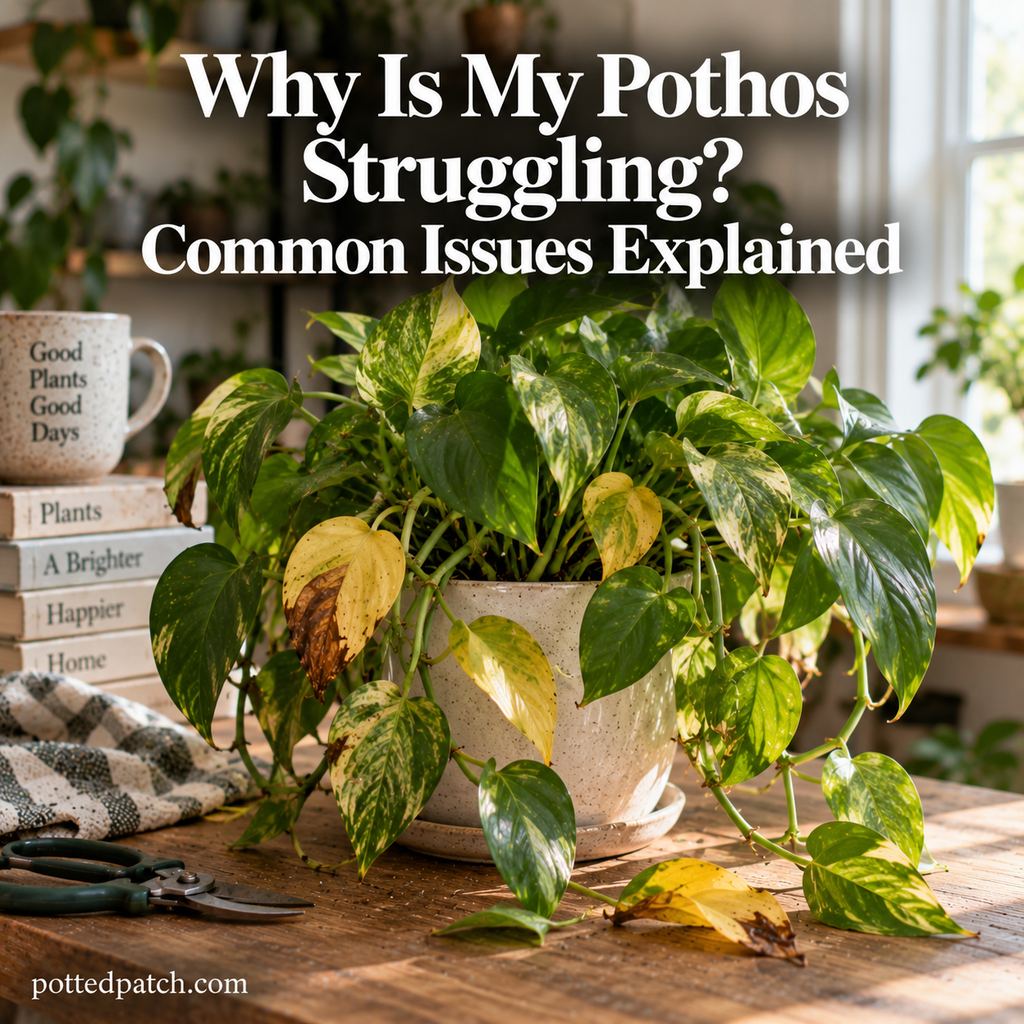
Pothos problems are easy to misdiagnose because opposite conditions can produce nearly identical symptoms: a plant can droop because it is extremely dry or because damaged roots are sitting in wet soil. This guide focuses on the clues I would check first—soil moisture, drying time, roots, stem condition, damage pattern, and new growth—before deciding what actually needs fixing.
Start With the Whole Pothos, Not One Damaged Leaf
Before watering, fertilizing, repotting, or moving a struggling pothos, inspect it.
I would start with five questions:
- Is the soil currently wet, slightly moist, or very dry?
- How long has it been that way?
- Is the problem affecting one old leaf or spreading through the plant?
- What does the newest growth look like?
- What changed recently?
That last question is easy to overlook. A pothos that declined shortly after being repotted, moved to a darker room, exposed to a cold draft, or placed beside a heater gives you useful context.
Also check underneath the nursery pot if it sits inside a decorative container. I’ve found that this is the kind of detail worth checking before blaming the plant itself: the surface can look normal while runoff remains trapped around the bottom of the inner pot.
For baseline watering, light, soil, and container care, use Pothos Care 101: Watering, Light & More. This page is about diagnosing what changed when that normal routine stops working.
Yellow Leaves on Pothos
Yellow leaves aren’t a diagnosis by themselves.
The useful question is which leaves are yellowing and what is happening in the root zone at the same time?
Several Yellow Leaves + Wet Soil
If several leaves are yellowing while the potting mix remains wet, don’t automatically add more water because the plant looks stressed.
Check:
- how long the soil has stayed wet;
- whether the pot drains;
- whether water is trapped in a cachepot;
- whether the soil has become dense;
- whether the container is oversized; and
- whether the roots are still firm.
Persistently wet soil combined with spreading yellow foliage makes the root zone much more important to investigate.
Yellow Leaves + Very Dry Soil
If the pot is extremely dry and the plant is also limp, yellowing may instead be associated with prolonged dryness.
Water the root ball thoroughly and let excess water drain.
Don’t compensate afterward by keeping the soil constantly wet. Return to an appropriate watering routine.
One Older Yellow Leaf
One old leaf near the base turning yellow while the rest of the pothos looks healthy and continues producing new growth is very different from five leaves yellowing in a few days.
I wouldn’t overhaul the plant’s care because of one aging leaf.
The pattern and progression matter more than the color alone.
Drooping Pothos
When pothos droops, soil moisture is the first thing I would check.
Don’t diagnose thirst by appearance alone.
Drooping + Dry Soil
If the root ball is genuinely dry and the foliage has gone limp, water thoroughly.
Make sure the water actually moistens the root ball rather than immediately running through gaps around extremely dry soil.
Then watch what happens.
A pothos whose roots are healthy can respond noticeably after rehydration, which gives you another diagnostic clue.
Drooping + Wet Soil
This is the situation where adding water can make the original problem worse.
If the soil is wet but the leaves remain limp, investigate:
- poor drainage;
- an oversized container;
- compacted soil;
- persistently low light;
- root damage; and
- root rot.
The leaves may look thirsty even though the root zone contains plenty of water because unhealthy roots aren’t functioning normally.
Drooping After Repotting
If drooping started immediately after repotting, recent root disturbance matters.
Keep the environment stable and resist trying to “fix” the droop with repeated watering, fertilizer, another repot, and a new location all at once.
Wilting Pothos
Wilting and drooping overlap, but I pay more attention to wilting when the plant has lost noticeable firmness and the entire vine or several leaves appear depleted.
Again, check the soil before doing anything.
Very dry soil + wilted foliage: the plant may be dehydrated.
Wet soil + persistent wilting: investigate the roots.
Wilting after a sudden environmental change: consider temperature, light, repotting, or another recent stress.
This is why “water a wilted plant” is an unreliable rule. The visible result can look similar while the underlying conditions are completely different.
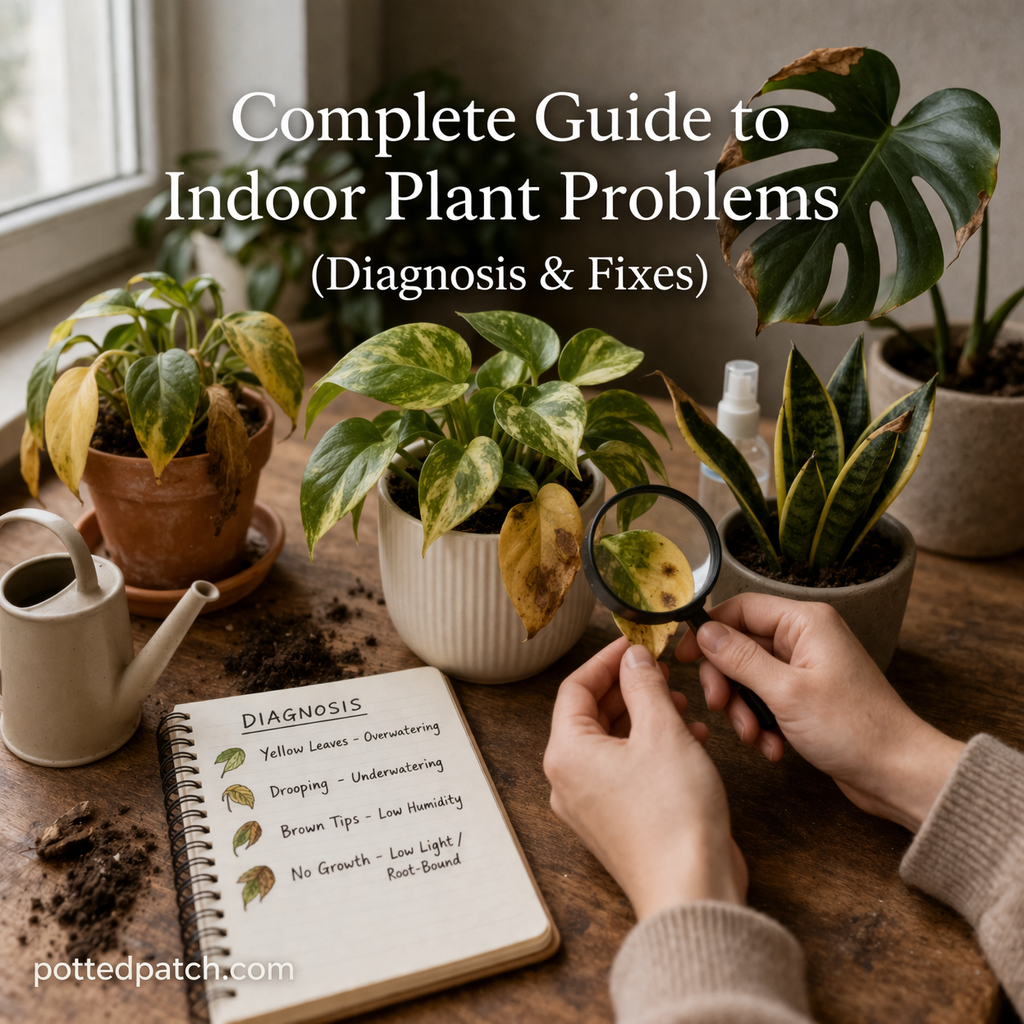
If several symptoms are appearing together and the cause remains unclear, the Complete Guide to Indoor Plant Problems provides a broader diagnostic process.
Brown Tips on Pothos
A tiny brown tip on one otherwise healthy leaf isn’t something I would treat as an emergency.
Repeated browning on newer foliage is more informative.
Look at whether the plant has experienced:
- repeated severe drying;
- inconsistent watering;
- very dry indoor conditions;
- excessive fertilizer or accumulated salts; or
- root stress.
Also distinguish a small brown tip from a large damaged patch.
A crispy patch concentrated on the window-facing side after a sudden move into stronger sunlight points you in a different direction than several leaves developing brown tips over time.
You can trim dead brown tissue with clean scissors if the appearance bothers you, but trimming is cosmetic. It doesn’t correct whatever caused the damage.
Leaf Curling on Pothos
Before treating curled pothos leaves as a humidity problem, check whether you’re looking at mature foliage or a new leaf that hasn’t finished opening.
Fresh pothos leaves naturally emerge folded.
Don’t pull a developing leaf open manually. Give it time to unfurl.
When established leaves begin curling, check the root zone first.
Curling + Dry Soil
Very dry soil makes dehydration a reasonable possibility, particularly when the leaves are also losing firmness.
Water thoroughly if the root ball is genuinely dry.
Curling + Wet Soil
If the pot is already wet, don’t add more water.
Look for root problems, especially when curling appears alongside yellowing, drooping, or deteriorating stems.
Heat, intense direct sun, dry air, and pests can also contribute, but soil moisture is a fast way to divide the possibilities before chasing less likely explanations.
Leaf Drop on Pothos
The location and speed of leaf loss matter.
A pothos slowly losing an occasional older leaf near the base isn’t behaving the same way as a plant suddenly dropping leaves throughout several vines.
When leaf drop accelerates, check for:
- severe dryness;
- persistently wet soil;
- unhealthy roots;
- very low light;
- cold exposure; and
- a recent environmental change.
I would also look at the remaining foliage.
Leaf drop accompanied by yellowing and wet soil pushes the investigation toward the root zone. Leaf loss following severe dehydration tells a different story.
Don’t focus only on replacing the leaves that were lost. Identify why the plant stopped maintaining them.
Slow Growth on Pothos
A pothos that hasn’t produced a new leaf recently isn’t automatically unhealthy.
Growth naturally changes with usable light, temperature, season, root condition, and the plant’s recent history.
When Slow Growth May Be Normal
If growth slows while:
- existing foliage remains healthy;
- roots appear healthy;
- soil dries normally; and
- there are no other signs of decline,
I wouldn’t assume the plant needs fertilizer.
Shorter, darker days can slow an indoor pothos considerably.
When Slow Growth Deserves Investigation
I pay more attention when stalled growth occurs alongside:
- yellowing;
- drooping;
- persistently wet soil;
- declining stems;
- damaged roots; or
- pest activity.
Also look at the newest leaves and stem spacing.
Smaller leaves and increasingly long spaces between them can point toward inadequate usable light. If placement is questionable, compare the room with the room-by-room indoor plant placement guide.
Don’t expect fertilizer to compensate for a pothos sitting in a location where it doesn’t receive enough light to grow well.
Soft Stems on Pothos
This is one symptom I would take more seriously than an isolated brown tip.
First distinguish normal older stem coloration from actual tissue breakdown.
A healthy older vine can develop darker coloration and scarring while remaining firm.
I’m more concerned when a stem becomes:
- soft;
- mushy;
- blackened;
- water-soaked; or
- easy to collapse between the fingers.
If that damage is near the soil line and the potting mix has remained wet, inspect the roots and surrounding stem tissue for rot.
Remove clearly rotted material with clean tools until you reach healthy, firm tissue.
Healthy vine sections with viable nodes may still be salvageable if deterioration has already destroyed the lower stem and root system.
Root Rot in Pothos
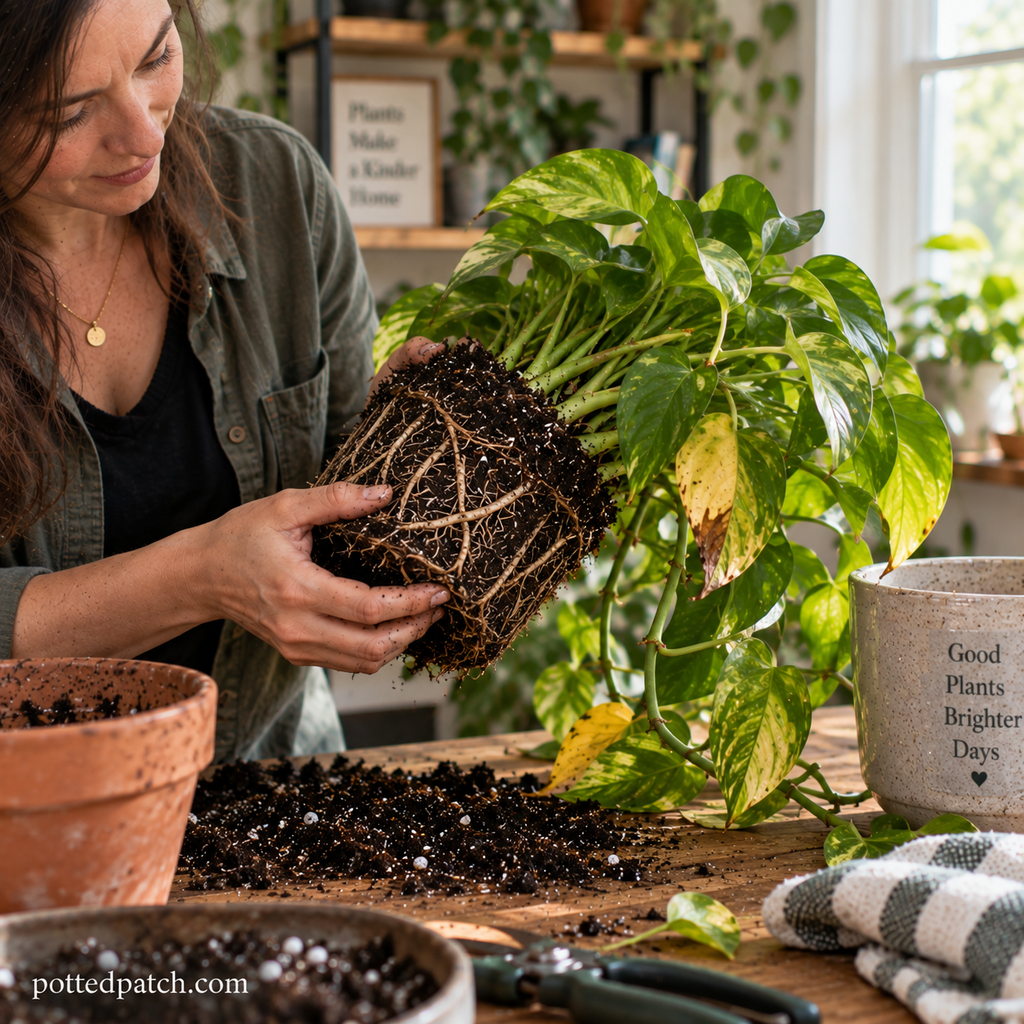
Don’t diagnose root rot because the leaves are yellow.
Don’t diagnose it because a root looks brown, either.
Inspect the roots themselves.
Healthy pothos roots should generally feel firm. Their exact color can vary with age and potting mix, so texture and condition are more useful than color alone.
Rotten roots are more likely to be:
- mushy;
- slimy;
- unusually fragile;
- darkened in combination with tissue breakdown; or
- unpleasant smelling.
Above the soil, you may also see wet soil that doesn’t dry normally, yellowing, persistent drooping, leaf loss, or soft stems.
How to Fix Pothos Root Rot
If you’ve actually confirmed rotten roots:
- Remove the pothos from its container.
- Remove enough soil to see the root system clearly.
- Cut away roots that are obviously rotten using clean tools.
- Remove badly rotted stem tissue if necessary.
- Discard degraded, waterlogged potting mix.
- Clean the existing container or use a clean replacement.
- Repot the healthy root system into fresh, airy soil.
- Use a container with drainage holes.
- Size the pot for the remaining roots, not the size the root system had before the damage.
- Correct the condition that kept the root zone excessively wet.
That ninth step matters.
If a pothos has lost a substantial portion of its roots, moving what’s left into an enormous pot creates another large volume of wet soil around a reduced root system.
If healthy vines remain but very little viable root tissue survives, healthy node cuttings can also preserve part of the plant.
Mold on Pothos Soil
Surface mold can look alarming, but I wouldn’t assume the entire pothos has root rot because there’s a little fungal growth on top of the soil.
Instead, treat it as a reason to inspect the growing conditions.
Ask:
- How long does the soil remain damp?
- Is the plant getting enough usable light?
- Does the container drain?
- Is dead plant material sitting on the soil?
- Is water trapped inside an outer pot?
- Has the potting mix become dense?
Surface fungal growth is more likely to persist when the upper soil stays damp for long periods.
How to Fix Mold on Pothos Soil
Remove obvious mold and decaying material from the surface, then address the conditions allowing it to return.
Let the upper soil dry appropriately between waterings, improve drainage where necessary, and make sure the pothos isn’t sitting in an unnecessarily dark location where the pot takes an unusually long time to dry.
Don’t respond by allowing the entire plant to become severely dehydrated.
The goal isn’t “make the soil as dry as possible.” The goal is restoring a healthier wet-to-dry cycle.
For the baseline soil, watering, and drainage setup, refer back to the complete pothos care guide.
When Several Pothos Problems Happen at Once
This is where diagnosis becomes much easier.
One symptom can be vague. A combination often tells you more.
For example:
Yellow leaves + wet soil + drooping + soft lower stems
I’d inspect the roots.
Drooping + curled leaves + extremely dry soil
I’d investigate dehydration first.
Slow growth + small new leaves + long spaces between leaves
I’d evaluate light.
One old yellow leaf + healthy new growth + normal soil drying
I probably wouldn’t change anything major yet.
That’s the approach I prefer over matching one leaf symptom to a long list of possible causes.
What Healthy Recovery Looks Like
Damaged pothos leaves usually won’t return to their original appearance.
A brown section won’t turn green again. A completely yellow leaf won’t become healthy because you corrected the watering problem.
So don’t judge recovery by waiting for damaged tissue to repair itself.
Watch what happens next.
I would look for:
- firm new growth;
- healthy new leaves;
- normal stem tissue;
- a more predictable soil-drying pattern;
- no new spreading damage; and
- renewed growth when conditions support it.
An old damaged leaf can remain ugly while the pothos itself is recovering perfectly well.
A Better Pothos Troubleshooting Order
When a pothos starts looking unhealthy, work through the problem in this order:
- Check the soil. Is it wet or dry?
- Check drying time. Has it changed noticeably?
- Check drainage. Is water actually leaving the pot?
- Check the roots when symptoms point toward root trouble.
- Look at the damage pattern. Old leaves or new? One vine or the whole plant?
- Evaluate the light.
- Think about recent changes.
- Inspect for pests if the previous checks don’t explain the damage.
- Make the most justified correction first.
- Watch the new growth before changing everything else.
The broader Complete Indoor Plant Care Guide can help when the problem traces back to general indoor growing conditions.
The biggest mistake is reacting to every symptom separately. Yellowing, drooping, curling, leaf drop, soft stems, and slow growth can all overlap when the root zone is unhealthy.
Check the conditions first, make a targeted correction, and then give the pothos a chance to show you whether that correction worked.