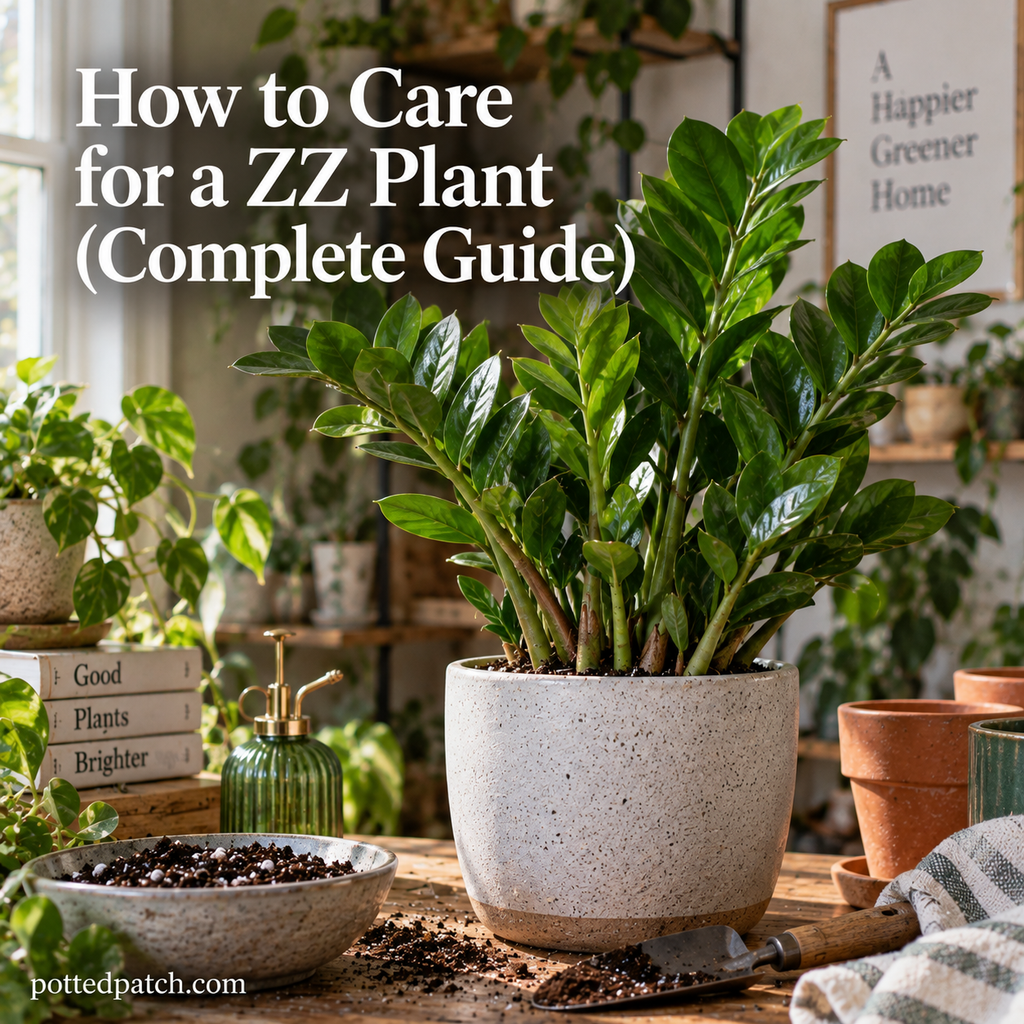
The ZZ plant has earned a reputation as one of the easiest houseplants to grow. It tolerates missed waterings, doesn’t demand constant attention, and can adapt to lighting conditions that would make many other indoor plants struggle.
That doesn’t mean a ZZ plant is impossible to harm, though. Overwatering is particularly troublesome, and keeping the plant in very dark conditions can eventually lead to weak or disappointing growth.
Fortunately, ZZ plant care is straightforward once you understand what the plant actually needs. This complete guide covers light, watering, soil, temperature, humidity, fertilizing, repotting, propagation, pruning, pests, and the common problems you may encounter along the way.
About the ZZ Plant
The ZZ plant, or Zamioculcas zamiifolia, is native to eastern Africa. It grows from thick underground structures called rhizomes that store water and nutrients.
Those rhizomes are one reason the plant handles dry periods so well.
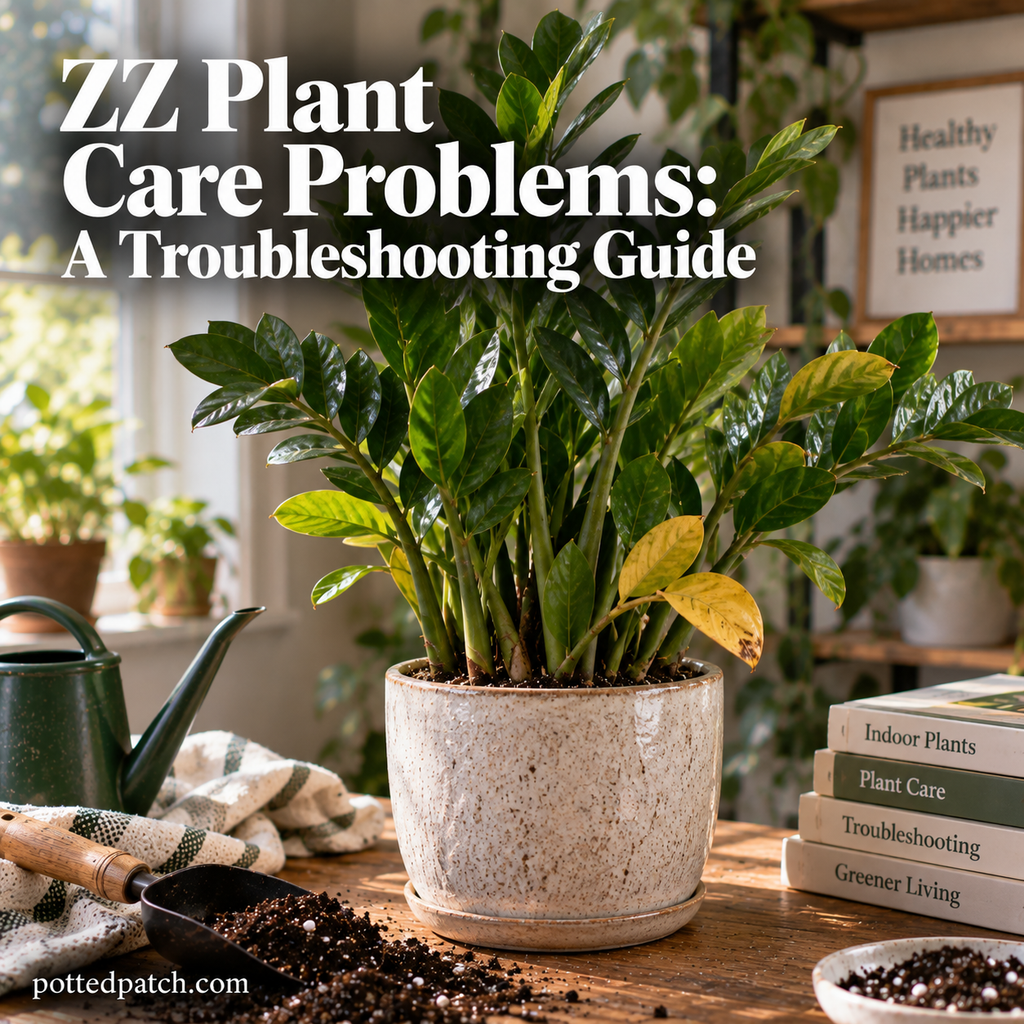
Above the soil, ZZ plants produce upright stems lined with smooth, glossy leaflets. Healthy plants typically have a deep green appearance, while fresh growth often emerges in a much lighter shade before gradually darkening.
ZZ plants are slow to moderate growers indoors, so don’t worry if yours isn’t constantly producing new stems.
ZZ Plant Care at a Glance
For a quick reference, ZZ plants generally prefer:
- Light: Bright, indirect light is ideal
- Water: Allow the soil to dry substantially between waterings
- Soil: Loose, well-draining potting mix
- Temperature: Around 65–80°F (18–27°C)
- Humidity: Normal household humidity
- Fertilizer: Light feeding during active growth
- Repotting: Usually every 2–3 years or when needed
- Pruning: Minimal
- Difficulty: Beginner-friendly
The biggest mistake to avoid is keeping the soil constantly wet.
How Much Light Does a ZZ Plant Need?
One reason ZZ plants are so popular is their ability to adapt to a wide range of indoor lighting.
They can tolerate lower-light rooms better than many common houseplants. However, there’s an important difference between tolerating low light and actually preferring it.
A ZZ plant usually grows best in bright, indirect light.
Place it somewhere that receives plenty of ambient daylight without exposing the foliage to hours of harsh direct sunlight.
Can ZZ Plants Grow in Low Light?
Yes, but growth will usually be slower.
A ZZ plant in lower light may:
- Produce fewer new stems
- Grow more slowly
- Lean toward the nearest light source
- Use water much more slowly
- Develop less vigorous growth
If your plant is in a dim room, be particularly careful with watering. Soil dries much more slowly when a plant receives little light.
Can ZZ Plants Handle Direct Sunlight?
Some gentle direct sunlight can be tolerated, especially morning sun.
Strong afternoon sunlight through a window can be much more intense and may scorch foliage, particularly if the plant was previously growing in a darker location.
If you’re moving a ZZ plant into brighter conditions, increase its exposure gradually.
How Often Should You Water a ZZ Plant?
ZZ plants would generally rather be slightly too dry than consistently too wet.
Their rhizomes store water, allowing them to tolerate periods when the soil dries substantially.
Instead of watering according to a fixed schedule, check the potting mix.
Allow most of the soil to dry before watering again.
When it is time to water:
- Take the plant to a sink or somewhere excess water can drain.
- Water the soil thoroughly.
- Continue until water begins flowing from the drainage holes.
- Allow the container to drain completely.
- Empty any water collected in the saucer or decorative outer pot.
Then wait for the soil to dry substantially before watering again.
How Many Days Should You Wait Between Waterings?
There isn’t a reliable universal number.
One ZZ plant may need water every couple of weeks during warm, bright conditions, while another may go considerably longer between waterings.
Watering frequency depends on:
- Light exposure
- Pot size
- Soil composition
- Temperature
- Humidity
- Plant size
- Container material
- Season
Checking the soil is much more reliable than automatically watering every Saturday.
Signs of an Overwatered ZZ Plant
Overwatering is probably the most common ZZ plant care problem.
Because the plant stores water in its rhizomes, it doesn’t need its soil to remain continuously moist.
Possible signs of overwatering include:
- Yellow leaves
- Yellowing stems
- Soft or mushy stems
- Drooping
- Persistently wet soil
- Brown or black areas near the base
- Soft rhizomes
- An unpleasant smell coming from the soil
If several symptoms appear while the soil is wet, don’t automatically assume the plant needs more water because it’s drooping.
Check the roots and rhizomes first.
What ZZ Plant Root Rot Looks Like
Healthy ZZ plant roots and rhizomes should feel firm.
Rot may cause affected tissue to become:
- Brown or black
- Soft
- Mushy
- Slimy
- Easily damaged
- Unpleasant smelling
If you suspect root rot, carefully remove the plant from its container and inspect the root system.
Remove badly rotted roots and rhizome sections using clean tools. Repot the remaining healthy plant in fresh, well-draining soil and make sure the container has adequate drainage.
Signs of an Underwatered ZZ Plant
Although ZZ plants are drought tolerant, they aren’t artificial plants. Eventually, they do need water.
Possible signs of prolonged underwatering include:
- Dry potting soil
- Wrinkled or shriveled stems
- Curling leaflets
- Crispy brown areas
- Drooping
- Leaf drop
If the soil is extremely dry, give the plant a thorough watering rather than a small splash.
Very dry potting mix can sometimes pull away from the sides of the container, allowing water to run straight through. Water slowly so the soil has time to absorb moisture.
Best Soil for a ZZ Plant
ZZ plants need soil that drains efficiently.
A quality indoor potting mix can serve as a starting point, but adding materials that improve drainage and aeration may help prevent the root zone from remaining wet for too long.
A practical mixture might contain:
- Indoor potting mix
- Perlite or pumice
- Fine orchid bark
You don’t need a complicated recipe.
The goal is simply to create soil that retains enough moisture for the roots while allowing excess water to escape.
Why Drainage Matters So Much
ZZ plants store water underground.
Dense soil combined with frequent watering can keep those rhizomes surrounded by moisture for extended periods, increasing the risk of rot.
If your ZZ plant’s soil remains wet for a week or more after watering, evaluate its light, container size, and soil composition.
Choosing the Right Pot for a ZZ Plant
A ZZ plant doesn’t need a huge container.
Choose a pot that comfortably accommodates the root system while leaving some room for growth.
Containers that are dramatically oversized hold more soil, and that additional soil can remain wet longer than the plant needs.
Does a ZZ Plant Pot Need Drainage Holes?
A drainage hole is strongly recommended.
It allows excess water to escape instead of collecting around the roots and rhizomes.
If you want to use a decorative container without drainage, keep the plant inside a smaller nursery pot with holes. Remove the inner pot when watering, let it drain completely, and then return it to the decorative container.
Terracotta vs. Plastic Pots
Both can work.
Terracotta is porous and tends to dry more quickly. That can be helpful if you’re prone to overwatering.
Plastic and glazed ceramic retain moisture longer.
Neither material is inherently better. You simply need to adjust your watering habits accordingly.
Temperature Requirements for ZZ Plants
ZZ plants generally appreciate the same temperatures people find comfortable.
A range of approximately 65–80°F (18–27°C) works well for typical indoor growing.
Protect the plant from:
- Cold drafts
- Frost
- Air-conditioning vents
- Heating vents
- Sudden temperature changes
Avoid leaving a ZZ plant pressed against extremely cold window glass during winter.
Does a ZZ Plant Need High Humidity?
No special humidity setup is usually necessary.
ZZ plants generally adapt well to average household humidity, which makes them considerably easier to accommodate than many tropical houseplants.
You typically don’t need to:
- Mist the plant daily
- Use a humidity tray
- Place it in a bathroom
- Run a humidifier specifically for it
If your home is extremely dry, the plant may appreciate some additional humidity, but light and proper watering are usually much more important.
Should You Mist a ZZ Plant?
Regular misting isn’t necessary.
Misting provides only a temporary increase in moisture around the foliage and doesn’t replace proper watering.
If the leaves become dusty, wiping them gently with a damp cloth is more useful.
This keeps the glossy foliage looking attractive while giving you an opportunity to inspect the plant for pests.
How to Fertilize a ZZ Plant
ZZ plants aren’t particularly heavy feeders.
During periods of active growth, you can use a balanced houseplant fertilizer according to the product’s instructions.
Avoid assuming that extra fertilizer will make a slow-growing ZZ plant suddenly grow quickly.
Too much fertilizer can lead to salt buildup and root damage.
Possible signs of excessive fertilizer include:
- Brown leaf tips
- White crust on the soil surface
- Mineral buildup around the pot
- Declining growth
- Root stress
Reduce feeding when growth slows substantially.
How Fast Do ZZ Plants Grow?
ZZ plants aren’t known for explosive growth.
Under good conditions, you may occasionally notice new shoots emerging directly from the soil. These shoots often begin light green and gradually darken as they mature.
Growth is influenced by:
- Light
- Temperature
- Watering
- Root health
- Nutrients
- Season
- Plant maturity
A ZZ plant receiving bright indirect light will generally have better growth potential than one sitting in a dark corner.
How to Encourage More ZZ Plant Growth
Focus on improving the plant’s overall conditions rather than trying to force growth.
Provide:
- Bright indirect light
- Proper watering
- Well-draining soil
- Appropriate temperatures
- Light fertilization during active growth
- Enough root space without dramatically oversizing the pot
Then be patient.
ZZ plants simply grow more slowly than many other houseplants.
When Should You Repot a ZZ Plant?
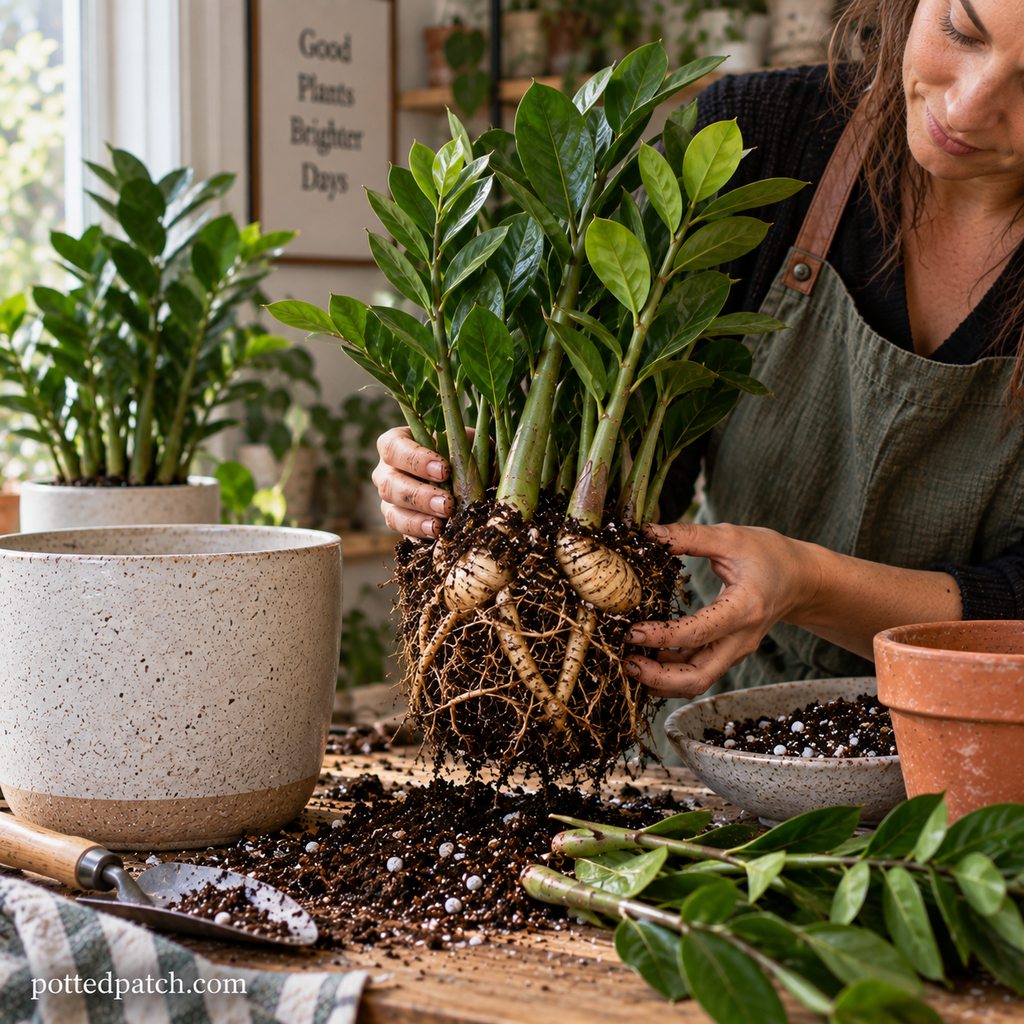
ZZ Plants are tolerant of missed waterings and lower light, but those traits can also encourage two of the easiest mistakes to make with them: watering too often and assuming a dark location is ideal. I would judge a ZZ Plant by its soil-drying time, the firmness and crowding of its underground rhizomes, the condition of its stems, and whether new shoots are emerging normally.
ZZ Plant Indoor Care Basics
A ZZ Plant doesn’t need much intervention when its basic growing conditions are working.
I would focus on:
- useful indirect light;
- letting the soil dry substantially between waterings;
- loose, well-draining soil;
- a pot with drainage;
- enough room for the roots and rhizomes without oversizing the container;
- light feeding during active growth; and
- occasional cleaning, rotation, and pruning.
The underground part of the plant matters particularly with ZZs. They grow from thick rhizomes that store resources, so I don’t manage their soil moisture like I would a tropical plant that prefers consistently moist soil.
For broader principles that apply across houseplants, see the Complete Indoor Plant Care Guide.
Best Light for a ZZ Plant
ZZ Plants are famous for tolerating lower light.
The important word is tolerating.
I wouldn’t use survival in a dim corner as evidence that it’s the best location. In brighter indirect light, a healthy ZZ Plant generally has more energy available for stronger growth.
Very low light can mean:
- slower growth;
- fewer new shoots;
- weaker or more stretched growth;
- leaning toward the available light; and
- soil remaining wet considerably longer.
That last point matters because light and watering aren’t separate decisions.
Move the same plant into a darker location and it may begin using water more slowly even though nothing about your watering routine changed.
Can ZZ Plants Take Direct Sun?
Avoid suddenly moving a plant accustomed to indoor shade into intense direct sunlight.
If you want to increase its exposure, do it gradually.
Where to Place a ZZ Plant
Living rooms, bedrooms, offices, and other rooms can work as long as the plant receives natural or appropriate supplemental light.
A completely dark room isn’t a suitable long-term location simply because ZZ Plants are advertised as “low-light plants.”
For help comparing actual locations, use the room-by-room indoor plant placement guide.
How to Water a ZZ Plant
I wouldn’t water a ZZ Plant according to a weekly schedule.
Let most of the potting mix dry before watering again, then water the root zone thoroughly and allow the excess to drain.
The basic routine is:
- Check moisture below the immediate soil surface.
- Make sure the pot has dried substantially.
- Water thoroughly.
- Let excess water leave through the drainage holes.
- Empty collected water from an outer decorative pot or saucer.
- Wait for the soil to dry substantially again.
How long that takes can change dramatically.
Pay Attention to Drying Time
Light, temperature, soil, container material, pot size, root density, and season all affect water use.
That’s why I find drying time more useful than counting days.
If a ZZ Plant that normally dries predictably suddenly remains wet for much longer, investigate why.
Has it been moved into lower light? Is the weather cooler? Is the soil compacted? Is the container too large? Is water trapped inside a decorative pot?
Those questions are more useful than asking whether it has been exactly two weeks since the last watering.
If your ZZ Plant develops yellowing, softness, or wet-soil drooping, use the Complete Guide to Indoor Plant Problems rather than automatically watering again.
Drainage for ZZ Plants
Drainage is especially important for a plant that doesn’t use water particularly quickly.
A drainage hole lets you thoroughly water the soil without deliberately leaving excess water trapped around the roots and rhizomes.
But drainage isn’t only about the hole.
I would evaluate:
- soil structure;
- pot size;
- container material;
- available light;
- drying time; and
- whether runoff is trapped in an outer pot.
A drainage hole can’t compensate for dense soil in an oversized container that remains saturated for a long time.
Think of drainage as the behavior of the whole root environment.
Best Soil for a ZZ Plant
The goal is a potting mixture that accepts water but doesn’t remain dense and saturated.
A loose indoor potting mix can be adjusted with aerating materials if necessary.
Rather than becoming attached to one exact recipe, I would watch what happens after watering.
Ask:
- Does water enter the mixture evenly?
- Does excess water drain?
- Does the soil remain loose rather than muddy?
- Does it dry at a reasonable rate for the plant’s conditions?
If the answer to the last question changes significantly, that’s useful information.
Old, compacted soil can behave very differently from fresh potting mix even if your watering technique hasn’t changed.
Best Containers for ZZ Plants
A ZZ Plant container needs to accommodate more than fine roots.
The plant’s rhizomes can become substantial as it matures.
I prefer a container that:
- has drainage holes;
- provides modest growing room;
- is sturdy enough for the root and rhizome mass; and
- isn’t dramatically larger than necessary.
If you want to use a decorative pot without drainage, keep the ZZ Plant in a draining inner pot and remove it for watering.
Always check for trapped water before putting it back.
Choosing the Right Pot Size
Don’t solve every crowded ZZ Plant by jumping several pot sizes.
A dramatically oversized container leaves a large volume of soil that the existing root system doesn’t occupy. That soil may stay wet considerably longer.
When repotting, I would move up modestly.
The new container should provide room for continued root and rhizome growth without creating an unnecessarily large wet root zone.
Preventing a Root-Bound ZZ Plant
ZZ Plants can tolerate some crowding.
That doesn’t mean severe crowding should be deliberately maintained.
I would consider the plant genuinely ready for more space when several clues begin appearing together:
- roots heavily circle the container;
- rhizomes crowd the pot;
- roots emerge extensively from drainage holes;
- the container becomes distorted or cracks;
- soil has become heavily compacted;
- drainage has deteriorated; or
- the plant has become physically unstable.
A single visible root isn’t enough for me to automatically repot.
The condition of the rhizome system and container as a whole is more useful.
How to Repot a ZZ Plant
ZZ Plants don’t need frequent repotting. Depending on growth and container size, one may remain comfortable in the same pot for several years.
When repotting is genuinely necessary:
- Choose a container slightly larger than the existing pot.
- Prepare fresh, well-draining potting mix.
- Carefully remove the plant.
- Inspect the roots and rhizomes.
- Remove clearly dead or rotten tissue if necessary.
- Position the plant in the new container.
- Fill around the root system with fresh soil.
- Avoid burying the plant dramatically deeper than before.
I would spend more time inspecting the underground structure than rushing to get the plant into its new pot.
Healthy, firm rhizomes are very different from soft or deteriorating tissue.
Also handle the rhizomes and roots gently. They are an important part of how the plant stores resources and produces new shoots.
How to Encourage New Growth on a ZZ Plant
ZZ Plants aren’t fast-growing houseplants, so patience is part of their care.
New growth usually appears as shoots emerging directly from the soil rather than as extensions from the tips of old stems.
That’s the growth I would watch.
Don’t Mistake Pale New Growth for Yellowing
Fresh ZZ Plant shoots can emerge noticeably lighter green than mature foliage.
That isn’t automatically a problem.
Watch the shoot as it develops. Healthy new foliage typically darkens as it matures.
This distinction matters because immediately changing watering or fertilizer in response to healthy pale new growth can create a problem that wasn’t there.
If Your ZZ Plant Isn’t Growing
Check:
- available light;
- season and temperature;
- soil behavior;
- root and rhizome health;
- root crowding; and
- nutrition.
Don’t jump straight to fertilizer.
If the plant looks healthy and conditions are appropriate, slow growth may simply be normal for a ZZ Plant.
How to Fertilize a ZZ Plant
ZZ Plants don’t need heavy feeding.
During active growth, an appropriate houseplant fertilizer can be used according to its directions.
I would base feeding more on whether the plant is actively growing than on a rigid monthly schedule.
If growth slows during darker months, reduce or pause feeding accordingly.
And don’t use fertilizer to compensate for poor light, persistently wet soil, or damaged roots.
Those problems need to be corrected directly.
How to Prune a ZZ Plant
ZZ Plants don’t require routine pruning to maintain their basic shape.
Most pruning is corrective or cosmetic.
Remove:
- dead growth;
- completely yellow stems;
- badly damaged stems;
- diseased tissue; or
- unwanted awkward growth when necessary.
Use clean, sharp tools.
Where to Cut a ZZ Plant Stem
If an entire stem needs to go, I would remove it near the soil line rather than cutting off individual leaflets until a bare stalk remains.
A completely yellow stem won’t become green again.
Before removing it, however, make sure you’re not looking at healthy pale new growth.
One older yellowing stem may be natural aging. Several stems yellowing together deserve investigation before you simply prune away the evidence.
Rotating a ZZ Plant
ZZ Plants can gradually lean toward the strongest available light.
Occasional rotation can help keep growth more balanced when illumination comes primarily from one direction.
I wouldn’t rotate it constantly.
Instead, watch the plant.
If new stems are consistently orienting toward the window, turn the container occasionally.
If the entire plant is becoming stretched or heavily leaning, rotation isn’t the real solution. Evaluate whether the location provides enough light.
ZZ Plant Maintenance
A healthy ZZ Plant needs surprisingly little routine maintenance.
My useful checks would be:
- Is the soil drying normally?
- Are new shoots appearing healthy?
- Are mature stems remaining firm?
- Is the plant leaning noticeably toward its light source?
- Are rhizomes beginning to distort the container?
- Has water collected inside a decorative pot?
- Is dust building up on the foliage?
Cleaning the Leaves
ZZ Plants have naturally glossy leaflets that can collect visible dust.
Wipe them gently with a soft, damp cloth when necessary.
I wouldn’t rely on artificial leaf-shine products.
Cleaning is also a convenient opportunity to inspect the undersides of leaves, stems, and new growth for anything unusual.
Year-Round ZZ Plant Care
I wouldn’t create completely different routines for each season.
Instead, adjust according to growth, light, temperature, and soil-drying time.
Spring and Summer
Longer days and warmer indoor conditions may encourage new shoots.
During active growth:
- monitor soil moisture;
- provide useful indirect light;
- fertilize lightly if appropriate;
- watch for new shoots;
- and repot only if the roots and rhizomes genuinely need more space.
Don’t automatically increase watering because it’s summer.
If the soil isn’t ready, the plant isn’t ready.
Fall and Winter
Shorter days often mean slower growth and slower water use.
This is when I would pay particularly close attention to drying time.
If a pot that dried reasonably quickly during brighter weather now remains damp much longer, extend the interval between waterings.
Also:
- maximize useful natural light;
- protect the plant from cold drafts;
- keep it away from temperature extremes; and
- reduce fertilizer when active growth slows.
Carrying a summer watering routine unchanged into darker winter conditions is one of the easiest ways to keep a ZZ Plant wet for too long.
Common ZZ Plant Care Mistakes
Watering on a Fixed Schedule
ZZ Plants don’t need water because a certain number of days have passed.
Check the soil.
Watering Too Frequently
Their ability to store resources makes constantly wet soil unnecessary and potentially harmful.
Let the soil dry substantially.
Treating “Low Light” as “No Light”
ZZ Plants tolerate relatively low light, but they still need light.
A brighter suitable location generally supports stronger growth.
Using Dense Soil
Soil that stays saturated for an extended period makes moisture management much harder.
Ignoring Drainage
A decorative container full of trapped runoff can undo otherwise sensible watering.
Using an Oversized Pot
More soil isn’t automatically an upgrade.
Match the container to the root and rhizome system.
Repotting Because One Root Is Visible
ZZ Plants can tolerate some crowding.
Look for several signs that the plant has genuinely outgrown the pot.
Confusing New Growth With Yellowing
Fresh shoots may emerge pale green.
Observe how they develop before treating them as a symptom.
Fertilizing to Force Faster Growth
ZZ Plants naturally grow more slowly than many houseplants.
More fertilizer doesn’t turn them into fast growers.
Assuming Every Drooping Stem Needs Water
Older stems can naturally arch outward, while drooping associated with very wet soil can indicate an entirely different issue.
Check the root zone before reacting.
A Practical ZZ Plant Care Routine
I would keep ZZ Plant care centered on observation rather than intervention.
Give it useful light. Low-light tolerance doesn’t make darkness ideal.
Let the soil dry substantially. Use the plant and pot rather than the calendar to decide when to water.
Water thoroughly when needed. Then let excess water drain.
Notice drying time. A sudden change can reveal a change in the plant’s environment.
Watch new shoots. Pale young growth can be completely normal and should darken as it matures.
Inspect roots and rhizomes before repotting. Don’t move up in pot size merely because you spotted one root.
Adjust seasonally. Darker, cooler conditions often mean slower water use.
Most importantly, don’t micromanage a healthy ZZ Plant.
Firm stems, healthy rhizomes, predictable soil drying, and occasional new shoots tell you much more about its condition than a rigid care schedule ever will.