
Areca palms can be excellent indoor plants, but they are less forgiving of inconsistent conditions than tougher houseplants such as snake plants or ZZ plants. The biggest difference I’ve found is that an Areca palm does best when light, moisture, humidity, and temperature stay reasonably stable rather than swinging between extremes.
This guide focuses on the practical decisions that make the biggest difference indoors: where to place an Areca palm, how to judge when it needs water, what soil works, how to encourage healthy new fronds, when to repot, and which common mistakes to avoid.
Areca Palm Indoor Care Basics
The Areca palm (Dypsis lutescens) is also commonly called butterfly palm, golden cane palm, or yellow palm.
Its basic indoor needs are:
- Light: Bright, indirect light
- Water: Water as the upper portion of the soil begins to dry
- Soil: Well-draining mix that still retains some moisture
- Temperature: Roughly 65–80°F (18–27°C)
- Humidity: Moderate to higher humidity is helpful
- Fertilizer: Feed conservatively during active growth
- Repotting: When root or soil conditions justify it
- Pruning: Mainly dead or badly damaged fronds
The key difference between Areca palm care and succulent care is moisture.
I don’t wait for an Areca palm’s entire root ball to become bone dry before every watering. At the same time, I don’t try to keep the soil constantly wet.
That middle ground—even moisture with some drying near the top—is where much of successful Areca palm care happens.
For general houseplant fundamentals beyond this species, see the Complete Indoor Plant Care Guide (Beginner to Advanced).
Light: Bright Without Baking the Fronds
Areca palms generally look their best in plenty of bright, indirect light.
A bright east-facing window can be a good starting point. South- and west-facing rooms can also work, but I pay more attention to the actual intensity of the sun than the direction printed on a compass.
A palm a few feet back from a large unobstructed south-facing window may receive excellent light. The same distance from a small window shaded by a building or tree could be much darker.
Signs an Areca Palm Needs More Light
Watch for:
- Slow growth
- Smaller or weaker new fronds
- Sparse-looking growth
- Leaning toward the window
- Soil remaining wet much longer than expected
That last symptom is easy to overlook.
When light decreases, plant growth and water use can decrease too. If the soil suddenly takes much longer to dry, I don’t look only at watering—I also look at whether the palm is receiving enough light.
Can Areca Palms Take Direct Sun?
Some gentle direct sun, particularly morning sun, can be tolerated.
Strong afternoon sun through hot glass is more likely to cause trouble, especially if the palm was previously growing in softer indoor light.
Possible sun stress includes:
- Bleached areas
- Dry brown patches
- Crispy sections on exposed fronds
If I’m moving a palm into substantially stronger light, I make the transition gradually.
For help evaluating windows and room placement rather than relying only on terms like “bright indirect light,” see the Where to Place Indoor Plants (Room-by-Room Guide).
Watering an Areca Palm
Watering is where Areca palms differ noticeably from many drought-tolerant houseplants.
I don’t let the plant repeatedly go from saturated soil to an extremely dry root ball.
Instead, check the upper portion of the soil. When the top inch or two has begun to dry, investigate a little deeper and water when the root zone is ready rather than waiting for the entire pot to become completely dry.
When watering:
- Water the soil slowly and evenly.
- Continue until excess water drains from the bottom.
- Allow the container to drain.
- Empty water from the saucer or decorative outer pot.
Avoid giving the palm tiny amounts of water every day.
A proper watering should reach the root zone.
Don’t Water an Areca Palm on a Calendar
“Water once a week” sounds convenient, but it ignores almost everything that determines drying time.
Frequency changes with:
- Light
- Temperature
- Humidity
- Pot size
- Pot material
- Soil
- Root density
- Plant size
- Season
In my experience, the seasonal change is especially important. A pot that needs checking frequently during warm, bright weather may stay moist considerably longer once winter light decreases.
The solution isn’t to memorize a summer and winter schedule. It’s to learn what the soil feels like when the plant is actually ready for water.
What an Underwatered Areca Palm Looks Like
Possible signs include:
- Drooping fronds
- Dry or curling leaflets
- Crispy tips
- Browning edges
- Very dry soil
- Soil shrinking from the sides of the container
If a root ball becomes extremely dry, water slowly.
Very dry potting mix can sometimes pull away from the pot and allow water to run around the outside without properly wetting the roots. When I see that happening, I slow down and give the mix time to absorb the water rather than assuming that water coming from the drainage hole means the entire root ball is wet.
What an Overwatered Areca Palm Looks Like
Possible signs include:
- Widespread yellowing
- Persistently wet soil
- Drooping despite wet soil
- Dark or soft tissue near the base
- Unpleasant-smelling soil
- Soft, brown, or black roots
The phrase “drooping despite wet soil” is particularly useful.
If a palm is drooping and the soil is dry, watering may be appropriate. If it is drooping while sitting in soggy soil, adding more water can make the underlying problem worse.
When symptoms don’t clearly match one cause, use the Complete Guide to Indoor Plant Problems (Diagnosis & Fixes) to work through soil, roots, light, and environmental conditions before making several changes at once.
Soil: Moisture-Retentive but Still Aerated
Areca palm soil needs to perform two jobs that can sound contradictory.
It should retain enough moisture that the roots don’t dry almost immediately, while also allowing excess water to drain and air to remain around the roots.
That’s why I wouldn’t use an extremely gritty succulent mix for an Areca palm.
A quality indoor potting mix can work as a base. Depending on how dense it is, materials such as perlite, pumice, or fine orchid bark can be used to improve structure and aeration.
The exact recipe matters less than how the finished mix behaves.
After watering, ask:
- Does excess water drain?
- Does the mix stay saturated for an unusually long time?
- Does it become dense and compacted?
- Does it dry so rapidly that the palm is constantly becoming thirsty?
For an Areca palm, I’m looking for moisture retention without prolonged saturation.
Pot Choice Matters Too
Always use a container with drainage holes.
An appropriately sized pot is also important. Putting a modest root system into a huge container creates a large volume of moist soil that may take too long to dry.
When moving up in size, one reasonable step is usually enough.
Terracotta can work, but remember that unglazed clay loses moisture more quickly than plastic or glazed ceramic. In a warm, dry home, that difference can be noticeable.
I don’t consider one pot material universally superior. I choose a pot that works with the plant’s environment and the way the soil dries.
Humidity and Temperature
Areca palms appreciate more humidity than plants such as aloe vera or cacti.
They can adapt to ordinary household conditions, but very dry air can contribute to:
- Brown tips
- Crispy leaflets
- Dry-looking foliage
This often becomes more noticeable during winter when indoor heating begins running.
If a palm suddenly starts developing more dry tips after months of looking fine, I check whether a heating vent has started blowing nearby or whether indoor humidity has fallen before changing the watering routine.
Useful options include:
- Moving the palm away from heating or cooling vents
- Using a room humidifier when indoor air is persistently dry
- Grouping compatible houseplants
- Avoiding hot or cold blasts of air
I don’t rely on occasional misting to solve genuinely dry room conditions. Any humidity increase is brief, whereas a humidifier changes the environment around the whole plant more consistently.
Temperatures around 65–80°F (18–27°C) are generally comfortable.
Also protect the palm from cold windows, frequently opened exterior doors, air-conditioning vents, and abrupt temperature changes.
Encouraging New Growth on an Areca Palm
When an Areca palm isn’t producing much new growth, adding fertilizer isn’t my first move.
I start with the growing environment.
Check:
- Is it receiving enough light?
- Are the roots healthy?
- Is the soil draining properly?
- Is the plant repeatedly drying too far?
- Is the soil remaining wet for too long?
- Is it simply a slower time of year?
Healthy roots and appropriate light do more for sustainable new growth than trying to force a stressed palm with fertilizer.
What Healthy New Growth Looks Like
New palm growth emerges as developing fronds that gradually open.
Don’t expect every frond to appear perfect immediately. What matters is whether successive growth looks reasonably strong and the overall plant continues filling out.
If new fronds are consistently weak, unusually small, or growth has stalled during an otherwise active period, I reassess light and roots before doing anything else.
Fertilizing for Growth
Areca palms can benefit from feeding while actively growing.
Use a fertilizer appropriate for palms or indoor foliage plants and follow its label rather than increasing the dose in an attempt to accelerate growth.
More fertilizer isn’t more care.
Excessive feeding can contribute to salt accumulation and root stress—both of which can eventually show up as foliage problems.
During darker periods when growth slows significantly, feeding can usually be reduced or paused.
Repotting an Areca Palm
Areca palms don’t need constant repotting.
In fact, I would rather leave a healthy palm undisturbed than repot it simply because another year has passed.
Consider repotting when:
- Roots are tightly circling the container
- Roots are emerging heavily through drainage holes
- The pot has become mostly roots and dries unusually quickly
- Soil has become badly compacted
- Drainage has deteriorated
- Root health needs to be investigated
- The plant has become unstable
How to Repot an Areca Palm
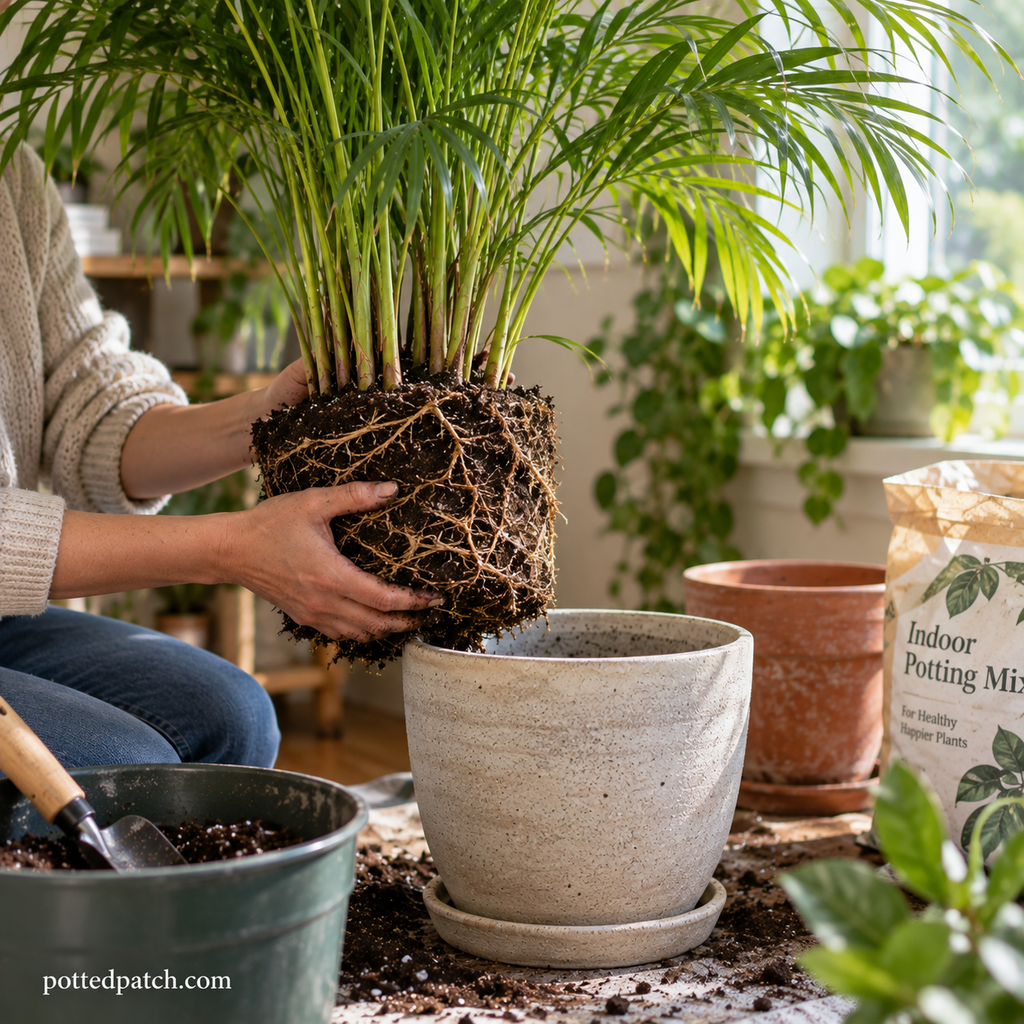
- Choose a container only slightly larger than the current pot.
- Make sure it has working drainage holes.
- Prepare fresh, well-draining potting mix.
- Gently slide the root ball from the old container.
- Inspect visible roots for damage or rot.
- Place the root ball at approximately the same depth as before.
- Fill around it with fresh mix without heavily compressing the soil.
- Water appropriately and allow excess moisture to drain.
Afterward, keep the palm’s environment stable.
Some temporary stress after root disturbance doesn’t mean the plant immediately needs more fertilizer, more water, or another move.
Give it time to settle.
Year-Round Areca Palm Care
The plant may live indoors year-round, but its environment still changes with the seasons.
Spring and Summer
Longer days and warmer conditions often mean more active growth and faster water use.
This is when I:
- Check soil moisture more frequently
- Feed during active growth when appropriate
- Watch new frond development
- Repot if genuinely necessary
- Inspect for pests
- Watch for sudden increases in direct sun
If an indoor palm goes outside for summer, acclimate it gradually.
A palm accustomed to filtered indoor light can scorch if moved directly into intense outdoor sunlight.
Fall and Winter
Winter changes the equation.
Shorter days may reduce water use, while indoor heating can make the air considerably drier.
That combination is what makes winter Areca palm care interesting: the air can be dry while the soil simultaneously dries more slowly.
This is exactly why I don’t respond to brown tips by automatically watering more.
During winter:
- Check the soil before watering
- Expect drying to slow in weaker light
- Keep the palm near adequate natural light
- Reduce feeding when growth slows
- Watch humidity
- Move the plant away from heating vents
- Protect it from cold drafts
One of the easiest mistakes is carrying a summer watering rhythm straight into winter.
Common Areca Palm Care Mistakes
Areca palms tend to respond best to stability. Most recurring problems come from a relatively short list of mistakes.
Watering on a Fixed Schedule
The pot determines when it needs water—not the day of the week.
Letting the Palm Become Bone Dry Repeatedly
Areca palms aren’t succulents.
Repeated severe drying can contribute to crispy foliage and brown tips.
Keeping the Soil Constantly Wet
The opposite extreme is equally problematic.
Roots need oxygen, and saturated soil can lead to root damage.
Keeping the Palm in Low Light
A dark corner may make an Areca palm look attractive for a while, but weak light can lead to sparse growth and slower soil drying.
Putting It Straight Into Harsh Sun
Bright light is useful. Sudden intense sun is different.
Acclimate the plant when substantially increasing exposure.
Keeping It Beside a Vent
Heating and cooling vents can create repeated temperature and humidity stress.
I’ve found that moving a palm even a short distance away from a direct stream of heated air can make more sense than trying to compensate by watering it more.
Overfertilizing
Fertilizer won’t repair unhealthy roots, poor light, or incorrect watering.
Correct the environment first.
Repotting Without a Reason
Root disturbance is still stress.
If the soil drains, the roots have adequate space, and the palm is healthy, repotting can wait.
Treating Every Brown Tip as a Watering Problem
Brown tips are a symptom with several possible causes.
This is probably the Areca palm symptom where context matters most.
Brown Tips, Yellow Fronds, and Other Symptoms
This guide covers the basic interpretation of common symptoms, but avoid diagnosing a palm from one damaged leaflet.
Brown Tips
Possible causes include:
- Dry air
- Inconsistent watering
- Repeated severe drying
- Fertilizer or mineral buildup
- Root stress
- Normal aging
Check the soil first, then consider humidity and the plant’s feeding history.
You can trim brown tips cosmetically by following the natural shape of the leaflet, but trimming doesn’t correct the cause.
Yellow Fronds
An older frond eventually yellowing isn’t necessarily a problem.
Widespread yellowing deserves more investigation.
Possible causes include:
- Excess moisture
- Poor drainage
- Root problems
- Insufficient light
- Nutrient issues
- Pest activity
Again, start with the soil.
Drooping
Feel the potting mix before reaching for water.
A drooping palm in dry soil and a drooping palm in wet soil are two very different troubleshooting situations.
Curling or Dry Leaflets
Possible factors include:
- Dehydration
- Dry air
- Excessive heat
- Root stress
- Pests
Inspect the undersides of the foliage as well as the soil.
Brown Patches
Look at their location and how they developed.
A dry bleached patch on the window-facing side after a move into stronger sunlight suggests a different cause than rapidly spreading spots appearing throughout the plant.
For symptoms that aren’t obvious after checking the soil, light, and environment, use the Complete Guide to Indoor Plant Problems (Diagnosis & Fixes).
Pruning and Cleaning
Areca palms don’t need aggressive pruning.
I mainly remove:
- Completely dead fronds
- Severely damaged fronds
- Diseased material
Use a clean, sharp tool and cut the unwanted frond near its base without injuring neighboring stems.
Avoid removing healthy green fronds simply to reshape the palm.
The many narrow leaflets also collect dust. Gently cleaning them with a damp cloth or careful rinse makes the plant look better and gives you a chance to inspect it closely.
Watch for Spider Mites and Other Pests
Areca palms can attract common houseplant pests, including:
- Spider mites
- Mealybugs
- Scale
I pay particular attention to spider mites when indoor conditions become warm and dry.
Look for:
- Fine webbing
- Pale stippling
- Tiny moving specks
- Faded foliage
- Leaves that appear unusually dry despite adequate soil moisture
Check underneath the leaflets rather than only viewing the palm from across the room.
If you find pests, separate the palm from nearby houseplants while you identify and treat the infestation. Also inspect neighboring plants because pests can spread before damage becomes obvious.
Can You Propagate an Areca Palm?
At home, division is more practical than trying to propagate an Areca palm from a leaf or stem cutting.
A mature pot often contains multiple stems growing together.
If division is genuinely necessary:
- Remove the palm from its container.
- Identify a natural group of stems with attached roots.
- Separate the root systems as gently as possible.
- Use a clean tool only where necessary.
- Pot each division into an appropriately sized container.
- Keep light, moisture, and temperature stable while the divisions recover.
I wouldn’t divide a healthy Areca palm merely because it contains multiple stems. That clustered form is part of what gives the plant its full appearance, and division creates additional root disturbance.
A Practical Areca Palm Care Routine
Areca palms don’t need daily fussing, but regular observation helps.
Once or twice a week:
- Check the upper soil
- Look for yellowing or browning
- Inspect a few fronds for pests
- Make sure the pot isn’t sitting in water
Every few weeks:
- Rotate the plant if growth is becoming one-sided
- Pay attention to humidity if tips are repeatedly drying
- Remove completely dead foliage
- Check how quickly the pot is drying
Periodically:
- Clean dusty fronds
- Inspect drainage holes
- Check whether roots are becoming crowded
- Reassess light as seasons change
- Look for compacted or degraded soil
The most useful part of this routine isn’t completing a checklist. It’s noticing when something changes.
If a pot that normally begins drying within a predictable period suddenly stays wet much longer, I want to know why. If brown tips appear as soon as winter heating begins, I look at humidity and vent placement.
Those patterns are much more useful than treating every symptom in isolation.
Final Thoughts
Healthy Areca palm care comes down to avoiding extremes.
Give the plant plenty of bright, indirect light without suddenly exposing it to harsh sun. Keep the root zone moderately moist without leaving it saturated. Use soil and a container that drain well, but don’t treat the palm like a drought-tolerant succulent.
Then account for the environment around it.
During brighter periods, the palm may use water more quickly and produce stronger new growth. During winter, weaker light can slow soil drying at the same time indoor heating makes the foliage’s environment drier.
That’s why I wouldn’t judge an Areca palm by a fixed watering schedule or a single brown tip.
Look at the soil, the roots, the light, the season, and what recently changed.
Once you find a bright location and a watering rhythm that keep the soil from swinging between swampy and bone dry, consistency becomes more valuable than constant intervention. That’s the point where an Areca palm becomes much easier to manage—and its new fronds become a better measure of success than a few imperfect older leaf tips.