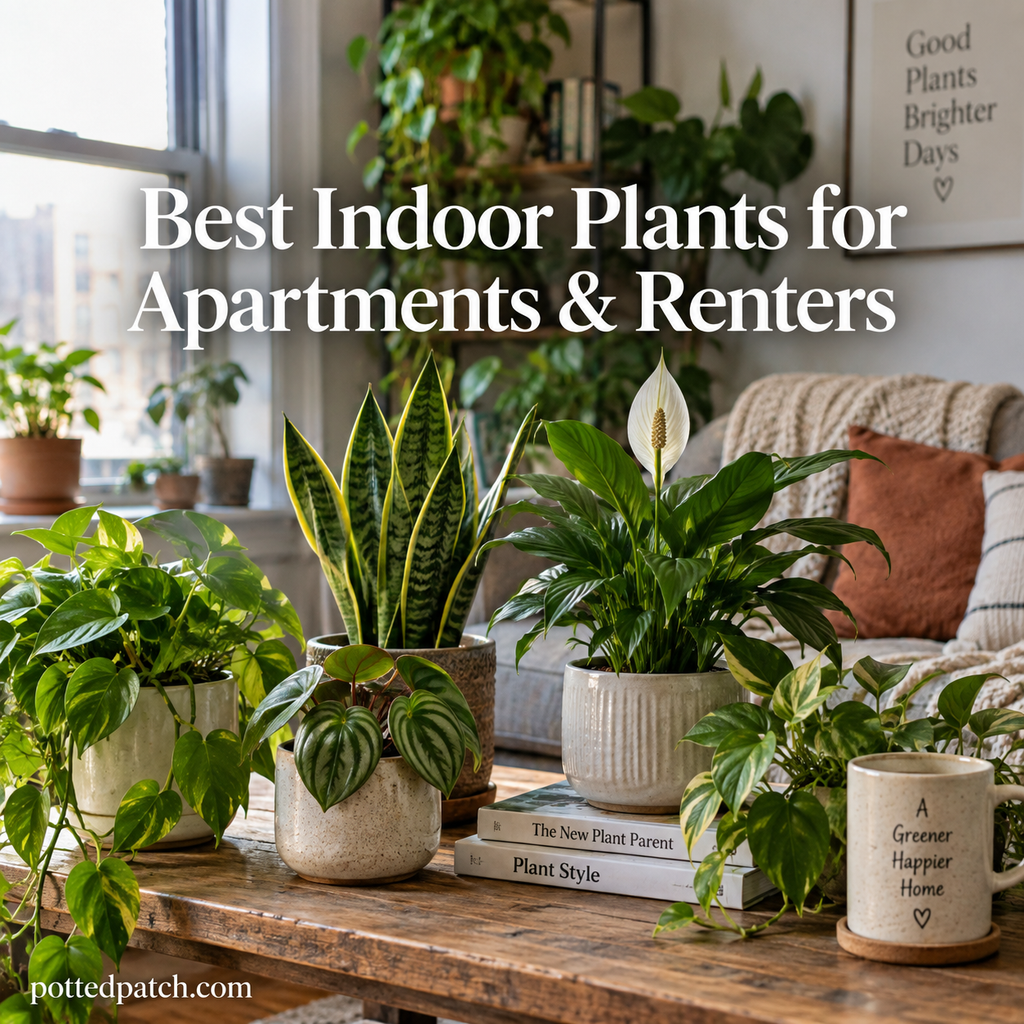
Living in an apartment doesn’t mean you have to give up on having a home filled with plants. In fact, many popular houseplants are especially well suited to apartment living because they stay manageable, tolerate indoor conditions, and don’t require permanent changes to your space.
The trick is choosing plants that match the apartment you actually have—not the bright, oversized living room you might see in a plant catalog.
Limited windows, small rooms, pets, dry indoor air, and rental restrictions can all influence which plants will work best. Fortunately, there are plenty of attractive options for sunny apartments, dim corners, shelves, desks, bedrooms, and even tiny studios.
Here are some of the best indoor plants for apartments and renters, along with practical tips for choosing where to put them and keeping your plant collection manageable.
What Makes a Good Apartment Plant?
The best apartment plants usually have a few things in common. They adapt well to indoor environments and don’t require a greenhouse-like setup to stay healthy.
Look for plants that offer some combination of these qualities:
- Tolerate average indoor temperatures
- Grow well in containers
- Adapt to moderate or lower light
- Stay reasonably compact
- Don’t require constant watering
- Can be moved easily
- Don’t need permanent supports attached to walls
- Recover reasonably well from occasional care mistakes
Your available light is still more important than the size of your apartment. A tiny studio with a large, bright window may actually provide better growing conditions than a spacious apartment with shaded windows.
Before buying a plant, spend a few days noticing how sunlight moves through your home.
1. Pothos
Pothos is one of the easiest plants to incorporate into an apartment because it can grow in many different locations.
Its trailing vines look great on shelves, bookcases, plant stands, and cabinets. You can also let the vines trail naturally rather than attaching them permanently to a rental wall.
Pothos generally prefers bright, indirect light but can tolerate lower-light conditions. Growth may simply become slower or less full when light is limited.
Allow the upper portion of the soil to dry before watering again. Constantly wet soil can lead to root problems.
One thing renters with animals should know: pothos is considered toxic to cats and dogs if ingested, so placement matters in pet-friendly homes.
2. Snake Plant
Snake plants are particularly useful when floor space is limited.
Rather than spreading outward, many varieties produce stiff, upright leaves. That vertical growth makes them easy to position beside furniture, near a desk, or in a narrow corner with adequate light.
Snake plants are also relatively tolerant of inconsistent watering.
Their biggest enemy is often too much attention rather than too little. Letting the potting mix dry substantially between waterings is generally safer than keeping it constantly damp.
While snake plants tolerate relatively low light, brighter indirect light usually supports stronger growth.
3. ZZ Plant
If your apartment doesn’t receive abundant natural light, the ZZ plant deserves consideration.
Its thick stems and glossy leaves give it a polished appearance without requiring complicated care. It also stores water in underground rhizomes, allowing it to handle periods of dry soil.
A ZZ plant can tolerate lower-light locations, although low light shouldn’t be confused with no light. Every houseplant still needs usable light to grow.
Avoid frequent watering, especially in a dim apartment where soil dries slowly.
ZZ plants are also toxic if chewed or eaten, so keep them away from curious pets and young children.
4. Spider Plant
Spider plants are a classic choice for apartments because they’re adaptable, relatively compact, and easy to propagate.
Mature plants produce long arching leaves along with small plantlets that hang from stems. This makes them particularly attractive on:
- Plant stands
- Shelves
- Tall furniture
- Hanging planters
- Window-adjacent tables
Spider plants generally perform best with bright, indirect light, although they can adapt to somewhat lower light.
They also offer renters an inexpensive way to expand a plant collection. The small plantlets can be propagated into separate pots instead of purchasing additional mature plants.
5. Heartleaf Philodendron
Heartleaf philodendron is another excellent trailing plant for smaller homes.
Its heart-shaped leaves and flexible vines work particularly well when you want greenery without sacrificing much floor space.
Place it on a shelf or elevated plant stand and allow the stems to cascade downward. Alternatively, provide a removable trellis inside the container if you prefer upward growth.
Bright, indirect light is ideal, but heartleaf philodendrons can tolerate somewhat lower light levels.
Keep in mind that philodendrons contain calcium oxalate crystals and should be kept away from pets that may chew the foliage.
6. Peperomia
Not every apartment has room for a large statement plant.
Peperomias are useful when you want something much smaller.
There are many varieties with different leaf shapes, colors, and textures, and most fit comfortably on desks, shelves, windowsills, and small tables.
They generally prefer bright, indirect light and should not be left sitting in soggy soil. Their relatively small root systems also mean oversized pots are usually unnecessary.
Peperomia can be especially practical in a studio apartment where every square foot matters.
7. Cast Iron Plant
The cast iron plant has earned its name from its reputation for tolerating less-than-perfect indoor conditions.
Its broad, dark green leaves create a lush appearance, and it can handle lower-light areas better than many common houseplants.
That makes it useful for apartments where the brightest window space is already occupied.
However, tolerance doesn’t mean the plant will thrive in complete darkness. Give it indirect natural light when possible and avoid routinely overwatering it.
8. Chinese Evergreen
Chinese evergreens are another good option for apartments with moderate or relatively low natural light.
Depending on the variety, the foliage may feature shades of green, silver, cream, pink, or red. This gives you plenty of visual interest without needing a flowering plant.
They generally prefer:
- Indirect light
- Warm indoor temperatures
- Moderately moist but well-draining soil
- Protection from cold drafts
More colorful varieties may need brighter indirect light to maintain their coloration.
Chinese evergreen is toxic if ingested, so it isn’t the best choice for every pet household.
9. Parlor Palm
Want something that gives your apartment a more tropical feel without immediately taking over the room?
Consider a parlor palm.
These palms have been grown indoors for generations and adapt relatively well to household environments. Their soft fronds can add height and texture without the heavy visual footprint of some larger tropical plants.
Parlor palms prefer indirect light and generally don’t need intense direct sun.
They are also considered non-toxic to cats and dogs, making them particularly appealing for renters with pets.
10. Prayer Plant
Prayer plants are a nice choice when you want foliage that feels a little more distinctive.
Their patterned leaves can feature combinations of green, red, cream, and darker markings. The leaves also change position between day and night, giving the plant an especially lively appearance.
Prayer plants appreciate bright, indirect light and higher humidity than some of the tougher plants on this list.
That means they may require slightly more attention, particularly in apartments where heating or air conditioning creates very dry air.
They can work well in bathrooms with suitable windows or grouped alongside other humidity-loving plants.
11. Hoya
Hoyas are especially appealing for renters who like trailing plants but don’t want extremely fast growth.
Many hoyas have thick, waxy leaves and can eventually produce clusters of distinctive flowers under good conditions.
Their vines can be allowed to trail from a shelf or trained around a small trellis placed directly inside the pot. The latter approach is useful in rentals because you don’t need to install hooks or permanent wall supports.
Give hoyas plenty of bright, indirect light and avoid keeping their soil constantly wet.
12. African Violet
If you want flowers rather than another green foliage plant, an African violet can provide plenty of color without requiring much space.
Their compact size makes them ideal for:
- Small tables
- Shelves near windows
- Kitchen counters with sufficient light
- Desks
- Plant stands
African violets generally appreciate bright, indirect light and consistent care.
Avoid repeatedly soaking the foliage when watering, and use a container with good drainage.
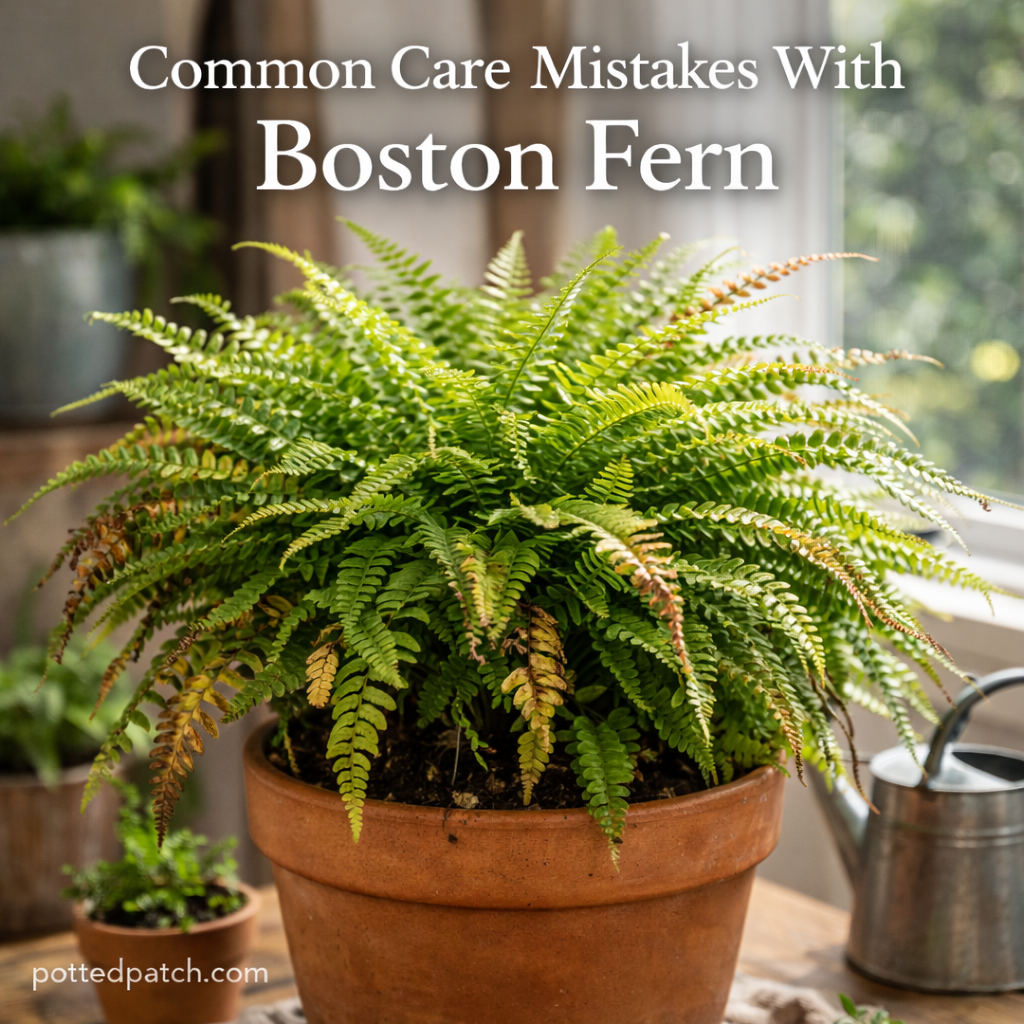
13. Boston Fern
Boston ferns can create an impressive amount of greenery without requiring a huge container.
Their arching fronds make them attractive on stands or in hanging planters, but they aren’t quite as forgiving as snake plants or ZZ plants.
Ferns typically prefer consistently moist soil and higher humidity.
A Boston fern may therefore be better suited to someone who enjoys checking plants regularly rather than a renter looking for the lowest-maintenance option possible.
14. Ponytail Palm
Despite its common name, the ponytail palm isn’t actually a true palm.
Its swollen trunk stores water, while long, narrow leaves emerge from the top and curve downward. The unusual shape gives it plenty of personality without necessarily occupying a large footprint.
Ponytail palms appreciate bright light and should be allowed to dry between waterings.
They can also be slow growers indoors, which is an advantage when you don’t want a plant rapidly outgrowing your apartment.
15. Herbs
Houseplants aren’t your only option.
Renters with a bright kitchen window may want to use some of their limited growing space for herbs.
Depending on your conditions, you might try:
- Basil
- Mint
- Parsley
- Chives
- Thyme
- Rosemary
Herbs generally need more light than low-light foliage plants. A dim kitchen counter several feet from a window usually won’t provide enough natural light.
If your apartment doesn’t receive sufficient sunlight, a small grow light can make an indoor herb setup much more practical.
Best Plants for Low-Light Apartments
“Low light” is one of the most misunderstood terms in houseplant care.
It doesn’t mean a windowless room. It generally describes an area receiving limited indirect natural light where sun-loving plants would struggle.
Some better candidates include:
- ZZ plant
- Snake plant
- Cast iron plant
- Chinese evergreen
- Heartleaf philodendron
- Pothos
Even these plants usually grow better when given brighter indirect light.
If a location is too dark to support plant growth, consider moving the plant closer to a window or adding a grow light rather than searching for a plant that supposedly needs no light.
Best Apartment Plants for Small Spaces
When space is the main problem, think vertically.
Instead of filling your floor with large pots, use compact plants and trailing varieties on existing surfaces.
Good choices include:
- Peperomia
- African violet
- Spider plant
- Pothos
- Heartleaf philodendron
- Hoya
A small plant collection spread across shelves and furniture can make an apartment feel greener without making it feel crowded.
Best Apartment Plants for Pet Owners
Plant selection becomes more important when cats or dogs share your home.
Some popular houseplants can cause irritation or illness when pets chew or ingest them. If your pet regularly investigates plants, choosing non-toxic species is safer than relying entirely on placement.
Common pet-friendlier choices include:
- Parlor palm
- Spider plant
- Prayer plant
- Many peperomia species
- Boston fern
- African violet
Always verify the exact species before bringing a new plant home. Common names can be confusing, and toxicity can differ between plants that look similar.
How to Choose the Right Location
A beautiful empty corner isn’t automatically a good place for a plant.
Start with light.
Stand where you plan to put the plant and look toward the nearest window. Consider the direction the window faces, whether nearby buildings block sunlight, and how far the plant will sit from the glass.
Light intensity drops significantly as you move farther into a room.
Also consider temperature. Avoid placing sensitive plants directly against heating vents, air conditioners, radiators, or frequently opened exterior doors.
Once you’ve found a suitable growing location, you can choose a plant that fits it rather than buying a plant first and trying to force it into an unsuitable spot.
Use Your Windows Without Overcrowding Them
Windows are valuable real estate in an apartment.
You don’t need to cover every windowsill with pots.
Instead, think of the entire area around a window as a growing zone. Depending on the light, plants might be positioned on:
- A narrow plant stand
- A side table
- A bookshelf
- A freestanding shelving unit
- A removable hanging system
- Furniture already positioned near the window
This creates layers of greenery while keeping the window functional.
Be careful with plants pressed directly against glass. Temperatures near windows can become surprisingly hot in summer and cold during winter.
Apartment-Friendly Plant Displays
Renters often want creative plant displays without drilling holes or making permanent changes.
Freestanding solutions are usually the easiest.
Try a narrow plant ladder, bookshelf, tiered stand, rolling plant cart, or tension-based system appropriate for your space.
For climbing plants, put the support inside the pot whenever possible. Small trellises, hoops, and moss poles can give vines something to climb without attaching them to the wall.
This also makes moving much easier.
Don’t Underestimate Plant Weight
A small nursery pot may not weigh much, but large houseplants are different.
Once you combine a ceramic planter, wet potting mix, and a mature plant, the total weight can become substantial.
Be particularly careful with:
- Floating shelves
- Wall-mounted planters
- Older furniture
- Window ledges
- Hanging systems
When you’re renting, a sturdy freestanding plant stand is often a simpler solution.
Protect Rental Floors and Furniture
Water damage is one of the easiest ways for an innocent plant hobby to become a rental headache.
A drainage hole is good for the plant—but the water coming through that hole needs somewhere to go.
Use saucers or cachepots to catch excess water, and empty standing water after watering.
For larger plants, consider putting a waterproof barrier or plant mat beneath the pot, especially on wood or laminate flooring.
Periodically check underneath pots as well. Moisture can become trapped where you don’t notice it.
Be Careful With Humidity
Many tropical houseplants appreciate elevated humidity, but that doesn’t mean you should turn your apartment into a rainforest.
Constantly wet windows, walls, or floors can encourage mold and other moisture problems.
Instead of trying to raise the humidity of an entire room dramatically, focus on choosing plants that already tolerate normal household conditions.
If you do use a humidifier, monitor the area around it and maintain good airflow.
Should Apartment Renters Use Grow Lights?
Grow lights can dramatically expand your options if natural light is limited.
They are particularly useful for:
- Dark apartments
- North-facing rooms
- Herbs
- Propagation stations
- Plant shelves
- Apartments shaded by neighboring buildings
- Keeping plants farther from windows
You don’t necessarily need a huge commercial-looking setup.
Compact LED grow lights, freestanding lamps, and shelf-mounted fixtures can blend reasonably well into a living space. Choose a light designed for plant growth and follow its recommended distance and operating time.
A simple timer can make daily use much easier.
Avoid Buying Too Many Plants at Once
It’s surprisingly easy to go from “I want one plant for my desk” to having 20 plants scattered around an apartment.
Start slowly.
A smaller collection lets you learn how quickly soil dries in your home, which windows provide useful light, and which plants fit your routine.
This matters because two apartments in the same building can provide very different growing environments.
After you’ve successfully cared for a few plants, you’ll have a much better idea of what to add next.
Think About Moving Day Before Buying Huge Plants
Renters eventually move.
That enormous bird of paradise might look fantastic beside your sofa now, but imagine carrying it down three flights of stairs two years from now.
Large plants can absolutely work in apartments, but consider portability before investing in oversized specimens and extremely heavy decorative pots.
Lightweight nursery pots placed inside attractive cachepots are particularly renter-friendly. When moving day arrives, you can separate the plant from the decorative container and transport both more easily.
A Simple Apartment Plant Setup for Beginners
You don’t need ten different species to create an attractive indoor garden.
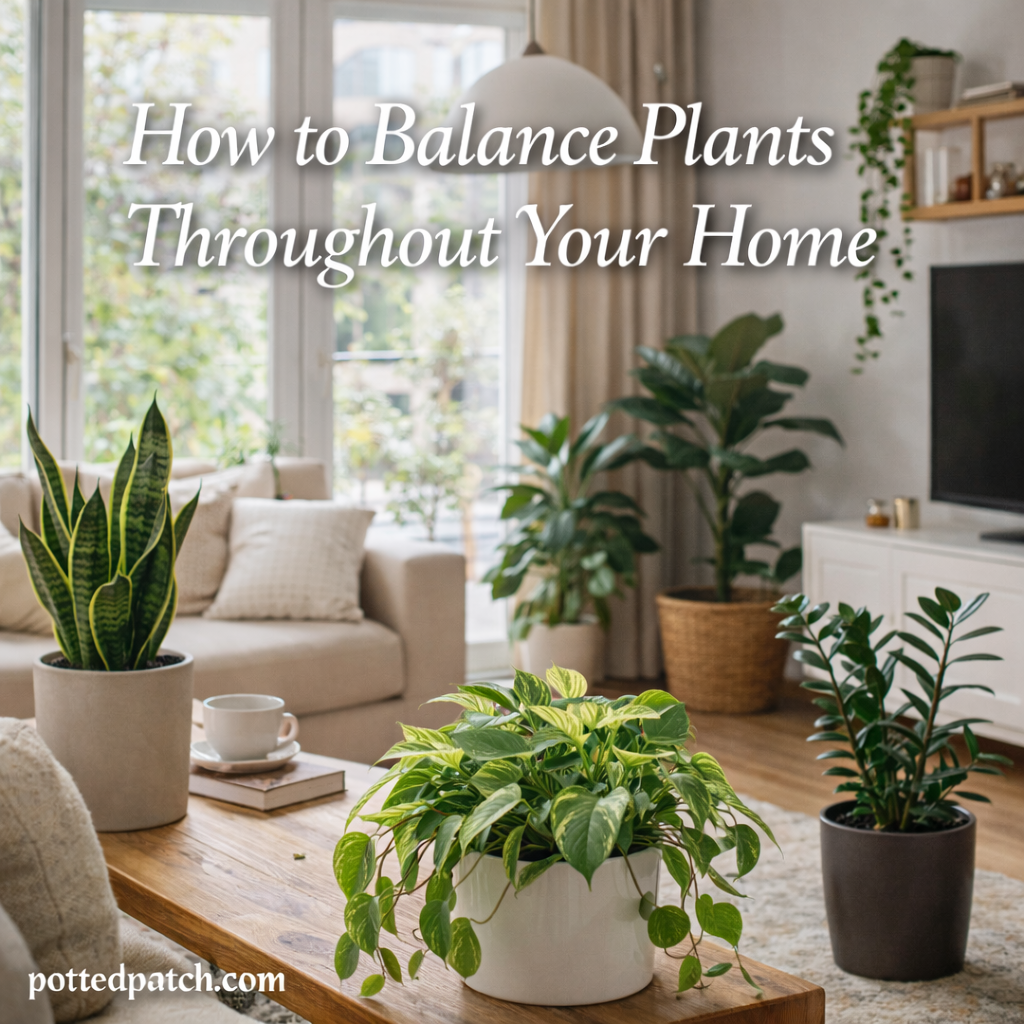
A simple three-plant setup might include:
- A snake plant for vertical structure.
- A pothos or heartleaf philodendron for trailing growth.
- A peperomia or African violet for a table or shelf.
Choose the exact plants based on the light available in your apartment.
This combination gives you different shapes and growing habits without immediately turning plant care into a second job.
Common Apartment Plant Mistakes
Apartment growing comes with a few recurring problems.
Choosing Plants Based Only on Appearance
That beautiful plant at the garden center may require much brighter light than your apartment provides.
Check its needs before buying it.
Overwatering Low-Light Plants
Plants generally use water more slowly under lower-light conditions.
Watering on a rigid weekly schedule can therefore keep the soil wet for too long.
Check the soil first rather than automatically reaching for the watering can.
Putting Plants in Dark Corners
A plant may look perfect across the room from your window, but aesthetics don’t change its biological needs.
If natural light doesn’t reach the area adequately, use supplemental lighting or choose another location.
Using Pots Without Drainage
Decorative containers can hide drainage problems.
One renter-friendly solution is to keep the plant in a plastic nursery pot with drainage holes and place that pot inside a decorative cachepot.
Remove it when watering, let excess water drain, and then return it to the outer pot.
Ignoring Pests
Small apartments put plants relatively close together, which can allow pests to spread quickly.
Inspect new plants before adding them to your collection and periodically check existing plants, especially the undersides of leaves and areas where leaves meet stems.
Frequently Asked Questions
What is the easiest indoor plant for an apartment?
Snake plants, pothos, and ZZ plants are among the most forgiving choices for many beginners. The easiest plant for your apartment ultimately depends on your available light and watering habits.
What plants are good for apartments with little sunlight?
ZZ plants, snake plants, cast iron plants, Chinese evergreens, pothos, and heartleaf philodendrons can tolerate lower-light conditions. However, no houseplant can live indefinitely without adequate light.
How many plants should I have in a small apartment?
There is no ideal number. Start with a few plants that suit your available growing spaces and add more only after you understand their care requirements. Three healthy plants usually look better than fifteen struggling ones.
Can I keep plants in an apartment without drilling holes?
Absolutely. Use plant stands, shelves, tables, tension systems, freestanding racks, or trellises placed directly inside pots. There are plenty of ways to display plants without attaching anything permanently to the walls.
Can indoor plants damage a rental?
Plants themselves generally aren’t the problem. Water leaking from pots, trapped moisture, oversized hanging systems, and climbing plants attached directly to walls can potentially cause damage. Use saucers, protect surfaces, and favor removable or freestanding displays.
Are grow lights worth it in an apartment?
They can be very useful, especially if your apartment has limited natural light. Grow lights can also let you place plants on shelves or in areas that would otherwise be too dark.
Final Thoughts
The best indoor plants for apartments and renters aren’t necessarily the smallest or toughest plants. They’re the ones that match your home’s actual conditions.
Start by evaluating your light, available space, temperature, pets, and how much plant care you realistically want to do. Then choose plants that fit those conditions.
For many renters, adaptable choices such as pothos, snake plants, ZZ plants, peperomias, spider plants, and parlor palms are excellent places to start.
And remember that you don’t need a huge apartment—or a huge plant collection—to create a greener home. A few well-placed, healthy plants can completely change the feel of a room while still keeping your rental practical, comfortable, and easy to maintain.