Indoor Plant Care Routines for Beginners

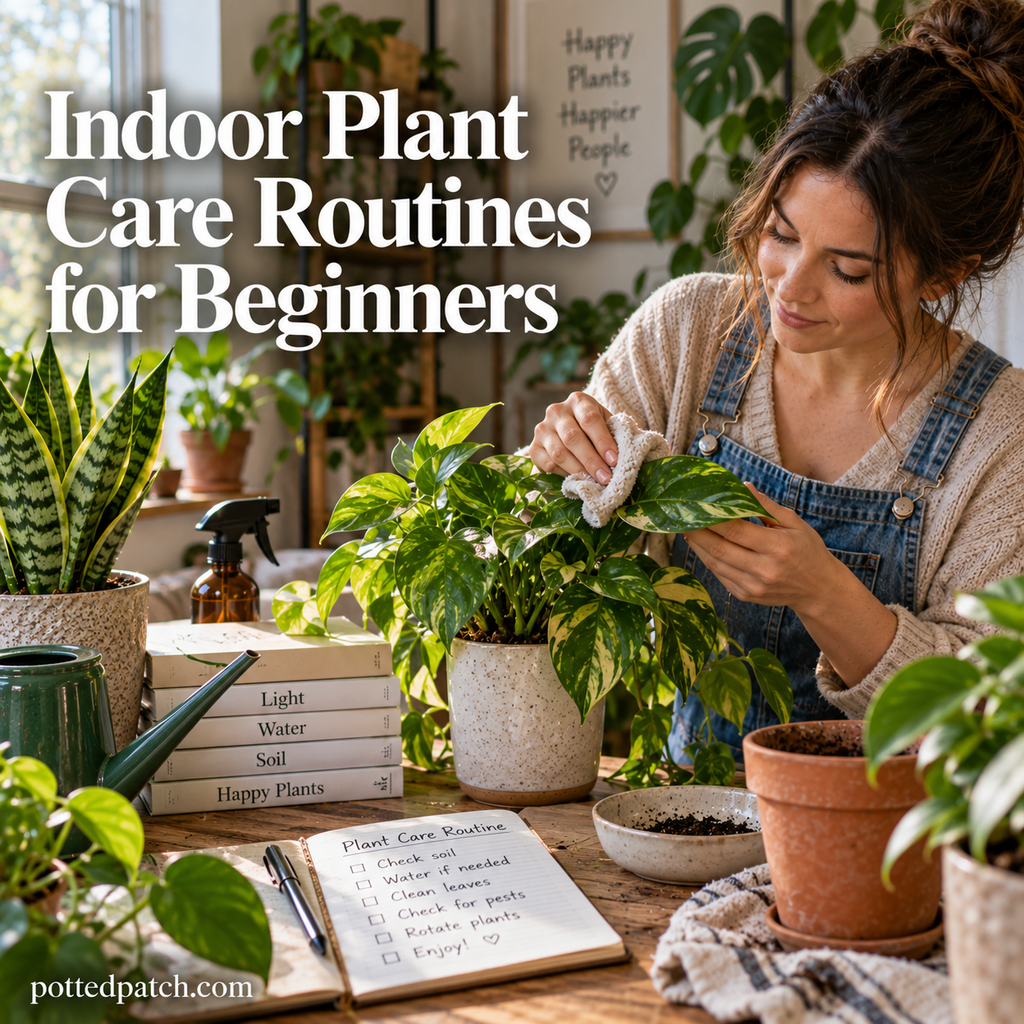
Woman following a beginner indoor plant care routine by cleaning houseplant leaves in a bright home.
A simple indoor plant care routine makes it easier to stay on top of watering, leaf cleaning, pest checks, and other basic maintenance.

Bringing home your first few houseplants is exciting. Then the questions start.

Should you water them every week? How often should you fertilize? Do the leaves need cleaning? When should you repot? And how can you tell whether a plant is actually healthy?

The good news is that indoor plant care doesn’t need to become a complicated daily routine. In fact, checking plants too often—and reacting to every slightly yellow leaf—can sometimes create more problems than simply giving them consistent conditions and letting them grow.

For beginners, the easiest approach is to develop a simple plant care routine built around observation rather than a rigid schedule.

Instead of deciding that every plant gets watered every Sunday, for example, make Sunday your plant-checking day. Some plants may need water. Others won’t.

This guide walks through a practical daily, weekly, monthly, and seasonal indoor plant care routine that beginners can realistically maintain.

Continue reading “Indoor Plant Care Routines for Beginners”

Low-Maintenance Indoor Plants: The Complete Guide

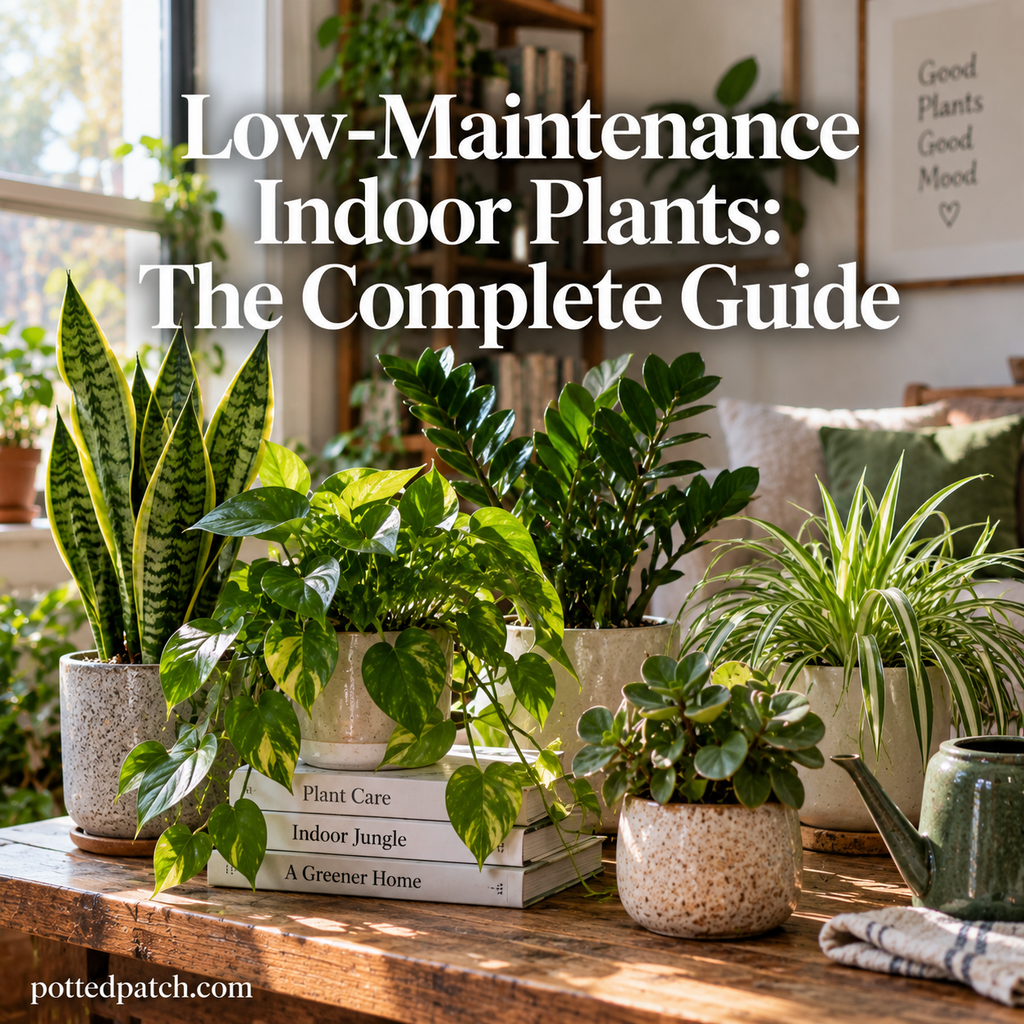
Low-maintenance indoor plants including snake plant, pothos, ZZ plant, and spider plant in a bright home.
Low-maintenance houseplants such as snake plants, pothos, ZZ plants, and spider plants bring easy-care greenery into the home.

Indoor plants can make a home feel warmer, greener, and more inviting. But not everyone wants a collection that needs constant watering, misting, pruning, and troubleshooting.

That’s where low-maintenance indoor plants come in.

These plants tend to tolerate ordinary household conditions, occasional missed waterings, and less-than-perfect care better than more demanding species. They’re especially useful if you’re new to houseplants, travel frequently, have a busy schedule, or simply want greenery without turning plant care into another daily chore.

Low-maintenance doesn’t mean maintenance-free, though. Every plant still needs appropriate light, water, soil, and a suitable container.

The good news is that once you understand a few basic principles, keeping easy-care houseplants healthy can be surprisingly simple.

This guide covers some of the best low-maintenance indoor plants, how to choose the right ones for your home, and the common mistakes that can turn an “easy” plant into a struggling one.

Continue reading “Low-Maintenance Indoor Plants: The Complete Guide”

Best Indoor Plants for Apartments & Renters

Best indoor plants for apartments and renters arranged in a bright, cozy apartment living room.
Apartment-friendly houseplants can add greenery without taking up too much space or requiring permanent changes.

Living in an apartment doesn’t mean you have to give up on having a home filled with plants. In fact, many popular houseplants are especially well suited to apartment living because they stay manageable, tolerate indoor conditions, and don’t require permanent changes to your space.

The trick is choosing plants that match the apartment you actually have—not the bright, oversized living room you might see in a plant catalog.

Limited windows, small rooms, pets, dry indoor air, and rental restrictions can all influence which plants will work best. Fortunately, there are plenty of attractive options for sunny apartments, dim corners, shelves, desks, bedrooms, and even tiny studios.

Here are some of the best indoor plants for apartments and renters, along with practical tips for choosing where to put them and keeping your plant collection manageable.

Continue reading “Best Indoor Plants for Apartments & Renters”

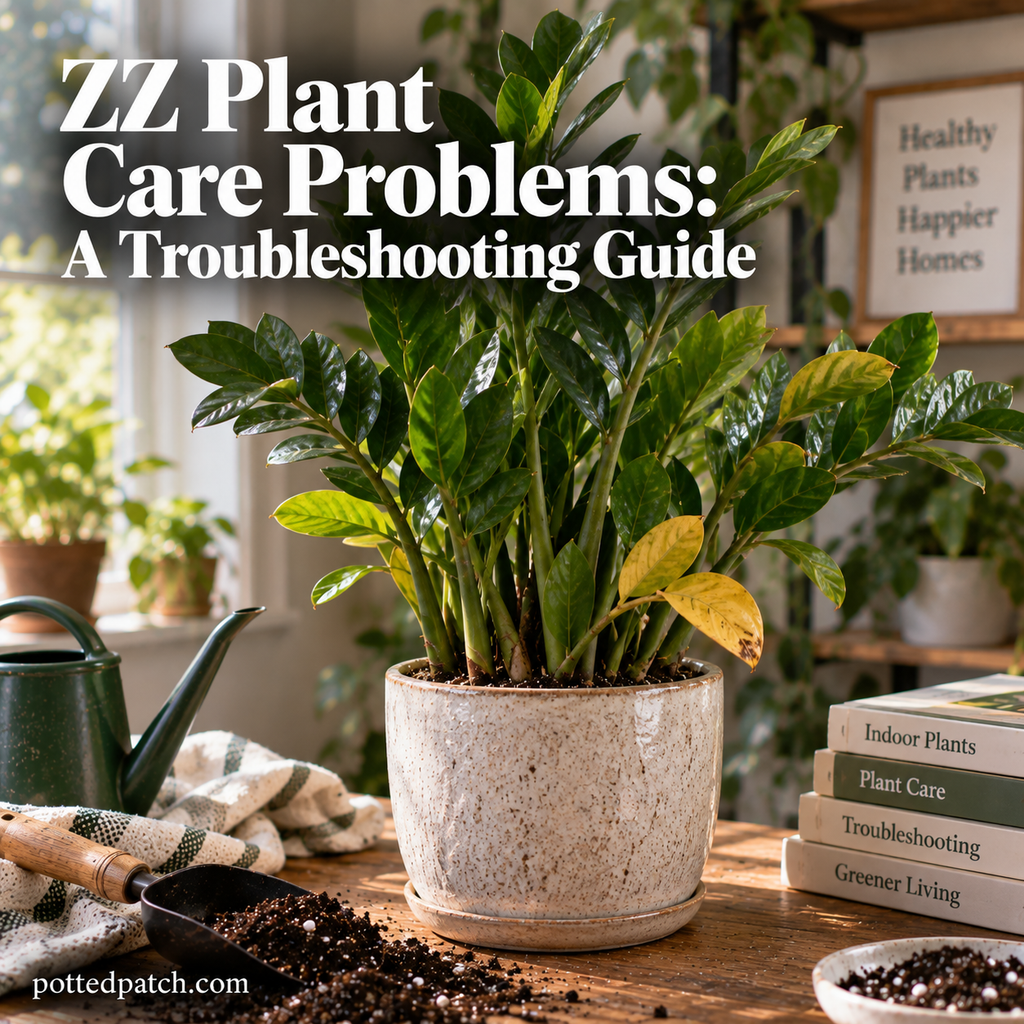
ZZ Plant Care Problems: A Troubleshooting Guide

ZZ plant with yellowing and damaged leaves showing common care problems

ZZ plants have a reputation for surviving conditions that would frustrate many other houseplants. They tolerate missed waterings, adapt to lower-light rooms, and generally don’t demand much attention.

That toughness can also make their problems easy to misunderstand.

A ZZ plant may look fine for weeks while something is going wrong below the soil. By the time stems begin yellowing, leaves start dropping, or the base of the plant becomes soft, the issue may have been developing for a while.

Overwatering is a common concern, but it isn’t the explanation for every yellow leaf or drooping stem. Light, drainage, root health, temperature, pests, and normal aging can all affect how a ZZ plant looks.

The best way to troubleshoot one is to slow down and gather a few clues before changing its care.

Here’s how to identify common ZZ plant problems and what you can do about them.

Continue reading “ZZ Plant Care Problems: A Troubleshooting Guide”

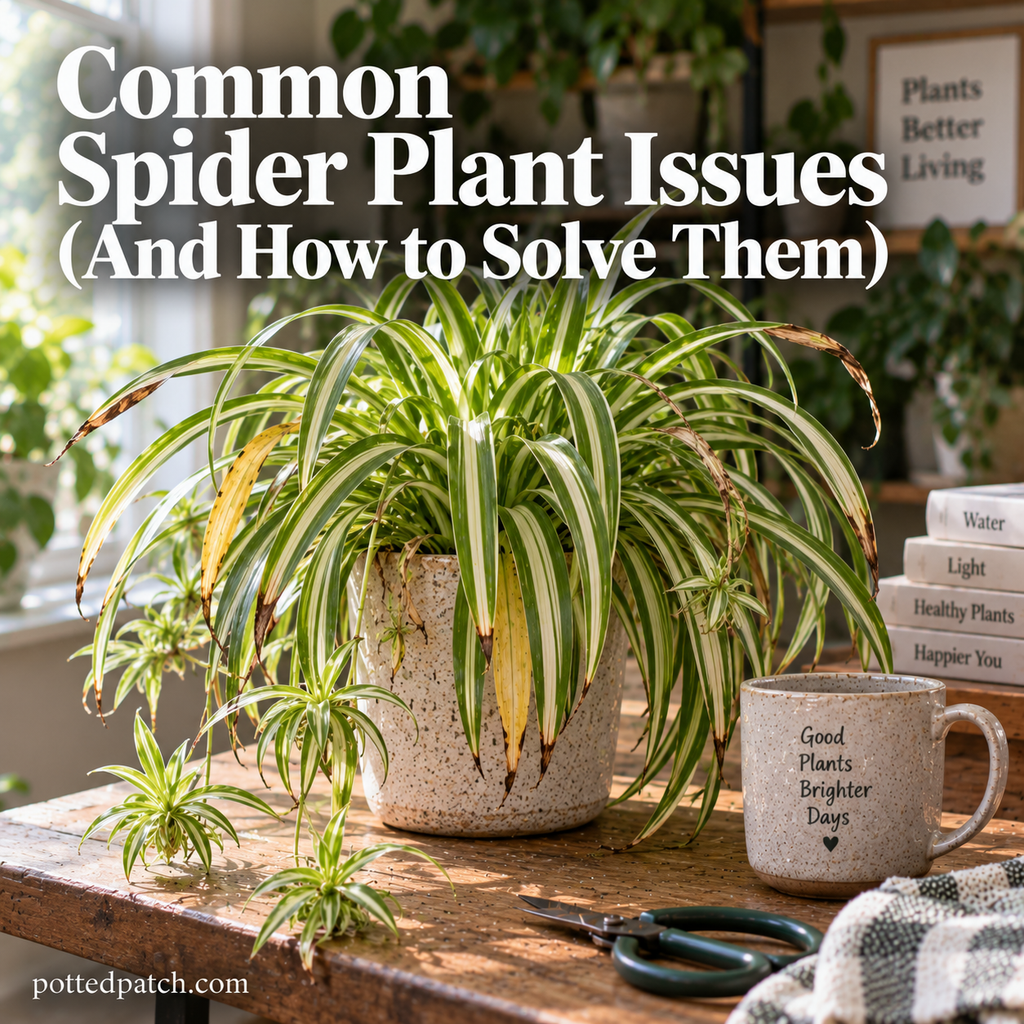
Common Spider Plant Issues (And How to Solve Them)

Spider plant with brown tips and yellow leaves showing common plant problems
Brown tips, yellow leaves, drooping foliage, and weak growth can provide useful clues when troubleshooting spider plant problems.

Spider plants are often recommended as beginner-friendly houseplants, and for good reason. They’re adaptable, grow relatively quickly in the right conditions, and mature plants can produce plenty of cascading spiderettes.

But spider plants aren’t completely trouble-free.

Brown tips are probably the complaint you’ll see most often, but yellow leaves, pale foliage, curling, drooping, root problems, pests, and a lack of spider plant babies can all happen too.

The difficult part is figuring out what’s actually causing the problem.

A brown leaf tip, for example, doesn’t automatically mean your home is too dry. Yellow leaves don’t always mean you’ve overwatered. And a spider plant that isn’t producing babies may simply need more time.

Before making major changes, look at the entire plant and its growing conditions.

Here’s how to diagnose common spider plant problems and get your plant moving in the right direction again.

Continue reading “Common Spider Plant Issues (And How to Solve Them)”

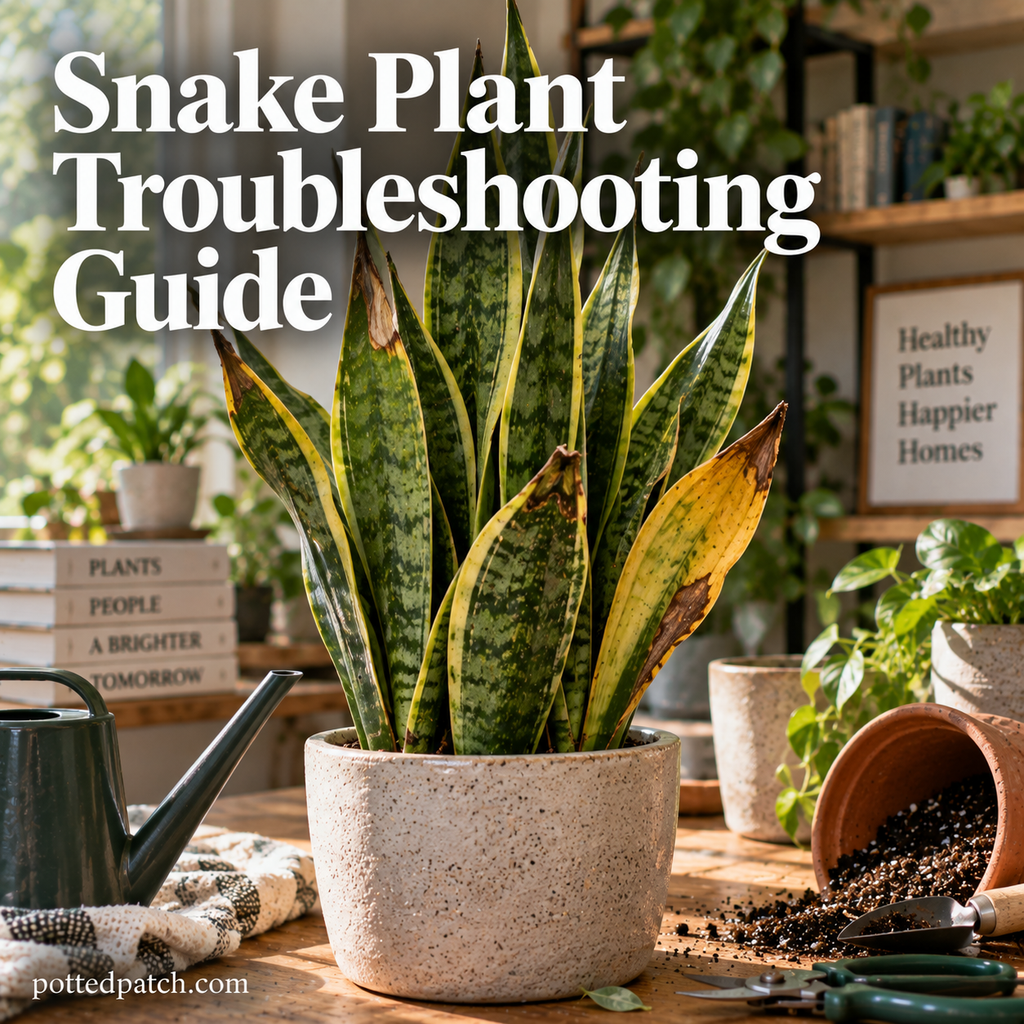
Snake Plant Troubleshooting Guide

Snake plant with yellow leaves and brown tips showing common plant problems
Yellow leaves, brown tips, drooping, and soft foliage can provide useful clues when troubleshooting a struggling snake plant.

Snake plants have a reputation for being nearly indestructible. They tolerate missed waterings, handle ordinary household humidity, and can adapt to less-than-perfect lighting.

But “low maintenance” doesn’t mean “no maintenance.”

A snake plant can still develop yellow leaves, brown tips, curling foliage, soft stems, root rot, pest problems, or frustratingly slow growth. And because several of these symptoms can have more than one cause, fixing the plant isn’t always as simple as watering it more—or less.

The best approach is to look at the entire growing environment.

Check the soil. Think about when you last watered. Look at the roots when necessary. Consider the amount of light the plant receives and whether anything recently changed.

This troubleshooting guide covers the most common snake plant problems, what may be causing them, and practical steps you can take to help your plant recover.

Continue reading “Snake Plant Troubleshooting Guide”

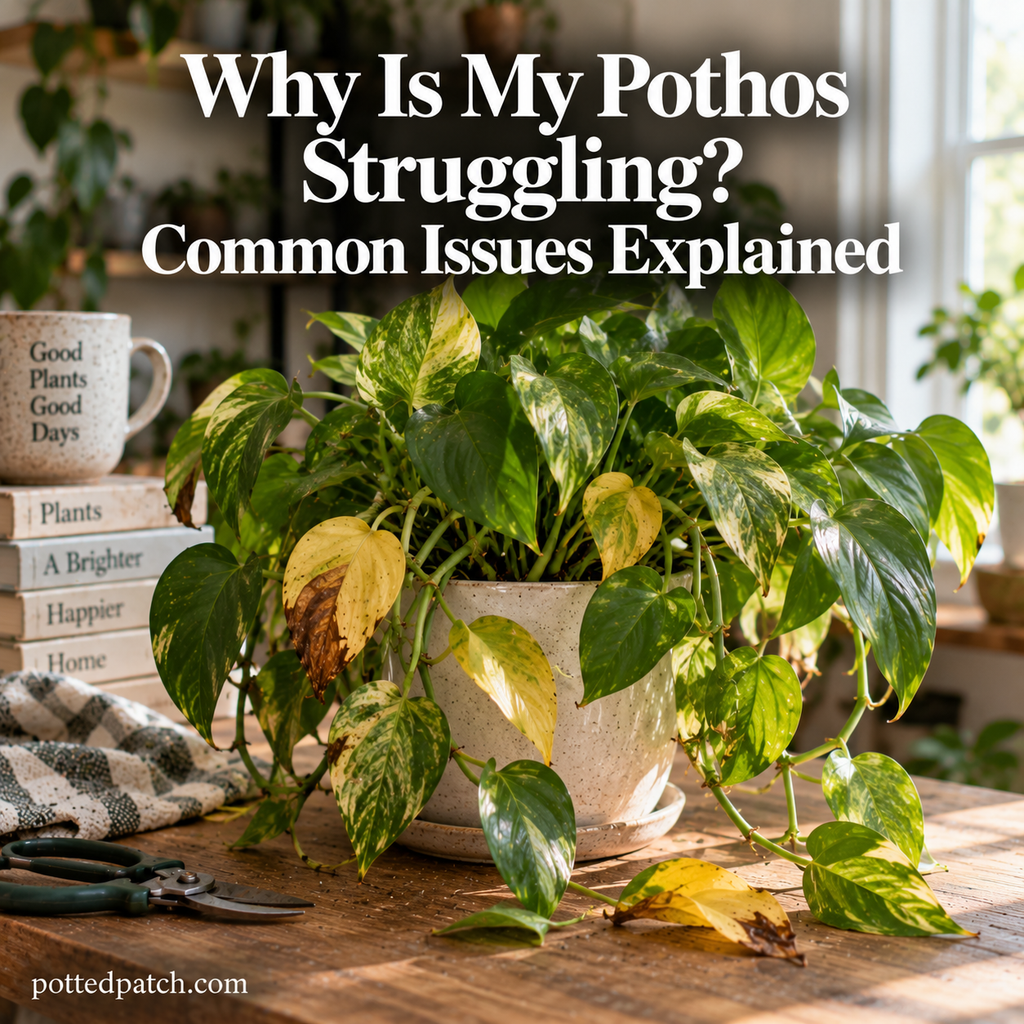
Why Is My Pothos Struggling? Common Issues Explained

Struggling pothos plant with yellow leaves, brown tips, and damaged foliage indoors
Yellow leaves, brown patches, drooping vines, and declining growth can help reveal what’s causing a pothos to struggle.

Pothos has a well-earned reputation for being one of the easier houseplants to grow. It tolerates missed waterings, adapts to a range of indoor conditions, and can continue growing even when its care isn’t perfect.

So when a pothos suddenly starts turning yellow, drooping, developing brown patches, or dropping leaves, it can be confusing.

The biggest challenge is that many pothos problems look similar. A drooping plant may be thirsty, but damaged roots caused by consistently wet soil can produce a similar appearance. Yellow leaves might point to overwatering, insufficient light, root trouble, or simply an older leaf reaching the end of its life.

Instead of treating one symptom in isolation, look at the whole plant.

This guide covers the most common pothos problems, what may be causing them, and practical ways to help your plant recover.

Continue reading “Why Is My Pothos Struggling? Common Issues Explained”

Peace Lily Common Problems and Fixes

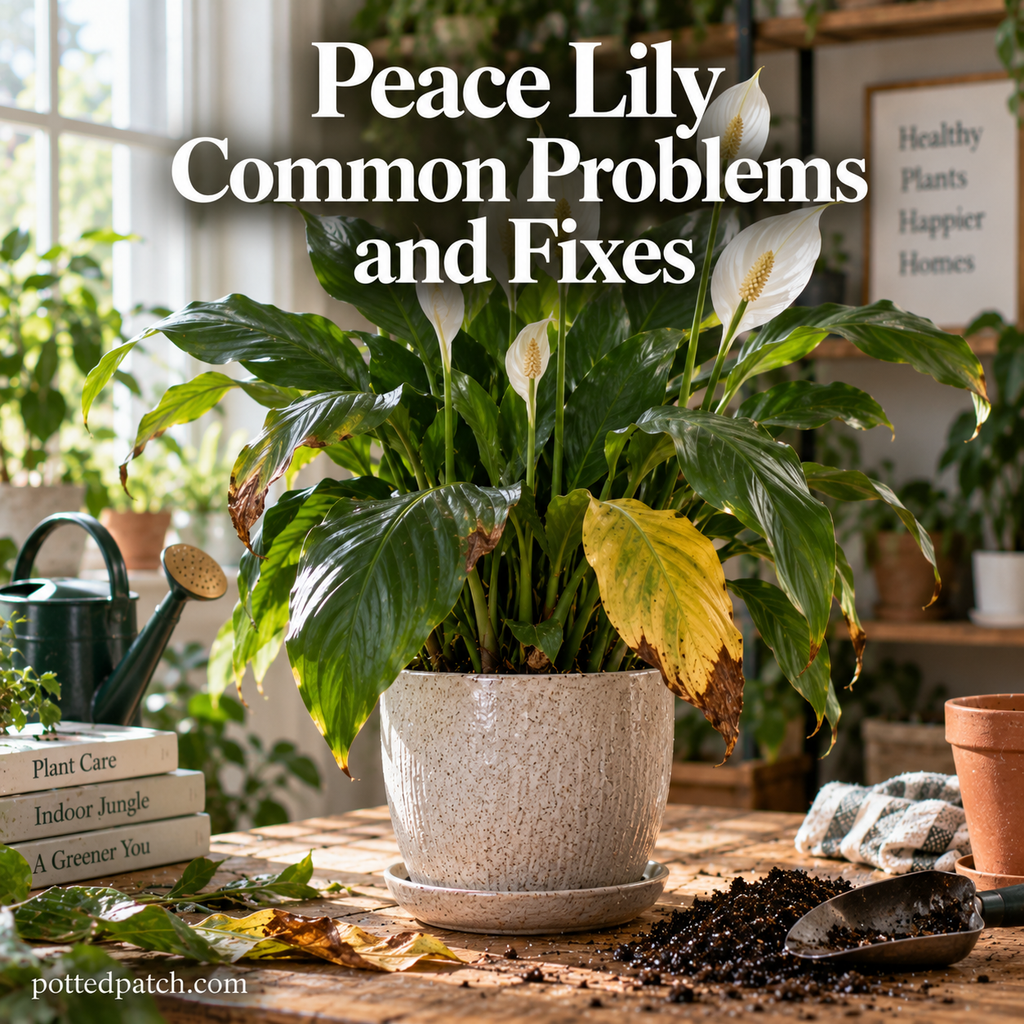
Peace lily with yellow leaves and brown tips showing common indoor plant problems
Yellow leaves, brown tips, drooping, and damaged foliage can provide useful clues when diagnosing common peace lily problems.

Peace lilies are often described as easy houseplants, but they can also be surprisingly expressive when something isn’t right. One day the plant looks perfectly healthy, and the next its leaves are hanging dramatically over the edge of the pot.

Fortunately, a drooping peace lily isn’t always a disaster.

Many common peace lily problems can be corrected once you figure out what’s happening around the roots. Watering, drainage, light, temperature, and soil conditions all play a role, and several different problems can produce very similar symptoms.

The key is to diagnose before you treat.

If your peace lily has yellow leaves, brown tips, black spots, drooping foliage, or refuses to flower, this guide will help you narrow down the likely cause and decide what to do next.

Continue reading “Peace Lily Common Problems and Fixes”

Monstera Problems: Common Issues & How to Fix Them

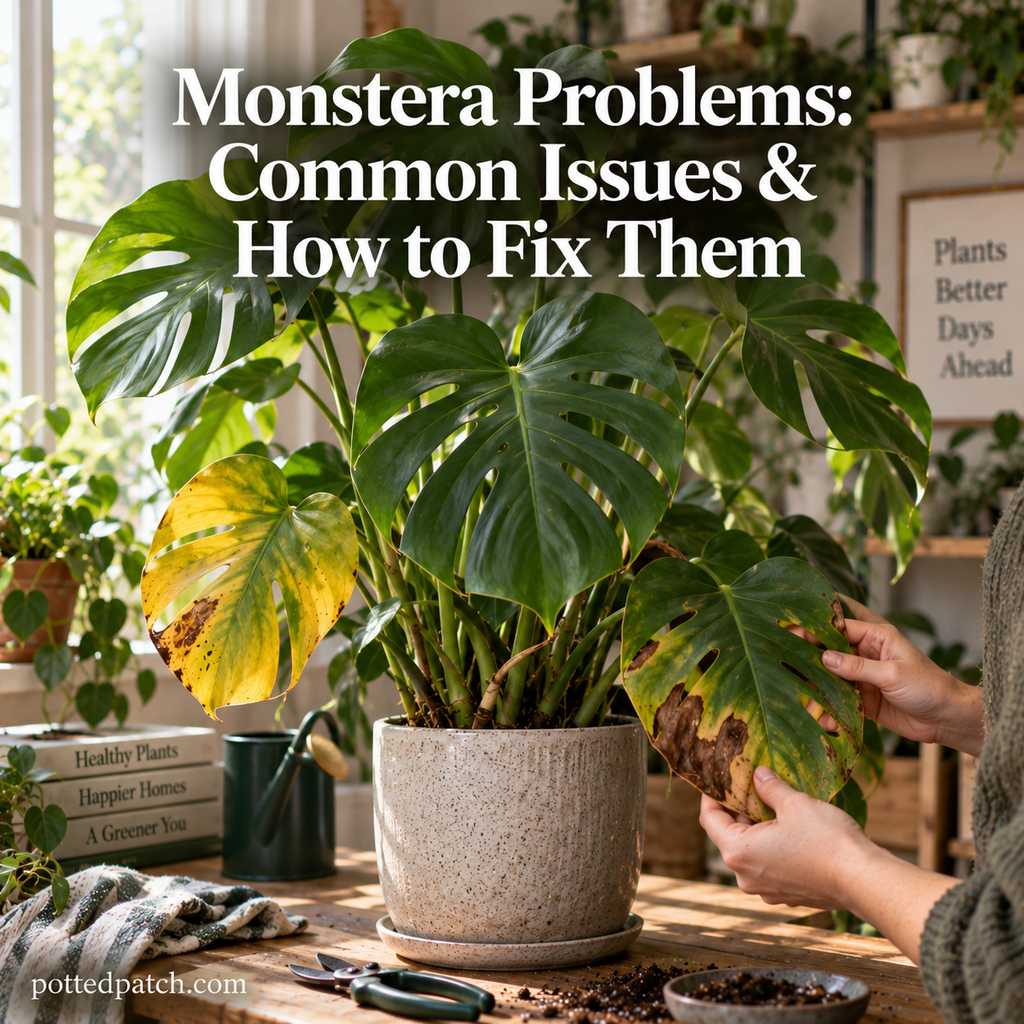
Monstera plant with yellow leaves and brown spots being inspected for common plant problems
Yellowing, brown spots, and damaged Monstera leaves can point to watering, root, light, or environmental problems that need closer inspection.

Monsteras are fairly forgiving houseplants, but even a healthy plant can occasionally develop yellow leaves, brown spots, curling foliage, drooping stems, or a stubborn lack of new growth.

The tricky part is that many Monstera problems look alike.

A drooping plant might need water, for example, but it can also droop when its roots have stayed wet for too long. Yellow leaves can point to overwatering, poor drainage, insufficient light, root trouble, or simply an older leaf reaching the end of its life.

Instead of treating a symptom immediately, look at the whole plant. Check the soil, roots, light, recent watering, and any environmental changes.

This guide walks through the most common Monstera problems, what may be causing them, and the practical steps you can take to help your plant recover.

Continue reading “Monstera Problems: Common Issues & How to Fix Them”

Growing & Caring for a Spider Plant: The Complete Guide

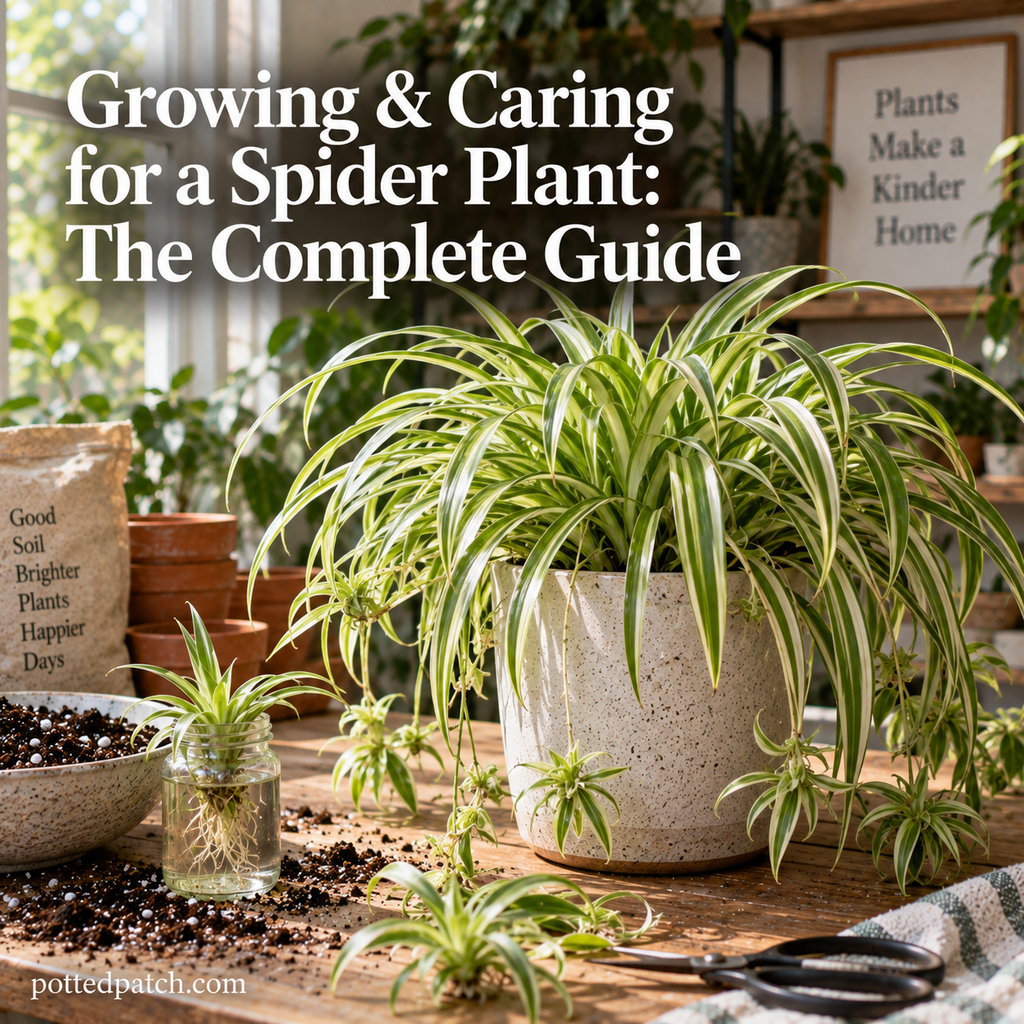
Healthy spider plant with cascading spiderettes growing indoors in bright natural light
A healthy spider plant can produce cascading spiderettes when given bright indirect light, proper watering, and suitable growing conditions.

Spider plants are the kind of houseplant that can make almost anyone feel successful. They grow quickly under the right conditions, tolerate the occasional missed watering, and produce cascading plantlets that can turn one plant into an entire collection.

They’re forgiving, but they’re not completely maintenance-free.

Brown leaf tips, pale foliage, soggy soil, and a plant that refuses to produce spiderettes are all common frustrations. Fortunately, most spider plant problems can be traced back to a handful of things: light, watering, soil, root health, or the plant’s growing environment.

Whether you’ve just brought home your first spider plant or you’re trying to revive an older one, this complete guide covers what you need to know about growing and caring for spider plants indoors.

Continue reading “Growing & Caring for a Spider Plant: The Complete Guide”