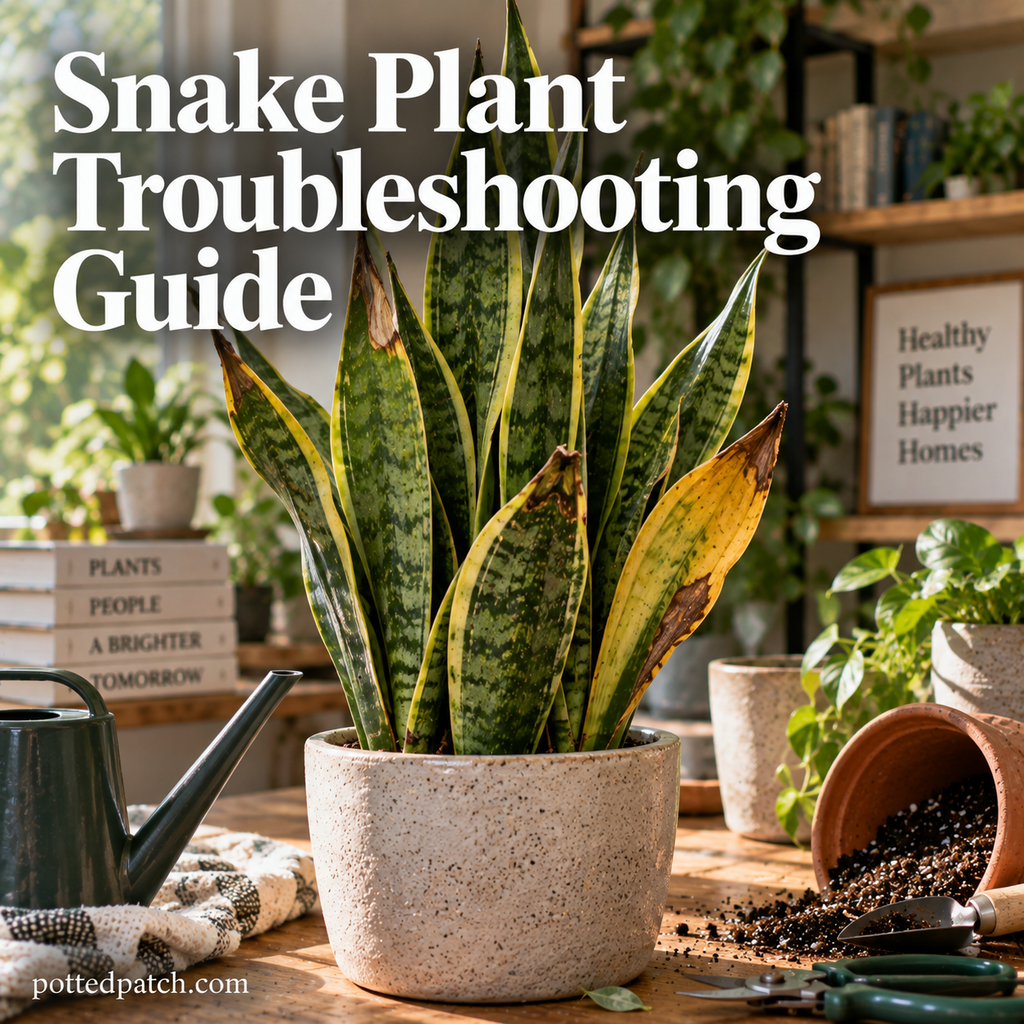
Snake Plant symptoms can be misleading: drooping or curling can happen when the plant is extremely dry, but similar symptoms can appear when wet, damaged roots can no longer function properly. This guide uses the clues I would check first—soil moisture, drying time, leaf-base firmness, roots and rhizomes, damage pattern, and new growth—to narrow down the actual problem before trying to fix it.
Start With the Whole Snake Plant
Before treating an individual leaf, check the plant as a system.
I would start with five questions:
- Is the soil currently wet, slightly moist, or completely dry?
- How long has it been in that condition?
- Is the damage limited to one older leaf or spreading through several?
- Are the leaf bases, roots, and rhizomes firm?
- Has anything recently changed—watering, light, temperature, location, or repotting?
This matters especially with Snake Plants because their thick leaves and underground rhizomes store water. A plant can look dehydrated above the soil while damaged roots below the soil are sitting in moisture.
Also check decorative containers. Water trapped around a nursery pot can keep the root zone wet even when the visible soil surface looks relatively dry.
For normal watering, light, soil, and container setup, use the Snake Plant Care Made Simple guide.
Yellow Leaves on a Snake Plant
Yellowing isn’t a diagnosis by itself.
The first distinction I would make is between one aging outer leaf and several leaves changing at approximately the same time.
Several Yellow Leaves With Wet Soil
This combination deserves attention.
Don’t automatically water again. Check:
- how long the soil has remained wet;
- whether the container drains;
- whether water is trapped inside a cachepot;
- whether the soil is dense;
- whether the pot is oversized;
- whether the plant receives enough light; and
- whether roots or rhizomes are deteriorating.
Yellowing combined with soft leaf bases, persistently wet soil, or an unpleasant smell makes the underground tissue especially important to inspect.
One Older Yellow Leaf
One older outer leaf gradually yellowing while the rest of the plant remains firm isn’t the same situation.
Leaves eventually age.
I wouldn’t overhaul the plant’s care because of one declining older leaf if the roots are healthy and the rest of the plant is stable.
The pattern and speed of change are more useful than the color alone.
Drooping Snake Plant Leaves
Healthy Snake Plant foliage is usually relatively rigid, so noticeable loss of firmness is worth investigating.
But don’t diagnose thirst from drooping alone.
Drooping With Very Dry Soil
If the potting mix has been completely dry for an extended period and otherwise healthy leaves are losing firmness, dehydration becomes a reasonable possibility.
Water thoroughly enough to moisten the root zone, allow excess water to drain, and then return to an appropriate drying cycle.
Don’t compensate by keeping the soil constantly damp afterward.
Drooping With Wet Soil
I would treat this very differently.
If the soil remains wet and the leaves continue losing rigidity, adding more water can make the underlying problem worse.
Check the roots and rhizomes, particularly when drooping occurs alongside yellowing or soft tissue near the soil line.
One Leaf Falling Sideways
Look closely at the base.
A firm leaf that has bent or creased may simply be physically damaged.
A leaf collapsing from a soft, mushy base is much more concerning.
Wilting Snake Plants
Wilting overlaps with drooping, but I use it here to describe a broader loss of firmness rather than one tall leaf leaning or bending.
The soil condition again changes the diagnosis.
Wilting + extremely dry soil: investigate prolonged dehydration.
Wilting + wet soil: investigate root or rhizome health.
Wilting + a recent environmental change: consider whether the plant was recently repotted, moved, chilled, or exposed to dramatically different light.
One of the easiest troubleshooting mistakes is seeing wilted foliage and immediately adding water.
Check below the surface first.
For a broader symptom-first approach that applies across houseplants, see the Complete Guide to Indoor Plant Problems.
Soft Stems and Leaf Bases
With Snake Plants, softness near the soil line is one of the symptoms I would take more seriously than a cosmetic brown tip.
Healthy leaf bases and rhizomes should feel firm.
Warning signs include:
- a soft or mushy leaf base;
- yellowing around the affected growth;
- brown or black deteriorating tissue;
- wet soil that isn’t drying;
- an unpleasant smell; and
- soft rhizomes below the soil.
If a leaf is becoming mushy where it enters the soil, waiting for the surface to dry may not be enough.
Remove the plant from its container and inspect what is happening underneath.
That distinction—firm versus soft—is often more useful than trying to diagnose the plant by color.
Root Rot in Snake Plants
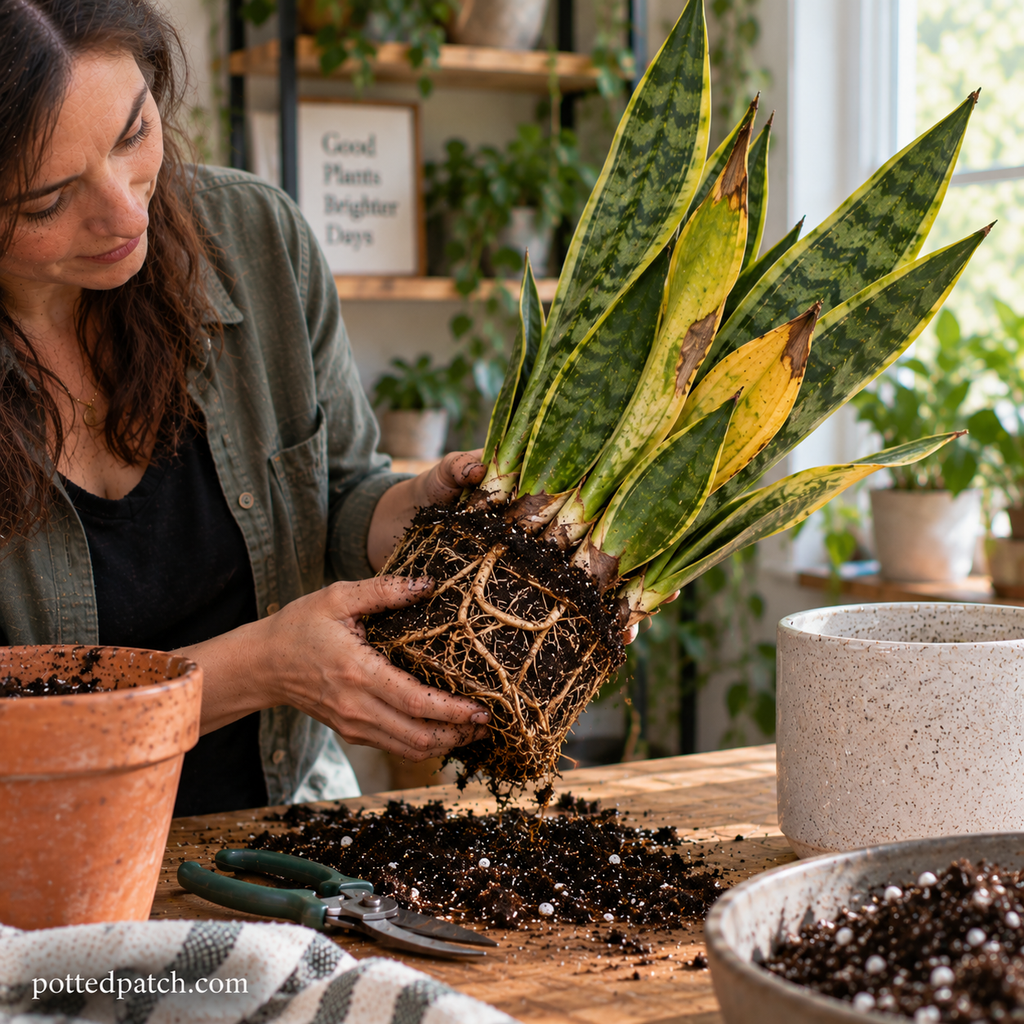
Root rot is where the Snake Plant’s underground structure becomes particularly important.
Don’t inspect only the fine roots. Check the rhizomes, too.
These thicker underground structures connect growth and produce new shoots. Healthy remaining rhizome tissue should feel firm.
Signs That Point Toward Root Rot
Look for a combination of:
- persistently wet soil;
- yellowing;
- drooping;
- soft leaves;
- mushy leaf bases;
- dark, deteriorating roots;
- soft rhizomes; and
- an unpleasant smell.
I wouldn’t diagnose root rot from root color alone.
Roots can vary in appearance. Texture, firmness, smell, and whether the tissue is structurally intact are much more useful clues.
How to Fix Snake Plant Root Rot
Once rot is confirmed:
- Remove the Snake Plant from its container.
- Remove enough wet soil to inspect the underground tissue.
- Check both roots and rhizomes.
- Cut away clearly soft, mushy, or rotten tissue using clean tools.
- Remove leaves whose bases have severely rotted.
- Discard badly degraded wet potting mix.
- Clean the existing container or use a clean replacement.
- Repot healthy remaining tissue into fresh, fast-draining soil.
- Make sure the container has drainage holes.
- Correct whatever kept the root zone excessively wet.
Pay attention to how much healthy root system remains.
A Snake Plant that has lost substantial roots shouldn’t automatically go back into a large container. Too much unused soil around a reduced root system can remain wet for too long.
Recovery depends on how much healthy tissue remains.
Leaf Curling on Snake Plants
Curling or folding leaves can indicate water stress, but that doesn’t automatically mean the plant needs water.
Check the soil first.
Curling With Very Dry Soil
If the soil has been completely dry for an extended period and the foliage is also becoming wrinkled or less rigid, dehydration is a reasonable explanation.
Water thoroughly and let excess water drain.
Curling With Wet Soil
Don’t add water just because the leaves look dehydrated.
Damaged roots can prevent the plant from taking up moisture effectively even when water is available in the pot.
If curling occurs with wet soil, yellowing, or soft tissue, inspect the root system.
Heat, abrupt environmental changes, and pests can also contribute, but I would establish what is happening in the root zone first.
Brown Tips on Snake Plants
A small brown tip is usually much less urgent than a mushy leaf base.
Possible contributors include:
- prolonged dryness;
- inconsistent watering;
- fertilizer or mineral accumulation;
- environmental stress; and
- physical damage.
Physical damage deserves particular attention with Snake Plants because their upright tips are easy to bump against walls, furniture, or people.
Look at whether the damage is progressing.
One old dry tip on an otherwise firm, healthy plant doesn’t justify the same response as browning repeatedly appearing on new growth.
Should You Trim Brown Tips?
You can, but the original point won’t grow back.
Once the natural tip is removed, the cut remains visible.
For minor cosmetic damage, I would usually leave the functional leaf alone. If you trim it, use clean scissors and remove as little healthy tissue as possible.
Leaf Drop on Snake Plants
“Leaf drop” looks somewhat different on a Snake Plant because the foliage doesn’t shed like leaves on many branching houseplants.
Instead, an individual leaf may collapse, detach at the base, or deteriorate enough that it needs removal.
When that happens, inspect the attachment point.
Firm base + bent or creased leaf: physical damage becomes more plausible.
Soft or mushy base + wet soil: investigate rot.
Several declining leaves: look beyond the individual leaf and evaluate the entire root zone.
A permanently creased leaf may never stand upright again even after the plant itself is healthy.
Damaged tissue also won’t repair itself. The useful question is whether the remaining plant and future growth are healthy.
Slow Growth in Snake Plants
Snake Plants are naturally slower-growing indoors than many common houseplants, so lack of dramatic growth isn’t automatically a problem.
I would be more interested in whether the plant has stopped growing under conditions where it previously produced new growth.
When Slow Growth May Be Normal
Slow growth is less concerning when:
- the foliage remains firm;
- roots and rhizomes are healthy;
- the soil dries normally;
- there is no spreading damage; and
- growth has slowed during a darker or cooler part of the year.
Sometimes a healthy Snake Plant simply needs time.
When Slow Growth Deserves Investigation
Look more closely when slow growth appears alongside:
- persistently wet soil;
- yellowing;
- soft tissue;
- unhealthy roots or rhizomes;
- very low light; or
- continuing deterioration.
Light is particularly worth checking.
Snake Plants tolerate dim conditions, but tolerance isn’t the same as active growth. A plant in very low light may produce little visible growth while also using water so slowly that its soil remains wet much longer.
If placement may be limiting growth, use the room-by-room indoor plant placement guide to evaluate the location.
Don’t try to compensate for insufficient light by adding extra fertilizer or water.
Mold on Snake Plant Soil
Surface mold doesn’t automatically mean the Snake Plant has root rot.
It does tell me to investigate why the surface is remaining favorable for fungal growth.
Check:
- how long the soil remains damp;
- available light;
- drainage;
- pot size;
- dense or degraded soil;
- dead organic debris; and
- water trapped in a decorative planter.
With a Snake Plant, recurring mold deserves attention because the plant normally benefits from substantial drying between waterings.
How to Fix Mold on Snake Plant Soil
Remove obvious surface mold and dead debris, but don’t stop there.
Correct the condition allowing the surface to remain damp.
That may mean allowing a more appropriate drying period, improving drainage, increasing usable light, addressing an oversized container, or replacing poorly structured soil when necessary.
Don’t deliberately dehydrate the plant for an extreme period just to kill surface mold.
The goal is a healthier wet-to-dry cycle, not permanent dryness.
Baseline soil and watering practices are covered in the Snake Plant Care Made Simple guide.
When Several Snake Plant Problems Appear Together
Combinations are often more diagnostic than individual symptoms.
For example:
Yellow leaves + wet soil + soft bases
Inspect roots and rhizomes for rot.
Drooping or curling + bone-dry soil + wrinkled foliage
Prolonged dehydration becomes more plausible.
Slow growth + very low light + soil staying wet longer
The location may be contributing to both slow growth and excessive moisture retention.
One damaged brown tip + firm foliage + healthy new growth
A major care change probably isn’t justified.
Wilting + wet soil + deteriorating rhizomes
Don’t respond with additional water.
This is why I wouldn’t troubleshoot a Snake Plant by matching one leaf symptom to one solution.
What Healthy Recovery Looks Like
Don’t judge recovery by waiting for damaged tissue to become perfect again.
It won’t.
A brown patch won’t turn green. A split won’t reconnect. A cut tip won’t regain its original point, and a permanently creased leaf may stay bent.
Instead, watch for:
- firm remaining leaves;
- firm healthy rhizomes;
- no new spreading softness;
- predictable soil drying;
- healthy new shoots or pups; and
- no continued yellowing or collapse.
New growth is often a better measure of recovery than old damage.
A Better Snake Plant Troubleshooting Order
When a Snake Plant starts struggling, I would work through the problem in this order:
- Check whether the soil is wet or dry.
- Consider how long it has stayed that way.
- Confirm that the container drains.
- Check leaf bases for softness.
- Inspect roots and rhizomes when rot is suspected.
- Look at whether damage affects one leaf or several.
- Evaluate the available light.
- Think about recent changes in watering, temperature, location, or repotting.
- Check for pests when the earlier clues don’t explain the damage.
- Make the most justified correction and give the plant time to respond.
The biggest mistake is treating every symptom separately.
Yellowing, drooping, curling, softness, and slow growth can all trace back to the same unhealthy root zone. Find the strongest underlying clue first, correct that condition, and then judge recovery by what happens next—not by whether an already damaged leaf becomes attractive again.