

Ferns can make a room feel instantly greener.
Their soft, arching fronds look very different from the thick leaves of many popular houseplants, and they can fill shelves, hanging baskets, plant stands, and empty corners with an impressive amount of foliage.
They also have a reputation for being difficult.
That reputation isn’t entirely undeserved. Some indoor ferns react quickly to dry soil, low humidity, or intense sunlight. A Boston fern that seemed perfectly happy last week can suddenly develop crispy tips or start dropping leaflets.
But not every fern is equally demanding.
Once you understand which type you’re growing and provide the right balance of moisture, light, humidity, and drainage, fern care becomes much easier.
This complete guide covers how to care for ferns indoors, including watering, light, soil, humidity, fertilizer, repotting, propagation, pruning, pests, and common problems.
Understanding Indoor Ferns
Ferns are an ancient group of plants that reproduce through spores rather than flowers and seeds.
There are thousands of fern species growing in environments ranging from tropical forests to temperate woodlands and even relatively dry habitats.
That’s important because there isn’t one universal fern care routine.
The tropical ferns commonly sold as houseplants generally appreciate moisture and humidity, but their individual requirements can still differ.
Popular Types of Indoor Ferns
Some of the ferns commonly grown indoors include:
- Boston fern
- Bird’s nest fern
- Maidenhair fern
- Button fern
- Rabbit’s foot fern
- Staghorn fern
- Kimberly Queen fern
- Lemon button fern
- Blue star fern
Before changing your plant’s care routine, identify the fern whenever possible.
A maidenhair fern and a staghorn fern are both ferns, but treating them exactly the same way isn’t ideal.
Are Ferns Easy to Care For?
It depends on the fern.
Some are relatively forgiving. Others respond dramatically to dry air or missed watering.
For beginners, the biggest challenge is usually moisture management.
Many tropical ferns prefer more consistent moisture than plants such as pothos, snake plants, or succulents. At the same time, their roots still need oxygen.
That creates a balancing act:
Keep the soil appropriately moist without turning it into a swamp.
Once you understand that relationship, much of fern care starts making sense.
How Much Light Do Indoor Ferns Need?
Most commonly grown indoor ferns prefer bright, indirect light.
In nature, many grow beneath taller plants and trees where direct sunlight is filtered before reaching their fronds.
A bright room without harsh midday sun can provide excellent conditions.
Can Ferns Grow in Low Light?
Some ferns tolerate moderate or relatively low indoor light, but very dark conditions aren’t ideal.
A fern receiving too little light may:
- Grow slowly
- Produce smaller fronds
- Develop weak growth
- Lose density
- Lean toward a light source
- Remain wet for unusually long periods
The last point is particularly important.
Less light means slower photosynthesis and lower water use. That means a fern in a dim location may need watering less frequently than one growing near a bright window.
Can Ferns Take Direct Sunlight?
Many indoor ferns are sensitive to strong direct sunlight.
Excessive sun can cause:
- Pale foliage
- Bleached areas
- Crispy patches
- Brown fronds
- Dry leaf edges
Gentle morning light may be tolerated by some species, but intense afternoon sunlight can damage tender fronds.
Move plants gradually when increasing their light exposure.
Where Should You Put a Fern Indoors?
The ideal location depends on the species, but most indoor ferns appreciate bright filtered light and protection from extreme temperatures.
Good possibilities include:
- Near an east-facing window
- A short distance from a bright south-facing window
- A bright bathroom
- A well-lit kitchen
- A plant stand near filtered sunlight
- A room with supplemental grow lights
Bathrooms are often recommended for ferns because of their humidity.
But there’s a catch.
A dark bathroom is still dark.
Humidity doesn’t replace light, so make sure the room receives enough natural or artificial illumination.
How Often Should You Water a Fern?
Many tropical indoor ferns prefer their potting mix to remain relatively consistent in moisture.
That doesn’t mean constantly saturated.
For many species, watering when the surface begins to feel slightly dry works better than allowing the entire root ball to become bone dry.
How to Check Whether Your Fern Needs Water
Feel the soil with your finger.
If the surface has begun drying while the soil slightly deeper remains somewhat moist, the plant may be ready for water.
You can also watch for:
- A lighter pot
- Slightly drooping fronds
- Dry soil near the pot’s edge
- Fronds beginning to lose firmness
Try not to use wilting as your primary watering reminder.
Some delicate ferns can suffer leaf damage after becoming severely dehydrated.
How to Water a Fern Properly
When watering:
- Pour water slowly over the soil.
- Moisten the root zone evenly.
- Continue until excess water drains from the bottom.
- Allow the container to drain.
- Empty standing water from the saucer or decorative pot.
- Check the soil again before the next watering.
Avoid repeatedly giving the plant tiny amounts of water.
You want moisture to reach the root system rather than only wetting the surface.
Can You Overwater a Fern?
Absolutely.
Ferns may appreciate moisture, but their roots still require oxygen.
Constantly saturated soil can create conditions that encourage root rot.
Signs of excessive moisture may include:
- Yellowing fronds
- Wilting despite wet soil
- Dark or mushy roots
- Unpleasant-smelling soil
- Soft growth near the base
- Persistent fungus gnat problems
If the soil stays wet for a very long time, investigate the pot, soil mixture, lighting, and watering frequency.
What Does an Underwatered Fern Look Like?
An underwatered fern may develop:
- Crispy fronds
- Brown tips
- Dry leaf edges
- Drooping
- Shriveling
- Leaflet drop
- Completely dry potting soil
Some ferns recover surprisingly well after a temporary dry period.
Others—particularly delicate species—may lose damaged foliage even after watering resumes.
The goal is consistency rather than repeatedly letting the plant wilt and then rescuing it.
Do Ferns Need High Humidity?
Many popular tropical ferns appreciate moderate to high humidity.
This is one reason they sometimes struggle during winter when indoor heating dries the air.
Low humidity may contribute to:
- Crispy leaf tips
- Brown edges
- Dry fronds
- Leaflet drop
- Slower or less attractive growth
Humidity requirements vary by species.
Maidenhair ferns, for example, are often less forgiving of dry conditions than tougher varieties.
How to Increase Humidity Around Ferns
If your home is dry, you can:
- Use a humidifier
- Group compatible plants together
- Move the fern away from heating vents
- Keep it away from constantly blowing air
- Place it in a naturally more humid room with sufficient light
- Monitor humidity with a hygrometer
A humidifier is generally the most reliable solution for consistently dry indoor air.
Should You Mist a Fern?
Misting is often recommended for ferns, but its effect on room humidity is temporary.
It can make the foliage wet without significantly changing the surrounding humidity for very long.
If your fern needs consistently higher humidity, improving the room environment is more effective.
Good airflow is also important. Constantly wet foliage combined with stagnant air can encourage disease problems.
The Best Soil for Indoor Ferns
Most indoor ferns prefer soil that retains some moisture while still allowing air to reach the roots.
The potting mix shouldn’t become dense, muddy, or compacted.
Depending on the species, an indoor fern mix might contain:
- Quality houseplant potting mix
- Coco coir or peat-based material
- Perlite or pumice
- Fine bark
- Other moisture-retentive but aerating ingredients
The exact mixture matters less than how it behaves.
Water should move through the soil while enough moisture remains behind for the roots.
Choosing the Right Pot for a Fern
Drainage holes are strongly recommended.
They allow excess water to leave the container after watering.
This is particularly useful with moisture-loving plants because you can water thoroughly without leaving the root system submerged.
What Size Pot Does a Fern Need?
Choose a pot appropriate to the root system.
Don’t move a small fern into a huge container just because you want it to grow faster.
Excess soil holds additional moisture and may remain wet long after the roots have absorbed what they need.
When repotting, move up gradually.
Are Plastic Pots Good for Ferns?
Yes.
Plastic pots retain moisture longer than unglazed terracotta, which can be useful for ferns that dislike drying quickly.
Terracotta can still work, but you’ll probably need to monitor moisture more closely because water evaporates through the porous sides.
Neither option is automatically better.
Choose based on the fern and your growing environment.
Temperature Requirements for Indoor Ferns
Many tropical indoor ferns prefer comfortable household temperatures.
Avoid sudden extremes.
Keep your fern away from:
- Cold drafts
- Air-conditioning vents
- Heating vents
- Radiators
- Freezing windows
- Frequently opened exterior doors during cold weather
Some fern species tolerate cooler temperatures better than others, so identify your plant before assuming all ferns require identical warmth.
How to Fertilize a Fern
Ferns generally don’t need aggressive fertilizing.
During active growth, a diluted or appropriately formulated houseplant fertilizer can provide additional nutrients.
Always follow the product directions.
More fertilizer doesn’t mean more fronds.
Excessive feeding can damage roots and contribute to brown tips or mineral buildup.
When Should You Fertilize Ferns?
Spring and summer are typically the most active growing periods for indoor ferns.
Fertilize moderately during active growth.
Reduce or stop feeding when growth slows during fall and winter.
If a fern continues growing actively under supplemental lighting, its needs may differ.
How to Repot a Fern
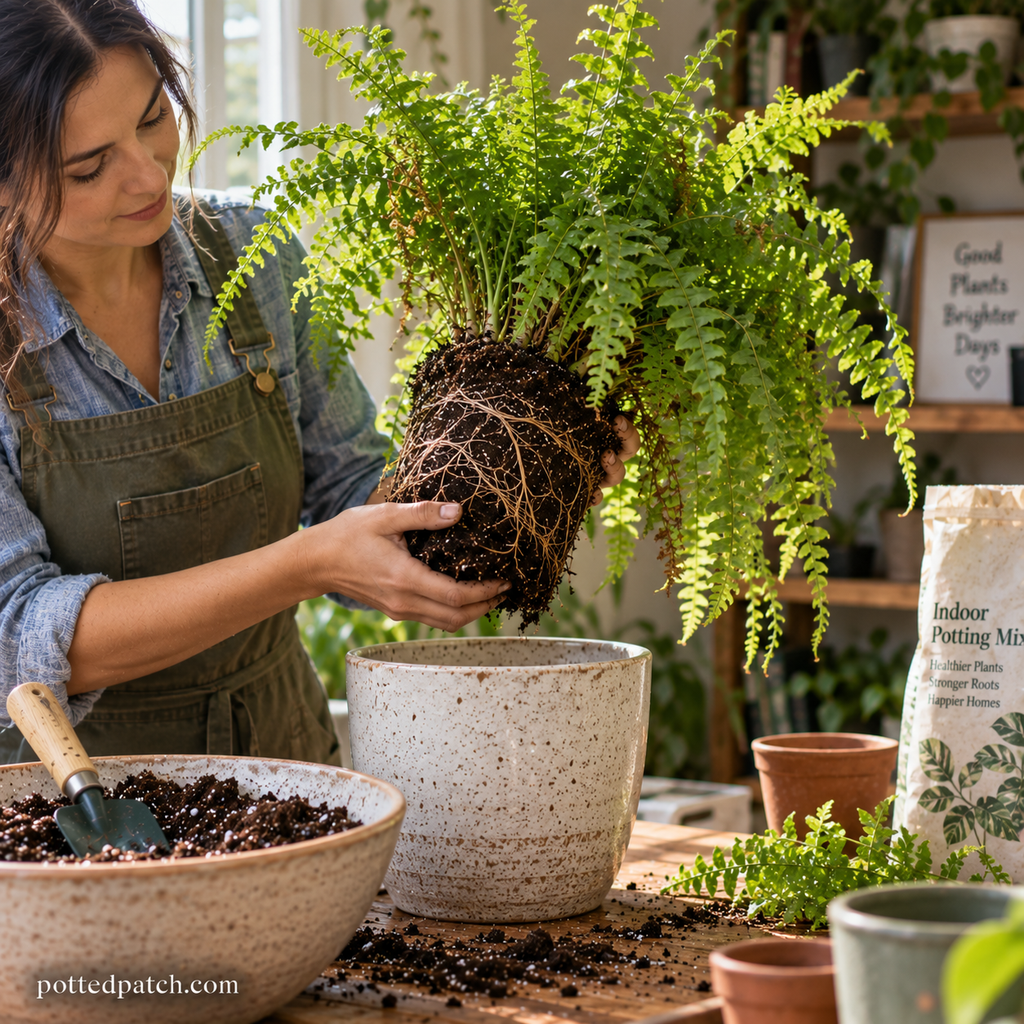
You don’t need to repot a fern simply because another year has passed.
Repot when the plant actually needs it.
Signs can include:
- Roots filling the container
- Roots emerging heavily from drainage holes
- The plant drying unusually quickly
- Water immediately running through the pot
- Compacted or degraded soil
- Slowed growth
- The plant becoming unstable
Spring is often a convenient time to repot.
How to Repot a Fern Step by Step
- Choose a container slightly larger than the existing pot.
- Prepare fresh potting mix appropriate for your fern.
- Gently remove the plant from its container.
- Inspect the roots.
- Loosen badly compacted soil when necessary.
- Remove clearly dead or rotten roots with clean tools.
- Position the fern at approximately its original planting depth.
- Add fresh soil around the roots.
- Water thoroughly.
- Allow excess water to drain.
Avoid burying the crown of a fern too deeply.
For species with visible rhizomes, make sure you’re following the appropriate planting method for that particular fern.
How to Propagate Ferns
Fern propagation depends heavily on the species.
Common methods include:
- Division
- Rhizome division
- Offsets
- Spores
For most home growers, division is the simplest method.
Propagating Ferns by Division
A mature fern that has developed multiple crowns or natural sections can often be divided during repotting.
To divide a suitable fern:
- Remove the plant from its pot.
- Gently loosen the root ball.
- Identify natural sections with healthy roots and foliage.
- Carefully pull the sections apart.
- Use a clean knife if necessary.
- Pot each section into an appropriately sized container.
- Water thoroughly.
- Maintain stable moisture and humidity while the divisions establish.
Don’t divide every fern automatically.
Some species have different growth habits and are better propagated through other methods.
Can You Grow Ferns From Spores?
Yes.
Those small dots or patches on the undersides of mature fern fronds may be sori, structures associated with spore production.
They’re sometimes mistaken for insect eggs or disease.
Growing ferns from spores is possible, but it’s considerably slower and more involved than dividing an established plant.
For most casual houseplant growers, division is the easier approach.
Should You Prune a Fern?
Ferns don’t require shaping in the same way as many woody houseplants, but removing damaged foliage helps keep them tidy.
Prune fronds that are:
- Completely brown
- Severely damaged
- Broken
- Diseased
- Mostly dead
Use clean scissors or pruning shears.
Cut dead fronds near their base without damaging healthy new growth.
Should You Cut Brown Tips Off a Fern?
You can trim brown tips for cosmetic reasons.
Use clean scissors and follow the natural outline of the frond.
But trimming won’t solve the underlying problem.
If brown tips continue appearing, investigate:
- Humidity
- Watering consistency
- Water quality
- Fertilizer use
- Root health
- Excessive sunlight
An occasional brown tip isn’t necessarily concerning.
Widespread browning is worth investigating.
Why Is My Fern Turning Brown?
Brown fronds are probably the most common fern-care complaint.
Possible causes include:
- Underwatering
- Low humidity
- Excessive sunlight
- Fertilizer buildup
- Root damage
- Temperature stress
- Natural aging
Look at the pattern.
A few old outer fronds gradually turning brown can be normal.
New fronds becoming crispy soon after unfurling suggests a broader environmental issue.
Why Are My Fern Leaves Turning Yellow?
Yellowing may result from:
- Overwatering
- Poor drainage
- Root rot
- Low light
- Nutrient issues
- Natural aging
- Temperature stress
Check the soil first.
If the potting mix remains saturated for long periods, excessive moisture becomes a likely possibility.
Why Is My Fern Crispy?
A crispy fern often points toward a moisture-related problem, but don’t assume it simply needs more water.
Potential causes include:
- Dry soil
- Low humidity
- Intense sunlight
- Heating vents
- Root damage
- Fertilizer stress
Check both the soil and the air around the plant.
A fern sitting directly beside a heater can develop crispy foliage even when its soil is adequately moist.
Why Is My Fern Dropping Leaves?
Some ferns drop individual leaflets or entire fronds when stressed.
Possible causes include:
- Severe underwatering
- Dry air
- Sudden relocation
- Temperature changes
- Root problems
- Insufficient light
- Natural aging
Boston ferns can be especially messy when allowed to become too dry.
If leaf drop suddenly increases, look for a recent environmental change.
Why Is My Fern Wilting Even Though the Soil Is Wet?
This is an important warning sign.
Wilting doesn’t always mean a plant needs water.
If the soil is wet and the fern remains limp, damaged roots may be unable to absorb water properly.
Possible causes include:
- Root rot
- Poor drainage
- Compacted soil
- An oversized pot
- Excessive watering
Inspect the root system if the problem continues.
Fern Root Rot
Root rot develops when roots remain in wet, oxygen-poor conditions for too long.
Signs can include:
- Persistent wilting
- Yellowing
- Dark or mushy roots
- Unpleasant-smelling soil
- Rapid decline
- Soft tissue near the crown
If you discover root rot:
- Remove the fern from its container.
- Gently remove saturated soil.
- Inspect the roots.
- Trim severely rotten tissue with sanitized tools.
- Repot into fresh, appropriately aerated soil.
- Use a container with drainage.
- Adjust your watering routine.
Also consider whether insufficient light is causing the soil to dry too slowly.
Common Fern Pests
Indoor ferns can attract several common houseplant pests.
Watch for:
- Spider mites
- Scale
- Mealybugs
- Thrips
- Fungus gnats
Spider Mites
Spider mites can be especially problematic when indoor air is warm and dry.
Signs may include:
- Fine webbing
- Pale stippling
- Faded fronds
- Tiny moving dots
- General decline
Inspect both sides of the fronds.
Scale
Scale insects can look like small brown or tan bumps attached to stems or foliage.
Dense fern growth provides plenty of places for pests to hide, so inspect the interior of the plant as well as the outer fronds.
Fungus Gnats
Fungus gnats are common around moist organic potting mixes.
Because ferns often receive more frequent watering than drought-tolerant houseplants, they can provide favorable conditions for gnats.
A persistent infestation is a good reason to evaluate how long the soil stays wet.
How to Prevent Fern Pest Problems
Regular inspection is your best defense.
Good habits include:
- Inspecting plants before purchasing
- Separating new plants temporarily
- Checking frond undersides
- Removing dead foliage
- Maintaining appropriate airflow
- Avoiding persistently saturated soil
- Inspecting neighboring plants when pests appear
Dense ferns deserve especially careful inspection because pests can remain hidden near the center.
How to Care for a Boston Fern
Boston fern is one of the most familiar indoor ferns.
It generally prefers:
- Bright indirect light
- Consistent soil moisture
- Moderate to high humidity
- Good drainage
- Protection from hot, dry air
Boston ferns are particularly prone to developing crispy foliage and dropping leaflets when they become too dry.
Keep them away from heating vents and monitor soil moisture regularly.
How to Care for a Maidenhair Fern
Maidenhair ferns are beautiful but less forgiving.
Their delicate fan-shaped leaflets can dry quickly when soil moisture or humidity drops too far.
They generally appreciate:
- Bright filtered light
- Consistent moisture
- Higher humidity
- Stable temperatures
- Protection from direct sun
If you’re new to houseplants, don’t judge your overall gardening ability by one unhappy maidenhair fern.
They have frustrated plenty of experienced growers too.
How to Care for a Bird’s Nest Fern
Bird’s nest ferns have broad, strap-like fronds rather than the finely divided foliage people typically associate with ferns.
They prefer:
- Bright indirect light
- Moderate moisture
- Good humidity
- Loose, well-draining soil
Avoid repeatedly pouring water directly into the central crown, particularly when conditions are cool and airflow is limited.
How to Care for a Staghorn Fern
Staghorn ferns are quite different from ordinary potted ferns.
They’re epiphytes and naturally grow attached to trees and other surfaces rather than rooted in ordinary forest soil.
They may be grown mounted on boards or in baskets using suitable materials.
Their watering requirements depend heavily on how they’re mounted, the surrounding humidity, temperature, and airflow.
Don’t treat a mounted staghorn fern exactly like a Boston fern growing in potting soil.
Fern Care Throughout the Year
Your indoor environment changes throughout the year, and fern care should change with it.
Spring
As daylight increases, many ferns begin stronger growth.
Spring is a good time to:
- Repot when necessary
- Divide suitable mature ferns
- Begin fertilizing
- Remove dead winter foliage
- Increase watering as growth accelerates
- Inspect for pests
Summer
Warm weather and brighter light can increase water use.
Monitor soil more frequently.
Protect sensitive ferns from harsh direct afternoon sunlight and strong air-conditioning drafts.
Fall
As daylight decreases, growth may slow.
The potting mix may begin taking longer to dry.
Adjust watering rather than continuing your summer routine automatically.
Winter
Winter can be challenging because indoor heating often creates dry air while shorter days reduce plant growth.
You may need to water less frequently while simultaneously increasing room humidity.
Keep ferns away from heating vents and cold windows.
Beginner Fern Care Checklist
If you’re growing your first indoor fern, concentrate on the basics:
- Identify the type of fern you’re growing.
- Provide bright, indirect light for most indoor species.
- Keep moisture relatively consistent where appropriate.
- Don’t leave roots sitting in saturated soil.
- Use a pot with drainage holes.
- Choose an aerated, moisture-retentive potting mix.
- Provide adequate humidity.
- Keep the fern away from heating and cooling vents.
- Fertilize moderately during active growth.
- Remove dead fronds.
- Inspect regularly for pests.
- Adjust watering as seasons change.
Most fern problems come back to a few basic factors: moisture, humidity, light, and airflow.
Frequently Asked Questions About Fern Care
Are Ferns Good Indoor Plants?
Yes.
Many fern species adapt well to indoor environments when given sufficient light, moisture, and humidity.
Choosing the right species for your home makes a big difference.
How Often Should I Water an Indoor Fern?
There’s no universal schedule.
Many tropical indoor ferns prefer relatively consistent moisture, but watering frequency depends on species, light, temperature, humidity, soil, and pot size.
Check the soil rather than watering automatically.
Do Ferns Need Direct Sunlight?
Most commonly grown indoor ferns prefer indirect or filtered light.
Strong direct sunlight can scorch delicate fronds.
Can Ferns Live in Low Light?
Some tolerate moderate or relatively low light, but extremely dark conditions generally lead to weak growth.
Supplemental lighting can help in darker rooms.
Do Ferns Need a Humidifier?
Not always.
Some homes naturally maintain enough humidity.
If your fern repeatedly develops crispy foliage and your indoor air is very dry, a humidifier can be helpful.
Should Fern Soil Always Be Wet?
No.
Many ferns prefer consistent moisture, but their roots still need oxygen.
Aim for appropriately moist soil rather than permanently saturated soil.
Can Ferns Grow in Bathrooms?
Yes, if the bathroom receives enough light.
Higher humidity can make bathrooms excellent locations for some ferns.
A windowless bathroom will usually require supplemental lighting.
Why Does My Fern Keep Getting Brown Leaves?
Check soil moisture, humidity, sunlight, fertilizer, temperature, and root health.
A few aging brown fronds are normal.
Widespread browning or crispy new growth suggests the growing conditions need attention.
Do Ferns Grow Back After Turning Brown?
If the roots and crown remain healthy, many ferns can produce fresh fronds after damaged foliage is removed.
A completely dead crown or severely rotted root system is less likely to recover.
Should I Cut Dead Fern Fronds?
Yes.
Completely dead fronds can be removed near their base with clean tools.
This improves appearance and makes it easier to monitor new growth.
Final Thoughts on Indoor Fern Care
Ferns aren’t all as difficult as their reputation suggests.
What they don’t tolerate well—particularly the more delicate species—is inconsistency.
Letting a moisture-loving fern become bone dry, soaking it the next day, moving it into direct sun, and then placing it beside a heater is a recipe for crispy fronds.
Instead, focus on creating stable conditions.
Give your fern enough filtered light. Learn how quickly its soil dries. Provide appropriate humidity and airflow. Keep the roots moist when the species requires it, but never assume that a moisture-loving plant wants to sit in saturated soil.
And identify the fern you’re growing.
That one step can make the difference between following generic advice and providing care that actually fits the plant.
Once you’ve found the right balance, healthy new fronds are your best indication that you’re on the right track.