New to houseplants? Start here. Our Beginner Plant Guides break down everything you need to know to confidently care for indoor plants — from choosing your first plant to understanding light, watering, soil, and basic maintenance. Each guide is written in simple, step-by-step language so you can build confidence quickly and avoid common beginner mistakes. Whether you’re growing a snake plant, pothos, or peace lily, this section helps you create a thriving indoor garden without overwhelm.
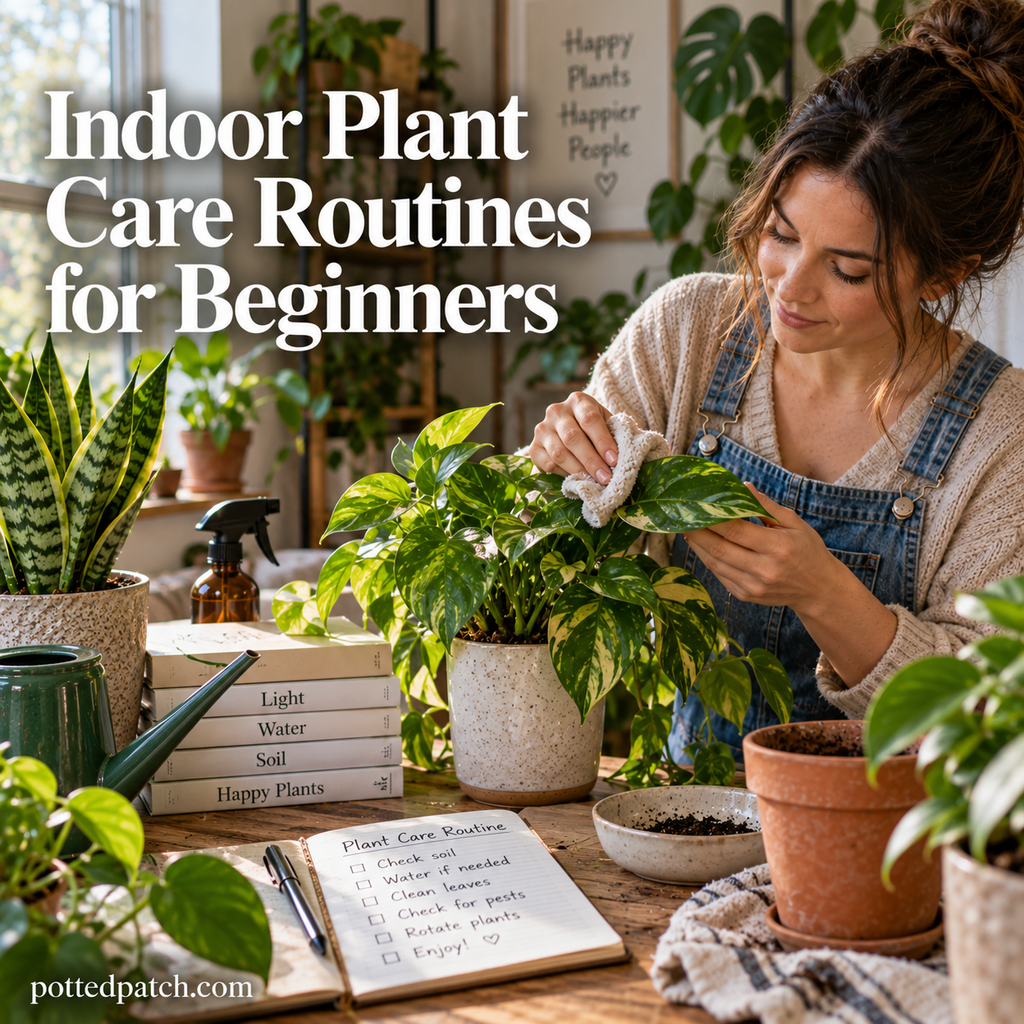
A simple indoor plant care routine makes it easier to stay on top of watering, leaf cleaning, pest checks, and other basic maintenance.
A good beginner plant-care routine isn’t a calendar telling you when every plant gets water, fertilizer, or a larger pot. I would use a regular schedule to check plants, then let soil moisture, new growth, light, temperature, and the plant’s condition determine what actually needs to be done.
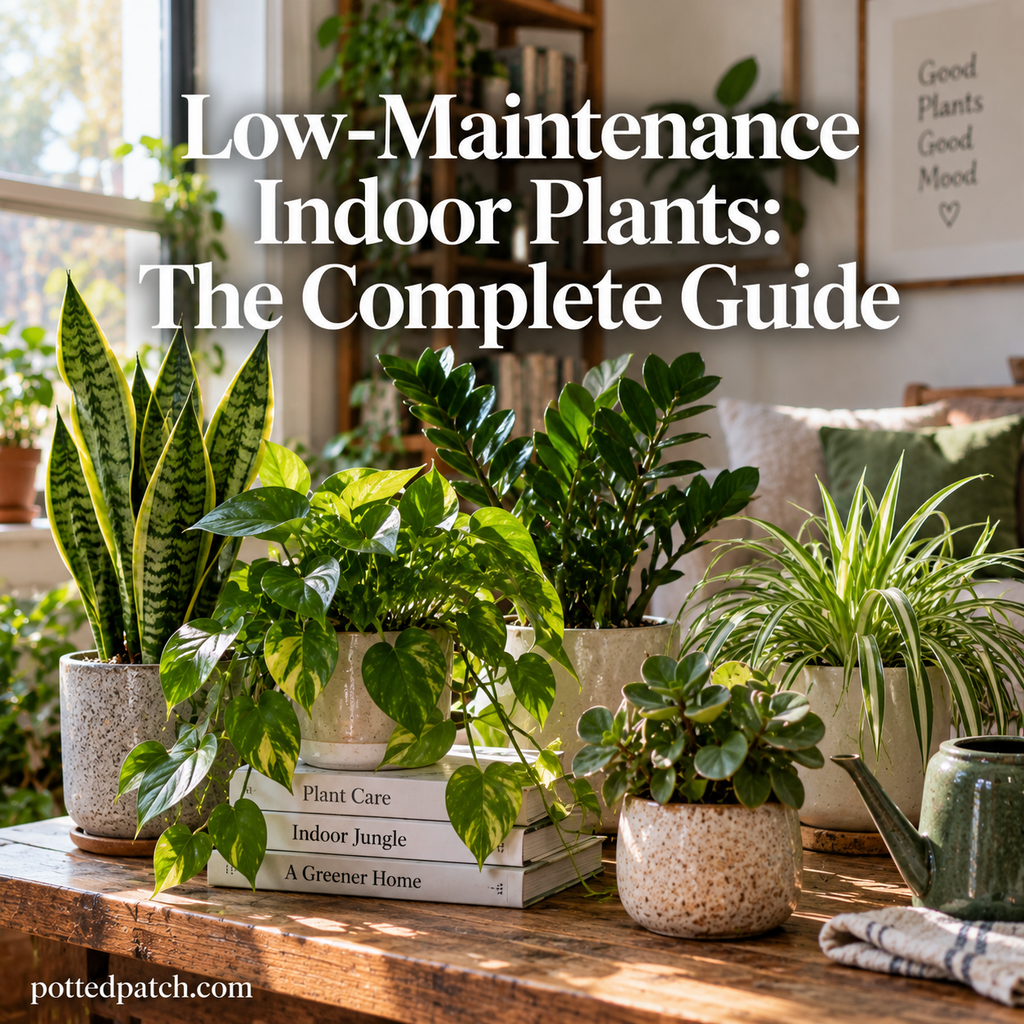
Low-maintenance houseplants such as snake plants, pothos, ZZ plants, and spider plants bring easy-care greenery into the home.
A low-maintenance houseplant isn’t one you can ignore indefinitely. I think of it as a plant that fits ordinary indoor conditions, doesn’t demand constant intervention, and gives you some margin for an occasional late watering or other small care mistake.
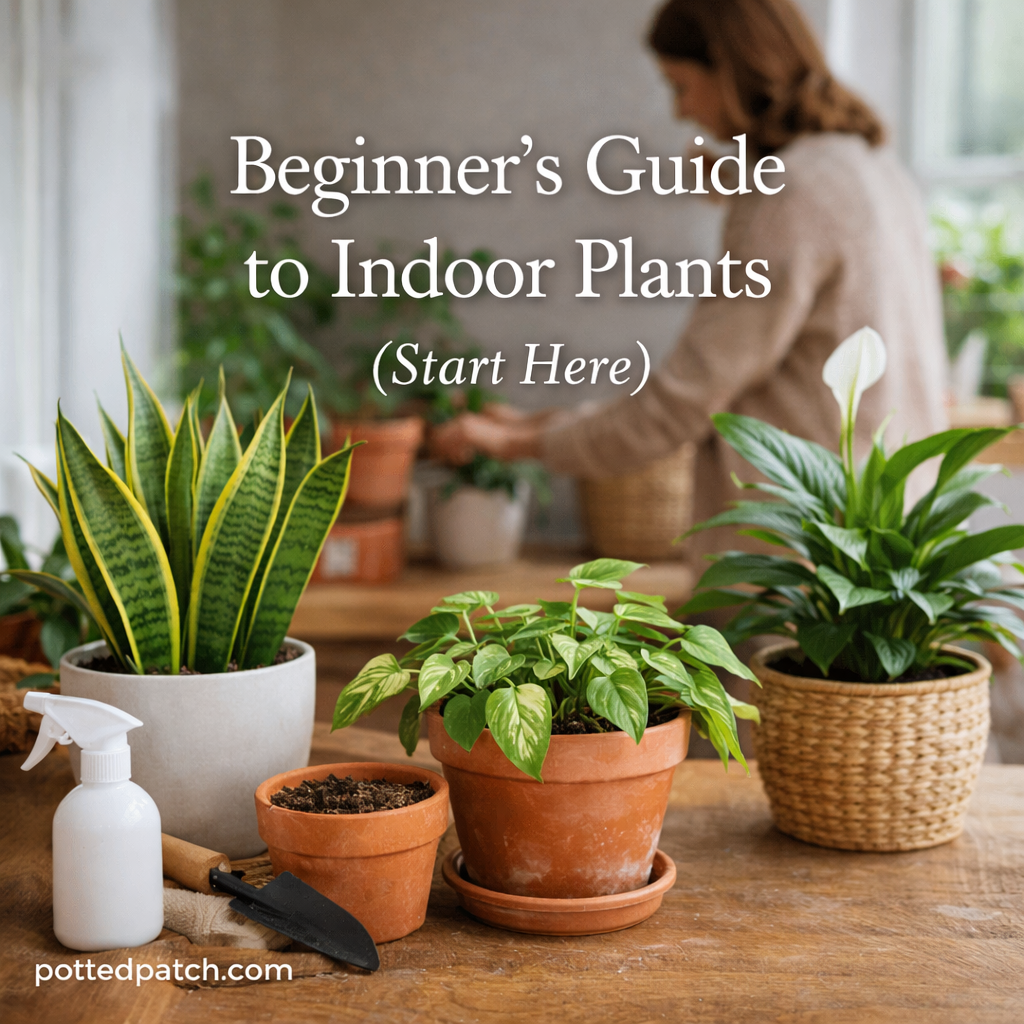
A beginner-friendly indoor plant setup showing easy-care plants and tools for starting a houseplant routine. pottedpatch.com.
Getting started with indoor plants can feel overwhelming, but it doesn’t have to be. There is a lot of plant-care advice online, and beginners can quickly end up worrying about everything from humidity percentages to fertilizer schedules before they have even watered their first plant.
Most indoor plant care is much simpler than that.
If you can learn how to evaluate light, check the soil before watering, use a container with drainage, and notice when your plant is changing, you already understand some of the most important parts of keeping houseplants healthy.
This beginner-friendly guide walks through what you actually need to know when you’re starting from scratch. You don’t need a large collection, expensive equipment, or years of gardening experience.
Start with one or two plants, learn how they respond to your home, and build from there.