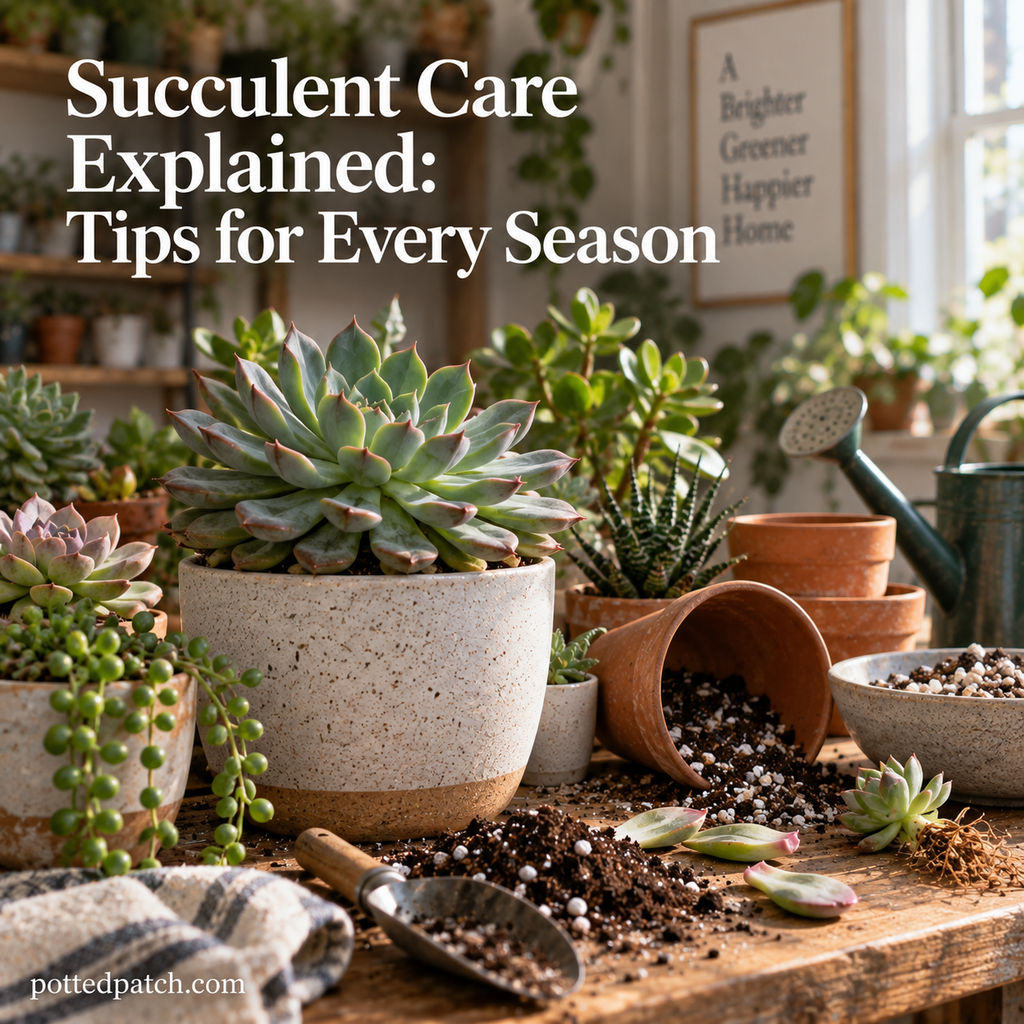
Succulents have a reputation for being easy houseplants, but that doesn’t mean they thrive on neglect. Their ability to store water helps them survive dry conditions, yet many common succulent problems actually come from giving them too much attention—especially too much water.
The good news is that succulent care becomes much easier once you understand how these plants naturally grow. Plenty of light, fast-draining soil, careful watering, and a few seasonal adjustments can make a noticeable difference.
This guide covers the essentials of growing succulents indoors and explains how to adjust their care throughout spring, summer, fall, and winter.
Understanding How Succulents Grow
“Succulent” describes a broad group of plants that store water in thickened leaves, stems, or roots. This adaptation allows them to tolerate periods of limited rainfall.
Popular indoor succulents include:
- Echeveria
- Haworthia
- Aloe
- Jade plants
- Sedum
- Crassula
- Gasteria
- String of Pearls
Although these plants share the ability to store water, they don’t all have identical needs. Some tolerate lower light better than others, while certain species have different seasonal growth patterns.
That’s why it’s useful to identify the type of succulent you own whenever possible.
Succulent Care at a Glance
For many common indoor succulents, a good starting point is:
- Light: Several hours of bright light each day
- Water: Thoroughly, then allow the soil to dry
- Soil: Fast-draining succulent or cactus mix
- Pot: Container with a drainage hole
- Temperature: Generally comfortable indoor temperatures
- Humidity: Low to moderate
- Fertilizer: Light feeding during active growth
- Repotting: As needed when roots outgrow the container or soil deteriorates
The most important thing to remember is that these are general guidelines. Your plant’s species, environment, season, and container all affect its needs.
How Much Light Do Succulents Need?
Light is one of the biggest factors in growing compact, healthy succulents indoors.
Many popular varieties prefer several hours of bright light each day. A sunny windowsill may work well, although the ideal location depends on the intensity of your sunlight and the species you’re growing.
South- and west-facing windows often provide strong light. East-facing windows can also work well, particularly for varieties that appreciate gentler morning sun.
Signs a Succulent Needs More Light
A succulent growing in insufficient light may begin stretching toward the nearest window.
This is called etiolation.
Common signs include:
- Unusually long stems
- Large gaps between leaves
- Pale or faded growth
- Leaves pointing downward
- The plant leaning strongly toward the light
- New growth appearing smaller or weaker
Once a succulent becomes severely stretched, the affected growth generally won’t return to its original compact shape simply by increasing the light.
However, improved lighting can help future growth develop more normally.
Can Succulents Get Too Much Sun?
Yes.
Even sun-loving succulents can develop damage if they’re suddenly moved from a dim indoor location into intense direct sunlight.
Sun stress or sunburn may appear as bleached, tan, brown, or damaged areas on exposed leaves.
When moving a succulent into stronger sunlight, increase its exposure gradually over several days or weeks. This gives the plant time to adjust.
How Often Should You Water Succulents?
There is no universal “water every seven days” rule for succulents.
Instead, let the soil dry between waterings and pay attention to the plant’s condition.
When watering, thoroughly saturate the potting mix until excess water flows from the drainage hole. Then allow the soil to dry before watering again.
This approach is often described as “soak and dry.”
Why Succulents Don’t Need Frequent Small Drinks
Giving a succulent tiny amounts of water every few days can create inconsistent moisture around the roots.
A thorough watering encourages the entire root zone to receive moisture. The drying period afterward allows air to return to the soil.
How quickly that happens depends on:
- Amount of sunlight
- Temperature
- Humidity
- Pot size
- Pot material
- Soil composition
- Plant size
- Time of year
A small terracotta pot in a sunny window may dry much faster than a large glazed ceramic container sitting several feet from a window.
Always check the soil rather than relying entirely on the calendar.
Signs of an Overwatered Succulent
Overwatering is one of the most common reasons indoor succulents decline.
Possible symptoms include:
- Soft or mushy leaves
- Yellow or translucent leaves
- Leaves dropping easily
- Darkening near the stem
- Wet soil that doesn’t dry
- Soft or rotting roots
- A collapsing stem or crown
A succulent can have plenty of water available and still look unhealthy because damaged roots can no longer function properly.
What Succulent Root Rot Looks Like
Healthy roots are generally firm. Their exact color varies between species and growing conditions.
Rotting roots may become:
- Brown or black
- Soft
- Mushy
- Slimy
- Fragile
- Unpleasant smelling
If you suspect root rot, carefully remove the plant from its pot and inspect the roots.
Remove clearly rotted material with clean tools. Depending on the severity of the damage, the plant may need to be repotted into fresh, dry, well-draining soil.
If rot has spread extensively into the stem, saving healthy portions for propagation may sometimes be the better option.
Signs of an Underwatered Succulent
Succulents tolerate dryness better than many tropical houseplants, but they still need water.
An underwatered succulent may develop:
- Wrinkled leaves
- Deflated or thinner foliage
- Dry, crispy lower leaves
- Drooping
- Severely dry soil
Some older lower leaves naturally dry up as the plant grows, so one shriveled leaf isn’t necessarily a problem.
Look at the plant as a whole and check the soil before deciding what it needs.
Choosing the Best Soil for Succulents
Succulent roots generally perform best in soil that drains quickly and doesn’t remain saturated for extended periods.
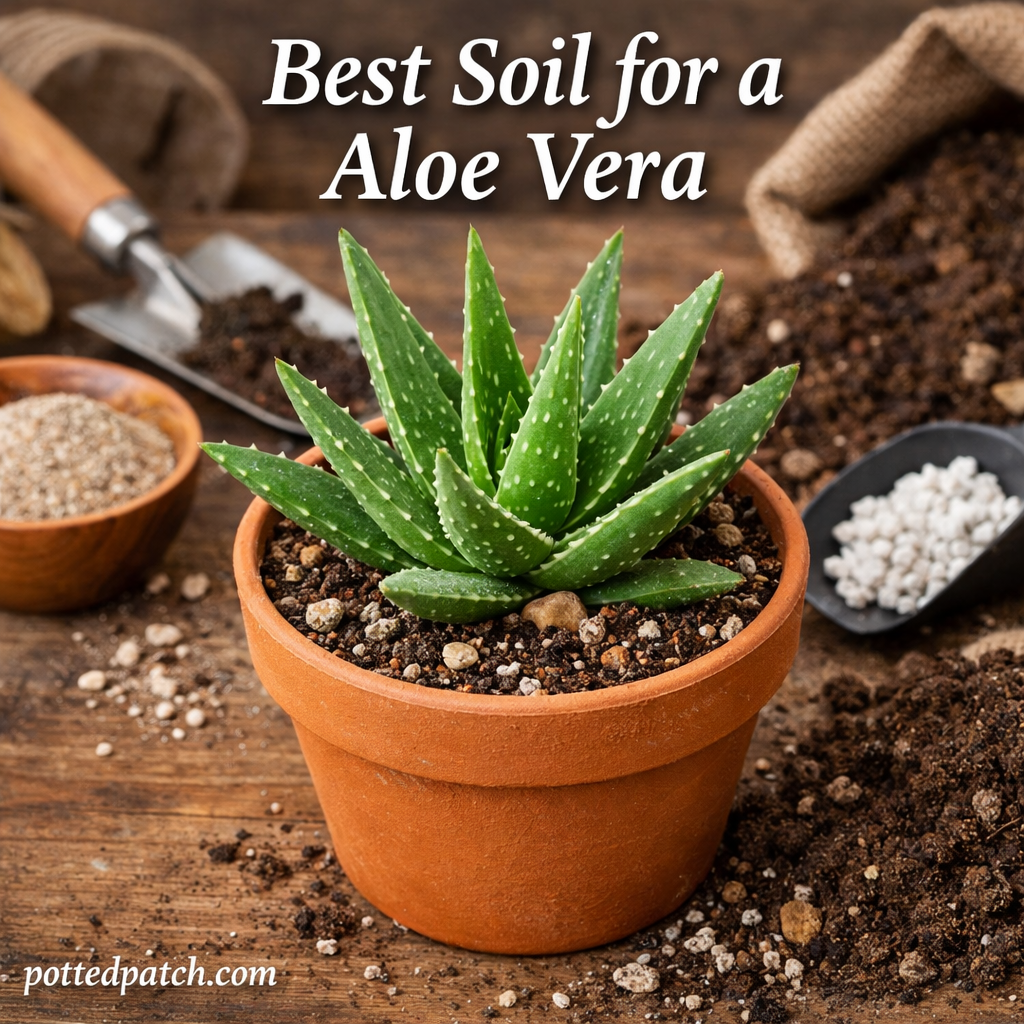
Commercial cactus and succulent mixes provide a convenient starting point. Depending on the mix and your growing conditions, additional mineral material can improve drainage.
Common ingredients include:
- Potting soil
- Perlite
- Pumice
- Coarse mineral components
- Fine bark
The goal is to create a mixture that holds enough moisture for the roots to absorb water but allows excess water to escape efficiently.
Why Regular Potting Soil Can Cause Problems
Standard indoor potting mixes are often designed to retain moisture.
That’s helpful for many houseplants but can become problematic for succulents, particularly in low-light indoor conditions where evaporation is slower.
If your succulent’s soil stays wet for many days after watering, consider whether the potting mix is too moisture-retentive.
Choosing the Right Pot for Succulents
A beautiful container isn’t necessarily a good succulent pot.
Drainage should be one of your first considerations.
A drainage hole allows excess water to leave the root zone instead of collecting at the bottom of the container.
Terracotta vs. Glazed and Plastic Pots
Terracotta is porous, allowing moisture to evaporate through the sides of the container. This can make it particularly forgiving for growers who tend to overwater.
Plastic and glazed ceramic pots retain moisture longer.
Neither option is automatically wrong. You simply need to adjust your watering to match the container.
Avoid Oversized Pots
A tiny succulent doesn’t need a huge container.
Extra soil surrounding a small root system can hold moisture for longer than the plant can use it.
When repotting, choose a container that comfortably accommodates the roots without leaving an excessive amount of unused soil around them.
Temperature and Humidity for Indoor Succulents
Many commonly grown succulents adapt well to normal household temperatures.
Protect them from extremes such as:
- Freezing temperatures
- Cold winter drafts
- Hot heating vents
- Air-conditioning vents
- Sudden temperature changes
Humidity is another consideration.
Many succulents prefer relatively dry conditions and don’t need the high humidity commonly associated with tropical houseplants.
Good airflow around the plants can also be beneficial.
Should You Mist Succulents?
Misting mature succulents usually isn’t necessary.
Their roots are responsible for taking up most of the water the plant needs. Lightly spraying the leaves doesn’t replace proper watering.
Frequently wetting dense rosettes can also leave moisture trapped between leaves, particularly when airflow is poor.
Water the soil appropriately instead.
How to Fertilize Succulents
Succulents aren’t generally heavy feeders, especially when grown indoors.
During periods of active growth, a diluted fertilizer suitable for houseplants or succulents can provide additional nutrients.
Follow the fertilizer’s directions and avoid applying more in an attempt to force faster growth.
Excessive fertilizer can contribute to:
- Root damage
- Salt buildup
- Brown leaf tips
- Weak or unusual growth
Fertilizing should complement good growing conditions, not compensate for poor lighting or unhealthy roots.
When Should You Repot a Succulent?
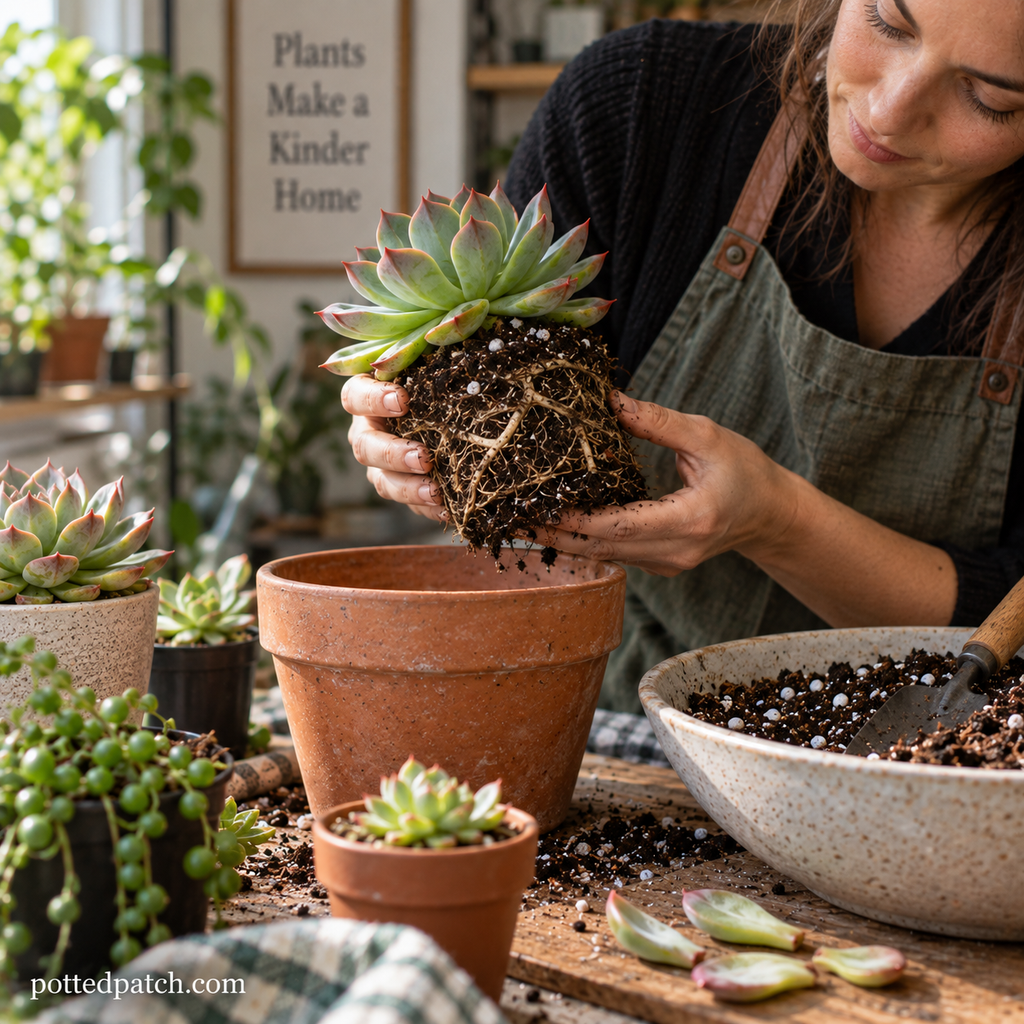
Succulents don’t need constant repotting.
Consider repotting when:
- Roots have filled the container
- Roots are emerging heavily from the drainage hole
- The soil has become compacted
- The potting mix drains poorly
- The plant has become unstable
- The current container is damaged
- You’ve discovered serious root problems
Spring or the beginning of a plant’s active growth period is often a convenient time to repot.
How to Repot a Succulent
- Choose a slightly larger container with drainage.
- Prepare fresh, fast-draining soil.
- Carefully remove the succulent from its old pot.
- Gently loosen excess old soil where appropriate.
- Inspect the roots for damage or rot.
- Remove clearly dead or rotted roots using clean tools.
- Position the plant in its new container.
- Fill around the roots without heavily compacting the soil.
Handle fleshy leaves carefully. Some succulent species drop leaves surprisingly easily.
How to Propagate Succulents
One of the most enjoyable things about growing succulents is how easily some varieties can be propagated.
Depending on the species, propagation may be possible through:
- Leaf cuttings
- Stem cuttings
- Offsets
- Division
Not every succulent can be propagated from an individual leaf, so identify your plant before choosing a method.
Propagating Succulents From Leaves
For species that support leaf propagation, start with a healthy, intact leaf.
Carefully remove the entire leaf from the stem. A torn or damaged base may be less successful.
Allow the leaf to sit in a dry location while the wound begins to callus. It can then be placed on or near an appropriate growing medium while you wait for roots and new growth to develop.
This isn’t an overnight process.
Depending on the plant and conditions, visible progress can take weeks.
Propagating From Stem Cuttings
Stem propagation is useful for many succulents and can also help rescue a plant that has become excessively tall or stretched.
Make a clean cut through healthy stem tissue and allow the cut surface to callus before planting it in an appropriate medium.
New roots can eventually develop from the cutting.
Common Succulent Pests
Succulents aren’t immune to pests.
Common indoor pests can include:
- Mealybugs
- Scale
- Spider mites
- Fungus gnats
- Aphids on some varieties
Mealybugs are especially noticeable because they can resemble tiny pieces of white cotton tucked between leaves.
How to Check a Succulent for Pests
Inspect:
- Between tightly packed leaves
- Under leaves
- Along stems
- Around new growth
- Near the soil line
- Around drainage holes
If you discover an infestation, separate the affected plant from your other houseplants while you identify and manage the problem.
The earlier pests are discovered, the easier they usually are to control.
Seasonal Succulent Care
Indoor succulent care isn’t completely static throughout the year.
Changes in daylight, temperature, and plant growth can dramatically affect how quickly soil dries and how much water a plant uses.
Rather than following exactly the same routine every month, adjust your care as conditions change.
Spring Succulent Care
Spring often brings longer days and stronger natural light.
For many succulents, this means more noticeable growth.
Increase Light Gradually
If your plants spent winter in relatively weak light, don’t immediately place them in hours of intense spring sun.
Gradually increase direct-light exposure to reduce the risk of sunburn.
This is especially important if you’re moving indoor plants outdoors.
Check Whether Repotting Is Needed
Spring is a useful time to inspect plants that have been in the same containers for a long time.
Look for:
- Crowded roots
- Compacted soil
- Poor drainage
- Unstable plants
- Damaged pots
Don’t repot simply because spring has arrived. If the plant still has suitable soil and adequate root space, leaving it alone may be perfectly fine.
Adjust Watering as Growth Increases
Longer days and warmer temperatures may cause pots to dry more quickly.
Check the soil regularly and water based on actual moisture levels.
Resume Fertilizing When Appropriate
If you reduced feeding during winter, active spring growth may be a suitable time to begin fertilizing again.
Start conservatively rather than applying a strong dose immediately.
Summer Succulent Care
Summer can be an excellent growing season, but intense sunlight and high temperatures introduce new challenges.
Watch for Excessive Heat
A windowsill receiving strong afternoon sunlight can become considerably hotter than the rest of the room.
Monitor your plants for:
- Bleached areas
- Brown patches
- Sudden discoloration
- Severe shriveling
Move sensitive plants slightly away from extremely hot glass if necessary.
Check Soil More Frequently
Warm temperatures can increase evaporation.
Your succulents may need watering more frequently than they did during winter, but that doesn’t mean the soil should remain constantly moist.
Let the potting mix dry appropriately between waterings.
Caring for Succulents Outdoors in Summer
Some indoor succulents benefit from spending part of the summer outdoors.
If you move plants outside:
- Start in a protected, bright location.
- Introduce direct sunlight gradually.
- Protect them from heavy, prolonged rain.
- Check more frequently for insects.
- Monitor nighttime temperatures.
Outdoor sunlight is much stronger than light coming through a window, so acclimation matters.
Fall Succulent Care
Fall is a transition period.
As daylight decreases and temperatures cool, your plants may begin using water more slowly.
Start Reducing Watering Frequency
Don’t reduce watering simply because the calendar says September.
Watch the soil.
If a pot that dried in five days during summer now takes ten days, adjust your routine accordingly.
This seasonal slowdown is one reason fixed watering schedules can cause problems.
Bring Outdoor Succulents Inside
If your plants spent summer outdoors, bring them inside before temperatures become unsuitable for their species.
Inspect them carefully first.
Check for:
- Mealybugs
- Spider mites
- Scale
- Aphids
- Other insects
- Eggs or webbing
It’s much easier to address pests before placing the plant back among your indoor collection.
Find the Brightest Indoor Location
Autumn sunlight becomes weaker and days become shorter.
You may need to move succulents closer to a bright window to maintain adequate light.
Winter Succulent Care
Winter is where many indoor succulent problems begin.
Lower light levels and cooler temperatures often mean soil stays wet much longer.
Be Especially Careful With Watering
A pot that needed water every week or two during warm weather may remain moist considerably longer in winter.
Always check before watering.
Keeping succulent roots constantly wet during low-light conditions can significantly increase the risk of rot.
Maximize Available Light
Place light-loving succulents near your brightest suitable window.
If natural light is consistently inadequate, a suitable grow light can help maintain healthier growth.
Keep Succulents Away From Cold Glass
Leaves touching extremely cold windows can become damaged.
Give plants some space from cold glass and protect them from drafts around poorly insulated windows and doors.
Don’t Force Growth
Some succulents naturally slow down during certain parts of the year.
Trying to force growth with extra fertilizer and water usually isn’t helpful.
Let the plant respond naturally to its environment.
Do All Succulents Go Dormant in Winter?
No.
This is an important reason not to treat every succulent exactly the same.
Different species can have different growth cycles. Some slow significantly during winter, while others may remain active or follow different seasonal patterns.
Indoor conditions complicate things further because artificial heating and lighting can influence a plant’s behavior.
Rather than assuming your succulent is dormant, watch for signs of active growth and learn about the particular species you’re growing.
Common Succulent Care Mistakes
Most succulent problems can be traced back to a handful of common mistakes.
Watering on a Strict Schedule
Your plant doesn’t know it’s Sunday.
Check the soil instead.
Using Soil That Stays Wet Too Long
Dense, moisture-retentive soil can make overwatering much easier.
Choose a fast-draining mixture appropriate for succulents.
Growing Succulents in Containers Without Drainage
Decorative containers without drainage can trap excess water around the roots.
If you love a decorative pot without a drainage hole, consider keeping the succulent in a smaller nursery pot that fits inside it. Remove the inner pot for watering and let it drain thoroughly before putting it back.
Not Providing Enough Light
Succulents can sometimes survive for months in inadequate light while gradually becoming stretched and weak.
Bright conditions are essential for many popular varieties.
Suddenly Moving Plants Into Full Sun
More light can be beneficial, but sudden exposure to intense sunlight can burn foliage.
Make the transition gradually.
Overfertilizing
Succulents don’t need large amounts of fertilizer.
More nutrients won’t compensate for insufficient light or poor root health.
Misting Instead of Watering
A quick spray isn’t a replacement for watering the root system.
Water thoroughly when needed and allow the soil to dry appropriately afterward.
How to Tell if Your Succulent Is Healthy
A healthy succulent generally has firm growth appropriate for its species.
Look for:
- Firm leaves or stems
- Compact growth
- Healthy new growth
- Stable roots
- Appropriate coloration
- No signs of pests
- Soil that dries normally after watering
Don’t expect perfection.
An older lower leaf occasionally drying and falling away is part of normal growth for many succulents. Small scars and cosmetic blemishes aren’t necessarily signs of poor health either.
Pay attention to changes rather than individual imperfections.
Frequently Asked Questions About Succulent Care
Are Succulents Easy to Care For?
Many succulents are relatively easy to grow once their basic needs are understood.
Good lighting and avoiding excessive watering are two of the biggest factors in long-term success.
How Often Should Indoor Succulents Be Watered?
Water when the soil has dried appropriately rather than following a fixed weekly schedule.
The actual interval can vary considerably depending on season, light, temperature, soil, and container size.
Do Succulents Need Direct Sunlight?
Many succulents appreciate some direct sunlight, but requirements vary by species.
Plants should also be acclimated gradually to stronger direct sun to prevent damage.
Where Is the Best Place to Put Succulents Indoors?
A bright window is usually a good starting point.
South- or west-facing windows often provide strong light, while east-facing windows can offer gentler morning sunlight. The ideal location depends on the species and your home’s conditions.
Why Is My Succulent Growing Tall and Skinny?
Tall, stretched growth often indicates insufficient light.
Move the plant gradually into brighter conditions. Existing stretched growth generally won’t become compact again, although new growth can improve.
Should I Cut Off Dead Succulent Leaves?
Completely dry or dead lower leaves can usually be removed gently.
Avoid pulling healthy leaves or aggressively removing foliage that is still providing energy to the plant.
Can Succulents Live in Bathrooms?
It depends on the bathroom.
A bright bathroom with adequate airflow may work for certain species. A dark bathroom with consistently high humidity is unlikely to provide ideal conditions for many common succulents.
Light is usually the bigger concern.
Can Succulents Grow Under Artificial Light?
Yes. Suitable grow lights can supplement or replace inadequate natural light.
The effectiveness depends on the light’s intensity, duration, and distance from the plants.
A Simple Year-Round Succulent Routine
You don’t need to make succulent care complicated.
For most indoor growers, a simple routine works well:
- Give the plant as much appropriate light as possible.
- Check the soil before watering.
- Water thoroughly when needed.
- Let excess water drain completely.
- Inspect the leaves and stems for pests.
- Rotate the plant occasionally for more even growth.
- Adjust watering and light as the seasons change.
- Repot only when there’s a reason to do so.
The goal isn’t to follow a perfect schedule. It’s to notice how your plant responds to its environment.
Final Thoughts
Successful succulent care is less about constant attention and more about providing the right conditions.
Start with strong light, fast-draining soil, and a container with proper drainage. Water thoroughly when the plant needs it, then give the soil time to dry. As daylight and temperatures change throughout the year, adjust your routine instead of treating every season the same.
Spring may bring stronger growth and an opportunity to repot. Summer requires attention to heat and intense sunlight. Fall is the time to prepare for shorter days, while winter often calls for much more cautious watering.
Most importantly, get to know the particular succulent you’re growing. These plants come from many different environments, so there isn’t one perfect routine for every species.
Once you learn to read the plant and respond to changing conditions, succulent care becomes much simpler—and far more rewarding.