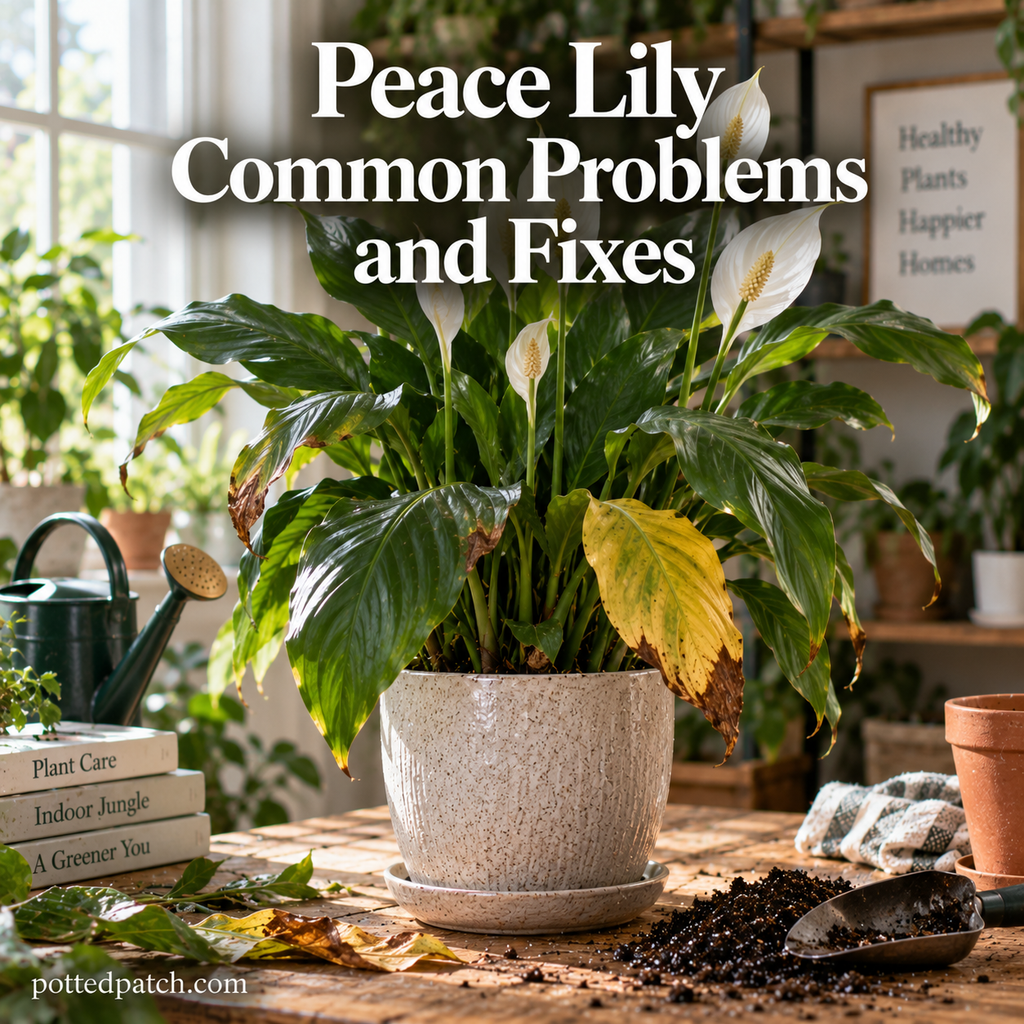
Peace lilies can show the same symptom for very different reasons, so the first question shouldn’t be “What should I add?” but “What changed?” This guide uses soil moisture, root condition, damage pattern, new growth, and recent changes to narrow down common Peace Lily problems before you start treating them.
Start Here: Diagnose the Plant Before You Treat It
Before focusing on one damaged leaf, check the plant as a whole.
I would start in this order:
- Feel the soil. Is it wet, slightly moist, dry, or extremely dry?
- Think about drying time. Is the pot taking much longer—or much less time—to dry than it normally does?
- Check drainage. Is water actually leaving the container?
- Look at the newest growth. Old damage tells you what happened; new growth tells you how the plant is doing now.
- Consider recent changes. Was the plant moved, repotted, fertilized, exposed to stronger sun, or affected by a seasonal change?
- Inspect the roots when the symptoms justify it. Don’t uproot a healthy plant just to investigate one brown tip.
That sequence matters because many Peace Lily symptoms overlap.
Drooping can mean dry soil or unhealthy roots. Yellow leaves can accompany excessive moisture or severe dehydration. Slow growth may be completely normal in darker months or a sign that something is wrong below the soil.
For normal watering, light, soil, potting, and fertilizing practices, use the Peace Lily Care Made Easy: The Complete Guide rather than changing routine care based on one damaged leaf.
Why Is My Peace Lily Drooping?
Drooping is probably the most recognizable Peace Lily symptom, but it isn’t a diagnosis by itself.
Check the soil before doing anything else.
Drooping With Dry Soil
If the foliage is limp and the root ball is genuinely dry, the plant probably needs water.
Water thoroughly enough to moisten the entire root ball and allow excess water to drain.
Then watch the plant.
A dehydrated Peace Lily may begin lifting its leaves again within several hours. That response is useful information: it supports dehydration as the cause.
Don’t make severe wilting your normal signal to water, though. Repeatedly letting the plant collapse from thirst can eventually contribute to damaged foliage.
Drooping With Wet Soil
This is the situation where I’d stop watering, not add more.
If the soil is already wet and the leaves are hanging, investigate:
- how long the soil has remained wet;
- whether the container drains;
- whether water is trapped inside a decorative pot;
- whether the soil is dense;
- whether the pot is oversized; and
- whether the roots are still firm and healthy.
A waterlogged root system can malfunction even though there’s plenty of moisture in the pot.
That’s why “my Peace Lily is drooping” isn’t enough information to tell someone to water it.
Drooping After Repotting
If drooping began immediately after repotting, recent root disturbance becomes an important clue.
Assuming the new pot, soil, and moisture level are appropriate, give the plant stable conditions instead of responding with several more interventions.
Don’t repot it again, flood it with water, fertilize it heavily, and move it to a completely different location on the same day.
Why Is My Peace Lily Wilting?
Wilting and drooping are often used interchangeably, but I find it useful to treat persistent wilting as a more serious version of the same diagnostic problem.
If dry soil caused the wilt and the plant firms up after watering, the cause is fairly straightforward.
I’d investigate further when:
- the plant stays wilted after appropriate watering;
- the soil is already wet;
- yellowing is increasing;
- stems near the base are becoming soft;
- the pot smells unpleasant; or
- the root system looks unhealthy.
At that point, don’t keep adding water because the leaves still look thirsty.
Move your attention below the soil.
Why Are My Peace Lily Leaves Turning Yellow?
One yellow leaf and six yellow leaves don’t tell the same story.
One Older Leaf Is Yellow
If an older outer leaf slowly turns yellow while the rest of the plant remains firm and healthy and new growth looks normal, natural leaf aging is a reasonable explanation.
Remove it once it has declined.
I wouldn’t change the plant’s entire care routine because of one aging leaf.
Several Leaves Are Yellow and the Soil Is Wet
This combination deserves much more attention.
Check how long the pot stays wet, whether the container drains properly, and whether the roots are healthy.
If yellowing increases while the root zone remains saturated, root stress or rot becomes more plausible.
Yellowing With Very Dry Soil
If the root ball has become extremely dry and the plant is also wilted, dehydration may be contributing.
Water thoroughly and return to more consistent moisture rather than compensating with frequent small drinks.
Watch the New Leaves
The pattern after you correct the problem matters more than making damaged leaves look better.
A yellow leaf won’t become green again.
What you want to see is the yellowing stop spreading and subsequent growth emerge healthy.
For broader symptom diagnosis beyond Peace Lilies, the Complete Guide to Indoor Plant Problems covers the same diagnostic approach across houseplants.
Why Does My Peace Lily Have Brown Tips?
Brown tips are common enough that I wouldn’t treat a tiny amount of browning as an emergency.
I become more interested when new leaves repeatedly develop fresh brown tips.
Possible contributors include:
- repeated severe drying;
- inconsistent moisture;
- very dry indoor air;
- fertilizer or mineral buildup;
- water quality; and
- root stress.
Look for a pattern before changing anything.
If browning appeared after you began fertilizing more frequently, investigate buildup. If it becomes worse during winter when indoor heating is running, dry air and changes in watering deserve attention. If the soil alternates between extremely dry and saturated, improve that inconsistency first.
Could the Water Be Causing Brown Tips?
It’s possible, but I wouldn’t make tap water the first suspect automatically.
If the root system is healthy, watering is consistent, fertilizer isn’t being overused, and new leaves continue developing brown tips, trying an alternative water source can be a useful test.
The important part is changing one variable and watching subsequent growth.
Should You Cut Off Brown Tips?
You can trim them for appearance with clean scissors.
Follow the leaf’s natural shape and avoid removing unnecessary healthy tissue.
Just don’t confuse trimming with treatment. The useful evidence is whether new foliage develops the same damage.
Why Are My Peace Lily Leaves Curling?
Leaf curling is another symptom where the surrounding conditions matter more than the curl itself.
Start with the soil.
Curling + very dry soil: investigate dehydration.
Curling + intense sun or heat: check whether exposed leaves are receiving too much direct light.
Curling + wet soil and general decline: inspect the root zone rather than automatically watering.
Curling + unusual speckling, webbing, residue, or distorted new growth: inspect carefully for pests.
Location can also matter. A plant beside hot glass, a heating vent, or strong afternoon sun may behave differently from the same plant several feet farther into the room.
If you’re deciding whether the plant’s location is contributing, use the room-by-room indoor plant placement guide to evaluate the actual light and environmental conditions rather than relying on room names alone.
Peace Lily Root Rot
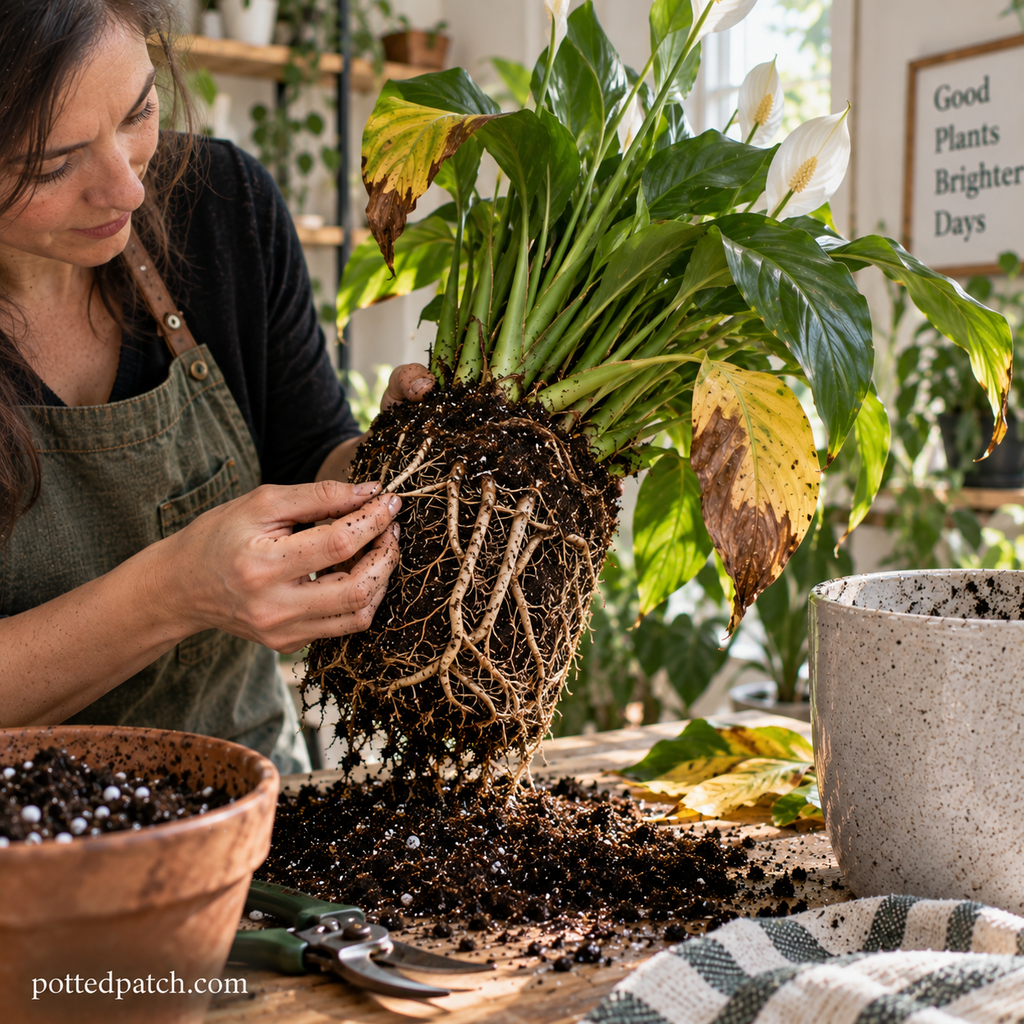
Root rot is one problem I wouldn’t diagnose from foliage alone.
Yellow leaves, drooping, and slow growth can all occur for other reasons.
The combination that makes me much more suspicious is:
declining foliage + persistently wet soil + unhealthy roots.
What Peace Lily Root Rot Looks Like
Remove the plant from its pot when the symptoms genuinely justify checking the root system.
Healthy roots should generally feel firm.
Don’t diagnose rot from color alone. Roots can naturally vary in color depending on their age and the potting mix.
Texture is more useful.
Rotten roots may be:
- mushy;
- soft;
- slimy;
- fragile or collapsing;
- unusually dark; and
- unpleasant smelling.
If a dark root is still firm, don’t automatically cut it off simply because it isn’t pale.
How to Fix Peace Lily Root Rot
Once you’ve confirmed rotten roots:
- Remove the plant from its container.
- Gently expose enough of the root system to see the damage.
- Cut away clearly soft, rotten roots using clean tools.
- Remove badly degraded potting mix.
- Clean the existing container or use an appropriate clean one.
- Repot into fresh, well-draining mix.
- Make sure excess water can leave the container.
- Correct the condition that kept the roots wet in the first place.
That final step is easy to overlook.
Fresh soil won’t permanently solve the problem if the plant goes straight back into an oversized pot, poor light, standing drainage water, or the same excessive watering routine.
How to Tell Whether It’s Recovering
Don’t judge recovery by waiting for damaged leaves to repair themselves.
They won’t.
Look for the decline to stop and, eventually, for healthy new growth.
A plant that lost substantial root mass may need time before the foliage starts looking vigorous again.
Why Does My Peace Lily Have Soft Stems?
Soft stems deserve more attention than an ordinary drooping leaf, especially when the softness is close to the soil line.
First determine whether the stem is simply bent or limp versus physically soft or mushy.
If the base is soft and the soil has remained wet, inspect for root or crown deterioration.
I’d be especially concerned if soft stems appear together with:
- yellowing;
- a foul smell;
- blackened tissue;
- mushy roots; or
- foliage collapsing despite wet soil.
Don’t keep the plant saturated in an attempt to make soft stems stand back up.
Remove deteriorating tissue when necessary, correct the root-zone problem, and preserve as much healthy plant material as possible.
If the stems are firm but the entire plant is merely hanging downward, return to the drooping and wilting checks instead.
Why Is My Peace Lily Dropping Leaves?
Leaf drop is more useful diagnostically when you look at how many leaves are being lost and what happens before they fall.
One aging outer leaf is very different from a plant rapidly losing foliage.
Check for:
- persistently wet or extremely dry soil;
- yellowing before the leaves die;
- root deterioration;
- recent repotting;
- sudden temperature changes;
- a major relocation;
- severe light changes; and
- pest damage.
If several symptoms started shortly after the plant was moved, repotted, or exposed to cold, that timing is valuable.
Don’t ignore what happened immediately before the decline.
Once you’ve corrected the likely cause, stop measuring recovery by the damaged leaves. Watch whether additional leaves continue to decline.
If leaf loss slows and healthy growth eventually resumes, that’s a better sign that the correction worked.
Why Is My Peace Lily Growing Slowly?
Slow growth isn’t automatically a problem.
This distinction matters particularly in fall and winter.
A healthy Peace Lily growing more slowly during a period of shorter days is very different from a plant that has stopped growing while simultaneously yellowing, drooping, and sitting in wet soil.
Slow Growth With Otherwise Healthy Foliage
Check the season and available light first.
Peace lilies tolerate lower light, but a plant sitting well back from a window may remain alive while producing very little new growth.
If the location is dim, improve the light before assuming the plant needs more fertilizer.
Slow Growth With Wet Soil
Look below the surface.
Low light, an oversized container, dense soil, or damaged roots can all leave the root zone wet for an unusually long time.
That’s not a situation I’d try to solve by feeding the plant more.
Slow Growth After Repotting
Recent root disturbance can temporarily change growth.
If the plant otherwise appears stable, allow it time to establish instead of immediately repotting it again.
How to Encourage Recovery
Once you’ve corrected the limiting condition, watch the newest leaves.
Healthy new growth is much better evidence of improvement than the appearance of an old damaged leaf.
Baseline light, feeding, soil, watering, and repotting practices are covered in the complete Peace Lily care guide.
Why Is There Mold on My Peace Lily’s Soil?
A small amount of surface mold doesn’t automatically mean the Peace Lily itself has root rot.
But it tells you something about the environment at the soil surface.
Mold is more likely when the surface stays damp for extended periods and there’s limited air movement.
Before treating the visible mold, ask why the surface isn’t drying.
Check:
- how frequently you’re watering;
- how long the pot stays wet;
- the amount of light;
- drainage;
- the density of the potting mix; and
- whether dead organic material is accumulating on the surface.
You can remove the affected surface material, but I’d consider that cleanup rather than the complete fix.
If the same mold quickly returns, address the moisture conditions supporting it.
Mold vs. Root Rot
Don’t assume they’re the same problem.
Surface mold can occur while the roots remain healthy.
Root rot involves deteriorating root tissue.
If the plant itself is declining, the soil stays saturated, or there’s an unpleasant smell coming from deeper in the pot, inspect more carefully.
A Better Way to Troubleshoot Peace Lily Problems
The easiest mistake with Peace Lilies is treating the visible symptom before identifying the condition producing it.
Use this sequence:
- Check moisture first. Dry and wet soil can produce surprisingly similar foliage symptoms.
- Check drainage and drying time. A pot suddenly staying wet much longer than normal is useful evidence.
- Look at the pattern. One old yellow leaf means something different from widespread yellowing.
- Look at new versus old growth. Old damage doesn’t disappear after you fix the cause.
- Think backward. What changed before the symptom appeared?
- Inspect roots when justified. Persistent wetness plus declining foliage is a stronger reason than one cosmetic brown tip.
- Change the most likely cause first.
- Give the plant time to respond before changing something else.
The Complete Indoor Plant Care Guide goes deeper into the light, watering, soil, humidity, feeding, and seasonal principles behind those decisions.
What Recovery Actually Looks Like
A recovering Peace Lily doesn’t necessarily become cosmetically perfect.
Yellow tissue won’t turn green again. Brown tips won’t refill themselves. Leaves badly damaged by root problems won’t suddenly look new.
Look instead for:
- no new yellowing;
- no continuing leaf drop;
- stable stems and foliage;
- a root zone returning to a predictable wet-to-dry cycle; and
- eventually, healthy new leaves.
That distinction can prevent a common cycle: seeing old damage, assuming the treatment failed, changing the care routine again, and stressing a plant that was already beginning to recover.
Correct the underlying condition, then judge the next stage of growth rather than expecting the previous damage to disappear.