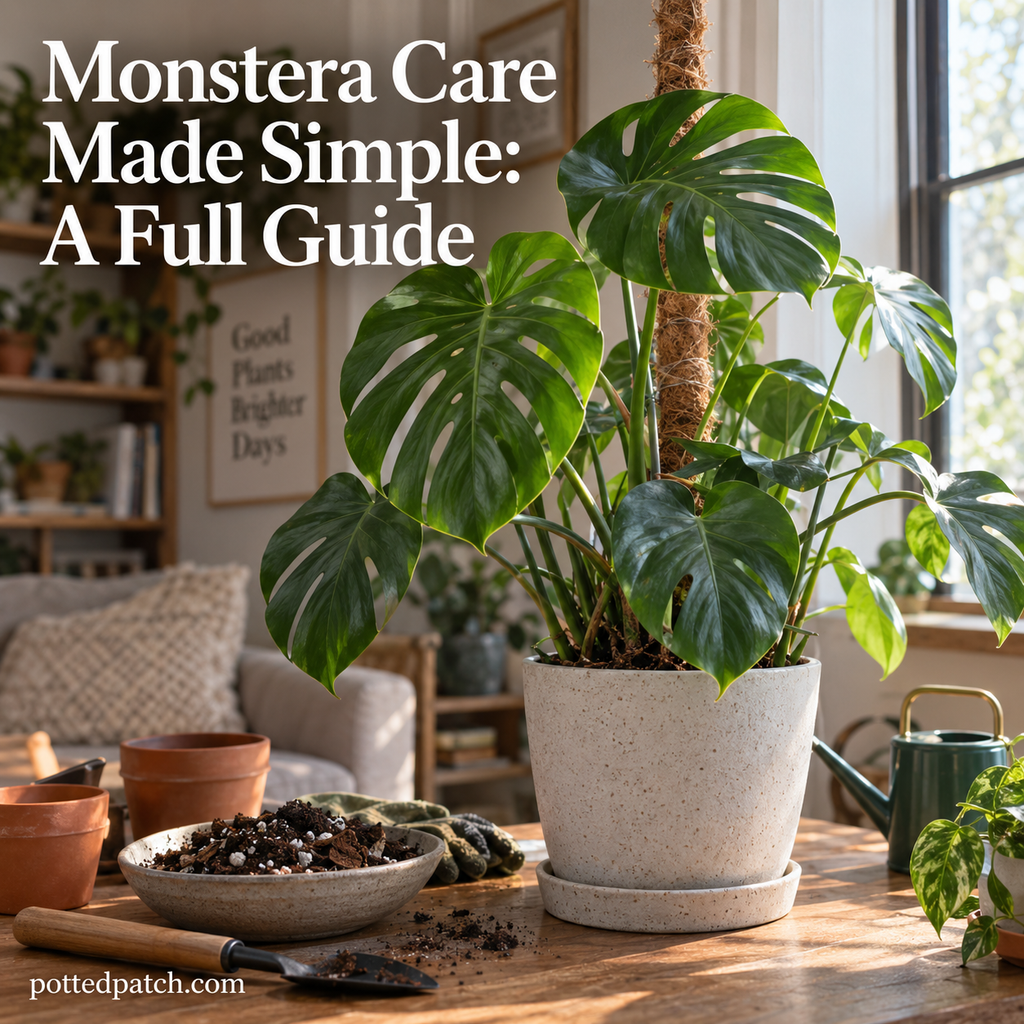
Monsteras have become some of the most recognizable houseplants around, and it’s easy to see why. Their large green leaves, dramatic splits, and tropical appearance can transform an ordinary corner into something that feels lush and inviting.
Fortunately, Monstera care isn’t especially complicated. Give the plant bright indirect light, a well-draining soil mix, sensible watering, and enough room to climb, and it can thrive indoors for years.
This guide covers the essentials of growing a healthy Monstera indoors, including light, watering, soil, humidity, fertilizing, repotting, pruning, propagation, and common problems.
About Monstera Plants
Monstera is a genus of tropical plants native to the Americas. In their natural environment, many Monsteras grow as climbing plants, using trees for support as they reach toward brighter light.
The species most commonly grown as a houseplant is Monstera deliciosa. It is sometimes called the Swiss cheese plant because mature leaves develop distinctive holes and splits known as fenestrations.
A healthy indoor Monstera can become quite large. While young plants may fit comfortably on a table or plant stand, mature specimens often become floor plants and may need a moss pole, trellis, or other support.
Monstera Care at a Glance
For a quick overview, aim for these general conditions:
- Light: Bright, indirect light
- Water: When the upper portion of the soil begins to dry
- Soil: Loose, chunky, well-draining potting mix
- Humidity: Average to moderately high household humidity
- Temperature: Approximately 65–85°F (18–29°C)
- Fertilizer: Balanced houseplant fertilizer during active growth
- Repotting: Usually every 1–2 years, depending on growth
- Support: Moss pole, coir pole, stake, or trellis as the plant matures
These aren’t rigid rules. Your home’s light, temperature, pot size, soil, and season all influence how quickly a Monstera uses water and grows.
How Much Light Does a Monstera Need?
Monsteras generally perform best in plenty of bright, indirect light.
Place your plant close enough to a window that it receives good natural light throughout the day without being exposed to intense direct sun for long periods.
An east-facing window can work particularly well. A bright south- or west-facing room can also be suitable, although the plant may need to sit farther from the window or behind a sheer curtain if sunlight becomes harsh.
Signs Your Monstera Needs More Light
A Monstera growing in insufficient light may:
- Produce smaller leaves
- Develop fewer splits or holes
- Become stretched or leggy
- Lean strongly toward a window
- Grow very slowly
- Take longer for its soil to dry
Keep in mind that young Monstera leaves naturally have fewer fenestrations. A lack of splits doesn’t automatically mean something is wrong.
Can Monstera Handle Direct Sun?
Some gentle direct sunlight, particularly early in the morning, may be tolerated. Strong midday or afternoon sunlight can be much more intense.
A plant that has been growing in relatively low light is especially vulnerable if suddenly moved into direct sun.
If you want to give your Monstera more sunlight, increase its exposure gradually rather than moving it immediately into a dramatically brighter location.
How Often Should You Water a Monstera?
One of the easiest ways to run into problems with Monstera care is to water according to a strict calendar.
Instead, check the soil.
Allow the upper few inches of the potting mix to dry before watering again. You can check by inserting a finger into the soil or using a wooden chopstick to get a better idea of moisture deeper in the pot.
When it’s time to water:
- Water the soil thoroughly.
- Continue until excess water begins draining from the bottom of the pot.
- Allow the pot to drain.
- Empty standing water from the saucer or decorative outer pot.
Then wait until the soil has dried sufficiently before watering again.
Why a Fixed Watering Schedule Doesn’t Always Work
Your Monstera might need water more frequently during warm, bright periods when it is actively growing. During cooler or darker months, the same plant may use water much more slowly.
Watering frequency can also change depending on:
- Pot size
- Plant size
- Soil composition
- Indoor temperature
- Humidity
- Amount of sunlight
- Type of container
Checking the soil is usually more reliable than deciding that every Monstera needs water once a week.
Signs of an Overwatered Monstera
Consistently wet soil can deprive roots of oxygen and encourage root problems.
Possible warning signs include:
- Yellowing leaves
- Soft or dark stems
- Drooping despite wet soil
- Soil remaining damp for unusually long periods
- An unpleasant smell coming from the potting mix
- Brown or black areas on leaves
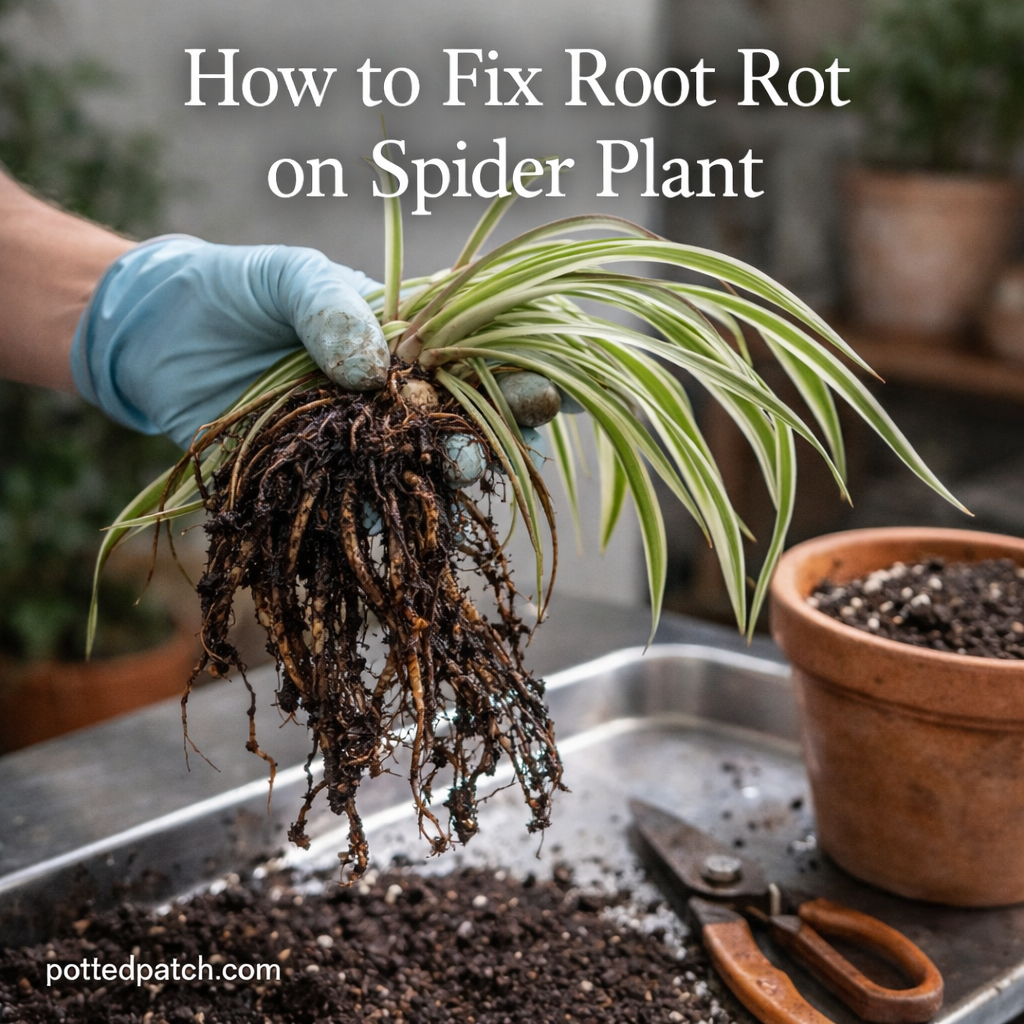
- Soft, dark, or mushy roots
If the soil remains saturated for a long time, don’t simply add more water because the leaves are drooping. Check the soil and roots first.
What Monstera Root Rot Looks Like
Healthy Monstera roots are generally firm. Root rot often causes affected roots to become brown or black, soft, mushy, or easily damaged.
If you suspect root rot, carefully remove the plant from its container and inspect the root system.
Trim badly rotted roots with clean pruning tools and repot the plant in fresh, well-draining soil. Make sure the new container has adequate drainage holes.
Signs of an Underwatered Monstera
A thirsty Monstera can also droop, which is why drooping alone isn’t enough to diagnose the problem.
Signs that may point toward underwatering include:
- Very dry soil
- Curling leaves
- Drooping foliage
- Crispy brown leaf edges
- A pot that feels unusually light
If the soil has become extremely dry, water thoroughly rather than giving the plant a small splash.
Very dry potting mixes can sometimes repel water initially. If water immediately runs down the sides and out of the drainage holes, apply it more slowly so the root ball has a chance to absorb moisture.
Choosing the Best Soil for Monstera
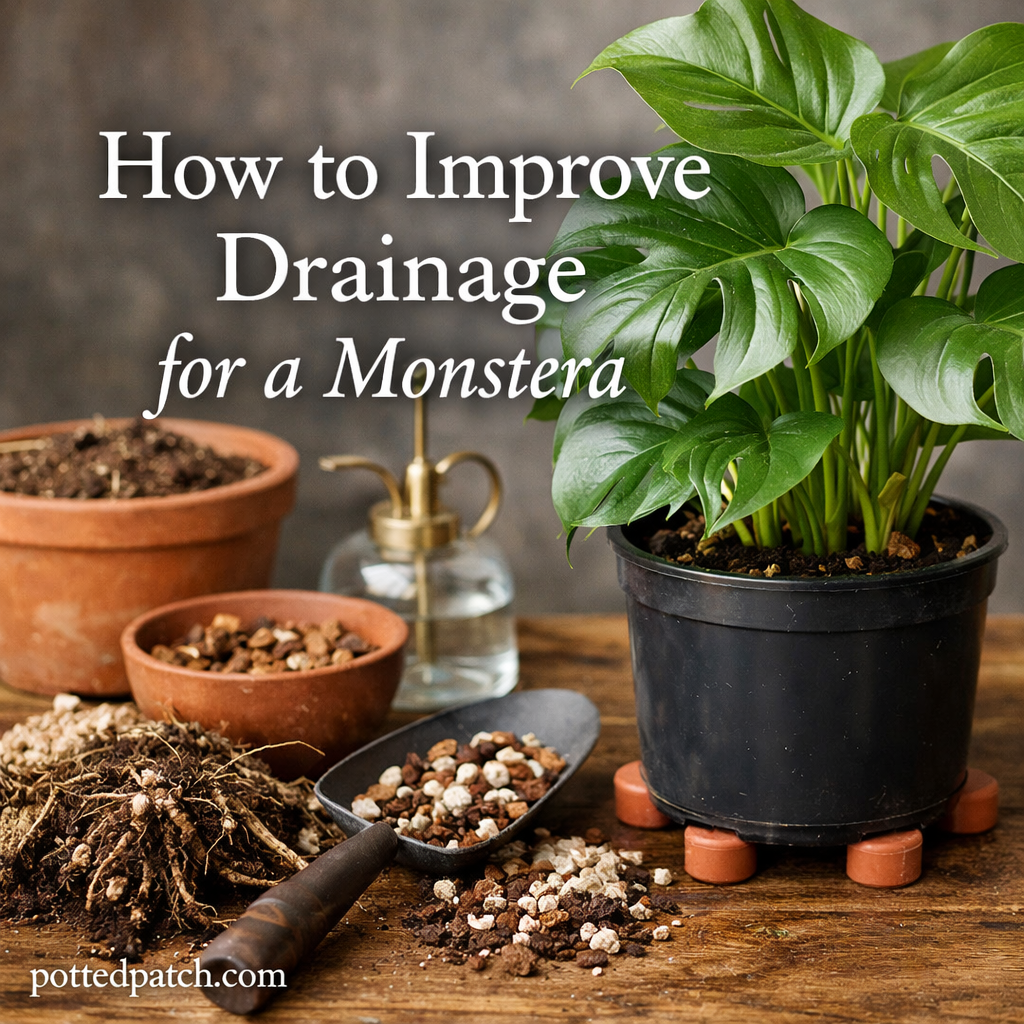
Monsteras appreciate moisture, but they don’t generally do well sitting in dense, waterlogged soil.
A loose, airy mixture helps balance moisture retention with drainage and airflow around the roots.
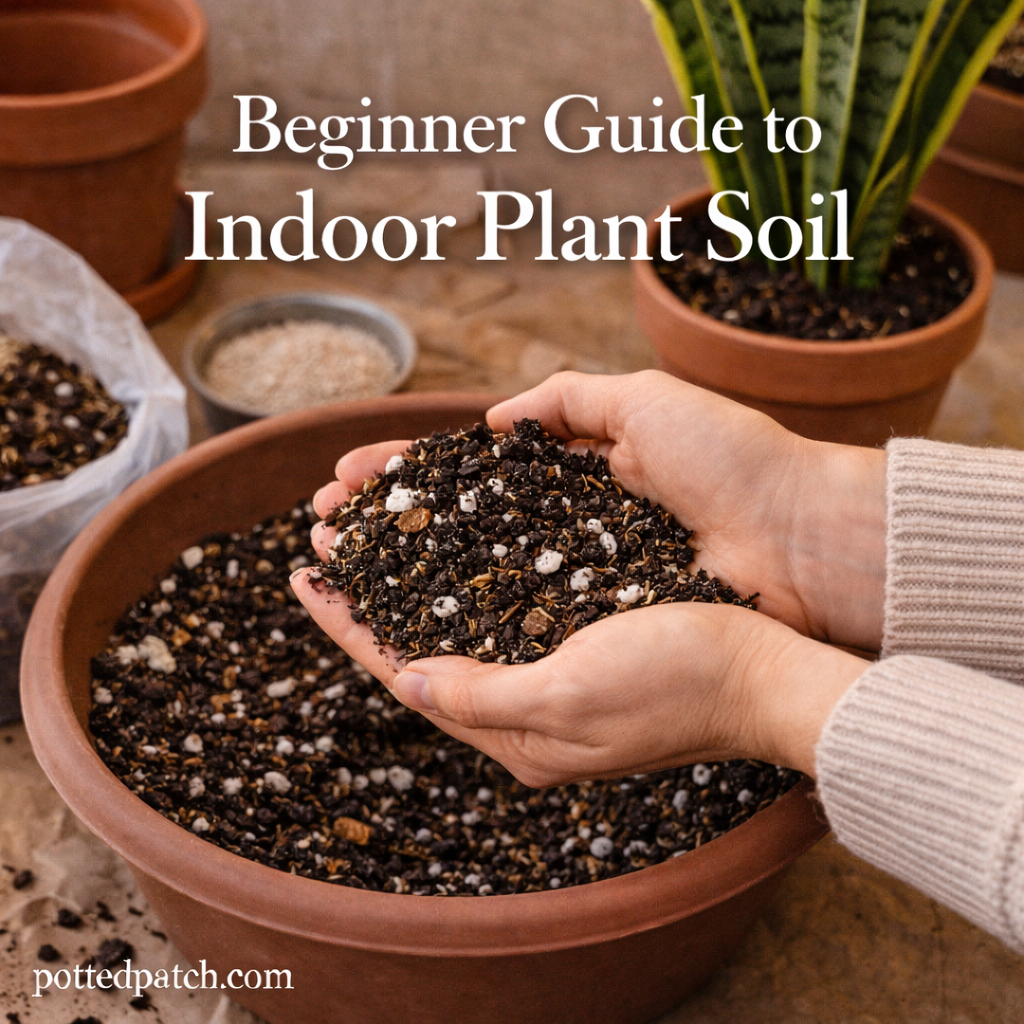
A practical Monstera soil mix can contain:
- Quality indoor potting mix
- Orchid bark
- Perlite or pumice
- Coco coir or a similar moisture-retaining component
You don’t need an elaborate recipe to grow a healthy plant. The important thing is that the finished mixture drains effectively while retaining enough moisture that the roots don’t dry immediately.
Why Chunky Soil Helps
Monstera roots benefit from oxygen as well as water. Larger particles such as bark create spaces within the potting mix where air can circulate.
Dense soil tends to compact over time and can stay wet much longer, particularly in large containers or lower-light environments.
If your Monstera’s soil remains soggy for many days after watering, the potting mix may be too moisture-retentive for its current conditions.
Choosing the Right Pot
A Monstera doesn’t need an enormous container to grow well.
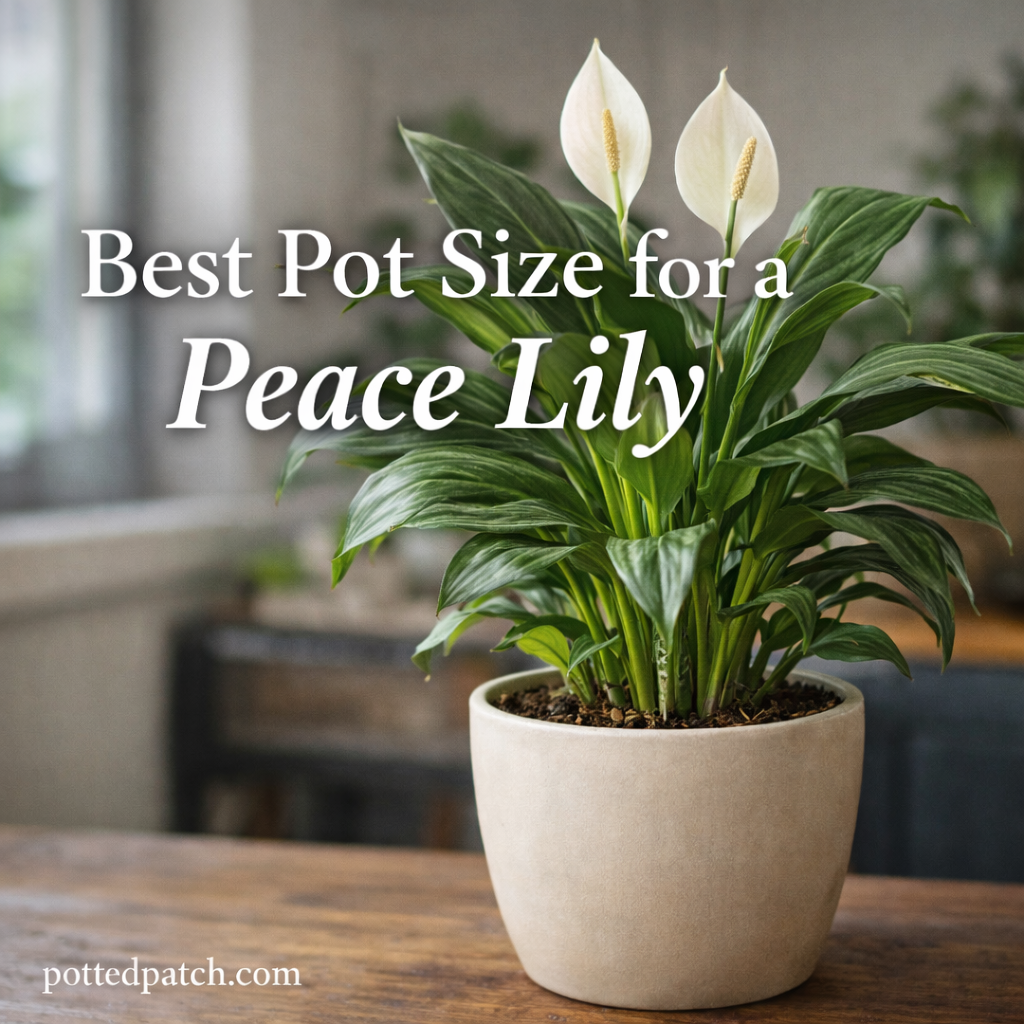
When repotting, choose a pot only somewhat larger than the existing root system. Moving a relatively small plant into a huge container leaves a large amount of unused soil surrounding the roots, which can remain wet longer than expected.
Drainage holes are especially important.
Common pot materials include plastic, glazed ceramic, and terracotta. Each behaves somewhat differently. Terracotta tends to lose moisture more quickly, while plastic and glazed pots generally retain it longer.
There’s no single best choice. Adjust your watering habits to the container you’re using.
Temperature and Humidity for Monstera
Monsteras are tropical plants and generally prefer the same comfortable temperatures found in many homes.
A range of roughly 65–85°F (18–29°C) is suitable for typical indoor growth.
Try to protect the plant from:
- Cold drafts
- Sudden temperature changes
- Air-conditioning vents
- Heating vents
- Very cold windows during winter
Does Monstera Need High Humidity?
Monsteras can adapt to normal household humidity, although moderately humid conditions can be beneficial.
If your indoor air is extremely dry, consider grouping plants together or using a humidifier.
You don’t need to turn your living room into a tropical greenhouse. Good light, proper watering, and healthy roots generally deserve more attention than trying to achieve a precise humidity percentage.
How to Fertilize a Monstera
Monsteras can grow quickly when conditions are favorable, and regular feeding helps provide nutrients needed for new foliage and roots.
During active growth, use a balanced houseplant fertilizer according to the product’s directions.
Avoid assuming that more fertilizer means faster growth. Excess fertilizer can cause salt buildup in the soil and potentially damage roots.
Signs of excessive fertilizer may include:
- Brown leaf tips
- Crusty residue on the soil
- White deposits around the pot
- Declining growth despite regular feeding
Reduce or stop fertilizing when the plant’s growth slows substantially, particularly during darker winter conditions.
How to Make a Monstera Grow Bigger Leaves
Large, fenestrated leaves are one of the main reasons people grow Monsteras.
However, fertilizer alone won’t turn a young plant into a mature specimen.
Leaf size and fenestration are influenced by several factors, particularly plant maturity, adequate light, and growing conditions.
To encourage stronger growth:
- Provide plenty of bright indirect light.
- Allow the plant to climb.
- Keep watering consistent.
- Provide nutrients during active growth.
- Avoid repeatedly disturbing the root system.
- Give the plant time to mature.
Young Monsteras often produce relatively small, solid leaves. As the plant matures under good conditions, new leaves can become progressively larger and more fenestrated.
Does a Monstera Need a Moss Pole?
A support isn’t absolutely necessary for keeping a Monstera alive, but it can help the plant grow in a way that resembles its natural climbing habit.
Without support, a mature Monstera may begin sprawling sideways and taking up considerable floor space.
You can use:
- Moss poles
- Coir poles
- Wooden stakes
- Planks
- Trellises
Position the main stem against the support and secure it loosely with plant ties. Avoid tightly tying leaf petioles to the pole because the leaves need freedom to move and orient themselves toward light.
What Should You Do With Aerial Roots?
Monsteras commonly produce aerial roots from their stems. These are normal.
You can guide aerial roots toward a support or into the potting mix when practical. Long, inconvenient aerial roots can also be trimmed with clean tools if necessary.
They aren’t a sign that something is wrong with the plant.
How and When to Repot a Monstera
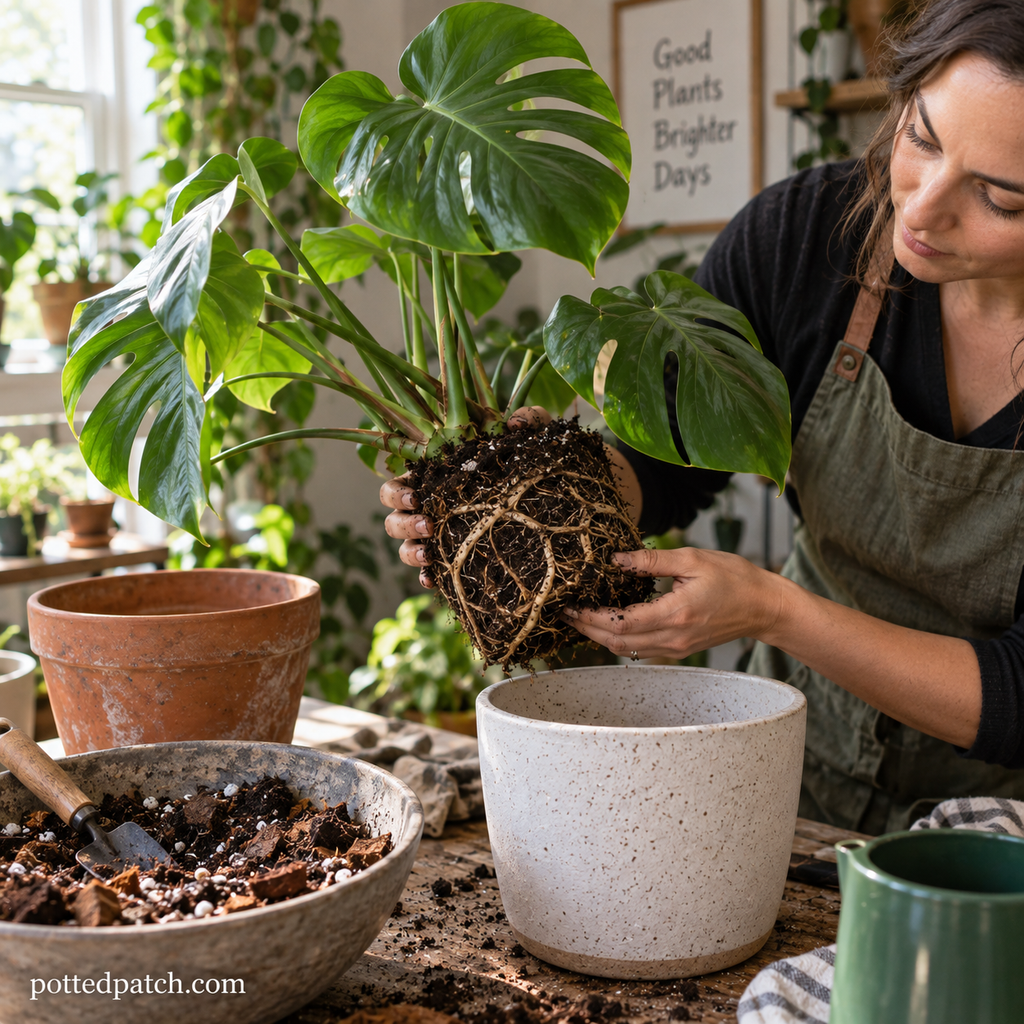
Monsteras generally need repotting when their roots have significantly filled their current container or when the existing soil has deteriorated.
Depending on growth, this may be necessary roughly every one to two years, although some plants can stay in the same container longer.
Signs that repotting may be appropriate include:
- Roots densely circling inside the pot
- Roots emerging extensively from drainage holes
- Water passing through the pot unusually quickly
- The plant becoming unstable in its container
- Old soil becoming compacted
- Growth slowing despite otherwise suitable conditions
How to Repot a Monstera
- Prepare a container slightly larger than the current one.
- Add some fresh potting mix.
- Carefully remove the Monstera from its old pot.
- Inspect the roots and remove any that are clearly dead or rotted.
- Position the plant at approximately the same depth as before.
- Fill around the roots with fresh soil.
- Gently settle the mixture without heavily compacting it.
- Water as appropriate for the condition of the roots and potting mix.
This is also a convenient time to install a support if your Monstera is beginning to climb.
How to Prune a Monstera
Pruning can help control the size and shape of a mature Monstera.
Use clean, sharp pruning shears and decide what you’re trying to accomplish before making a cut.
You might prune to:
- Remove badly damaged leaves
- Control excessive growth
- Improve the plant’s shape
- Remove unhealthy stems
- Take cuttings for propagation
An individual damaged leaf can usually be removed by cutting its petiole near the main stem without damaging surrounding growth.
Don’t remove healthy leaves simply because they have a few cosmetic imperfections. Those leaves are still helping the plant photosynthesize.
How to Propagate Monstera
Monstera deliciosa is commonly propagated from stem cuttings.
The most important part is the node.
A leaf and petiole without a viable stem node may remain green for some time, but it cannot produce a complete new plant in the same way a proper node cutting can.
Propagating Monstera in Water
To propagate in water:
- Find a healthy section of stem containing at least one node.
- Make a clean cut below the node.
- Place the node in clean water while keeping as much foliage above water as possible.
- Put the cutting somewhere with bright, indirect light.
- Replace or refresh the water as needed.
- Wait for a healthy root system to develop.
- Transfer the cutting into an appropriate potting mix.
Don’t rush the process. Root development takes time, and conditions inside the home can affect how quickly a cutting progresses.
Can You Propagate Monstera Directly in Soil?
Yes. A viable node cutting can also be rooted directly in a suitable growing medium.
Keep the medium lightly moist rather than saturated while roots establish. Maintaining warmth and adequate humidity can help prevent the cutting from losing moisture too quickly.
Common Monstera Problems
Even a well-cared-for Monstera occasionally develops an imperfect leaf. One yellow tip or small brown spot doesn’t necessarily mean the entire plant is unhealthy.
Look for patterns and recent changes before making major adjustments.
Yellow Leaves
Yellow Monstera leaves can have several causes, including:
- Excessive watering
- Poor drainage
- Insufficient light
- Root problems
- Nutrient issues
- Natural aging of older leaves
Start by checking the soil rather than automatically adding fertilizer or water.
An occasional older leaf turning yellow can simply be part of normal growth. Multiple leaves yellowing in a short period deserves closer investigation.
Brown Leaf Tips or Edges
Brown edges can be associated with:
- Inconsistent watering
- Very dry conditions
- Fertilizer or mineral buildup
- Root stress
- Physical damage
Avoid diagnosing the plant based on one symptom alone. Check its soil, roots, light, and recent care history.
Black or Dark Brown Spots
Dark spots may develop after severe watering problems, cold exposure, physical injury, or other forms of plant stress.
If spots are rapidly spreading or appearing across several leaves, inspect the plant carefully rather than simply cutting away the visible damage.
Curling Leaves
Leaves can curl when a plant is dehydrated or experiencing environmental stress.
Check soil moisture and look for other clues. A plant with curling leaves and bone-dry soil requires a different response from one with curling leaves sitting in saturated soil.
Common Monstera Pests
Indoor Monsteras can occasionally attract common houseplant pests.
Watch for:
- Spider mites
- Thrips
- Mealybugs
- Scale insects
Get into the habit of inspecting both sides of the leaves, particularly when watering.
Possible pest symptoms include tiny moving insects, sticky residue, webbing, unusual stippling, silvery damage, distorted new growth, or clusters of cotton-like material.
What to Do If You Find Pests
First, move the affected plant away from other houseplants when practical.
Then identify the pest before choosing a treatment. Depending on the infestation, management may involve physically removing insects, washing foliage, pruning heavily affected material, or using an appropriately labeled horticultural product.
Check nearby plants as well. Catching an infestation early is much easier than dealing with pests after they’ve spread throughout an indoor plant collection.
Cleaning Monstera Leaves
Large Monstera leaves naturally collect dust.
Occasionally wipe them with a soft, damp cloth, supporting each leaf gently with your other hand. Cleaning makes the foliage look better and removes dust without the need for leaf-shine products.
This is also a good opportunity to inspect for pests and catch problems early.
Where Should You Put a Monstera Indoors?
The best location combines good light with enough physical space for future growth.
Look for an area that:
- Receives bright indirect light
- Isn’t directly beside a heating or cooling vent
- Has room for the leaves to expand
- Can accommodate a support
- Is easy to access for watering and inspection
Think about the plant’s future size, not just how it looks today. A small Monstera can eventually occupy a surprisingly large amount of space.
Monstera Care Through the Seasons
Indoor conditions change throughout the year, even when your thermostat stays relatively consistent.
Spring and Summer
Longer days and brighter light often encourage more active growth.
During this period, your Monstera may:
- Need water more frequently
- Produce new leaves
- Benefit from regular fertilizing
- Need pruning or repotting
- Grow more vigorously up its support
Continue checking the soil rather than increasing watering automatically.
Fall and Winter
Shorter days can slow growth, particularly in homes that receive significantly less natural light during winter.
The soil may consequently take longer to dry.
Adjust watering accordingly and reduce fertilizing when growth slows. Keeping a summer watering routine through a darker winter is one way otherwise healthy plants end up staying too wet.
Monstera Care Mistakes to Avoid
Monsteras are fairly forgiving, but several common habits can make care unnecessarily difficult.
Try to avoid:
- Watering automatically on a fixed schedule
- Keeping the soil constantly wet
- Using a pot without drainage
- Placing the plant in very low light
- Moving it suddenly into intense direct sunlight
- Repotting into an excessively large container
- Applying too much fertilizer
- Assuming every yellow leaf means the plant needs water
- Cutting a propagation without including a node
- Ignoring pests until the infestation becomes severe
Most Monstera problems are easier to solve when they’re noticed early.
Frequently Asked Questions About Monstera Care
Are Monsteras Easy to Care For?
Generally, yes. Monstera deliciosa can adapt well to typical indoor environments when given adequate light, appropriate watering, and well-draining soil.
The biggest challenge for many growers is avoiding excessive watering.
How Often Should I Water My Monstera?
There isn’t a universal number of days between waterings. Check the soil and water once the upper portion has dried sufficiently.
Your watering frequency will naturally change with the seasons and your home’s conditions.
Why Doesn’t My Monstera Have Holes?
Young Monsteras naturally begin with simpler leaves. Fenestrations generally become more pronounced as the plant matures.
Good light, climbing support, proper nutrition, and time can encourage the development of larger, more mature foliage.
Should I Mist My Monstera?
Regular misting isn’t necessary for successfully growing a Monstera. If your home is extremely dry and you want to increase humidity, a humidifier provides more consistent control.
Why Is My Monstera Drooping?
Both excessively dry and excessively wet soil can contribute to drooping.
Check the soil before watering. If it’s wet, adding more water may make the underlying problem worse.
Should I Cut Off Yellow Monstera Leaves?
A completely yellow leaf won’t return to green and can be removed with clean pruning shears.
If several leaves are turning yellow, however, investigate the underlying cause before simply removing them all.
Can Monstera Grow in Low Light?
A Monstera may survive in relatively low light, but survival isn’t the same as thriving.
Growth can become slower and less vigorous, and new leaves may remain smaller or develop fewer fenestrations. Bright indirect light is generally a better choice.
Is Monstera Toxic to Pets?
Monstera plants contain insoluble calcium oxalate crystals and can cause painful irritation of the mouth and gastrointestinal tract if chewed or ingested by cats or dogs. Keep the plant somewhere curious pets cannot easily reach it.
Final Thoughts
Monstera care becomes much easier once you stop trying to follow a rigid schedule and start responding to what the plant is actually telling you.
Give your Monstera plenty of bright indirect light. Let the soil partially dry between thorough waterings. Use an airy potting mix and a container with good drainage. As the plant matures, provide something sturdy to climb.
Most importantly, give it time.
Not every leaf will be perfect, and growth won’t look the same throughout the year. With consistent care and a suitable environment, however, a Monstera can gradually develop from a modest houseplant into an impressive indoor centerpiece with large, deeply fenestrated leaves.