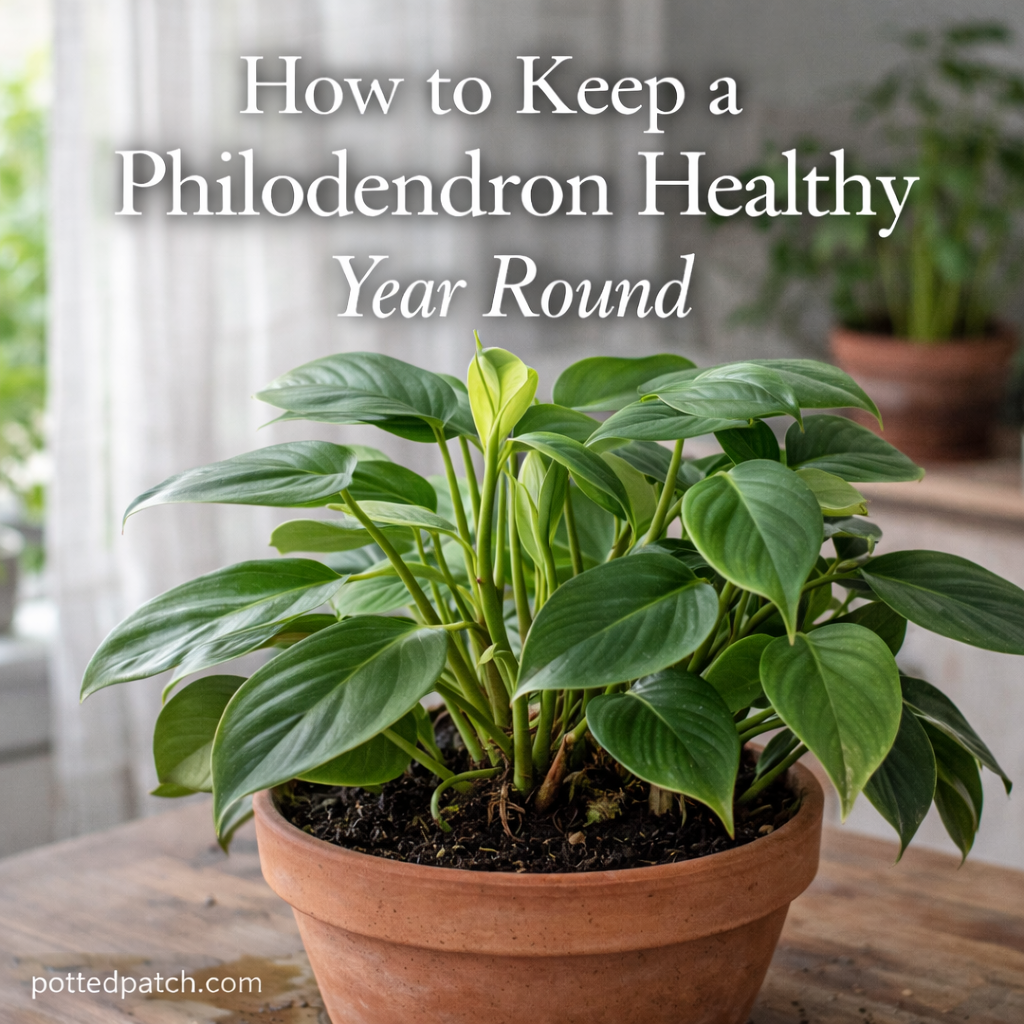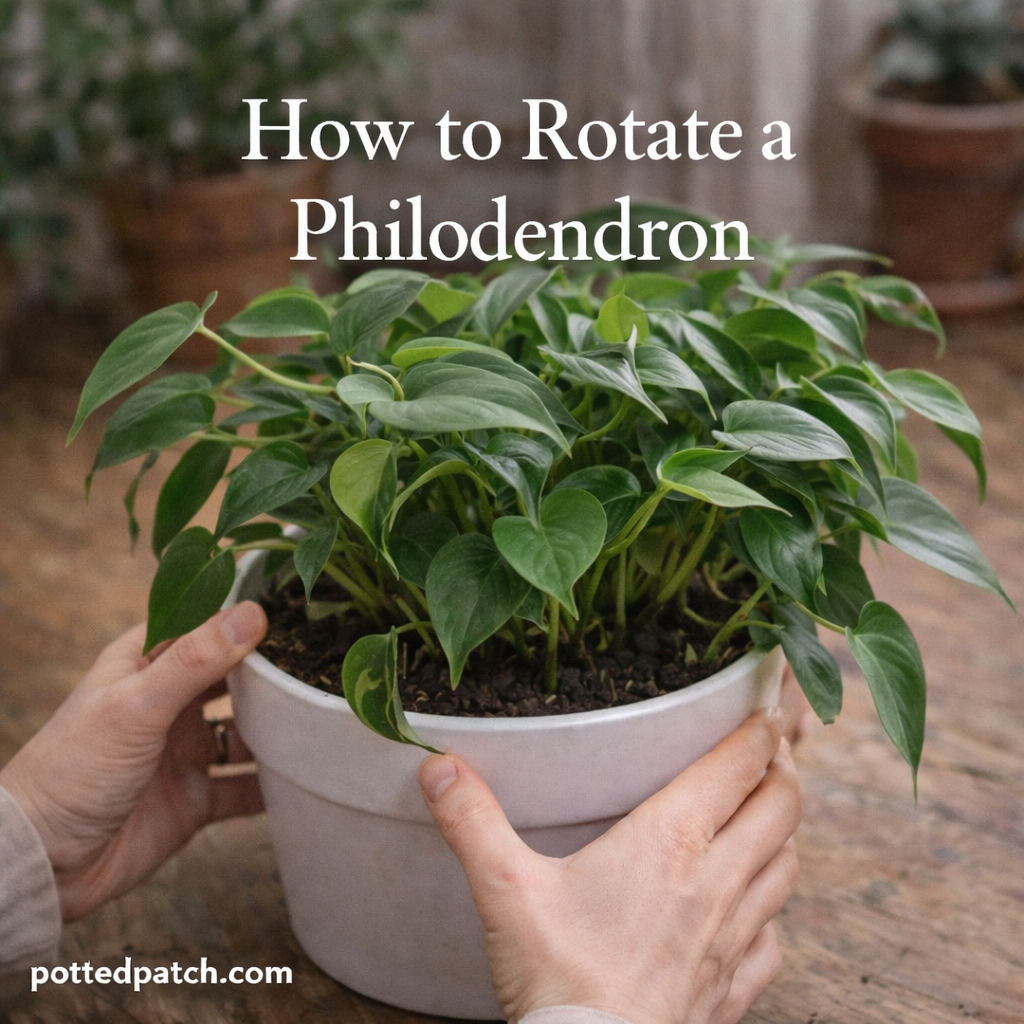

Philodendrons are some of the most recognizable houseplants around. Some climb shelves and moss poles with long trailing stems, while others grow upright with large, dramatic leaves. Either way, they’ve earned their popularity by being attractive, adaptable, and relatively forgiving.
That doesn’t mean every philodendron wants exactly the same thing.
The Philodendron genus contains many species and cultivars, ranging from the classic heartleaf philodendron to larger climbing and self-heading varieties. Their appearance can vary considerably, but most indoor philodendrons share similar basic care requirements.
Give them good indirect light, sensible watering, an airy potting mix, and room for their roots to breathe, and you’re already covering most of what matters.
This complete guide explains how to care for a philodendron indoors, including watering, light, soil, humidity, fertilizing, climbing support, pruning, repotting, propagation, pests, and common problems.
Philodendron Care at a Glance
If you’re looking for the essentials first, here’s a quick overview:
- Light: Bright, indirect light
- Water: Water after the upper portion of the soil begins to dry
- Soil: Loose, airy, well-draining potting mix
- Humidity: Average household humidity or higher
- Temperature: Warm, stable indoor conditions
- Fertilizer: Moderate feeding during active growth
- Pruning: As needed to remove damaged growth or control size
- Repotting: When roots become crowded or the potting mix deteriorates
- Propagation: Commonly through stem cuttings or division, depending on the type
- Support: Climbing varieties may benefit from a pole, stake, or trellis
The biggest mistake to avoid is treating every philodendron according to a rigid schedule. Your plant’s needs will change with its variety, size, environment, and season.
Understanding Different Types of Philodendrons
Before discussing care, it helps to understand that “philodendron” doesn’t describe one specific-looking houseplant.
Philodendrons have different growth habits.
Climbing and Trailing Philodendrons
These plants produce longer stems that naturally climb trees and other supports in their native environments.
Indoors, they can be allowed to trail from a shelf or hanging container, or they can be trained upward.
Heartleaf philodendrons are a familiar example of this growth habit.
Climbing philodendrons often develop a more dramatic appearance when given something to climb.
Self-Heading Philodendrons
Other philodendrons grow in a more upright or compact form rather than producing long vines.
Their leaves emerge relatively close together from a central growing area, creating a fuller appearance.
These plants generally don’t need the same climbing support as vining varieties.
Knowing which type you have will help you make better decisions about pruning, propagation, placement, and support.
How Much Light Does a Philodendron Need?
Most philodendrons grow best in bright, indirect light.
They’re often described as low-light plants because many varieties can tolerate less-than-perfect lighting. But there’s an important difference between surviving and growing vigorously.
A philodendron receiving adequate light is more likely to produce:
- Larger leaves
- More compact growth
- Stronger stems
- Better coloration
- Faster growth
- A fuller overall appearance
Low light can result in:
- Long gaps between leaves
- Smaller new leaves
- Thin or stretched stems
- Slower growth
- Soil remaining wet longer
Can Philodendrons Handle Direct Sunlight?
Some gentle direct sunlight may be tolerated, particularly when a plant has gradually adjusted to it.
Intense sunlight is different.
A philodendron suddenly placed in strong afternoon sun can develop bleached, yellow, or brown areas where the foliage has been damaged.
If you’re moving a plant into brighter conditions, make the change gradually.
Where Should You Put a Philodendron?
A location near a bright window is often ideal.
How close the plant should be depends on your specific room.
Window direction matters, but so do:
- Trees outside
- Nearby buildings
- Curtains and blinds
- Window size
- Seasonal changes
- Roof overhangs
- Distance from the glass
Watch how your plant grows.
If it repeatedly stretches toward the window or produces increasingly small leaves, it may be asking for more light.
How Often Should You Water a Philodendron?
There’s no universal “water once a week” rule for philodendrons.
Instead, check the soil.
Allow the upper portion of the potting mix to dry somewhat before watering again. Exactly how quickly this happens depends on the plant and its environment.
When your philodendron needs water:
- Water slowly and evenly across the soil.
- Continue until excess water drains from the bottom of the container.
- Allow the pot to drain completely.
- Empty standing water from the saucer or decorative pot.
Then wait until the soil reaches an appropriate level of dryness before watering again.
This approach is much more reliable than giving the plant small amounts of water according to the calendar.
What Changes a Philodendron’s Watering Needs?
Your philodendron may need water more or less frequently depending on:
- Light levels
- Temperature
- Humidity
- Pot size
- Soil composition
- Root density
- Plant size
- Season
- Rate of growth
A large philodendron growing vigorously beside a bright window may use water much faster than a small plant sitting several feet away.
Signs of an Overwatered Philodendron
Philodendrons don’t appreciate having their roots constantly surrounded by saturated soil.
Possible signs of excessive moisture include:
- Yellowing leaves
- Persistently wet soil
- Drooping despite wet soil
- Soft or mushy roots
- Unpleasant odors from the potting mix
- Darkened stems near the soil
- Increasing leaf loss
The problem isn’t necessarily the amount of water you pour into the pot at one time.
The bigger concern is how long the root zone stays saturated afterward.
Poor drainage, low light, dense soil, oversized containers, and frequent watering can all contribute.
What Does Philodendron Root Rot Look Like?
Healthy roots should generally feel firm.
Roots damaged by rot may become:
- Dark brown or black
- Soft
- Mushy
- Slimy
- Fragile
- Unpleasant smelling
If you discover significant root rot, remove obviously dead tissue with clean pruning tools and address the conditions that caused the problem.
Repotting into fresh, airy soil may be necessary if the existing mix has become badly waterlogged or degraded.
Signs of an Underwatered Philodendron
Philodendrons can also suffer when allowed to stay dry for too long.
Signs may include:
- Drooping foliage
- Curling leaves
- Dry or crispy edges
- Very lightweight pots
- Potting soil pulling away from the container
- Older leaves dying
- Slowed growth
If the soil becomes extremely dry, it can sometimes resist absorbing water.
Water slowly and thoroughly so moisture has time to penetrate the root ball.
Best Soil for Philodendrons
Philodendron roots generally appreciate a mixture that balances moisture retention with plenty of air.
Dense soil that compacts around the roots can stay wet for too long.
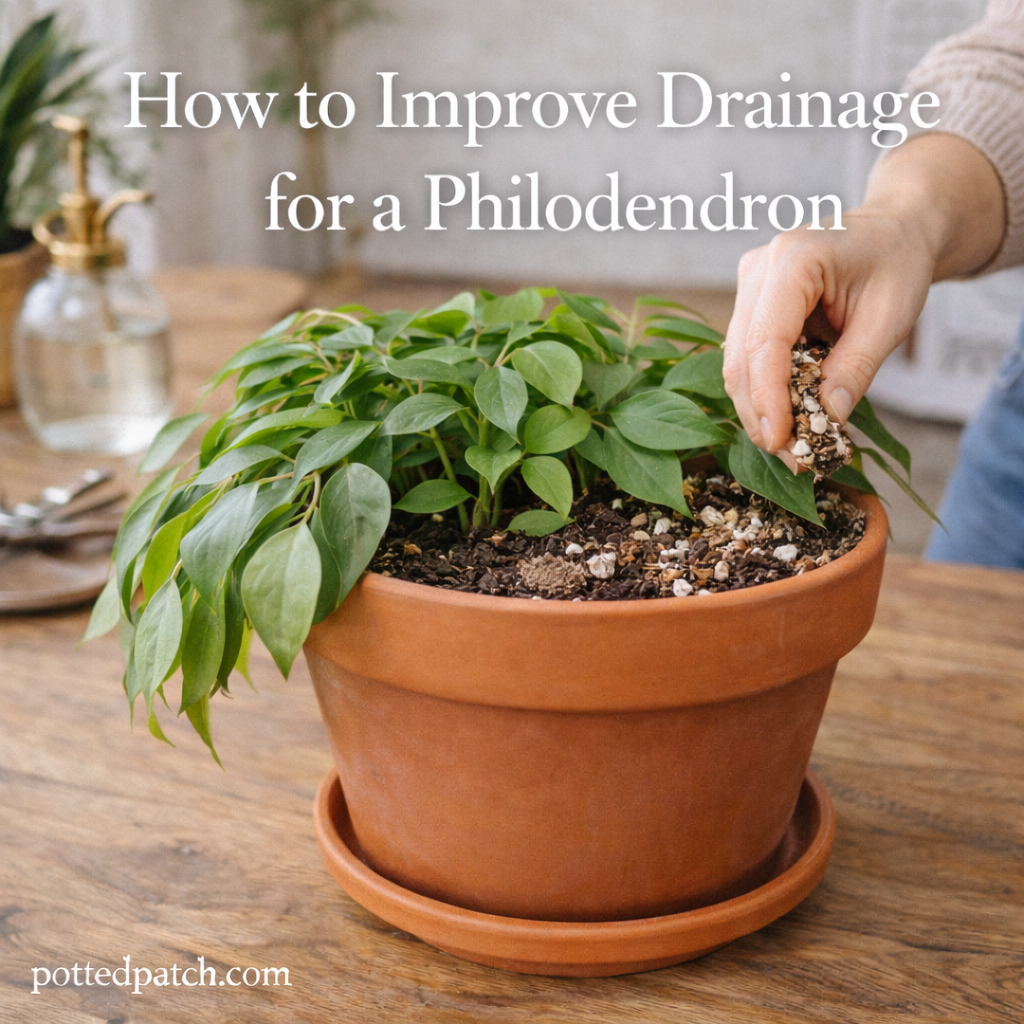
A useful indoor mix may combine quality potting soil or coco-based potting medium with ingredients such as:
- Orchid bark
- Perlite
- Pumice
- Coco coir
- Other coarse, airy amendments
You don’t need to follow one exact recipe.
The goal is a mixture that absorbs water but allows excess moisture to drain while maintaining air spaces around the roots.
A Simple Philodendron Soil Mix
If you prefer a basic starting point, you might combine:
- 2 parts indoor potting mix
- 1 part orchid bark
- 1 part perlite or pumice
Adjust the mixture based on your environment.
Someone growing plants in a warm, bright room may use a somewhat more moisture-retentive mixture than someone whose plants dry very slowly.
Does a Philodendron Need Drainage Holes?
Drainage holes are strongly recommended.
They make it much easier to thoroughly water the plant without trapping excess moisture around its roots.
Decorative containers without drainage can still be used as outer pots.
Simply keep the philodendron in a nursery pot with drainage holes, remove it when watering, allow it to drain, and then place it back inside the decorative container.
Never leave the nursery pot sitting in accumulated water.
Choosing the Right Pot Size
Avoid putting a small philodendron into a huge container simply because you want it to grow larger.
Plants don’t necessarily grow faster because they have more soil.
An oversized container can actually make watering more difficult because a large volume of soil remains wet around a relatively small root system.
When repotting, move up gradually.
Choose a container that provides some additional room without being dramatically larger than the existing root ball.
Temperature Requirements for Philodendrons
Philodendrons generally prefer warm indoor temperatures.
Normal household conditions are often suitable as long as temperatures remain reasonably stable.
Avoid placing your plant directly beside:
- Heating vents
- Air-conditioning vents
- Drafty windows
- Exterior doors during cold weather
- Other areas with dramatic temperature fluctuations
Sudden environmental changes can cause stress even when the average room temperature seems acceptable.
How Much Humidity Do Philodendrons Need?
Many philodendrons appreciate moderate to high humidity because of their tropical origins.
Fortunately, common varieties can often adapt to average household humidity.
You may notice that some varieties produce better-looking foliage when humidity is somewhat higher.
Very dry air can contribute to:
- Brown leaf edges
- Crispy tips
- Difficulty unfurling new leaves
- Faster moisture loss
A humidifier can help if your indoor air is consistently dry.
Should You Mist a Philodendron?
Misting is optional and usually provides only a temporary increase in moisture around the foliage.
If your home is extremely dry, a humidifier is much more effective.
Regular misting also isn’t a substitute for proper watering.
Focus first on soil moisture, light, temperature, and overall humidity.
How to Fertilize a Philodendron
Philodendrons can grow relatively quickly under good conditions, particularly during warmer, brighter parts of the year.
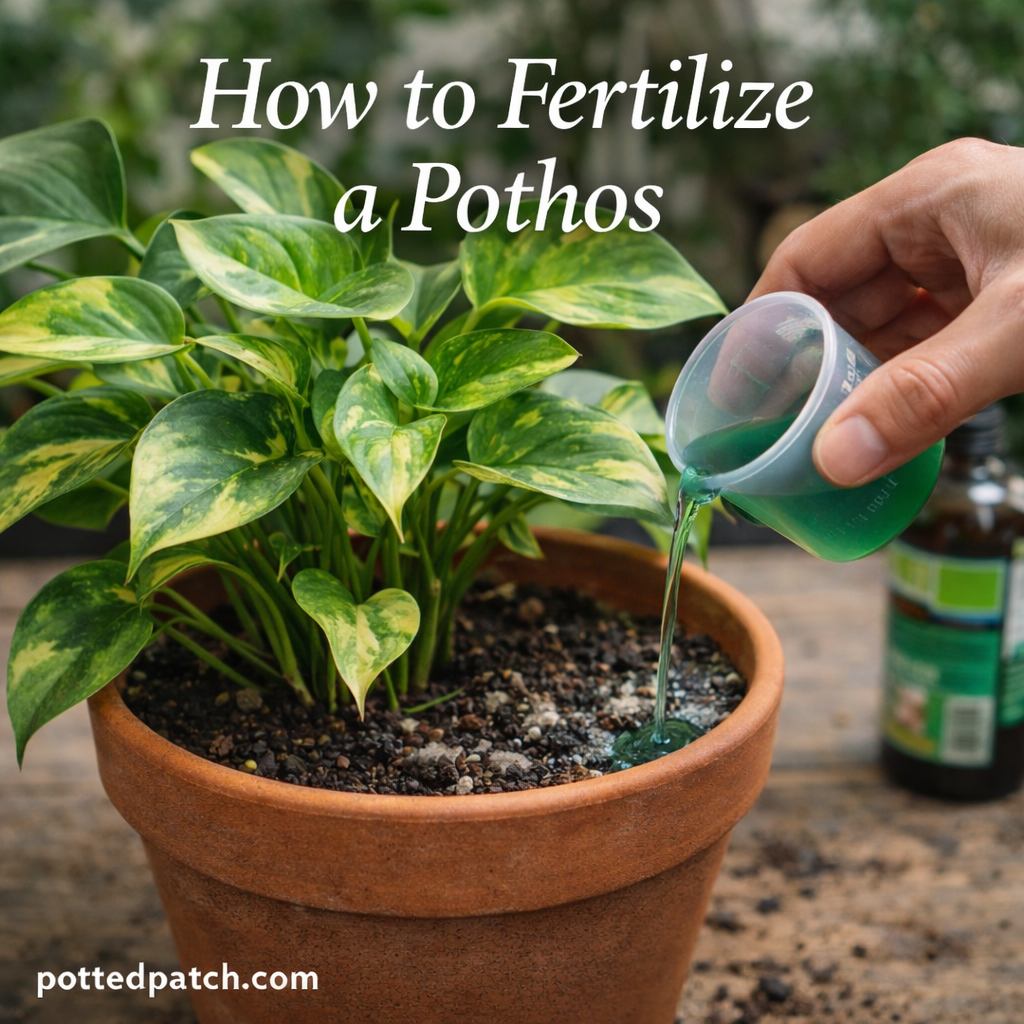
A balanced houseplant fertilizer can support that growth.
Follow the fertilizer’s label directions rather than assuming a stronger mixture will produce larger leaves.
Overfertilization can cause:
- Root damage
- Salt accumulation in the soil
- Brown leaf tips
- Stressed foliage
Reduce feeding when growth naturally slows.
And don’t fertilize a severely stressed philodendron in an attempt to revive it.
If the plant has root rot, pest problems, poor lighting, or another environmental issue, correct that problem first.
How to Make a Philodendron Grow Bigger Leaves
Leaf size depends partly on genetics, so not every philodendron will produce enormous foliage.
However, growing conditions can make a major difference.
To encourage stronger growth:
- Provide plenty of bright, indirect light
- Maintain healthy roots
- Water consistently
- Fertilize appropriately during active growth
- Maintain suitable humidity
- Give climbing varieties support
That last point can be especially important.
Why Climbing Philodendrons Benefit From Support
Many climbing philodendrons naturally grow upward along trees.
As they mature and climb, some species can produce progressively larger leaves.
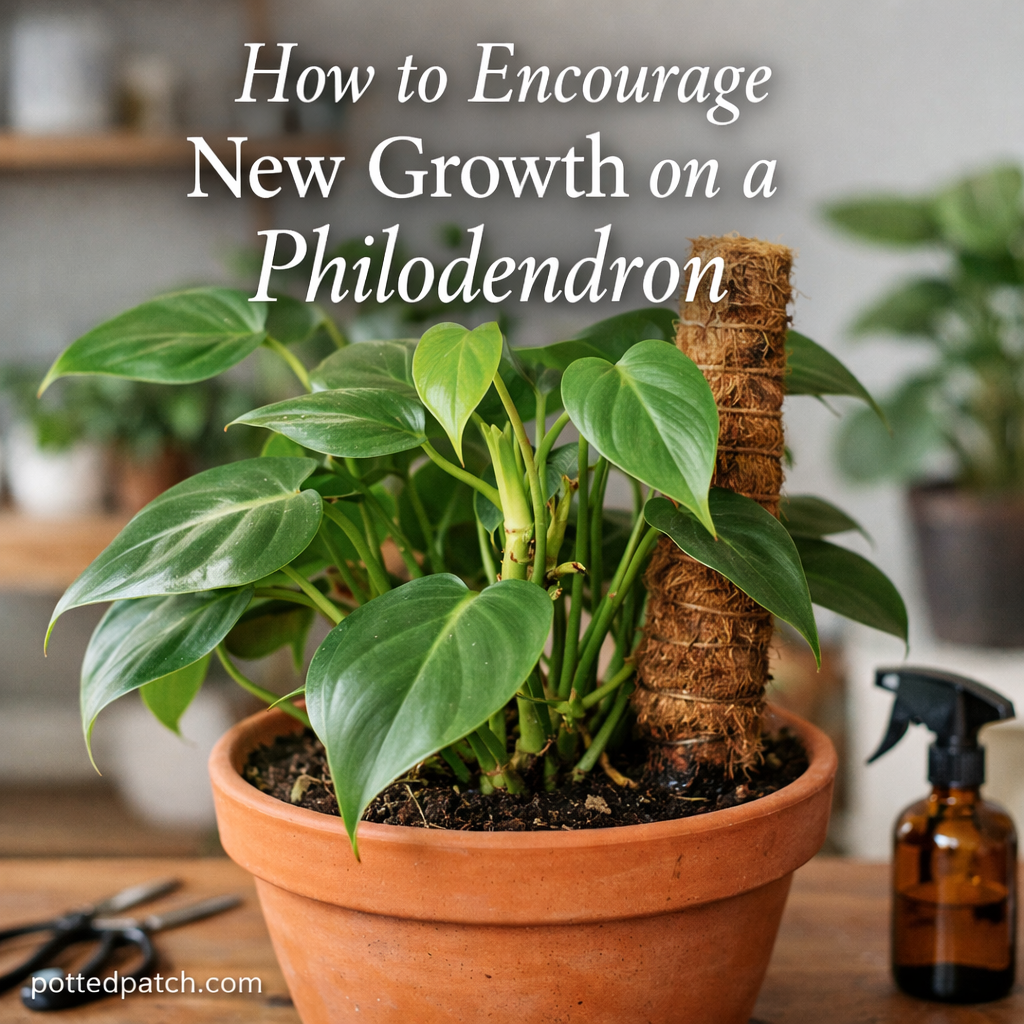
Indoors, you can mimic this growth habit using:
- Moss poles
- Coir poles
- Wooden planks
- Stakes
- Trellises
Gently attach the stem to the support rather than tightly binding it.
As the plant grows, continue guiding new growth upward.
Aerial Roots on Philodendrons
If your philodendron develops roots along its stems, don’t panic.
These are aerial roots.
In nature, climbing philodendrons use aerial roots to attach themselves to surfaces and interact with their environment.
You can guide suitable aerial roots toward a support or potting medium.
There’s usually no reason to remove them unless they’re damaged or creating a practical problem.
How to Prune a Philodendron
Pruning can help control size, remove unhealthy foliage, and encourage a fuller appearance in some varieties.
Use clean, sharp pruning shears.
You may want to prune:
- Yellow leaves
- Dead foliage
- Damaged stems
- Excessively long vines
- Unbalanced growth
- Diseased or severely damaged sections
For vining philodendrons, making cuts around nodes can also provide material for propagation.
Where Should You Cut a Philodendron?
If you’re simply removing a damaged leaf, follow the leaf stem toward its base and make a clean cut without damaging nearby healthy growth.
For propagation, the cutting needs a node.
A node is the area along the stem where leaves, aerial roots, or new growth can emerge.
A leaf by itself generally won’t produce a complete new philodendron plant without the necessary node tissue.
How to Repot a Philodendron
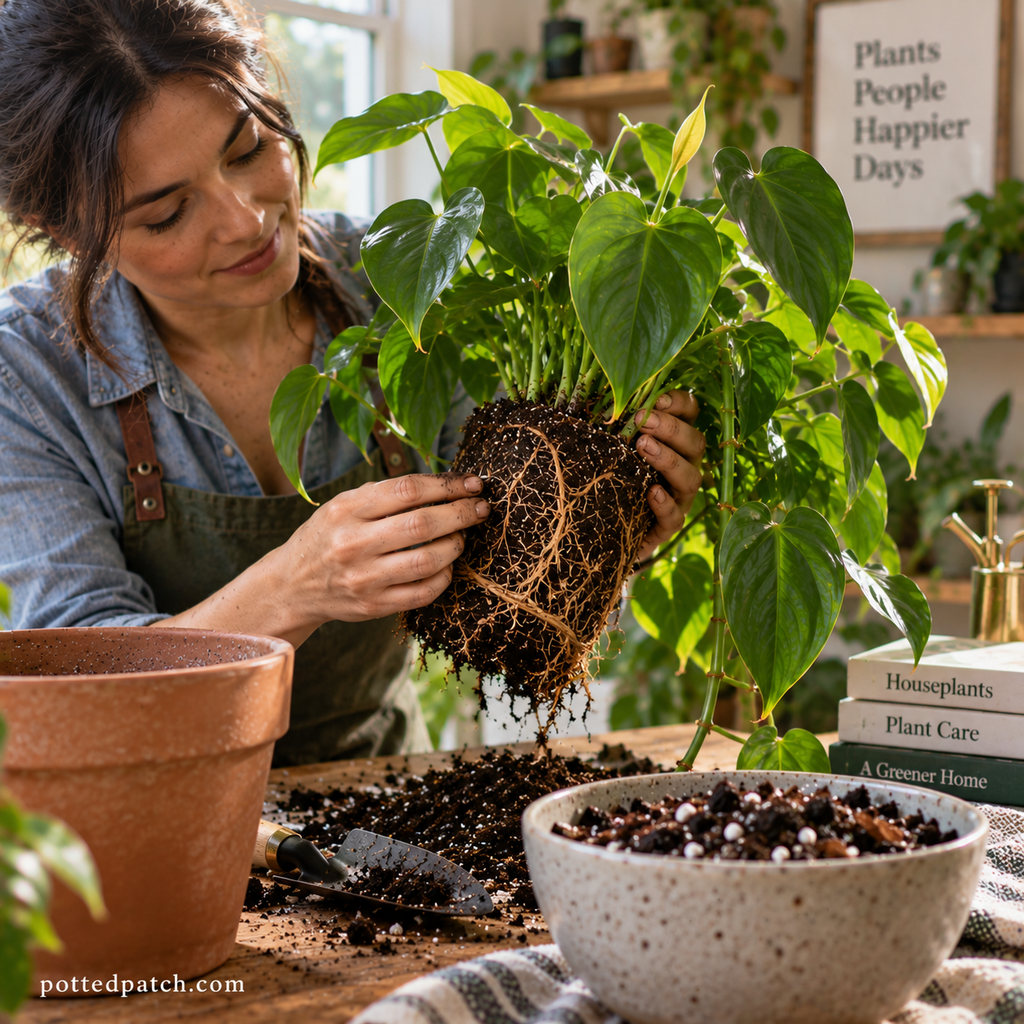
You don’t need to repot your philodendron every year simply because another growing season has passed.
Look at the root system instead.
Repotting may be appropriate when:
- Roots heavily circle the pot
- Roots emerge extensively from drainage holes
- The plant dries unusually quickly
- The soil has become compacted
- The potting mix no longer drains properly
- Growth appears restricted by severe root crowding
To repot:
- Choose a container moderately larger than the existing root ball.
- Prepare fresh, airy potting mix.
- Carefully remove the philodendron from its current pot.
- Inspect the roots.
- Remove clearly dead or rotten roots with clean tools.
- Loosen severely circling roots if necessary.
- Position the plant in the new container.
- Fill around the roots with fresh soil.
- Avoid tightly compressing the potting mix.
- Water thoroughly and allow excess water to drain.
Give the plant time to adjust afterward.
A little temporary stress following repotting doesn’t necessarily mean something went wrong.
How to Propagate a Philodendron
Many vining philodendrons are relatively easy to propagate from stem cuttings.
The most important part is including at least one healthy node.
Propagating Philodendron Cuttings in Water
A simple method is:
- Find a healthy section of stem.
- Locate a node.
- Make a clean cut below the node.
- Remove any leaf that would sit underwater.
- Place the node in clean water while keeping most foliage above the surface.
- Put the cutting somewhere with bright, indirect light.
- Refresh the water periodically.
- Wait for a healthy root system to develop.
Once the cutting has established several roots, it can eventually be transferred into potting mix.
Propagating Philodendrons in Potting Mix
Stem cuttings can also be rooted directly in a suitable growing medium.
Keep the medium lightly moist rather than saturated while roots establish.
Warmth, appropriate humidity, and bright indirect light can help support the process.
Can All Philodendrons Be Propagated From Cuttings?
Not necessarily in exactly the same way.
Growth habit matters.
Vining philodendrons are particularly suited to stem cuttings, while some self-heading plants may be more appropriately propagated through division or offsets when available.
Identify your philodendron before choosing a propagation method.
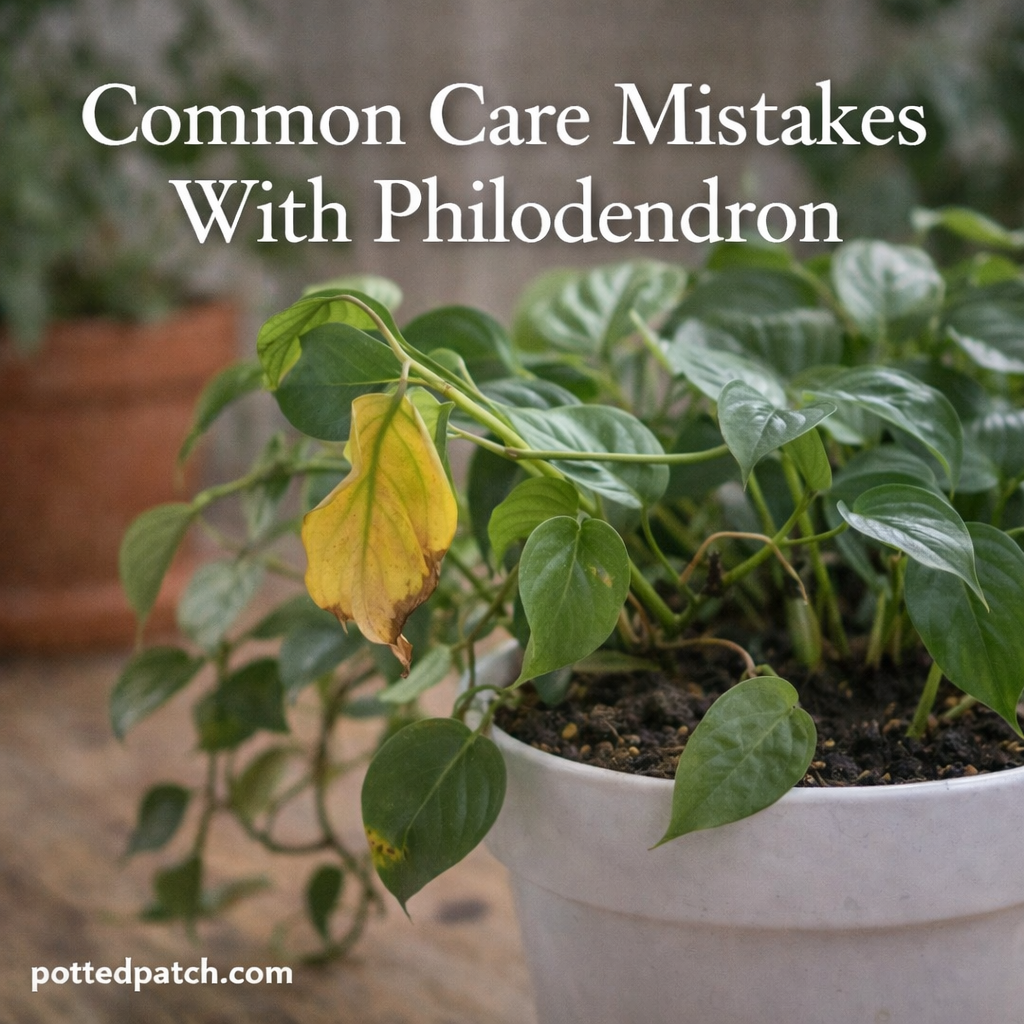
Why Are My Philodendron Leaves Turning Yellow?
A yellow leaf isn’t a diagnosis by itself.
Possible causes include:
- Excessive moisture
- Poor drainage
- Root problems
- Very dry soil
- Insufficient light
- Nutrient issues
- Environmental stress
- Natural aging
An occasional older yellow leaf can be completely normal.
Several leaves yellowing rapidly is more concerning.
Check soil moisture first, then consider light, roots, and recent changes to the plant’s environment.
Why Are My Philodendron Leaves Turning Brown?
Brown areas can have several causes.
Dry, crispy edges may be associated with:
- Inconsistent watering
- Low humidity
- Excess fertilizer
- Root stress
- Prolonged dryness
Larger bleached or brown patches on foliage exposed to intense sunlight may indicate sun damage.
Don’t diagnose the problem based on color alone.
Look at where the damage appears and what conditions the plant has recently experienced.
Why Are Philodendron Leaves Curling?
Leaf curling can indicate environmental stress.
Possible causes include:
- Dry soil
- Low humidity
- Excessive heat
- Intense sunlight
- Root problems
- Pest activity
New leaves can also look curled while they’re still unfurling.
Give fresh foliage time to mature before assuming something is wrong.
Why Is My Philodendron Drooping?
Start by checking the soil.
Dry soil accompanied by limp foliage may indicate that the plant needs water.
Wet soil accompanied by drooping is different.
In that situation, additional watering may make matters worse. Check for poor drainage or unhealthy roots instead.
Philodendrons may also droop temporarily after:
- Repotting
- Major pruning
- Relocation
- Temperature changes
- Sudden changes in light
Why Is My Philodendron Growing Leggy?
Leggy growth often develops when a plant is reaching for more light.
You may notice:
- Long spaces between leaves
- Thin stems
- Smaller foliage
- Growth leaning strongly toward a window
Moving the plant to brighter indirect light can help improve future growth.
Pruning existing vines can also encourage a more compact appearance, depending on the variety.
Common Philodendron Pests
Philodendrons can occasionally attract common indoor plant pests.
Watch for:
- Spider mites
- Mealybugs
- Scale insects
- Aphids
- Thrips
- Fungus gnats
Check leaves regularly, especially their undersides and areas around new growth.
Possible warning signs include:
- Fine webbing
- Sticky residue
- White cottony material
- Small bumps on stems
- Distorted new leaves
- Speckled or discolored foliage
- Tiny moving insects
What to Do if You Find Pests
Move the affected philodendron away from your other plants while you identify the pest.
Treatment depends on what you’re dealing with and may include:
- Rinsing the foliage
- Physically removing pests
- Pruning severely damaged material
- Using an appropriately labeled insecticidal or horticultural product
- Correcting overly wet soil when fungus gnats are present
Follow product instructions carefully.
Continue inspecting the plant afterward because many pest infestations require repeated treatment and monitoring.
Should You Clean Philodendron Leaves?
Large philodendron leaves can collect quite a bit of dust.
Use a soft, damp cloth to gently wipe the foliage while supporting each leaf with your other hand.
Cleaning the leaves also gives you an opportunity to look for pests and developing problems.
There’s generally no need for leaf-shine products.
Philodendron Care During Winter
Indoor conditions often change significantly during winter.
Days become shorter, growth may slow, and the soil can take longer to dry.
At the same time, heating systems can make indoor air much drier.
During winter:
- Check soil before watering
- Expect watering frequency to decrease
- Provide as much suitable indirect light as possible
- Keep plants away from cold drafts
- Avoid direct blasts from heaters
- Monitor humidity
- Reduce fertilizer when growth slows
Let the plant’s actual conditions determine your care routine rather than simply following what worked during summer.
Common Philodendron Care Mistakes
Most problems can be traced back to a few recurring mistakes.
1. Keeping the Plant Too Far From a Window
Philodendrons can tolerate moderate light, but chronically dim conditions often result in weaker growth.
2. Watering on a Fixed Schedule
Check the soil first.
The same plant may dry at dramatically different rates throughout the year.
3. Using Dense Soil
Philodendron roots benefit from an airy mixture with good drainage.
4. Moving Into an Oversized Pot
More soil doesn’t automatically mean more growth.
Oversized containers can remain wet too long.
5. Ignoring the Plant’s Growth Habit
A climbing philodendron may perform very differently when given appropriate vertical support.
6. Fertilizing a Sick Plant
Fertilizer won’t repair root rot, poor lighting, or a pest infestation.
Diagnose the problem first.
7. Changing Everything at Once
Repotting, relocating, fertilizing, pruning, and changing your watering routine simultaneously can create additional stress.
Make deliberate changes and watch how your plant responds.
Philodendron Care FAQ
Are Philodendrons Easy to Care For?
Many common philodendrons are excellent beginner-friendly houseplants.
They tolerate a range of indoor conditions and can recover from occasional care mistakes, provided serious root problems haven’t developed.
Can Philodendrons Grow in Low Light?
Many varieties tolerate lower light, but growth usually becomes slower and less vigorous.
Bright, indirect light generally produces better results.
How Often Should I Water My Philodendron?
Check the soil rather than following a fixed number of days.
Water after the upper portion of the potting mix has dried sufficiently, then soak the soil thoroughly and allow excess water to drain.
Do Philodendrons Like to Be Root-Bound?
They can tolerate being somewhat snug, but severe root crowding eventually creates problems.
Repot when the root system clearly needs additional space rather than automatically increasing the pot size every year.
Do Philodendrons Need a Moss Pole?
Not all of them.
Climbing philodendrons can benefit from vertical support, while self-heading varieties generally don’t require a moss pole.
Why Are My Philodendron’s New Leaves Small?
Insufficient light is one possibility.
Nutrition, root health, plant maturity, variety, and lack of appropriate climbing support can also affect leaf size.
Can I Grow a Philodendron in Water?
Stem cuttings are commonly rooted in water, and philodendrons can also be grown using certain hydroponic or semi-hydroponic systems.
However, a plant established in traditional soil shouldn’t simply be permanently submerged in water without adapting its growing method.
How Fast Do Philodendrons Grow?
Growth rate varies considerably by variety and environment.
Warm temperatures, bright indirect light, healthy roots, adequate nutrition, and active growing conditions generally support faster growth.
Are Philodendrons Toxic to Pets?
Philodendrons contain calcium oxalate crystals that can cause irritation if chewed or eaten.
Keep the plant somewhere curious cats, dogs, and other pets can’t reach it.
If you believe a pet has eaten part of a philodendron, contact your veterinarian or an appropriate animal poison-control service for guidance.
Final Thoughts on Philodendron Care
Philodendron care doesn’t need to become complicated.
Start with the fundamentals: bright indirect light, an airy potting mix, good drainage, and thorough watering after the soil has partially dried. Keep the plant warm, provide reasonable humidity, and fertilize appropriately while it’s actively growing.
Then consider what type of philodendron you actually have.
A compact self-heading plant and a vigorous climbing philodendron may share many basic needs, but they won’t necessarily grow or respond to support and pruning in the same way.
Most importantly, watch the plant.
New leaf size, stem spacing, soil drying time, root health, and foliage condition provide useful clues about whether your care routine is working.
Once you learn to read those signals, philodendrons become much easier to manage—and you’ll be in a much better position to help yours develop the lush, healthy growth that makes these plants so rewarding indoors.