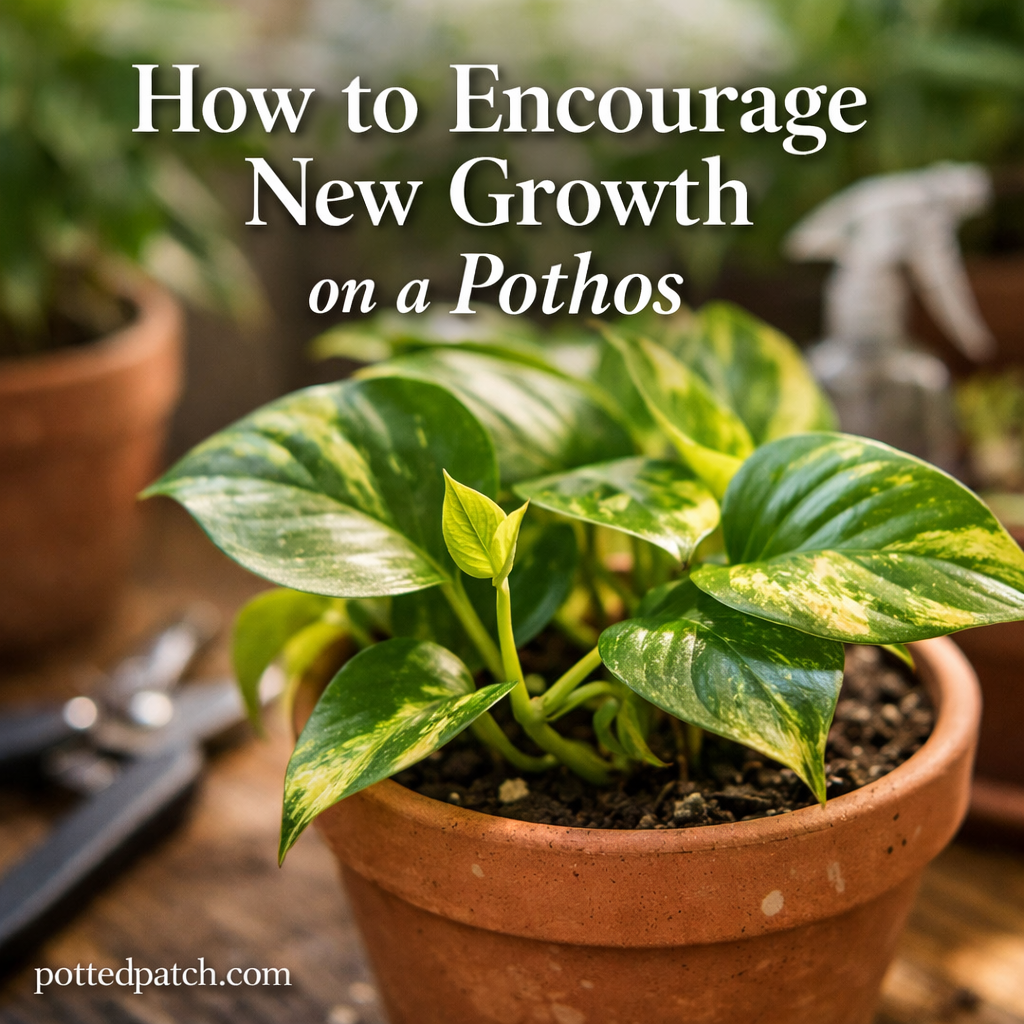
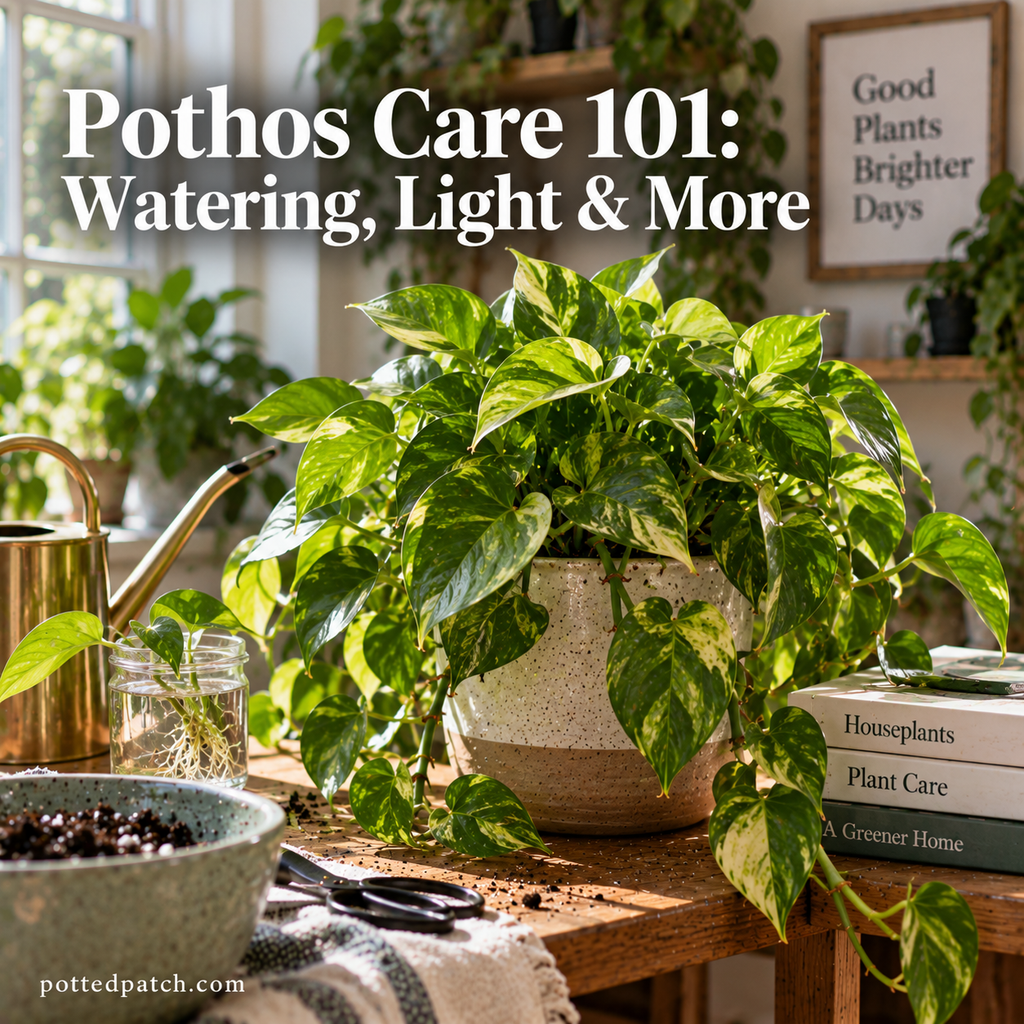
Pothos has a reputation for being nearly impossible to kill. That’s probably an exaggeration, but there’s a reason this trailing houseplant shows up everywhere from sunny kitchens to office shelves.
It’s adaptable, grows relatively quickly under good conditions, and doesn’t usually throw a fit if you’re a little late with watering.
Still, there’s a difference between keeping a pothos alive and helping it grow into a full, healthy plant with long vines and attractive leaves.
If your pothos is turning yellow, looking leggy, developing brown spots, or simply refusing to grow, its environment may need a few adjustments.
This complete pothos care guide covers watering, light, soil, humidity, fertilizing, pruning, repotting, propagation, pests, and the common problems you’re likely to encounter along the way.
Pothos Care at a Glance
If you’re new to pothos, start with these basics:
- Light: Bright, indirect light
- Water: Water after the upper portion of the soil has dried
- Soil: Loose, well-draining indoor potting mix
- Humidity: Average household humidity or higher
- Temperature: Warm, stable indoor temperatures
- Fertilizer: Light to moderate feeding during active growth
- Pruning: As needed to control vines and encourage fuller growth
- Repotting: When roots become crowded or the soil deteriorates
- Propagation: Easily propagated from stem cuttings containing nodes
Pothos can tolerate less-than-perfect conditions, which makes it an excellent beginner houseplant. But getting the basics right will produce a noticeably better plant.
What Is a Pothos?
Pothos, commonly known by the botanical name Epipremnum aureum, is a tropical climbing plant widely grown indoors.
In nature, pothos climbs trees and other structures. Indoors, its growth habit makes it extremely versatile.
You can:
- Let vines trail from a shelf
- Grow it in a hanging basket
- Train it across a wall
- Guide it around a trellis
- Encourage it to climb a pole or plank
There are also numerous pothos varieties with different colors and patterns.
Golden pothos is perhaps the most recognizable, with green leaves splashed with yellow or gold. Other varieties may feature white, cream, lime green, or more intricate variegation.
Although their appearances differ, most common pothos varieties have similar basic care requirements.
How Much Light Does a Pothos Need?
Pothos is frequently marketed as a low-light houseplant.
That’s partly true.
It can tolerate relatively low light compared with many indoor plants, but pothos generally grows better in bright, indirect light.
Better light can support:
- Faster growth
- Larger leaves
- Shorter spaces between leaves
- Stronger variegation
- Fuller-looking vines
A pothos sitting in a dim corner may remain alive for quite some time, but growth can become slow and stretched.
Can Pothos Grow in Low Light?
Yes, within reason.
A green pothos may tolerate lower light particularly well, but growth will usually slow as light decreases.
Variegated pothos can also lose some of their visual contrast in insufficient light because the plant has less green, chlorophyll-containing tissue available for photosynthesis.
If a variegated plant begins producing increasingly green growth, inadequate light may be one factor.
Can Pothos Handle Direct Sunlight?
Gentle direct sunlight may be tolerated, especially when a plant has been gradually acclimated to brighter conditions.
Intense direct sunlight can scorch foliage.
Watch for:
- Bleached patches
- Pale areas
- Dry brown spots
- Crispy sections on exposed leaves
Avoid suddenly moving a pothos from a dim room into hours of intense sun.
Make significant lighting changes gradually.
Where Should You Put a Pothos?
A spot near a bright window with indirect light is often ideal.
Exactly how close depends on your home.
A south-facing window shaded by a large tree may provide less usable light than an unobstructed window facing another direction.
Consider:
- Window size
- Outdoor trees
- Nearby buildings
- Curtains
- Blinds
- Seasonal sun angle
- Distance from the window
Watch the plant’s growth.
Long spaces between leaves and increasingly small foliage can be signs that your pothos wants more light.
How Often Should You Water Pothos?
Forget the idea that every pothos should be watered once a week.
Check the soil instead.
Allow the upper portion of the potting mix to dry before watering again. You can use your finger, a wooden skewer, or simply learn how heavy the container feels when wet compared with when it has dried.
When it’s time to water:
- Water slowly across the surface of the soil.
- Thoroughly moisten the root ball.
- Continue until excess water drains through the bottom.
- Allow the pot to drain.
- Empty standing water from the saucer or decorative outer pot.
Then wait until the soil has partially dried before repeating the process.
How Can You Tell When Pothos Needs Water?
Soil moisture is the most useful clue.
You may also notice that the leaves begin to look slightly less firm when the plant becomes thirsty.
Don’t deliberately wait for severe wilting every time.
Repeatedly allowing the entire root ball to become extremely dry can stress the plant.
What Changes How Often Pothos Needs Water?
Water use varies according to:
- Light
- Temperature
- Humidity
- Pot size
- Plant size
- Root density
- Soil composition
- Season
- Growth rate
A pothos growing rapidly beside a bright window may need watering much sooner than the same plant would in a darker room during winter.
That’s why watering according to soil conditions is more reliable than using a fixed schedule.
Signs of an Overwatered Pothos
Pothos is forgiving, but its roots still need oxygen.
When soil remains saturated for too long, root health can decline.
Possible signs of overwatering include:
- Yellow leaves
- Drooping despite wet soil
- Persistently soggy potting mix
- Soft stems
- Increasing leaf loss
- Dark or mushy roots
- An unpleasant smell from the soil
Don’t assume overwatering simply means you poured too much water into the pot at one time.
Thorough watering is good when the plant actually needs it.
The problem is soil staying wet for too long because of frequent watering, poor drainage, dense soil, low light, or an oversized container.
What Does Pothos Root Rot Look Like?
Healthy roots should generally feel firm.
Roots affected by rot may appear:
- Dark brown or black
- Soft
- Mushy
- Slimy
- Fragile
- Unpleasant smelling
If you suspect root rot:
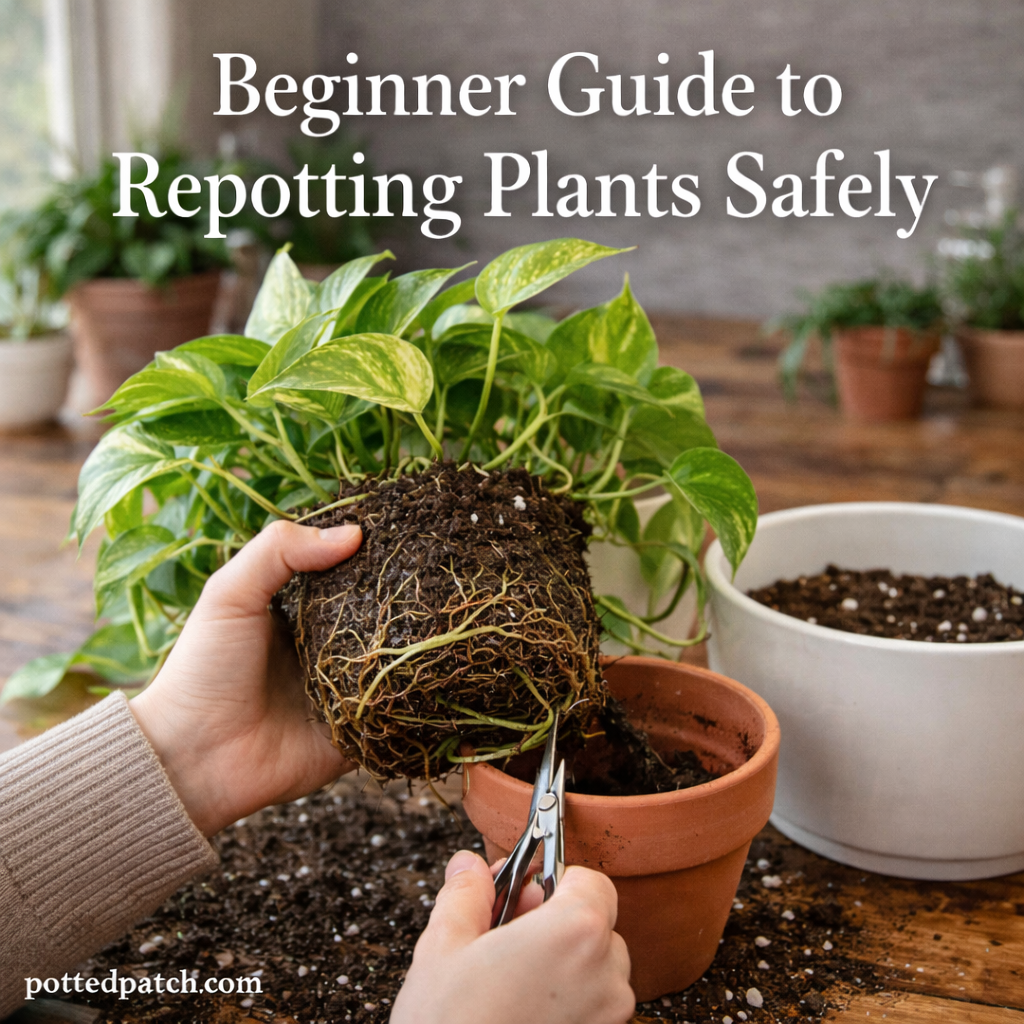
- Remove the pothos from its pot.
- Gently remove enough soil to inspect the roots.
- Cut away clearly dead or rotten roots using clean tools.
- Remove badly degraded or waterlogged soil.
- Repot into fresh, well-draining potting mix.
- Use a container with drainage holes.
- Adjust your watering routine.
A severely damaged plant may also be worth propagating from healthy remaining vines as a backup.
Signs of an Underwatered Pothos
Pothos can handle occasional dryness, but prolonged dehydration will eventually cause problems.
Signs include:
- Drooping leaves
- Curling foliage
- Crispy brown edges
- Very dry soil
- Soil pulling away from the pot
- Leaf loss
- Slowed growth
If the potting mix becomes extremely dry, it may initially repel water.
Water slowly and give the soil enough time to absorb moisture throughout the root ball.
Best Soil for Pothos
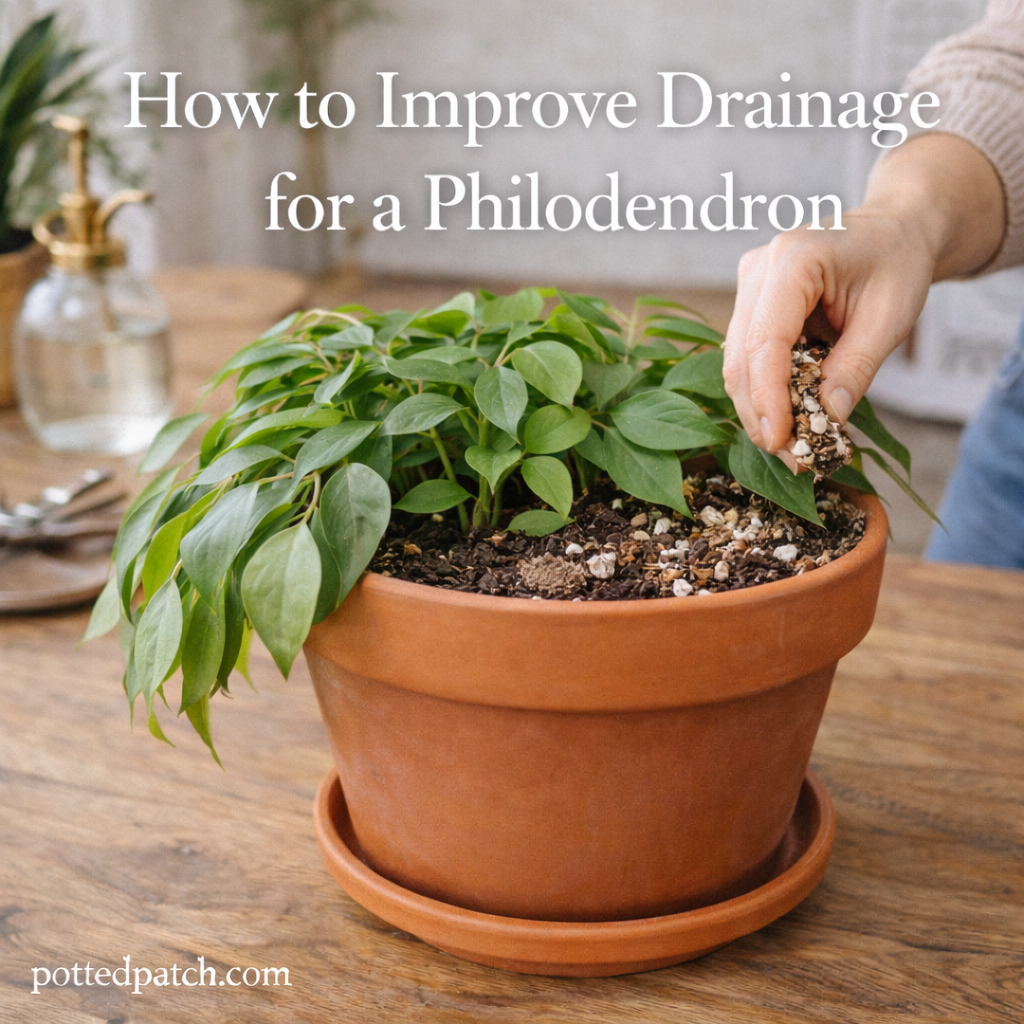
Pothos grows well in a loose indoor potting mix that holds some moisture while allowing excess water to drain.
Dense, compacted soil can remain wet around the roots for too long.
A simple mixture might include:
- Indoor potting mix
- Perlite or pumice
- Fine orchid bark
There’s no single perfect recipe.
The best mix depends partly on your environment and watering habits.
If your plants tend to remain wet for a long time, increasing aeration can help. If they dry extremely quickly, you may need a mixture that retains somewhat more moisture.
A Simple Pothos Soil Mix
A practical starting point is:
- 2 parts indoor potting mix
- 1 part perlite or pumice
- 1 part fine orchid bark
You can adjust from there based on how quickly your plant dries.
Does Pothos Need Drainage Holes?
Drainage holes are strongly recommended.
They allow you to thoroughly water the root system and let excess moisture escape.
If you want to use a decorative planter without drainage, keep the pothos in a nursery pot inside it.
Remove the nursery pot when watering, let it drain completely, and then return it to the decorative container.
Don’t allow water to collect around the bottom of the inner pot.
Choosing the Right Pot Size
When repotting, don’t automatically choose a dramatically larger container.
More soil isn’t necessarily better.
An oversized pot can hold a large amount of moisture around a relatively small root system, causing the soil to dry slowly.
Move up gradually to a container that’s moderately larger than the current root ball.
Temperature Requirements for Pothos
Pothos prefers warm indoor conditions.
Normal household temperatures are generally suitable.
Protect the plant from:
- Cold drafts
- Air-conditioning vents
- Heating vents
- Cold exterior doors
- Sudden temperature changes
Pothos may tolerate occasional fluctuations, but stable conditions encourage more consistent growth.
How Much Humidity Does Pothos Need?
Pothos is adaptable enough to grow in typical household humidity.
However, as a tropical plant, it often appreciates somewhat higher humidity.
Very dry conditions can contribute to:
- Brown leaf tips
- Crispy edges
- Difficulty with new growth
- Faster soil drying
If your home is consistently dry, particularly during winter, a humidifier can help.
Should You Mist Pothos?
Misting is optional.
It temporarily wets the foliage and slightly changes the immediate environment, but it doesn’t provide a lasting solution for low humidity.
If your room is genuinely dry, a humidifier is much more effective.
How to Fertilize Pothos
Pothos can grow quickly when conditions are good, and occasional feeding helps support that growth.
Use an appropriate balanced houseplant fertilizer according to the product directions during periods of active growth.
Avoid assuming more fertilizer means faster growth.
Excess fertilizer can cause salts to accumulate in the potting mix and potentially lead to:
- Brown leaf tips
- Root stress
- Damaged foliage
Reduce feeding when growth slows significantly.
And don’t use fertilizer as a treatment for an unhealthy plant.
Root rot, poor lighting, pests, and watering problems need to be corrected directly.
How to Make Pothos Grow Faster
If your pothos seems stuck, look at its overall environment.
Healthy growth is supported by:
- Bright, indirect light
- Consistent watering
- Healthy roots
- Appropriate fertilization
- Warm temperatures
- Suitable humidity
- Fresh, airy soil
Light is particularly important.
A pothos growing in a dim corner simply won’t have the same growth potential as one receiving abundant indirect light.
How to Make Pothos Fuller
A common pothos problem isn’t poor health—it’s appearance.
One or two vines may grow several feet long while the top of the pot remains sparse.
Pruning can help.
Cutting long vines back near healthy nodes can encourage new growth and create a more compact appearance.
You can also propagate the removed sections and plant rooted cuttings back into the original container.
Over time, this can create a much fuller pot.
Why Is My Pothos Leggy?
Long stretches of bare stem between leaves are often associated with insufficient light.
If the plant is reaching toward a window, producing smaller leaves, and developing long internodes, consider moving it somewhere brighter.
Pruning can improve the existing shape, but better lighting helps prevent future growth from becoming equally stretched.
Should Pothos Climb or Trail?
Either is possible.
Allowing pothos to trail works beautifully in hanging baskets and on shelves.
But pothos is naturally a climbing plant.
Providing vertical support can change how it grows.
Options include:
- Moss poles
- Coir poles
- Wooden planks
- Stakes
- Trellises
Under good conditions, climbing pothos can develop increasingly mature growth and larger leaves.
This can look dramatically different from the smaller leaves commonly seen on trailing indoor plants.
How to Prune Pothos
Pothos handles pruning well.
Pruning can be used to:
- Control vine length
- Remove damaged foliage
- Encourage fuller growth
- Remove leggy sections
- Collect propagation material
Use clean, sharp scissors or pruning shears.
For general shaping, cut the vine near a node at an appropriate point.
Avoid removing an excessive amount of healthy growth from a stressed plant all at once.
Where to Cut Pothos for Propagation
This is one of the most important details when propagating pothos.
Your cutting needs a node.
The node is the area on the stem where leaves and roots can emerge.
Look for a slightly thicker area of stem near where a leaf attaches. You may also see a small aerial root or bump.
Make your cut so the propagation piece includes at least one healthy node.
A leaf with only its petiole and no node may stay green for a while, but it won’t develop into a complete new pothos vine.
How to Propagate Pothos in Water
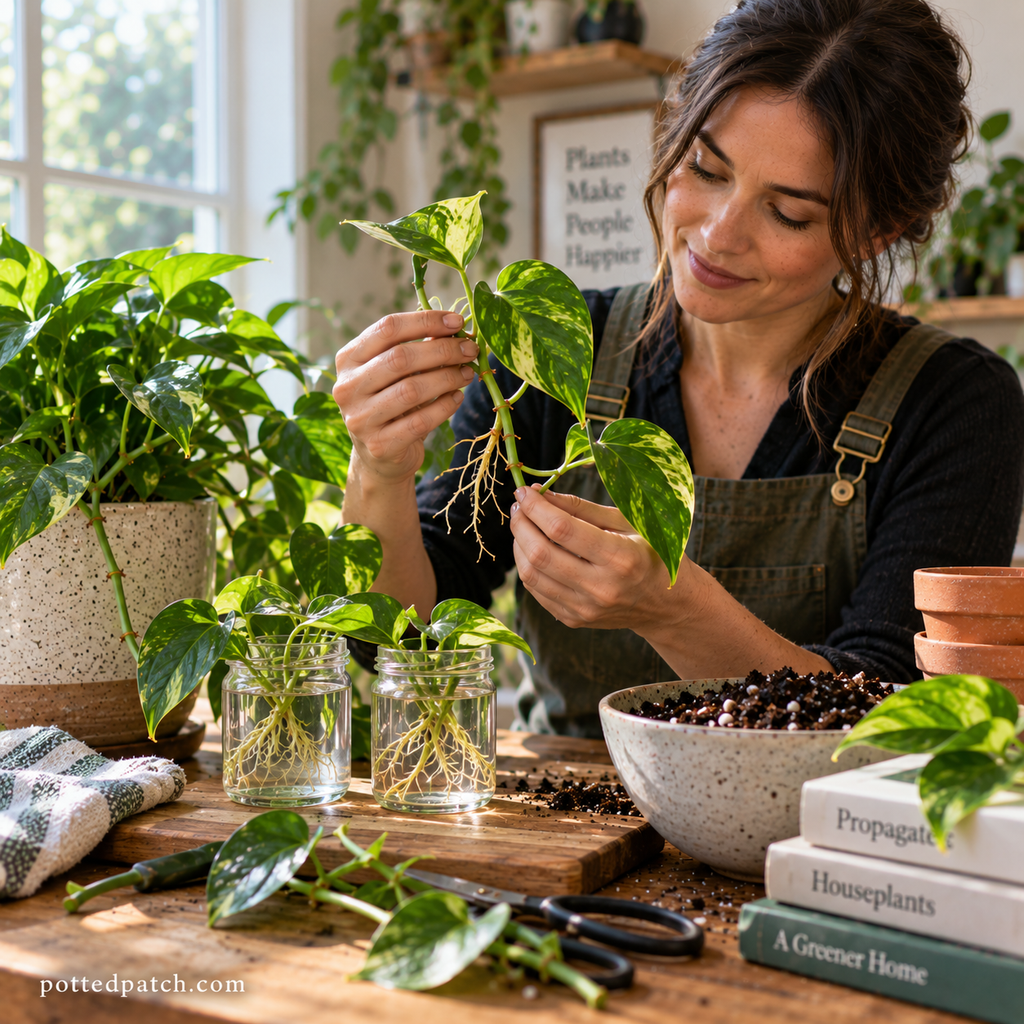
Water propagation is simple and lets you watch the roots develop.
Here’s how:
- Select a healthy vine.
- Locate several nodes.
- Cut the vine into sections containing at least one node each.
- Remove leaves that would otherwise sit underwater.
- Place the nodes in clean water.
- Keep the leaves above the waterline.
- Put the container in bright, indirect light.
- Refresh the water regularly.
- Wait for healthy roots to develop.
Once the cutting has developed a useful root system, it can be moved into potting soil.
Keep the soil somewhat consistently moist during the initial transition while the cutting adjusts.
Can You Propagate Pothos Directly in Soil?
Yes.
Instead of rooting cuttings in water, place the nodes directly into lightly moist potting mix.
Keep the soil appropriately moist while the new root system develops.
Bright indirect light, warmth, and suitable humidity can help.
Soil propagation doesn’t give you the same visible root progress as a glass of water, but it eliminates the later transition from water to potting soil.
How to Repot Pothos
Pothos doesn’t need repotting simply because you’ve owned it for a year.
Look for signs that the plant actually needs more space or fresh soil.
These include:
- Roots circling heavily inside the pot
- Roots emerging extensively through drainage holes
- Soil drying unusually quickly
- A root ball with very little soil remaining
- Compacted or degraded potting mix
- Growth slowing because of severe root crowding
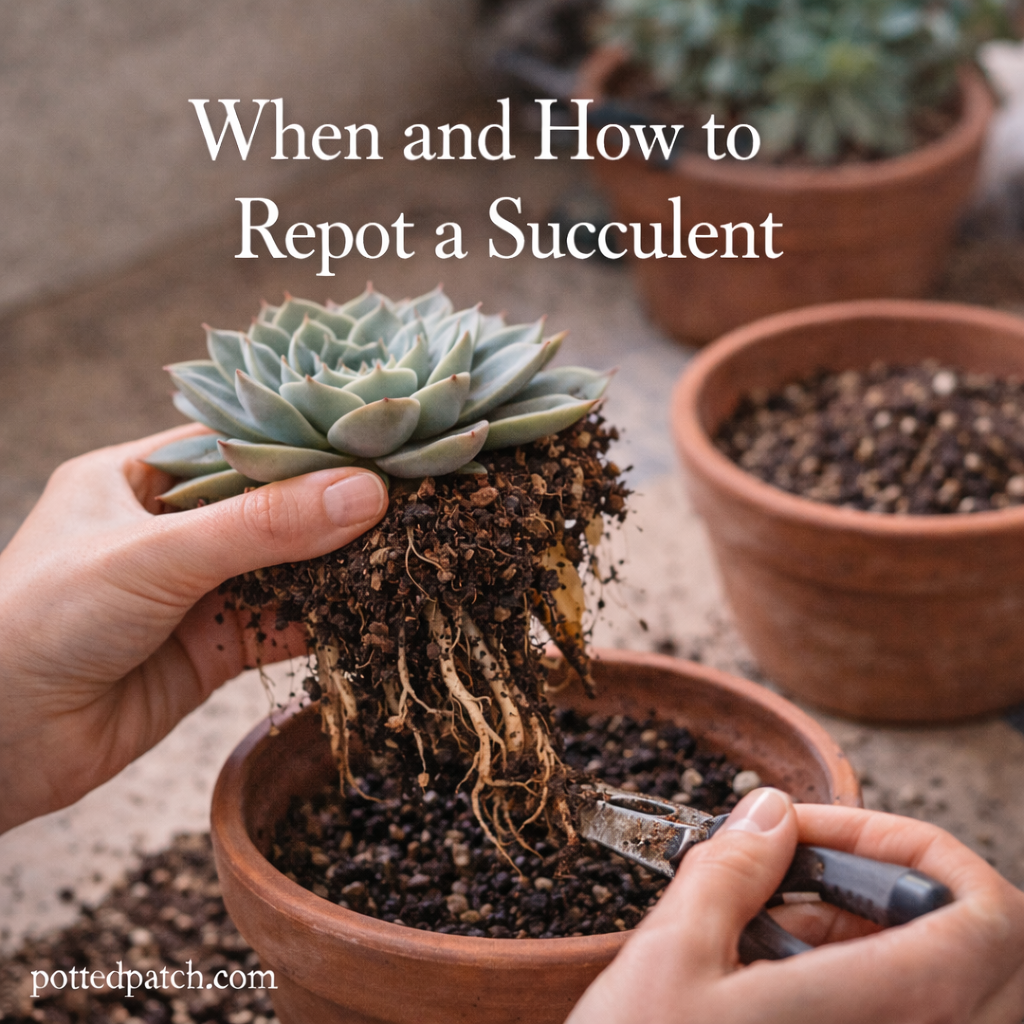
To repot:
- Choose a container slightly larger than the current root ball.
- Prepare fresh, well-draining potting mix.
- Carefully remove the pothos from its existing pot.
- Inspect the roots.
- Remove clearly rotten roots if necessary.
- Gently loosen severely circling roots.
- Position the plant in its new container.
- Add soil around the root ball.
- Avoid packing the soil too tightly.
- Water thoroughly and allow excess water to drain.
Give the plant some time to adjust afterward.
Why Are My Pothos Leaves Turning Yellow?
Yellow leaves are one of the most common pothos problems.
Possible causes include:
- Excessive watering
- Poor drainage
- Root rot
- Prolonged underwatering
- Insufficient light
- Nutrient problems
- Environmental stress
- Natural aging
One older leaf turning yellow occasionally isn’t necessarily concerning.
Several leaves yellowing rapidly deserves closer attention.
Start by checking the soil.
If it’s constantly wet, investigate drainage and root health before watering again.
Why Does My Pothos Have Brown Leaves?
Brown foliage can develop for different reasons.
Dry, crispy edges may be associated with:
- Inconsistent watering
- Very dry soil
- Low humidity
- Fertilizer buildup
- Root stress
Large pale or brown patches on leaves receiving intense sunlight may instead be sun damage.
The location and texture of the damage can help you narrow down the cause.
Why Are My Pothos Leaves Curling?
Curling can be a sign of stress.
Possible causes include:
- Dry soil
- Low humidity
- Excessive heat
- Strong sunlight
- Root problems
- Pest activity
If the plant looks otherwise healthy, check soil moisture first.
New leaves may also appear curled while they’re still opening.
Why Is My Pothos Drooping?
Drooping is commonly associated with thirst, but don’t automatically reach for the watering can.
Touch the soil first.
If the soil is dry, the plant may simply need a thorough watering.
If it’s already wet, adding more water could make matters worse.
Wet soil combined with persistent drooping can indicate root stress or poor drainage.
Why Is My Pothos Losing Variegation?
Variegated pothos may produce greener leaves when light is insufficient.
Moving the plant into brighter indirect light can help encourage future growth with stronger coloration, depending on the variety and genetics of the plant.
Avoid intense direct sunlight in an attempt to increase variegation.
Too much sun can damage the foliage.
Common Pothos Pests
Pothos isn’t unusually pest-prone, but infestations can still happen.
Watch for:
- Spider mites
- Mealybugs
- Scale insects
- Aphids
- Thrips
- Fungus gnats
Inspect the undersides of leaves, stems, nodes, and new growth.
Possible signs include:
- Fine webbing
- White cottony material
- Sticky residue
- Small bumps
- Speckled leaves
- Distorted new growth
- Tiny moving insects
What to Do if You Find Pests
Separate the affected pothos from nearby plants while you identify the problem.
Treatment depends on the pest and may involve:
- Rinsing foliage
- Physically removing insects
- Pruning badly affected growth
- Using an appropriately labeled horticultural or insecticidal product
- Adjusting overly wet soil conditions for fungus gnats
Follow product instructions carefully and continue checking the plant afterward.
Pest treatment often requires more than one inspection or treatment cycle.
Should You Clean Pothos Leaves?
Yes, particularly on larger or mature plants.
Dust can accumulate on foliage over time.
Gently wipe the leaves with a soft, damp cloth while supporting them with your other hand.
This also gives you a convenient opportunity to check for pests.
There’s generally no need to apply leaf-shine products.
Pothos Care During Winter
Your pothos won’t necessarily need the same care year-round.
During winter, shorter days and weaker light can slow growth.
The soil may take longer to dry as a result.
Indoor heating can also reduce humidity.
During colder months:
- Check the soil before watering
- Expect watering frequency to decrease
- Move the plant closer to suitable natural light if necessary
- Protect it from cold drafts
- Keep it away from heating vents
- Monitor humidity
- Reduce fertilizer when growth slows
Let the plant’s actual environment guide your routine.
Common Pothos Care Mistakes
Pothos is forgiving, but a few mistakes repeatedly cause problems.
1. Assuming It Can Live Anywhere
Pothos tolerates lower light, but extremely dim conditions don’t support strong growth.
2. Watering Every Week Automatically
Check the soil first.
Your plant may dry in four days during one part of the year and take two weeks during another.
3. Leaving It in Soggy Soil
Good drainage matters.
Pothos roots still need oxygen.
4. Putting a Small Plant in a Huge Pot
Oversized containers can hold excessive moisture.
Move up gradually.
5. Ignoring Leggy Growth
Long spaces between leaves can indicate insufficient light.
Pruning alone won’t correct the environmental cause.
6. Forgetting About the Nodes
If you’re propagating pothos, every successful cutting needs appropriate node tissue.
7. Overfertilizing
More fertilizer doesn’t guarantee faster growth.
8. Making Too Many Changes at Once
If your pothos is struggling, don’t immediately repot, fertilize, relocate, prune, and change your watering routine all at once.
Identify the most likely problem and make deliberate adjustments.
Pothos Care FAQ
Is Pothos Easy to Care For?
Yes. Pothos is one of the more forgiving indoor plants and is often a good choice for beginners.
Good drainage, reasonable light, and appropriate watering will prevent many common problems.
How Often Should I Water Pothos?
There’s no universal schedule.
Check the soil and water when the upper portion has dried sufficiently. Water thoroughly and allow excess moisture to drain.
Can Pothos Live in Low Light?
Pothos can tolerate lower light, but growth will generally be slower and may become leggy.
Bright, indirect light usually produces better growth.
Can Pothos Grow in Water Forever?
Pothos can be grown in water for extended periods when managed as a water-grown plant and supplied with appropriate nutrients.
However, rooting a cutting in plain water and maintaining a plant hydroponically are not exactly the same thing.
For most beginners, transitioning established cuttings into potting mix is straightforward.
Does Pothos Like to Be Root-Bound?
Pothos can tolerate somewhat snug containers, but severe root crowding can eventually interfere with watering and growth.
Repot when the root system has clearly outgrown its container.
How Do I Make My Pothos Bushier?
Prune long vines and propagate healthy cuttings.
Once rooted, plant those cuttings back into the original container to increase the number of growing stems.
Providing good light will also help future growth remain more compact.
Should I Give My Pothos a Moss Pole?
You don’t have to.
Pothos looks great trailing from shelves and hanging baskets.
However, providing climbing support can encourage a more natural growth habit and, under suitable conditions, larger mature leaves.
How Fast Does Pothos Grow?
Growth speed varies depending on light, temperature, nutrients, root health, variety, and season.
A healthy pothos in bright indirect light can grow noticeably during its active growing period.
Is Pothos Toxic to Pets?
Pothos contains calcium oxalate crystals that can cause irritation if chewed or eaten.
Keep pothos away from curious cats, dogs, and other pets.
If you believe a pet has eaten part of the plant, contact your veterinarian or an appropriate animal poison-control service for guidance.
Final Thoughts on Pothos Care
Pothos earns its beginner-friendly reputation, but giving it the right conditions can transform it from a few surviving vines into a lush, vigorous houseplant.
Start with bright, indirect light and a loose potting mix with good drainage. Water thoroughly after the soil has partially dried rather than following a strict schedule. Fertilize modestly during active growth and prune when vines become excessively long or sparse.
If you want a fuller plant, don’t be afraid to propagate it.
A few healthy cuttings planted back into the original container can make a noticeable difference over time.
Most importantly, pay attention to what your pothos is doing. Leaf size, stem spacing, soil drying time, foliage color, and root health can all tell you whether your care routine is working.
Get those fundamentals right, and pothos really can be one of the easiest—and most rewarding—plants to grow indoors.