Spider plants are often recommended as beginner-friendly houseplants, and for good reason. They’re adaptable, grow relatively quickly in the right conditions, and mature plants can produce plenty of cascading spiderettes.
But spider plants aren’t completely trouble-free.
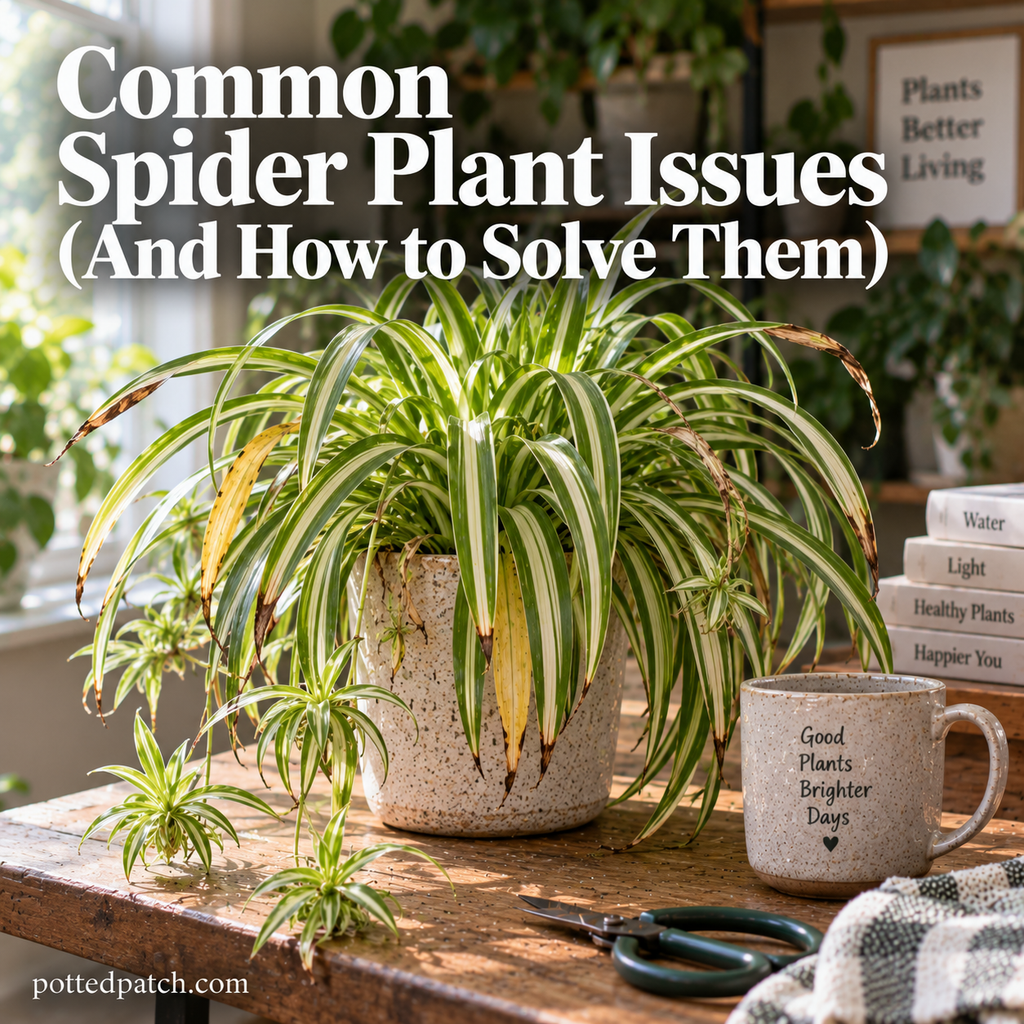
Brown tips are probably the complaint you’ll see most often, but yellow leaves, pale foliage, curling, drooping, root problems, pests, and a lack of spider plant babies can all happen too.
The difficult part is figuring out what’s actually causing the problem.
A brown leaf tip, for example, doesn’t automatically mean your home is too dry. Yellow leaves don’t always mean you’ve overwatered. And a spider plant that isn’t producing babies may simply need more time.
Before making major changes, look at the entire plant and its growing conditions.
Here’s how to diagnose common spider plant problems and get your plant moving in the right direction again.
Start Here: Check the Plant Before Treating It
When a spider plant starts looking unhealthy, begin with a basic inspection.
Check:
- Soil moisture
- Drainage
- Light
- Roots
- Watering habits
- Pests
- Recent environmental changes
Try not to change everything at once.
If you water heavily, repot, fertilize, prune, and move the plant on the same day, you can create additional stress while making it difficult to determine what was wrong in the first place.
Check the Soil Moisture
Push a finger into the potting mix.
Does it feel wet, slightly moist, mostly dry, or extremely dry?
Spider plants generally appreciate some moisture, but they shouldn’t remain saturated indefinitely.
If the soil is still very wet long after watering, investigate why.
Check the Drainage
Make sure excess water can escape.
If your spider plant is growing in a nursery pot placed inside a decorative container, remove it after watering and check whether water has collected underneath.
Standing water around the root ball can create problems over time.
Check the Light
Spider plants generally perform well in bright, indirect light.
They can tolerate less light, but growth may become slower and weaker.
Intense direct sunlight can cause scorching, especially if the plant hasn’t gradually adjusted to stronger exposure.
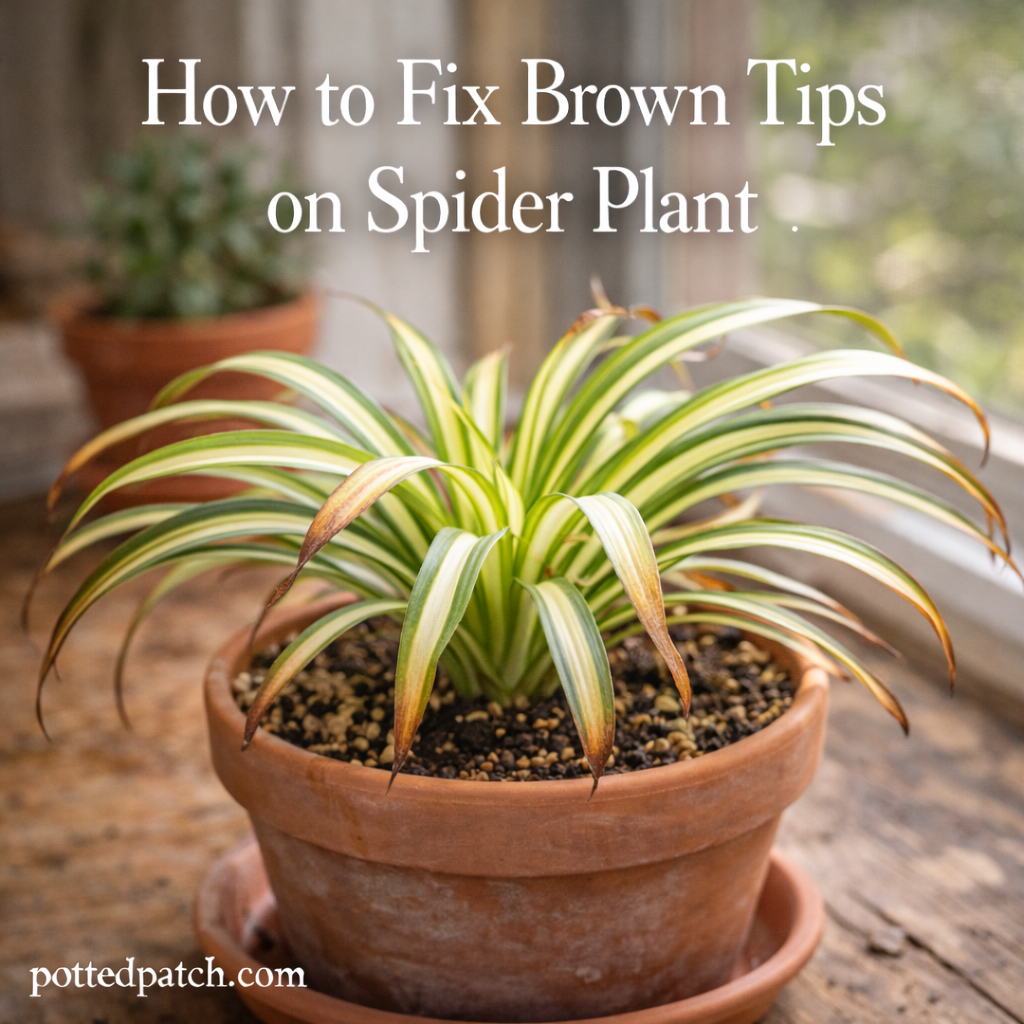
Why Does My Spider Plant Have Brown Tips?
Brown tips are perhaps the classic spider plant problem.
A plant can otherwise look perfectly healthy while the ends of its leaves gradually become brown and crispy.
Possible causes include:
- Inconsistent watering
- Prolonged dryness
- Mineral buildup
- Fertilizer buildup
- Water quality
- Low humidity
- Root stress
- Physical damage
Because there are several possibilities, don’t immediately assume one factor is responsible.
Can Tap Water Cause Brown Spider Plant Tips?
Water quality can sometimes contribute to leaf-tip damage.
Spider plants can be sensitive to certain minerals or substances that accumulate in the soil over time.
If brown tips keep returning despite otherwise good care, you can experiment with rainwater, distilled water, or suitable filtered water and observe future growth.
Existing brown tips won’t become green again.
What you’re looking for is healthier new foliage.
Can Too Much Fertilizer Cause Brown Tips?
Yes.
Excess fertilizer can lead to salt buildup in the potting mix, potentially damaging roots and leaf tips.
Avoid the temptation to fertilize a struggling plant heavily.
More fertilizer doesn’t automatically mean more growth.
If you suspect buildup, flushing the soil thoroughly with appropriate water may help, provided the container drains freely.
Should You Cut Brown Tips Off a Spider Plant?
You can trim them for appearance.
Use clean scissors and follow the natural shape of the leaf.
Avoid removing large amounts of healthy green tissue.
Trimming is cosmetic, though. If new leaves continue developing brown tips, you’ll still need to identify the underlying cause.
Why Are My Spider Plant Leaves Turning Yellow?
Yellow leaves can indicate several different issues.
Possible causes include:
- Overwatering
- Poor drainage
- Underwatering
- Root problems
- Insufficient light
- Nutrient issues
- Natural aging
Look at how many leaves are affected and where they’re located.
Multiple Yellow Leaves With Wet Soil
If several leaves are turning yellow while the soil stays consistently wet, investigate the root zone.
Check:
- Drainage
- Pot size
- Soil texture
- Watering frequency
- Root health
If the roots remain waterlogged, they may eventually begin to deteriorate.
Yellow Leaves With Dry Soil
A spider plant that has remained extremely dry for too long may also develop yellowing.
Water thoroughly and allow the excess to drain.
Then return to a more consistent watering routine.
One Older Yellow Leaf
An occasional older leaf near the base may simply be aging.
If the rest of the plant looks healthy and new leaves continue developing, one yellow leaf usually isn’t cause for alarm.
Why Is My Spider Plant Turning Pale?
Spider plant leaves may sometimes look faded or washed out rather than their normal vibrant green.
Possible causes include:
- Excessive direct sunlight
- Insufficient light
- Nutrient issues
- Root stress
- Pest damage
Variegated varieties naturally contain lighter sections, so first distinguish normal coloration from an overall change in appearance.
Pale Leaves After Moving to a Window
If your spider plant became noticeably pale after being moved into strong direct sunlight, excessive light may be responsible.
Move it away from harsh sun while still providing plenty of bright indirect light.
Damaged foliage won’t necessarily regain its original appearance, but new leaves can develop normally.
Why Is My Spider Plant Drooping?
Spider plants naturally arch outward, so don’t confuse their cascading growth habit with actual wilting.
A sudden loss of firmness is different.
Possible causes include:
- Underwatering
- Overwatering
- Root damage
- Heat stress
- Recent repotting
Drooping With Dry Soil
If the soil is very dry and the foliage feels limp, the plant may need water.
Water thoroughly until excess water exits the drainage holes.
Drooping With Wet Soil
If the plant is drooping while the soil remains wet, don’t add more water.
Poor drainage or damaged roots may be preventing the plant from taking up water normally.
Inspect the roots if the problem continues.
Why Are My Spider Plant Leaves Curling?
Curling leaves can be another sign of stress.
Possible causes include:
- Underwatering
- Low humidity
- Excessive heat
- Too much direct sunlight
- Root problems
- Pest activity
Check soil moisture first.
If the soil is very dry, water may be needed.
If it’s already wet, look for another cause rather than adding more moisture.
Why Does My Spider Plant Have Brown Spots?
Brown spots are different from the familiar crispy leaf tips.
Possible causes include:
- Sunburn
- Physical damage
- Watering stress
- Root problems
- Cold exposure
- Leaf disease
Pay attention to texture and location.
Dry Brown Patches
Dry, crispy patches can occur after:
- Strong direct sunlight
- Severe dehydration
- Heat exposure
- Physical damage
Think about whether the plant was recently moved.
Soft or Spreading Brown Areas
Soft dark areas are more concerning, particularly when accompanied by wet soil or yellowing.
Check the roots and crown of the plant for signs of rot.
Spider Plant Root Rot: Signs to Look For
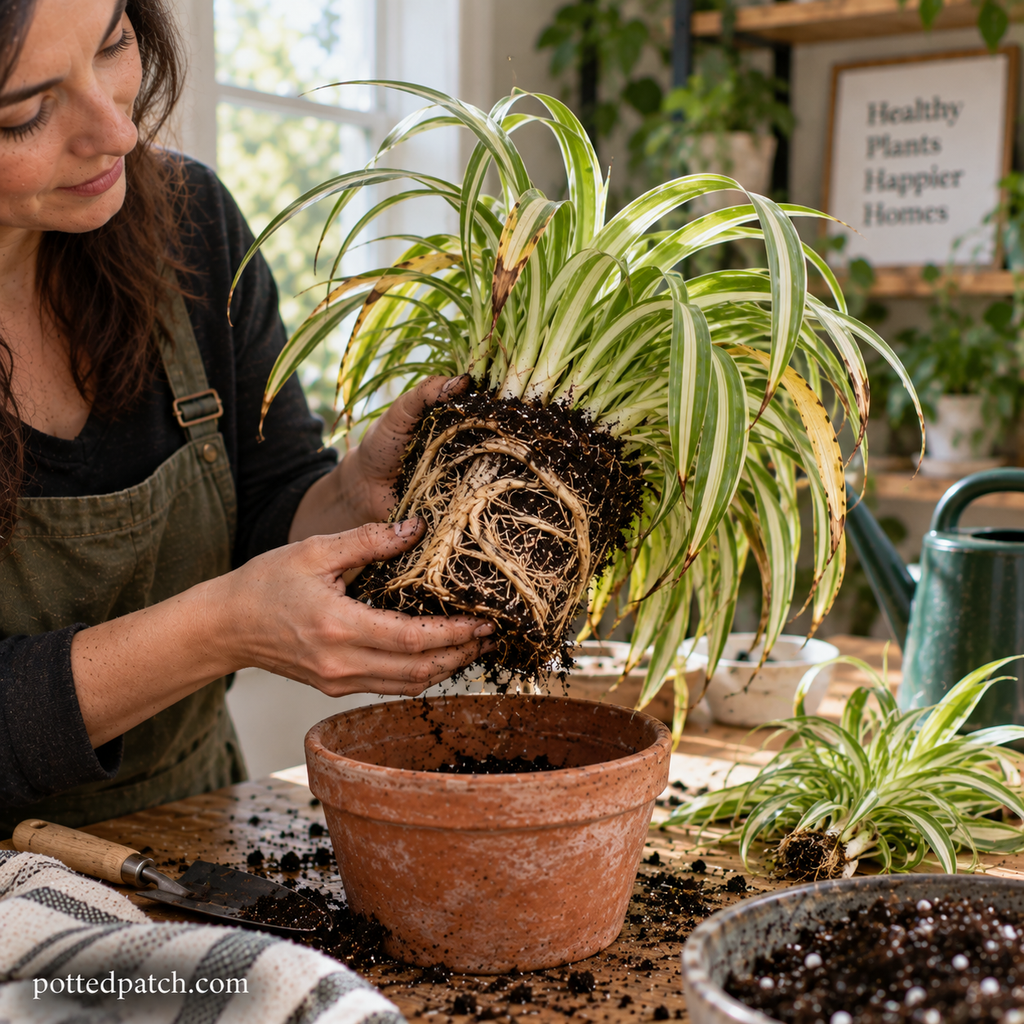
Root rot can occur when roots remain in excessively wet, poorly aerated conditions.
Warning signs may include:
- Yellowing
- Drooping despite wet soil
- Persistent wetness
- Soft growth around the base
- Unpleasant-smelling soil
- Brown or black roots
- Mushy roots
The most reliable way to confirm root rot is to inspect the roots.
What Do Healthy Spider Plant Roots Look Like?
Spider plants develop thick, fleshy roots that store water and nutrients.
Healthy roots should generally feel firm.
Depending on the plant and growing conditions, they may appear cream, tan, or light-colored.
What Do Rotten Spider Plant Roots Look Like?
Rotten roots are more likely to be:
- Dark
- Soft
- Mushy
- Slimy
- Fragile
- Unpleasant smelling
Texture is an important clue.
A root isn’t automatically rotten just because it isn’t perfectly white.
How to Fix Spider Plant Root Rot
If you’ve confirmed rot:
- Remove the spider plant from its container.
- Gently remove enough soil to inspect the root system.
- Cut away clearly rotten roots using clean tools.
- Remove severely damaged foliage if necessary.
- Clean the old container or use a fresh one.
- Repot the healthy plant in fresh, well-draining soil.
- Make sure the pot has drainage holes.
- Adjust your watering routine.
Avoid moving a plant with a reduced root system into an oversized pot.
Extra unused soil can hold moisture longer than necessary.
Can a Spider Plant Recover From Root Rot?
Yes, depending on how much healthy root and crown tissue remains.
A plant with plenty of firm roots has a better chance of recovering than one where rot has spread throughout the crown.
Healthy spiderettes may also provide a backup method of propagating the plant.
Why Is My Spider Plant Not Growing?
Spider plants usually grow fairly actively when conditions are favorable.
If growth has stalled, consider:
- Low light
- Seasonal changes
- Cool temperatures
- Root problems
- Nutrient availability
- Recent repotting
- Plant maturity
Slow Growth During Winter
Growth often slows when days become shorter.
A healthy plant that isn’t producing much new foliage during winter may not need fixing.
Continue providing appropriate care and avoid compensating with excessive fertilizer or water.
Slow Growth With Yellowing
Slow growth becomes more concerning when combined with:
- Yellow leaves
- Root rot
- Pest damage
- Persistent wet soil
- Weak new growth
In that situation, investigate the underlying growing conditions.
Why Isn’t My Spider Plant Producing Babies?
One of the most enjoyable things about growing a spider plant is seeing long stems develop with small plantlets, often called spiderettes or spider plant babies.
If yours isn’t producing them, don’t panic.
Possible reasons include:
- The plant is still young
- Insufficient light
- Seasonal growth patterns
- Overall plant stress
- Nutrient imbalance
- Plant maturity
Does Light Help Spider Plants Produce Babies?
Good light can support stronger growth.
If your spider plant is sitting in a dim corner, moving it into brighter indirect light may improve its overall vigor.
Avoid harsh direct sunlight.
Does a Spider Plant Need to Be Root-Bound to Make Babies?
Spider plants can tolerate relatively snug pots, but you don’t need to deliberately keep the plant severely root-bound just to encourage spiderettes.
Focus on healthy growing conditions rather than stressing the roots.
A mature, healthy plant is more likely to produce runners naturally.
Why Are My Spider Plant Babies Dying?
Spiderettes can decline while still attached to the parent plant or after propagation.
Possible causes include:
- Severe dryness
- Poor root development
- Excessive moisture after planting
- Low light
- Damaged plantlets
- Environmental stress
If you’re propagating spider plant babies, choose healthy plantlets whenever possible.
Should You Root Spider Plant Babies in Water or Soil?
Both methods can work.
For water propagation:
- Select a healthy spiderette.
- Place the developing root area in water.
- Keep the leaves above the water.
- Wait for roots to develop.
- Transfer the plantlet into soil once it has a useful root system.
You can also root spiderettes directly in moist potting mix.
Some growers leave the plantlet attached to the parent while it begins rooting, then cut the runner after the new plant establishes itself.
Why Is My Spider Plant Bare in the Middle?
A mature spider plant can sometimes become sparse around the center.
Possible reasons include:
- Aging foliage
- Crowded roots
- Previous leaf removal
- Root problems
- Uneven growth
- Division of older clumps
Remove completely dead foliage and inspect the crown.
If the plant has become extremely crowded, division may help rejuvenate it.
Should You Divide a Large Spider Plant?
Division can be useful when a mature plant has developed several dense crowns.
To divide it:
- Remove the plant from its pot.
- Identify natural sections of the crown and root system.
- Gently separate them.
- Use clean tools if roots can’t be separated by hand.
- Repot each healthy division appropriately.
You don’t need to divide a healthy plant simply because it’s large.
Why Is My Spider Plant Root-Bound?
Spider plants produce vigorous, thick roots and can fill containers relatively quickly.
Signs of severe crowding may include:
- Large numbers of roots filling the pot
- Roots emerging from drainage holes
- Water running through unusually quickly
- The plant becoming difficult to water
- A distorted nursery pot
- Very little soil remaining around the roots
Spider plants tolerate some crowding, so visible roots don’t automatically mean an emergency repotting is required.
What Size Pot Should I Use?
When repotting, move up only modestly in container size.
A dramatically oversized pot holds more soil around the root system, which can stay wet longer.
Make sure the new container has drainage holes.
Why Is My Spider Plant Struggling After Repotting?
Repotting can temporarily stress a plant.
The roots may have been disturbed, and conditions around them have suddenly changed.
After repotting:
- Keep the plant in bright indirect light
- Maintain reasonable soil moisture
- Avoid constantly wet soil
- Protect it from extreme temperatures
- Avoid heavy fertilizer immediately after major root disturbance
Give the plant time to settle.
Why Is My Spider Plant Losing Its Variegation?
Some spider plant varieties naturally have white or cream stripes.
If new growth appears greener than usual, low light may be contributing.
Move the plant gradually into brighter indirect light.
Genetics also influence variegation, so light isn’t the only factor.
Can Green Spider Plant Leaves Turn Variegated Again?
An existing solid-green leaf won’t usually develop new white striping.
Instead, watch the coloration of future growth after conditions improve.
Spider Plant Sunburn: What It Looks Like
Strong direct sunlight can damage spider plant foliage.
Possible signs include:
- Bleached patches
- Tan areas
- Crispy brown sections
- Faded foliage
- Damage concentrated on exposed leaves
If the plant recently moved into stronger sunlight, this is an important clue.
Move it away from intense direct sun while continuing to provide bright indirect light.
Why Is My Spider Plant Soil Staying Wet?
Soil that remains wet for an unusually long time may eventually create root problems.
Possible causes include:
- Low light
- Dense potting mix
- Oversized container
- Poor drainage
- Cool temperatures
- Frequent watering
Consider the entire growing setup rather than simply stretching the time between waterings.
What Soil Does a Spider Plant Need?
Spider plants generally do well in a loose indoor potting mix that retains some moisture while still allowing excess water to drain.
If your mix is particularly dense, amendments such as perlite or fine bark can improve aeration.
The goal isn’t to create soil that dries instantly.
It’s to avoid a compacted, waterlogged root environment.
Why Does Water Run Straight Through My Spider Plant Pot?
Water can rush through the pot when:
- The soil is extremely dry
- Potting mix has pulled away from the container
- Roots occupy most of the pot
- Soil has become compacted
- Channels have formed through the mixture
Water slowly and check whether the root ball is actually absorbing moisture.
If roots have almost completely replaced the soil, it may be time to repot.
Common Spider Plant Pests
Spider plants can occasionally develop pest infestations.
Common pests include:
- Spider mites
- Mealybugs
- Scale
- Aphids
Inspect the foliage regularly, especially if the plant begins looking dull or develops unexplained discoloration.
Spider Mites on Spider Plants
Despite the similar name, spider mites aren’t unique to spider plants.
Possible signs include:
- Fine webbing
- Pale speckling
- Yellowing
- Dull foliage
- Tiny moving pests
Pay close attention to the undersides of leaves.
Mealybugs on Spider Plants
Mealybugs often resemble small white cottony clusters.
Look around:
- Leaf bases
- Crowded growth
- New leaves
- Protected crevices
Sticky residue can sometimes appear as well.
Scale on Spider Plants
Scale insects may look like small bumps attached to the foliage.
Because they don’t always resemble typical insects, they’re easy to overlook.
Check suspicious bumps carefully, particularly if the plant has sticky leaves or unexplained yellowing.
How to Treat Spider Plant Pests
If you discover pests:
- Separate the affected plant from other houseplants when practical.
- Identify the pest as accurately as possible.
- Inspect the entire plant.
- Rinse or physically remove pests where practical.
- Remove severely damaged foliage if needed.
- Use an appropriately labeled treatment when necessary.
- Follow the product instructions.
- Inspect the plant repeatedly over the following weeks.
Check neighboring plants too.
An infestation may have spread before you noticed it.
Can Damaged Spider Plant Leaves Heal?
Brown, yellow, or physically damaged leaf tissue won’t turn healthy green again.
But that doesn’t mean you need to remove every imperfect leaf.
A partially damaged leaf can still photosynthesize.
When Should You Remove a Damaged Leaf?
Consider removing leaves that are:
- Completely yellow
- Completely brown
- Severely damaged
- Rotten at the base
- Heavily affected by pests
For small brown tips, trimming is mostly cosmetic.
Spider Plant Problems in Winter
Indoor growing conditions often change during winter.
Lower light and cooler temperatures can cause soil to dry more slowly.
You may notice:
- Slower growth
- Fewer spiderettes
- Soil remaining moist longer
- Increased risk of overwatering
- Cold-related stress
Adjust care according to the plant’s actual conditions.
Don’t water simply because a certain number of days have passed.
How to Prevent Common Spider Plant Problems
Most spider plant problems become easier to prevent when the basic growing conditions are consistent.
Aim to:
- Provide bright, indirect light.
- Use a pot with drainage holes.
- Grow the plant in loose, well-draining soil.
- Check soil moisture before watering.
- Water thoroughly when needed.
- Avoid leaving the pot in standing water.
- Fertilize moderately during active growth.
- Repot when the roots become excessively crowded.
- Inspect the foliage regularly for pests.
- Adjust watering as indoor conditions change.
Don’t worry about making every leaf flawless.
Healthy plants still develop occasional brown tips, scars, and aging leaves.
Frequently Asked Questions About Spider Plant Problems
What Is the Most Common Problem With Spider Plants?
Brown leaf tips are one of the most frequently noticed issues.
They can be associated with inconsistent watering, mineral or fertilizer buildup, water quality, low humidity, and other forms of root or environmental stress.
Why Are My Spider Plant Tips Turning Brown?
Start by reviewing watering consistency and fertilizer use.
If those seem appropriate, consider whether mineral buildup or water quality could be contributing.
Why Is My Spider Plant Turning Yellow?
Yellow leaves can result from excessive moisture, poor drainage, prolonged dryness, root problems, low light, or natural aging.
Check the soil before deciding how to respond.
How Do I Know if My Spider Plant Is Overwatered?
Possible signs include yellowing, drooping while the soil remains wet, and declining roots.
Persistent wetness is an important clue.
Can a Spider Plant Recover From Root Rot?
Sometimes.
Remove clearly rotten roots and preserve as much healthy root and crown tissue as possible.
Healthy spiderettes can also be propagated as backups.
Why Isn’t My Spider Plant Making Babies?
The plant may be too young, growing slowly, receiving insufficient light, or simply not in an active stage of runner production.
Give it good growing conditions and time.
Should I Cut the Babies Off My Spider Plant?
You don’t have to.
Spiderettes can remain attached for their cascading appearance.
Remove them if you want to propagate new plants or prefer a tidier look.
Why Is My Spider Plant Drooping After Watering?
If the soil is already wet and the plant remains droopy, adding more water isn’t necessarily the solution.
Check drainage and root health.
Should I Mist My Spider Plant?
Misting isn’t required for successful spider plant care.
Consistent watering, appropriate light, healthy roots, and reasonable indoor humidity are more important.
Quick Spider Plant Troubleshooting Checklist
When your spider plant looks unhealthy, work through these steps:
- Check whether the soil is wet or dry.
- Make sure excess water can drain.
- Evaluate the amount of light the plant receives.
- Look for mineral or fertilizer buildup if tips keep browning.
- Inspect the foliage for pests.
- Check the roots if yellowing or drooping continues.
- Think about recent repotting or environmental changes.
- Correct the most likely cause.
- Give the plant time to respond.
Healthy new growth is usually the best sign that your changes are working.
Final Thoughts
Spider plants are resilient, but their long, narrow leaves make certain problems—especially brown tips—very noticeable.
Try not to diagnose the plant from a single damaged leaf.
Start with the soil. Check whether it’s wet or dry and make sure the container drains properly. Look at the plant’s light, inspect its thick root system when necessary, and check the foliage for pests.
If brown tips keep appearing, consider watering consistency, fertilizer buildup, and water quality rather than automatically assuming the plant needs more humidity.
And if your spider plant isn’t producing babies yet, give it time. A healthy mature plant growing in favorable conditions is much more likely to send out the familiar cascading runners.
The goal isn’t a plant without a single imperfect leaf.
Look instead for firm roots, steady growth, healthy new foliage, and a plant that remains vigorous over time. Those are much better indicators that your spider plant is doing well.