Pothos has a well-earned reputation for being one of the easier houseplants to grow. It tolerates missed waterings, adapts to a range of indoor conditions, and can continue growing even when its care isn’t perfect.
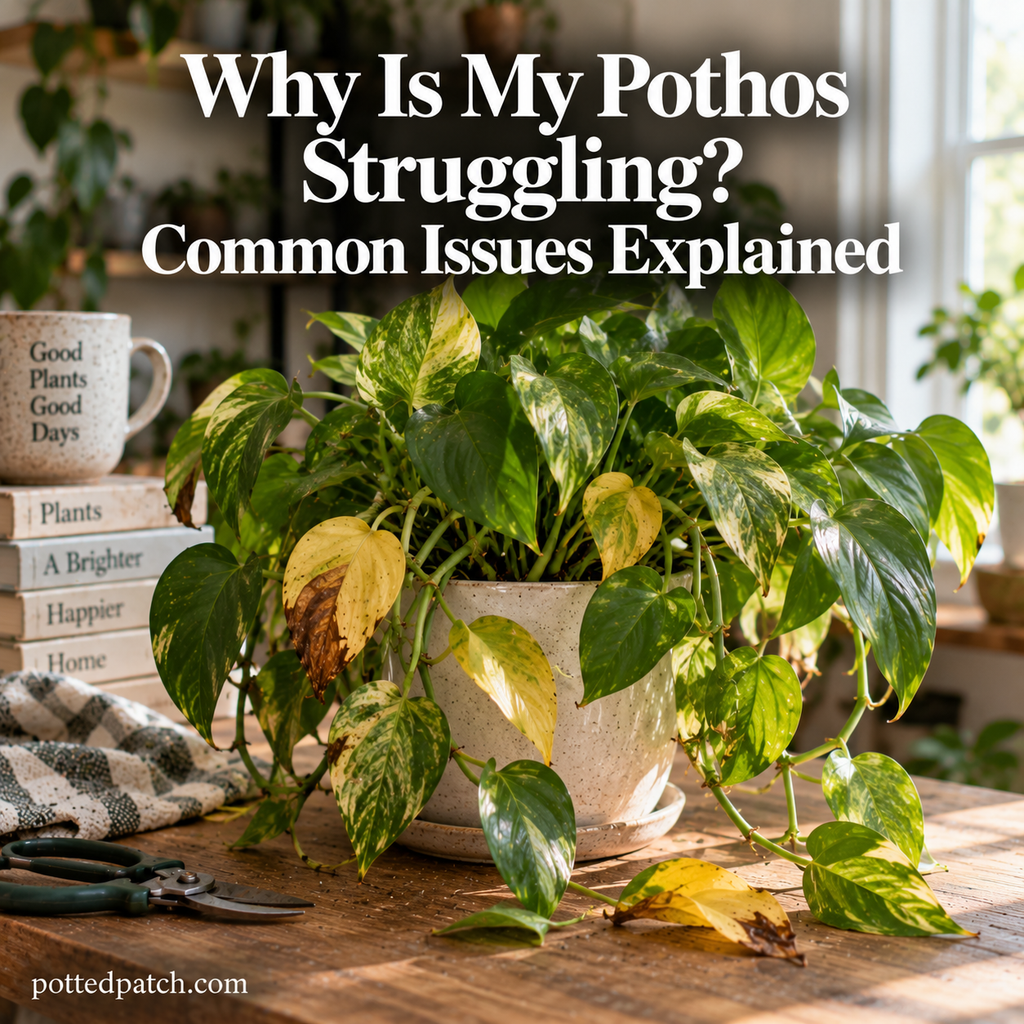
So when a pothos suddenly starts turning yellow, drooping, developing brown patches, or dropping leaves, it can be confusing.
The biggest challenge is that many pothos problems look similar. A drooping plant may be thirsty, but damaged roots caused by consistently wet soil can produce a similar appearance. Yellow leaves might point to overwatering, insufficient light, root trouble, or simply an older leaf reaching the end of its life.
Instead of treating one symptom in isolation, look at the whole plant.
This guide covers the most common pothos problems, what may be causing them, and practical ways to help your plant recover.
Start Here: Check Your Pothos Before Making Changes
When a pothos looks unhealthy, resist the temptation to immediately water, fertilize, repot, and move it to a new location.
Start with a quick inspection.
Check:
- Soil moisture
- Drainage
- Light
- Roots
- Temperature
- Pests
- Recent changes
These clues often reveal more than the damaged leaves themselves.
Check the Soil
Push your finger an inch or two into the potting mix.
Is it:
- Wet and heavy?
- Slightly moist?
- Mostly dry?
- Extremely dry?
Think about how long it has been that way, too.
Soil that’s still wet shortly after watering is normal. Soil that remains saturated for a long time may indicate poor drainage, low light, an oversized pot, or watering that’s too frequent.
Check the Drainage
Make sure excess water can escape from the container.
If your pothos sits inside a decorative pot, check the bottom after watering. Water can collect there without being visible from above.
Check the Light
Pothos is adaptable, but it still needs light to grow.
Very dim conditions can contribute to slow growth, reduced variegation, and soil that stays wet longer.
At the other extreme, intense direct sunlight can scorch the foliage.
Think About What Changed
Plant problems sometimes appear shortly after a change in environment.
Ask yourself:
- Did I recently repot it?
- Did I move it to another room?
- Has the weather changed?
- Is a heating or air-conditioning vent nearby?
- Did I recently fertilize?
- Did I change my watering routine?
Recent changes can provide valuable clues.
Why Are My Pothos Leaves Turning Yellow?
Yellow leaves are one of the most common pothos problems.
Unfortunately, yellowing can have several causes.
Possible reasons include:
- Overwatering
- Poor drainage
- Underwatering
- Root rot
- Insufficient light
- Nutrient problems
- Temperature stress
- Natural aging
The pattern matters.
Multiple Yellow Leaves With Wet Soil
If several leaves are yellowing while the soil remains consistently wet, start by investigating moisture.
Don’t add more water simply because the plant looks unhappy.
Check:
- Drainage holes
- Soil texture
- Pot size
- Root condition
- How frequently you’re watering
Persistently saturated soil can eventually damage the roots.
Yellow Leaves With Very Dry Soil
If the soil is extremely dry and several leaves are wilting or yellowing, the plant may have gone too long without water.
Water thoroughly and allow excess moisture to drain.
Afterward, return to a more consistent routine rather than keeping the soil constantly wet to compensate.
One Older Leaf Turning Yellow
An occasional yellow leaf isn’t automatically a problem.
Older pothos leaves naturally decline over time.
If one older leaf near the base turns yellow while the rest of the plant is healthy and producing new growth, there may be nothing to fix.
Rapid yellowing across multiple leaves deserves more attention.
Why Is My Pothos Drooping?
Drooping is another symptom with opposite possible causes.
The first thing to check is soil moisture.
Drooping With Dry Soil
If the potting mix is very dry and the leaves are limp, your pothos may simply need water.
Water thoroughly until excess water exits through the drainage holes.
A thirsty pothos can sometimes recover surprisingly quickly.
Drooping With Wet Soil
A pothos sitting in wet soil can also droop.
This may happen because the roots aren’t functioning properly in waterlogged conditions.
Possible causes include:
- Overwatering
- Poor drainage
- Dense soil
- Root rot
- An oversized pot
If the soil is already wet, don’t add more water.
Pothos Drooping After Repotting
Temporary drooping after repotting can happen when roots have been disturbed.
Keep conditions stable and give the plant time to adjust.
Avoid immediately fertilizing or repeatedly watering in an attempt to make the leaves stand upright.
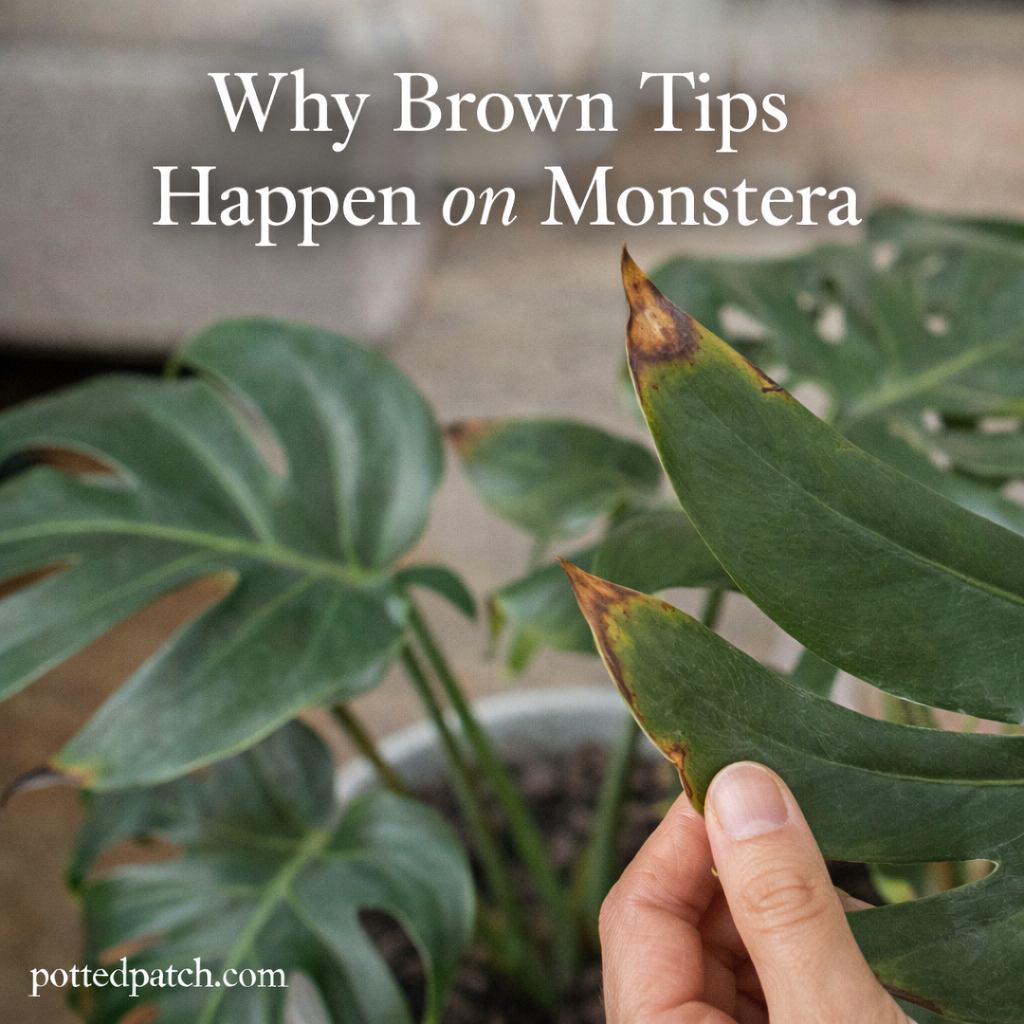
Why Does My Pothos Have Brown Tips?
Small brown tips are fairly common.
Possible causes include:
- Inconsistent watering
- Prolonged dryness
- Low humidity
- Fertilizer buildup
- Mineral accumulation
- Root stress
A tiny brown tip on an otherwise healthy plant usually isn’t an emergency.
Repeated browning on new growth is more useful as a troubleshooting clue.
Should You Cut Brown Tips Off Pothos?
You can trim brown tips for appearance.
Use clean scissors and remove only the dead tissue.
Trimming doesn’t solve the underlying problem, so continue checking watering, roots, fertilizer use, and environmental conditions if the browning continues.
Why Does My Pothos Have Brown Spots?
Brown spots can develop for several reasons.
Consider:
- Sunburn
- Watering stress
- Root problems
- Cold damage
- Physical injury
- Leaf disease
The texture and location of the damage can help.
Dry, Crispy Brown Patches
Dry patches are often associated with environmental stress such as:
- Strong direct sunlight
- Severe dehydration
- Heat
- Physical damage
If the damage appeared after moving the plant into a sunny window, sun exposure becomes a strong possibility.
Soft Dark Brown Spots
Soft or spreading dark areas deserve closer inspection.
If they’re appearing alongside wet soil, yellowing, or declining stems, check the root system.
Why Are My Pothos Leaves Curling?
Pothos leaves may curl when the plant is stressed.
Possible causes include:
- Underwatering
- Root problems
- Excessive heat
- Low humidity
- Too much direct sunlight
- Pest activity
Start with soil moisture.
If the soil is extremely dry, the plant may need water.
If the soil is already wet, investigate the roots instead.
New Pothos Leaves Curling
Fresh pothos leaves naturally emerge folded and gradually unfurl.
Don’t manually pull them open.
A developing leaf can be easily damaged.
Give the plant stable conditions and allow new foliage to open naturally.
Why Is My Pothos Losing Leaves?
Leaf drop can occur for several reasons.
Potential causes include:
- Severe underwatering
- Overwatering
- Root rot
- Low light
- Cold temperatures
- Environmental changes
- Natural aging
Look at where leaves are dropping.
A few older leaves near the base declining slowly is different from healthy leaves suddenly dropping throughout the plant.
Pothos Root Rot: Signs to Look For
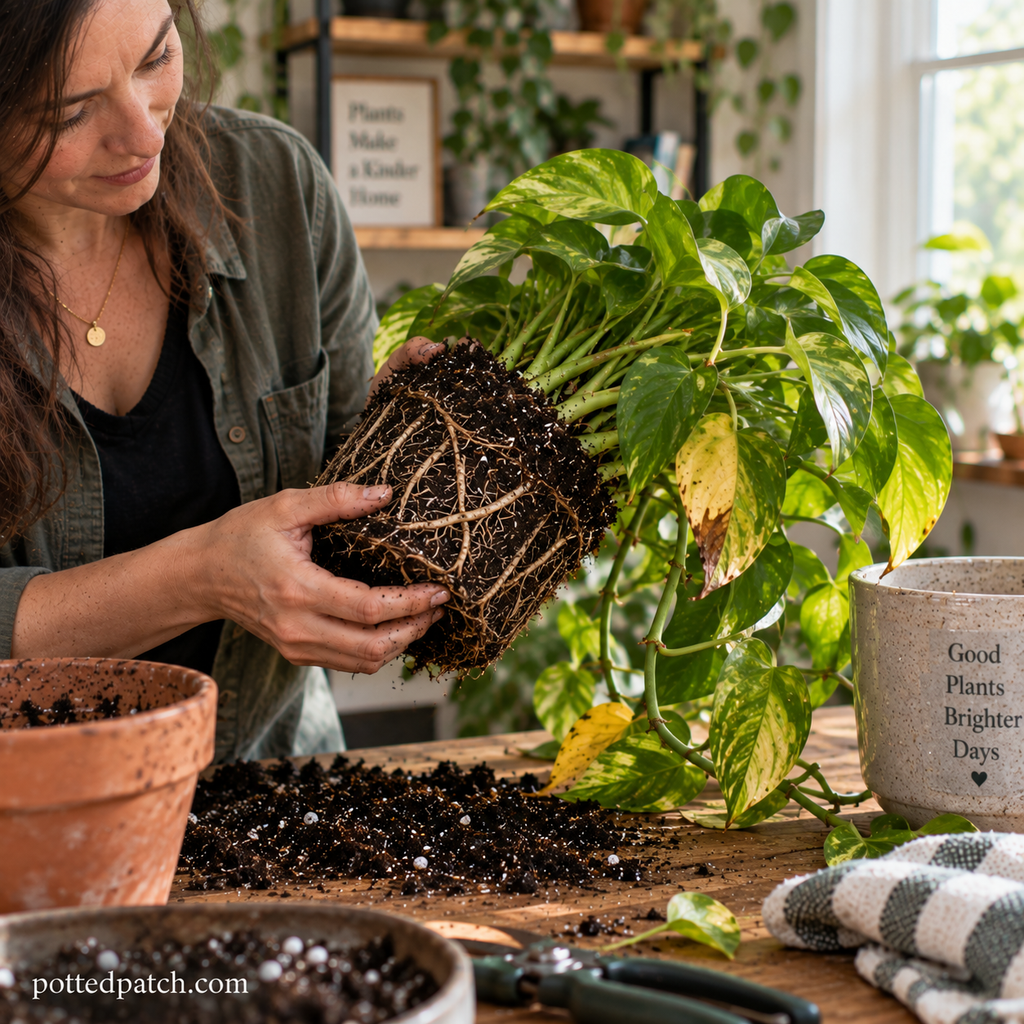
Root rot is one of the more serious pothos problems.
It usually develops when the roots remain in poorly aerated, excessively wet conditions for too long.
Possible warning signs include:
- Yellow leaves
- Drooping despite wet soil
- Soil that stays wet for a long time
- Soft or darkened stems near the soil
- Unpleasant-smelling potting mix
- Brown or black roots
- Mushy roots
The best way to confirm root rot is to inspect the root system.
Healthy vs. Rotten Pothos Roots
Healthy roots should generally feel firm.
Their color can vary depending on age and soil.
Rotten roots are more likely to be:
- Soft
- Mushy
- Slimy
- Darkened
- Fragile
- Unpleasant smelling
Don’t diagnose root rot based on root color alone. Texture and overall condition are more useful clues.
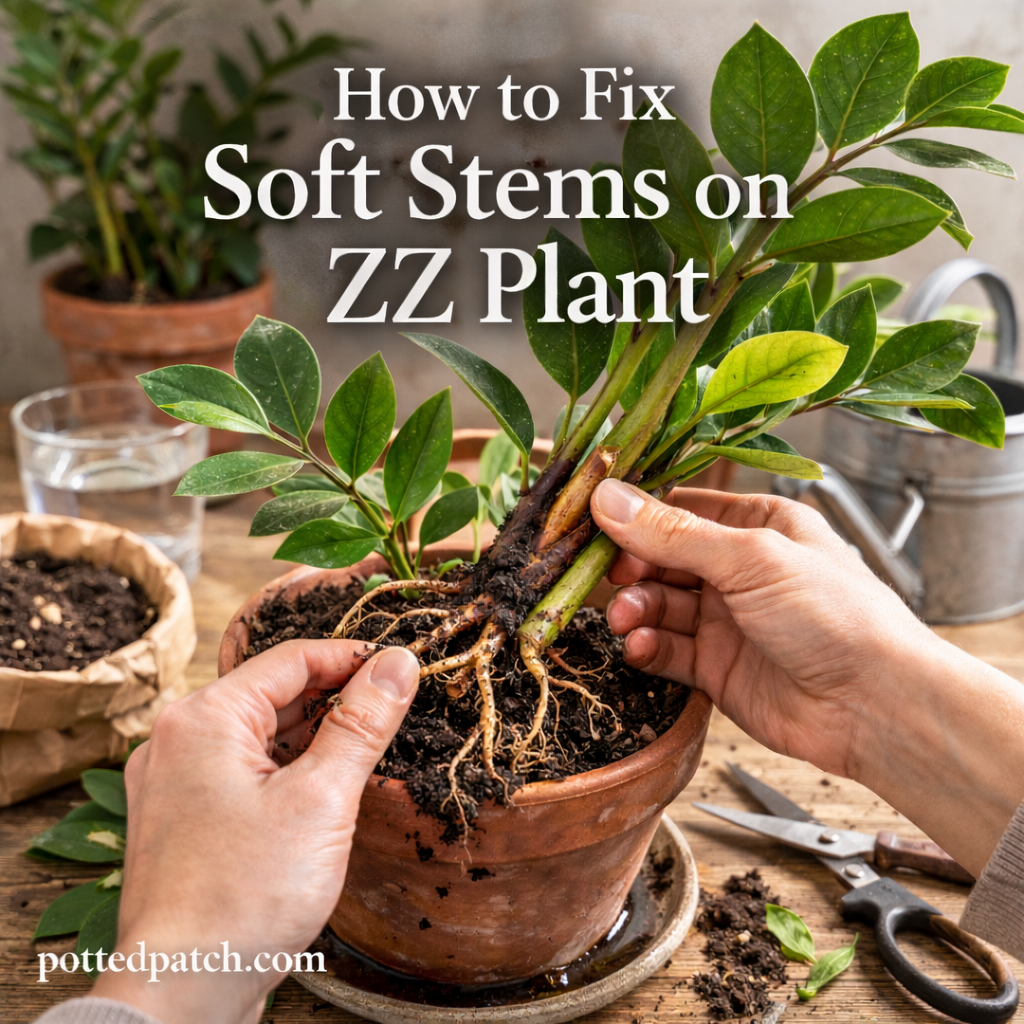
How to Fix Pothos Root Rot
If you confirm root rot:
- Remove the pothos from its container.
- Gently remove enough soil to inspect the roots.
- Cut away clearly rotten roots using clean tools.
- Remove badly rotted stem sections if necessary.
- Clean the container or use a fresh one.
- Repot the healthy portion in fresh, well-draining soil.
- Make sure the container has drainage holes.
- Adjust your watering routine.
Choose the new pot according to the remaining root system.
A plant that has lost many roots doesn’t need an enormous container.
Can a Pothos Recover From Root Rot?
Yes, if enough healthy tissue remains.
Pothos also has an advantage: healthy stem sections containing nodes can often be propagated.
If the root system is severely damaged but healthy vines remain, taking cuttings may allow you to save the plant even if the original root ball doesn’t recover.
Why Is My Pothos Leggy?
Long stretches of bare vine between leaves usually indicate that the plant isn’t growing as compactly as it could.
Insufficient light is a common reason.
A pothos in low light may stretch toward the nearest window, producing longer spaces between leaves.
How to Fix a Leggy Pothos
Try:
- Moving it gradually into brighter indirect light
- Pruning long bare vines
- Propagating healthy cuttings
- Replanting rooted cuttings into the original pot
Adding propagated cuttings back into the container can help create a fuller appearance over time.
Existing bare sections won’t suddenly grow closely spaced leaves again, so pruning and propagation are often useful.
Why Is My Pothos Bare at the Top?
A pothos may look full when purchased but gradually become sparse around the soil line as vines grow longer.
This happens because most of the foliage continues developing farther along the vines.
To create a fuller plant:
- Prune healthy vine sections.
- Propagate cuttings containing nodes.
- Allow them to develop roots.
- Plant the rooted cuttings back into the original container.
You can repeat this process as needed.
Good light also helps encourage stronger growth.
Why Is My Pothos Not Growing?
A pothos can temporarily stop producing noticeable growth without being unhealthy.
Growth may slow because of:
- Low light
- Seasonal changes
- Cool temperatures
- Root problems
- Nutrient limitations
- Recent repotting
- Pest activity
When Slow Growth Is Normal
Indoor plants often grow more slowly during periods with shorter days.
If the leaves remain healthy and the roots are in good condition, slower growth may simply reflect the season.
When Slow Growth Indicates a Problem
Investigate further when stalled growth appears alongside:
- Yellow leaves
- Drooping
- Root rot
- Pest damage
- Persistently wet soil
- Declining stems
The combination of symptoms is more informative than slow growth by itself.
Why Are My Pothos Leaves Getting Smaller?
Smaller new leaves can be associated with:
- Insufficient light
- Lack of climbing support
- Nutrient availability
- Root problems
- Plant maturity
Pothos is naturally a climbing plant.
When given suitable support and good growing conditions, mature plants can eventually develop much larger leaves than the trailing pothos commonly seen on shelves.
Does a Moss Pole Help Pothos Grow Larger Leaves?
It can.
Giving pothos something to climb more closely resembles its natural growth habit.
Options include:
- Moss poles
- Coir poles
- Wooden planks
- Trellises
Light remains important. A climbing support won’t compensate for a very dark location.
Why Is My Variegated Pothos Losing Its Variegation?
Variegated pothos varieties need enough light to maintain strong coloration.
In low-light conditions, new growth may contain more green.
Move the plant gradually into brighter indirect light.
Don’t place it immediately in harsh direct sunlight, which may burn the foliage.
Can Green Leaves Become Variegated Again?
Existing green sections generally won’t suddenly develop new variegation.
The goal is to encourage future growth with better coloration.
Variegation also depends on the plant’s genetics, so lighting isn’t the only factor.
Why Is My Pothos Turning Pale?
Pale leaves can result from several conditions.
Consider:
- Too much intense light
- Nutrient issues
- Root problems
- Pest damage
- Natural coloration of the variety
Compare new foliage with older healthy leaves.
Some pothos varieties naturally have lighter or patterned growth, so make sure you’re distinguishing normal coloration from an actual decline.
Pothos Sunburn: What It Looks Like
Pothos generally prefers bright indirect light rather than intense direct sun for long periods.
Sunburn can appear as:
- Bleached patches
- Tan areas
- Crispy brown sections
- Faded leaves
- Damage concentrated on the window-facing side
If damage appeared after suddenly moving the plant into stronger sunlight, sunburn is a likely possibility.
Move the plant away from harsh direct sun.
Damaged areas won’t turn green again, but new foliage can develop normally.
Why Is My Pothos Soil Staying Wet?
Potting mix that stays wet for a long time can increase the risk of root problems.
Possible reasons include:
- Insufficient light
- Oversized container
- Dense soil
- Poor drainage
- Cool temperatures
- Frequent watering
- A small root system
Consider whether the growing setup needs improvement rather than simply waiting longer and longer between waterings.
Does Pothos Need Well-Draining Soil?
Yes.
Pothos likes some moisture but also benefits from air around the roots.
A quality indoor potting mix amended with materials such as perlite, pumice, or fine bark can improve drainage and aeration.
Why Does Water Run Straight Through My Pothos Pot?
Water can sometimes pour through a container without properly moistening the root ball.
Possible causes include:
- Extremely dry soil
- Soil pulling away from the pot
- Compacted potting mix
- Heavy root crowding
- Channels developing through old soil
Apply water slowly and check whether the center of the root ball actually becomes moist.
If roots have completely filled the container, repotting may be appropriate.
Common Pothos Pests
Pothos can occasionally attract common houseplant pests.
Watch for:
- Spider mites
- Mealybugs
- Scale
- Thrips
Inspect your plants regularly rather than waiting for obvious damage.
Spider Mites on Pothos
Possible signs include:
- Fine webbing
- Tiny pale speckles
- Dull foliage
- Yellowing
- Very small pests on leaf undersides
Spider mites can be difficult to see without looking closely.
Mealybugs on Pothos
Mealybugs often resemble small cottony clusters.
Check:
- Leaf joints
- Stems
- New growth
- Leaf undersides
Sticky residue can sometimes accompany an infestation.
Scale on Pothos
Scale insects can resemble small bumps attached to the stems and leaves.
Look for:
- Brown or tan bumps
- Sticky residue
- Yellowing foliage
- Declining growth
Inspect suspicious areas carefully.
Thrips on Pothos
Thrips can cause damage that looks like silvery or scarred patches.
You may also notice:
- Tiny dark specks
- Distorted new growth
- Discolored foliage
- Small slender insects
Check both sides of the leaves and pay particular attention to new growth.
What to Do if Your Pothos Has Pests
If you find pests:
- Move the plant away from other houseplants when practical.
- Identify the pest.
- Inspect the entire plant.
- Remove heavily damaged foliage if necessary.
- Physically remove or rinse off pests where practical.
- Use an appropriately labeled treatment if needed.
- Follow the product instructions.
- Continue checking for recurring pests.
Inspect nearby plants as well.
Houseplant pests rarely respect pot boundaries.
Why Are There Tiny Flies Around My Pothos?
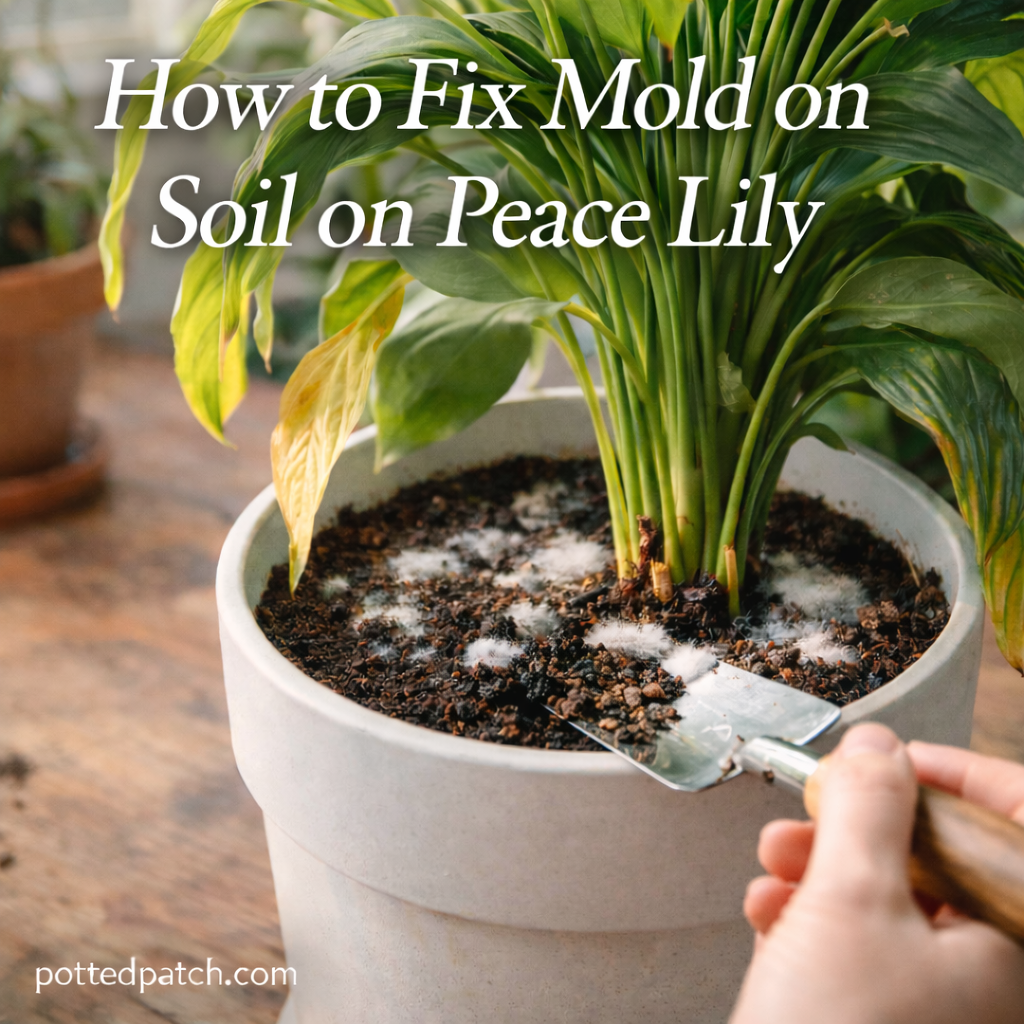
Small flies hovering around the soil may be fungus gnats.
Their presence often becomes more noticeable when potting mix remains consistently moist.
To reduce favorable conditions:
- Allow the upper soil to dry appropriately
- Improve drainage
- Avoid constantly wet soil
- Remove decaying plant material
- Use appropriate fungus gnat controls if necessary
Don’t intentionally allow the entire plant to become severely dehydrated.
The goal is better moisture management.
Why Are Pothos Stems Turning Brown or Black?
Older portions of a pothos vine can develop normal coloration and scarring.
Soft, black, or mushy stems are more concerning.
Check for:
- Rot
- Excess moisture
- Physical injury
- Cold damage
If the stem is rotting, remove affected sections until you reach healthy tissue.
Healthy portions containing viable nodes may be propagated.
Can Damaged Pothos Leaves Heal?
Damaged plant tissue generally doesn’t return to its original condition.
A brown spot won’t turn green again, and a torn leaf won’t repair itself.
What matters is what happens next.
Once you’ve corrected the underlying problem, look for healthy new growth.
Should You Remove Damaged Leaves?
Not necessarily.
A leaf with minor cosmetic damage can still help the plant photosynthesize.
Consider removing leaves that are:
- Completely yellow
- Completely brown
- Severely damaged
- Diseased
- Heavily infested
Avoid stripping a struggling plant of large amounts of functional foliage unnecessarily.
Why Is My Pothos Struggling After Repotting?
Repotting disturbs the roots.
Temporary drooping or slowed growth may occur while the plant adjusts.
Keep conditions stable and avoid:
- Overwatering
- Heavy fertilizing
- Repeatedly moving the plant
- Exposing it to intense direct sunlight
If the roots were healthy and the new pot isn’t dramatically oversized, give the plant time.
Pothos Problems in Winter
Pothos care often needs to change when days become shorter.
During winter:
- Soil may dry more slowly
- Growth may decrease
- Cold drafts can cause stress
- Lower light can contribute to weaker growth
- Overwatering becomes easier
Don’t continue watering at exactly the same frequency simply because that schedule worked during summer.
Check the soil every time.
How to Prevent Common Pothos Problems
You can prevent many pothos problems by keeping the basics simple.
Aim to:
- Provide bright, indirect light.
- Use well-draining soil.
- Choose a container with drainage holes.
- Check the soil before watering.
- Water thoroughly when needed.
- Empty standing water from decorative pots.
- Fertilize moderately during active growth.
- Protect the plant from temperature extremes.
- Inspect leaves for pests regularly.
- Adjust care as indoor conditions change.
Pothos doesn’t need constant attention.
It needs reasonably consistent conditions.
Frequently Asked Questions About Pothos Problems
What Is the Most Common Problem With Pothos?
Watering problems are among the most common.
Both excessively wet and severely dry soil can cause yellowing and drooping, so always check soil moisture before deciding what to do.
How Do I Know if My Pothos Is Overwatered?
Possible signs include yellow leaves, drooping while the soil is wet, soft stems, and soil that remains saturated for a long time.
Severe cases may develop root rot.
How Do I Know if My Pothos Is Underwatered?
The soil may be extremely dry while leaves become limp, curled, or droopy.
A thorough watering may help the plant recover if the roots remain healthy.
Why Are My Pothos Leaves Yellow but the Plant Is Still Growing?
An occasional older yellow leaf can be part of normal plant aging.
If many leaves are turning yellow, investigate watering, drainage, roots, and light.
Why Is My Pothos Drooping After I Water It?
If the soil is already wet and the plant remains droopy, don’t assume it needs more water.
Root damage, poor drainage, or excessively wet soil may be involved.
How Do I Make My Pothos Fuller?
Pruning long vines and propagating healthy node cuttings can help.
Once rooted, plant those cuttings back into the original pot to create additional growth around the top.
Why Is My Pothos Not Growing New Leaves?
Low light, seasonal changes, root problems, insufficient nutrients, or recent stress can slow growth.
If the plant otherwise looks healthy, it may simply need better conditions and time.
Can a Pothos Recover After Losing Most of Its Leaves?
Possibly.
If healthy roots and viable nodes remain, the plant can often produce new growth.
Healthy stem sections can also be propagated as a backup.
Quick Pothos Troubleshooting Checklist
When your pothos looks unhealthy, work through these steps:
- Check whether the soil is wet or dry.
- Make sure the pot drains properly.
- Evaluate the plant’s light.
- Look for pests on both sides of the leaves.
- Consider recent environmental changes.
- Inspect the roots if symptoms suggest rot.
- Correct the most likely underlying issue.
- Give the plant time before making additional major changes.
Try not to change everything at once.
Plants need time to respond, and making several dramatic changes simultaneously can create additional stress.
Final Thoughts
When a pothos starts struggling, the damaged leaves are only part of the story.
The real answer is often below the soil or somewhere in the plant’s environment.
Check whether the potting mix is wet or dry. Make sure excess water can drain. Look at the amount of light the plant receives, inspect for pests, and think about anything that changed recently.
Most importantly, don’t automatically reach for the watering can.
Drooping can mean too little water or too much. Yellow leaves can have several causes. Brown spots may result from sun, dryness, root problems, or physical damage.
Once you narrow down the likely cause, make a targeted correction and give the plant time to respond.
Pothos is remarkably resilient. Even a plant that has lost much of its root system may sometimes be saved through healthy node cuttings.
Focus on healthy new growth rather than expecting damaged leaves to repair themselves. With better conditions and a little patience, a struggling pothos can often return to vigorous growth.