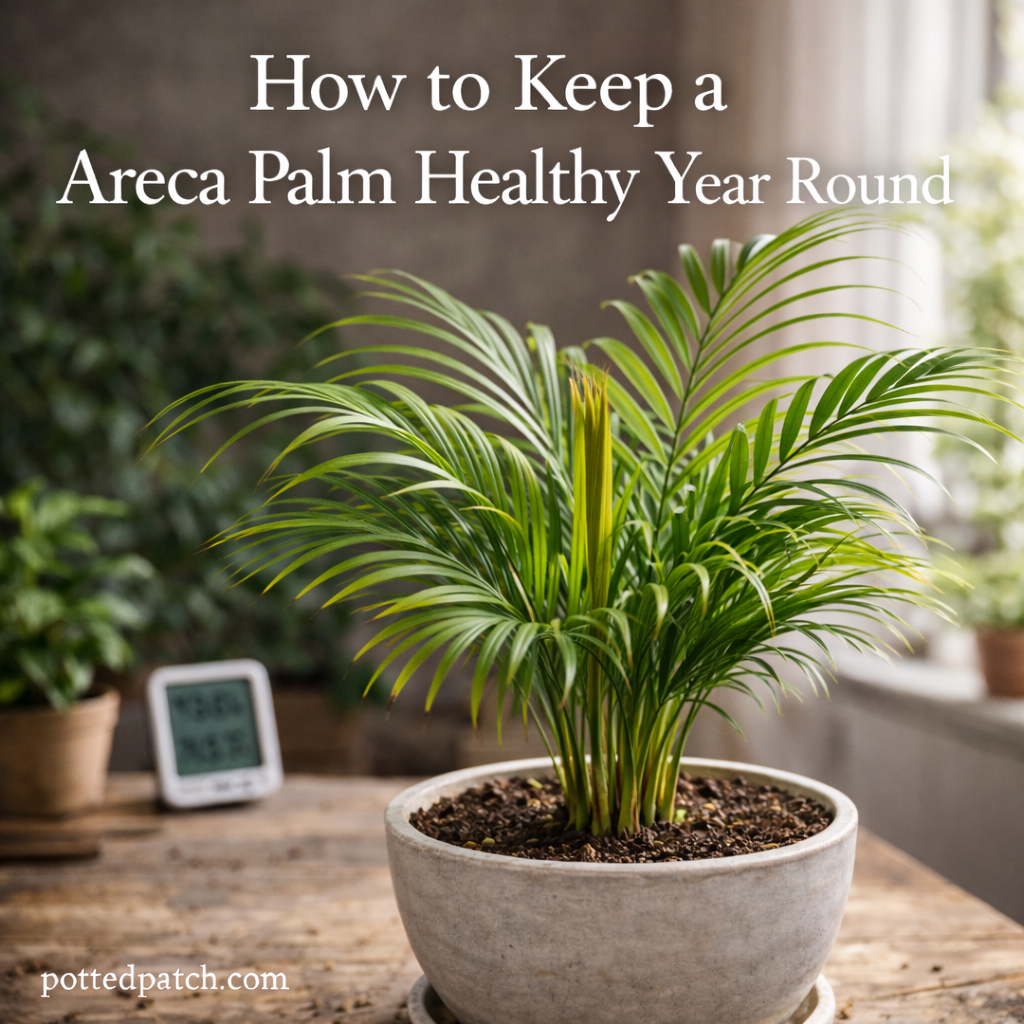

The Areca palm is one of those houseplants that can instantly make a room feel brighter and more tropical. Its long, arching fronds and clusters of slender stems give it a full, feathery appearance without taking up the visual space of a heavier indoor tree.
It also has a reputation for being slightly fussy.
Areca palms aren’t necessarily difficult to grow, but they do notice when their environment isn’t quite right. Brown leaf tips, yellowing fronds, dry soil, too much direct sun, and low humidity can all affect their appearance.
The key is consistency. Give your palm plenty of bright, indirect light, keep the soil moderately moist without leaving it waterlogged, and protect it from extremely dry indoor conditions.
Once you understand that balance, Areca palm care becomes much easier.
This complete guide covers how to care for an Areca palm indoors, including watering, lighting, humidity, soil, fertilizing, pruning, repotting, pests, propagation, and the most common problems you may encounter.
Areca Palm at a Glance
The Areca palm is commonly grown indoors for its graceful, arching foliage. It may also be sold under names such as butterfly palm, golden cane palm, or yellow palm.
Its botanical name is Dypsis lutescens.
Here’s a quick overview of its basic indoor care:
- Light: Bright, indirect light
- Water: Water when the upper portion of the soil begins to dry
- Soil: Well-draining, moisture-retentive potting mix
- Temperature: Approximately 65–80°F (18–27°C)
- Humidity: Moderate to high humidity preferred
- Fertilizer: Feed during active growth
- Repotting: Usually every 2–3 years or when necessary
- Pruning: Remove completely dead or badly damaged fronds
- Difficulty: Moderate
Unlike succulents that prefer to dry out completely, Areca palms generally perform better when their soil doesn’t swing repeatedly between soaking wet and bone dry.
How Much Light Does an Areca Palm Need?
Areca palms prefer plenty of bright, indirect light.
A location near an east-, south-, or west-facing window can work well, depending on the intensity of the sunlight and whether curtains or nearby buildings filter it.
The goal is to provide strong natural light without exposing the leaves to harsh sunlight for long periods.
Can an Areca Palm Handle Direct Sunlight?
Some gentle direct sunlight, particularly in the morning, is usually fine.
Intense afternoon sunlight coming through a hot window can scorch the foliage, especially if the palm was previously growing under lower-light conditions.
Sunburn may appear as:
- Pale or bleached areas
- Dry brown patches
- Crispy sections on exposed fronds
If you’re moving your palm into a brighter location, make the transition gradually.
Signs Your Areca Palm Needs More Light
An Areca palm receiving insufficient light may:
- Grow slowly
- Produce smaller or weaker fronds
- Lean toward the nearest window
- Develop sparse growth
- Stay wet for unusually long periods after watering
Low light can indirectly contribute to watering problems because the plant uses moisture more slowly.
If your palm’s soil remains damp for weeks, consider both your watering habits and the amount of light the plant receives.
How Often Should You Water an Areca Palm?
Areca palms like consistent moisture, but they don’t want their roots sitting in saturated soil.
Rather than following a fixed watering schedule, check the soil regularly.
When the upper inch or two of soil begins to feel dry, it’s usually time to check whether the plant needs water.
When watering:
- Water the soil thoroughly and evenly.
- Continue until excess water begins draining from the bottom.
- Allow the pot to drain completely.
- Empty standing water from the saucer or decorative container.
Don’t give the plant small amounts of water every day. A thorough watering followed by an appropriate drying period encourages healthier root conditions.
How Often Will That Be?
It depends.
Your Areca palm may need water more frequently during warm, bright summer conditions and less often during winter.
The drying rate depends on:
- Plant size
- Pot size
- Pot material
- Soil mixture
- Indoor temperature
- Humidity
- Light exposure
- Air circulation
- Season
This is why “water once a week” isn’t a reliable rule for every home.
Check the plant instead of the calendar.
Signs of an Overwatered Areca Palm
Consistently wet soil prevents roots from receiving enough oxygen and can eventually lead to root rot.
Watch for symptoms such as:
- Widespread yellowing
- Soft or darkened stems near the soil
- Persistently wet potting mix
- Drooping despite moist soil
- An unpleasant smell from the soil
- Brown, soft, or black roots
If you suspect overwatering, don’t simply stop watering for a predetermined number of days. First determine why the soil is staying wet.
Possible causes include an oversized pot, compacted soil, insufficient drainage, low light, or watering too frequently.
What to Do If You Suspect Root Rot
For a seriously declining palm:
- Carefully remove the plant from its container.
- Examine the roots.
- Healthy roots should generally feel firm rather than soft or mushy.
- Trim clearly rotted roots with clean tools.
- Remove excessively wet or degraded soil.
- Repot into fresh, well-draining potting mix.
- Make sure the new container has drainage holes.
Root rot becomes harder to reverse once a large portion of the root system has deteriorated, so early intervention matters.
Signs of an Underwatered Areca Palm
Areca palms aren’t as drought tolerant as many other popular houseplants.
If the soil remains dry for too long, you may notice:
- Drooping fronds
- Crispy leaf tips
- Browning along leaf edges
- Dry, curling leaflets
- Soil pulling away from the pot
- Rapid drying of older fronds
If the root ball is extremely dry, water it slowly and thoroughly.
Very dry soil sometimes allows water to run down the sides of the pot without actually saturating the root zone. If this happens, water gradually to give the soil time to absorb moisture.
Why Are the Tips of My Areca Palm Turning Brown?
Brown tips are probably the most familiar Areca palm complaint.
Unfortunately, they don’t have a single cause.
Brown leaf tips can result from:
- Low humidity
- Inconsistent watering
- Allowing the plant to become excessively dry
- Fertilizer buildup
- Mineral or salt accumulation
- Root stress
- Natural aging
Start by checking the soil and your watering habits.
If watering seems appropriate, consider humidity and whether fertilizer or dissolved minerals may have accumulated in the potting mix.
Avoid assuming that every brown tip means the palm needs more water. Increasing watering when the soil is already damp can create a much more serious root problem.
Humidity Requirements for Areca Palms
Areca palms appreciate moderate to higher humidity.
They can adapt to average household conditions, but extremely dry air may contribute to brown tips and crispy foliage.
Indoor humidity often drops during winter when heating systems are running.
If your home is particularly dry, consider:
- Using a room humidifier
- Grouping compatible houseplants together
- Moving the palm away from heating vents
- Keeping it away from blasts of hot or cold air
A humidifier is generally more effective at raising humidity around the entire plant than occasional misting.
Should You Mist an Areca Palm?
You can occasionally mist the foliage, but misting isn’t a substitute for proper watering or meaningful humidity control.
Any increase in humidity from misting tends to be temporary.
If dry air is a recurring problem, a humidifier is the more practical solution.
Best Temperature for an Areca Palm
Areca palms prefer the same comfortable temperatures found in many homes.
Aim for approximately 65–80°F (18–27°C).
Protect the plant from sudden temperature extremes, including:
- Cold winter drafts
- Air-conditioning vents
- Heating vents
- Frequently opened exterior doors during cold weather
- Cold windows
Try to avoid letting the foliage rest directly against very cold window glass.
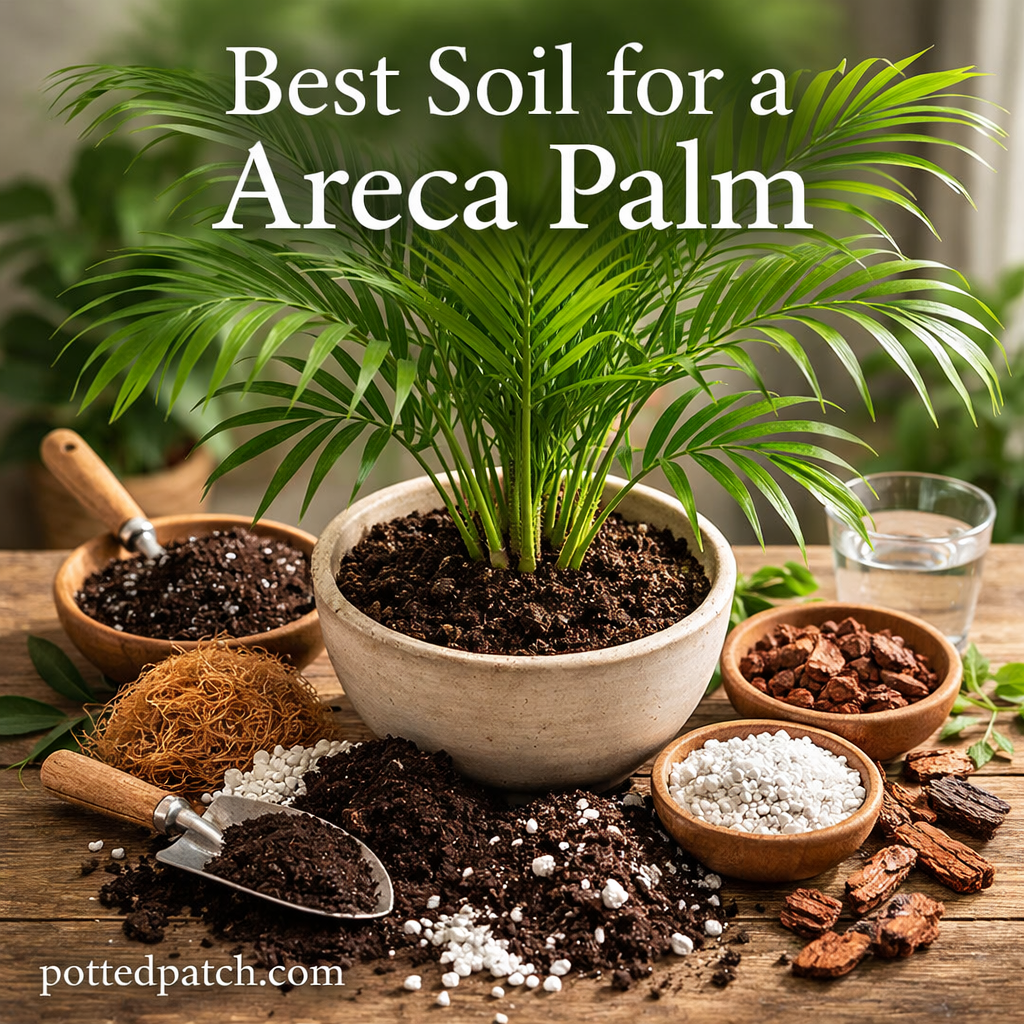
Best Soil for an Areca Palm
The ideal soil holds enough moisture to prevent the roots from immediately drying out while still allowing excess water to drain.
A quality indoor potting mix can work well when amended for better aeration and drainage if necessary.
Materials commonly used to improve potting soil structure include:
- Perlite
- Pumice
- Fine orchid bark
- Other coarse, airy amendments suitable for indoor plants
You don’t need to create an extremely gritty succulent mix. Areca palms prefer more moisture retention than aloe vera, cacti, and many other drought-tolerant plants.
The goal is balance: moist but aerated.
Choosing the Right Pot
Always use a container that allows excess water to escape.
Drainage holes are particularly important for Areca palms because consistently saturated soil can damage their roots.
The pot should also be appropriately sized.
Putting a relatively small root system into a huge container creates a large volume of soil that can remain wet for too long.
When repotting, moving up only one pot size is usually sufficient.
Are Terracotta Pots Good for Areca Palms?
They can be, but keep in mind that unglazed terracotta loses moisture faster than plastic or glazed ceramic.
If your home is already warm and dry, a terracotta pot may require more frequent soil checks.
There’s no single correct pot material. Choose one that works with your environment and watering habits.
How to Fertilize an Areca Palm
Areca palms benefit from nutrients while actively growing, but excessive fertilizer can cause problems.
Use a fertilizer intended for palms or indoor foliage plants and follow its application instructions carefully.
Spring and summer are generally the main feeding periods for indoor palms.
Reduce or pause feeding when growth slows significantly during the darker months.
Don’t Overfertilize
Applying extra fertilizer won’t force a struggling palm to recover faster.
Too much can contribute to salt accumulation and root damage.
If a plant is unhealthy, first investigate:
- Light
- Watering
- Drainage
- Root health
- Pests
- Temperature
Correct the underlying growing conditions before assuming the plant needs more fertilizer.
How to Repot an Areca Palm
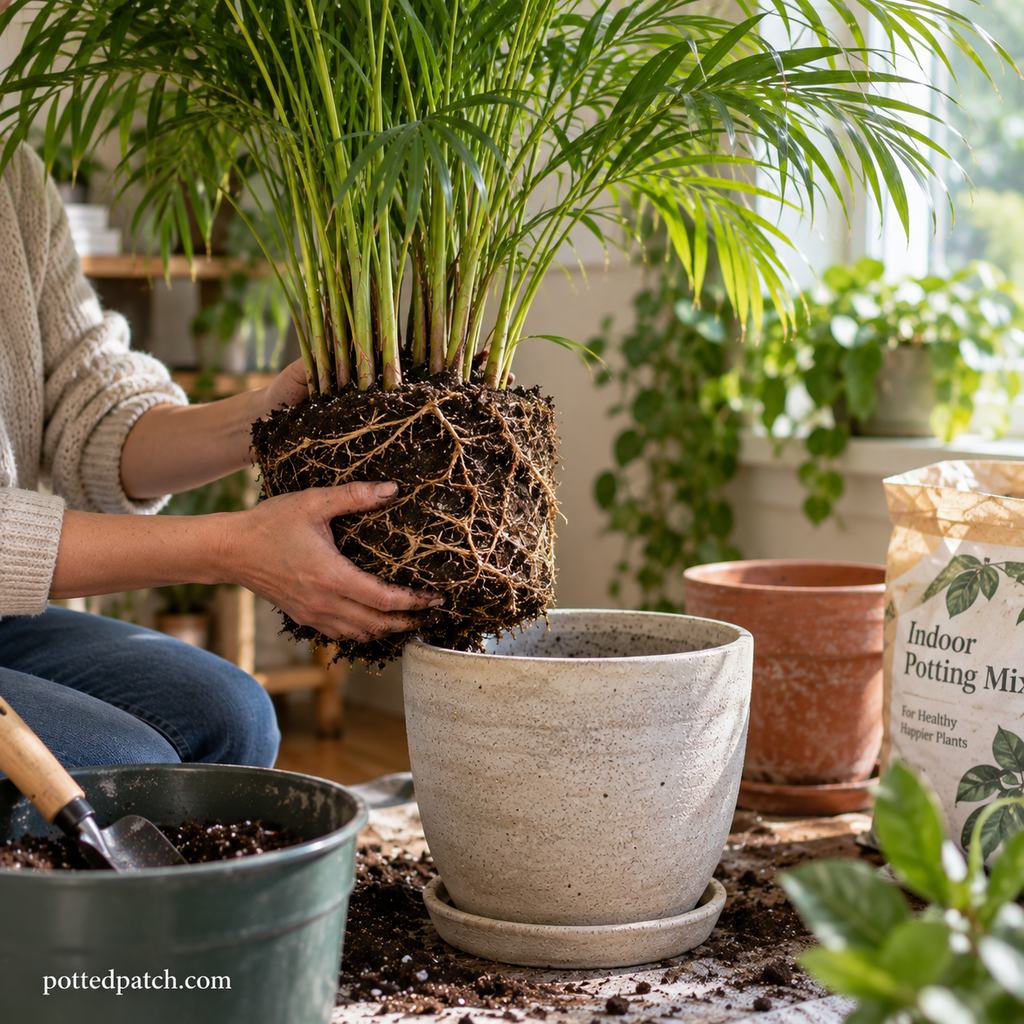
Areca palms don’t need to be repotted constantly.
In fact, unnecessarily disturbing the roots can stress the plant.
Repot when you notice signs such as:
- Roots tightly circling the container
- Roots emerging from drainage holes
- Soil drying unusually quickly because the pot is mostly roots
- Severely compacted or degraded soil
- Poor drainage
- The plant becoming unstable
For many indoor plants, this may mean repotting every couple of years, although the actual timing depends on growth.
Repotting an Areca Palm Step by Step
- Choose a container slightly larger than the current pot.
- Make sure it has drainage holes.
- Prepare fresh, well-draining potting mix.
- Gently slide the palm from its existing container.
- Inspect the roots for damage or rot.
- Position the root ball in the new pot.
- Keep the plant at approximately the same soil depth.
- Fill around the root ball with fresh potting mix.
- Gently firm the soil without heavily compacting it.
- Water appropriately and allow excess moisture to drain.
The plant may look slightly stressed after repotting. Give it stable light and temperature conditions while it adjusts.
How to Prune an Areca Palm
Areca palms don’t need extensive pruning.
Focus mainly on removing fronds that are completely dead, badly damaged, or diseased.
Use clean, sharp pruning shears and cut the unwanted frond near its base without damaging surrounding stems.
Should You Cut Brown Tips Off an Areca Palm?
You can trim brown tips for appearance if you wish.
Follow the natural shape of the leaflet and avoid cutting deeply into healthy green tissue.
However, trimming only addresses the appearance.
If brown tips repeatedly return, identify the underlying cause rather than continuing to cut them off.
Should You Cut Yellow Fronds?
A fully yellow or dying older frond can usually be removed.
Don’t rush to cut every leaf that develops a small yellow section. The plant can still use portions of a frond that remain healthy.
Cleaning Areca Palm Leaves
Areca palms have many narrow leaflets, which can collect dust over time.
Dusty foliage doesn’t look its best and may also make it harder to spot pests.
You can gently clean the fronds with:
- A soft damp cloth
- A gentle shower
- Lukewarm water from a spray attachment
Support the foliage while cleaning and avoid aggressively rubbing delicate leaflets.
If you rinse the plant in a shower, allow excess water to drain thoroughly afterward.
Common Areca Palm Pests
Indoor Areca palms can attract several common houseplant pests.
Watch for:
- Spider mites
- Mealybugs
- Scale insects
Spider mites can be particularly troublesome in warm, dry indoor conditions.
Signs of Spider Mites
Look for:
- Fine webbing
- Tiny moving specks
- Pale stippling on leaves
- Faded foliage
- Dry-looking leaves despite adequate watering
Check the undersides of leaflets carefully.
What to Do If You Find Pests
Move the affected palm away from other houseplants while you identify the pest.
Depending on the infestation, treatment may include physically washing pests from the foliage or using an appropriate insecticidal soap, horticultural product, or other treatment labeled for the pest and plant.
Follow product directions carefully.
Check neighboring plants as well, since pests can spread before they’re obvious.
Why Is My Areca Palm Turning Yellow?
Some yellowing of older fronds is natural.
If many leaves are turning yellow at once, however, something may be wrong.
Potential causes include:
- Overwatering
- Poor drainage
- Root stress
- Insufficient light
- Nutrient problems
- Pest damage
Check the soil first.
If it has remained wet for a long time, don’t add more water. Investigate drainage and root health.
If the soil and roots appear healthy, look at lighting, pests, and the plant’s feeding history.
Why Is My Areca Palm Drooping?
Drooping can happen for several reasons.
Common possibilities include:
- Dry soil
- Damaged roots
- Overwatering
- Recent repotting
- Temperature stress
- Insufficient light
Feel the soil before watering.
A drooping plant in dry soil tells you something very different from a drooping plant sitting in soggy soil.
Why Are My Areca Palm Leaves Curling?
Curling or dry leaflets may be associated with:
- Dehydration
- Low humidity
- Excessive heat
- Root problems
- Pest activity
Again, avoid diagnosing from a single symptom.
Check the soil, examine both sides of the leaves for pests, and consider whether environmental conditions recently changed.
Why Is My Areca Palm Developing Brown Spots?
Brown spots can be caused by environmental stress, physical damage, pest activity, excessive sunlight, or certain leaf diseases.
Consider where the spots appear and how they’re changing.
A dry, bleached patch on the side facing a bright window may indicate sun damage. Rapidly spreading spots on multiple leaves may require closer inspection for pests or disease.
Avoid leaving foliage continually wet, especially when air circulation is poor.
Can You Propagate an Areca Palm?
Areca palms are most practically propagated at home through division rather than stem or leaf cuttings.
A mature container often contains multiple stems growing together.
How to Divide an Areca Palm
If you want to divide a mature plant:
- Remove the palm carefully from its container.
- Identify a natural cluster of stems with an attached section of roots.
- Gently separate the root systems where possible.
- Use a clean tool if roots cannot be separated by hand.
- Pot each division into an appropriately sized container.
- Use fresh, well-draining soil.
- Keep conditions stable while the divisions establish.
Division can be stressful for the plant, so don’t separate a healthy palm simply because it has multiple stems. Its clustered growth is part of its natural indoor appearance.
Can an Areca Palm Grow Outdoors?
Areca palms can grow outdoors in warm climates where temperatures remain suitable.
Indoor plants can also be moved outside seasonally.
If you take your palm outdoors for summer, don’t immediately place it in intense direct sunlight.
Gradually acclimate it to brighter conditions.
Also watch for:
- Heavy rain
- Strong wind
- Temperature changes
- Outdoor pests
Check the plant carefully before bringing it back indoors so you don’t introduce pests to your other houseplants.
Where Should You Place an Areca Palm Indoors?
A bright room with good natural light is ideal.
Consider placing the palm:
- Near a bright east-facing window
- A few feet from a strong south- or west-facing window
- Behind a sheer curtain in a very sunny room
- In a bright living room, bedroom, or home office
The exact distance from the window depends on how much light actually enters your home.
Avoid placing the palm in a dark corner simply because it fills the space nicely. It may look good initially but gradually decline without sufficient light.
Seasonal Areca Palm Care
Indoor conditions change throughout the year, and your care routine should change with them.
Spring and Summer
During brighter months:
- Check soil moisture more frequently
- Water when appropriate
- Fertilize during active growth
- Watch for pests
- Repot if necessary
- Protect the foliage from sudden intense sun exposure
Warmer temperatures and brighter light often mean the plant uses water faster.
Fall and Winter
During cooler, darker months:
- Check soil before watering
- Expect the soil to dry more slowly
- Reduce or pause fertilizer
- Keep the palm away from cold drafts
- Watch for dry air from indoor heating
- Provide as much appropriate light as possible
One of the easiest winter mistakes is continuing a summer watering schedule after the plant’s water use has slowed.
A Simple Areca Palm Care Routine
You don’t need to fuss over your palm every day.
Instead, develop a simple routine.
Once or twice a week:
- Feel the upper layer of soil
- Look for yellowing or browning
- Check underneath a few fronds for pests
- Make sure water isn’t sitting in the saucer
Every few weeks:
- Rotate the plant for more even light exposure
- Check humidity if the leaf tips are becoming dry
- Remove completely dead foliage
Periodically:
- Clean dusty fronds
- Check drainage
- Look for roots emerging from the pot
- Assess whether the soil has become compacted
Small, regular checks make it much easier to catch problems early.
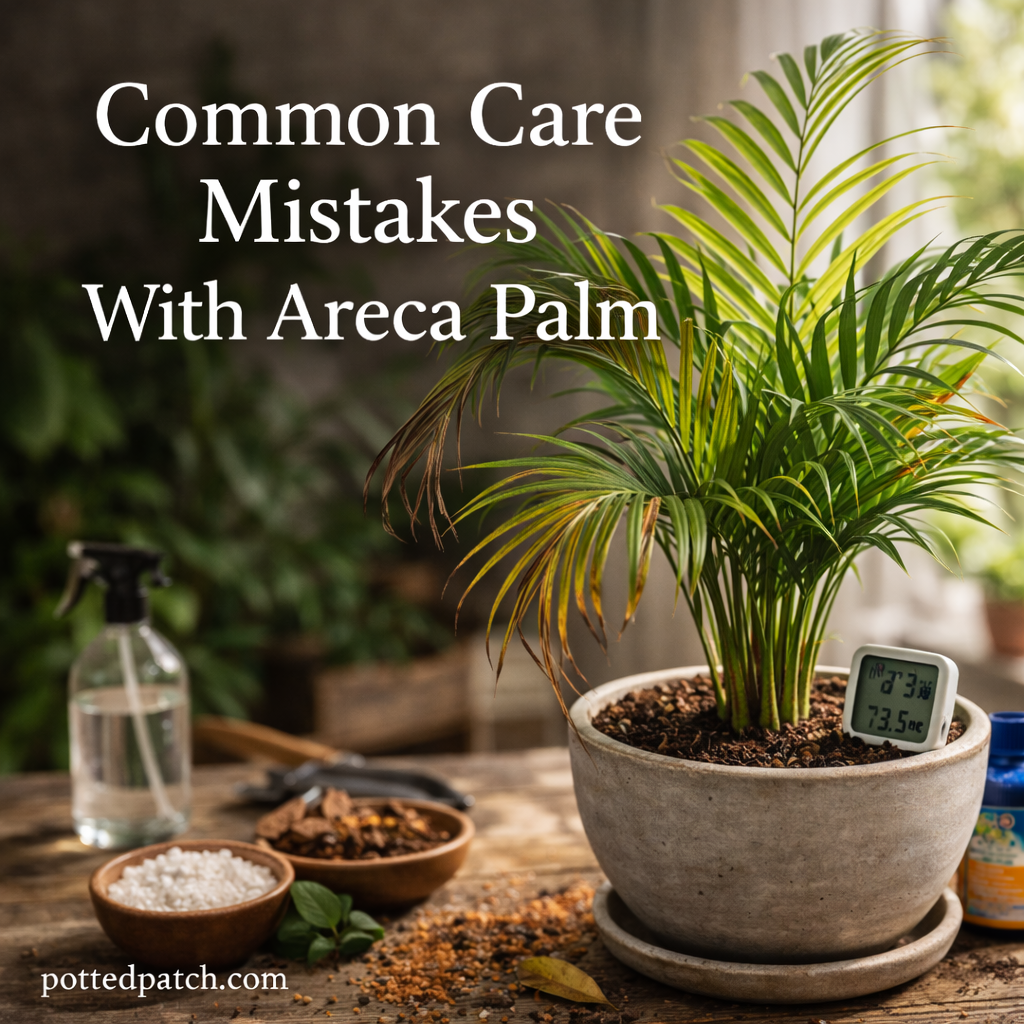
Common Areca Palm Care Mistakes
Most Areca palm problems come back to a relatively small number of care mistakes.
Try to avoid:
- Watering on a rigid schedule
- Allowing the soil to stay constantly soggy
- Letting the plant become severely dry repeatedly
- Using a container without drainage
- Placing the palm in very low light
- Suddenly exposing it to intense direct sunlight
- Keeping it directly beside heating or cooling vents
- Overfertilizing
- Repotting unnecessarily
- Assuming every brown leaf means the plant needs water
Areca palms appreciate consistency more than constant attention.
Frequently Asked Questions About Areca Palm Care
Is an Areca Palm Easy to Care For?
Areca palms are moderately easy once you understand their moisture and light requirements.
They’re less forgiving of inconsistent watering and extremely dry air than some beginner houseplants, but they don’t require complicated care.
How Often Should I Water an Areca Palm?
Check the soil rather than following a fixed schedule.
Water when the upper portion of the potting mix begins to dry, then water thoroughly and allow excess moisture to drain.
Does an Areca Palm Need Direct Sunlight?
Bright, indirect light is generally ideal.
Some gentle direct sun may be tolerated, particularly in the morning, but harsh sunlight can scorch the foliage.
Can an Areca Palm Live in Low Light?
It may survive in lower light for some time, but growth and appearance are usually better with bright, indirect light.
Very low light can also cause the soil to remain wet for longer.
Do Areca Palms Like Humidity?
Yes.
Moderate to higher humidity generally helps keep the foliage looking its best, although the plant can adapt to normal household conditions.
Why Does My Areca Palm Keep Getting Brown Tips?
Common causes include dry air, inconsistent watering, mineral or fertilizer buildup, and root stress.
Evaluate the plant’s overall environment instead of treating brown tips as a watering signal by themselves.
Should I Cut Off Brown Areca Palm Leaves?
Completely dead fronds can be removed.
You can trim brown tips for cosmetic reasons, but correcting the underlying cause is more important.
How Big Do Areca Palms Get Indoors?
Container size, light, growing conditions, and age all influence indoor growth. Given suitable conditions, an Areca palm can eventually become a substantial floor plant, so it’s worth allowing enough room for its arching fronds.
Final Thoughts
A healthy Areca palm comes down to balance.
Give it bright, indirect light, water when the upper soil begins to dry, and make sure excess water can escape freely from the pot. Moderate humidity and comfortable indoor temperatures will help keep its feathery foliage looking its best.
Most importantly, pay attention to what the plant is telling you.
Brown tips, yellow leaves, drooping fronds, or slow growth aren’t diagnoses by themselves. Check the soil, roots, light, humidity, and foliage before making changes.
Once you find a location and watering rhythm your Areca palm likes, keep things consistent. That’s usually the difference between a palm that constantly struggles and one that develops into a lush, impressive indoor plant.