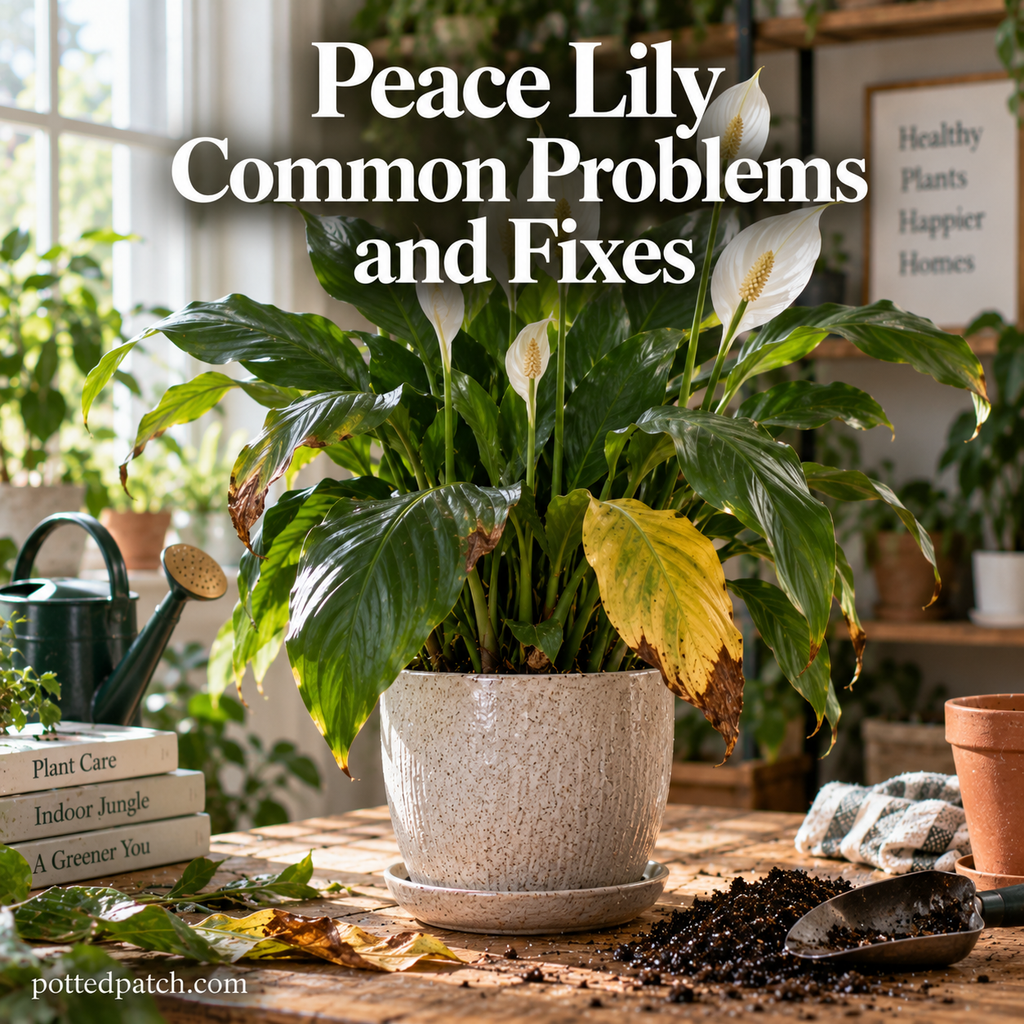
Peace lilies are often described as easy houseplants, but they can also be surprisingly expressive when something isn’t right. One day the plant looks perfectly healthy, and the next its leaves are hanging dramatically over the edge of the pot.
Fortunately, a drooping peace lily isn’t always a disaster.
Many common peace lily problems can be corrected once you figure out what’s happening around the roots. Watering, drainage, light, temperature, and soil conditions all play a role, and several different problems can produce very similar symptoms.
The key is to diagnose before you treat.
If your peace lily has yellow leaves, brown tips, black spots, drooping foliage, or refuses to flower, this guide will help you narrow down the likely cause and decide what to do next.
Start by Checking the Basics
Before focusing on a single damaged leaf, take a look at the entire plant.
Start with:
- Soil moisture
- Drainage
- Light
- Root condition
- Temperature
- Pests
These checks can eliminate many possibilities quickly.
Check the Soil Moisture
Push your finger an inch or two into the potting mix.
Does it feel:
- Wet and heavy?
- Slightly moist?
- Mostly dry?
- Extremely dry?
Also think about when you last watered.
A peace lily that droops in very dry soil has a different problem from one that’s drooping while its roots are sitting in saturated potting mix.
Check the Drainage
Make sure water can leave the pot.
If your peace lily is planted directly in a decorative container without drainage holes, excess moisture may be accumulating around the roots.
If you’re using a nursery pot inside a decorative container, check whether water has collected at the bottom.
Check the Light
Peace lilies generally grow well in bright, indirect light.
They can tolerate lower light, but very dim conditions may result in:
- Slower growth
- Fewer flowers
- Soil staying wet longer
- Weaker overall growth
Strong direct sunlight can cause a completely different set of problems, including scorched foliage.
Check for Pests
Look closely at the leaves, particularly:
- Undersides
- New growth
- Leaf joints
- Stems
- Areas near the soil
Pests aren’t always obvious from a distance.
Why Is My Peace Lily Drooping?
Drooping is probably the symptom peace lilies are best known for.
They can wilt dramatically when thirsty and sometimes recover surprisingly quickly after watering.
But don’t assume every drooping peace lily is dry.
Drooping With Dry Soil
If the leaves are limp and the soil feels very dry, the plant probably needs water.
Water thoroughly until excess moisture flows from the drainage holes.
Allow the container to drain completely before returning it to its saucer or decorative pot.
A thirsty peace lily may begin lifting its leaves again within several hours.
Drooping With Wet Soil
If the plant is drooping but the soil is still wet, don’t add more water.
Possible causes include:
- Overwatering
- Poor drainage
- Dense soil
- Root damage
- Root rot
When roots remain waterlogged for too long, they may struggle to function properly. The plant can wilt even though plenty of water is present in the pot.
This is why checking the soil before watering is so important.
Peace Lily Drooping After Repotting
Temporary drooping can occur after repotting.
Roots are often disturbed during the process, and the plant needs time to adjust.
Keep conditions stable and avoid responding by repeatedly watering or fertilizing.
If the soil, pot size, and root system are appropriate, give the plant time to recover.
Why Are My Peace Lily Leaves Turning Yellow?
Yellow leaves can result from several different conditions.
Possible causes include:
- Overwatering
- Poor drainage
- Underwatering
- Low light
- Root damage
- Nutrient issues
- Temperature stress
- Natural aging
The number and location of yellow leaves can help narrow things down.
Multiple Yellow Leaves and Wet Soil
This combination deserves attention.
If several leaves are turning yellow while the soil remains consistently wet, investigate the roots and drainage.
Allowing the soil to remain saturated can eventually lead to root rot.
Yellow Leaves and Very Dry Soil
If the soil is extremely dry and the plant has been neglected for a while, prolonged dehydration may contribute to yellowing.
Water thoroughly and return to a more consistent routine.
One Older Yellow Leaf
An occasional older leaf turning yellow isn’t necessarily a problem.
Plants naturally replace older foliage.
If the rest of your peace lily looks healthy and new growth is developing normally, removing one aging yellow leaf may be all that’s needed.
Why Does My Peace Lily Have Brown Tips?
Brown tips are extremely common on peace lilies.
They’re also frustrating because several different conditions can cause them.
Possible reasons include:
- Inconsistent watering
- Low humidity
- Fertilizer buildup
- Mineral accumulation
- Water quality
- Root stress
- Excessive dryness
Before changing everything about your care routine, check the basics.
Can Tap Water Cause Brown Tips?
Peace lilies can sometimes be sensitive to minerals and other substances found in certain water supplies.
If your plant repeatedly develops brown tips despite appropriate watering and healthy roots, trying rainwater, distilled water, or suitable filtered water may help you determine whether water quality is contributing.
Don’t automatically assume tap water is the problem, though.
Inconsistent watering and fertilizer buildup are also common causes.
Should You Cut Brown Tips Off a Peace Lily?
You can trim brown tips for appearance.
Use clean scissors and follow the natural shape of the leaf.
Avoid cutting deeply into healthy green tissue.
Remember that trimming removes the symptom, not the cause. If new leaves continue developing brown tips, investigate why.
Why Are My Peace Lily Leaves Turning Brown?
An entire leaf turning brown is different from a tiny brown tip.
Possible causes include:
- Severe underwatering
- Root damage
- Excessive direct sunlight
- Fertilizer injury
- Temperature stress
- Natural aging
Look at where the damage appears.
Dry, crispy patches on the side facing a sunny window may suggest sun damage, while widespread browning combined with unhealthy roots may indicate a watering problem.
Why Are My Peace Lily Leaves Turning Black?
Black or very dark areas deserve closer attention, particularly if they’re soft or spreading.
Possible causes include:
- Root rot
- Excessive moisture
- Cold damage
- Severe stress
- Leaf disease
If dark leaves appear alongside wet soil, yellowing, and a declining plant, inspect the roots.
Black Leaves After Cold Exposure
Peace lilies are tropical plants.
Cold drafts or contact with very cold window glass can damage foliage.
Affected areas may darken after exposure.
Move the plant to a stable location away from cold drafts and remove badly damaged foliage when appropriate.
Peace Lily Root Rot: What It Looks Like
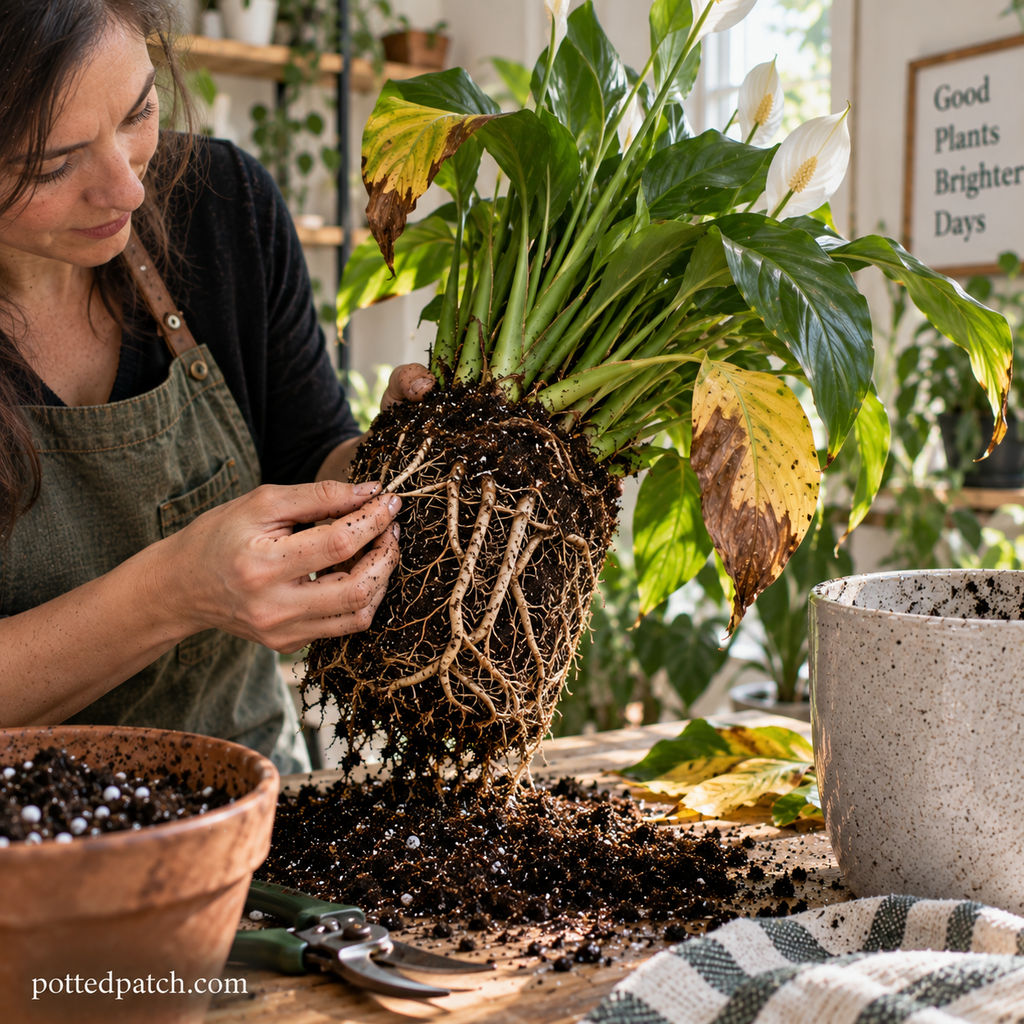
Root rot can develop when roots remain in poorly aerated, excessively wet conditions for too long.
Possible signs include:
- Yellowing leaves
- Drooping despite wet soil
- Persistent wetness
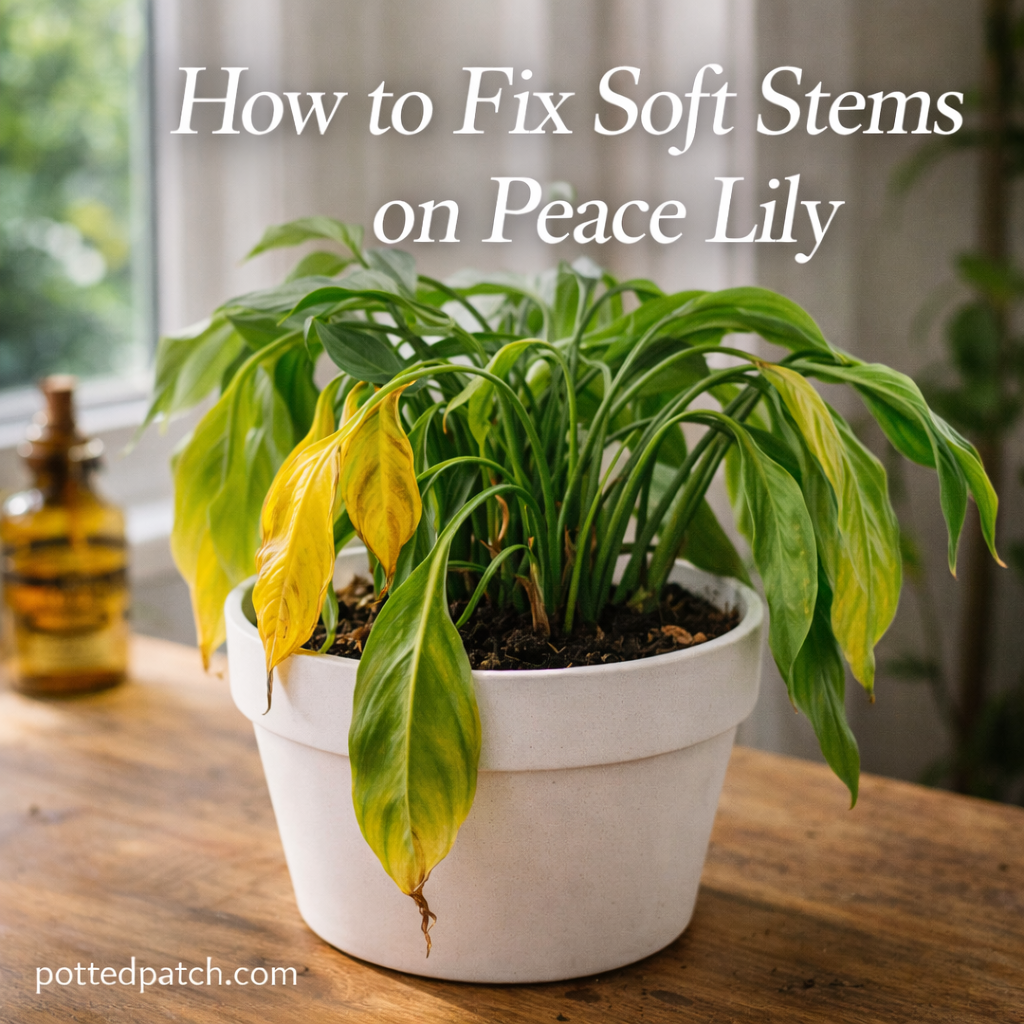
- Soft or dark stems near the base
- Unpleasant-smelling soil
- Brown or black roots
- Mushy roots
The most reliable way to confirm root rot is to inspect the roots.
Healthy vs. Rotten Peace Lily Roots
Healthy roots should generally feel firm.
Their color can vary depending on soil and age, so don’t diagnose rot based on color alone.
Rotten roots are more likely to be:
- Soft
- Mushy
- Slimy
- Fragile
- Darkened
- Unpleasant smelling
Texture is often a better clue than color.
How to Fix Peace Lily Root Rot
If you’ve confirmed root rot, act before the damage spreads further.
- Remove the peace lily from its container.
- Gently remove enough soil to inspect the root system.
- Cut away clearly rotten roots with clean, sharp tools.
- Remove badly damaged plant material when necessary.
- Clean the container or use a fresh one.
- Repot in fresh, well-draining potting mix.
- Make sure the container has adequate drainage.
- Adjust your watering routine.
Choose a pot appropriate for the remaining root system.
Moving a damaged plant into a huge container can make moisture management more difficult.
Can a Peace Lily Recover From Root Rot?
Yes, depending on the severity.
A plant with plenty of healthy roots remaining has a better chance of recovery.
If most of the root system has rotted, recovery becomes more difficult.
Be patient after repotting. New healthy growth is a better indicator of recovery than expecting old damaged leaves to become perfect again.
Why Are My Peace Lily Leaves Curling?
Curling leaves can indicate environmental stress.
Possible causes include:
- Underwatering
- Low humidity
- Excessive heat
- Too much direct sunlight
- Root stress
- Pest activity
Start by checking soil moisture.
If the soil is extremely dry, watering may be the answer.
If the soil is wet, adding more water could make the problem worse.
Why Is My Peace Lily Not Flowering?
Peace lilies are grown partly for their distinctive white blooms, so it can be disappointing when a healthy-looking plant produces nothing but leaves.
Insufficient light is one of the first things to consider.
Does a Peace Lily Need More Light to Bloom?
Peace lilies can survive in lower light, but brighter indirect light generally provides better conditions for flowering.
If your plant has healthy foliage but hasn’t flowered for a long time, consider moving it gradually into brighter indirect light.
Avoid intense direct sunlight.
Other Reasons a Peace Lily May Not Bloom
Flowering can also be influenced by:
- Plant maturity
- Nutrient availability
- Season
- General plant health
- Recent repotting
- Growing conditions
Don’t try to force flowering by dramatically increasing fertilizer.
Too much fertilizer can create additional problems.
Why Are Peace Lily Flowers Turning Green?
A peace lily’s “flower” includes a modified leaf called a spathe surrounding the central spadix.
Spathe color can change as the bloom ages.
Green flowers aren’t necessarily a sign that something is wrong.
Environmental conditions and plant maturity can influence coloration as well.
Should You Remove Green Peace Lily Flowers?
You don’t have to.
If the bloom is still attractive, leave it.
Once it begins fading, browning, or looking spent, you can cut the flower stalk near its base using clean pruning tools.
Why Are Peace Lily Flowers Turning Brown?
Flowers don’t last forever.
A bloom that gradually changes from white to green and eventually brown may simply be aging naturally.
Other factors such as dehydration or environmental stress can cause premature browning.
If the foliage remains healthy and only older blooms are turning brown, there’s usually little reason for concern.
Why Is My Peace Lily Not Growing?
Peace lilies don’t grow at exactly the same rate throughout the year.
Growth can slow because of:
- Low light
- Cooler temperatures
- Seasonal changes
- Root problems
- Nutrient deficiencies
- Recent repotting
- An oversized container
A healthy plant that slows down during darker months may not need fixing.
When Slow Growth Becomes Concerning
Look more closely if slow growth appears alongside:
- Yellowing
- Root rot
- Drooping
- Pest damage
- Persistent wet soil
- Declining foliage
Multiple symptoms usually tell you more than slow growth alone.
Why Is My Peace Lily Growing Small Leaves?
Small new leaves may indicate that growing conditions aren’t supporting vigorous growth.
Consider:
- Light levels
- Root health
- Nutrient availability
- Pot size
- Plant maturity
Move the plant into brighter indirect light if it has been growing in a particularly dim location.
Avoid trying to solve small leaves simply by adding large amounts of fertilizer.
Peace Lily Sunburn: What It Looks Like
Peace lilies generally prefer indirect light rather than hours of intense direct sunlight.
Sunburn may appear as:
- Bleached areas
- Pale patches
- Dry brown spots
- Crispy sections
- Damage concentrated on exposed leaves
If the plant has recently been moved to a sunny window, light exposure is an important clue.
Move it away from harsh direct sun while maintaining plenty of bright indirect light.
Existing burns won’t disappear, but healthy new growth can develop normally.
Why Is My Peace Lily Leaning?
Plants naturally grow toward light.
If most light reaches your peace lily from one direction, the foliage may begin leaning toward the window.
Occasionally rotating the pot can encourage more balanced growth.
Severe leaning combined with weak growth may indicate insufficient light overall.
Why Is My Peace Lily Soil Staying Wet?
Soil that stays wet for a very long time can increase the risk of root problems.
Potential causes include:
- Low light
- Dense potting mix
- Oversized container
- Poor drainage
- Cool temperatures
- Frequent watering
- A small root system
Consider the entire growing setup.
Simply waiting longer between waterings may not completely solve the problem if the soil itself drains poorly.
Why Does Water Run Straight Through the Pot?
Sometimes water seems to pass through the container immediately without actually moistening the root ball.
Possible causes include:
- Extremely dry soil
- Soil pulling away from the pot
- Compacted potting mix
- Severe root crowding
- Channels forming through old soil
Water slowly and check whether the center of the root ball is actually becoming moist.
If the plant is severely root-bound or the soil has deteriorated, repotting may be appropriate.
When Should You Repot a Troubled Peace Lily?
Don’t automatically repot every struggling plant.
Repotting causes additional root disturbance.
Consider repotting when:
- Root rot needs treatment
- Soil drains poorly
- The pot has no adequate drainage
- Roots are severely crowded
- The soil has badly deteriorated
- The container is dramatically inappropriate for the root system
If the problem can be corrected without disturbing healthy roots, repotting may not be necessary.
Common Peace Lily Pests
Peace lilies can occasionally attract common houseplant pests.
Watch for:
- Spider mites
- Mealybugs
- Scale
- Aphids
Inspect plants regularly so infestations can be addressed before they become severe.
Spider Mites on Peace Lilies
Spider mites are extremely small and can be difficult to notice initially.
Signs may include:
- Fine webbing
- Tiny pale speckles
- Dull foliage
- Yellowing
- Small moving pests on leaf undersides
Look closely, particularly where leaves meet stems.
Mealybugs on Peace Lilies
Mealybugs often resemble tiny white cottony clusters.
They may hide:
- Along stems
- Around leaf joints
- On leaf undersides
- In protected crevices
Sticky residue can sometimes accompany an infestation.
Scale on Peace Lilies
Scale insects can look like small bumps attached to leaves and stems.
Because they don’t always resemble typical insects, they can go unnoticed.
Inspect suspicious bumps carefully rather than assuming they’re part of the plant.
How to Deal With Peace Lily Pests
If you discover pests:
- Separate the affected plant from other houseplants when practical.
- Identify the pest.
- Inspect the entire plant.
- Remove heavily damaged foliage when appropriate.
- Physically remove or rinse away pests where practical.
- Use an appropriately labeled treatment if needed.
- Follow product directions carefully.
- Repeat inspections over the following weeks.
Check nearby plants too.
Pests can spread before their damage becomes obvious.
Should You Remove Damaged Peace Lily Leaves?
Not every imperfect leaf needs to be removed.
A leaf with a small brown tip can still photosynthesize and contribute to the plant.
Consider removing leaves that are:
- Completely yellow
- Completely brown
- Severely damaged
- Diseased
- Heavily infested with pests
Use clean pruning tools and cut the leaf stem close to its base without damaging surrounding growth.
Can Damaged Leaves Turn Green Again?
Generally, no.
Yellow, brown, or black tissue won’t return to healthy green tissue.
The goal of treatment is to stop the underlying problem so future growth develops normally.
Peace Lily Problems After Repotting
A recently repotted peace lily may droop or temporarily stop growing.
This can happen because the roots were disturbed.
Try not to respond by making several additional changes immediately.
Keep the plant in:
- Bright indirect light
- Stable temperatures
- Appropriate moisture
- A location away from harsh direct sunlight
Avoid heavy fertilization immediately after stressful root disturbance.
Give the plant time.
Peace Lily Problems in Winter
Indoor conditions often change considerably during winter.
Days become shorter, temperatures near windows can drop, and soil may take longer to dry.
Common winter problems include:
- Overwatering
- Slow growth
- Yellow leaves
- Cold damage
- Reduced flowering
- Pest infestations
Adjust your care according to the plant’s actual environment rather than continuing the exact same routine you used during summer.
How to Prevent Common Peace Lily Problems
A healthy growing environment can prevent many problems before they appear.
Focus on the basics:
- Provide bright, indirect light.
- Use a container with drainage.
- Grow the plant in loose, well-draining soil.
- Check soil moisture before watering.
- Water thoroughly when needed.
- Empty standing water from decorative containers.
- Protect the plant from temperature extremes.
- Fertilize moderately during active growth.
- Inspect foliage regularly for pests.
- Adjust watering as seasonal conditions change.
Consistency matters more than constant intervention.
Frequently Asked Questions About Peace Lily Problems
What Is the Most Common Problem With Peace Lilies?
Watering problems are extremely common.
Both excessively dry and overly wet soil can cause dramatic drooping, which is why checking the potting mix before watering is important.
How Can I Tell if My Peace Lily Is Overwatered?
Possible signs include yellow leaves, drooping despite wet soil, persistently saturated potting mix, and soft or rotting roots.
Inspecting the root system may be necessary to confirm severe cases.
How Can I Tell if My Peace Lily Is Underwatered?
The plant may droop dramatically while the soil feels very dry.
Leaves may also curl or develop dry edges.
Water thoroughly and observe how the plant responds.
Why Does My Peace Lily Keep Getting Brown Tips?
Possible causes include inconsistent watering, low humidity, fertilizer buildup, mineral accumulation, water quality, and root stress.
Look at the plant’s overall care rather than treating the brown tips alone.
Why Does My Peace Lily Droop Even After Watering?
If the soil is already wet and the plant continues drooping, root damage or poor drainage may be involved.
Check the soil and roots before watering again.
Should I Cut Yellow Leaves Off My Peace Lily?
Completely yellow leaves won’t recover and can be removed.
However, if multiple leaves are yellowing, determine the cause before simply cutting away the symptoms.
How Do I Get My Peace Lily to Flower Again?
Provide bright indirect light, appropriate watering, healthy roots, and moderate nutrition during active growth.
Low-light peace lilies may survive but often flower less reliably.
Can a Peace Lily Recover After All Its Leaves Droop?
Often, yes, depending on the cause and the health of the root system.
A severely thirsty peace lily may recover quickly after watering, while a plant with root rot requires more extensive treatment.
Quick Peace Lily Troubleshooting Guide
When your peace lily looks unhealthy, work through these steps:
- Feel the soil.
- Check whether the container drains.
- Look at the amount of light the plant receives.
- Inspect the leaves for pests.
- Consider recent temperature changes.
- Examine the roots if symptoms suggest rot.
- Correct the most likely underlying problem.
- Give the plant time to respond.
Avoid changing everything at once.
If you repot, relocate, fertilize, prune, and dramatically change watering on the same day, you may create additional stress and make it harder to determine what actually helped.
Final Thoughts
Peace lilies have a reputation for being dramatic, but their reactions can actually be useful.
Drooping tells you something has changed. Yellow leaves encourage you to check the roots and watering routine. Brown tips may point toward inconsistent moisture, buildup in the soil, or environmental conditions.
The important thing is not to diagnose the plant from one symptom alone.
Check the soil first. Look at the drainage. Consider the light, temperature, and recent care. Inspect the roots when necessary and keep an eye out for pests.
Once you identify the likely cause, make a targeted correction and give the plant time to respond.
Not every damaged leaf needs to become perfect again. In fact, it won’t. What you’re looking for is healthy new growth and a plant that becomes more stable over time.
With appropriate light, sensible watering, healthy roots, and a little observation, most common peace lily problems can either be corrected or prevented before they become serious.