Peace lilies are one of those houseplants that can look surprisingly elegant without requiring expert-level care. Their deep green leaves, graceful shape, and distinctive white blooms make them equally at home on a living room shelf, beside a bright window, or in an office.
They also communicate pretty clearly when something isn’t right. A thirsty peace lily can go from perfectly upright to dramatically drooping, while yellow leaves, brown tips, or a lack of flowers can offer clues about its growing conditions.
The trick is learning what those signals actually mean.
Whether you’ve just brought home your first peace lily or you’re trying to revive one that’s looking a little unhappy, this guide covers the essentials: light, watering, soil, humidity, fertilizing, pruning, repotting, propagation, pests, and common problems.
Peace Lily Care at a Glance
Peace lilies aren’t especially difficult plants, but they do best when their environment stays reasonably consistent.
Here’s a quick overview:
- Light: Bright, indirect light
- Water: Water when the upper layer of soil begins to dry
- Soil: Moisture-retentive but well-draining potting mix
- Humidity: Average to moderately high indoor humidity
- Temperature: Warm, stable household temperatures
- Fertilizer: Light feeding during active growth
- Pruning: Remove yellow leaves and spent flowers as needed
- Repotting: When the plant becomes crowded or the soil needs refreshing
Peace lilies appreciate moisture, but that doesn’t mean they should live in constantly soggy soil. Finding the balance between adequately moist and waterlogged is one of the most important parts of caring for them.
Understanding the Peace Lily
Peace lilies belong to the genus Spathiphyllum and originate from tropical regions of the Americas and Southeast Asia.
Despite the name, they aren’t true lilies.
The familiar white “flower” is actually a specialized leaf called a spathe. Inside it is the upright structure called the spadix, where the plant’s tiny true flowers are located.
Indoors, peace lilies are primarily grown for their attractive foliage and blooms. Depending on the variety, they can range from compact tabletop plants to considerably larger floor plants.
Their tropical origins also explain many of their preferences: warmth, consistent moisture, protection from harsh sunlight, and moderate humidity.
How Much Light Does a Peace Lily Need?
Peace lilies are frequently described as low-light plants. While they can survive in lower light than many houseplants, that doesn’t mean a dark corner is their ideal home.
Bright, indirect light usually produces stronger growth and gives the plant a better chance of flowering.
Too little light can lead to:
- Slow growth
- Smaller new leaves
- Few or no flowers
- Thin or stretched growth
- Soil remaining wet for too long
Too much intense direct sunlight can cause:
- Bleached areas on leaves
- Brown or scorched patches
- Curling or stressed foliage
- Faster moisture loss
Where Should You Put a Peace Lily?
Look for a spot where the plant receives plenty of natural light without spending hours in intense direct sun.
The exact distance from a window depends on your home.
A window shaded by trees or nearby buildings may provide relatively gentle light, while an unobstructed window can be dramatically brighter.
Pay attention to the plant rather than relying entirely on window direction.
If leaves begin looking pale or scorched, the sunlight may be too intense. If growth becomes weak and flowering stops, the plant may need more light.
Can Peace Lilies Grow in Low Light?
Yes, within reason.
Peace lilies can adapt to lower-light environments, which is one reason they’re popular indoor plants.
However, growth will usually be slower, and flowering may become less frequent.
There’s also another consideration: plants in lower light use water more slowly.
If you move a peace lily from a bright location into a darker room but continue watering at the same frequency, the soil may remain wet much longer.
How Often Should You Water a Peace Lily?
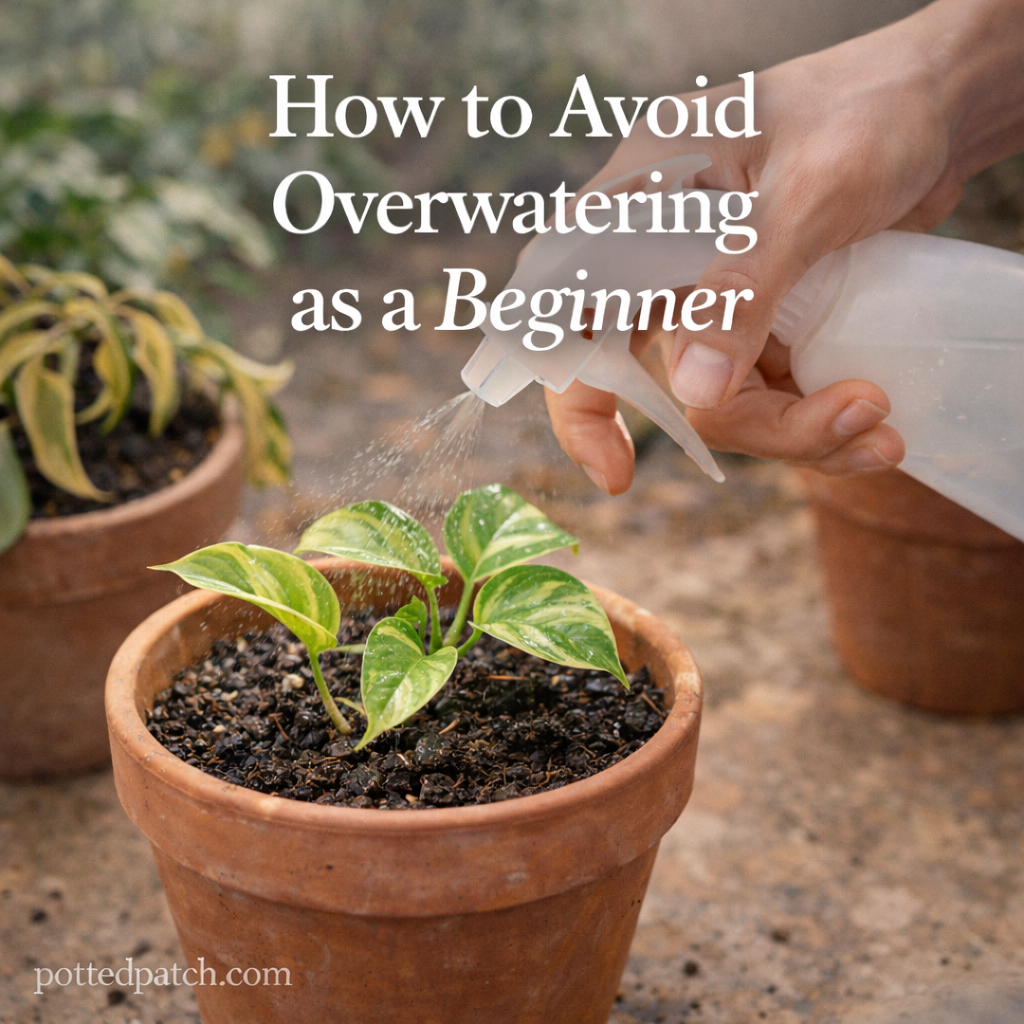
Peace lilies prefer more consistent moisture than some popular houseplants, but watering should still be based on the condition of the soil rather than a rigid schedule.
Check the upper layer of potting mix with your finger.
When it begins to feel dry, it’s usually time to check whether the plant needs water.
When watering:
- Water the soil thoroughly and evenly.
- Continue until excess water drains through the bottom of the container.
- Allow the pot to finish draining.
- Empty any standing water from the saucer or decorative outer pot.
Avoid giving the plant tiny amounts of water every day.
A thorough watering followed by an appropriate drying period encourages a healthier root environment.
Why Peace Lilies Droop When They’re Thirsty
Peace lilies are famous for dramatic drooping.
When the plant loses too much water, its leaves and stems lose some of their firmness and begin to hang downward.
A thirsty peace lily can sometimes look much worse than it actually is and may recover relatively quickly after a thorough watering.
That doesn’t mean you should intentionally wait for severe drooping every time.
Repeatedly allowing a plant to become extremely dry can stress the root system and eventually contribute to brown leaves and declining growth.
Use early changes in leaf position as a clue, but let soil moisture guide your watering decisions.
Signs of an Overwatered Peace Lily
A drooping peace lily doesn’t automatically need more water.
This is important because both overly dry and overly wet conditions can cause wilting.
Possible signs of excessive moisture include:
- Yellow leaves
- Persistently wet soil
- Drooping despite moist soil
- Soft or mushy roots
- Unpleasant odors from the potting mix
- Dark or soft areas near the base of the plant
- Increasing leaf loss
Before watering a drooping plant, touch the soil.
If it’s already very wet, adding more water could make the problem worse.
What Does Peace Lily Root Rot Look Like?
Healthy roots should generally feel firm.
Roots affected by rot may become dark, soft, mushy, or fragile. Severely damaged roots can sometimes have an unpleasant smell.
If root rot is suspected:
- Carefully remove the peace lily from its container.
- Inspect the root system.
- Remove clearly dead or mushy roots using clean tools.
- Discard badly degraded or waterlogged potting mix.
- Repot the plant in fresh, well-draining soil.
- Use a container with adequate drainage.
- Adjust your watering routine going forward.
Root rot can become difficult to reverse once it is extensive, so prevention is much easier than recovery.
Signs of an Underwatered Peace Lily
Underwatering tends to be easier to identify because peace lilies respond so visibly to dry conditions.
Look for:
- Drooping foliage
- Dry potting soil
- Crispy brown leaf edges
- Soil pulling away from the container
- Leaves becoming limp
- Older leaves dying prematurely
If the soil has become extremely dry, it may repel water initially.
Water slowly and thoroughly. If necessary, give the soil time to absorb moisture rather than pouring a large amount through the pot all at once.
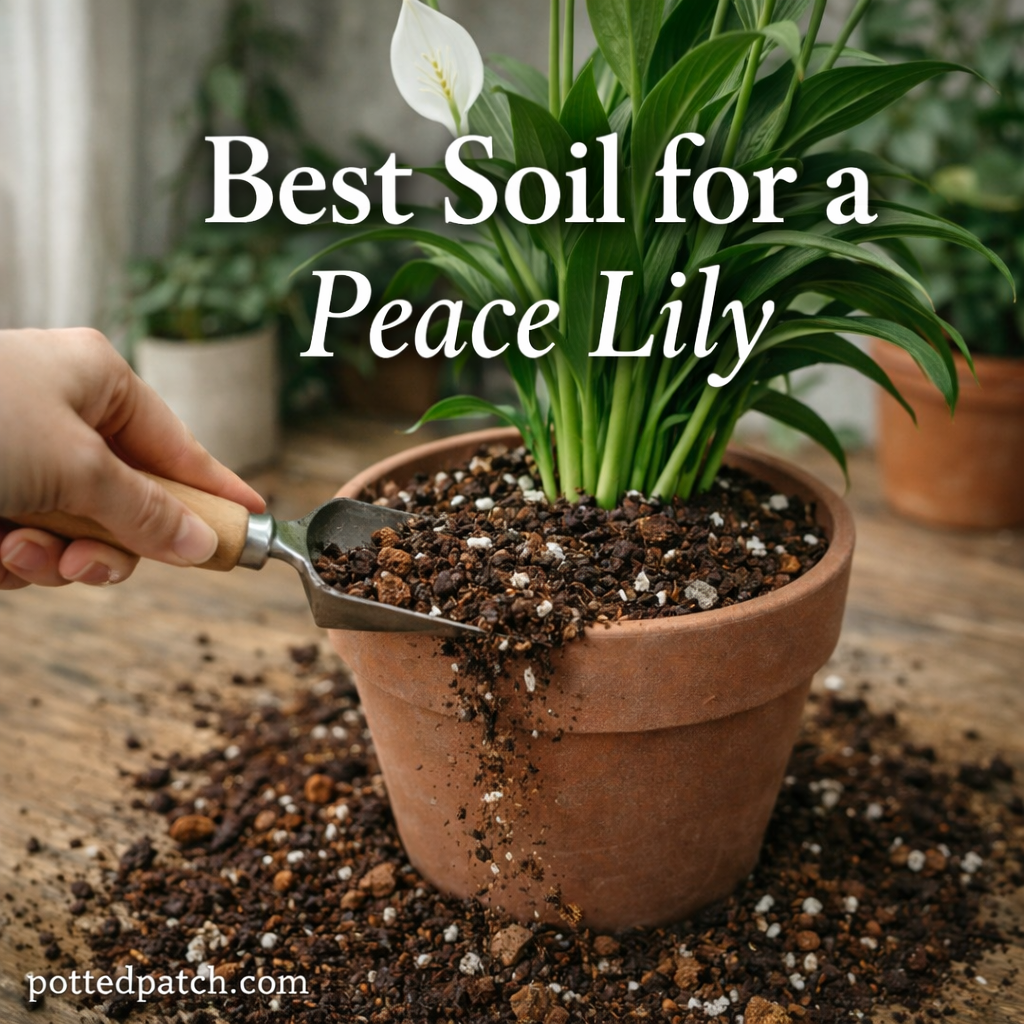
Best Soil for Peace Lilies
Peace lilies like soil that holds some moisture without becoming dense and waterlogged.
A standard high-quality indoor potting mix can work well, especially when amended to improve aeration and drainage.
Useful ingredients can include:
- Perlite
- Pumice
- Fine orchid bark
- Coco coir
- Other lightweight potting amendments
The goal isn’t to create soil that dries immediately.
Instead, you want a mixture that stays lightly moist for a reasonable period while still allowing oxygen to reach the roots.
Does a Peace Lily Need Drainage Holes?
Drainage holes are strongly recommended.
They allow you to water the entire root ball thoroughly without trapping excess moisture at the bottom of the container.
If you prefer decorative pots without drainage holes, keep the peace lily in a nursery pot that fits inside the decorative container.
Remove it for watering, allow it to drain completely, and then return it to the outer pot.
Don’t allow standing water to collect around the nursery pot.
Choosing the Right Pot for a Peace Lily
When it’s time to repot, avoid jumping from a small container to a dramatically larger one.
An oversized pot contains more soil than the root system can use. That extra soil can stay wet for a long time and increase the chance of root problems.
Choose a new container that’s only moderately larger than the existing root ball.
Peace lilies can tolerate being somewhat snug in their containers, so there’s usually no reason to rush into repotting a healthy plant.
Temperature Requirements for Peace Lilies
Peace lilies prefer warm, relatively stable indoor temperatures.
Most comfortable household conditions suit them well.
Try to protect your plant from:
- Cold drafts
- Exterior doors during cold weather
- Air-conditioning vents
- Heating vents
- Sudden temperature swings
- Very hot windows
Tropical plants can react poorly to abrupt changes even when the average room temperature seems acceptable.
How Much Humidity Does a Peace Lily Need?
Peace lilies appreciate moderate to higher humidity, but many adapt reasonably well to typical household conditions.
Dry indoor air may contribute to brown leaf tips and edges, particularly during winter when heating systems are running.
If your home is consistently dry, a humidifier is one of the most effective ways to increase humidity around your plants.
You can also group compatible houseplants together, although the humidity increase from grouping alone is usually modest.
Should You Mist a Peace Lily?
You can mist a peace lily occasionally, but misting doesn’t provide a meaningful long-term replacement for adequate humidity.
The effect disappears fairly quickly as the water evaporates.
If your plant is struggling because the room is extremely dry, improving overall humidity will be more useful than repeatedly misting the leaves.
How to Fertilize a Peace Lily
Peace lilies don’t need aggressive feeding.
During active growth, you can use an appropriate balanced houseplant fertilizer according to its label directions.
More fertilizer isn’t necessarily better.
Excess fertilizer can lead to salt accumulation in the potting mix and potentially contribute to damaged roots or brown leaf tips.
Reduce feeding when growth slows.
You also shouldn’t fertilize a severely stressed plant simply because it looks unhealthy. Fertilizer won’t correct problems caused by overwatering, root rot, poor light, pests, or temperature stress.
Find the underlying problem first.
How to Get a Peace Lily to Bloom
One of the most common questions about peace lilies is why they aren’t flowering.
Light is an important place to start.
A peace lily may survive in a dim room while producing few or no flowers. Moving it to a brighter location with indirect light can improve its growing conditions.
Other factors that may influence flowering include:
- Plant maturity
- Overall health
- Available nutrients
- Seasonal growth patterns
- Temperature
- Root health
Don’t try to force flowering by drastically increasing fertilizer.
Focus on keeping the entire plant healthy. Good blooms are usually a result of good growing conditions rather than a special trick.
How Long Do Peace Lily Flowers Last?
Individual blooms can remain attractive for a considerable period under good conditions.
Eventually, the white spathe may turn green, brown, or begin to fade.
That’s a normal part of the flower’s life cycle.
Once a bloom is clearly spent, you can remove the flower stalk near its base using clean pruning shears.
How to Prune a Peace Lily
Peace lilies don’t require complicated pruning.
Most pruning involves removing old foliage and finished flowers.
To tidy your plant:
- Identify yellow, brown, or badly damaged leaves.
- Follow the leaf stem toward the base of the plant.
- Use clean, sharp scissors or pruning shears.
- Cut the damaged leaf stem near its base without injuring neighboring growth.
- Remove spent flower stalks in the same way.
Avoid cutting healthy leaves simply to make the plant look perfectly symmetrical.
A few natural imperfections are completely normal.
Should You Cut Brown Tips Off a Peace Lily?
You can trim brown tips for appearance if you wish.
Use clean scissors and follow the natural shape of the leaf rather than cutting straight across it.
Keep in mind that trimming removes the symptom, not the cause.
If brown tips repeatedly appear, investigate watering consistency, humidity, fertilizer use, and general root health.
How to Repot a Peace Lily
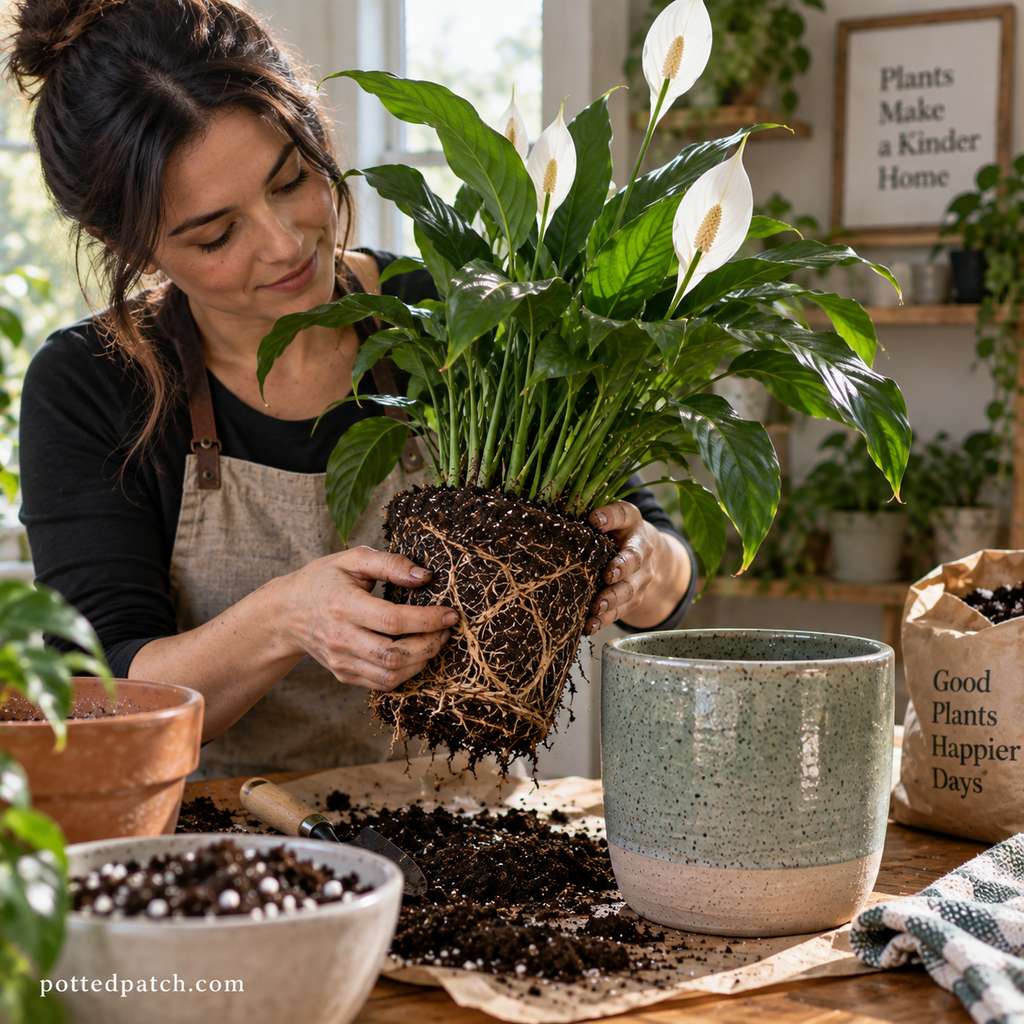
Repotting gives crowded roots more space and allows you to replace old or compacted soil.
Signs your peace lily may be ready include:
- Roots growing heavily through drainage holes
- A tightly packed root ball
- Water passing through unusually quickly
- Soil drying much faster than before
- Crowded growth
- Severely degraded or compacted potting mix
To repot:
- Choose a container slightly larger than the current one.
- Carefully remove the peace lily from its pot.
- Inspect the roots for damage.
- Gently loosen heavily circling roots if necessary.
- Remove dead or rotten roots with clean tools.
- Add fresh potting mix to the new container.
- Position the plant at approximately its previous depth.
- Fill around the root ball without tightly compressing the soil.
- Water thoroughly and let excess water drain.
Your peace lily may droop temporarily after repotting.
Give it stable light and moisture conditions while it adjusts rather than making several additional changes immediately.
How to Propagate a Peace Lily
Unlike many houseplants, peace lilies aren’t typically propagated from stem or leaf cuttings.
Division is the practical method.
A mature peace lily naturally develops separate crowns or clusters that can be divided into individual plants.
How to Divide a Peace Lily
Repotting time is a convenient opportunity for division.
- Remove the entire plant from its container.
- Gently loosen excess soil around the roots.
- Look for natural sections containing both leaves and healthy roots.
- Carefully separate those sections.
- Use a clean knife only if the roots can’t be separated gently by hand.
- Plant each division in an appropriately sized container.
- Water thoroughly.
- Keep the new plants in bright, indirect light while they establish.
Don’t divide the plant into unnecessarily tiny pieces.
Larger divisions with established roots generally have more stored resources to help them recover.
Why Are My Peace Lily’s Leaves Turning Yellow?
Yellow leaves can have several causes.
Possibilities include:
- Excessive watering
- Poor drainage
- Root problems
- Very dry conditions
- Insufficient light
- Environmental stress
- Normal aging
One yellow leaf on an otherwise healthy plant isn’t necessarily a problem.
Older leaves eventually die as new growth replaces them.
Several leaves yellowing at once—particularly when the soil remains constantly wet—deserve closer investigation.
Check soil moisture and root conditions before automatically reaching for fertilizer.
Why Does My Peace Lily Have Brown Tips?
Brown tips are another common peace lily complaint.
Possible causes include:
- Inconsistent watering
- Very dry indoor air
- Fertilizer buildup
- Root stress
- Extremely dry soil
- General environmental stress
A small amount of browning doesn’t necessarily mean your plant is unhealthy.
If the problem continues spreading or repeatedly appears on new leaves, look for a pattern in your care routine.
Why Is My Peace Lily Drooping?
Start with the soil.
If the soil is dry and the plant is limp, thirst is a likely explanation.
If the soil is wet and the plant is still drooping, don’t automatically water it again. Excessive moisture, damaged roots, or another environmental problem may be responsible.
Drooping can also occur after:
- Repotting
- Division
- Sudden temperature changes
- Moving the plant
- Major changes in light
Understanding what happened before the drooping began can make diagnosis much easier.
Why Are Peace Lily Leaves Curling?
Curling leaves can be a response to several environmental stresses.
Check for:
- Dry soil
- Excessive heat
- Strong direct sunlight
- Low humidity
- Root problems
- Pest activity
Look at the entire plant rather than treating leaf curl as a single specific diagnosis.
Common Peace Lily Pests
Healthy peace lilies can still occasionally develop pest problems.
Common houseplant pests to watch for include:
- Spider mites
- Mealybugs
- Scale insects
- Aphids
- Fungus gnats
Inspect the leaves regularly, including their undersides.
You may notice:
- Fine webbing
- Sticky residue
- White cottony clusters
- Small bumps attached to stems or leaves
- Tiny moving insects
- Distorted new growth
- Unusual spotting
What to Do if You Find Pests
Separate the affected peace lily from your other houseplants while you determine what pest you’re dealing with.
Depending on the pest, treatment may involve rinsing the foliage, physically removing insects, replacing overly wet soil, or using an appropriately labeled insecticidal or horticultural product.
Follow product instructions carefully.
Continue inspecting the plant afterward because a single treatment may not eliminate every stage of the pest’s life cycle.
Should You Clean Peace Lily Leaves?
Peace lilies have large leaves that can collect noticeable amounts of dust.
Cleaning them occasionally improves their appearance and gives you an opportunity to inspect for pests.
Use a soft, damp cloth and gently wipe each leaf while supporting it with your other hand.
There’s generally no need to use leaf-shine products.
Peace Lily Care During Winter
Winter can quietly change your plant’s needs.
Shorter days and weaker sunlight usually mean slower growth and reduced water use.
At the same time, indoor heating can make the air considerably drier.
During winter:
- Check soil before watering
- Expect the potting mix to dry more slowly
- Keep the plant away from heating vents
- Protect it from cold drafts
- Provide as much suitable indirect light as possible
- Monitor humidity if your home becomes very dry
- Reduce fertilizer when active growth slows
Don’t assume the watering routine that worked in July will still work in January.
Common Peace Lily Care Mistakes
A few mistakes cause a large percentage of peace lily problems.
1. Assuming Low Light Means No Light
Peace lilies tolerate lower light, but they still need light to grow.
Brighter indirect light generally supports stronger growth and better flowering.
2. Watering Every Few Days Automatically
Check the soil first.
Your plant’s water needs change throughout the year.
3. Watering Every Time the Plant Droops
Dry soil and wet soil can both accompany drooping.
Always check the potting mix before adding more water.
4. Letting the Pot Sit in Water
Drainage matters even though peace lilies enjoy moisture.
Empty standing water from saucers and decorative containers.
5. Using an Oversized Pot
A large volume of unused soil can remain wet for too long.
Move up gradually when repotting.
6. Overfertilizing to Encourage Flowers
Extra fertilizer doesn’t guarantee flowers and can create additional problems.
Improve light and overall growing conditions first.
7. Changing Everything at Once
When a plant looks unhealthy, it’s tempting to repot it, move it, fertilize it, prune it, and change its watering routine all at once.
That makes it difficult to determine what was actually wrong and can create additional stress.
Make deliberate changes based on what you’re observing.
Peace Lily Care FAQ
Are Peace Lilies Easy to Care For?
Yes. Peace lilies are generally approachable houseplants once you understand their watering needs.
They appreciate consistent moisture and good indirect light but don’t require complicated maintenance.
How Often Should I Water a Peace Lily?
There isn’t one watering frequency that works for every plant.
Check the soil regularly and water when the upper portion begins to dry. Temperature, humidity, light, container size, and season all affect how quickly soil loses moisture.
Can a Peace Lily Live in a Bathroom?
Potentially.
Bathrooms can provide useful humidity, but the room still needs adequate light.
A humid bathroom without sufficient natural or supplemental light isn’t automatically a good location for a peace lily.
Can Peace Lilies Grow in Water?
Peace lilies are sometimes grown using water-based or semi-hydroponic methods, but a plant grown conventionally in potting soil shouldn’t simply be submerged in water indefinitely.
For most home growers, a well-draining potting mix and container with drainage holes is the simplest approach.
Why Isn’t My Peace Lily Flowering?
Insufficient light is one of the first things to investigate.
Plant maturity, nutrition, season, and overall health can also influence flowering.
Give the plant bright, indirect light and maintain healthy growing conditions rather than relying on excessive fertilizer.
Should I Cut Off Dead Peace Lily Flowers?
Yes. Once a flower has faded, its stalk can be cut near the base using clean pruning shears.
This keeps the plant tidy and allows you to focus on healthy new growth.
Do Peace Lilies Like to Be Root-Bound?
Peace lilies can tolerate somewhat snug containers, but they don’t need to become severely root-bound.
Repot when roots become excessively crowded or the plant begins showing clear signs that it has outgrown its container.
How Long Can a Peace Lily Live?
With appropriate indoor care, peace lilies can remain attractive houseplants for many years.
Regular maintenance, sensible watering, good light, occasional repotting, and early attention to problems all contribute to their longevity.
Are Peace Lilies Toxic to Pets?
Peace lilies contain calcium oxalate crystals that can cause irritation if the plant is chewed or eaten.
For households with curious cats, dogs, or other pets, it’s best to keep the plant somewhere they cannot access it.
If you suspect a pet has eaten part of a peace lily, contact your veterinarian or an appropriate animal poison-control service for guidance rather than relying on a home remedy.
Final Thoughts on Peace Lily Care
Peace lily care becomes much easier once you stop treating the plant according to a rigid schedule and start paying attention to what it’s telling you.
Give it bright, indirect light. Keep the soil appropriately moist without leaving the roots waterlogged. Use a well-draining potting mix, protect the plant from temperature extremes, and provide additional humidity when your home becomes particularly dry.
Then watch how the plant responds.
A drooping leaf, yellow patch, or brown tip isn’t automatically a disaster. It’s information. Check the soil, consider the light, look at the roots when necessary, and think about what has recently changed.
Once you get those basics right, a peace lily can be a remarkably manageable plant—and one that rewards good care with lush green foliage and those unmistakable white blooms.