Calatheas have a reputation for being difficult houseplants. Crispy leaf edges, curling leaves, mysterious brown spots—sometimes it feels like they find a new way to complain every week.
They’re definitely more particular than a pothos or snake plant, but they’re not impossible to grow.
The trick is consistency.
Calatheas generally do best when their environment stays relatively stable. Give them bright indirect light, evenly moist soil, comfortable temperatures, and enough humidity, and much of the drama disappears.
This guide covers the essentials of Calathea care, including watering, light, soil, humidity, fertilizer, repotting, propagation, pests, and the common leaf problems that make people wonder what went wrong.
Understanding Calathea Plants
Calatheas are prized for their foliage rather than their flowers.
Depending on the variety, the leaves may feature stripes, spots, feathered patterns, deep green markings, silvery backgrounds, purple undersides, or combinations of several colors.
They’re part of the prayer plant family, Marantaceae.
One of their most interesting characteristics is the way the leaves move throughout the day. Many plants in this family raise or reposition their leaves as light conditions change, sometimes becoming noticeably more upright in the evening.
You may also encounter some familiar “Calatheas” sold under the botanical genus Goeppertia. Plant classification has changed over time, but Calathea remains the name commonly used by houseplant growers and retailers.
Whatever the label says, the basic indoor care requirements for commonly grown Calathea-type plants are similar.
How Much Light Does a Calathea Need?
Calatheas generally prefer bright, indirect light.
Think of the filtered light they would receive beneath taller vegetation rather than intense, exposed sunlight.
A location near a bright window can work very well, particularly when harsh direct sunlight doesn’t fall on the leaves for long periods.
Can Calatheas Handle Direct Sunlight?
Strong direct sunlight can scorch Calathea foliage or cause its beautiful colors and patterns to fade.
Signs of excessive light may include:
- Bleached-looking patches
- Faded leaf patterns
- Dry or scorched areas
- Curling during intense sunlight
- Crispy damaged tissue
Gentle morning sun may be tolerated by some plants, but strong afternoon sunlight is more likely to cause trouble.
If you’re moving a Calathea into a brighter location, make the change gradually.
What Happens When a Calathea Doesn’t Get Enough Light?
Calatheas tolerate moderate indoor light better than many sun-loving plants, but very low light can still cause problems.
You may notice:
- Slower growth
- Smaller new leaves
- Less vibrant patterns
- Soil remaining wet for longer
- Reduced water use
That last point is important.
Light and watering are connected. A Calathea sitting in lower light usually uses water more slowly, which means following the same watering schedule year-round can lead to overly wet soil.
How Often Should You Water a Calathea?
Calatheas prefer more consistent moisture than drought-tolerant houseplants.
However, consistently moist doesn’t mean soaking wet.
A useful approach is to water when the upper portion of the potting mix has begun to dry while moisture still remains farther down in the root zone.
Don’t wait for the entire pot to become bone dry.
How to Tell When Your Calathea Needs Water
Check the soil with your finger rather than watering automatically on a certain day.
If the upper inch or so feels dry, it may be time to water.
Other clues can include:
- Slightly drooping leaves
- Leaves beginning to curl inward
- A noticeably lighter pot
- Dry soil pulling slightly from the sides of the container
Try to catch the plant before severe wilting occurs.
Repeatedly allowing a Calathea to become extremely dry can contribute to crispy edges and stressed growth.
How to Water a Calathea Properly
When the plant needs water:
- Water the soil thoroughly and evenly.
- Continue until excess water drains from the bottom.
- Allow the pot to finish draining.
- Empty standing water from the saucer or decorative container.
- Return the plant to its normal location.
Avoid giving the plant tiny amounts of water every day.
Small sips can leave parts of the root ball dry while other sections remain damp.
A thorough watering followed by appropriate drying is usually more effective.
Does Water Quality Matter for Calatheas?
Calatheas are known for developing brown leaf tips, and water quality can sometimes contribute.
Tap water varies considerably depending on where you live. Dissolved minerals and other components can accumulate in potting soil over time.
If your Calathea develops persistent brown tips despite otherwise good care, experimenting with filtered, distilled, or suitable collected rainwater may be worthwhile.
But don’t immediately blame the tap water.
Brown tips can also result from:
- Low humidity
- Inconsistent watering
- Fertilizer buildup
- Root damage
- Excessively dry soil
- Environmental stress
Look at the plant’s overall growing conditions before changing everything at once.
Humidity for Calatheas
Humidity is one area where Calatheas can be noticeably more demanding than many common houseplants.
They generally appreciate moderate to high humidity.
A very dry indoor environment—especially during winter heating season—can contribute to brown edges, curling, and generally unhappy-looking foliage.
How to Increase Humidity Around a Calathea
If your home is particularly dry, consider:
- Running a humidifier nearby
- Grouping compatible tropical plants together
- Keeping the plant away from heating vents
- Moving it away from constantly blowing air
- Monitoring humidity with an inexpensive hygrometer
A humidifier is generally the most reliable option when indoor air is consistently dry.
Should You Mist a Calathea?
Misting temporarily wets the leaves but usually doesn’t increase room humidity for very long.
It also isn’t a substitute for proper watering.
If your Calathea needs higher humidity, improving the surrounding environment is more effective than repeatedly spraying the foliage.
Constantly wet leaves combined with poor airflow may also encourage spotting or disease problems.
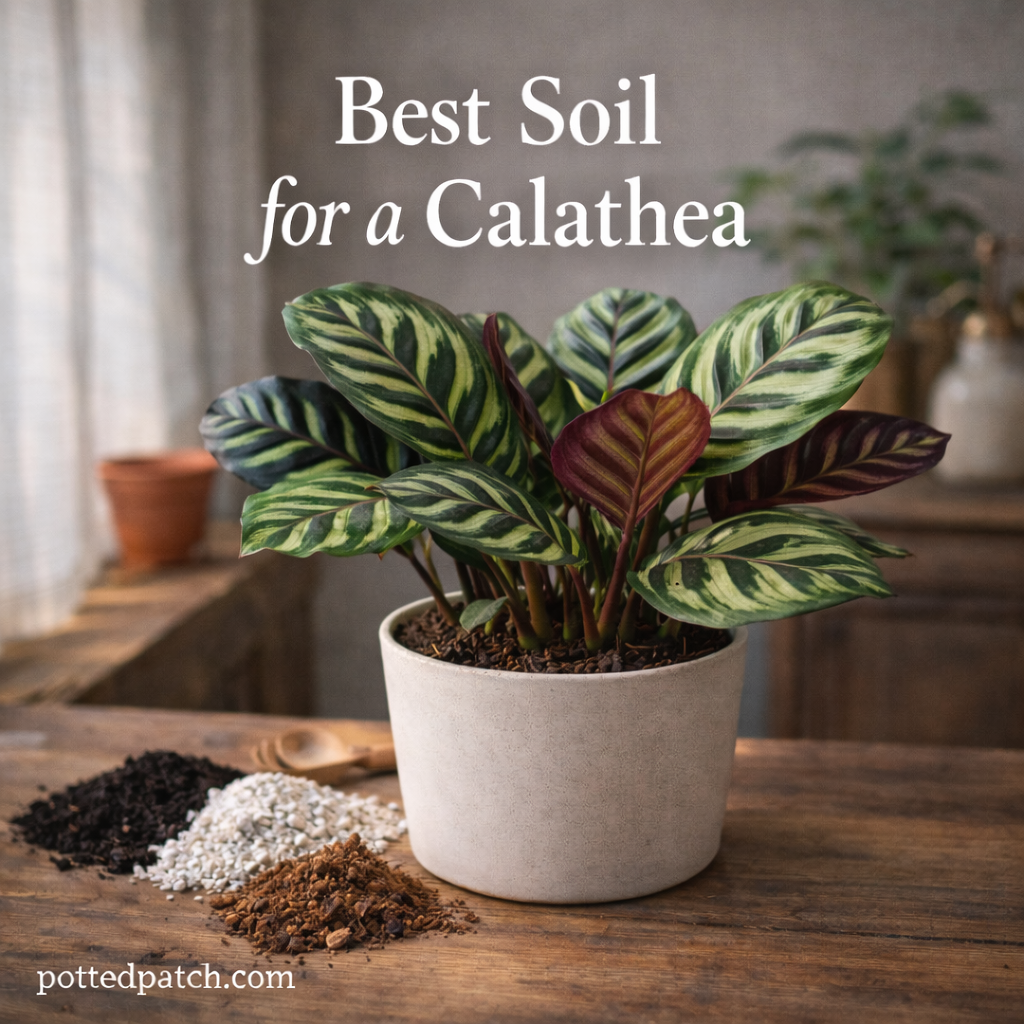
The Best Soil for Calatheas
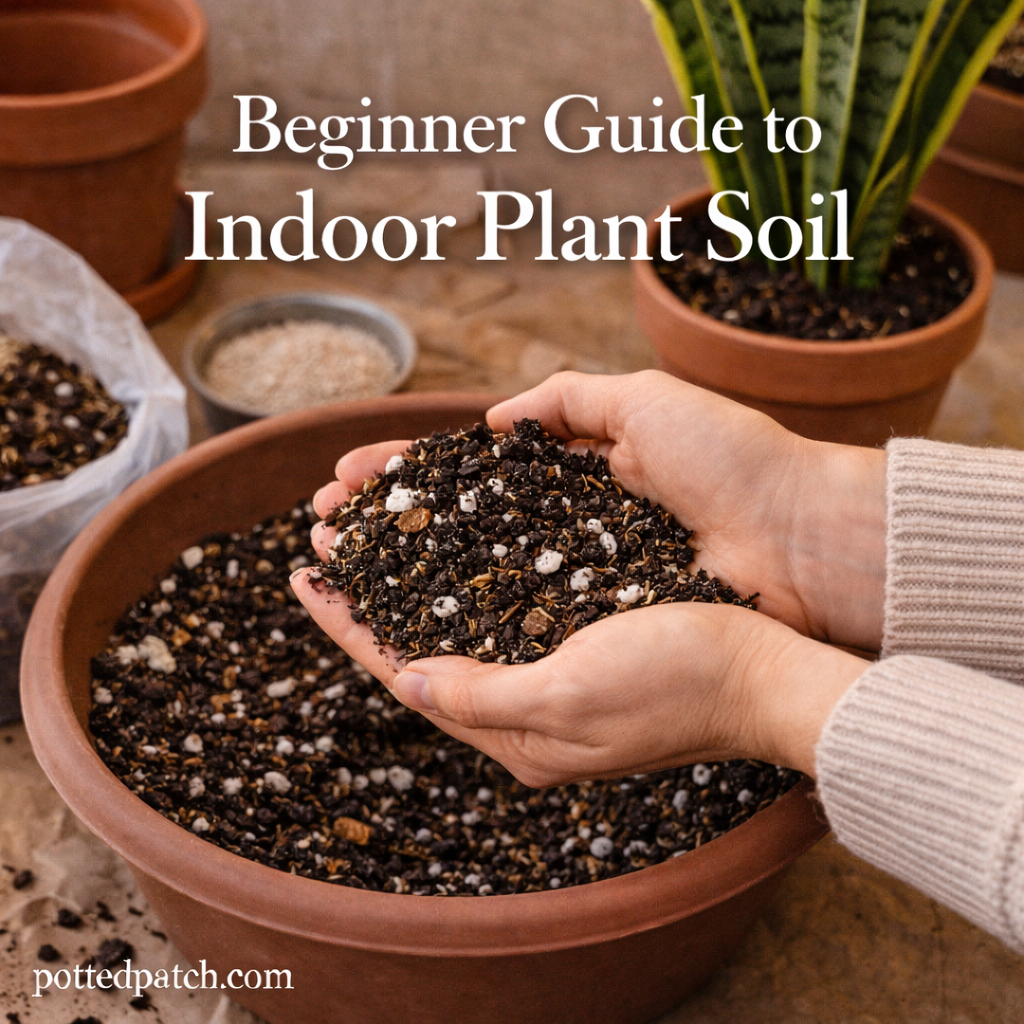
Calathea soil needs to strike a balance.
It should retain enough moisture to prevent the roots from drying immediately, but it also needs sufficient drainage and aeration.
Heavy, compacted soil that stays saturated for long periods can lead to root problems.
A suitable Calathea potting mix may contain a combination of:
- Quality indoor potting mix
- Coco coir or peat-based material
- Perlite or pumice
- Fine orchid bark
- Other well-aerated organic components
You don’t need an elaborate recipe with a dozen ingredients.
The goal is simply a loose mixture that holds some moisture without becoming dense and waterlogged.
Choosing a Pot for a Calathea
Always choose a container with drainage holes whenever possible.
Calatheas like moisture, but their roots still need oxygen.
A drainage hole allows excess water to escape after a thorough watering.
What Size Pot Does a Calathea Need?
Avoid moving a small plant into a dramatically larger container.
An oversized pot contains a large volume of soil relative to the root system. That extra soil can remain wet for too long.
When repotting, move up only slightly in container size unless there’s a specific reason to do otherwise.
Terracotta vs. Plastic Pots
Either can work, but they behave differently.
Unglazed terracotta allows moisture to evaporate through the sides of the pot, so the soil may dry faster.
Plastic and glazed ceramic generally retain moisture longer.
If your Calathea dries extremely quickly, a moisture-retaining container may make watering easier to manage.
The Best Temperature for Calatheas
Calatheas prefer warm, relatively stable indoor temperatures.
Typical comfortable household temperatures usually work well.
What they dislike are sudden extremes.
Keep your plant away from:
- Cold drafts
- Exterior doors during winter
- Air-conditioning vents
- Heating vents
- Radiators
- Cold windows
- Sudden temperature changes
A plant can experience stress even when the room itself feels comfortable if cold or hot air blows directly across its leaves.
How to Fertilize a Calathea
Calatheas benefit from nutrients during active growth, but they don’t need aggressive feeding.
A balanced houseplant fertilizer used according to the product instructions is usually sufficient.
Many growers choose to dilute fertilizer rather than applying a strong concentration.
When Should You Fertilize?
Feed primarily while the plant is actively growing, commonly during spring and summer.
Reduce feeding when growth slows.
Avoid fertilizing a plant that is severely stressed, suffering from root rot, or sitting in extremely dry soil.
Fertilizer isn’t medicine. If the plant is struggling because of incorrect watering, poor lighting, or damaged roots, adding more nutrients won’t solve the underlying problem.
Watch for Fertilizer Buildup
Repeated fertilizer applications can leave excess salts in container soil.
Possible signs include:
- Brown leaf tips
- Crusty deposits on the soil
- White buildup around the pot
- Root stress
Occasionally allowing plenty of water to flow through the soil can help flush accumulated minerals, provided the pot drains properly.
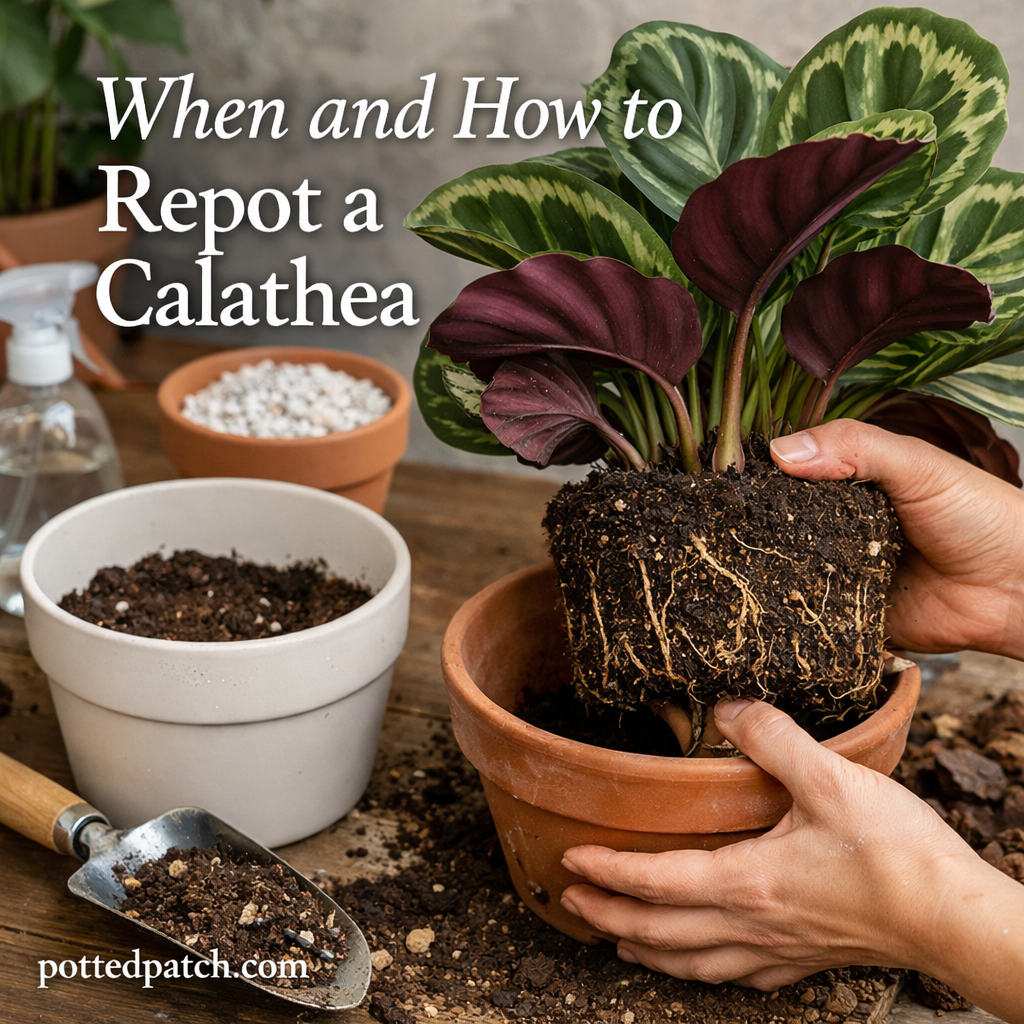
How to Repot a Calathea
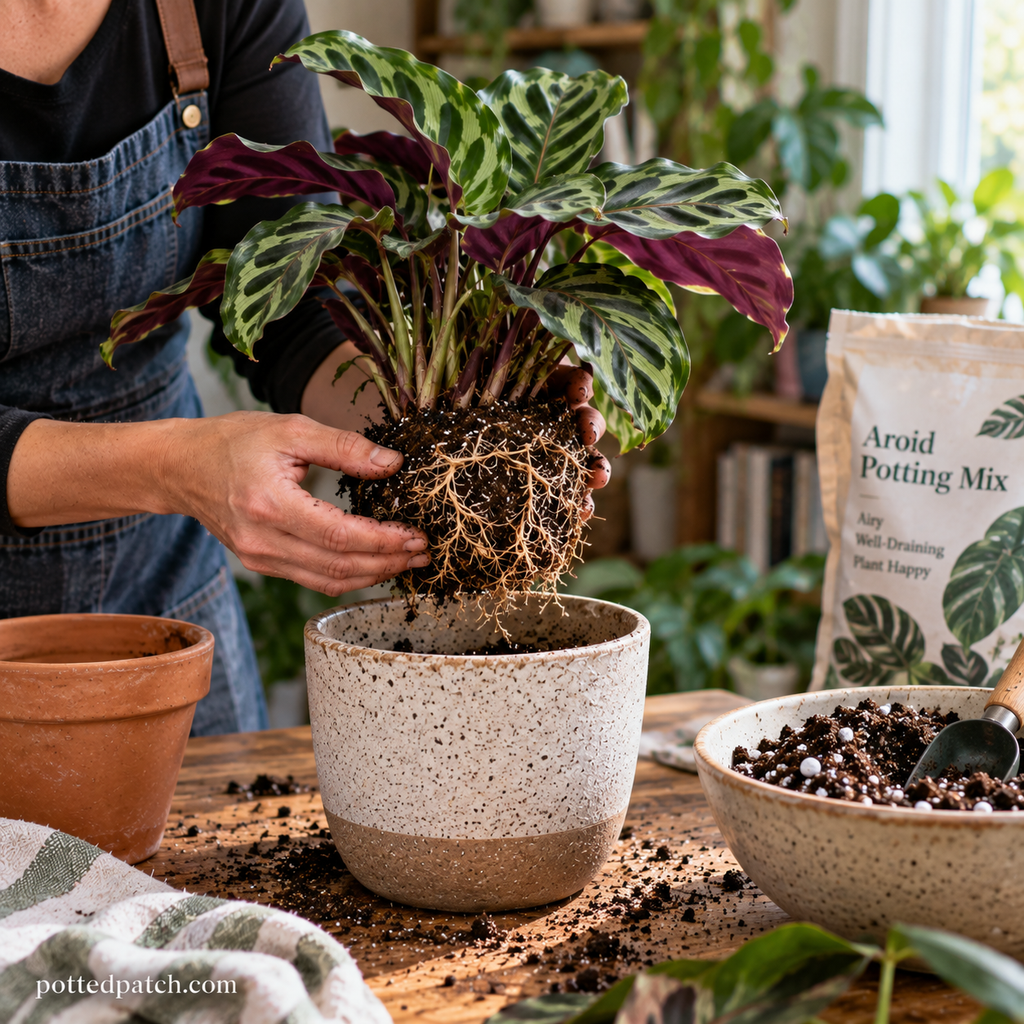
Calatheas don’t need to be repotted constantly.
Consider repotting when:
- Roots are circling densely inside the container
- Roots are growing heavily through drainage holes
- The plant dries unusually quickly
- The soil has become compacted
- Growth has slowed despite otherwise good conditions
- You suspect root problems
Spring or early in the active growing season is often a convenient time.
How to Repot a Calathea Step by Step
- Choose a container slightly larger than the existing root ball.
- Prepare fresh, well-draining potting mix.
- Gently remove the Calathea from its current container.
- Inspect the roots.
- Remove obviously dead or rotten roots with clean tools if necessary.
- Position the plant at roughly its previous soil depth.
- Fill around the roots with fresh potting mix.
- Water thoroughly and allow excess water to drain.
- Return the plant to stable light and temperature conditions.
Don’t be surprised if your Calathea looks slightly unhappy immediately after repotting.
Some temporary drooping can occur while the roots adjust.
Avoid making several other major changes at the same time.
How to Propagate a Calathea
Calatheas are most commonly propagated by division.
Unlike plants such as pothos, they aren’t generally propagated by taking a simple leaf cutting and placing it in water.
Division works because established Calatheas often develop multiple growing sections connected through their underground root and rhizome system.
Propagating Calathea by Division
The easiest time to divide a Calathea is often during repotting.
- Remove the plant carefully from its pot.
- Examine the root system and identify naturally separated sections.
- Gently tease sections apart where possible.
- If necessary, use a clean tool to separate firmly connected sections.
- Make sure each division has healthy roots and foliage.
- Pot each section into an appropriately sized container.
- Water thoroughly.
- Keep the new plants in stable, humid conditions while they establish.
Avoid dividing the plant into extremely tiny pieces simply to create more plants.
Larger divisions with established root systems usually recover more easily.
Why Are My Calathea Leaves Curling?
Leaf curling is one of the most common Calathea complaints.
Unfortunately, it doesn’t point to one specific problem.
Curling can be caused by:
- Dry soil
- Low humidity
- Excessive sunlight
- Heat
- Cold temperatures
- Root damage
- Pest activity
- General environmental stress
Start with the simplest possibilities.
Check the soil moisture. Then consider humidity, temperature, and lighting.
If those conditions seem appropriate, inspect the undersides of the leaves carefully for pests.
Why Does My Calathea Have Brown Tips?
A tiny brown tip isn’t necessarily a disaster.
Calatheas can develop imperfect leaves even when they’re generally healthy.
Persistent or worsening brown tips may be associated with:
- Dry air
- Inconsistent watering
- Mineral accumulation
- Excess fertilizer
- Poor water quality
- Root stress
If most of the leaf remains healthy and new growth looks good, minor brown tips may simply be cosmetic.
Focus on the overall trend rather than trying to maintain flawless foliage.
Why Are My Calathea Leaves Turning Brown?
Larger brown patches deserve closer attention.
Brown leaves or patches can result from:
- Severe underwatering
- Sunburn
- Root damage
- Excess fertilizer
- Very low humidity
- Cold injury
- Disease
- Pest damage
Feel the damaged tissue.
Dry, crispy patches often suggest different problems from soft, dark, water-soaked tissue.
Also look at where the damage occurs. Brown edges, brown tips, and dark spots in the center of a leaf can point toward different environmental issues.
Why Is My Calathea Turning Yellow?
Yellow leaves can have several causes.
Common possibilities include:
- Overwatering
- Poor drainage
- Root rot
- Low light
- Natural aging
- Nutrient problems
- Environmental stress
An occasional older yellow leaf near the bottom of an otherwise healthy plant isn’t necessarily concerning.
Multiple leaves yellowing rapidly is different.
Check whether the soil is staying wet for unusually long periods and inspect the roots if you suspect a drainage problem.
Calathea Root Rot
Root rot can develop when roots remain in poorly aerated, saturated conditions for too long.
Warning signs may include:
- Rapid yellowing
- Persistent wilting despite wet soil
- Mushy roots
- Darkened roots
- An unpleasant smell
- Soft tissue near the base
- Declining new growth
Healthy roots should generally feel firm.
If you discover root rot, remove badly affected roots with clean tools and repot the plant into fresh, appropriately aerated soil.
You’ll also need to determine what caused the problem.
Simply replacing the soil won’t help much if the plant goes back into the same oversized pot and receives the same excessive watering.
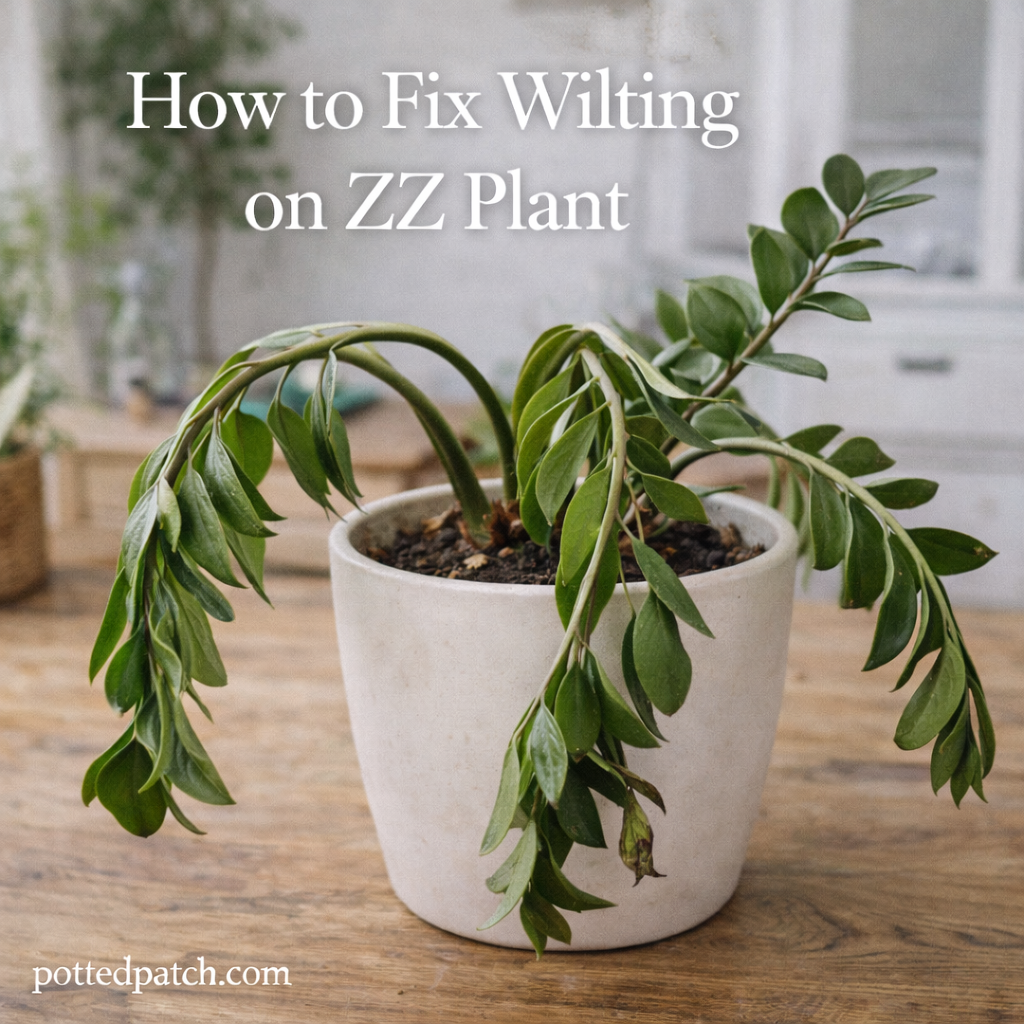
Calathea Leaves Drooping
Calathea leaves naturally change position, so some movement isn’t necessarily wilting.
If the entire plant suddenly looks limp, however, check the soil.
Dry soil is an obvious possibility, but don’t automatically add water.
A Calathea with damaged roots can also droop while sitting in wet soil because unhealthy roots aren’t functioning properly.
That’s why checking the soil first is so important.
Common Calathea Pests
Calatheas can attract several common houseplant pests.
Watch for:
- Spider mites
- Thrips
- Mealybugs
- Scale
- Fungus gnats
Spider Mites
Spider mites are particularly worth watching for on Calatheas.
They thrive in warm, dry conditions and can be difficult to notice when populations are small.
Possible signs include:
- Fine stippling on leaves
- Tiny moving dots
- Faded or dusty-looking foliage
- Fine webbing
- Damage concentrated on leaf undersides
Inspect the undersides of leaves regularly.
Thrips
Thrips can cause silvery, scarred, distorted, or discolored foliage.
The insects themselves are small, so leaf damage may be noticed before the pests.
New growth can also emerge damaged when infestations are significant.
Fungus Gnats
Adult fungus gnats are annoying, but their presence can also tell you something about the soil.
They commonly reproduce in moist organic potting mixes.
A few gnats don’t automatically mean you’re overwatering, but a persistent infestation is a good reason to evaluate how long the soil remains wet.
How to Prevent Calathea Pest Problems
Good plant care can’t guarantee you’ll never encounter pests, but regular inspection makes infestations much easier to control.
Try to:
- Inspect new plants before bringing them home
- Keep new plants separate from your collection temporarily
- Check leaf undersides regularly
- Remove heavily damaged or dead foliage
- Avoid leaving dead plant material on the soil
- Maintain appropriate humidity without eliminating airflow
- Inspect nearby plants if you discover pests
Don’t forget to look at new leaves as they unfurl. Their curled shape can provide hiding places for small pests.
Should You Prune a Calathea?
Calatheas don’t require extensive pruning.
Most pruning involves removing damaged, yellow, or dead leaves.
Use clean scissors or pruning shears and cut the leaf stem near the base of the plant without damaging surrounding growth.
Can You Cut Off Brown Calathea Tips?
Yes, if the appearance bothers you.
You can carefully trim dry brown edges while following the natural shape of the leaf.
Leave a very thin margin of brown tissue rather than cutting deeply into healthy green tissue.
Keep in mind that trimming doesn’t fix the cause.
If every new leaf develops brown edges, investigate the plant’s watering, humidity, fertilizer, roots, and environment.
Should You Clean Calathea Leaves?
Large Calathea leaves can collect dust.
Occasionally wiping them gently with a soft damp cloth helps keep them clean and makes pest inspections easier.
Support the underside of the leaf with one hand while wiping gently with the other.
Avoid aggressive rubbing.
You generally don’t need commercial leaf-shine products to make a Calathea look healthy.
Where Should You Put a Calathea Indoors?
A good location provides bright filtered light, stable temperatures, and reasonable humidity.
Possible locations include:
- Near an east-facing window
- A short distance from a bright south- or west-facing window
- A bright room with filtered sunlight
- Near other tropical plants
- A room where humidity naturally stays moderate
Bathrooms can work if they receive enough natural light.
A dark bathroom isn’t automatically a good Calathea location simply because it’s humid.
Light still matters.
Calathea Care Throughout the Year
Your plant’s needs won’t remain exactly the same every month.
Spring
Increasing daylight often triggers new growth.
Spring is a good time to:
- Resume regular fertilizing
- Repot when necessary
- Divide established plants
- Check for new pest activity
- Adjust watering as growth increases
Summer
Warm temperatures and longer days can increase water use.
Check the soil regularly and protect leaves from harsh direct afternoon sunlight.
Air conditioning can also create surprisingly cold or dry pockets within a room.
Fall
Growth may begin slowing as daylight decreases.
Start paying attention to how quickly the soil dries rather than continuing your summer watering routine automatically.
Reduce fertilizer as active growth slows.
Winter
Winter can be challenging for Calatheas because indoor heating often lowers humidity while shorter days reduce plant growth.
You may need to water less frequently even though the surrounding air is drier.
Keep the plant away from heating vents and cold windows, and consider supplemental humidity if your home becomes very dry.
Calathea Care Checklist for Beginners
Calatheas become much easier when you focus on consistency.
Keep these basics in mind:
- Provide bright, indirect light.
- Keep the soil lightly and consistently moist, not saturated.
- Use a pot with drainage holes.
- Choose loose, moisture-retentive but well-aerated soil.
- Avoid letting the plant repeatedly dry out completely.
- Maintain moderate to high humidity when possible.
- Keep temperatures relatively stable.
- Fertilize moderately during active growth.
- Inspect leaf undersides for pests.
- Don’t panic over an occasional imperfect leaf.
The goal isn’t to produce a plant without a single brown edge.
The goal is healthy roots and consistent new growth.
Frequently Asked Questions About Calathea Care
Are Calatheas Hard to Care For?
They can be more demanding than many beginner houseplants, but their reputation is sometimes exaggerated.
Most problems come from inconsistent moisture, very dry air, poor drainage, inappropriate light, or sudden environmental changes.
Once you find a location where your Calathea is happy, consistency becomes much easier.
How Often Should I Water My Calathea?
There’s no universal schedule.
Check the soil instead. Water when the upper portion begins to dry rather than automatically watering every seven days.
A plant may need water more frequently in summer than winter.
Do Calatheas Like to Stay Moist?
They generally prefer relatively consistent soil moisture, but they shouldn’t remain waterlogged.
Roots still need oxygen.
Think “evenly moist with drainage,” not “constantly wet.”
Can Calatheas Grow in Low Light?
They can tolerate moderate indoor light, but extremely low light can result in slower growth and less vibrant foliage.
It also causes soil to dry more slowly, increasing the risk of overwatering.
Do Calatheas Need a Humidifier?
Not always.
If your home naturally maintains moderate humidity, your plant may grow perfectly well without one.
A humidifier becomes more useful in very dry homes or during winter when indoor heating significantly reduces humidity.
Can I Put a Calathea in the Bathroom?
Yes, provided the bathroom has enough light.
Higher bathroom humidity can be beneficial, but humidity can’t compensate for an almost completely dark room.
Why Does My Calathea Look Worse After Repotting?
Repotting temporarily disturbs the root system.
Some plants respond with drooping, curling, or temporary stress.
Keep conditions stable and avoid overcompensating with excessive water or fertilizer.
Can Calatheas Be Propagated From a Leaf?
Calatheas are generally propagated by dividing established plants rather than rooting individual leaf cuttings.
A leaf without the appropriate root or rhizome growth won’t develop into a complete new plant in the same way a pothos cutting can.
Why Does My Calathea Move at Night?
Leaf movement is normal for plants in the prayer plant family.
Leaves may change their angle as light conditions shift throughout the day and night.
Movement by itself isn’t a sign that something is wrong.
Are Brown Edges Normal on Calatheas?
Small imperfections are common, especially indoors.
A few brown tips don’t necessarily mean your plant is unhealthy.
If browning becomes widespread or appears rapidly on new growth, investigate humidity, watering, water quality, fertilizer use, and root health.
Final Thoughts on Calathea Care
Calatheas aren’t the easiest houseplants, but they don’t require a mysterious care routine either.
Most of their needs come down to balance.
They want soil that stays somewhat moist but still contains air. They appreciate humidity without stagnant, constantly wet foliage. They need enough light to grow well without being scorched by intense sun.
And above all, they prefer consistency.
Instead of reacting to every curled leaf by immediately watering, fertilizing, misting, repotting, and moving the plant, investigate one thing at a time.
Check the soil. Look at the roots when necessary. Inspect the leaves for pests. Pay attention to light, temperature, and humidity.
Your Calathea will probably never have perfectly flawless leaves—and that’s completely normal.
If it’s producing healthy new growth, maintaining a strong root system, and keeping most of its colorful foliage, you’re doing something right.