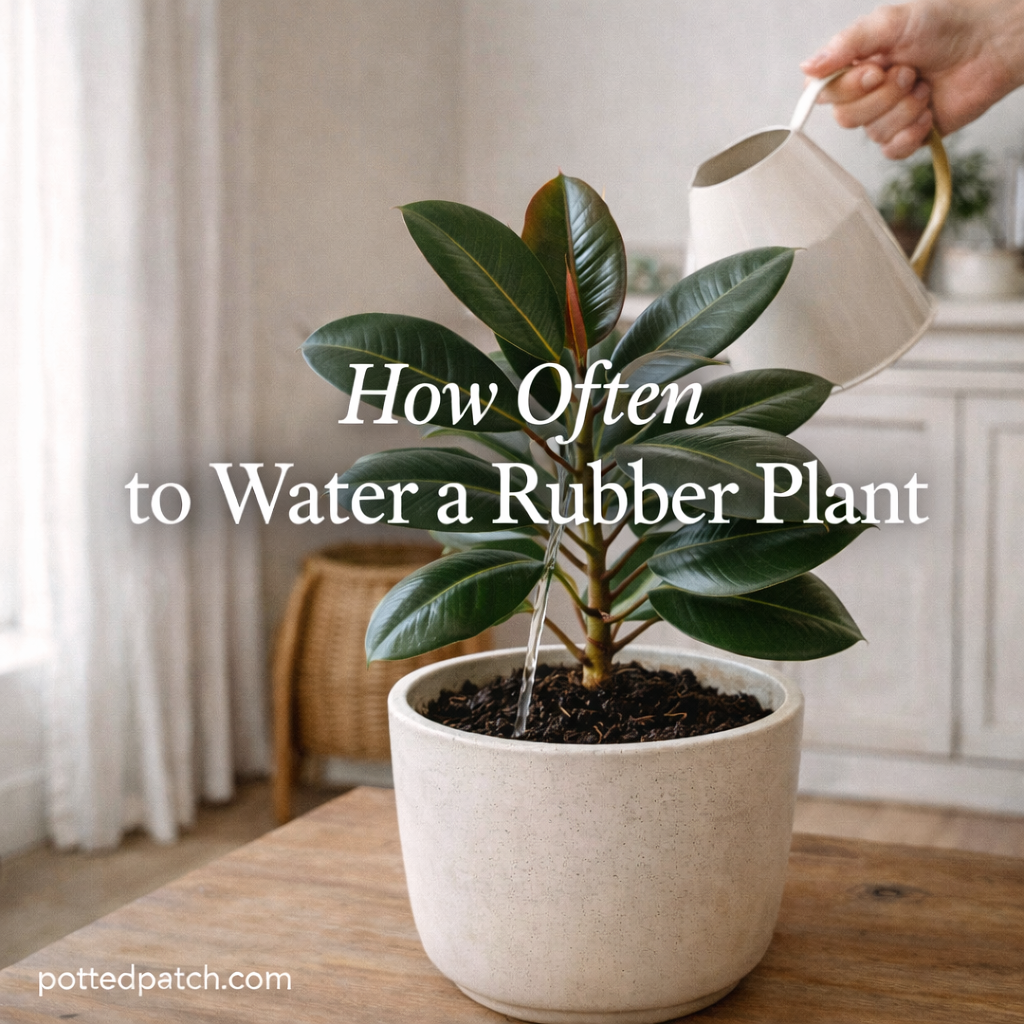

Chinese evergreen is one of those houseplants that makes indoor gardening feel easier.
It doesn’t demand the brightest window in the house, it can tolerate the occasional missed watering, and many varieties continue looking attractive even when conditions aren’t perfect. That’s a big reason Chinese evergreens have remained popular in homes and offices for decades.
But “easy to grow” doesn’t mean completely maintenance-free.
Too much water can cause yellow leaves and root problems. Very low light can slow growth dramatically. Colorful varieties may need brighter conditions than their darker green relatives. And a plant that’s been happy for years can suddenly struggle if its environment changes.
This complete guide covers how to grow and care for a Chinese evergreen indoors, including light, watering, soil, humidity, fertilizer, repotting, propagation, pests, pruning, and common problems.
What Is a Chinese Evergreen?
Chinese evergreen is the common name for plants in the Aglaonema genus.
These tropical plants are grown primarily for their foliage. Depending on the variety, leaves may be green, silver, cream, pink, red, or combinations of several colors.
Some have broad silver centers surrounded by dark green margins. Others feature pink stems, red edges, or almost camouflage-like patterns.
Chinese evergreens generally have a compact, bushy growth habit that works well indoors.
They’re particularly popular because many varieties tolerate indoor conditions better than plants that require intense sunlight.
Are Chinese Evergreens Easy to Grow?
Yes. Chinese evergreen is generally considered a relatively forgiving houseplant.
It’s particularly well suited to people who don’t have extremely bright windows.
Established plants can tolerate some inconsistency, but they’ll look their best when their basic needs are met.
The main things to get right are:
- Appropriate light
- Proper watering
- Good drainage
- Warm temperatures
- Occasional feeding
- Basic pest monitoring
Once those conditions are in place, Chinese evergreen care is fairly straightforward.
How Much Light Does a Chinese Evergreen Need?
Chinese evergreens are famous for tolerating lower light, but there’s an important distinction between tolerating low light and thriving in darkness.
Most grow best in bright, indirect light.
They can often adapt to moderate light, and darker green varieties may tolerate relatively low-light conditions better than highly variegated plants.
Do Colorful Chinese Evergreens Need More Light?
Generally, varieties with extensive pink, red, cream, or pale variegation benefit from brighter indirect light.
The colorful portions of their leaves contain less chlorophyll than solid green tissue.
If a highly variegated Chinese evergreen is kept in very low light, you may notice:
- Slower growth
- Smaller new leaves
- Less vibrant coloration
- Increased green coloration
- Longer periods between new leaves
Move the plant closer to a bright window while protecting it from harsh direct sunlight.
Can Chinese Evergreens Handle Direct Sun?
Strong direct sunlight can scorch the leaves.
Signs of excessive sun may include:
- Bleached areas
- Tan patches
- Crispy brown spots
- Faded coloration
- Curling or damaged leaves
Gentle early-morning sunlight may be tolerated, but prolonged intense afternoon sun is much riskier.
If you’re moving a plant into brighter conditions, acclimate it gradually.
Can Chinese Evergreen Grow in Low Light?
This is one of its biggest advantages as a houseplant.
Many green Aglaonema varieties can survive and continue growing in moderate to relatively low indoor light.
However, growth will usually be slower.
Low light also changes how you should water.
A plant receiving less light uses water more slowly, meaning the potting mix remains damp longer.
If you move a Chinese evergreen from a bright room into a darker one but continue watering at the same frequency, you can accidentally overwater it.
Light and watering always work together.
How Often Should You Water Chinese Evergreen?
Chinese evergreens prefer to dry somewhat between waterings.
Instead of watering every Monday or following another rigid schedule, check the soil.
When the upper portion of the potting mix feels dry, it’s usually time to consider watering.
How to Check Whether Your Chinese Evergreen Needs Water
Insert your finger into the soil.
If the top inch or two feels dry while the soil deeper in the pot retains some moisture, the plant may be ready for water.
You can also watch for:
- A lighter-feeling pot
- Slightly drooping foliage
- Dry soil around the pot’s edges
- Slower-than-normal drying during cooler months
Don’t wait for severe wilting every time before watering.
Repeated extreme dehydration can stress the plant.
How to Water Chinese Evergreen Properly
When it’s time to water:
- Water slowly across the soil surface.
- Continue until excess water drains from the bottom.
- Allow the container to drain completely.
- Empty water collected in the saucer or decorative pot.
- Wait until the soil begins drying again before the next watering.
Thorough watering helps moisten the entire root zone.
Frequent tiny sips can create uneven moisture and encourage shallow root development.
Signs of an Overwatered Chinese Evergreen
Overwatering is one of the easiest ways to cause trouble with Aglaonema.
Possible warning signs include:
- Yellow leaves
- Soft stems
- Persistently wet soil
- Drooping despite moist soil
- Brown or blackened roots
- An unpleasant smell from the potting mix
- Leaf loss
Remember that overwatering isn’t simply about pouring “too much” water into the pot.
It’s about the roots remaining wet for too long.
A thorough watering isn’t a problem when the soil drains well and is allowed to dry appropriately afterward.
Signs of an Underwatered Chinese Evergreen
Chinese evergreens are fairly tolerant of occasional dryness, but they can still become dehydrated.
Signs may include:
- Drooping leaves
- Curling foliage
- Crispy brown edges
- Very dry soil
- Lightweight pots
- Slowed growth
If the soil has become extremely dry, water thoroughly.
Very dry potting mixes sometimes repel water initially, causing it to run down the sides of the container without soaking into the root ball.
Water slowly to make sure the soil is actually becoming moist.
The Best Soil for Chinese Evergreen
Chinese evergreens prefer a potting mix that holds some moisture while still allowing excess water to drain.
Dense garden soil isn’t a good choice for indoor containers.
A suitable mix might contain:
- Indoor potting soil
- Perlite or pumice
- Coco coir or peat-based material
- Fine orchid bark
The goal is a loose, aerated mixture rather than an exact recipe.
When you squeeze damp soil in your hand, it shouldn’t remain compressed into a heavy, muddy clump.
Choosing the Right Pot
Drainage is more important than appearance.
Choose a pot with at least one drainage hole whenever possible.
This allows you to water thoroughly without leaving excess moisture trapped around the roots.
What Size Pot Does Chinese Evergreen Need?
Chinese evergreens don’t need enormous containers.
When repotting, choose a pot only slightly larger than the current root system.
Moving a small plant directly into a very large pot can create problems because the extra soil retains more water than the roots can use.
Terracotta vs. Plastic Pots
Both work.
Terracotta is porous and allows soil to dry faster.
Plastic and glazed ceramic containers retain moisture longer.
If you tend to water frequently, terracotta may provide a little extra margin for error.
If your plants dry very quickly, plastic or glazed ceramic may make moisture easier to manage.
Temperature Requirements
Chinese evergreens are tropical plants and generally appreciate warm indoor conditions.
Normal household temperatures are usually comfortable.
They don’t appreciate sudden cold.
Keep the plant away from:
- Cold drafts
- Frequently opened exterior doors during winter
- Air-conditioning vents
- Cold windows
- Heating vents
- Major temperature fluctuations
If you’re comfortable in the room, your Chinese evergreen probably is too—provided it isn’t sitting directly in a cold or hot draft.
Humidity Requirements
Chinese evergreens are relatively adaptable when it comes to household humidity.
They appreciate moderate humidity but usually don’t require the consistently high humidity demanded by some tropical houseplants.
In particularly dry homes, you may notice:
- Brown leaf tips
- Crispy edges
- Slower growth
- Increased spider mite activity
If the air is extremely dry, a nearby humidifier can help.
Should You Mist Chinese Evergreen?
Routine misting isn’t necessary.
Misting only raises humidity around the foliage temporarily and doesn’t replace proper watering.
If your home is consistently dry, a humidifier is much more effective.
How to Fertilize Chinese Evergreen
Chinese evergreens don’t need heavy feeding.
During active growth, an occasional application of a balanced houseplant fertilizer can provide nutrients.
Follow the fertilizer’s directions and avoid the temptation to apply extra fertilizer in hopes of producing faster growth.
More isn’t necessarily better.
When Should You Fertilize?
Spring and summer are commonly the most active growing periods indoors.
During this time, you may fertilize periodically depending on the product you’re using.
Reduce or stop feeding when growth slows during fall and winter.
If your plant continues growing actively under bright conditions or grow lights throughout winter, its needs may differ.
Always respond to the plant’s actual growth rather than relying entirely on the calendar.
How to Repot a Chinese Evergreen
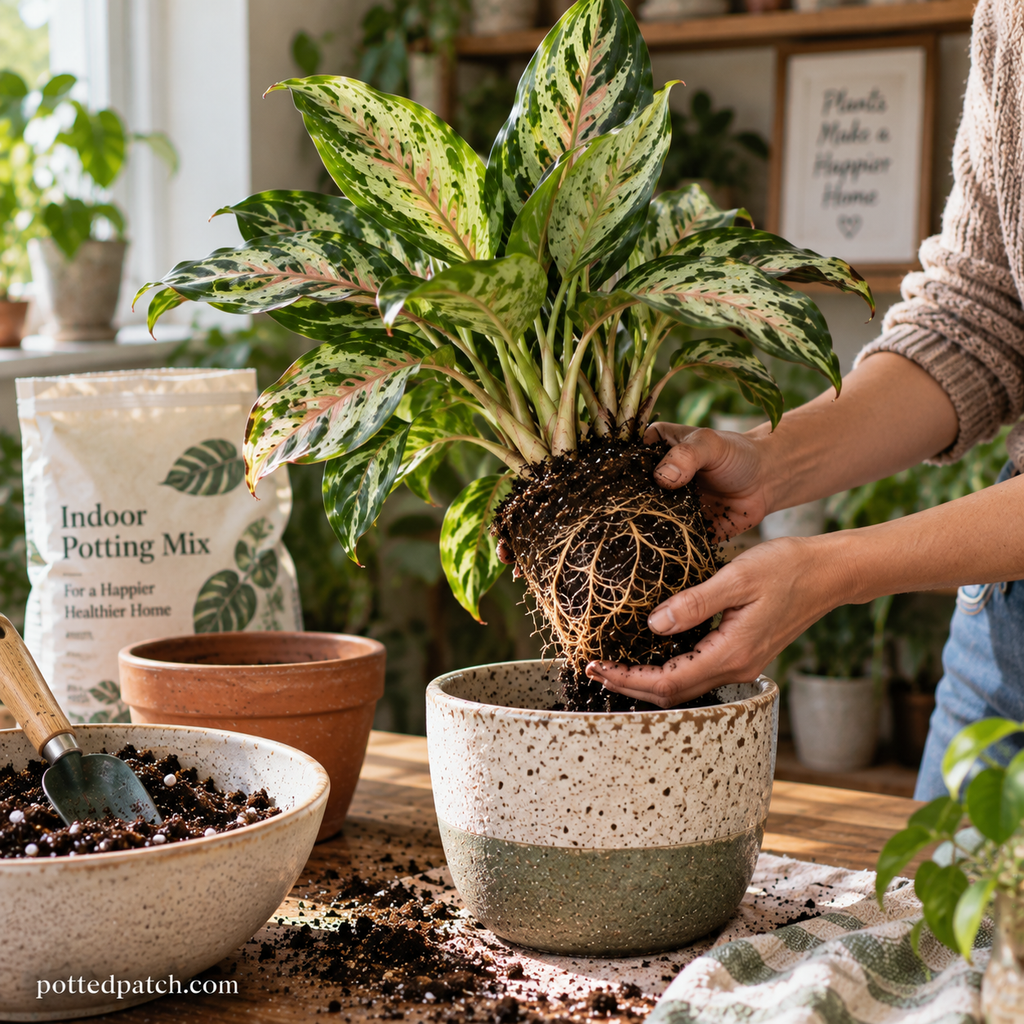
Chinese evergreens don’t mind being somewhat snug in their pots.
There’s no need to repot every year automatically.
Consider repotting when:
- Roots densely fill the container
- Roots emerge heavily from drainage holes
- Water passes through unusually quickly
- The soil has become compacted
- Growth has slowed significantly
- The plant has become unstable
- You suspect root problems
Spring is often a convenient time because the plant is entering an active growth period.
How to Repot Chinese Evergreen Step by Step
- Choose a pot slightly larger than the current one.
- Prepare fresh, well-draining potting mix.
- Gently remove the plant from its container.
- Examine the root system.
- Remove dead or rotten roots with clean tools if necessary.
- Position the plant at approximately its previous depth.
- Fill around the roots with fresh soil.
- Water thoroughly.
- Allow excess water to drain.
Don’t fertilize heavily immediately after repotting.
Give the roots some time to adjust.
How to Propagate Chinese Evergreen
Chinese evergreen can be propagated in several ways.
The most common methods are:
- Division
- Stem cuttings
Division is especially convenient when repotting a mature plant with several established stems.
Propagating Chinese Evergreen by Division
Mature Chinese evergreens often develop multiple shoots from the base.
These can sometimes be separated into individual plants.
How to Divide Chinese Evergreen
- Remove the entire plant from its pot.
- Gently loosen soil around the roots.
- Look for naturally separated groups of stems.
- Carefully tease the root systems apart.
- Use a clean knife if sections can’t be separated by hand.
- Make sure each division has healthy roots and foliage.
- Pot each section separately.
- Water and keep the plants in stable conditions while they establish.
Avoid creating extremely small divisions unless necessary.
Sections with established roots usually recover more easily.
Propagating Chinese Evergreen From Stem Cuttings
Some Aglaonema can also be propagated from sections of stem.
Cuttings should include viable nodes capable of producing new roots and shoots.
Depending on your preferred method, cuttings can be rooted in water or an appropriate growing medium.
Propagating in Water
Place the appropriate portion of the stem in clean water while keeping foliage above the surface.
Keep the cutting in bright, indirect light.
Change the water periodically if it becomes cloudy.
Once a healthy root system has developed, transfer the cutting to soil.
Keep in mind that water-grown roots need time to adjust to soil conditions, so maintain relatively consistent moisture during the initial transition.
Should You Prune Chinese Evergreen?
Chinese evergreen requires very little routine pruning.
You can prune to:
- Remove yellow leaves
- Remove dead or damaged foliage
- Control leggy growth
- Take propagation cuttings
- Improve the plant’s overall shape
Use clean, sharp scissors or pruning shears.
When removing an entire damaged leaf, cut the leaf stem near its base without injuring surrounding growth.
Why Is My Chinese Evergreen Turning Yellow?
Yellow leaves are one of the most common Aglaonema problems.
Unfortunately, yellowing doesn’t have a single cause.
Possible reasons include:
- Overwatering
- Poor drainage
- Root rot
- Underwatering
- Low light
- Cold stress
- Nutrient problems
- Natural aging
Start by checking the soil.
If it’s consistently wet and several leaves are yellowing, excessive moisture or root problems become more likely.
If only one older bottom leaf turns yellow while the rest of the plant looks healthy, it may simply be natural aging.
Why Does My Chinese Evergreen Have Brown Tips?
Brown tips can develop because of:
- Dry air
- Inconsistent watering
- Mineral buildup
- Excess fertilizer
- Root stress
- Severe dehydration
A small amount of browning isn’t necessarily a major concern.
If new leaves repeatedly develop significant brown edges, examine the plant’s overall care routine.
Why Are Chinese Evergreen Leaves Drooping?
Drooping often makes people reach immediately for the watering can.
Check the soil first.
Dry soil can certainly cause drooping, but so can damaged roots sitting in wet soil.
Other possible causes include:
- Temperature shock
- Repotting stress
- Root rot
- Severe heat
- Cold drafts
- Sudden environmental changes
The condition of the soil will help narrow down the cause.
Why Are the Leaves Curling?
Curling leaves may indicate environmental stress.
Possible causes include:
- Underwatering
- Very dry air
- Excessive sunlight
- Heat stress
- Cold temperatures
- Pest activity
Inspect both the plant and its environment.
If the soil moisture seems appropriate, check the leaf undersides carefully for pests.
Chinese Evergreen Root Rot
Root rot is usually associated with roots remaining in overly wet, poorly aerated conditions.
A plant with root rot may:
- Yellow rapidly
- Droop despite wet soil
- Develop soft stems
- Stop producing healthy growth
- Smell unpleasant near the soil
- Have brown, black, or mushy roots
Healthy roots should generally feel firm.
If you discover rotten roots, remove badly affected tissue with sanitized tools and repot the plant in fresh, appropriately draining soil.
Then correct whatever caused the excessive moisture.
That may mean watering less frequently, using a smaller pot, improving drainage, increasing light, or changing the potting mix.
Why Is My Chinese Evergreen Getting Leggy?
Long stems with widely spaced leaves can indicate insufficient light.
Move the plant gradually into brighter indirect light.
Older Chinese evergreens may also naturally develop taller, cane-like stems over time.
If the plant has become unattractively leggy, pruning and propagation can sometimes help rejuvenate it.
Common Chinese Evergreen Pests
Chinese evergreens are generally resilient, but they’re still vulnerable to common houseplant pests.
Watch for:
- Spider mites
- Mealybugs
- Scale
- Thrips
- Fungus gnats
Spider Mites
Spider mites can cause fine stippling or faded areas on leaves.
You may eventually notice fine webbing around stems and leaf undersides.
Dry indoor conditions can encourage spider mite problems.
Mealybugs
Mealybugs often look like tiny white cottony clusters.
Check:
- Leaf joints
- Stems
- New growth
- Leaf undersides
Small infestations are much easier to deal with than established ones.
Scale
Scale insects can resemble small brown or tan bumps attached to stems or leaves.
Because they don’t always look like insects, they can go unnoticed.
Inspect suspicious bumps closely rather than assuming they’re part of the plant.
Preventing Pest Problems
Regular inspection is one of the simplest forms of pest control.
Get into the habit of:
- Inspecting new plants before purchasing
- Keeping new plants separate temporarily
- Checking leaf undersides
- Cleaning dusty foliage
- Removing dead plant material
- Inspecting nearby plants when pests appear
- Keeping plants generally healthy
Pests often spread between plants before they’re noticed, particularly when leaves are touching.
Cleaning Chinese Evergreen Leaves
Aglaonema leaves can collect dust over time.
Wipe them gently with a soft damp cloth.
Support each leaf with your hand while cleaning to avoid bending or tearing it.
Cleaning leaves also gives you an opportunity to inspect for pests, discoloration, and other early warning signs.
There’s generally no need to use commercial leaf-shine products.
Does Chinese Evergreen Flower?
Yes.
Mature Chinese evergreens can produce flowers resembling small peace lily blooms, with a central spadix surrounded by a modified leaf called a spathe.
They’re not usually the main attraction.
Some growers remove flowers so the plant can focus its energy on foliage, while others simply leave them alone.
Either approach is reasonable.
Where Should You Put a Chinese Evergreen Indoors?
Chinese evergreen’s adaptability makes it useful in places where other houseplants might struggle.
Good locations can include:
- Bedrooms
- Living rooms
- Home offices
- Shelves near bright windows
- Entry areas with moderate natural light
- Office spaces with adequate ambient light
Avoid placing the plant in a completely dark corner.
Even low-light-tolerant plants need light to photosynthesize.
Can Chinese Evergreen Grow Under Artificial Light?
Yes.
Chinese evergreens can adapt well to suitable artificial lighting, which is one reason they’re frequently used in offices.
A grow light can also supplement natural light in darker homes.
Use a timer to maintain a consistent day-and-night cycle.
Chinese Evergreen Care Throughout the Year
Indoor growing conditions change with the seasons, even when the plant never leaves your house.
Spring
As daylight increases, growth often picks up.
Spring is a good time to:
- Repot if necessary
- Resume fertilizing
- Propagate mature plants
- Inspect for pests
- Adjust watering as growth increases
Summer
The plant may use water more quickly during warm, bright conditions.
Check the soil regularly rather than automatically increasing watering.
Protect the leaves from intense direct afternoon sunlight.
Fall
As daylight decreases, growth may slow.
Soil may begin taking longer to dry.
Reduce watering frequency accordingly and cut back on fertilizer.
Winter
During winter, many Chinese evergreens grow more slowly.
Allow more time between waterings if the soil is drying slowly.
Keep plants away from cold windows, drafts, and heating vents.
Chinese Evergreen Care Checklist
If you’re new to Aglaonema, focus on these basics:
- Provide bright to moderate indirect light.
- Give colorful varieties somewhat brighter conditions.
- Let the upper soil begin drying before watering.
- Water thoroughly when needed.
- Use a container with drainage holes.
- Choose loose, well-draining potting soil.
- Avoid oversized pots.
- Keep the plant warm and away from drafts.
- Fertilize moderately during active growth.
- Inspect leaves regularly for pests.
- Adjust watering as light and temperatures change.
You don’t need to create perfect tropical conditions.
Consistency and good drainage go a long way.
Frequently Asked Questions About Chinese Evergreen Care
Is Chinese Evergreen Good for Beginners?
Yes.
Chinese evergreen is generally an excellent choice for newer houseplant growers because it’s adaptable, relatively slow growing, and tolerant of moderate indoor light.
The biggest mistake to avoid is keeping the soil constantly wet.
How Often Should I Water a Chinese Evergreen?
There’s no fixed schedule that works for every plant.
Check the soil and water when the upper portion has dried sufficiently.
Depending on your conditions, this could change significantly between summer and winter.
Does Chinese Evergreen Need Sunlight?
It needs light, but it generally doesn’t need strong direct sunlight.
Bright, indirect light is ideal for many varieties.
Darker green varieties may tolerate lower light, while colorful varieties generally benefit from brighter conditions.
Can Chinese Evergreen Live in a Dark Room?
Not indefinitely without supplemental lighting.
A plant may survive for some time in very low light, but growth will slow and the soil will remain wet longer.
If a room receives little natural light, consider adding a grow light.
Does Chinese Evergreen Like Humidity?
Moderate humidity is generally sufficient.
Higher humidity can be beneficial, but Chinese evergreen is usually more tolerant of ordinary household conditions than some tropical foliage plants.
Should I Let Chinese Evergreen Dry Out?
Allow the upper portion of the soil to dry between waterings, but there’s usually no reason to repeatedly let the entire root ball become severely dehydrated.
Why Does My Chinese Evergreen Keep Losing Lower Leaves?
Occasional loss of older lower leaves can be normal.
Rapid or widespread leaf loss may indicate watering problems, poor light, cold stress, pests, or root damage.
Look at the overall pattern rather than focusing on one leaf.
Why Is My Chinese Evergreen Losing Its Color?
Insufficient light can reduce the intensity of variegation in some colorful varieties.
Move the plant gradually toward brighter indirect light.
Avoid suddenly placing it in intense direct sun, which can damage the leaves.
How Fast Does Chinese Evergreen Grow?
Chinese evergreen is generally a moderate to slow-growing houseplant.
Growth rate depends on variety, light, temperature, nutrition, root health, and season.
Don’t assume slow growth means something is wrong if the plant otherwise appears healthy.
Is Chinese Evergreen Toxic to Pets?
Chinese evergreen contains insoluble calcium oxalate crystals.
Chewing the plant can irritate the mouth and digestive tract of pets.
Keep Aglaonema out of reach of cats, dogs, and other animals that may chew houseplants.
If you suspect a pet has eaten part of the plant and is showing symptoms, contact your veterinarian or an appropriate animal poison-control service for guidance.
Final Thoughts on Growing Chinese Evergreen
Chinese evergreen earns its reputation as one of the more forgiving tropical houseplants.
You don’t need a greenhouse, an elaborate humidity setup, or a perfect south-facing window to grow one successfully.
What matters most is avoiding extremes.
Don’t keep the soil constantly saturated. Don’t put the plant in a completely dark corner. Don’t expose it to freezing drafts or harsh afternoon sunlight and expect it to adapt immediately.
Give it moderate to bright indirect light, let the soil dry somewhat between thorough waterings, provide good drainage, and keep an eye out for pests.
Then give it time.
Chinese evergreens aren’t always fast growers, but a healthy plant can gradually become fuller and more impressive year after year.
And with varieties ranging from classic silver-and-green foliage to leaves splashed with vivid pink and red, there’s an Aglaonema for almost any indoor plant collection.