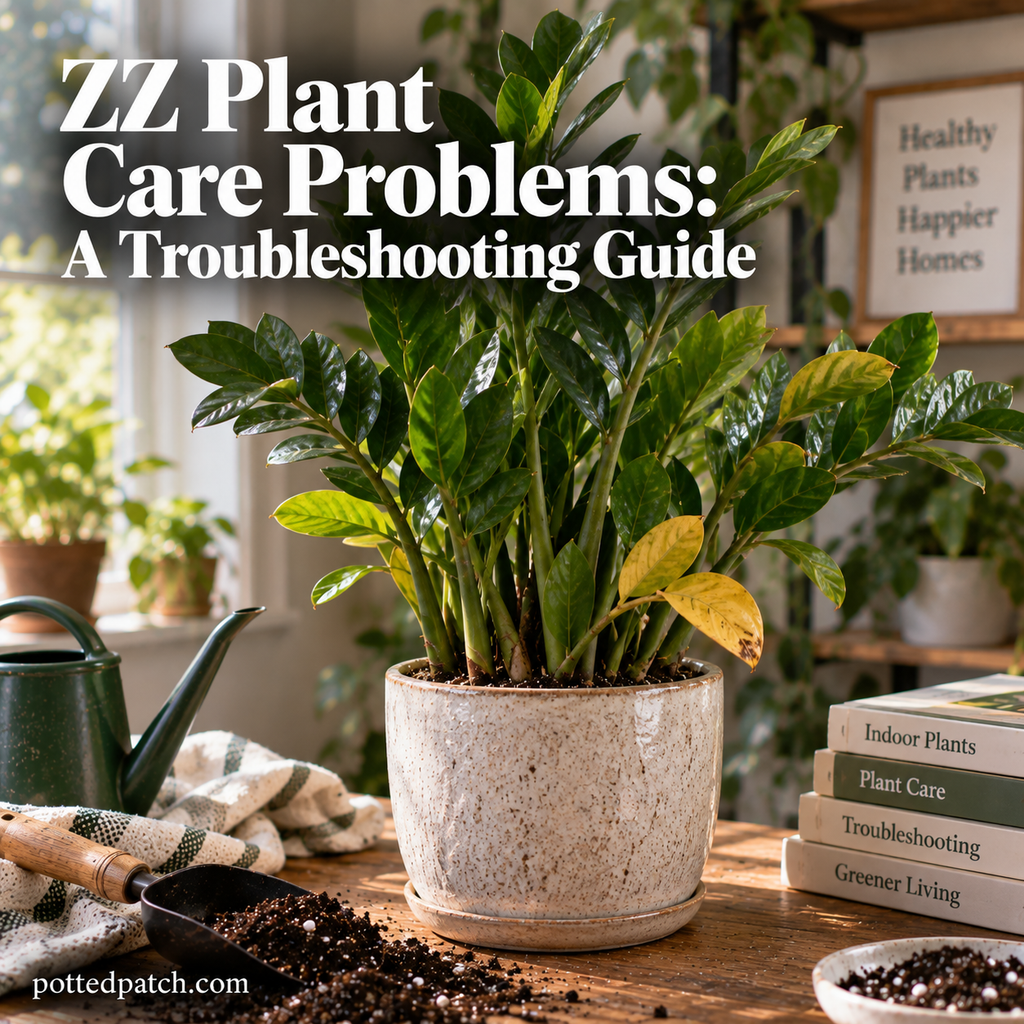
The ZZ plant has earned a reputation as one of the easiest houseplants to grow. It tolerates missed waterings, doesn’t demand constant attention, and can adapt to lighting conditions that would make many other indoor plants struggle.
That doesn’t mean a ZZ plant is impossible to harm, though. Overwatering is particularly troublesome, and keeping the plant in very dark conditions can eventually lead to weak or disappointing growth.
Fortunately, ZZ plant care is straightforward once you understand what the plant actually needs. This complete guide covers light, watering, soil, temperature, humidity, fertilizing, repotting, propagation, pruning, pests, and the common problems you may encounter along the way.
About the ZZ Plant
The ZZ plant, or Zamioculcas zamiifolia, is native to eastern Africa. It grows from thick underground structures called rhizomes that store water and nutrients.
Those rhizomes are one reason the plant handles dry periods so well.
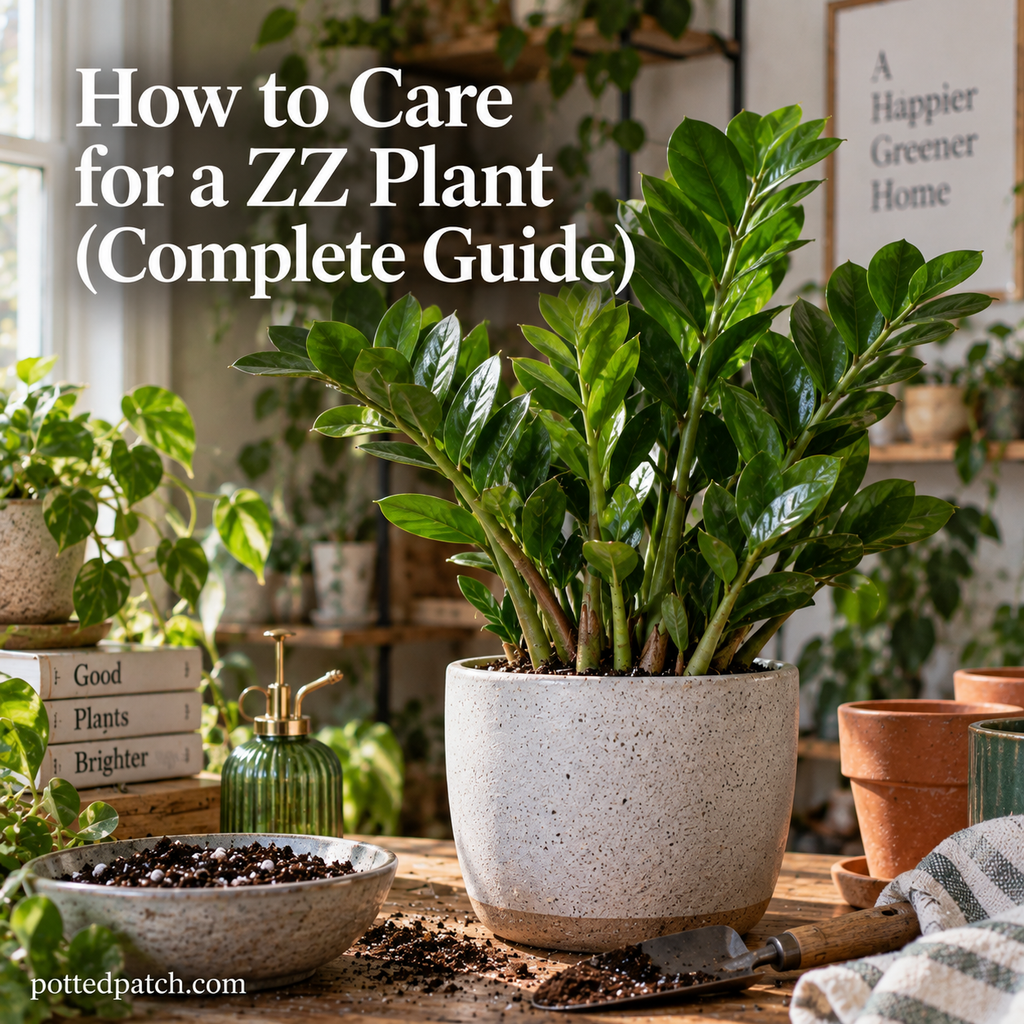
Above the soil, ZZ plants produce upright stems lined with smooth, glossy leaflets. Healthy plants typically have a deep green appearance, while fresh growth often emerges in a much lighter shade before gradually darkening.
ZZ plants are slow to moderate growers indoors, so don’t worry if yours isn’t constantly producing new stems.
ZZ Plant Care at a Glance
For a quick reference, ZZ plants generally prefer:
- Light: Bright, indirect light is ideal
- Water: Allow the soil to dry substantially between waterings
- Soil: Loose, well-draining potting mix
- Temperature: Around 65–80°F (18–27°C)
- Humidity: Normal household humidity
- Fertilizer: Light feeding during active growth
- Repotting: Usually every 2–3 years or when needed
- Pruning: Minimal
- Difficulty: Beginner-friendly
The biggest mistake to avoid is keeping the soil constantly wet.
How Much Light Does a ZZ Plant Need?
One reason ZZ plants are so popular is their ability to adapt to a wide range of indoor lighting.
They can tolerate lower-light rooms better than many common houseplants. However, there’s an important difference between tolerating low light and actually preferring it.
A ZZ plant usually grows best in bright, indirect light.
Place it somewhere that receives plenty of ambient daylight without exposing the foliage to hours of harsh direct sunlight.
Can ZZ Plants Grow in Low Light?
Yes, but growth will usually be slower.
A ZZ plant in lower light may:
- Produce fewer new stems
- Grow more slowly
- Lean toward the nearest light source
- Use water much more slowly
- Develop less vigorous growth
If your plant is in a dim room, be particularly careful with watering. Soil dries much more slowly when a plant receives little light.
Can ZZ Plants Handle Direct Sunlight?
Some gentle direct sunlight can be tolerated, especially morning sun.
Strong afternoon sunlight through a window can be much more intense and may scorch foliage, particularly if the plant was previously growing in a darker location.
If you’re moving a ZZ plant into brighter conditions, increase its exposure gradually.
How Often Should You Water a ZZ Plant?
ZZ plants would generally rather be slightly too dry than consistently too wet.
Their rhizomes store water, allowing them to tolerate periods when the soil dries substantially.
Instead of watering according to a fixed schedule, check the potting mix.
Allow most of the soil to dry before watering again.
When it is time to water:
- Take the plant to a sink or somewhere excess water can drain.
- Water the soil thoroughly.
- Continue until water begins flowing from the drainage holes.
- Allow the container to drain completely.
- Empty any water collected in the saucer or decorative outer pot.
Then wait for the soil to dry substantially before watering again.
How Many Days Should You Wait Between Waterings?
There isn’t a reliable universal number.
One ZZ plant may need water every couple of weeks during warm, bright conditions, while another may go considerably longer between waterings.
Watering frequency depends on:
- Light exposure
- Pot size
- Soil composition
- Temperature
- Humidity
- Plant size
- Container material
- Season
Checking the soil is much more reliable than automatically watering every Saturday.
Signs of an Overwatered ZZ Plant
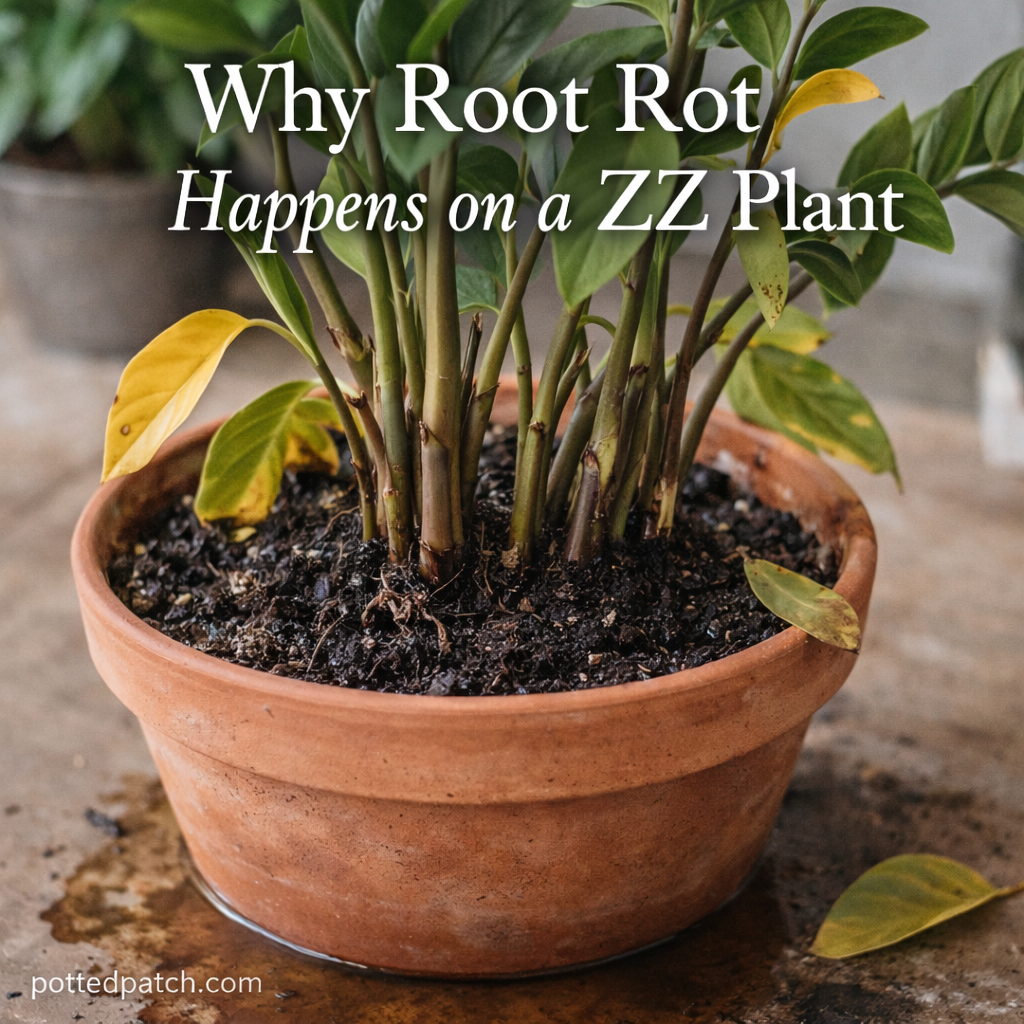
Overwatering is probably the most common ZZ plant care problem.
Because the plant stores water in its rhizomes, it doesn’t need its soil to remain continuously moist.
Possible signs of overwatering include:
- Yellow leaves
- Yellowing stems
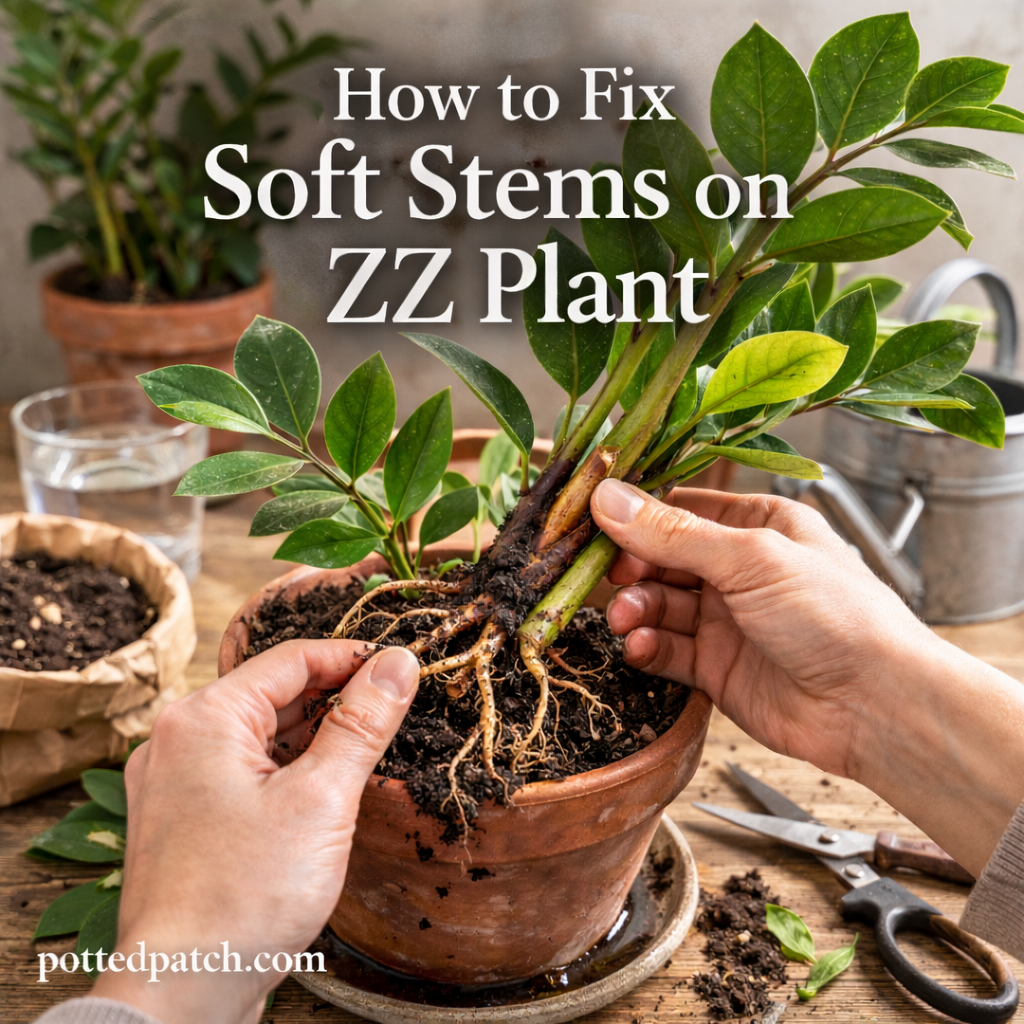
- Soft or mushy stems
- Drooping
- Persistently wet soil
- Brown or black areas near the base
- Soft rhizomes
- An unpleasant smell coming from the soil
If several symptoms appear while the soil is wet, don’t automatically assume the plant needs more water because it’s drooping.
Check the roots and rhizomes first.
What ZZ Plant Root Rot Looks Like
Healthy ZZ plant roots and rhizomes should feel firm.
Rot may cause affected tissue to become:
- Brown or black
- Soft
- Mushy
- Slimy
- Easily damaged
- Unpleasant smelling
If you suspect root rot, carefully remove the plant from its container and inspect the root system.
Remove badly rotted roots and rhizome sections using clean tools. Repot the remaining healthy plant in fresh, well-draining soil and make sure the container has adequate drainage.
Signs of an Underwatered ZZ Plant
Although ZZ plants are drought tolerant, they aren’t artificial plants. Eventually, they do need water.
Possible signs of prolonged underwatering include:
- Dry potting soil
- Wrinkled or shriveled stems
- Curling leaflets
- Crispy brown areas
- Drooping
- Leaf drop
If the soil is extremely dry, give the plant a thorough watering rather than a small splash.
Very dry potting mix can sometimes pull away from the sides of the container, allowing water to run straight through. Water slowly so the soil has time to absorb moisture.
Best Soil for a ZZ Plant
ZZ plants need soil that drains efficiently.
A quality indoor potting mix can serve as a starting point, but adding materials that improve drainage and aeration may help prevent the root zone from remaining wet for too long.
A practical mixture might contain:
- Indoor potting mix
- Perlite or pumice
- Fine orchid bark
You don’t need a complicated recipe.
The goal is simply to create soil that retains enough moisture for the roots while allowing excess water to escape.
Why Drainage Matters So Much
ZZ plants store water underground.
Dense soil combined with frequent watering can keep those rhizomes surrounded by moisture for extended periods, increasing the risk of rot.
If your ZZ plant’s soil remains wet for a week or more after watering, evaluate its light, container size, and soil composition.
Choosing the Right Pot for a ZZ Plant
A ZZ plant doesn’t need a huge container.
Choose a pot that comfortably accommodates the root system while leaving some room for growth.
Containers that are dramatically oversized hold more soil, and that additional soil can remain wet longer than the plant needs.
Does a ZZ Plant Pot Need Drainage Holes?
A drainage hole is strongly recommended.
It allows excess water to escape instead of collecting around the roots and rhizomes.
If you want to use a decorative container without drainage, keep the plant inside a smaller nursery pot with holes. Remove the inner pot when watering, let it drain completely, and then return it to the decorative container.
Terracotta vs. Plastic Pots
Both can work.
Terracotta is porous and tends to dry more quickly. That can be helpful if you’re prone to overwatering.
Plastic and glazed ceramic retain moisture longer.
Neither material is inherently better. You simply need to adjust your watering habits accordingly.
Temperature Requirements for ZZ Plants
ZZ plants generally appreciate the same temperatures people find comfortable.
A range of approximately 65–80°F (18–27°C) works well for typical indoor growing.
Protect the plant from:
- Cold drafts
- Frost
- Air-conditioning vents
- Heating vents
- Sudden temperature changes
Avoid leaving a ZZ plant pressed against extremely cold window glass during winter.
Does a ZZ Plant Need High Humidity?
No special humidity setup is usually necessary.
ZZ plants generally adapt well to average household humidity, which makes them considerably easier to accommodate than many tropical houseplants.
You typically don’t need to:
- Mist the plant daily
- Use a humidity tray
- Place it in a bathroom
- Run a humidifier specifically for it
If your home is extremely dry, the plant may appreciate some additional humidity, but light and proper watering are usually much more important.
Should You Mist a ZZ Plant?
Regular misting isn’t necessary.
Misting provides only a temporary increase in moisture around the foliage and doesn’t replace proper watering.
If the leaves become dusty, wiping them gently with a damp cloth is more useful.
This keeps the glossy foliage looking attractive while giving you an opportunity to inspect the plant for pests.
How to Fertilize a ZZ Plant
ZZ plants aren’t particularly heavy feeders.
During periods of active growth, you can use a balanced houseplant fertilizer according to the product’s instructions.
Avoid assuming that extra fertilizer will make a slow-growing ZZ plant suddenly grow quickly.
Too much fertilizer can lead to salt buildup and root damage.
Possible signs of excessive fertilizer include:
- Brown leaf tips
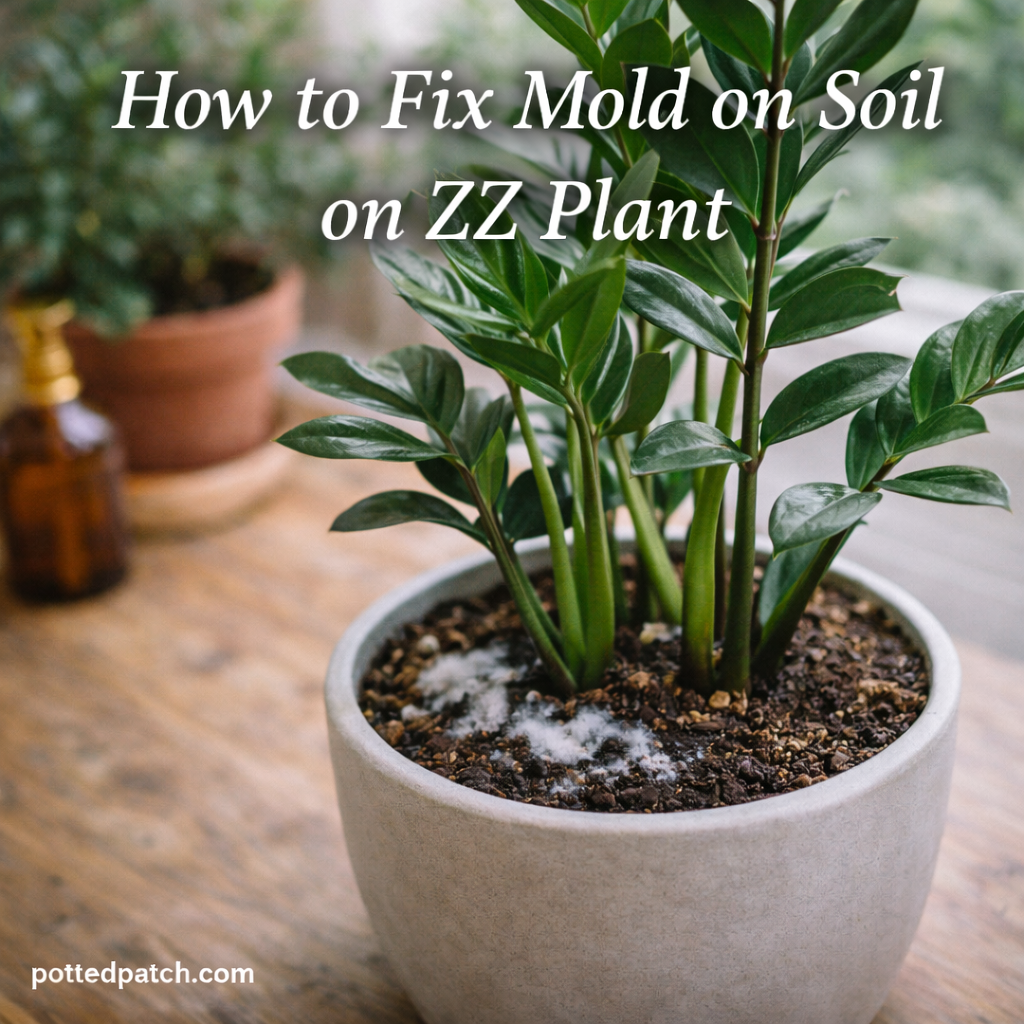
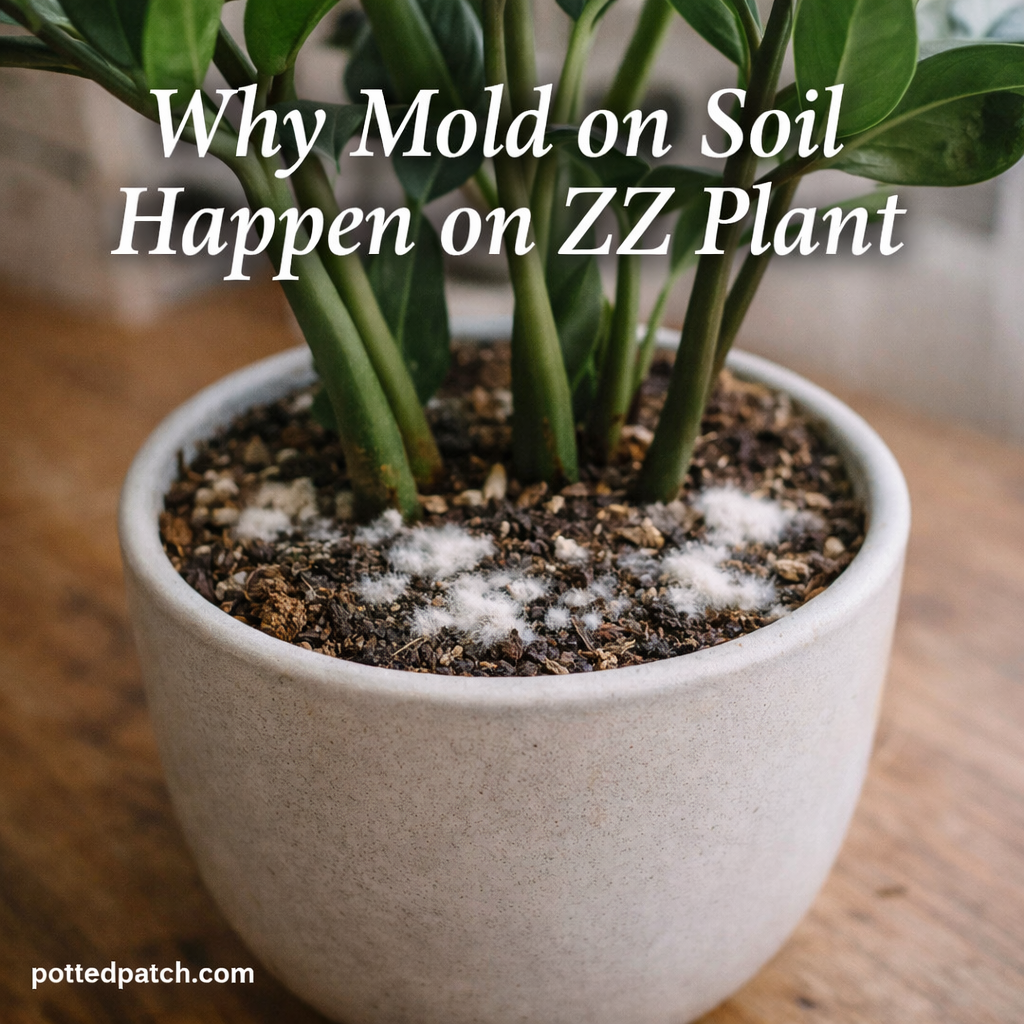
- White crust on the soil surface
- Mineral buildup around the pot
- Declining growth
- Root stress
Reduce feeding when growth slows substantially.
How Fast Do ZZ Plants Grow?
ZZ plants aren’t known for explosive growth.
Under good conditions, you may occasionally notice new shoots emerging directly from the soil. These shoots often begin light green and gradually darken as they mature.
Growth is influenced by:
- Light
- Temperature
- Watering
- Root health
- Nutrients
- Season
- Plant maturity
A ZZ plant receiving bright indirect light will generally have better growth potential than one sitting in a dark corner.
How to Encourage More ZZ Plant Growth
Focus on improving the plant’s overall conditions rather than trying to force growth.
Provide:
- Bright indirect light
- Proper watering
- Well-draining soil
- Appropriate temperatures
- Light fertilization during active growth
- Enough root space without dramatically oversizing the pot
Then be patient.
ZZ plants simply grow more slowly than many other houseplants.
When Should You Repot a ZZ Plant?
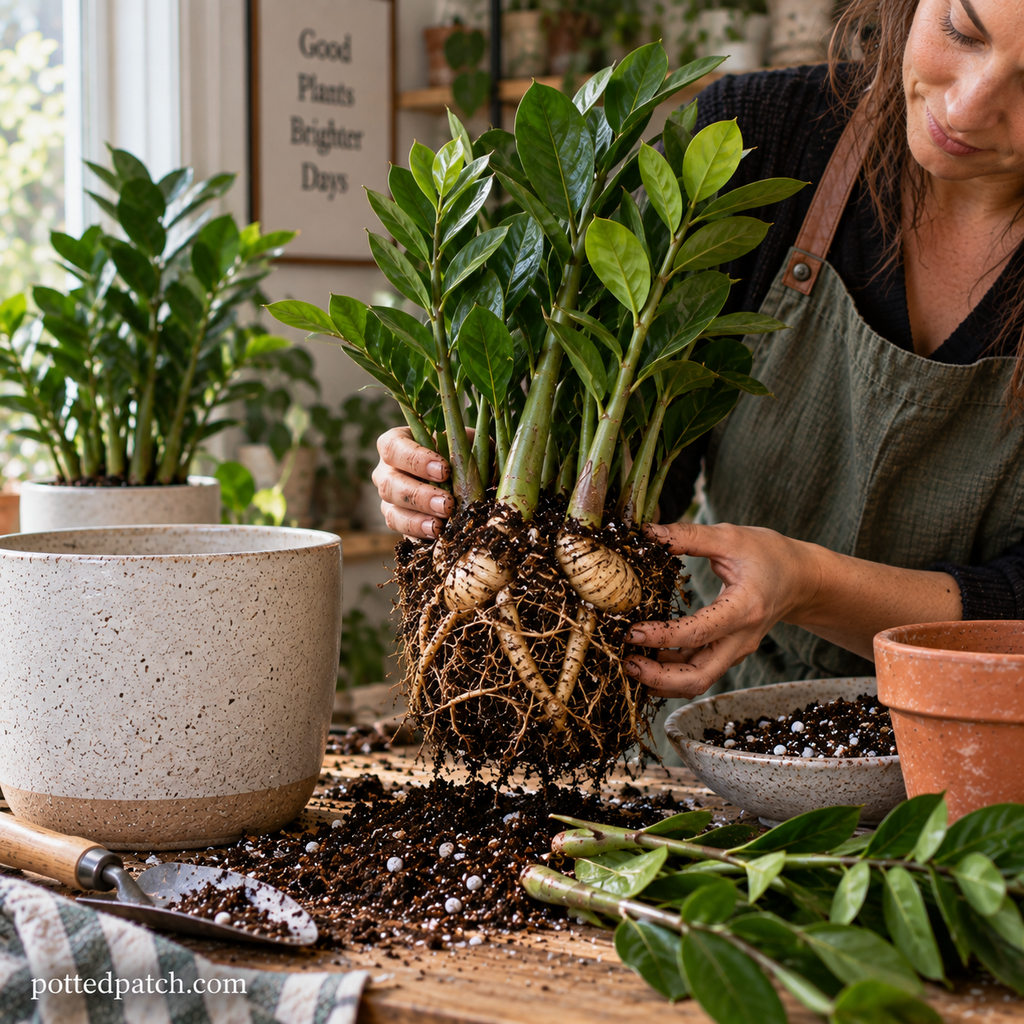
ZZ plants don’t need frequent repotting.
Depending on growth and container size, a plant may remain comfortable in the same pot for several years.
Consider repotting when:
- Roots are heavily circling the container
- Rhizomes are crowding the pot
- The container is becoming distorted or cracked
- Roots are emerging extensively from drainage holes
- Soil has become compacted
- Drainage has deteriorated
- The plant has become unstable
Spring or early in the active growing period is often a convenient time to repot.
How to Repot a ZZ Plant
- Choose a container slightly larger than the current pot.
- Prepare fresh, well-draining potting mix.
- Carefully remove the plant from its old container.
- Inspect the roots and rhizomes.
- Trim away clearly dead or rotted tissue if necessary.
- Position the plant in the new container.
- Fill around the root system with fresh soil.
- Avoid burying the plant dramatically deeper than it was before.
Be gentle with the rhizomes and roots during the process.
How to Prune a ZZ Plant
ZZ plants don’t require regular pruning to maintain their shape.
Most pruning is done to remove:
- Yellow stems
- Dead growth
- Damaged stems
- Diseased tissue
- Excessively long or awkward growth
Use clean, sharp pruning shears.
If an entire stem needs to be removed, cut it near the soil line rather than cutting individual leaflets off until you’re left with a bare stem.
Should You Cut Off Yellow ZZ Plant Leaves?
A completely yellow leaf or stem won’t turn green again.
It can be removed once you’re confident the yellowing isn’t simply very pale new growth.
More importantly, investigate why it turned yellow.
One aging stem isn’t necessarily concerning. Several stems turning yellow at once may indicate a watering or root problem.
How to Propagate a ZZ Plant
ZZ plants can be propagated in several ways.
Common methods include:
- Division
- Stem cuttings
- Leaf cuttings
Division is generally the quickest way to produce another established plant because you’re separating an existing portion of the root and rhizome system.
Propagating a ZZ Plant by Division
Division works especially well when a mature plant has developed multiple clusters.
To divide a ZZ plant:
- Remove the plant from its container.
- Gently loosen the soil around the roots.
- Identify natural divisions within the rhizome system.
- Carefully separate sections while preserving healthy roots.
- Pot each division into an appropriately sized container.
- Use fresh, well-draining soil.
Avoid repeatedly dividing a plant just because you can. Give each section enough roots and rhizome material to establish successfully.
Propagating ZZ Plants From Stem Cuttings
Stem cuttings can also produce new plants, although the process requires patience.
Cut a healthy stem with clean tools and place it in water or an appropriate growing medium.
Over time, roots and eventually small rhizomes can develop.
This may take considerably longer than propagation methods used for faster-growing houseplants.
Can You Propagate a ZZ Plant From a Leaf?
Yes, ZZ plants can be propagated from individual leaflets.
However, this method can be very slow.
A healthy leaflet can eventually develop roots and a small rhizome before producing new growth.
If you try it, don’t assume the propagation has failed simply because nothing dramatic happens after a few weeks.
ZZ plants reward patience.
Common ZZ Plant Problems
One imperfect leaf doesn’t mean your plant is dying.
When diagnosing a problem, look for patterns and consider what has changed recently.
Why Are My ZZ Plant Leaves Turning Yellow?
Yellow leaves are one of the most common concerns.
Potential causes include:
- Excessive watering
- Poor drainage
- Root rot
- Natural aging
- Sudden environmental changes
- Prolonged stress
Check the soil first.
If several stems are yellowing while the soil remains wet, excessive moisture should be high on your list of possibilities.
Is One Yellow Stem Normal?
Sometimes.
Older growth eventually declines naturally.
If the rest of the plant looks healthy, the soil conditions are appropriate, and new growth is developing normally, one aging stem may not indicate a serious problem.
Why Are My ZZ Plant Leaves Turning Brown?
Brown tips or patches can develop from several types of stress.
Possible causes include:
- Severe underwatering
- Excess fertilizer
- Mineral or salt buildup
- Direct sun damage
- Root problems
- Physical injury
Consider the location and appearance of the damage along with the condition of the soil.
Why Is My ZZ Plant Drooping?
Drooping can be confusing because both too much and too little water can contribute to it.
Check the soil.
If it’s extremely dry and the stems look wrinkled, the plant may need water.
If the soil is wet and stems are becoming soft or yellow, inspect the root system for moisture-related problems.
Older stems may also naturally arch outward as they grow.
Why Is My ZZ Plant Leaning?
A ZZ plant leaning toward a window may be reaching for stronger light.
Rotate the container occasionally to encourage more balanced growth.
If the plant is heavily leaning or producing unusually stretched stems, consider moving it somewhere brighter.
Common ZZ Plant Pests
ZZ plants are relatively resistant to pests, but infestations can still occur.
Potential pests include:
- Spider mites
- Mealybugs
- Scale
- Aphids
Inspect the foliage occasionally, paying particular attention to:
- Leaf undersides
- Stem joints
- New growth
- Areas close to the soil
Signs of pests may include sticky residue, fine webbing, unusual speckling, cotton-like clusters, bumps on stems, or visible insects.
What to Do if You Find Pests
Move the affected plant away from nearby houseplants when practical.
Identify the pest before choosing a treatment.
Depending on the infestation, management may include wiping or rinsing foliage, physically removing insects, pruning heavily affected material, or using an appropriately labeled horticultural treatment.
Check surrounding plants as well.
Cleaning ZZ Plant Leaves
One of the ZZ plant’s best features is its naturally glossy foliage.
Unfortunately, those smooth leaves can collect dust.
Use a soft damp cloth to gently wipe the leaflets occasionally.
Avoid relying on artificial leaf-shine products. Clean foliage doesn’t need to look unnaturally polished to be healthy.
Cleaning also gives you an opportunity to spot pests before an infestation becomes severe.
ZZ Plant Care in Spring and Summer
Longer days and warmer conditions may encourage more active growth.
During spring and summer:
- Monitor soil moisture more frequently
- Provide plenty of bright indirect light
- Fertilize lightly when the plant is actively growing
- Repot if genuinely necessary
- Watch for new shoots emerging from the soil
Don’t automatically increase watering just because summer arrives. Let the soil determine when the plant needs water.
ZZ Plant Care in Fall and Winter
Shorter days usually mean slower growth and slower water use.
During fall and winter:
- Allow the soil to dry appropriately
- Reduce watering frequency if the soil stays moist longer
- Keep the plant away from cold drafts
- Maximize available natural light
- Reduce or pause fertilizing when growth slows
Winter overwatering can be particularly problematic because soil may remain wet much longer than expected.
Where Should You Put a ZZ Plant?
ZZ plants are flexible enough to work in many rooms.
Potential locations include:
- Living rooms
- Bedrooms
- Home offices
- Entryways with natural light
- Bright hallways
Choose a location with at least some natural or suitable supplemental light.
The plant may tolerate a dim corner, but a brighter location generally supports stronger long-term growth.
Is a ZZ Plant Good for Beginners?
Yes.
A ZZ plant is an excellent choice for someone learning to care for houseplants because it doesn’t require frequent watering, high humidity, constant pruning, or complicated maintenance.
It is also forgiving if you occasionally forget to water it.
The main habit beginners need to avoid is watering too frequently.
When you’re unsure whether your ZZ plant needs water, check the soil first.
Is a ZZ Plant Toxic to Pets?
ZZ plants contain calcium oxalate crystals and should not be considered edible.
Chewing or ingesting plant material can cause irritation, including discomfort in the mouth and gastrointestinal upset.
If you have curious cats, dogs, or small children who chew plants, keep your ZZ plant somewhere they cannot easily access it.
Common ZZ Plant Care Mistakes to Avoid
ZZ plants are tough, but several common mistakes can eventually cause problems.
Try to avoid:
- Watering on a rigid schedule
- Keeping the soil constantly wet
- Using containers without adequate drainage
- Planting in dense soil that stays soggy
- Keeping the plant in extremely dark conditions indefinitely
- Moving it suddenly into intense direct sunlight
- Repotting into a dramatically oversized container
- Applying excessive fertilizer
- Misting instead of properly watering the soil
- Assuming drooping always means the plant needs water
Most serious ZZ plant problems are easier to prevent than fix.
Frequently Asked Questions About ZZ Plant Care
How Often Should I Water a ZZ Plant?
Allow most of the soil to dry before watering again.
The actual interval depends on light, temperature, pot size, soil, season, and the size of the plant.
Can ZZ Plants Survive Without Sunlight?
ZZ plants can tolerate relatively low light, but they still need light for photosynthesis.
A completely dark room isn’t a suitable long-term growing environment unless adequate artificial plant lighting is provided.
Can I Put a ZZ Plant in a Bathroom?
Possibly.
A bathroom with sufficient natural or supplemental light can work. A windowless bathroom without suitable plant lighting is not ideal simply because it has higher humidity.
ZZ plants don’t require high humidity.
Does a ZZ Plant Like to Be Root-Bound?
ZZ plants can tolerate somewhat crowded conditions, but that doesn’t mean they should remain indefinitely in a container that is severely overcrowded.
Repot when the rhizomes and roots have clearly outgrown the available space.
How Long Can a ZZ Plant Go Without Water?
There isn’t a safe universal number of days or weeks.
A mature ZZ plant in cool, low-light conditions may use water very slowly, while one growing in brighter, warmer conditions may dry faster.
Use soil moisture rather than a countdown.
Why Isn’t My ZZ Plant Growing?
Slow growth isn’t necessarily a problem.
ZZ plants naturally grow more slowly than many houseplants. Limited light, cooler temperatures, seasonal changes, root problems, or insufficient nutrients can slow growth further.
If the plant otherwise looks healthy, patience may be all that’s required.
Why Is New ZZ Plant Growth Light Green?
Fresh ZZ growth commonly emerges much lighter than mature foliage.
The leaves typically darken as they mature.
Don’t mistake healthy pale new growth for yellowing caused by a problem.
Should I Rotate My ZZ Plant?
Occasional rotation can help produce more balanced growth, particularly when most of the available light comes from one direction.
You don’t need to rotate it constantly.
A Simple ZZ Plant Care Routine
You don’t need an elaborate maintenance schedule to keep a ZZ plant healthy.
A practical routine looks like this:
- Keep the plant in bright indirect light when possible.
- Check the soil periodically.
- Water thoroughly only after the soil has dried substantially.
- Let excess water drain completely.
- Check the leaves and stems for pests or unusual changes.
- Wipe dusty foliage occasionally.
- Fertilize lightly during active growth.
- Adjust watering as conditions change through the year.
- Repot only when the plant actually needs more space or fresh soil.
The less you try to micromanage a healthy ZZ plant, the easier it often is to grow.
Final Thoughts
ZZ plant care really can be simple.
Give your plant good indirect light, well-draining soil, and a container with drainage. Let the soil dry substantially before watering again, and resist the temptation to add more water simply because several days have passed.
During brighter, warmer periods, your ZZ plant may produce fresh shoots and use water more quickly. When winter brings shorter days and slower growth, adjust your watering accordingly.
Most of all, don’t worry if your plant seems to be taking its time. ZZ plants aren’t known for racing through new growth.
With healthy roots, sensible watering, and a suitable location, a ZZ plant can remain an attractive and remarkably low-maintenance part of your indoor plant collection for years.