
Dracaena is one of those houseplants you’ve probably seen dozens of times, even if you didn’t know its name.
Tall cane-like stems topped with arching leaves are common in offices, living rooms, entryways, and shopping centers. Other Dracaena varieties stay smaller and bushier, with striped, lime-green, red-edged, or dramatically variegated foliage.
Part of their popularity comes from their adaptability. Dracaenas can handle typical indoor conditions, don’t require constant attention, and usually recover from an occasional missed watering.
Still, they have preferences.
Too much water is a common problem. Brown leaf tips can appear when conditions aren’t quite right, and a Dracaena kept in very low light may survive without really thriving.
This complete Dracaena care guide covers watering, light, soil, temperature, humidity, fertilizer, pruning, repotting, propagation, pests, and the problems you’re most likely to encounter indoors.
What Is a Dracaena?
Dracaena is a genus containing numerous species and cultivated varieties grown as ornamental plants.
They’re known for their foliage, which can vary considerably from one type to another.
Some develop thick, woody canes as they mature. Others grow from thinner stems or form dense clusters of leaves.
Depending on the variety, a Dracaena can work as a small tabletop plant or eventually become a substantial floor plant.
Popular Types of Dracaena
You may encounter several different Dracaenas when shopping for indoor plants.
Common examples include:
- Dracaena marginata
- Dracaena fragrans
- Dracaena ‘Lemon Lime’
- Dracaena ‘Janet Craig’
- Dracaena ‘Warneckii’
- Dracaena reflexa
Corn plant, dragon tree, and several other familiar houseplant names are associated with the Dracaena group.
Some plants previously classified in other genera have also been moved into Dracaena as botanical classifications have changed.
The exact appearance varies, but the basic indoor care requirements are similar for many commonly grown varieties.
Are Dracaenas Easy to Care For?
Generally, yes.
Dracaena is a good choice for someone who wants a substantial foliage plant without the demanding care routine of some tropical species.
They tolerate moderate indoor conditions and don’t need constantly moist soil.
The fundamentals are fairly simple:
- Provide adequate indirect light
- Allow the soil to partially dry between waterings
- Use a well-draining potting mix
- Avoid prolonged cold temperatures
- Fertilize moderately during active growth
- Inspect occasionally for pests
Get those basics right and a Dracaena can remain attractive for years.
How Much Light Does a Dracaena Need?
Most Dracaenas grow best in bright, indirect light.
They can often tolerate moderate or lower light, particularly varieties with darker green foliage.
However, “low-light tolerant” doesn’t mean the plant doesn’t need light.
A Dracaena kept far from a window may survive for a while but produce very little new growth.
Signs a Dracaena Needs More Light
Possible signs include:
- Slow growth
- Smaller new leaves
- Leggy growth
- Leaning toward a window
- Loss of variegation
- Soil staying wet for unusually long periods
That final sign is easy to overlook.
Plants use less water when photosynthesis slows, so a Dracaena in lower light generally needs watering less frequently.
Do Variegated Dracaenas Need More Light?
Variegated varieties often benefit from brighter indirect light.
Their white, cream, yellow, or lime-colored leaf sections contain less chlorophyll than solid green areas.
In very low light, colorful varieties may become less vibrant.
Give them plenty of filtered light while protecting the foliage from intense direct sun.
Can Dracaena Take Direct Sunlight?
Some gentle direct sunlight may be tolerated, but intense sun can scorch the foliage, particularly when a plant hasn’t been acclimated.
Sunburn may appear as:
- Bleached areas
- Pale patches
- Crispy brown spots
- Dry leaf sections
If you’re moving a Dracaena closer to a sunny window, increase its exposure gradually.
Where Should You Put a Dracaena Indoors?
A location near a bright window is often ideal.
Depending on the direction and intensity of the light, you may position the plant directly beside the window or several feet away.
Good locations can include:
- Living rooms
- Bedrooms
- Home offices
- Bright entryways
- Dining rooms
- Offices with sufficient natural or artificial light
Avoid placing a Dracaena in a dark corner simply because it fits the space.
Interior design and plant health don’t always agree.
How Often Should You Water a Dracaena?
Dracaenas generally prefer some drying between waterings.
They don’t want to remain constantly wet.
Before reaching for the watering can, check the soil.
If the upper portion is still noticeably damp, wait.
How to Tell When a Dracaena Needs Water
Insert your finger an inch or two into the soil.
When the upper layer has dried and the pot feels lighter, the plant may be ready for water.
Other clues include:
- Slightly drooping leaves
- Dry soil around the edges
- A noticeably lighter container
- Leaves beginning to lose some firmness
Don’t depend on a rigid schedule.
A Dracaena might need water considerably more often during warm, bright summer conditions than during a cool, low-light winter.
How to Water Dracaena Properly
When the plant needs water:
- Water slowly across the entire soil surface.
- Continue until water drains from the bottom.
- Allow the pot to drain thoroughly.
- Empty excess water from the saucer or decorative container.
- Wait until the soil partially dries before watering again.
Thorough watering is usually better than frequent small amounts.
The goal is to moisten the root zone and then allow it to regain some air as the soil dries.
Does Water Quality Matter for Dracaena?
Dracaenas can sometimes be sensitive to substances that accumulate in tap water and potting soil.
Brown leaf tips are often associated with water-quality concerns, although they’re not the only possible cause.
If your plant repeatedly develops brown tips despite otherwise appropriate care, you can experiment with filtered, distilled, or suitable collected rainwater.
But don’t assume every brown tip is caused by tap water.
Other possibilities include:
- Low humidity
- Inconsistent watering
- Fertilizer buildup
- Root stress
- Severe dehydration
- Excessive heat
Look at the entire plant before changing your routine.
Signs of an Overwatered Dracaena
Overwatering is one of the most common Dracaena problems.
Possible signs include:
- Yellow leaves
- Soft stems
- Drooping despite damp soil
- Leaf loss
- Persistently wet potting mix
- Brown or black roots
- An unpleasant smell from the soil
Overwatering is really about how long the roots remain wet.
You can pour a large amount of water through a well-draining pot without causing a problem if excess water escapes and the soil is allowed to dry appropriately.
Trouble begins when roots remain saturated and poorly aerated.
Signs of an Underwatered Dracaena
A thirsty Dracaena may develop:
- Drooping foliage
- Curling leaves
- Dry brown edges
- Crispy leaf tips
- Extremely dry soil
- Premature leaf loss
If the potting mix has become completely dry, water slowly.
Extremely dry soil can sometimes repel water, causing it to run directly around the root ball and out of the drainage holes.
Make sure the soil itself is actually becoming moistened.
The Best Soil for Dracaena
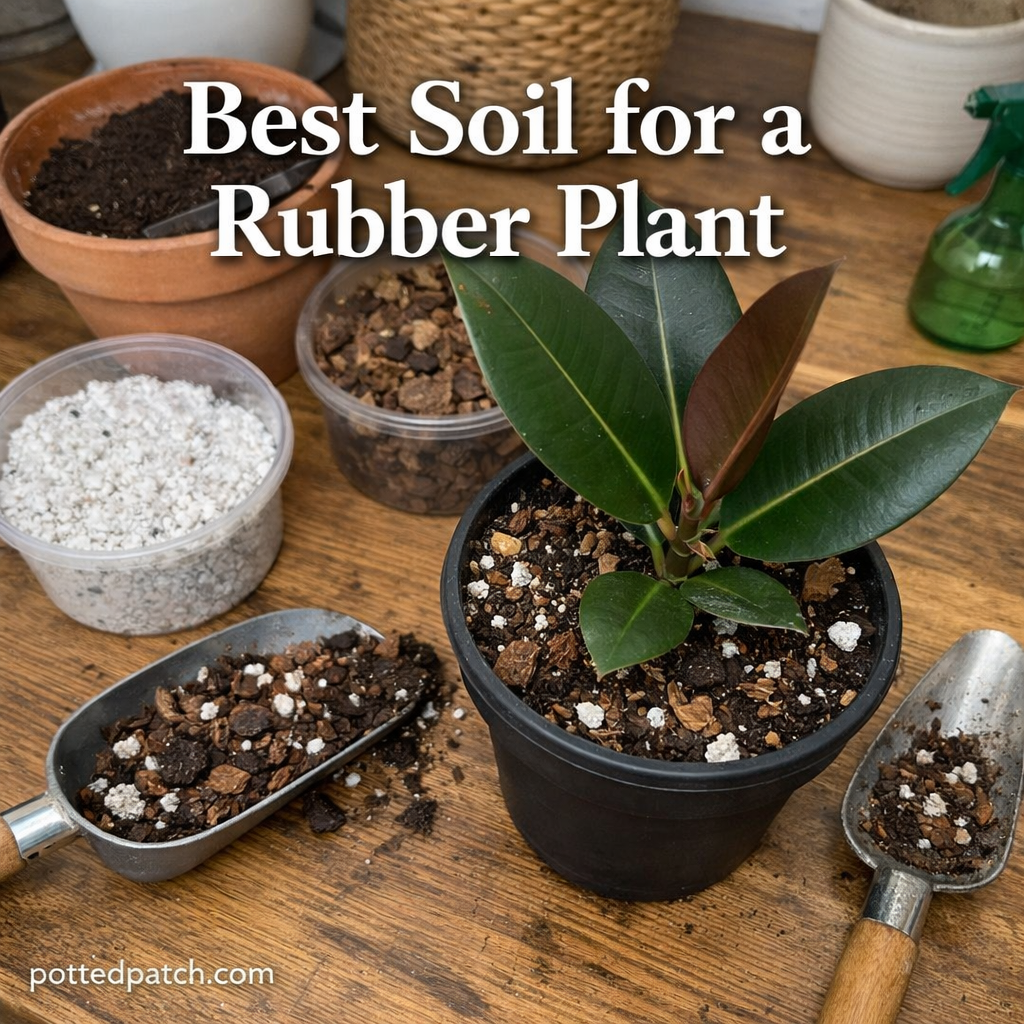
Dracaena prefers a loose, well-draining potting mixture that still retains some moisture.
Regular indoor potting soil can work as a base.
Depending on its texture, you may improve aeration by adding materials such as:
- Perlite
- Pumice
- Fine orchid bark
- Coco coir
You don’t need a complicated homemade recipe.
The important thing is avoiding dense soil that remains waterlogged for long periods.
Choosing the Right Pot
Choose a container with drainage holes.
This makes watering much easier to manage because excess moisture has somewhere to escape.
Decorative cachepots are fine, but don’t allow water to collect around the inner nursery pot.
What Size Pot Does Dracaena Need?
Don’t automatically choose a huge pot because you want the plant to grow larger.
Pot size should correspond to the root system.
When repotting, choose a container only slightly larger than the existing one.
An oversized pot holds more wet soil around the roots and can dramatically increase drying time.
Terracotta vs. Plastic Pots
Either can work.
Terracotta allows moisture to evaporate through the sides and tends to dry more quickly.
Plastic and glazed ceramic retain moisture longer.
Choose based on your environment and watering habits rather than appearance alone.
Temperature Requirements for Dracaena
Dracaenas prefer warm indoor temperatures.
Normal household conditions are generally suitable.
Avoid exposing the plant to:
- Cold drafts
- Freezing temperatures
- Air-conditioning vents
- Heating vents
- Sudden temperature swings
- Very cold windows
A plant beside an exterior door can experience dramatically colder conditions than the temperature shown on your thermostat.
Does Dracaena Need High Humidity?
Dracaenas appreciate moderate humidity but generally adapt well to ordinary household conditions.
Extremely dry air may contribute to:
- Brown leaf tips
- Crispy edges
- Increased pest problems
- Faster moisture loss
If your home becomes very dry during winter, a humidifier can help.
Should You Mist Dracaena?
Routine misting isn’t necessary.
Misting only changes humidity around the leaves briefly.
If the air is consistently dry, improving room humidity is more effective than spraying the plant several times a day.
How to Fertilize Dracaena
Dracaenas aren’t heavy feeders.
During active growth, occasional feeding with an appropriate houseplant fertilizer is generally sufficient.
Follow the manufacturer’s instructions and avoid overfertilizing.
Excess fertilizer can lead to salt buildup in the soil and contribute to root stress or brown leaf tips.
When Should You Fertilize?
Spring and summer are commonly the main growing periods.
Reduce or stop fertilizing when growth slows during fall and winter.
If your Dracaena grows year-round under strong supplemental lighting, its schedule may be somewhat different.
Don’t fertilize simply because the calendar says it’s time. Look for active growth.
How to Repot a Dracaena
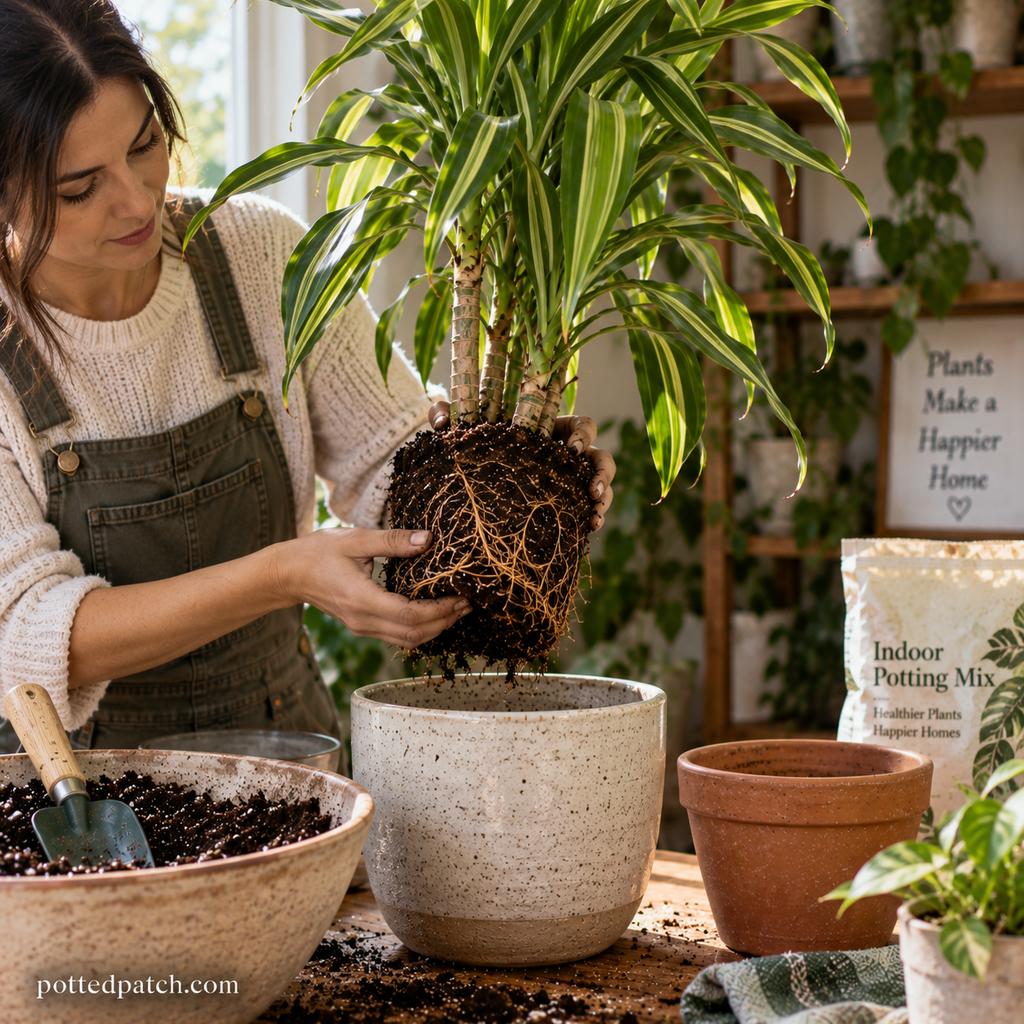
Dracaenas don’t need annual repotting.
They can remain slightly snug in their containers for quite some time.
Consider repotting when:
- Roots densely fill the pot
- Roots emerge heavily through drainage holes
- Water runs through immediately
- Soil has become badly compacted
- The plant becomes unstable
- Growth slows despite good care
- You suspect root problems
Spring is often a convenient time to repot.
How to Repot Dracaena Step by Step
- Choose a pot slightly larger than the current container.
- Prepare fresh, well-draining potting mix.
- Carefully remove the plant.
- Loosen some of the old soil around the roots.
- Inspect the root system.
- Remove clearly dead or rotten roots with clean tools if necessary.
- Position the plant at approximately its previous depth.
- Fill around the root system with fresh soil.
- Water thoroughly.
- Allow excess water to drain.
Give the plant some time to adjust afterward.
A little temporary stress doesn’t necessarily mean something went wrong.
How to Prune a Dracaena
One useful feature of Dracaena is its ability to respond well to pruning.
If a tall cane becomes too long, you can cut it back.
New shoots often develop below the cut, creating a fuller appearance.
Where Should You Cut a Dracaena?
Use clean, sharp pruning shears and make a clean cut across the stem or cane at the desired height.
Consider the future shape of the plant before cutting.
New growth typically develops below the pruning point rather than extending from the removed top.
Reasons to Prune Dracaena
You might prune to:
- Control height
- Encourage branching
- Remove damaged growth
- Improve an uneven shape
- Rejuvenate a leggy plant
- Take propagation cuttings
Don’t be afraid to prune an overly tall Dracaena.
Many plants respond by producing attractive new shoots.
How to Propagate Dracaena
Dracaenas are relatively easy to propagate from stem or cane cuttings.
Propagation is particularly useful when pruning a plant that has become too tall.
Rather than throwing away the removed top, you may be able to turn it into another plant.
Propagating Dracaena From Top Cuttings
A top cutting includes the leafy crown and a portion of stem.
To propagate:
- Use a clean tool to cut below the leafy top.
- Remove any leaves that would sit below the rooting medium or water.
- Place the cutting in water or an appropriate propagation medium.
- Keep it in bright, indirect light.
- Maintain appropriate moisture while roots develop.
- Transfer it to potting soil once a healthy root system has formed.
Root development takes time, so don’t expect immediate results.
Propagating Dracaena From Cane Cuttings
Bare sections of Dracaena cane can also produce new growth.
Cut healthy cane into sections, making sure you keep track of which end originally faced upward.
Planting a section upside down can interfere with successful growth.
Depending on the method, cane sections may be rooted vertically or horizontally in a suitable propagation medium.
Warm conditions and patience are important.
Why Does My Dracaena Have Brown Tips?
Brown leaf tips are extremely common.
Possible causes include:
- Water quality
- Dry air
- Fertilizer buildup
- Inconsistent watering
- Root stress
- Severe underwatering
- Environmental changes
A small amount of browning doesn’t necessarily mean your Dracaena is unhealthy.
If the problem becomes widespread or repeatedly affects new leaves, investigate further.
Can You Trim Brown Dracaena Tips?
Yes.
Use clean scissors and follow the natural shape of the leaf.
Try to leave a very thin border of brown tissue rather than cutting deeply into healthy green foliage.
Remember that trimming is cosmetic.
You’ll still need to identify the cause if browning continues.
Why Are My Dracaena Leaves Turning Yellow?
Yellow leaves can have several explanations.
Possible causes include:
- Overwatering
- Poor drainage
- Root rot
- Low light
- Cold stress
- Nutrient problems
- Natural aging
Occasional yellowing of the oldest lower leaves can be normal as the plant grows.
Rapid yellowing across multiple parts of the plant deserves closer attention.
Check the soil first.
If it’s staying wet for a long time, investigate the roots and drainage.
Why Is My Dracaena Losing Leaves?
Older lower leaves naturally die as some Dracaenas grow taller.
This is particularly noticeable on cane-forming varieties.
Rapid or unusual leaf loss can indicate:
- Watering problems
- Temperature stress
- Root damage
- Poor light
- Pests
- Recent relocation
- Repotting stress
Consider what changed recently.
Plants often react to sudden changes in their environment.
Why Is My Dracaena Drooping?
Drooping may result from underwatering, but don’t immediately add water.
A plant with damaged roots can also droop while the soil remains wet.
Check the potting mix.
If it’s extremely dry, the plant may simply need water.
If it’s saturated and has been wet for days, root problems become a stronger possibility.
Why Is My Dracaena Getting Leggy?
Insufficient light is a common reason.
A Dracaena stretching toward a window may develop longer spaces between leaves and weaker-looking growth.
Move the plant gradually into brighter indirect light.
Pruning can help restore the shape of an established leggy plant.
Dracaena Root Rot
Root rot develops when roots remain in poorly aerated, excessively wet conditions.
Signs may include:
- Yellowing
- Persistent drooping
- Leaf loss
- Soft stems
- Dark, mushy roots
- Unpleasant-smelling soil
- Declining new growth
Healthy roots should generally feel firm.
If rot is present:
- Remove the plant from its pot.
- Gently remove wet soil.
- Inspect the roots.
- Cut away severely rotten tissue using sanitized tools.
- Repot into fresh, well-draining soil.
- Adjust the watering routine.
- Improve light or drainage if necessary.
Don’t simply replace the soil without correcting the original cause.
Common Dracaena Pests
Dracaenas can attract several common houseplant pests.
Watch for:
- Spider mites
- Mealybugs
- Scale
- Thrips
- Fungus gnats
Spider Mites
Spider mites can be especially troublesome in warm, dry indoor conditions.
Look for:
- Fine webbing
- Tiny pale speckles
- Faded foliage
- Small moving dots on leaf undersides
Regularly inspecting the underside of leaves helps catch infestations early.
Mealybugs
Mealybugs often look like small white cottony clusters.
They may hide:
- Between leaves
- Along stems
- Around leaf bases
- In protected crevices
Scale
Scale insects can look like brown or tan bumps attached to stems or foliage.
Because they don’t always resemble insects, they can be overlooked.
Inspect unusual bumps closely.
Preventing Dracaena Pest Problems
You can’t guarantee that a houseplant will never develop pests, but you can reduce the risk.
Good habits include:
- Inspecting new plants carefully
- Keeping new arrivals separate temporarily
- Checking leaf undersides
- Cleaning dusty foliage
- Removing dead leaves
- Maintaining healthy growing conditions
- Inspecting nearby plants if pests appear
Early detection makes treatment much easier.
How to Clean Dracaena Leaves
Dracaena foliage can collect a surprising amount of dust.
Occasionally wipe the leaves with a soft, damp cloth.
For long narrow leaves, support the leaf while wiping gently from the base toward the tip.
Cleaning helps the plant look better and gives you an opportunity to inspect for pests.
Commercial leaf-shine products generally aren’t necessary.
Does Dracaena Flower Indoors?
Some mature Dracaenas can flower indoors.
Dracaena fragrans is particularly known for occasionally producing clusters of strongly fragrant flowers.
Indoor flowering isn’t something you can count on, and plants may go many years without blooming.
That’s perfectly normal.
Dracaenas are primarily grown for their foliage.
Dracaena Care Throughout the Year
Seasonal changes affect indoor plants even when room temperatures remain relatively stable.
Spring
As daylight increases, growth may become more active.
Spring is a good time to:
- Repot when necessary
- Begin fertilizing
- Prune overly tall plants
- Take propagation cuttings
- Inspect for pests
- Adjust watering as growth increases
Summer
Dracaenas may use water more quickly during warm, bright conditions.
Check the soil more frequently but continue watering based on moisture rather than a fixed schedule.
Protect leaves from intense direct afternoon sunlight.
Fall
Growth may begin slowing as daylight decreases.
The soil may take longer to dry.
Reduce fertilizer and adjust watering accordingly.
Winter
During winter, many Dracaenas use less water.
Keep them away from cold drafts and heating vents.
Indoor heating can also produce very dry air, which may contribute to brown leaf tips.
Dracaena Care Checklist for Beginners
If you’re growing your first Dracaena, focus on these basics:
- Provide bright to moderate indirect light.
- Let the upper soil dry before watering again.
- Water thoroughly when needed.
- Use well-draining soil.
- Choose a pot with drainage holes.
- Avoid dramatically oversized containers.
- Keep the plant warm and away from drafts.
- Fertilize moderately during active growth.
- Prune tall canes when necessary.
- Inspect foliage regularly for pests.
- Expect occasional older leaves to yellow and fall.
Dracaena care doesn’t need to be complicated.
Most problems can be avoided by paying attention to light, moisture, and drainage.
Frequently Asked Questions About Dracaena Care
Is Dracaena Good for Beginners?
Yes.
Most commonly grown Dracaenas are relatively forgiving and adapt well to normal indoor environments.
They’re particularly good for growers who want a larger foliage plant without an intensive watering schedule.
How Often Should I Water Dracaena?
Watering frequency varies according to light, temperature, pot size, soil, humidity, and season.
Check the soil instead of watering according to a calendar.
Allow the upper portion to dry before watering again.
Can Dracaena Grow in Low Light?
Many Dracaenas tolerate moderate to lower light, but growth will usually be slower.
Variegated plants may lose some coloration in very low light.
Bright indirect light generally produces stronger growth.
Does Dracaena Need Direct Sunlight?
Usually not.
Bright indirect light works well for most indoor Dracaenas.
Strong direct sunlight can scorch foliage, particularly when the plant isn’t acclimated.
Does Dracaena Like to Be Root-Bound?
Dracaenas can tolerate being somewhat snug in their containers.
However, a severely root-bound plant may eventually dry too quickly, become unstable, or experience slowed growth.
Repot when the root system has clearly outgrown the container rather than automatically moving up a pot size every year.
How Fast Does Dracaena Grow?
Growth rate depends on the variety and conditions.
Light has a major influence.
A Dracaena in bright indirect light will generally grow faster than the same plant kept in a dim room.
Why Are the Bottom Leaves on My Dracaena Falling Off?
Some loss of older lower leaves is normal as cane-forming Dracaenas mature.
If leaves are dropping rapidly throughout the plant, investigate watering, temperature, light, roots, and pests.
Can I Cut the Top Off a Dracaena?
Yes.
Dracaena responds well to pruning.
Cutting a cane can encourage new shoots to develop below the cut, while the removed top can often be propagated.
Can Dracaena Grow in Water?
Dracaena cuttings can root in water, and some may remain there for extended periods.
For traditional long-term houseplant culture, however, Dracaenas are commonly grown in a well-draining potting medium.
Is Dracaena Toxic to Pets?
Dracaena can be harmful if eaten by cats or dogs.
If you have pets that chew plants, keep Dracaena somewhere they can’t reach it.
If you believe your pet has eaten part of the plant or is showing unusual symptoms, contact a veterinarian or appropriate animal poison-control service for guidance.
Final Thoughts on Dracaena Care
There’s a reason Dracaena has become such a familiar indoor plant.
It’s adaptable, attractive, available in a wide range of sizes and colors, and doesn’t require constant attention.
The biggest thing to remember is that Dracaena would rather dry a little than sit indefinitely in wet soil.
Give it a well-draining potting mix, a container with drainage, and plenty of indirect light. Check the soil before watering instead of relying on the calendar.
If the plant becomes too tall, prune it. If brown tips appear, look at water quality, humidity, fertilizer, and watering consistency. If several leaves suddenly turn yellow, check the soil and roots.
Most importantly, watch how your individual plant responds.
A healthy Dracaena doesn’t need flawless leaves. It needs healthy roots, appropriate light, and steady new growth.
Get those fundamentals right, and your Dracaena can remain an easygoing part of your indoor plant collection for many years.