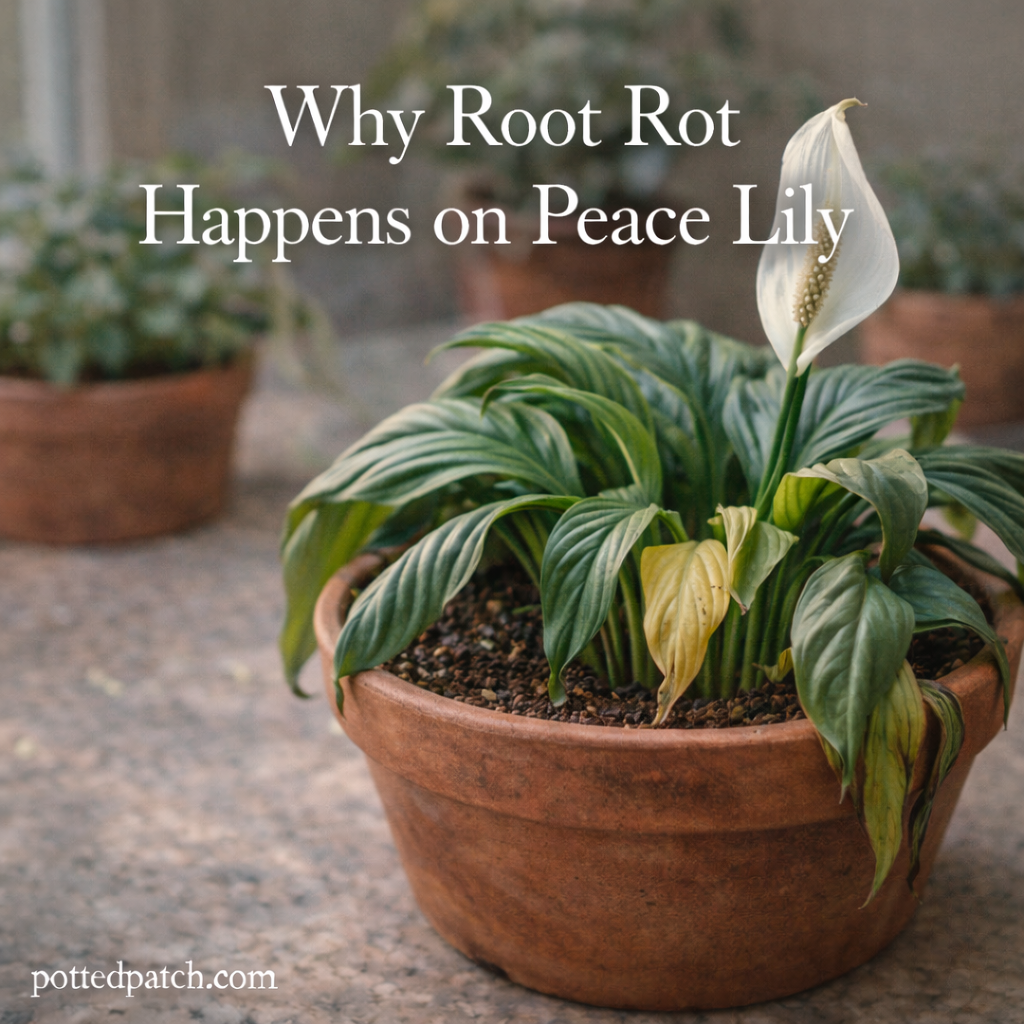
The Peace Lily is known for being resilient, but one problem it does not tolerate well is root rot.
If your plant suddenly droops despite wet soil, develops yellow leaves, or smells unpleasant at the base, root rot may be the cause.
Understanding why root rot happens is the first step to preventing — and fixing — it.
What Is Root Rot?
Root rot occurs when roots sit in overly wet soil for too long.
Healthy roots should be:
- Firm
- White or light tan
- Odorless
Rotting roots become:
- Brown or black
- Mushy
- Slimy
- Foul-smelling
Once roots begin to decay, they can no longer absorb water or nutrients properly.
1. Overwatering (The #1 Cause)
The most common reason root rot happens on a Peace Lily is watering too frequently.
Even though Peace Lilies like moist soil, they do not tolerate constantly wet conditions.
When soil stays soggy:
- Oxygen can’t reach roots
- Fungal pathogens multiply
- Roots begin to suffocate
Why This Happens
Many plant owners water on a schedule instead of checking soil moisture.
Peace Lilies should be watered when:
- The top 1–2 inches of soil are dry
- The pot feels lighter
- Leaves begin to slightly droop
Consistent sogginess leads directly to rot.
2. Poor Drainage
Even if you water correctly, poor drainage can trap moisture around roots.
Common drainage problems include:
- Pots without drainage holes
- Decorative outer pots holding excess water
- Dense soil that doesn’t drain well
If water cannot escape, roots remain submerged in moisture.
Best Practice
Always use:
- A pot with drainage holes
- Well-draining indoor plant mix
- A saucer that is emptied after watering
3. Soil That Holds Too Much Water
Standard potting soil can become compacted over time.
Compacted soil:
- Drains slowly
- Restricts airflow
- Keeps roots damp for too long
Peace Lilies prefer soil that retains some moisture but still drains efficiently.
If soil feels heavy or muddy days after watering, it’s too dense.
4. Low Light Conditions
Low light slows a plant’s growth and water usage.
When growth slows:
- Roots absorb water more slowly
- Soil stays wet longer
- Rot risk increases
A Peace Lily placed in a dim corner will need much less water than one in bright, indirect light.
Watering frequency should always match light exposure.
5. Cold Temperatures
Cold soil stays wet longer.
If your plant sits near:
- Drafty windows
- Air conditioners
- Cold floors
The roots may struggle to dry out between waterings.
Peace Lilies prefer temperatures between 65–80°F.
6. Repeated Water Stress
Watering too heavily after long dry spells can shock roots.
If a plant is allowed to dry completely and then flooded repeatedly, the stressed roots are more vulnerable to fungal infection.
Consistency is safer than extreme swings.
Signs Your Peace Lily Has Root Rot
Watch for these warning signals:
- Persistent drooping despite wet soil
- Yellowing leaves
- Blackened stems near the soil line
- Musty or sour smell from pot
- Leaves falling off easily
If you suspect root rot, check the roots immediately.
Can Root Rot Be Reversed?
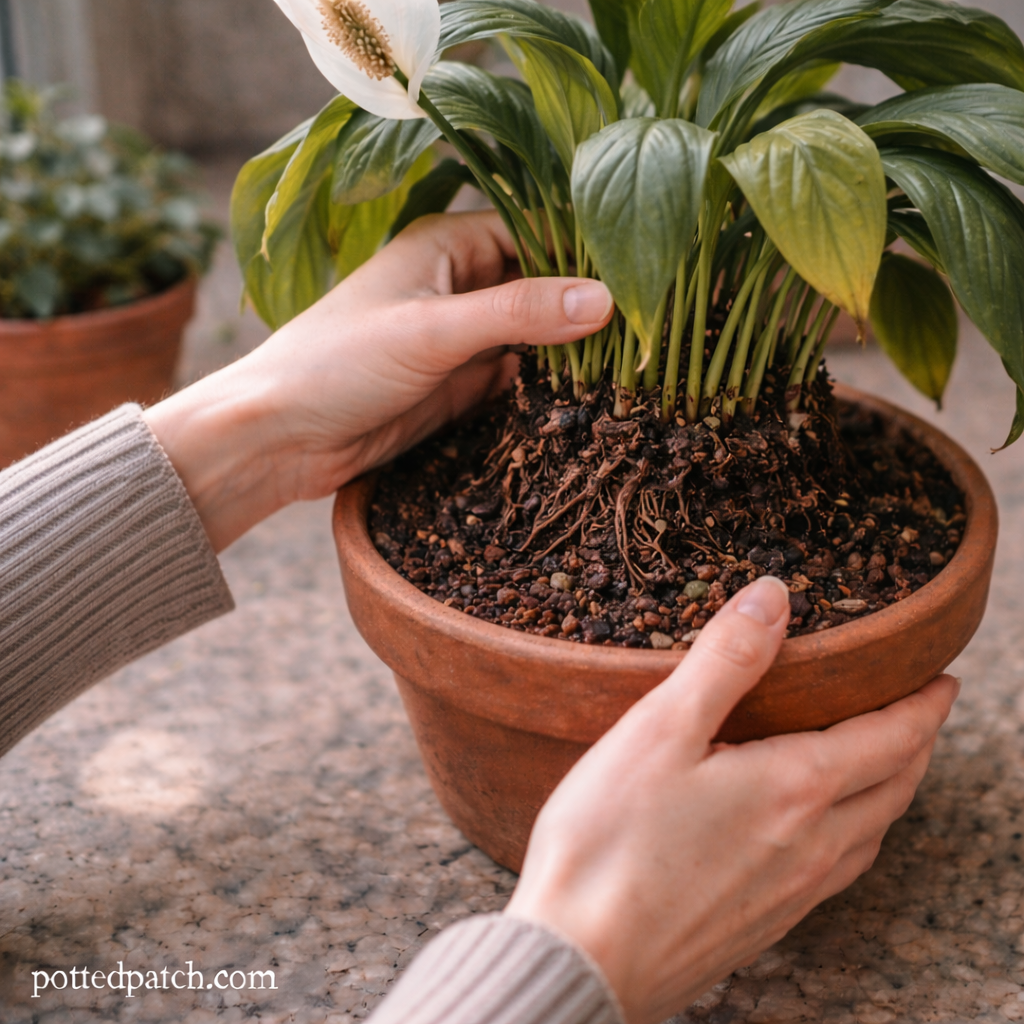
Yes — but only if caught early.
Steps typically include:
- Remove plant from pot.
- Trim away mushy, dark roots.
- Repot in fresh, well-draining soil.
- Reduce watering frequency.
Severely rotted plants may not recover, but early intervention often saves them.
How to Prevent Root Rot in the Future
Follow these prevention tips:
- Always check soil before watering
- Use pots with drainage holes
- Avoid letting plants sit in water
- Match watering frequency to light levels
- Repot every 1–2 years to refresh soil
Root rot is preventable with consistent care.
Final Thoughts
Root rot happens on Peace Lily plants primarily because of excess moisture combined with poor drainage or low light.
The solution isn’t less care — it’s smarter care.
Check soil before watering, ensure proper drainage, and provide bright, indirect light. With these basics in place, your Peace Lily can stay healthy and vibrant for years.