
When and How to Repot a Money Tree

Person repotting indoor money tree (Pachira aquatica) with exposed roots and fresh potting soil.
Repotting a Money Tree into fresh, well-draining soil to support healthy root growth. pottedpatch.com

Repotting a Money Tree is an essential part of long-term indoor plant care. While these plants don’t need frequent repotting, giving them fresh soil and a slightly larger container at the right time can dramatically improve growth and root health.

If your Money Tree looks cramped, dries out too quickly, or has roots growing out of the drainage holes, it may be time for an upgrade.

This guide explains exactly when to repot a Money Tree and how to do it safely.

Continue reading “When and How to Repot a Money Tree”


Best Soil for a Money Tree

Money tree (Pachira aquatica) in white pot with well-draining potting soil and perlite on wooden table indoors.
Well-draining potting mix with perlite helps support healthy roots for a Money Tree. pottedpatch.com

Choosing the right soil is one of the most important steps in keeping a Money Tree healthy indoors. While watering and light often get the most attention, soil is what determines how well roots breathe, drain, and absorb nutrients.

If your Money Tree has yellowing leaves, slow growth, or signs of root rot, the soil mix may be the issue.

This guide explains exactly what type of soil a Money Tree needs and how to create the ideal mix for long-term success.

Continue reading “Best Soil for a Money Tree”

Best Light Conditions for a Money Tree

Indoor money tree (Pachira aquatica) in white pot placed near bright window with filtered sunlight.
Money Tree positioned in bright, indirect light near a window for healthy indoor growth. pottedpatch.com

Light is one of the most important factors in keeping a Money Tree healthy. While this popular indoor plant is adaptable, giving it the right light conditions will dramatically improve growth, leaf color, and overall vitality.

If your Money Tree has yellowing leaves, slow growth, or dropping foliage, lighting may be the issue.

This guide explains exactly what kind of light a Money Tree needs, where to place it indoors, and how to recognize light-related problems.

Continue reading “Best Light Conditions for a Money Tree”

How Often to Water a Money Tree

Indoor money tree (Pachira aquatica) in white pot with braided trunk and glossy green leaves in bright living room.
Healthy indoor Money Tree (Pachira aquatica) thriving with proper watering routine. pottedpatch.com

Watering is the most important part of keeping a Money Tree healthy. Too much water is the most common cause of problems, while too little can cause stress and leaf drop.

The key is balance.

In this guide, you’ll learn exactly how often to water a Money Tree, how to test soil moisture, and how to adjust your routine based on the season and environment.

Continue reading “How Often to Water a Money Tree”

How to Care for a Money Tree Indoors

Healthy indoor money tree (Pachira aquatica) with braided trunk in white pot on wooden table in bright living room.
Money Tree (Pachira aquatica) thriving indoors in bright, indirect light. pottedpatch.com

The Money Tree (Pachira aquatica) is one of the most popular indoor plants for good reason. With its braided trunk and glossy green leaves, it adds a modern, calming touch to any room. It’s also considered a symbol of prosperity and good fortune in Feng Shui traditions.

The good news? Money Trees are relatively low maintenance — but they do have specific care preferences. If you get the basics right, your plant can thrive for years.

In this complete indoor care guide, you’ll learn exactly how to water, light, feed, and maintain your Money Tree for steady, healthy growth.

Continue reading “How to Care for a Money Tree Indoors”

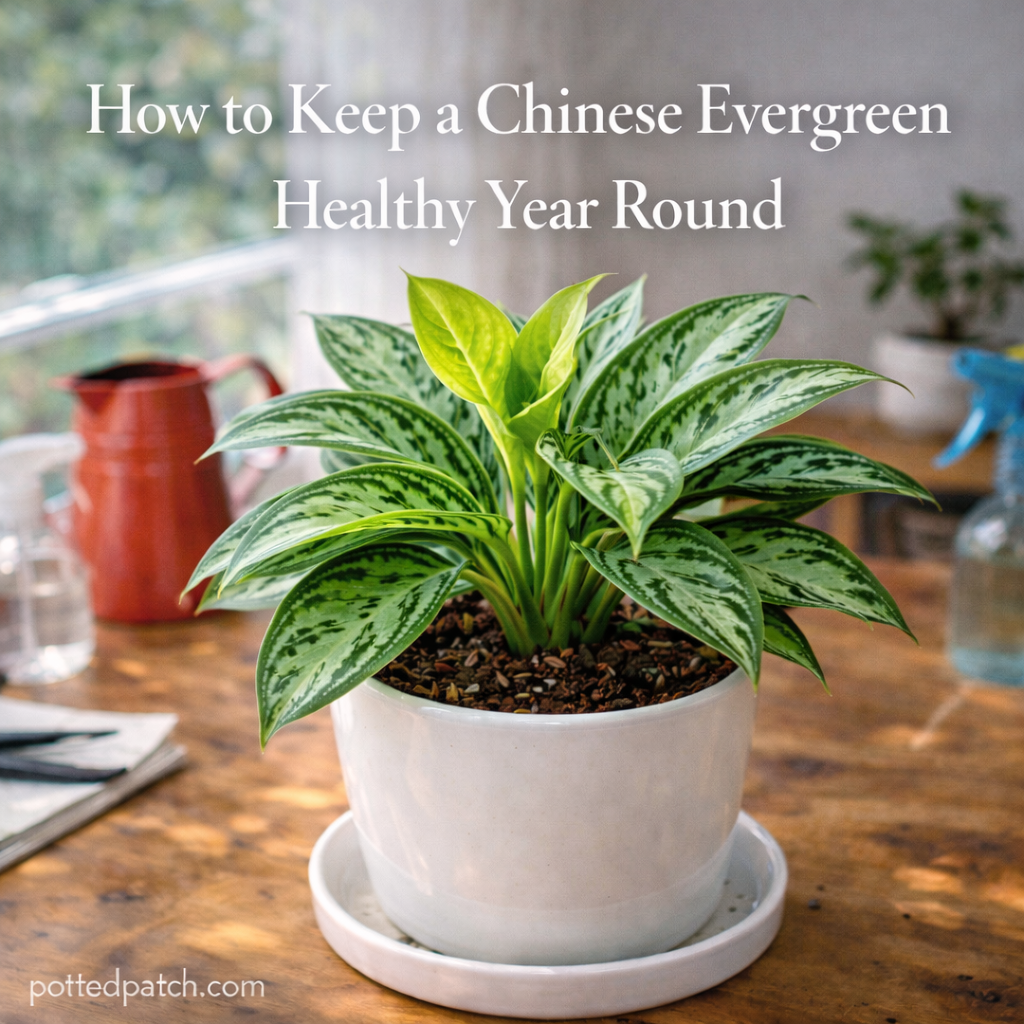
How to Keep a Chinese Evergreen Healthy Year Round

Healthy Chinese Evergreen plant indoors with overlay title How to Keep a Chinese Evergreen Healthy Year Round and pottedpatch.com watermark.
Thriving Chinese Evergreen maintained with consistent indoor care throughout the year. pottedpatch.com.

Chinese Evergreen, scientifically known as Aglaonema, is one of the most reliable indoor plants you can grow. Its adaptability makes it perfect for beginners, but maintaining year-round health requires small seasonal adjustments.

If you want lush foliage, steady growth, and minimal problems, here’s how to keep your Chinese Evergreen thriving in every season.

Continue reading “How to Keep a Chinese Evergreen Healthy Year Round”

How to Encourage New Growth on a Chinese Evergreen

Healthy Chinese Evergreen plant with fresh new leaves emerging indoors with overlay title How to Encourage New Growth on a Chinese Evergreen and pottedpatch.com watermark.
Chinese Evergreen producing fresh new foliage in bright indoor conditions. pottedpatch.com.

Chinese Evergreen, scientifically known as Aglaonema, is loved for its beautiful patterned foliage and easygoing nature. While it’s not a fast grower, you can absolutely encourage fuller, healthier new growth with the right care adjustments.

If your plant looks stagnant or sparse, here’s how to stimulate fresh leaves and stronger stems indoors.

Continue reading “How to Encourage New Growth on a Chinese Evergreen”

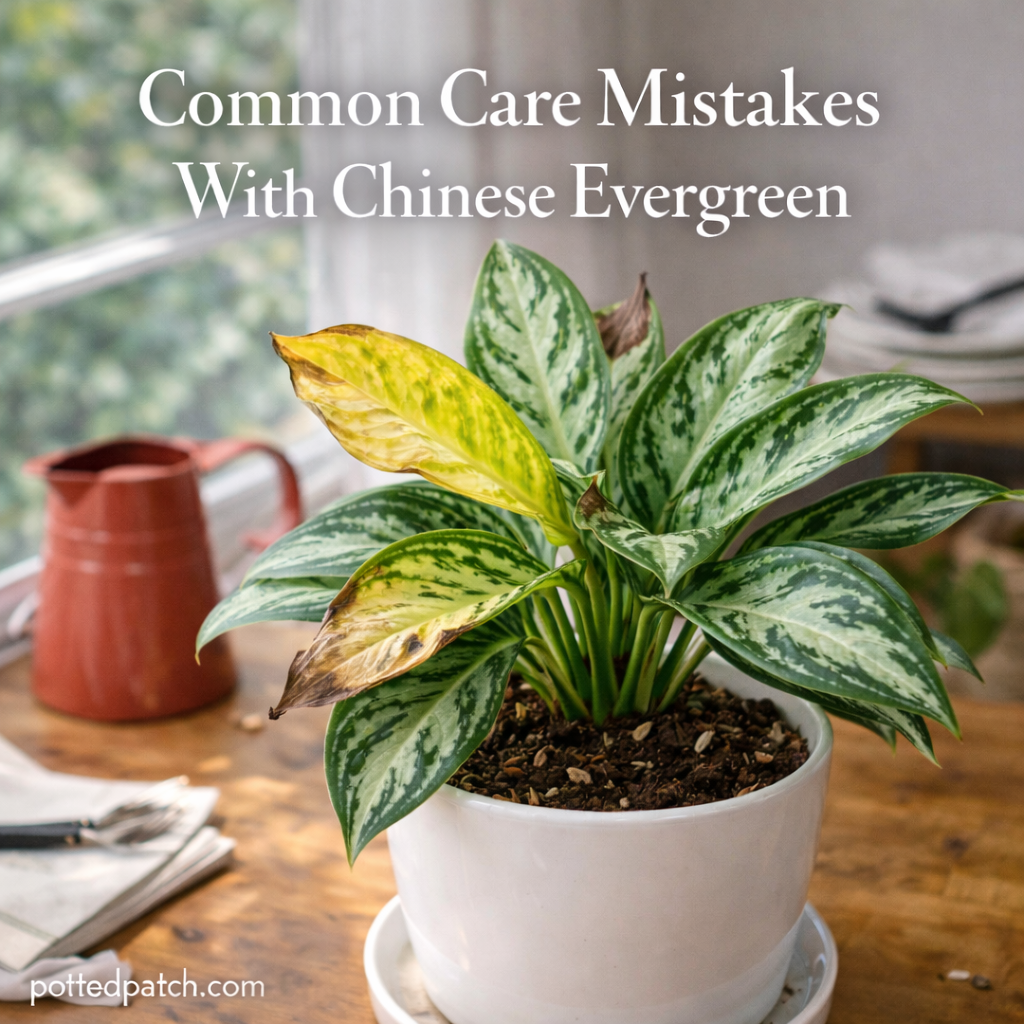
Common Care Mistakes With Chinese Evergreen

Chinese Evergreen plant with yellowing and brown leaves showing signs of care mistakes with overlay title Common Care Mistakes With Chinese Evergreen and pottedpatch.com watermark.
Chinese Evergreen showing yellow and brown leaf damage caused by common indoor care mistakes. pottedpatch.com.

Chinese Evergreen, scientifically known as Aglaonema, is famous for being low-maintenance. But even resilient plants can struggle when basic care mistakes pile up.

If your Chinese Evergreen has yellow leaves, brown tips, or slow growth, chances are one of these common errors is the cause.

Here’s what to watch for — and how to fix it.

Continue reading “Common Care Mistakes With Chinese Evergreen”

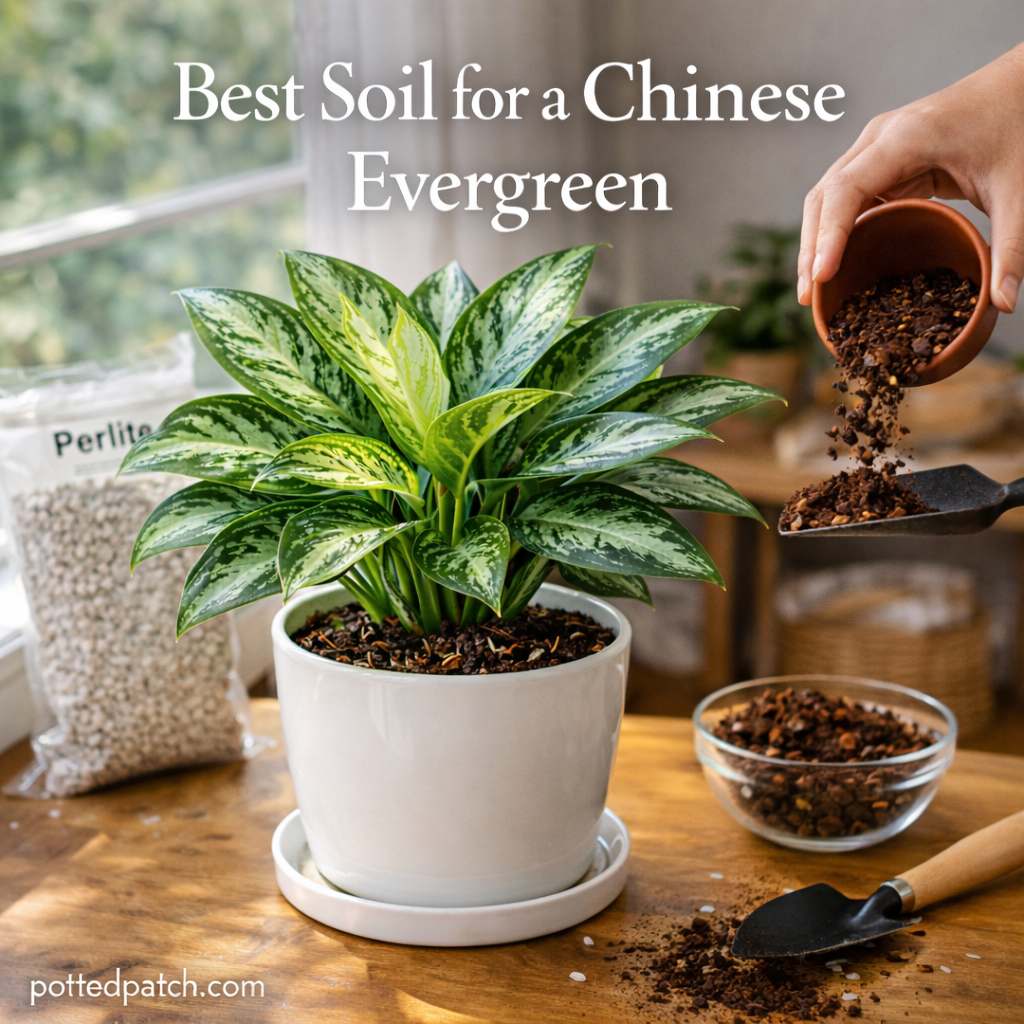
Best Soil for a Chinese Evergreen

Repotting a Chinese Evergreen with well-draining soil mix including perlite and orchid bark with overlay title Best Soil for a Chinese Evergreen and pottedpatch.com watermark.
Using a well-draining soil mix with perlite and orchid bark for healthy Chinese Evergreen growth indoors. pottedpatch.com.

Chinese Evergreen, scientifically known as Aglaonema, is known for being low-maintenance. But even easy plants can struggle if the soil isn’t right.

The best soil for a Chinese Evergreen is well-draining, airy, and moisture-retentive without staying soggy. Getting this balance correct prevents root rot and encourages steady, healthy growth.

Here’s exactly what to use and why it matters.

Continue reading “Best Soil for a Chinese Evergreen”

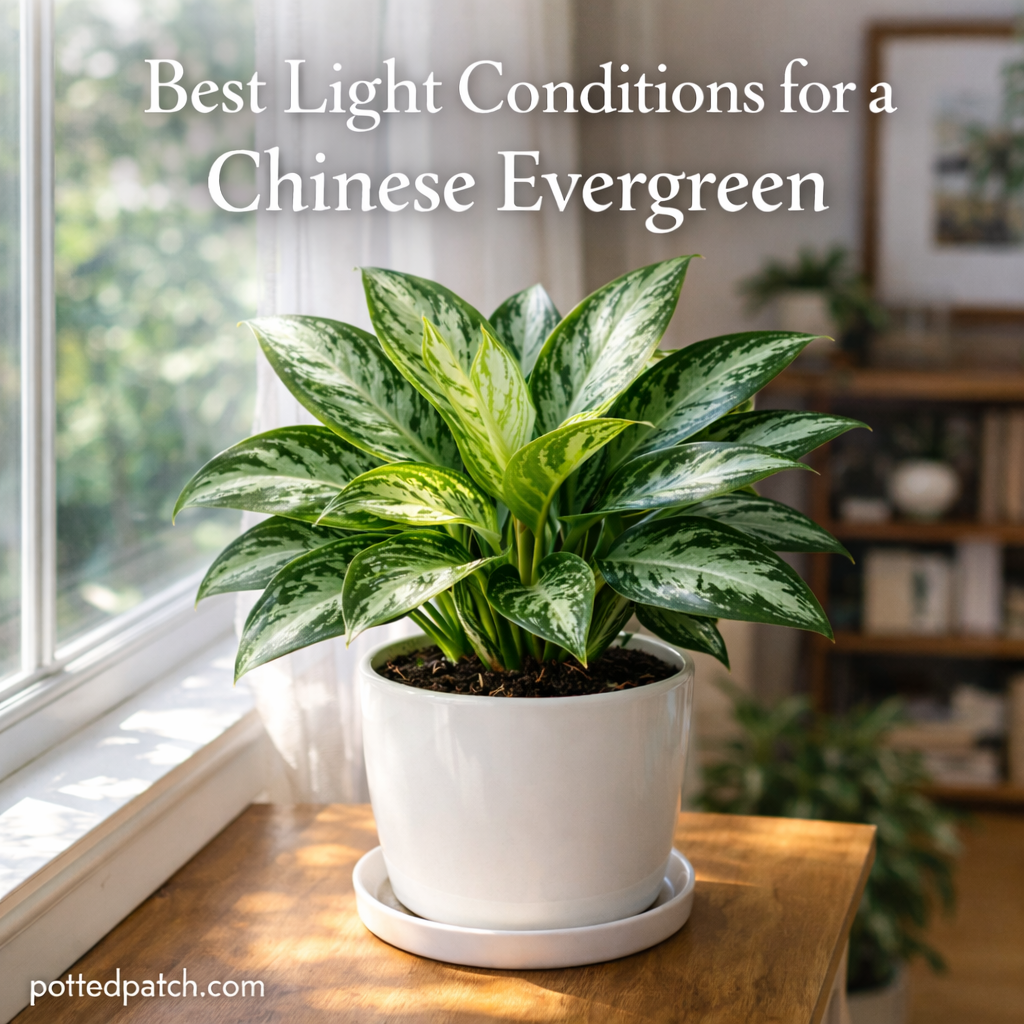
Best Light Conditions for a Chinese Evergreen

Chinese Evergreen plant in bright indirect light near a window with overlay title Best Light Conditions for a Chinese Evergreen and pottedpatch.com watermark.
Chinese Evergreen placed in bright indirect light near a window for optimal indoor growth. pottedpatch.com.

Chinese Evergreen, botanically known as Aglaonema, is one of the most adaptable indoor plants when it comes to lighting. Its ability to tolerate lower light makes it a favorite for apartments, offices, and rooms with limited sunlight.

But while it survives in low light, it truly thrives in the right conditions. Here’s exactly what kind of light your Chinese Evergreen needs to stay healthy and vibrant.

Continue reading “Best Light Conditions for a Chinese Evergreen”