
Snake plants are one of the easiest houseplants to maintain, but even they benefit from occasional pruning. Pruning helps remove damaged leaves, improve appearance, and encourage healthier growth. The good news is that pruning a snake plant is simple, low-risk, and doesn’t require frequent maintenance.
This guide explains when pruning is necessary, how to do it safely, and what to expect after trimming your plant.
Do Snake Plants Need Pruning?
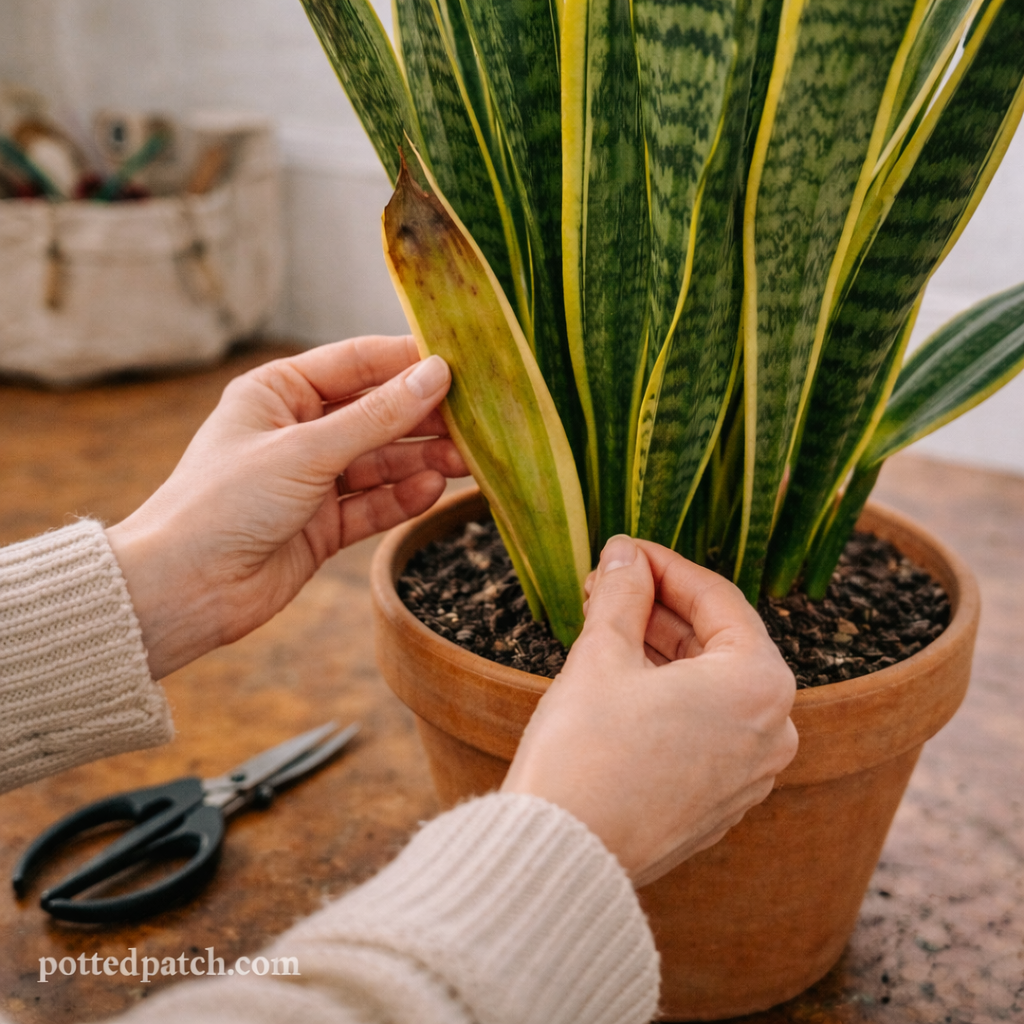
Snake plants do not require regular pruning to survive. However, pruning is useful for:
- Removing damaged, yellow, or broken leaves
- Improving the plant’s overall shape
- Preventing pests from spreading
- Managing overcrowded growth
Pruning is optional but beneficial when the plant shows visible issues.
When to Prune a Snake Plant
Timing matters, even for low-maintenance plants.
Best Time to Prune
The ideal time to prune a snake plant is:
- Spring or summer, during active growth
Pruning during this period allows the plant to recover more quickly.
When to Avoid Pruning
Avoid pruning when:
- The plant is dormant in late fall or winter
- The plant is stressed from repotting or overwatering
- You’ve recently moved the plant to a new environment
Light pruning can still be done if a leaf is damaged, but major cuts should wait.
What Tools You Need
Pruning a snake plant doesn’t require special equipment.
Basic tools:
- Clean, sharp scissors or pruning shears
- Rubbing alcohol or disinfectant
- Gloves (optional)
Always clean your tools before and after pruning to prevent disease.
Step-by-Step: How to Prune a Snake Plant
Follow these steps to prune safely and effectively.
- Identify leaves that are damaged, yellow, bent, or broken
- Trace the leaf down to the soil line
- Cut the leaf cleanly at the base, as close to the soil as possible
- Avoid cutting healthy leaves unless necessary
- Remove fallen debris from the pot
Never trim just the tip of a leaf for cosmetic reasons—this leaves a permanent scar.
How Much Can You Prune at One Time?
Snake plants respond best to minimal pruning.
General rule:
- Remove no more than 20–30% of the plant at once
Removing too many leaves can slow growth and stress the plant.
Can You Prune Snake Plants to Control Height?
Snake plants cannot be shortened like hedges.
Important to know:
- Cutting leaves halfway will not encourage branching
- Trimmed leaves will not regrow from the cut point
If height is an issue, remove tall leaves completely at the base or consider dividing the plant.
What to Do With Pruned Leaves
Healthy leaves don’t have to go to waste.
Options include:
- Composting damaged leaves
- Propagating healthy cuttings
- Disposing of diseased material
If using leaves for propagation, allow cut ends to dry before planting.
Aftercare Following Pruning
Snake plants need very little aftercare.
After pruning:
- Do not water immediately if the soil is already moist
- Return the plant to its normal light conditions
- Avoid fertilizing for at least 2–4 weeks
Let the plant recover naturally without extra intervention.
Common Pruning Mistakes to Avoid
Avoid these frequent errors:
- Cutting leaf tips instead of removing entire leaves
- Using dull or dirty tools
- Pruning during winter dormancy
- Removing too many leaves at once
Most pruning problems come from overhandling rather than under-pruning.
Will Pruning Encourage New Growth?
Pruning does not directly cause new leaves to form, but it helps the plant redirect energy.
What pruning does:
- Improves airflow
- Reduces stress from damaged leaves
- Allows healthier leaves to thrive
New growth comes from the base of the plant, not from cut leaf sections.
When Pruning Isn’t Enough
If your snake plant has ongoing issues despite pruning, the problem may be elsewhere.
Consider checking:
- Watering habits
- Soil drainage
- Light exposure
- Root health
Pruning is a corrective tool, not a cure-all.
Final Thoughts
Pruning a snake plant is simple and rarely risky when done correctly. Focus on removing damaged or unhealthy leaves, use clean tools, and avoid over-pruning. With minimal effort, pruning helps keep your snake plant looking tidy and growing strong.
When in doubt, prune less rather than more—snake plants reward patience and restraint.