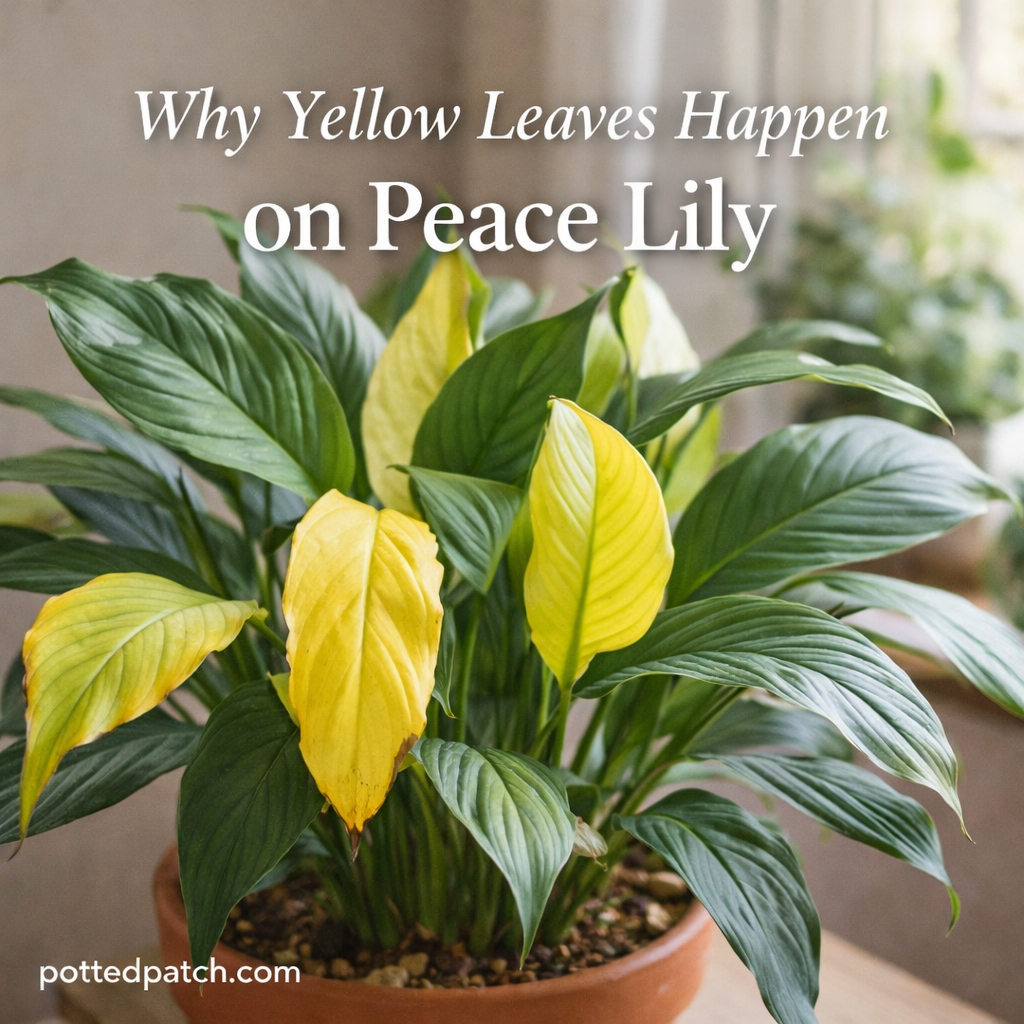
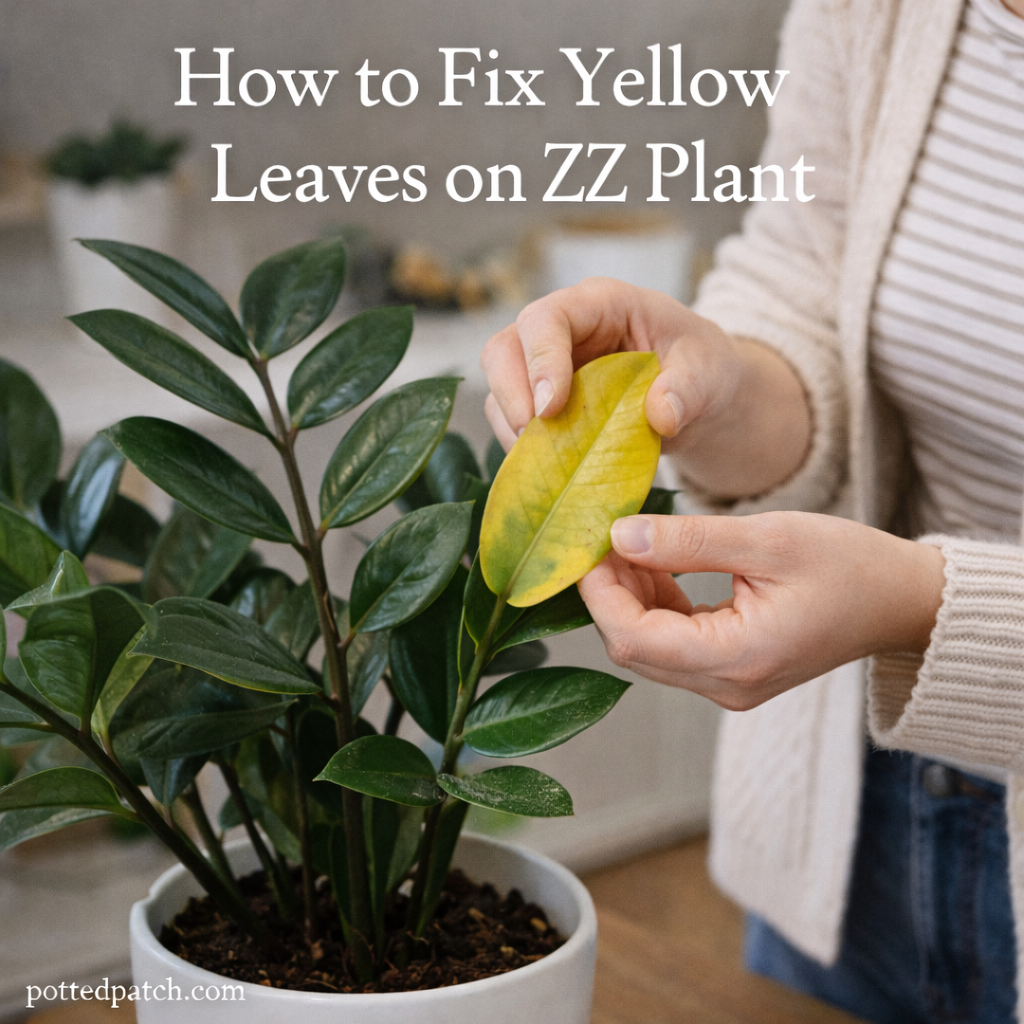
Yellow leaves on a ZZ plant can feel alarming — especially since this plant is known for being nearly indestructible.
The good news? Most yellowing issues are easy to fix once you identify the cause.
If your ZZ plant (Zamioculcas zamiifolia) is showing yellow leaves, this guide will walk you through exactly what to check, how to correct the problem, and how to prevent it from happening again.
Step 1: Check the Soil Moisture First
Overwatering is the most common reason ZZ plant leaves turn yellow.
ZZ plants grow from thick rhizomes that store water. When soil stays wet too long, roots begin to suffocate or rot — and yellow leaves follow.
What to Do
- Stick your finger 2–3 inches into the soil
- If it feels wet, stop watering immediately
- Let the soil dry completely before watering again
If the soil smells musty or feels soggy for days, drainage may be the issue.
Step 2: Inspect the Roots (If Yellowing Continues)
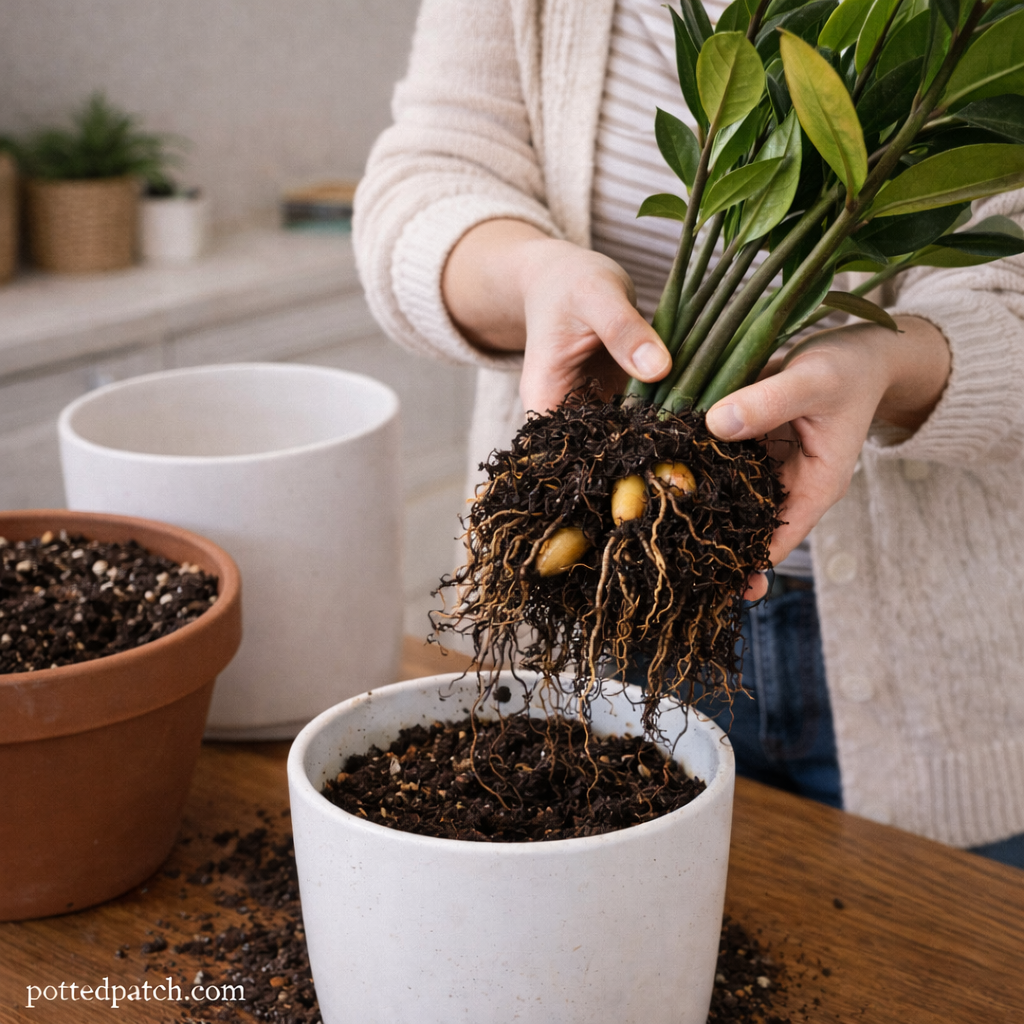
If multiple stems are turning yellow and the soil stays wet, check for root rot.
Signs of Root Rot
- Mushy, dark roots
- Foul smell
- Soft stems
How to Fix It
- Gently remove the plant from the pot.
- Trim off any black or mushy roots with clean scissors.
- Repot in fresh, well-draining soil.
- Use a pot with drainage holes.
Healthy roots should feel firm and light in color.
Step 3: Adjust Your Watering Schedule
Even without rot, inconsistent watering can stress the plant.
ZZ plants prefer a “soak and dry” method:
- Water thoroughly.
- Let excess drain out completely.
- Wait until the soil is fully dry before watering again.
For most homes, this means watering every 2–3 weeks.
Always adjust based on light and season.
Step 4: Evaluate Light Conditions
While ZZ plants tolerate low light, extremely dark corners can weaken growth over time.
Yellowing combined with slow growth may indicate insufficient light.
The Fix
- Move the plant to bright, indirect light
- Avoid harsh direct sun
- Rotate the pot weekly for even growth
Balanced light supports strong, green foliage.
Step 5: Check for Natural Aging
If only one or two lower leaves are yellow and the rest of the plant looks healthy, it may simply be natural leaf aging.
In this case:
- Gently trim the yellow leaf at the base
- Continue normal care
Not every yellow leaf signals a major problem.
Step 6: Improve Drainage
Even perfect watering habits won’t help if water can’t escape.
Make sure:
- The pot has drainage holes
- Soil drains quickly
- The plant isn’t sitting in standing water
Consider using a cactus or succulent mix for better airflow.
Should You Remove Yellow Leaves?
Yes — but only when they’re mostly yellow.
Use clean scissors and cut the leaf near the base of the stem. Avoid pulling, as this can damage the rhizome.
Removing damaged leaves helps the plant focus energy on healthy growth.
How Long Does It Take to Recover?
Once you correct the issue:
- New growth should appear healthy and green
- Existing yellow leaves will not turn green again
- Recovery may take several weeks
Patience is key. ZZ plants bounce back slowly but steadily.
Quick Fix Checklist
If you want a fast action plan:
- Let soil dry completely
- Improve drainage
- Trim damaged roots (if needed)
- Move to brighter indirect light
- Remove fully yellow leaves
Most yellowing problems resolve once watering is corrected.
Final Thoughts
Yellow leaves on a ZZ plant are usually a sign of too much water or poor drainage — not a dying plant.
By checking soil moisture, adjusting light, and improving drainage, you can restore your ZZ plant’s deep green color and healthy growth.
With a few small changes, your plant should recover and thrive again.