Succulents are hardy plants — but they are extremely sensitive to the wrong soil.
If your succulent is turning mushy, yellowing, or collapsing at the base, the problem often isn’t watering alone. It’s the soil holding too much moisture.
Here’s exactly what type of soil works best for succulents indoors — and how to create the perfect mix.
Why Soil Matters So Much for Succulents
Succulents evolved in dry, sandy, fast-draining environments.
Their roots need:
- Excellent drainage
- Air circulation
- Quick drying between waterings
Heavy, dense soil suffocates roots and leads to rot.
The right soil makes watering mistakes far less dangerous.
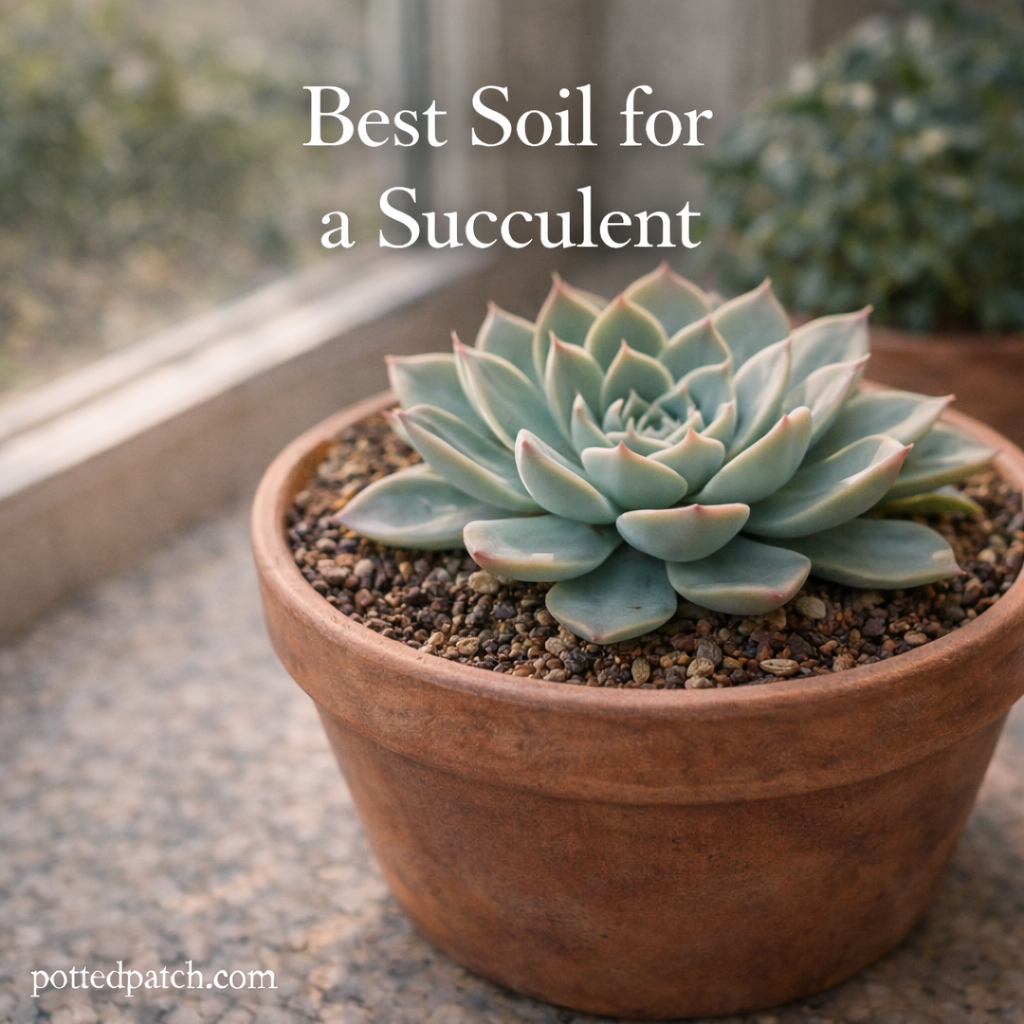
What Is the Best Soil for a Succulent?
The best soil for a succulent is:
- Fast-draining
- Gritty
- Lightweight
- Low in organic matter
Look for a cactus or succulent potting mix.
These mixes are specifically designed to drain quickly and prevent root rot.
Why Regular Potting Soil Is a Problem
Standard indoor potting soil:
- Holds too much moisture
- Drains slowly
- Compacts over time
- Reduces airflow around roots
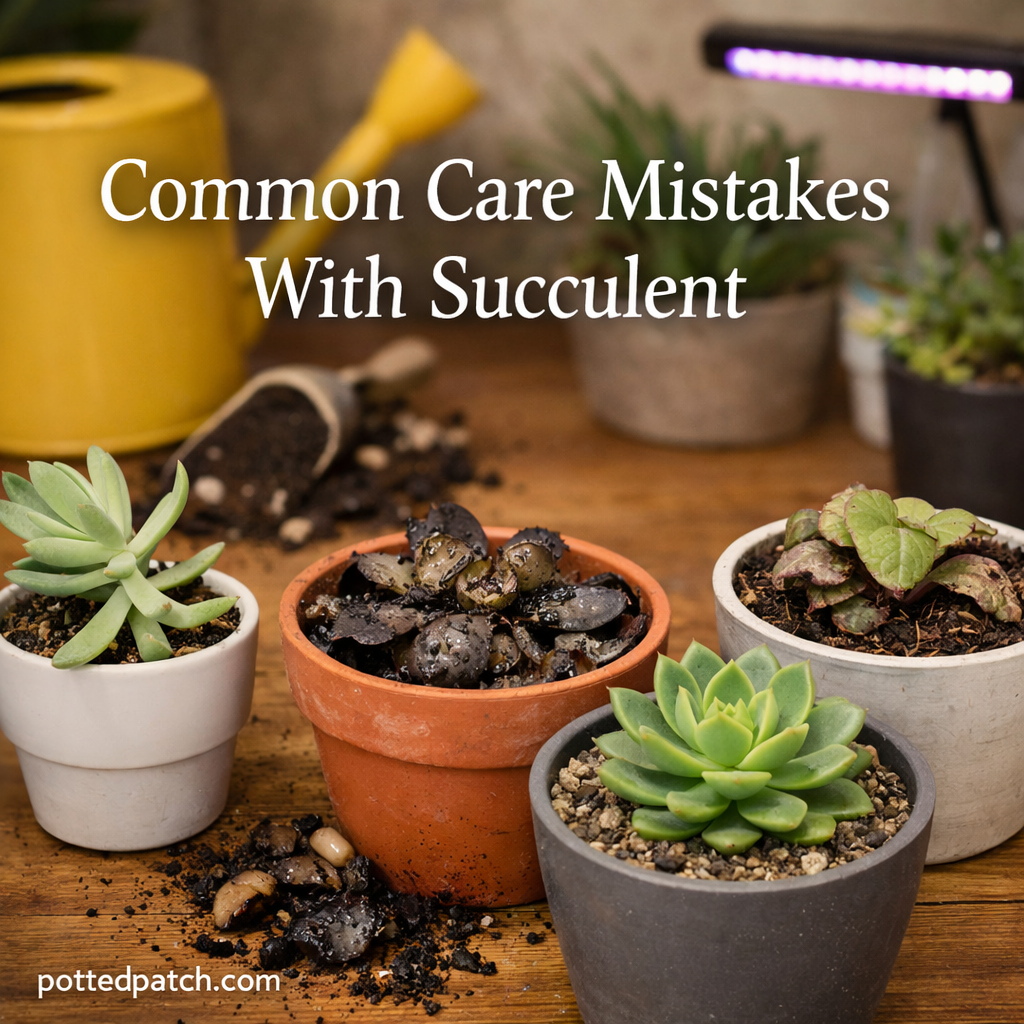
Succulents sitting in regular potting soil often develop root rot — even if you don’t water frequently.
If you only have standard potting soil, you’ll need to amend it.
How to Make Your Own Succulent Soil Mix
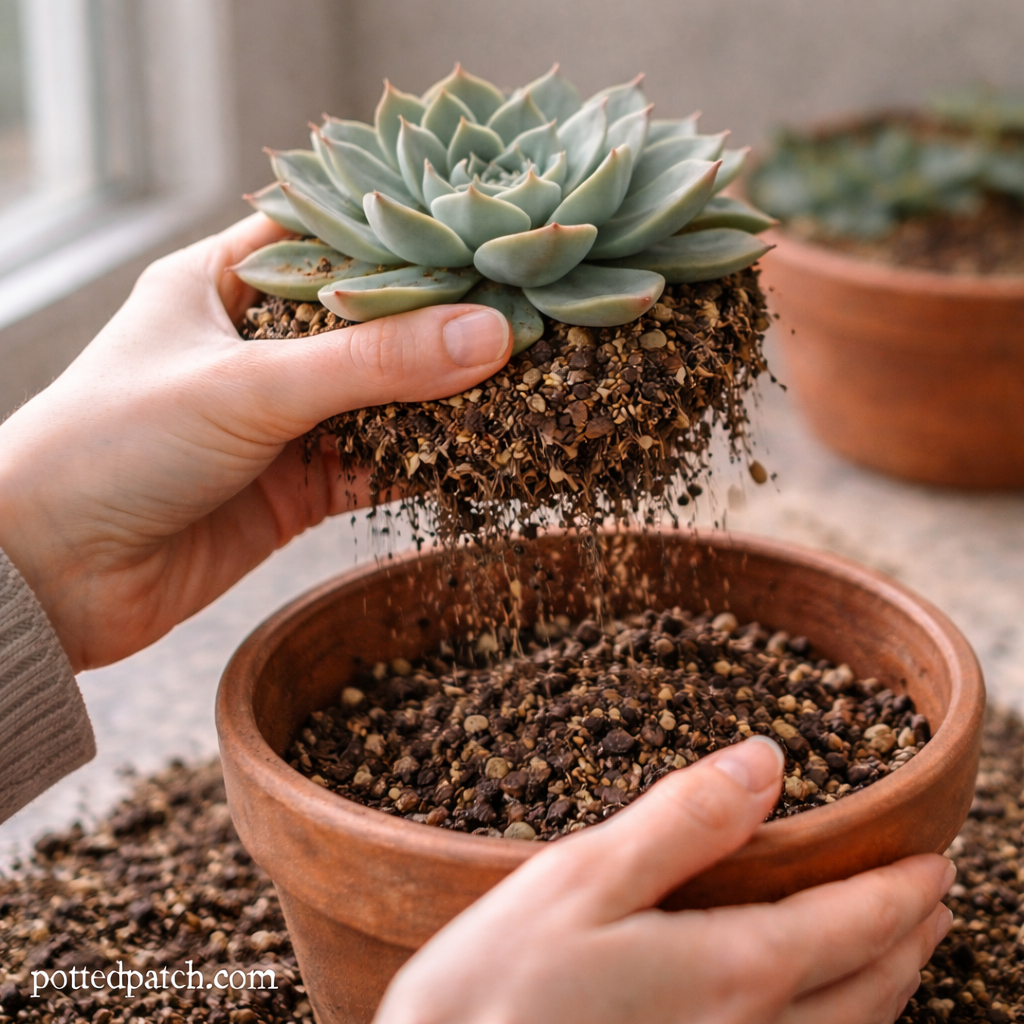
If you prefer a DIY approach, use this simple recipe:
Basic DIY Mix
- 50% regular potting soil
- 50% perlite or pumice
This improves drainage immediately.
Extra Fast-Draining Mix (For Humid Climates)
- 40% potting soil
- 30% perlite
- 30% coarse sand or pumice
The goal is for water to flow through quickly and not sit around roots.
Key Ingredients in Good Succulent Soil
Here’s what makes soil suitable for succulents:
Perlite
- Lightweight volcanic material
- Improves drainage
- Increases airflow
Pumice
- Similar to perlite
- Slightly heavier
- Excellent for long-term structure
Coarse Sand
- Adds grit
- Helps prevent compaction
Avoid fine sand, which can actually reduce drainage.
How to Test If Your Soil Drains Well
After watering, check:
- Water drains within seconds
- Soil feels dry within 5–7 days indoors
- Pot does not feel heavy for long periods
If soil stays wet more than a week, it’s too dense.
Soil and Pot Work Together
Even the best soil won’t help if your pot traps water.
Always use:
- A pot with drainage holes
- Terracotta pots for extra airflow
- A saucer that you empty after watering
Terracotta naturally absorbs excess moisture and reduces rot risk.
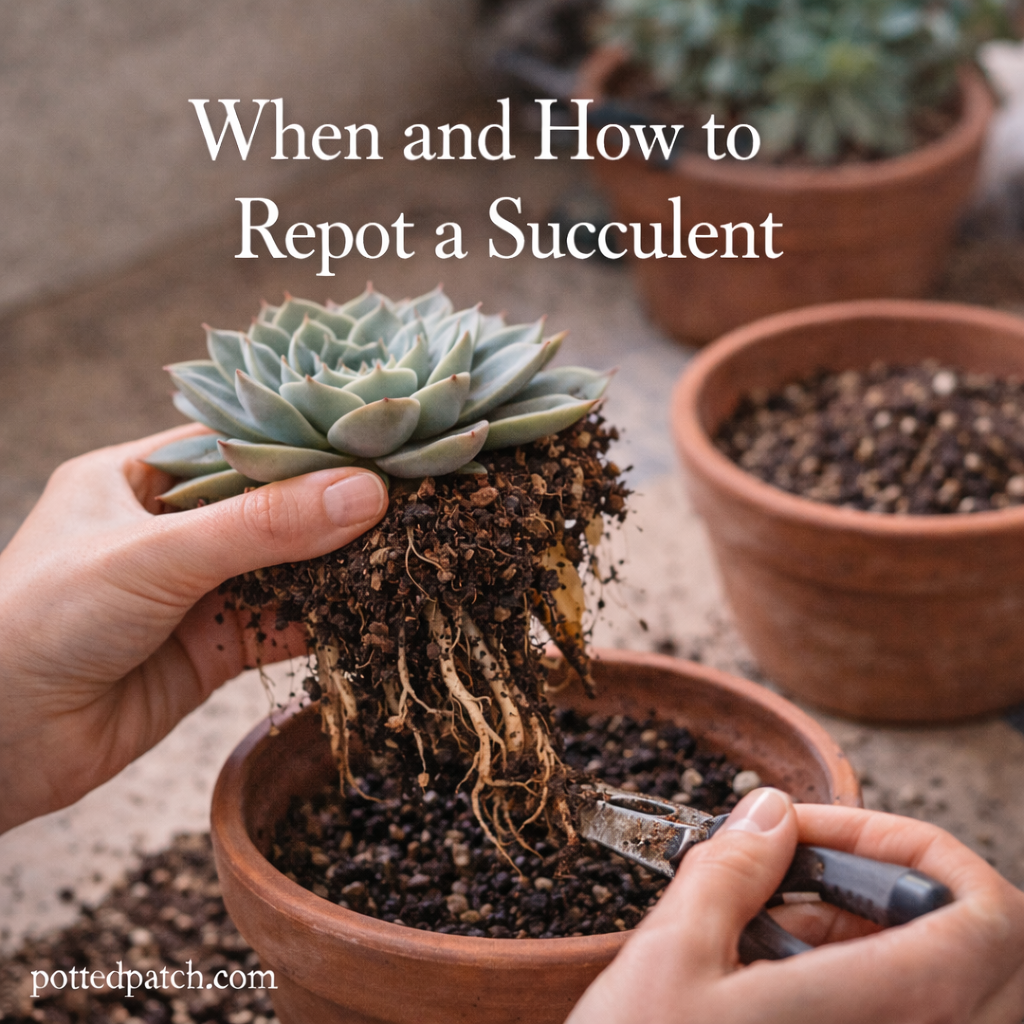
When to Repot Into Better Soil
Repot your succulent if:
- Soil feels compacted
- Plant is staying wet too long
- Roots are soft or dark
- You recently bought it in dense nursery soil
Spring and early summer are the best times to repot.
Common Soil Mistakes to Avoid
- Using moisture-retaining potting mix
- Adding peat-heavy blends
- Packing soil too tightly
- Skipping drainage holes
Succulents prefer dry feet — not constant moisture.
Quick Soil Checklist
The best soil for a succulent should:
- Drain quickly
- Feel gritty, not muddy
- Dry fully between waterings
- Contain perlite or pumice
If you’re unsure, err on the side of faster drainage.
Final Thoughts
The best soil for a succulent is one that dries quickly and allows roots to breathe.
Cactus or succulent mixes are ideal, but you can easily improve regular soil by adding perlite or pumice.
When soil drains properly, watering becomes easier, root rot becomes rare, and your succulent stays compact and healthy.
Good soil is the foundation of successful indoor plant care.