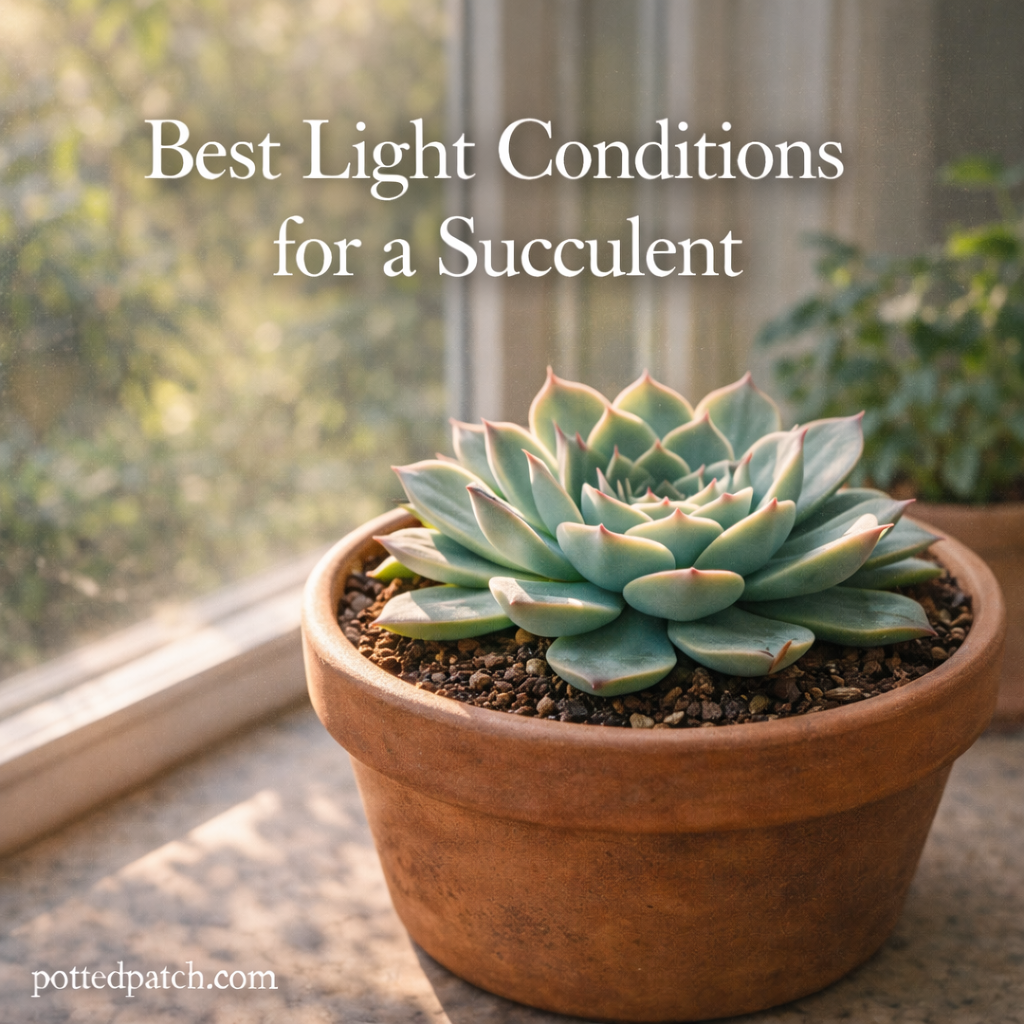
Succulents are famous for being low-maintenance — but light is one area where they’re not flexible.
If your succulent is stretching, leaning, fading, or losing its compact shape, lighting is almost always the reason.
Here’s exactly what kind of light succulents need indoors — and how to get it right.
Why Light Is So Important for Succulents
Succulents evolved in bright, sunny environments. Their thick leaves store water, but they rely heavily on strong light to:
- Maintain compact growth
- Keep vibrant color
- Prevent stretching (etiolation)
- Support healthy roots
Without enough light, they weaken quickly.
How Much Light Do Succulents Need?
Most indoor succulents need:
- At least 6 hours of bright light per day
- Preferably bright, indirect sunlight
- Some gentle direct morning sun
The brighter the light, the more compact and colorful your succulent will stay.
Best Window Placement Indoors
South-Facing Window (Best Option)
- Provides strongest light
- Ideal for most varieties
- May require slight filtering in extreme summer heat
West-Facing Window
- Strong afternoon light
- Monitor for leaf burn
- Works well for sun-loving types
East-Facing Window
- Gentle morning sun
- Great for moderate-light succulents
- Safer for beginners
North-Facing Window
- Usually too dim
- May cause stretching
- Supplement with grow lights if necessary
Signs Your Succulent Isn’t Getting Enough Light
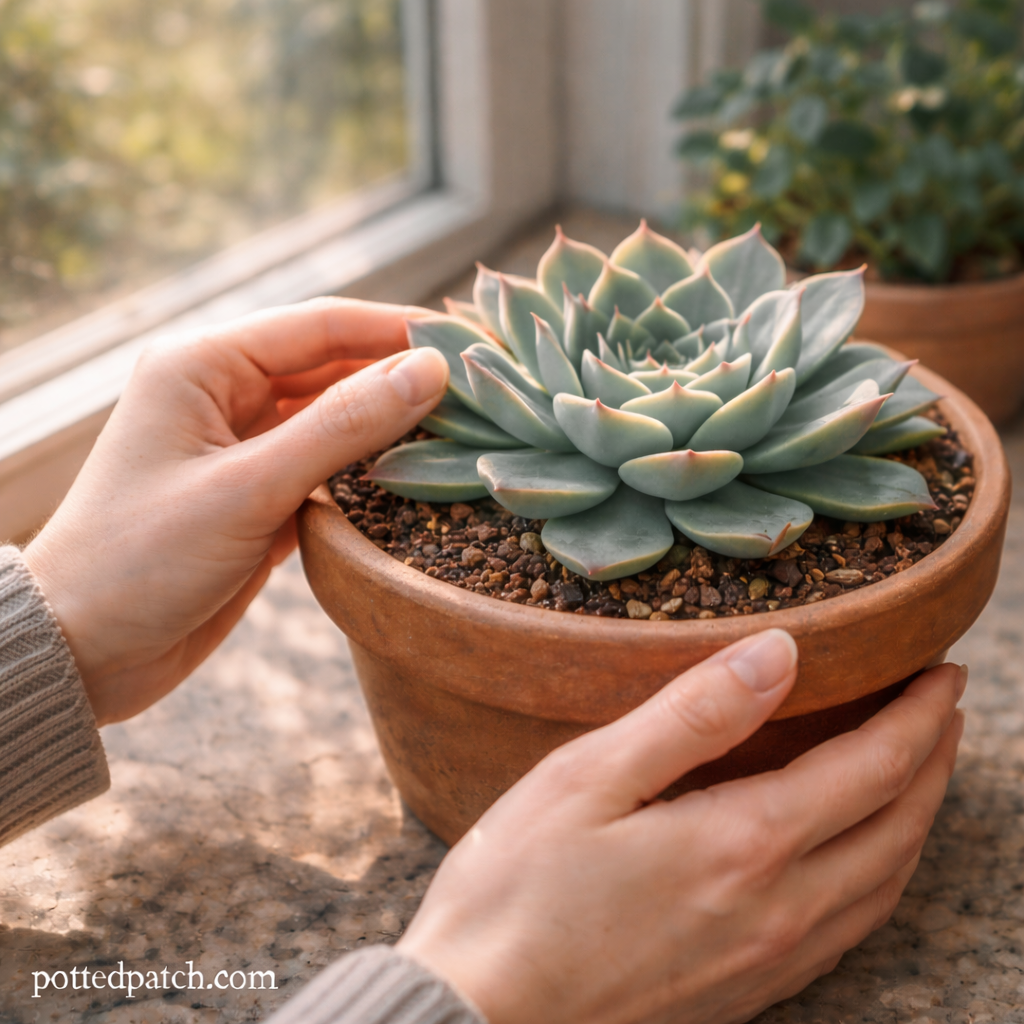
Look for:
- Stem stretching upward
- Wide gaps between leaves
- Leaning toward the window
- Faded or pale color
This condition is called etiolation. Once stretched, the plant won’t shrink back — but you can correct future growth by improving light.
Rotate your plant every 1–2 weeks to promote even growth.
Signs of Too Much Light
Yes, too much light can also be an issue.
Watch for:
- Brown or white scorch marks
- Crispy leaf edges
- Sudden color fading
If you notice burning:
- Move the plant slightly farther from the window
- Add sheer curtains for filtered light
Direct afternoon sun through glass can be intense.
Using Grow Lights for Succulents
If your home lacks bright windows, grow lights are an excellent solution.
Choose:
- Full-spectrum LED grow lights
- Position 6–12 inches above plant
- Run for 10–12 hours daily
Grow lights provide consistent, controlled brightness — often better than natural light in dim homes.
Light Needs by Succulent Type
While most succulents prefer bright light, some tolerate lower levels better.
High-light lovers:
- Echeveria
- Jade Plant
- Aloe
- Sedum
Moderate-light tolerant:
- Haworthia
- Gasteria
If you’re unsure, start bright and adjust gradually.
Seasonal Light Changes
Light intensity shifts throughout the year.
Spring & Summer
- Stronger sunlight
- Monitor for scorching
- May need slight filtering
Fall & Winter
- Reduced daylight hours
- Move plants closer to windows
- Consider supplemental grow lighting
Shorter days often cause winter stretching.
Ideal Indoor Setup for Succulents
For best results:
- Place near a south- or east-facing window
- Keep within 1–2 feet of glass
- Rotate regularly
- Avoid dark corners
- Ensure good airflow
Bright rooms are better than shaded spaces.
Quick Light Checklist
Use this guide:
Stretching → Not enough light
Burn spots → Too much direct sun
Leaning → Uneven light
Fading color → Insufficient brightness
Adjust gradually to avoid shock.
Final Thoughts
The best light conditions for a succulent are bright, consistent, and indirect — with some gentle direct sun if tolerated.
When lighting is correct, everything else becomes easier. Healthy growth, compact shape, and vibrant color all start with proper light.
If you fix one thing for your succulent, make it the lighting.