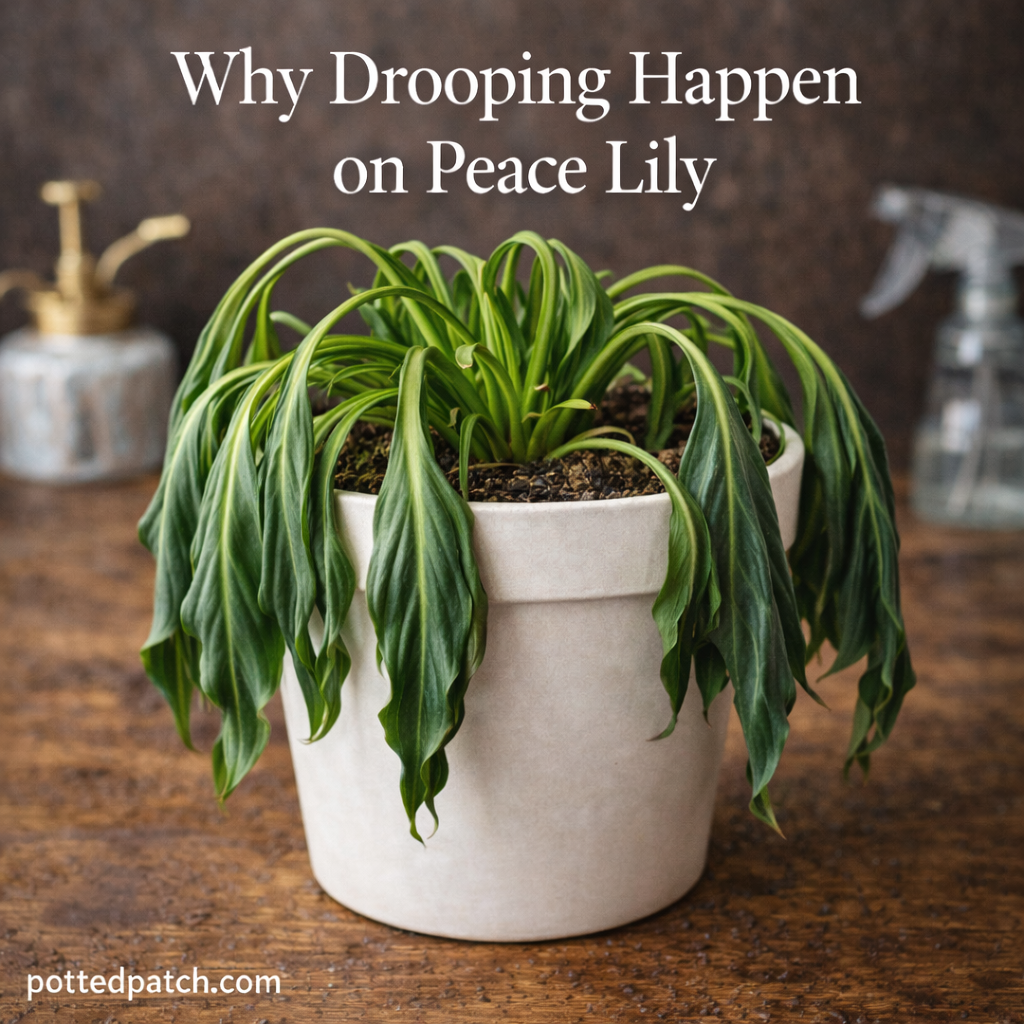
If your peace lily suddenly looks limp and lifeless, don’t panic. Drooping is one of the most common — and dramatic — signals this plant gives when something isn’t right.
Peace lilies are expressive. They visibly respond to stress, especially changes in watering or environment. The key is understanding why the drooping is happening so you can fix it quickly.
Let’s break down the most common causes.
1. Underwatering (The Most Common Cause)
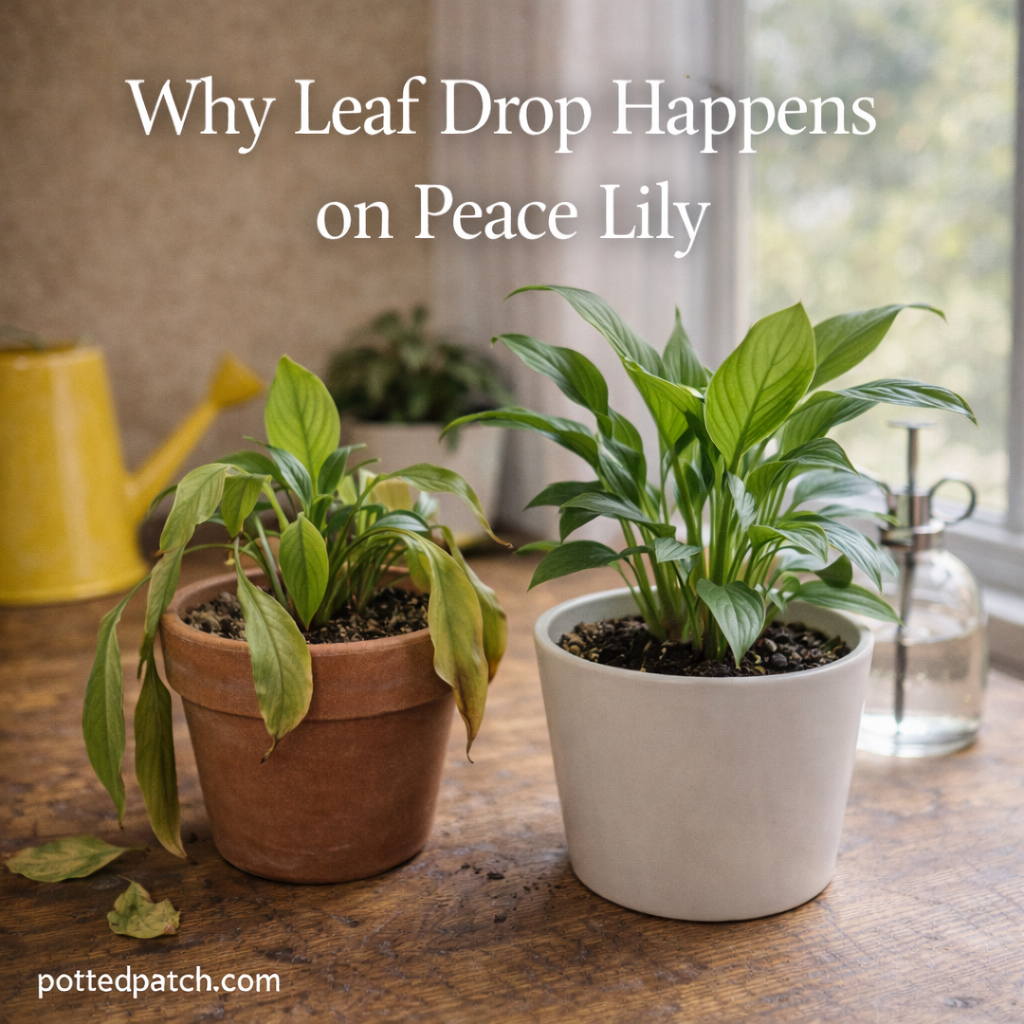
Peace lilies are known for drooping dramatically when they’re thirsty.
When the soil becomes too dry, the plant loses internal water pressure (turgor), causing the leaves to collapse.
Signs It’s Underwatering
- Leaves droop suddenly
- Soil feels dry several inches down
- Pot feels very light
- Leaves perk up within hours after watering
What’s Happening
The plant simply doesn’t have enough moisture to support its leaf structure.
The Fix
Water thoroughly until water drains from the bottom. Most peace lilies bounce back within a few hours.
2. Overwatering
Yes — too much water can also cause drooping.
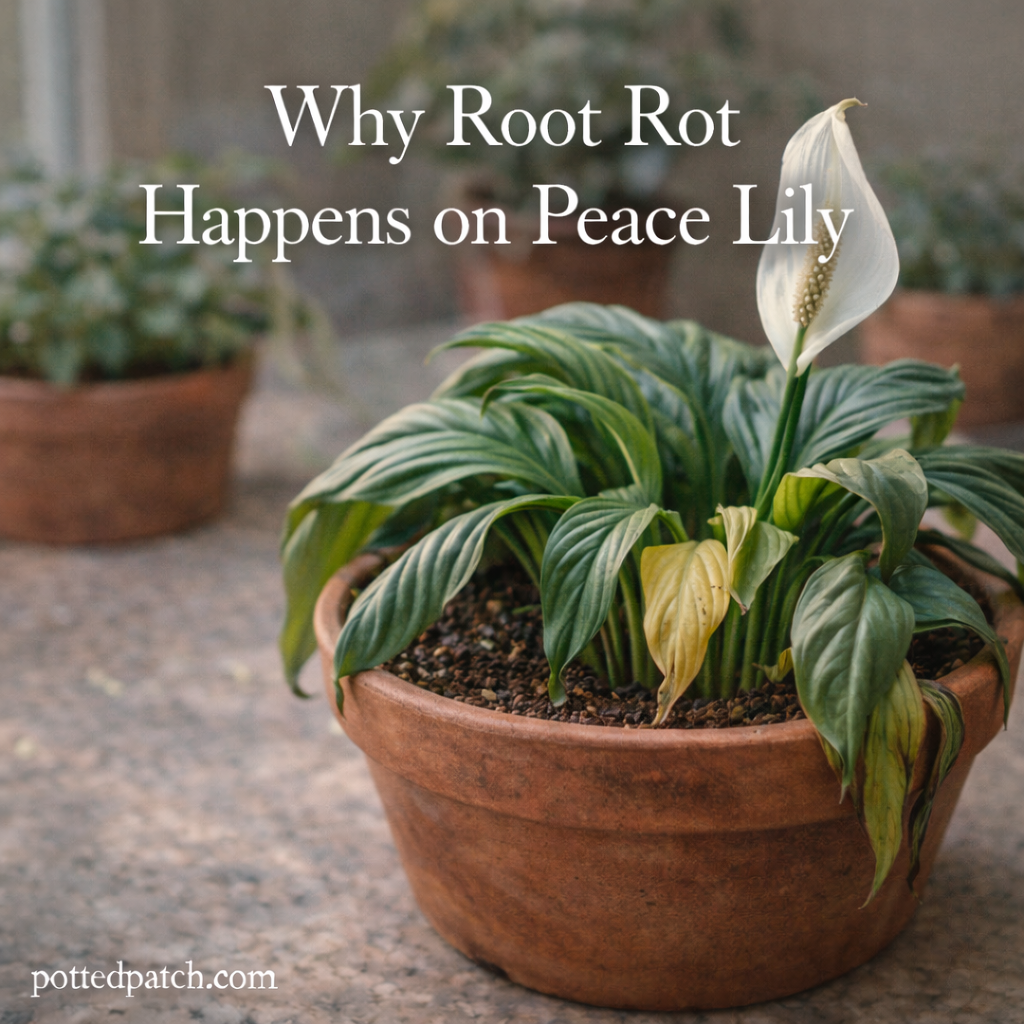
When roots sit in soggy soil, they can’t absorb oxygen. This leads to stress and eventually root rot.
Signs It’s Overwatering
- Yellowing leaves
- Soil stays wet for days
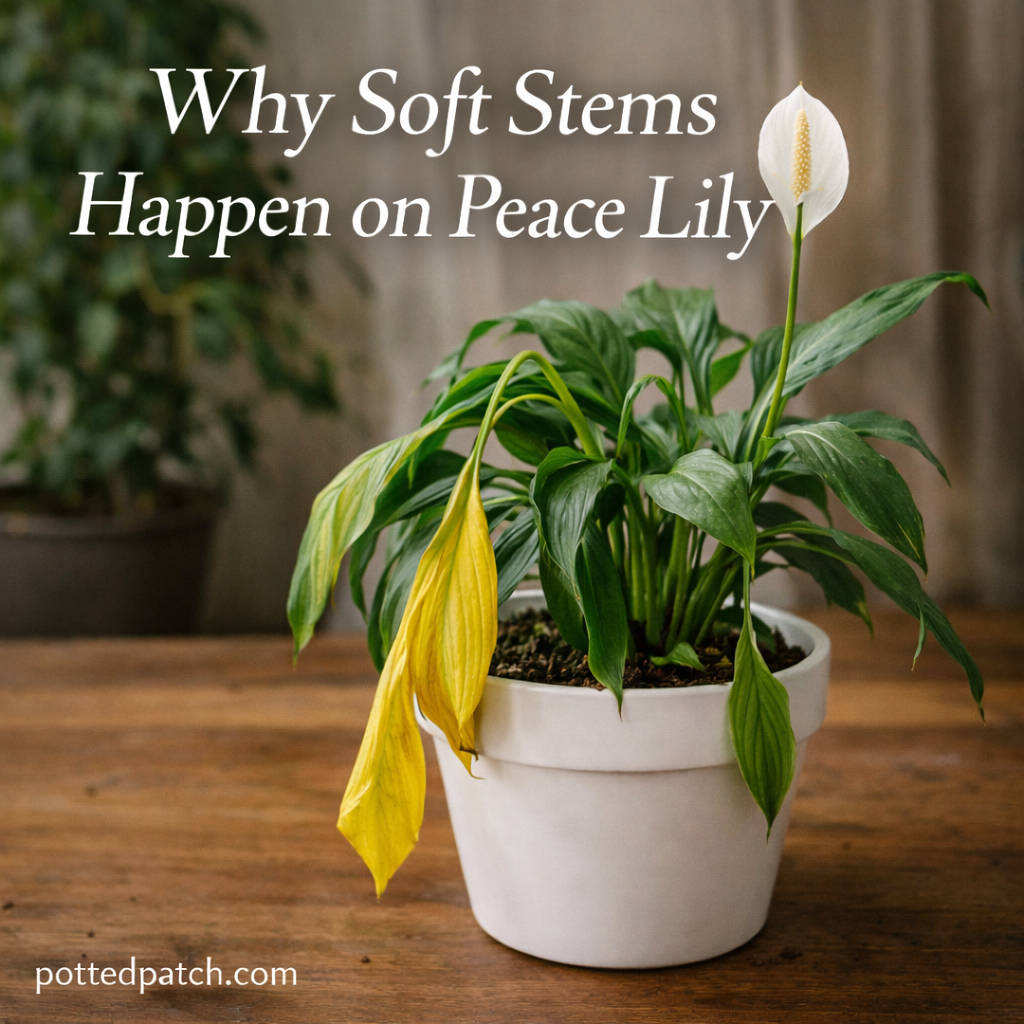
- Soft stems
- Foul smell from soil
Why It Causes Drooping
Damaged roots can’t transport water properly, even though the soil is wet.
The Fix
- Check drainage holes
- Let soil dry partially before watering again
- Repot if roots are black and mushy
3. Poor Drainage
Even if your watering schedule is correct, poor drainage can trap excess moisture.
Common issues include:
- Pots without drainage holes
- Compacted or dense soil
- Water pooling in saucers
Without airflow to the roots, stress develops — and drooping follows.
Repotting into fresh, well-draining soil often solves the issue.
4. Temperature Stress
Peace lilies prefer stable, warm environments.
Ideal Conditions
- 65–80°F
- No cold drafts
- No sudden temperature swings
Cold air from windows or AC vents can cause temporary drooping.
Move the plant to a more stable location and monitor recovery.
5. Low Humidity
Peace lilies enjoy moderate to high humidity.
In very dry indoor air, especially during winter, leaves may droop or curl slightly.
Signs of Low Humidity
- Leaf tips browning
- Mild drooping
- Crispy edges
Using a humidifier or grouping plants together can help.
6. Root Bound Conditions
When roots become tightly packed in the pot, water absorption becomes inconsistent.
Signs It’s Root Bound
- Roots growing out of drainage holes
- Water runs straight through quickly
- Soil dries out very fast
Repotting into a slightly larger container restores proper moisture balance.
7. Natural Watering Signal
Sometimes drooping is simply your peace lily’s way of saying:
“It’s watering time.”
Many owners actually use slight drooping as a reminder. As long as the plant perks back up after watering, there’s no problem.
How to Diagnose the Real Cause
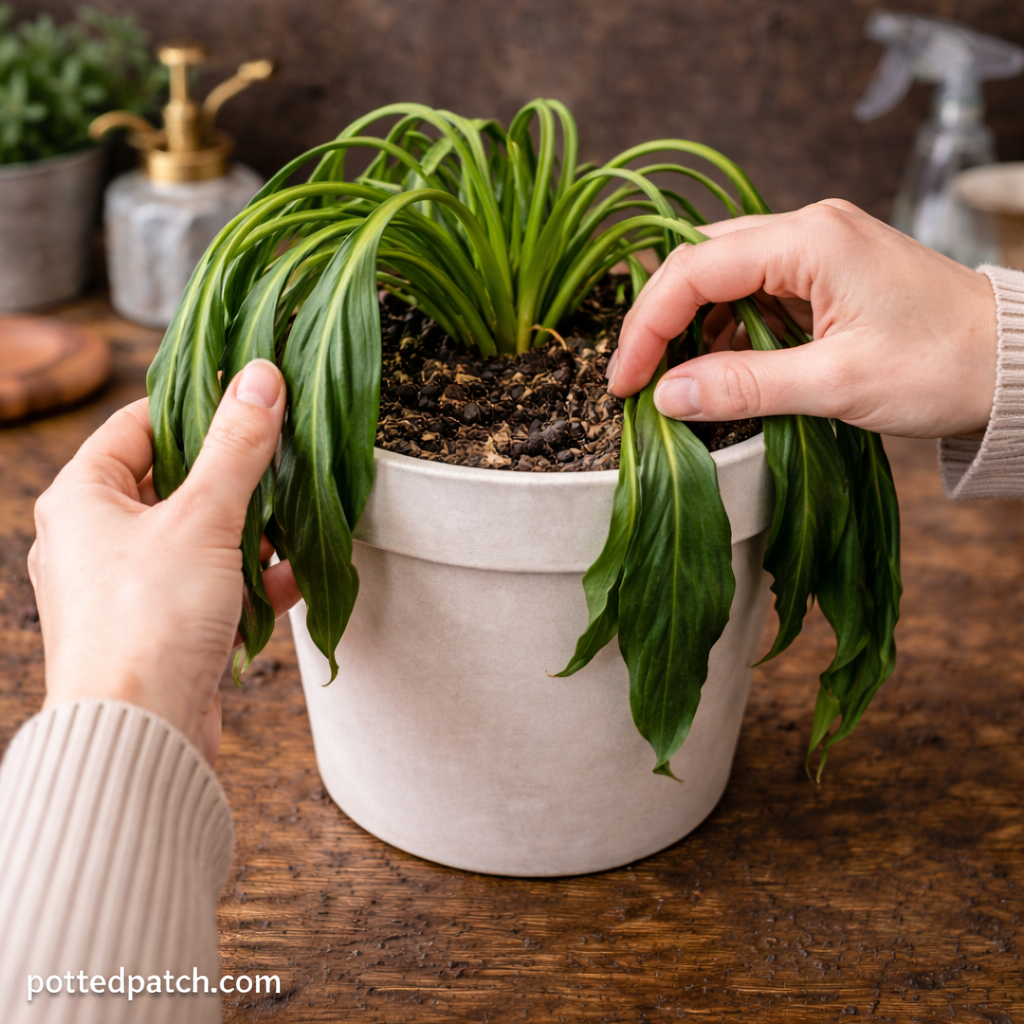
Before taking action, check:
- Soil moisture (dry or soggy?)
- Pot drainage
- Root health (if drooping continues)
- Temperature and drafts
- Humidity levels
Always address the most obvious issue first.
Avoid making multiple changes at once — this can cause additional stress.
When to Worry
Occasional drooping that resolves quickly is normal.
However, consistent drooping combined with:
- Yellow leaves
- Blackened stems
- Foul-smelling soil
May indicate root rot and requires immediate action.
Final Thoughts
Drooping on a peace lily looks dramatic, but it’s usually a simple fix.
In most cases, it comes down to watering — either too little or too much. Once you correct the underlying issue, peace lilies often recover quickly and return to their upright, glossy appearance.
Pay attention to soil moisture and environmental stability, and your peace lily will remain healthy and resilient.