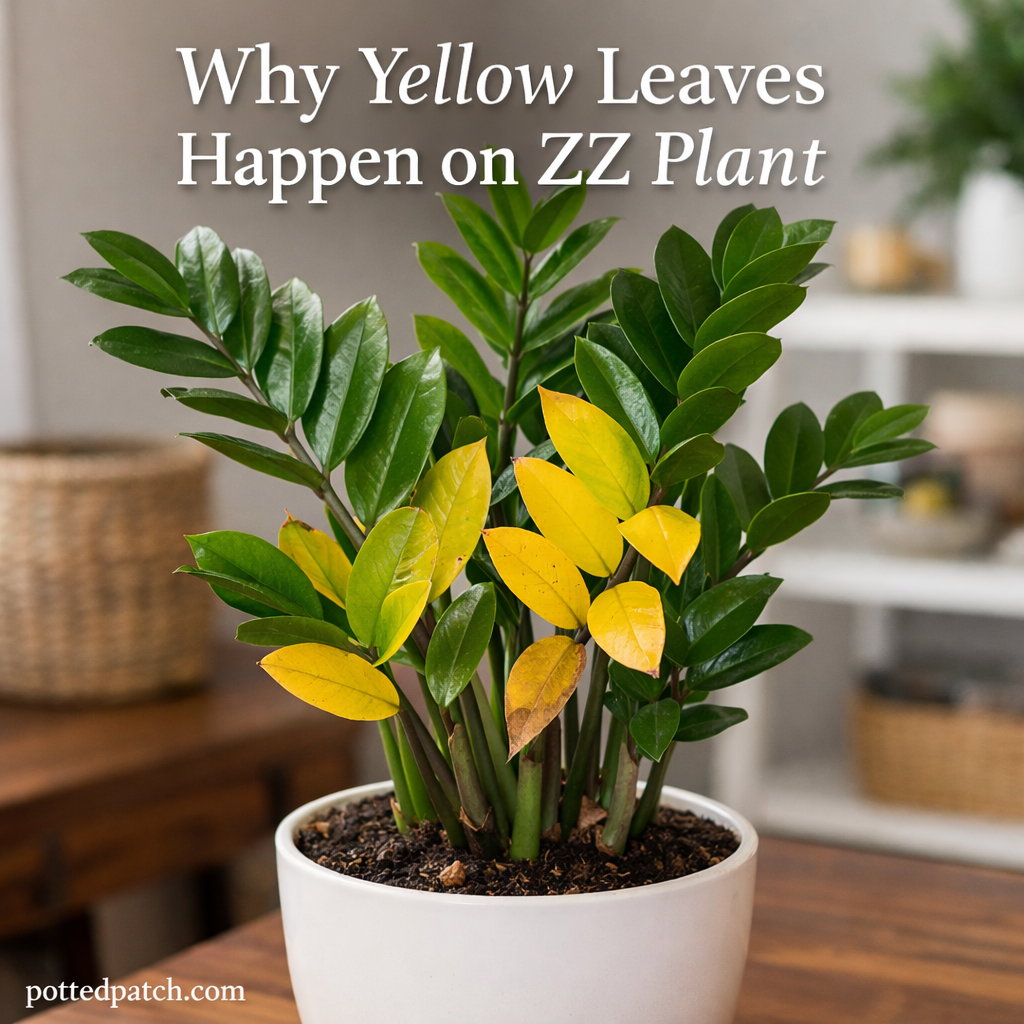
The ZZ plant (Zamioculcas zamiifolia) is famous for being nearly indestructible. It tolerates low light, irregular watering, and dry indoor air better than most houseplants.
So when you notice yellow leaves on your ZZ plant, it can feel confusing.
The good news? Yellowing leaves are usually a fixable issue. In this guide, you’ll learn why ZZ plant leaves turn yellow, how to diagnose the cause, and exactly what to do to restore your plant’s health.
Is It Normal for ZZ Plant Leaves to Turn Yellow?
Occasional yellow leaves can be normal.
Like all plants, ZZ plants shed older leaves over time. If:
- Only one or two lower leaves are yellow
- The rest of the plant looks healthy
- New growth appears firm and green
It may simply be natural aging.
However, if multiple stems are yellowing or the plant looks limp, you likely have a care issue to address.
1. Overwatering (Most Common Cause)
Overwatering is the number one reason ZZ plants develop yellow leaves.
ZZ plants grow from thick underground rhizomes that store water. When the soil stays wet too long, those rhizomes begin to rot. Yellow leaves are often the first visible warning sign.
Signs It’s Overwatering
- Several stems turning yellow at once
- Soft or mushy stems
- Soil that feels wet days after watering
- Musty smell from the pot
How to Fix It
- Stop watering immediately.
- Check that your pot has drainage holes.
- Let the soil dry out completely before watering again.
- If severe, remove the plant and inspect the roots for rot (trim any mushy roots).
Going forward, water only when the top 2–3 inches of soil are completely dry.
2. Poor Drainage or Heavy Soil
Even if you don’t water often, dense soil can trap moisture.
ZZ plants need well-draining soil. Regular potting mix that holds water too long can suffocate roots and cause yellowing.
What to Do
- Repot using a well-draining mix (cactus or succulent blend works well)
- Consider adding perlite or pumice for extra aeration
- Always use a pot with drainage holes
Good drainage prevents future yellowing episodes.
3. Too Much Direct Sunlight
ZZ plants prefer bright, indirect light.
If placed in harsh direct sun (especially south- or west-facing windows), the leaves may yellow and scorch.
Signs of Light Stress
- Yellowing on the side facing the window
- Pale or bleached patches
- Crispy brown tips following yellowing
The Fix
Move the plant to:
- Bright, indirect light
- A few feet away from a sunny window
- Or behind a sheer curtain
ZZ plants tolerate low light, so slightly less sun is usually safer than too much.
4. Underwatering (Less Common, But Possible)
Although ZZ plants tolerate drought, extreme dryness over long periods can cause stress.
When severely underwatered, leaves may:
- Turn yellow
- Curl slightly
- Feel thin or papery
How to Correct It
Water thoroughly until excess drains from the bottom.
Then return to a consistent schedule where the soil dries between waterings but doesn’t stay bone-dry for months.
5. Temperature Stress
ZZ plants prefer stable indoor temperatures between 65–80°F.
Yellow leaves can appear if the plant is exposed to:
- Cold drafts
- Air conditioning vents
- Heaters blowing directly on foliage
- Sudden temperature drops
Move the plant away from vents and drafty doors or windows.
Consistency matters more than perfection.
6. Nutrient Deficiency
If your ZZ plant hasn’t been fertilized in a year or more, yellowing could signal nutrient depletion.
This is more common in older soil.
What to Do
- Use a balanced houseplant fertilizer
- Feed lightly during spring and summer
- Avoid fertilizing in winter
Over-fertilizing can also cause stress, so less is more.
How to Tell What’s Causing the Yellow Leaves
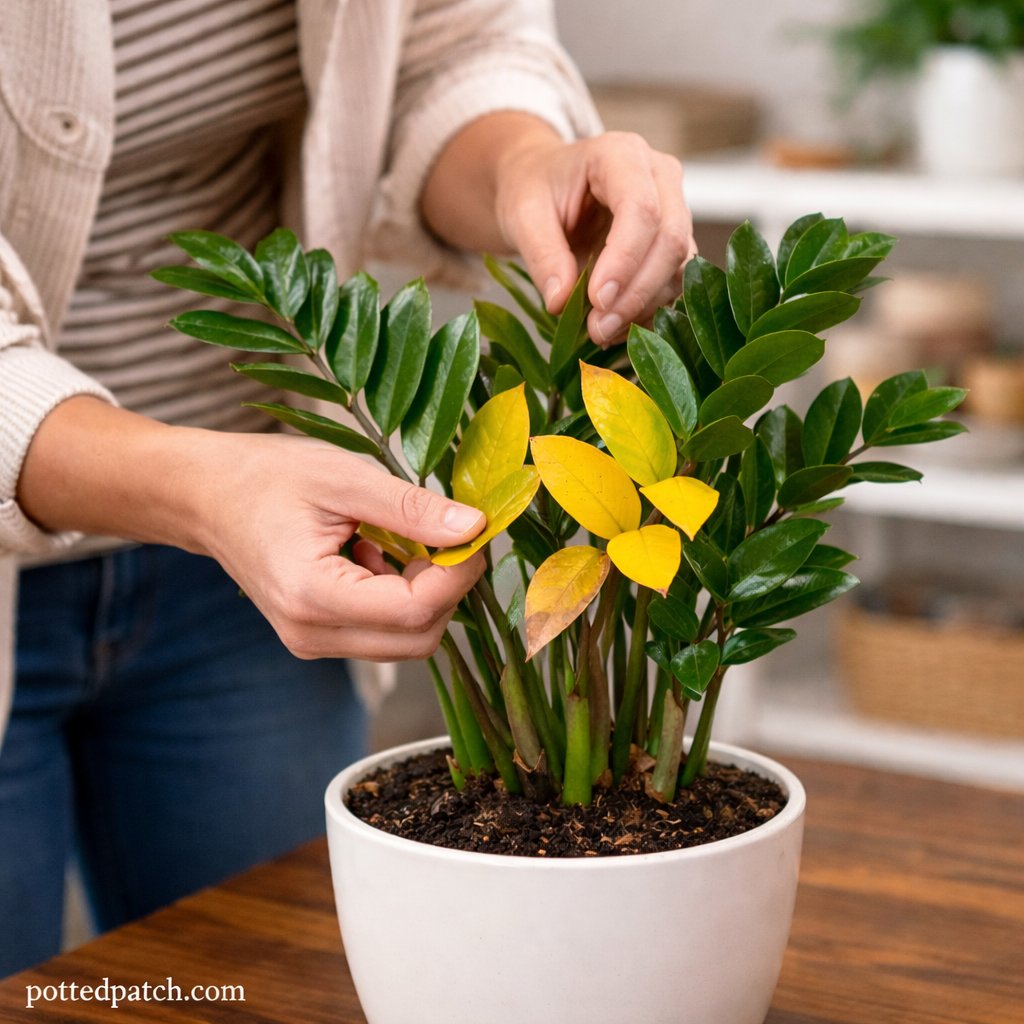
Use this quick checklist:
- Wet soil + multiple yellow stems → Likely overwatering
- Dry, compact soil + drooping leaves → Possibly underwatering
- Yellow patches facing sunlight → Light stress
- One or two lower leaves only → Natural aging
Diagnosing the root cause correctly prevents repeat issues.
Should You Remove Yellow Leaves?
Yes — but only when they are mostly yellow.
Use clean scissors to trim the leaf at the base of the stem. Removing damaged foliage helps the plant redirect energy to healthy growth.
Never remove more than 20–25% of the plant at once.
How to Prevent Yellow Leaves in the Future
Follow these ZZ plant care basics:
- Water only when soil is fully dry
- Use well-draining soil
- Keep in bright, indirect light
- Avoid extreme temperature swings
- Fertilize lightly during growing season
ZZ plants are resilient. Once the underlying issue is corrected, new growth should return to a healthy deep green.
Final Thoughts
Yellow leaves on a ZZ plant are usually a sign of overwatering or drainage problems — not a death sentence.
With small adjustments to watering, light, or soil, your plant can bounce back quickly.
The key is observing the pattern of yellowing and acting early.
Your ZZ plant is tougher than it looks — it just needs the right balance.