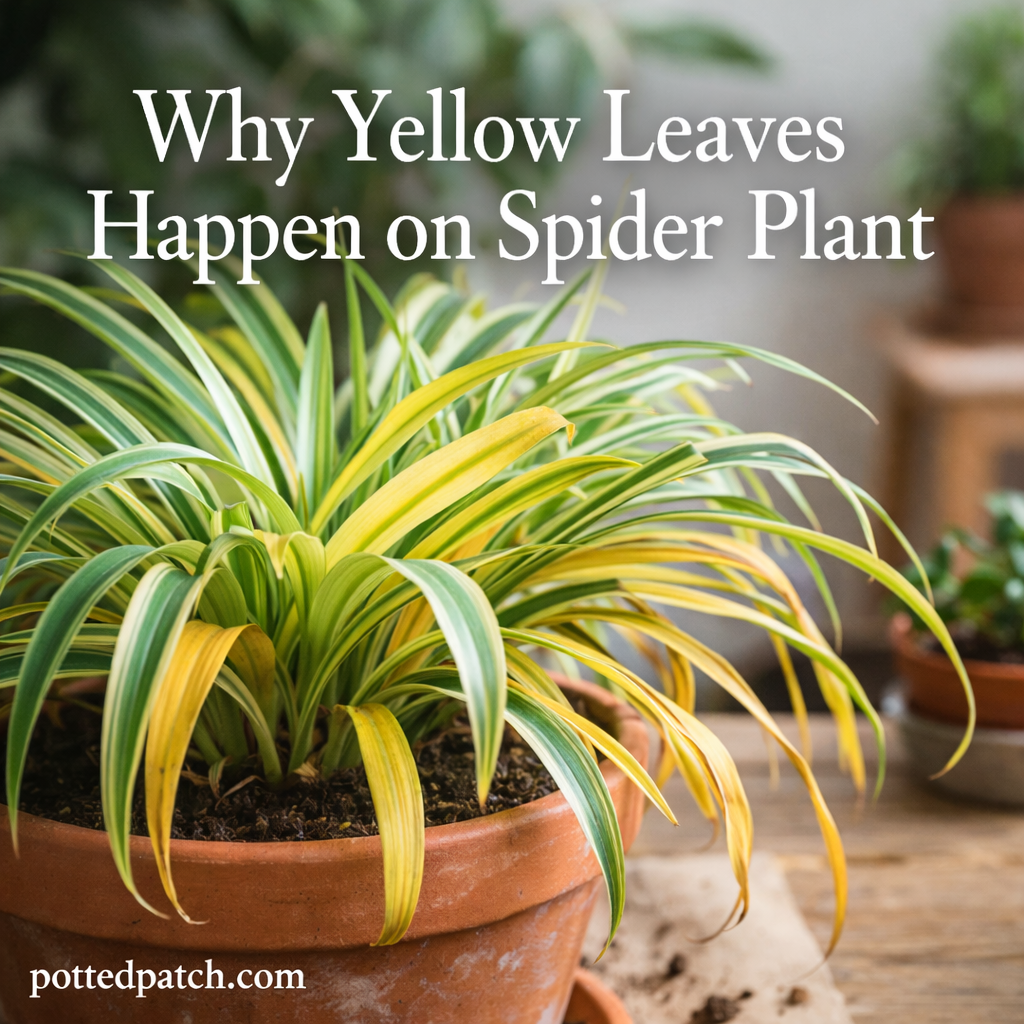
Spider plants are known for their arching green leaves and easy-care nature. So when those vibrant leaves start turning yellow, it can be confusing.
The good news? Yellow leaves are usually a fixable issue.
In this guide, we’ll break down why spider plant leaves turn yellow, how to identify the cause, and exactly how to fix it.
Is It Normal for Spider Plant Leaves to Turn Yellow?
Occasional yellow leaves are normal.
Older leaves naturally age and die off as part of the plant’s growth cycle. If you notice one or two lower leaves turning yellow while the rest of the plant looks healthy, there’s no reason to worry.
However, if multiple leaves are yellowing at once, it’s time to investigate.
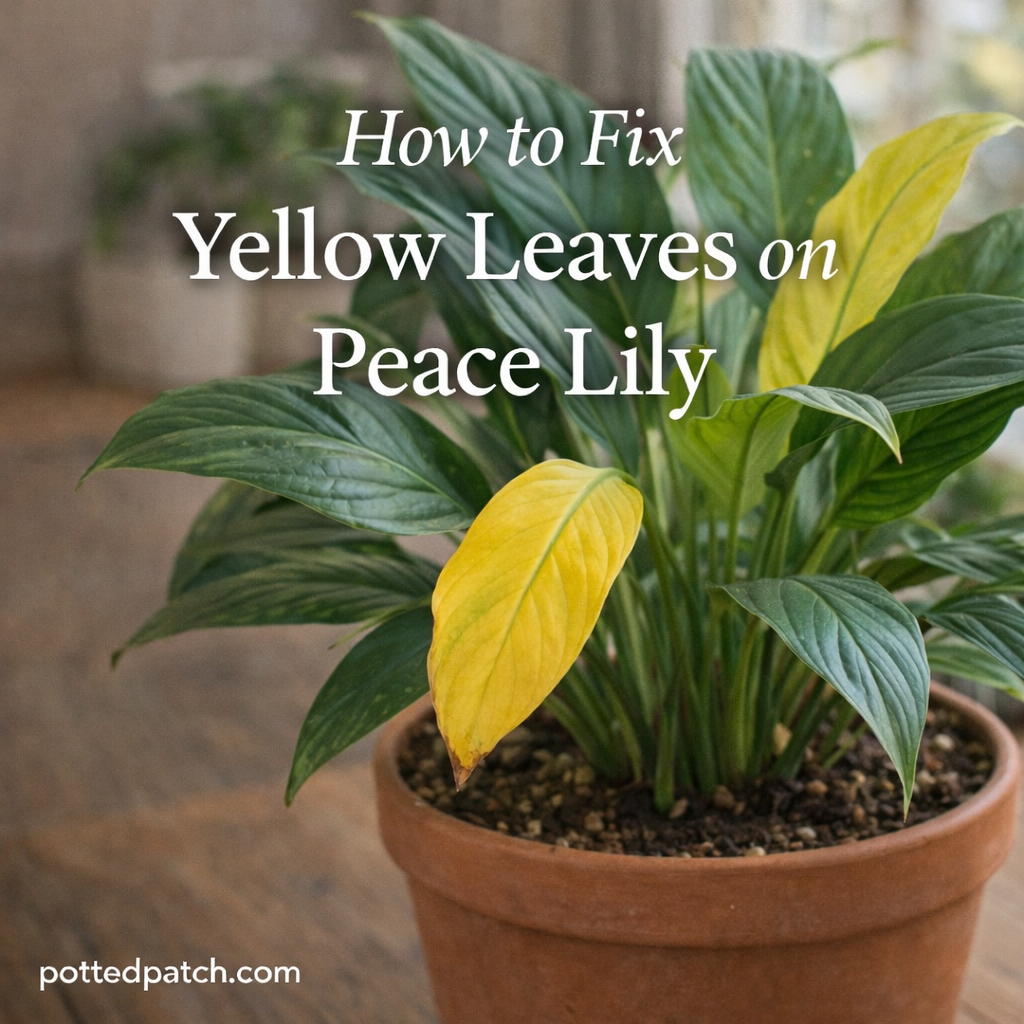
1. Overwatering (Most Common Cause)
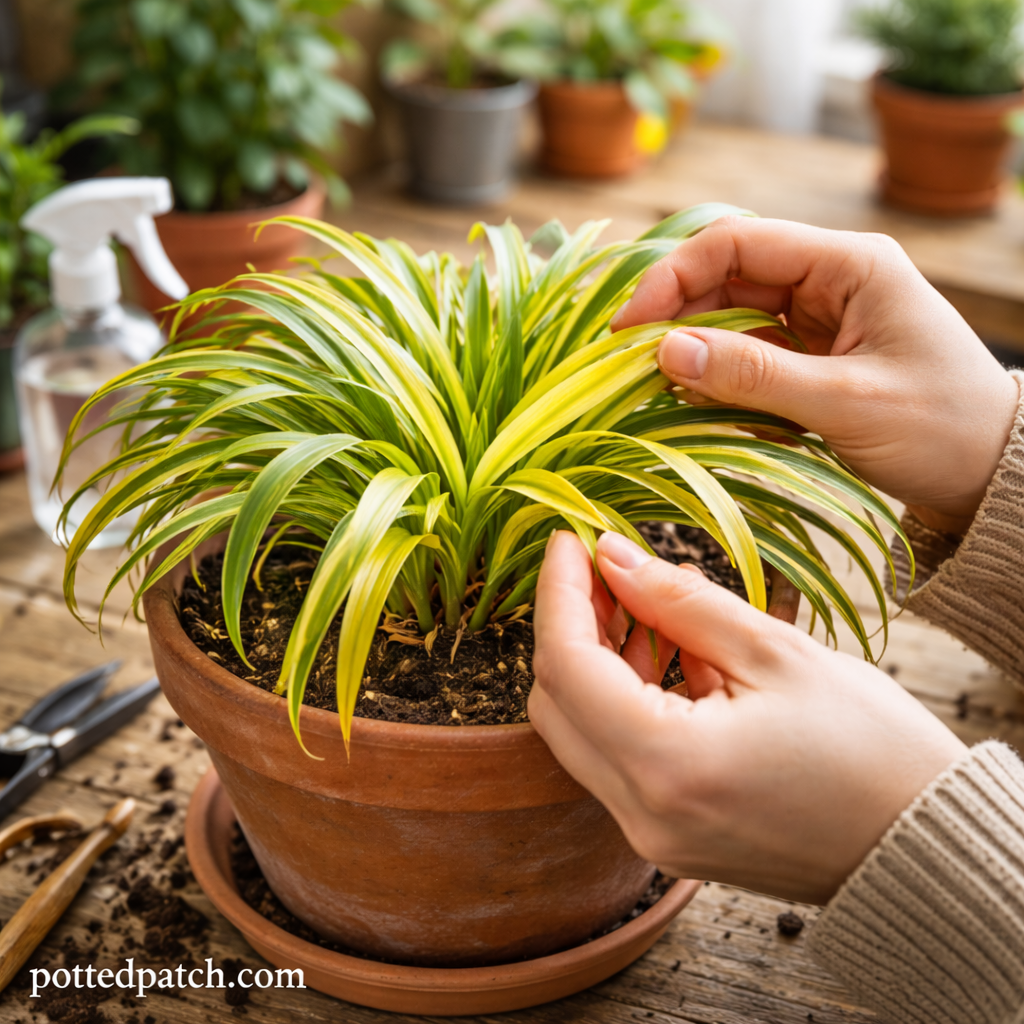
Overwatering is the #1 reason spider plant leaves turn yellow.
Spider plants prefer soil that dries slightly between waterings. When the soil stays consistently wet, roots struggle to breathe.
Signs of Overwatering
- Yellow leaves starting at the base
- Soft or mushy stems
- Wilting despite wet soil
- A musty smell from the pot
How to Fix It
- Let the soil dry out completely before watering again
- Ensure your pot has drainage holes
- Consider switching to a lighter, well-draining soil mix
- Reduce watering frequency
If root rot is suspected, you may need to repot the plant into fresh soil.
2. Underwatering
While less common, underwatering can also cause yellowing.
When spider plants become too dry for too long, the leaves may lose color and begin to yellow before turning brown and crispy.
Signs of Underwatering
- Dry, compacted soil pulling away from the pot
- Brown tips before full yellowing
- Drooping leaves
How to Fix It
- Water thoroughly until excess drains from the bottom
- Create a consistent watering routine
- Check soil moisture with your finger before watering
Consistency is key.
3. Poor Drainage
Even if you’re watering correctly, poor drainage can trap moisture.
This can happen when:
- The pot lacks drainage holes
- Soil is too dense
- The plant sits in standing water
Solution
- Use a pot with proper drainage
- Empty saucers after watering
- Repot into airy, well-draining soil
4. Fluoride or Tap Water Sensitivity
Spider plants are sensitive to chemicals in tap water, especially fluoride and chlorine.
Over time, mineral buildup can stress the plant and cause yellowing or brown tips.
Signs of Water Quality Issues
- Yellowing combined with brown leaf tips
- White crust on soil surface
- Gradual discoloration
How to Fix It
- Switch to distilled water
- Use rainwater
- Let tap water sit out for 24 hours before using
This small change can make a noticeable difference.
5. Too Much Direct Sunlight
Spider plants prefer bright, indirect light.
Excess direct sun can bleach and yellow the leaves.
Signs of Light Stress
- Faded or pale yellow patches
- Leaf scorching
- Crispy texture on sun-facing side
Solution
- Move the plant a few feet away from the window
- Use sheer curtains to diffuse light
- Avoid harsh afternoon sun
Bright but indirect light is ideal.
6. Nutrient Deficiency
If your spider plant hasn’t been fertilized in a long time, it may lack essential nutrients.
Nitrogen deficiency often causes leaves to yellow evenly.
How to Fix It
- Use a balanced liquid houseplant fertilizer
- Feed during spring and summer only
- Avoid over-fertilizing
Too much fertilizer can cause salt buildup, which also leads to yellowing.
7. Root Bound Stress
When spider plants outgrow their pots, roots can become tightly packed.
This limits nutrient and water absorption.
Signs
- Roots circling the bottom of the pot
- Water running straight through
- Stunted growth
Solution
- Repot into a container 1–2 inches larger
- Refresh the soil
Spider plants actually prefer being slightly root-bound, but extreme crowding causes stress.
How to Prevent Yellow Leaves in the Future
Follow these simple care habits:
- Water only when the top inch of soil is dry
- Use well-draining soil
- Provide bright, indirect light
- Avoid chemical-heavy water
- Repot every 1–2 years
Routine care prevents most yellowing issues.
Should You Cut Off Yellow Leaves?
Yes.
Yellow leaves will not turn green again.
Use clean scissors and trim at the base of the plant. This:
- Improves appearance
- Encourages new growth
- Prevents energy waste
Removing damaged foliage helps your spider plant focus on healthy leaves.
Final Thoughts
Yellow leaves on a spider plant usually signal a simple care adjustment.
Start by checking:
- Soil moisture
- Drainage
- Light exposure
- Water quality
Small tweaks often lead to quick recovery.
With proper watering, bright indirect light, and well-draining soil, your spider plant can stay lush, vibrant, and thriving year-round.