
Snake plants are known for being nearly indestructible, which is why yellow leaves often catch people off guard. When a snake plant starts turning yellow, it’s usually a sign that something in its care routine is slightly off—not that the plant is failing.
The good news is that yellowing leaves are almost always fixable once you understand the cause. This guide breaks down why yellow leaves happen on snake plants and exactly how to correct each issue.
Understanding Yellow Leaves on Snake Plants
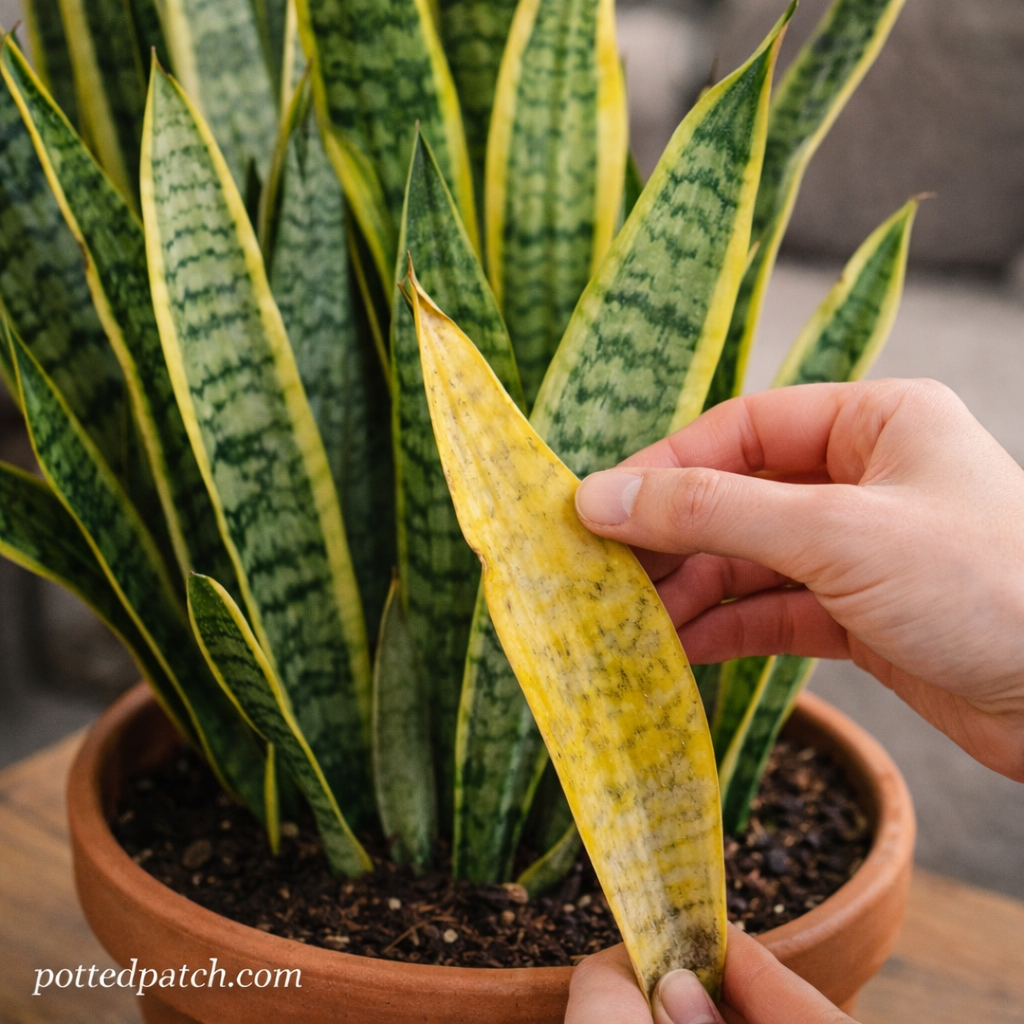
Yellowing leaves are a stress response. The plant is conserving energy or reacting to unfavorable conditions rather than actively growing.
Unlike fast-growing plants, snake plants respond slowly. That means yellowing often reflects a long-term issue rather than a sudden mistake.
Overwatering Is the Most Common Cause
Overwatering is by far the number one reason snake plant leaves turn yellow.
Snake plants store water in their thick leaves and rhizomes. When watered too frequently, the roots sit in moisture and begin to suffocate or rot.
Signs overwatering is the issue:
- Yellow leaves that feel soft or mushy
- Soil that stays wet for days
- A sour or musty smell from the pot
- Leaves collapsing near the base
How to fix it:
- Stop watering immediately
- Allow the soil to dry out completely
- Remove the plant and inspect roots if yellowing continues
- Trim any black, mushy roots and repot in fresh dry soil
Poor Drainage Traps Moisture
Even if you don’t water often, poor drainage can create the same problems as overwatering.
Common drainage issues include:
- Pots without drainage holes
- Heavy or compacted soil
- Decorative cache pots that trap excess water
When water has nowhere to go, roots remain wet long after watering.
How to fix it:
- Use a pot with drainage holes
- Switch to a well-draining soil mix
- Empty decorative pots after watering
Yellow Leaves From Too Much Water at Once
Snake plants prefer infrequent but thorough watering. However, soaking the soil repeatedly without allowing it to dry fully can cause yellowing.
This often happens when:
- Watering on a strict schedule instead of checking soil
- Watering small amounts too frequently
- Using self-watering pots incorrectly
Best practice:
- Water only when the soil is completely dry
- Water deeply, then let excess drain
- Avoid “top-off” watering
Low Light Stress Can Contribute
Snake plants tolerate low light, but extremely dim conditions can weaken them over time.
In low light:
- Growth slows dramatically
- Leaves may yellow gradually
- The plant becomes more sensitive to watering mistakes
How to fix it:
- Move the plant to brighter indirect light
- Avoid placing it in dark corners long-term
- Rotate the plant occasionally
Cold Temperatures and Drafts
Snake plants are tropical and do not tolerate cold well.
Cold stress can cause:
- Yellow or translucent patches
- Soft or collapsing leaves
- Sudden color changes
Common cold sources:
- Drafty windows
- Air conditioning vents
- Temperatures below 55°F
How to fix it:
- Move the plant away from cold drafts
- Keep temperatures stable
- Avoid placing near exterior doors in winter
Root Bound or Compact Soil Issues
A severely root-bound snake plant can develop yellow leaves due to nutrient and water imbalance.
Signs include:
- Slow growth despite proper care
- Soil drying unevenly
- Roots circling the pot tightly
How to fix it:
- Repot into a slightly larger container
- Refresh soil every 2–3 years
- Avoid jumping multiple pot sizes at once
Nutrient Imbalance or Fertilizer Burn
Too much fertilizer can damage roots and cause leaf discoloration, including yellowing.
This usually happens when:
- Fertilizing too often
- Using full-strength fertilizer year-round
- Fertilizing during winter dormancy
How to fix it:
- Stop fertilizing immediately
- Flush soil with water if buildup is suspected
- Resume feeding lightly during spring and summer only
Natural Aging of Leaves
Sometimes yellow leaves are completely normal.
Snake plants slowly shed older leaves as they grow. This usually affects:
- Outer leaves
- Leaves closest to the soil
- One or two leaves at a time
If the rest of the plant looks healthy, aging is likely the cause.
What to do:
- Trim yellow leaves at the base
- Continue normal care
- Monitor for additional symptoms
Should You Cut Yellow Leaves Off?
Yes—once a snake plant leaf turns fully yellow, it will not turn green again.
Best practice:
- Use clean, sharp scissors
- Cut at the base of the leaf
- Avoid tearing or pulling
Removing damaged leaves allows the plant to focus energy on healthy growth.
Quick Diagnosis Checklist
If your snake plant has yellow leaves, ask:
- Is the soil staying wet too long?
- Does the pot have drainage holes?
- Is the plant near cold drafts?
- Is it receiving extremely low light?
- Has it been fertilized recently?
Most yellowing issues trace back to water and drainage.
Final Thoughts
Yellow leaves on a snake plant are a signal, not a sentence. In most cases, the issue is simple to fix once identified. By adjusting watering habits, improving drainage, and keeping the plant in stable conditions, snake plants recover well and continue to thrive.
Slow down, observe the plant, and make small corrections. Snake plants reward patience far more than frequent intervention. 🌱