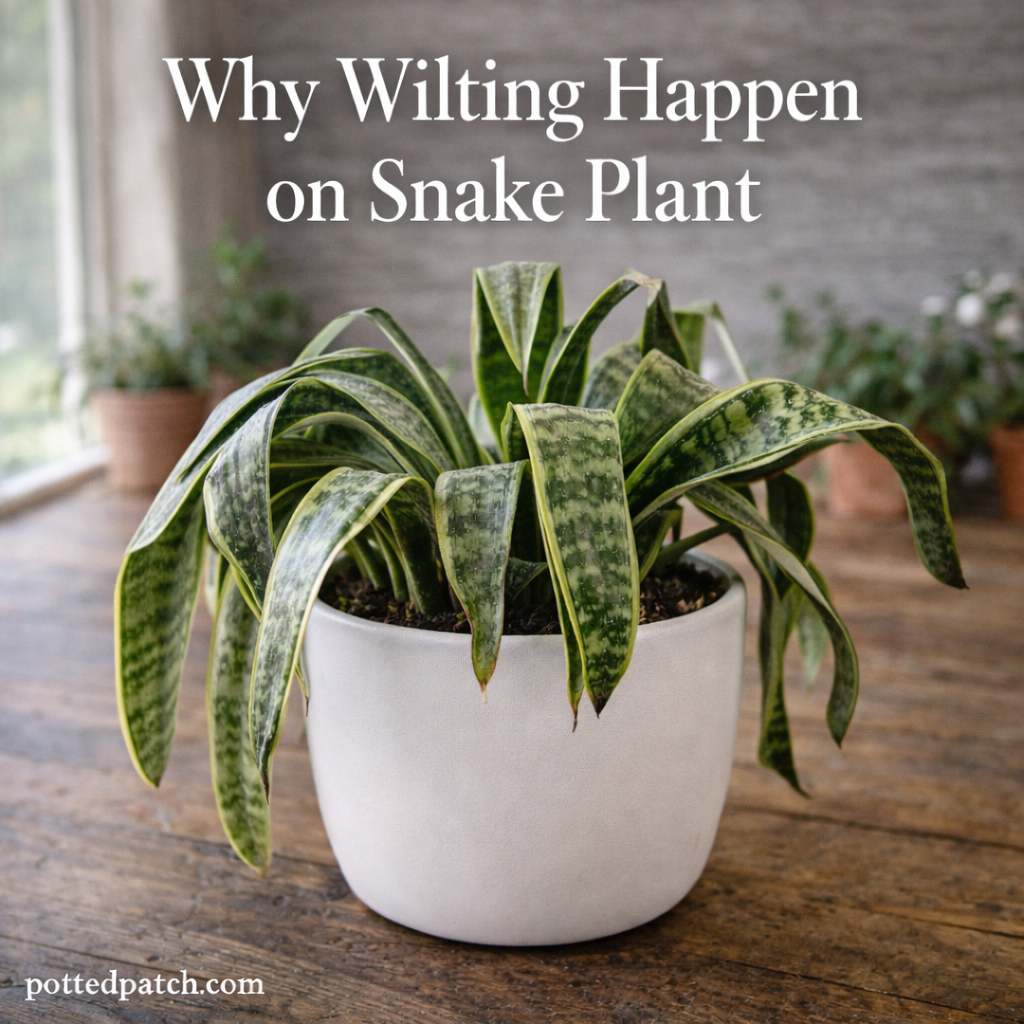
Snake plants are known for their stiff, upright leaves—so when those leaves start bending, drooping, or collapsing, it’s a clear sign something is wrong. Wilting in a snake plant is never normal and usually points to a care issue that needs correcting quickly.
This guide explains the most common reasons snake plants wilt, how to identify the cause, and what to do to restore firm, healthy growth.
What Wilting Looks Like in a Snake Plant
Wilting doesn’t always mean the same thing for every plant, but in snake plants it usually appears as:
- Leaves bending or leaning outward
- Soft or floppy leaves instead of rigid ones
- Leaves collapsing at the base
- Overall loss of structure
Because snake plants naturally hold themselves upright, any loss of firmness should be taken seriously.
Overwatering Is the Most Common Cause
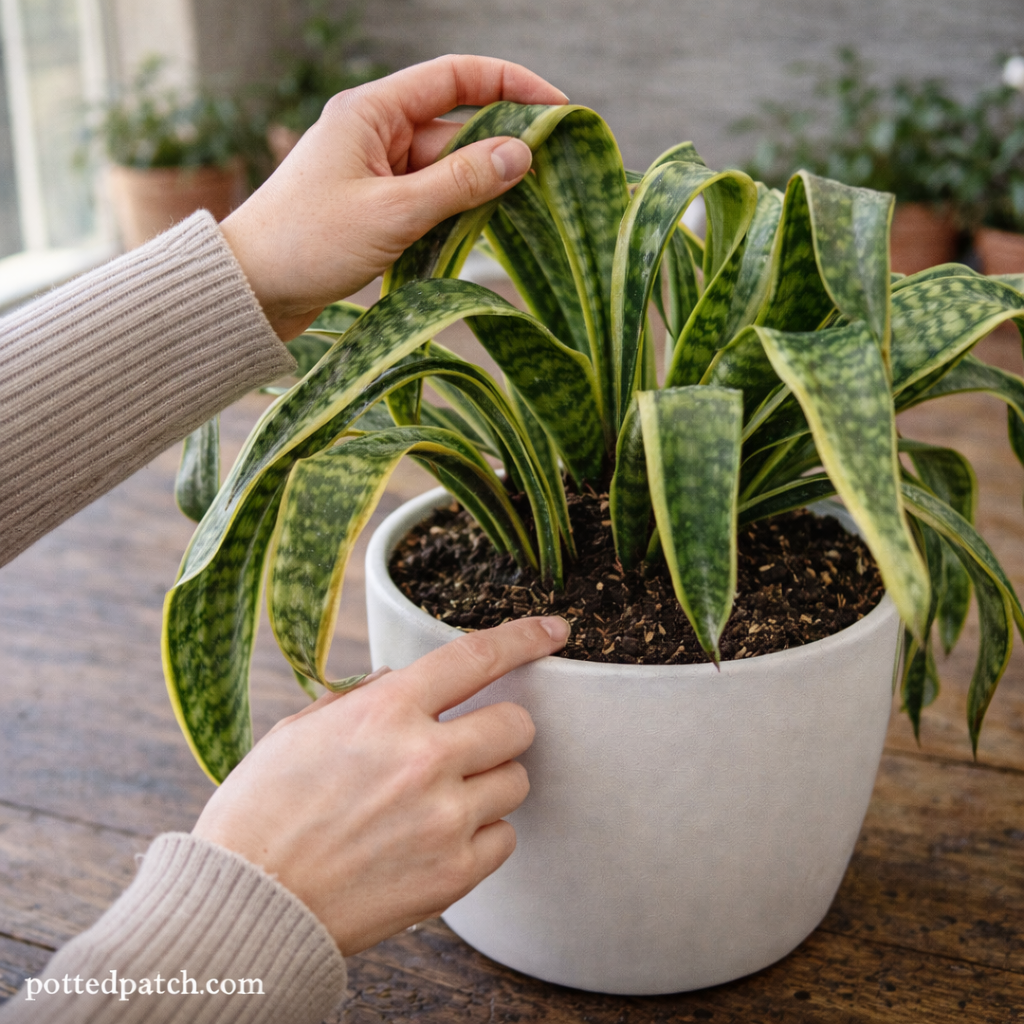
Overwatering is the number one reason snake plants wilt.
Snake plants store water in their leaves and underground rhizomes. When soil stays wet too long, roots begin to rot, cutting off the plant’s ability to absorb oxygen and nutrients. As a result, leaves lose firmness and start to wilt.
Signs of overwatering
- Soil feels damp or soggy for days
- Leaves feel soft or mushy
- Yellowing at the base of leaves
- Wilting combined with dark or black spots
How to fix it
- Stop watering immediately
- Let the soil dry out completely
- Make sure the pot has drainage holes
- Consider repotting into fresh, well-draining soil if rot is suspected
Root Rot and Rhizome Damage
If overwatering continues, wilting often progresses into root or rhizome rot.
Rhizomes are thick, underground storage organs that snake plants rely on for structure. When they rot, the plant loses its internal support system.
Signs of rot
- Strong, unpleasant odor from the soil
- Black, mushy roots or rhizomes
- Leaves falling over at the base
- Sudden, severe wilting
What to do
- Remove the plant from the pot
- Cut away all rotted roots and rhizomes with clean scissors
- Allow healthy sections to dry for 24 hours
- Repot in fresh, dry, well-draining soil
Underwatering and Extreme Dryness
While snake plants tolerate drought, prolonged dryness can also cause wilting.
When dehydrated for too long, leaves lose internal pressure and begin to bend or fold.
Signs of underwatering
- Soil extremely dry and compacted
- Leaves thinner or wrinkled
- Wilting with dry, crispy leaf edges
How to fix it
- Water thoroughly until excess drains out
- Resume a consistent watering routine
- Avoid frequent small waterings—deep watering is better
Poor Drainage or Wrong Soil
Even correct watering can cause wilting if soil holds too much moisture.
Dense potting mixes trap water around roots, leading to stress and collapse.
Drainage issues include
- Pots without drainage holes
- Heavy, peat-dense soil
- Decorative cachepots that hold water
Solution
- Use a cactus or succulent soil mix
- Add perlite or pumice for extra drainage
- Always allow excess water to escape
Light Stress Can Contribute to Wilting
Snake plants tolerate low light, but extreme conditions can weaken leaf structure.
Too little light
- Slower growth
- Weak, floppy leaves over time
Too much direct sun
- Heat stress
- Leaf damage that reduces rigidity
Fix
- Place in bright, indirect light
- Avoid harsh afternoon sun
- Rotate the plant occasionally
Temperature Shock or Cold Exposure
Snake plants are sensitive to cold.
Common temperature-related causes
- Cold drafts from windows or doors
- Sudden temperature drops
- Exposure below 45°F
Cold stress disrupts water movement inside the plant, leading to drooping or wilting.
What to do
- Move the plant to a warmer location
- Keep away from cold glass and vents
- Maintain stable indoor temperatures
Pot Size Problems
An overcrowded or oversized pot can both cause issues.
- Root-bound plants struggle to absorb water evenly
- Oversized pots hold excess moisture
Both scenarios can lead to wilting symptoms.
Fix
- Repot only when roots clearly outgrow the pot
- Choose a pot just 1–2 inches larger
Can a Wilted Snake Plant Recover?
In many cases, yes—if action is taken early.
Snake plants recover best when:
- Wilting is caught before rot spreads
- Healthy rhizomes remain intact
- Care issues are corrected promptly
New growth may take weeks to appear, but surviving leaves often firm up once conditions improve.
Common Mistakes That Keep Wilting From Improving
Avoid these habits during recovery.
- Continuing to water “just in case”
- Leaving the plant in soggy soil
- Using pots without drainage
- Expecting damaged leaves to straighten overnight
Patience and restraint are key.
Final Thoughts
Wilting in a snake plant is a clear signal—not a mystery. In most cases, the cause is overwatering, poor drainage, or root damage. Less commonly, extreme dryness, cold stress, or lighting problems may be responsible.
Once the underlying issue is corrected, snake plants are resilient and often bounce back. When in doubt, remember: snake plants prefer dry soil, bright indirect light, and minimal interference.