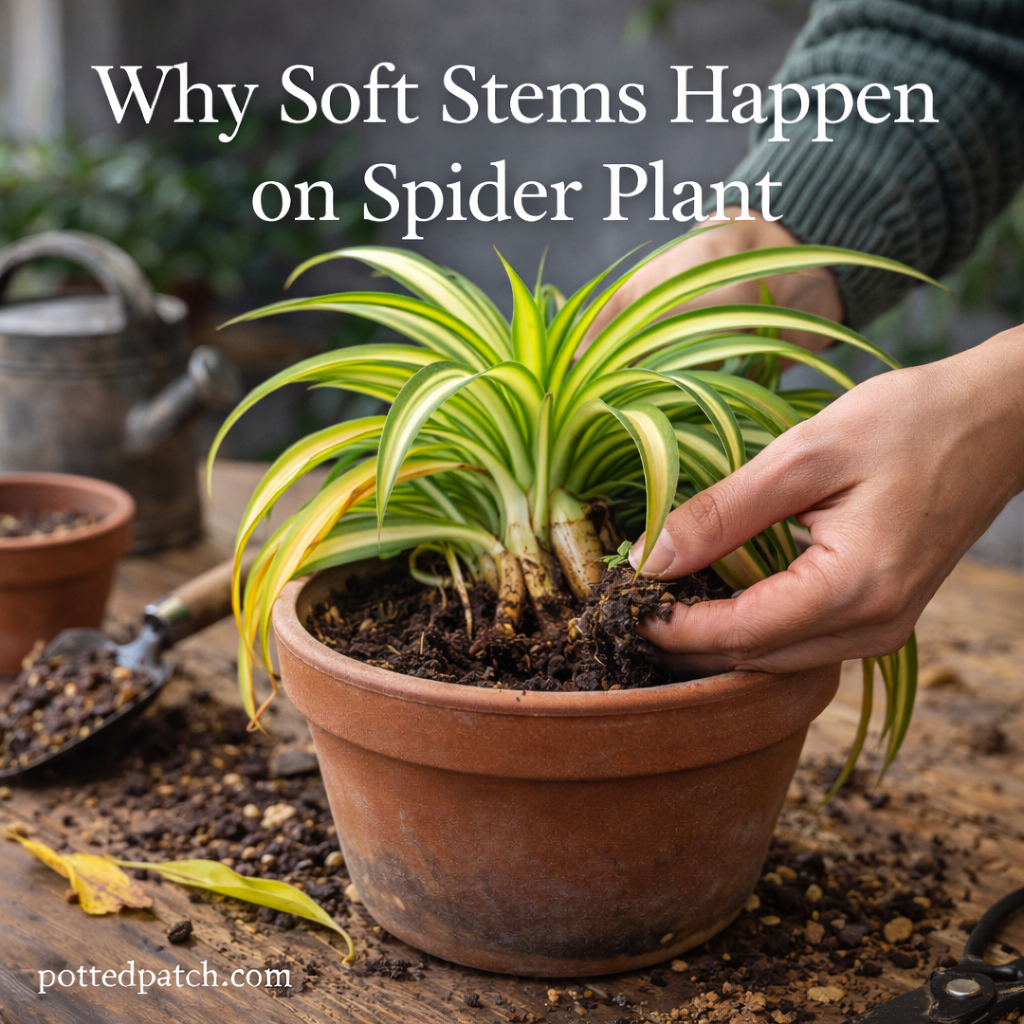
Spider plants are known for their tough, adaptable nature. So when you notice soft, weak, or mushy stems, it’s usually a sign something is wrong below the surface.
Soft stems are not normal for a healthy spider plant. The plant’s base and crown should feel firm and stable.
In this guide, you’ll learn why soft stems happen, how serious it is, and what you can do to fix it.
What Soft Stems Mean
Soft stems almost always indicate excess moisture.
Spider plants store water in their thick roots. When the soil stays wet for too long, roots begin to suffocate and rot. As root damage progresses, the softness can spread upward into the base of the plant.
If caught early, it’s fixable. If ignored, it can lead to plant collapse.
1. Overwatering (Most Common Cause)
Overwatering is the number one reason spider plant stems turn soft.
When soil remains constantly damp:
- Roots can’t get oxygen
- Fungal growth increases
- Rot spreads upward
Warning signs:
- Yellowing leaves
- Drooping even though soil is wet
- Mushy base near the soil line
- Sour smell from the pot
How to fix it:
- Stop watering immediately.
- Remove the plant from the pot.
- Inspect the roots.
- Trim away any brown, mushy sections.
- Repot in fresh, well-draining soil.
Switch to watering only when the top 1–2 inches of soil feel dry.
2. Poor Drainage
Even if you don’t overwater frequently, poor drainage can trap moisture.
Common drainage issues include:
- Pots without drainage holes
- Heavy, compacted soil
- Saucer left full of water
Spider plants need fast-draining soil and containers that allow excess water to escape.
If water sits at the bottom of the pot, the roots remain wet — and soft stems follow.
3. Crown Rot
Crown rot happens when water consistently sits at the base of the plant.
Unlike root rot, crown rot affects the center of the plant where leaves emerge.
Signs of crown rot:
- Softness directly at the center
- Leaves pulling out easily
- Darkened tissue at the base
This condition can spread quickly.
What to do:
- Remove affected tissue if possible.
- Ensure the crown stays above soil level.
- Avoid watering directly into the center of the plant.
If the crown is severely rotted, propagation of healthy offshoots may be the best solution.
4. Fungal or Bacterial Infection
Persistent moisture creates ideal conditions for fungal growth.
Infections can cause:
- Slimy stems
- Blackened tissue
- Rapid plant decline
Immediate action is necessary:
- Remove affected areas.
- Improve airflow.
- Reduce watering frequency.
- Repot with fresh soil if contamination is severe.
5. Cold Damage
Spider plants are sensitive to cold temperatures.
If exposed to:
- Temperatures below 50°F
- Cold drafts
- Sudden temperature drops
Tissue can become waterlogged and soft.
Move the plant to a warmer, stable environment between 65–80°F.
Cold damage sometimes mimics overwatering symptoms.
How to Check if the Damage Is Reversible
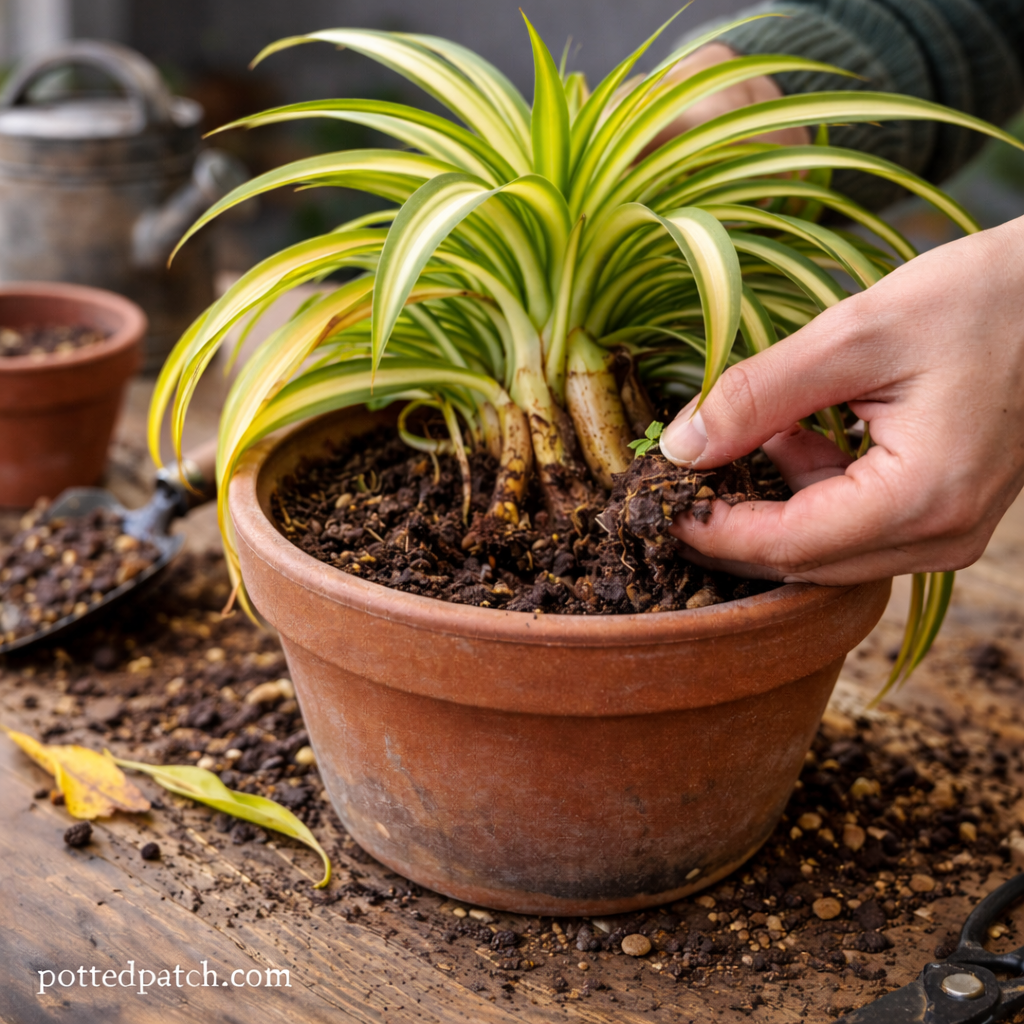
Gently press near the base of the plant.
- If only a small section feels soft, recovery is possible.
- If the entire crown is mushy, saving the main plant may be unlikely.
Healthy sections can often be propagated.
Spider plants produce “babies” (offshoots) that can be rooted separately if the parent plant declines.
How to Prevent Soft Stems in the Future
Prevention is much easier than treatment.
Follow these care guidelines:
- Use well-draining soil (add perlite if needed).
- Always use a pot with drainage holes.
- Water only when soil is partially dry.
- Avoid letting water sit in saucers.
- Keep the plant in bright, indirect light.
- Maintain consistent indoor temperatures.
Consistency is key.
Quick Action Plan
If your spider plant has soft stems:
- Stop watering immediately.
- Remove it from the pot.
- Inspect and trim damaged roots.
- Repot in fresh soil.
- Improve drainage and lighting.
The faster you act, the better your chances of saving the plant.
Final Thoughts
Soft stems on a spider plant are usually caused by excess moisture — whether from overwatering, poor drainage, or crown rot.
While it can look alarming, early intervention can save your plant. Adjust watering habits, improve soil drainage, and maintain stable indoor conditions.
Spider plants are resilient — with the right care, they can recover quickly.