Pothos is known for being one of the easiest houseplants to grow. Its trailing vines and heart-shaped leaves are usually resilient and forgiving.
So when you notice soft stems on your pothos, it can feel alarming.
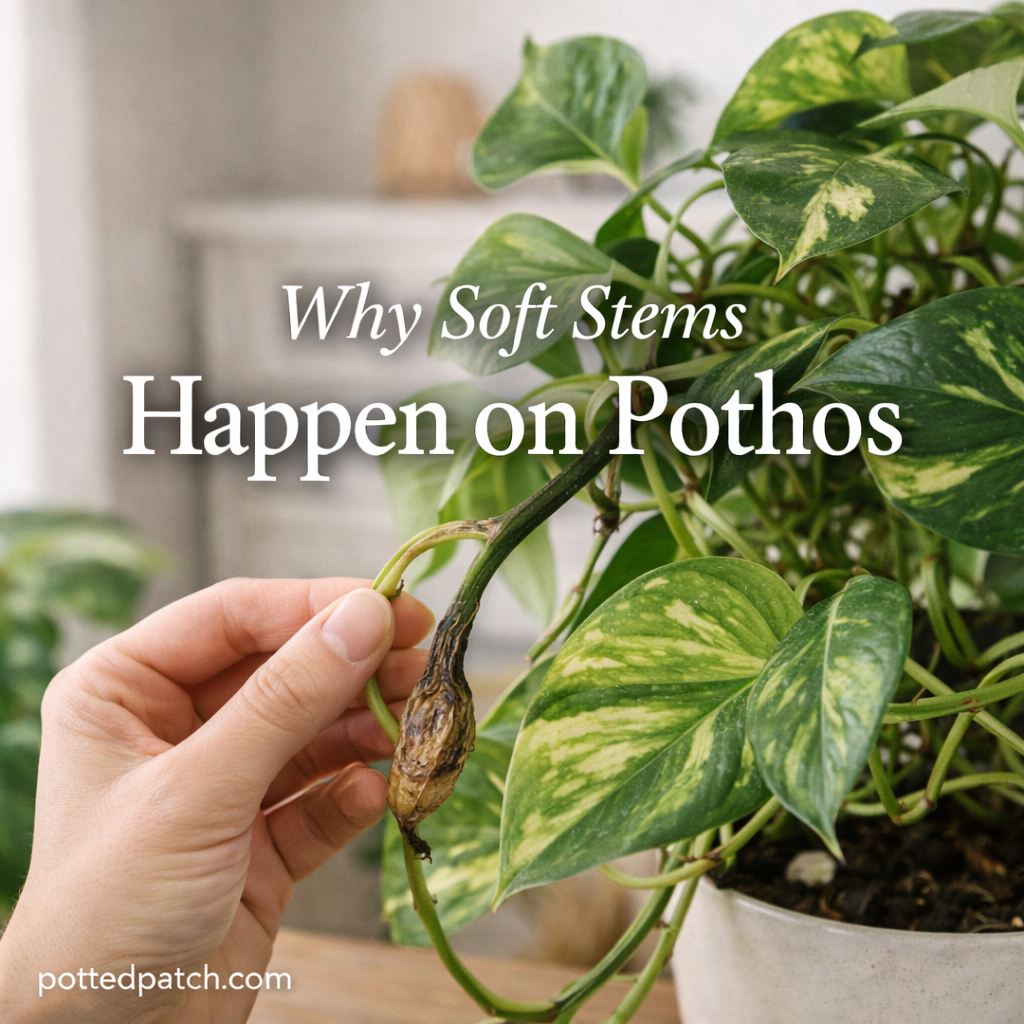
Soft, mushy, or weak stems are a sign that something in the plant’s environment is off. The good news? In most cases, the problem is fixable if caught early.
Let’s break down why soft stems happen on pothos and how to fix them.
What Soft Stems Mean on a Pothos Plant
Healthy pothos stems should feel:
- Firm but flexible
- Smooth and slightly sturdy
- Strong enough to support leaves
If the stems feel:
- Mushy
- Limp
- Collapsing
- Darkened or translucent
You’re likely dealing with a watering or root issue.
The #1 Cause: Overwatering
Overwatering is the most common reason pothos stems become soft.
When soil stays wet too long:
- Roots can’t get oxygen.
- Root rot begins.
- The rot spreads upward into the stems.
- Stems turn soft and weak.
Signs It’s Overwatering
- Yellowing leaves
- Soil that stays wet for days
- A sour or musty smell
- Black or brown stem sections
If you gently squeeze the stem and it feels mushy, root rot is likely present.
Poor Drainage Can Make It Worse
Even if you don’t water frequently, poor drainage can cause soft stems.
Common drainage problems:
- No drainage holes in the pot
- Heavy, compacted soil
- Decorative outer pots trapping water
- Large pots that hold excess moisture
Pothos prefer well-draining soil that dries slightly between waterings.
Underwatering (Less Common but Possible)
Soft stems can occasionally happen from severe underwatering.
If the plant dries out too long:
- Stems may wrinkle and weaken
- Leaves curl and droop
- Soil pulls away from the sides of the pot
However, underwatered stems feel dry and shriveled — not mushy.
This distinction is important.
Temperature Stress
Pothos plants dislike sudden cold exposure.
If stems feel soft and watery after:
- Cold drafts
- Being near a winter window
- Exposure to temperatures below 50°F
Cold damage may be the cause.
Cold-injured stems often look dark and feel waterlogged.
Fungal or Bacterial Infection
If soft stems are spreading quickly, you may be dealing with infection.
Signs include:
- Rapid stem collapse
- Blackened base
- Foul odor
- White mold on soil surface
Infections usually start in overly wet conditions.
How to Fix Soft Stems on Pothos
Act quickly to prevent spread.
Step 1: Inspect the Roots
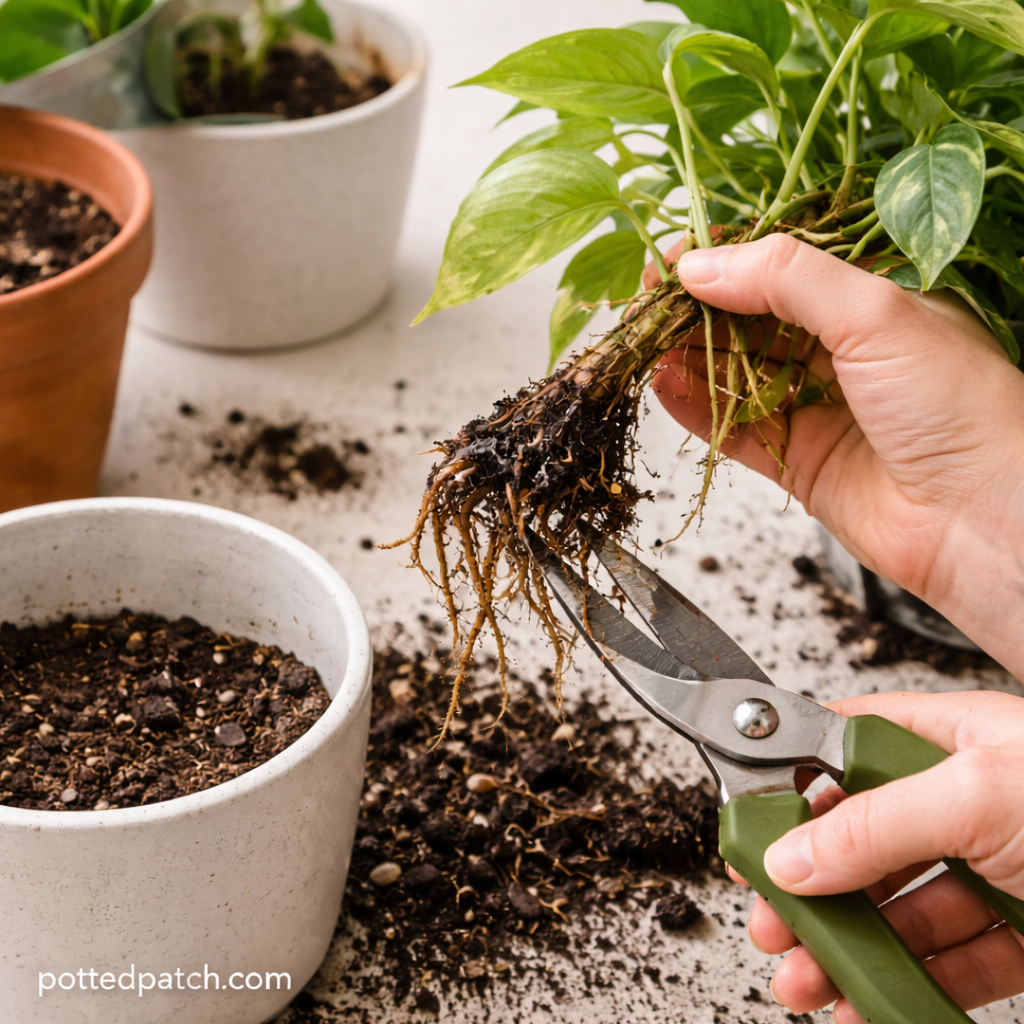
Remove the plant from its pot and check the roots.
Healthy roots:
- White or light tan
- Firm
Rotten roots:
- Brown or black
- Mushy
- Slimy
Trim away all affected roots with clean scissors.
Step 2: Remove Damaged Stems
Cut back soft or blackened stems until you reach healthy tissue.
If the base is severely rotted, propagation may be the best option.
Step 3: Repot in Fresh Soil
Use:
- Well-draining houseplant soil
- A pot with drainage holes
- A container only slightly larger than the root ball
Avoid reusing contaminated soil.
Step 4: Adjust Watering Habits
Only water when:
- The top 1–2 inches of soil are dry
- The pot feels lighter
In most homes, that’s about every 7–14 days.
Always empty excess water from saucers.
When to Propagate Instead
If root rot has spread extensively, save healthy vines by propagating.
- Cut healthy sections below a node.
- Place cuttings in water.
- Wait for new roots to form.
- Replant in fresh soil.
Pothos propagate easily, making recovery possible even after severe stem damage.
How to Prevent Soft Stems in the Future
Prevention is much easier than treatment.
Follow these guidelines:
- Use pots with drainage holes
- Choose airy, well-draining soil
- Avoid watering on a strict schedule
- Let soil partially dry between waterings
- Keep away from cold drafts
- Clean pruning tools before use
Good drainage and moderate watering solve most pothos problems.
Final Thoughts
Soft stems on pothos usually point to excess moisture or root rot. While it may look serious, early intervention can save the plant.
Check the roots, trim damaged sections, refresh the soil, and adjust watering habits. With the right care, pothos recover quickly and return to their vibrant, trailing growth.
Pay attention to how your soil feels — that’s your best guide.