

If your peace lily’s stems feel soft, mushy, or weak, it’s usually a sign something is wrong below the surface.
Soft stems are not a cosmetic issue — they’re a warning signal. In most cases, the cause is moisture-related stress, especially root rot.
The good news? If you act quickly, your peace lily can often recover.
Let’s break down why soft stems happen and how to fix the problem.
The Most Common Cause: Overwatering
Peace lilies like consistently moist soil — but not soggy soil.
When the roots sit in water for too long, oxygen can’t reach them. The roots begin to rot, and once that happens, the damage spreads upward into the stems.
Signs Overwatering Is the Problem
- Soil feels wet for several days
- Leaves turn yellow before drooping
- Stems feel mushy at the base
- Foul smell coming from the soil
Soft stems combined with yellowing leaves almost always point to overwatering.
Root Rot: What’s Really Happening
Soft stems are often the result of root rot.
When roots decay, they can no longer transport water and nutrients properly. The plant tissue becomes weak and waterlogged, leading to soft, collapsing stems.
Healthy roots are:
- Firm
- White or light tan
- Slightly crisp to the touch
Rotting roots are:
- Brown or black
- Slimy
- Mushy
- Foul-smelling
If you suspect root rot, you’ll need to inspect the root system directly.
How to Fix Soft Stems on Peace Lily
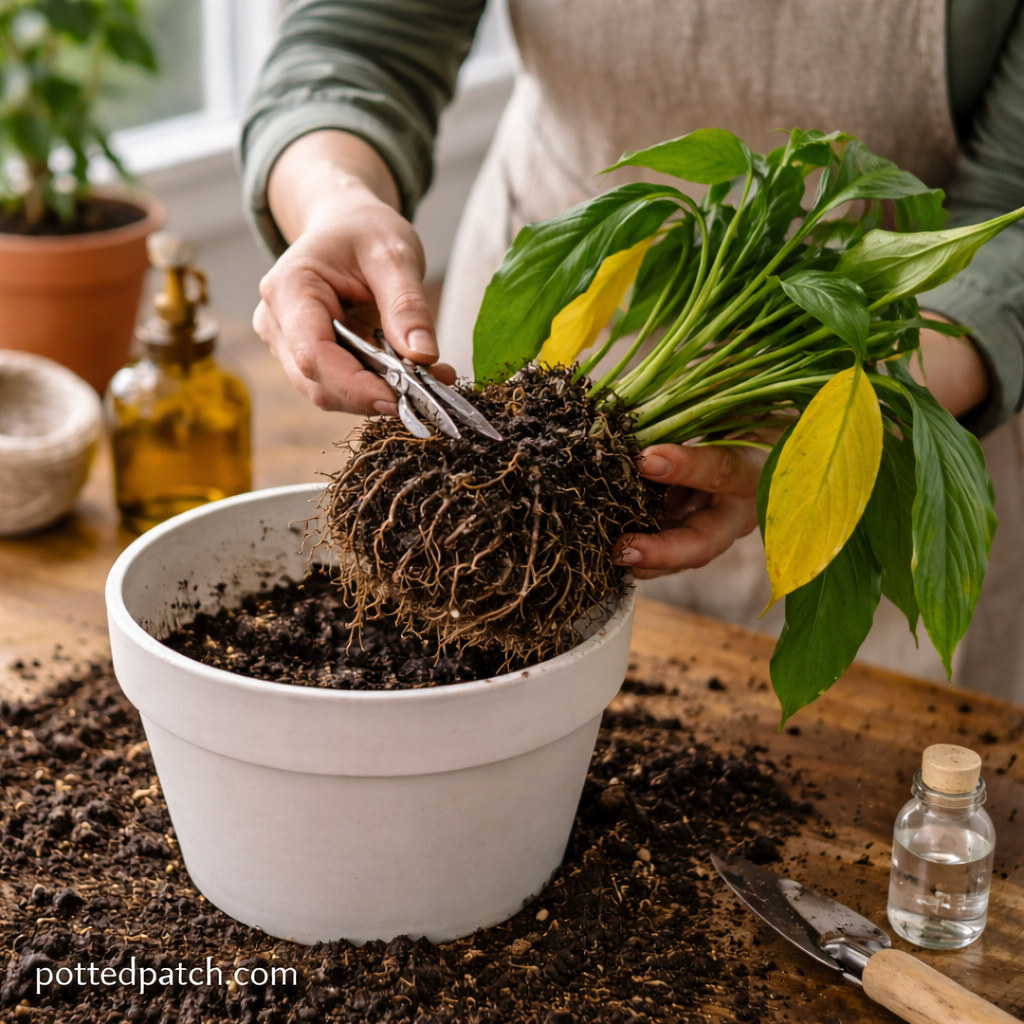
If caught early, recovery is possible.
Step 1: Remove the Plant From Its Pot
Gently slide the peace lily out and shake off excess soil.
Examine the roots carefully.
Step 2: Trim Damaged Roots
Use clean, sterilized scissors to cut away:
- Black roots
- Mushy roots
- Slimy sections
Only keep firm, healthy roots.
Step 3: Repot in Fresh Soil
Use:
- A well-draining indoor potting mix
- A pot with drainage holes
- Slightly dry soil (not soaking wet)
Do not reuse old, soggy soil.
Step 4: Adjust Watering Habits
Going forward:
- Water only when the top 1–2 inches of soil feel dry
- Empty drainage trays promptly
- Never let the plant sit in standing water
Consistency is key.
Could Poor Drainage Be the Cause?
Sometimes it’s not how often you water — it’s where the water goes.
Peace lilies placed in decorative pots without drainage holes are highly prone to soft stems.
Water collects at the bottom and suffocates roots.
Fix Poor Drainage Fast
- Always use an inner nursery pot with holes
- Add perlite or orchid bark to improve airflow
- Avoid compacted, heavy soil
Drainage prevents future rot.
Low Light Can Make It Worse
Peace lilies tolerate low light, but very dim conditions slow soil drying.
When the soil stays wet longer than it should, root rot becomes more likely.
If your plant is in a dark corner, move it to:
- Bright, indirect light
- Near a north- or east-facing window
- A room with consistent daylight
Improved light helps regulate moisture levels.
When Soft Stems Are Not Reversible
If most stems are completely collapsed and roots are severely rotten, recovery may not be possible.
In that case:
- Remove any remaining healthy sections
- Consider propagating if viable divisions exist
- Discard severely infected soil
Early intervention dramatically increases success.
How to Prevent Soft Stems in the Future
Prevention is much easier than recovery.
Follow this simple checklist:
- Use a pot with drainage holes
- Water only when soil begins to dry
- Avoid letting the plant sit in water
- Provide bright, indirect light
- Repot every 1–2 years with fresh soil
Peace lilies thrive when their roots can breathe.
Quick Diagnosis Guide
If your peace lily has soft stems, ask:
- Is the soil constantly wet?
- Does the pot drain properly?
- Do the roots smell bad?
- Is the plant sitting in low light?
Answering these questions quickly helps you act before the damage spreads.
Final Thoughts
Soft stems on a peace lily are almost always caused by excess moisture and root rot.
The solution isn’t more care — it’s better care.
Improve drainage.
Adjust watering.
Increase light if needed.
With prompt action, your peace lily can regain its strength and return to healthy, upright growth.