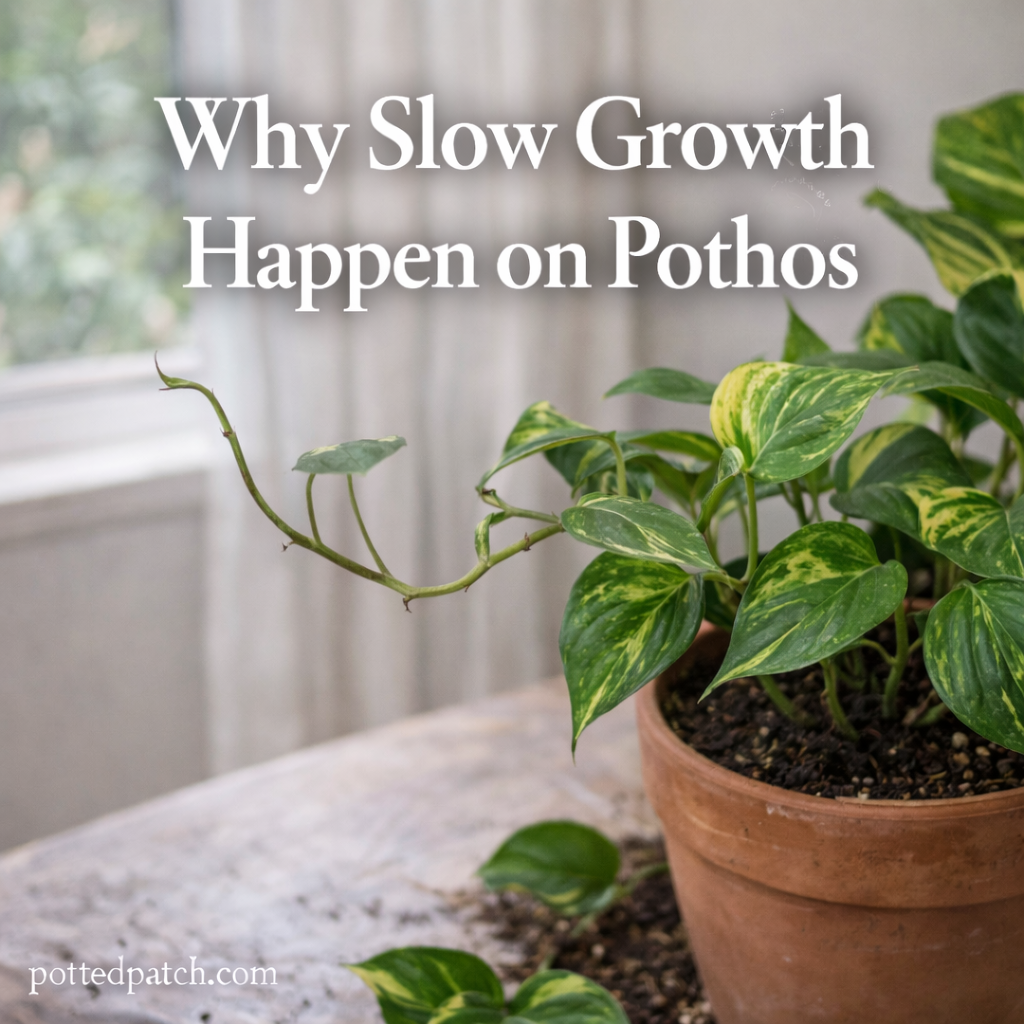
Pothos plants are known for fast, trailing vines and steady indoor growth. So when your plant suddenly stops growing—or seems stuck for months—it can feel frustrating.
Slow growth is usually a signal that something in the environment needs adjustment. The good news? Most causes are easy to fix once identified.
Let’s break down why slow growth happens on pothos and what you can do about it.
Is Slow Growth Ever Normal?
Yes.
Pothos growth naturally slows during:
- Fall and winter
- Periods of low light
- After repotting
- Shortly after bringing the plant home
If it’s winter or your plant recently went through a change, mild slow growth may be temporary.
If it’s spring or summer and growth is stalled, look deeper.
1. Not Enough Light
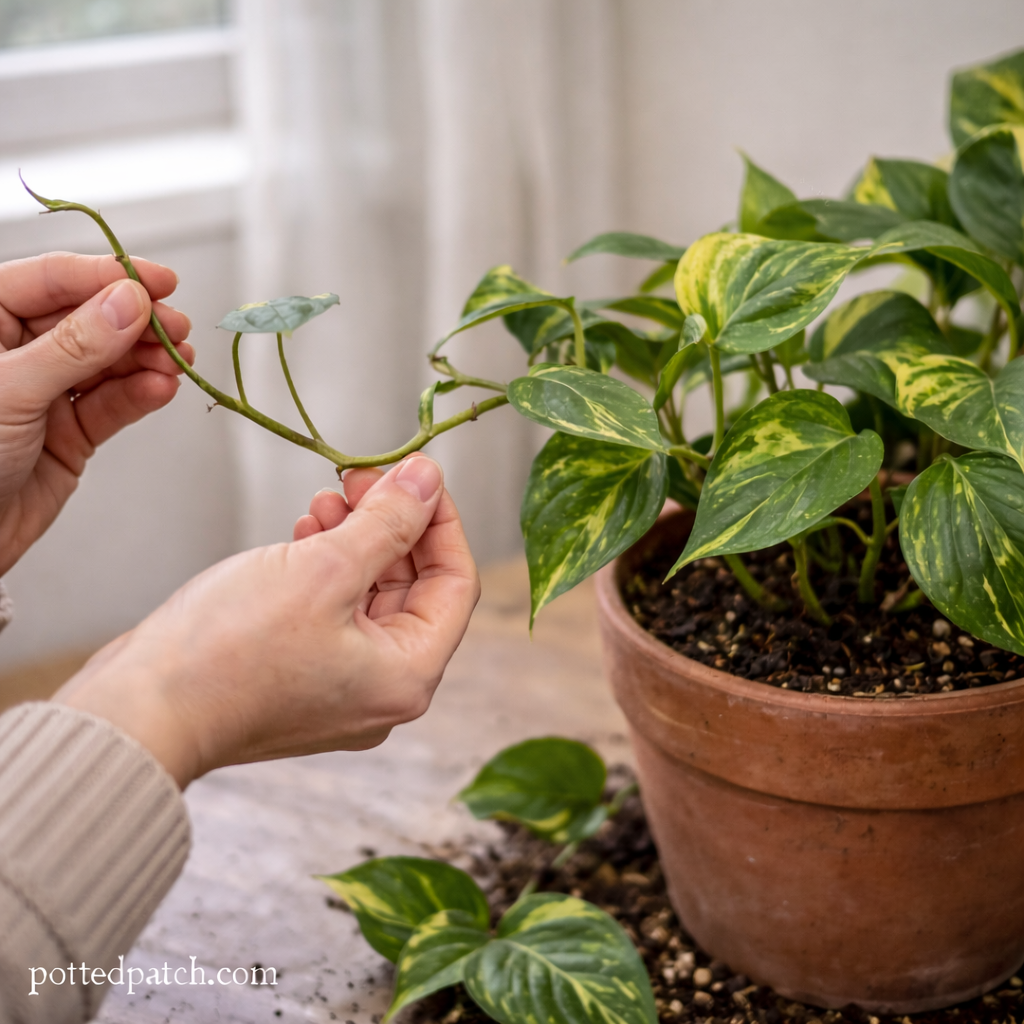
The most common reason pothos grows slowly is insufficient light.
Pothos tolerates low light—but it doesn’t thrive in it.
Signs of Low Light:
- Smaller new leaves
- Long gaps between leaves
- Pale or dull foliage
- Stretched, leggy vines
Fix:
Move your plant to bright, indirect light. A spot near an east- or south-facing window (with filtered light) is ideal.
Brighter light = faster growth.
2. Overwatering
When soil stays wet too long, roots struggle to absorb nutrients.
This leads to:
- Slower growth
- Yellowing leaves
- Wilting despite moist soil
Fix:
- Allow the top 1–2 inches of soil to dry before watering.
- Ensure your pot has drainage holes.
- Improve soil aeration with perlite if needed.
Healthy roots support healthy growth.
3. Underwatering
On the other hand, extremely dry soil can also stall growth.
If your pothos frequently dries out completely:
- Growth may pause
- Leaves may curl
- Soil may pull away from pot edges
Fix:
Water thoroughly and maintain consistent moisture cycles.
Avoid small, frequent sips—pothos prefers deep watering followed by partial drying.
4. Root Bound Conditions
If your plant has been in the same pot for years, roots may be overcrowded.
Signs include:
- Soil drying very quickly
- Roots circling the bottom
- Slowed growth despite good light
Fix:
Repot into a container 1–2 inches larger with fresh soil.
More room = stronger root development.
5. Lack of Nutrients
Indoor plants rely on you for nutrients.
If your pothos hasn’t been fertilized during growing season, it may slow down.
Signs of Nutrient Deficiency:
- Pale green leaves
- Small new growth
- Thin stems
Fix:
Feed with a balanced liquid houseplant fertilizer once per month during spring and summer.
Avoid fertilizing in winter.
6. Temperature Stress
Pothos prefers temperatures between 65–85°F.
Growth may slow if:
- The plant is near a drafty window
- It sits under an AC vent
- Temperatures drop below 60°F
Move the plant to a more stable indoor location.
7. Low Humidity
Pothos tolerates average indoor humidity, but very dry air can slow growth.
You may notice:
- Slight leaf curl
- Slower vine extension
Grouping plants together or using a humidifier can help in dry climates.
How to Encourage Faster Growth
If you want your pothos to grow more quickly:
- Provide bright, indirect light.
- Water consistently (not too much, not too little).
- Fertilize monthly during growing season.
- Repot every 1–2 years.
- Keep temperatures stable.
Healthy conditions lead to noticeable vine growth within weeks.
When to Be Patient
Sometimes slow growth is temporary.
After repotting or relocating, give your plant:
- 2–4 weeks to adjust
- Stable lighting
- Consistent care
Avoid making multiple changes at once.
Final Thoughts
Slow growth on pothos is rarely permanent. It’s usually a signal that light, water, nutrients, or space needs adjusting.
By:
- Improving lighting
- Correcting watering habits
- Refreshing soil
- Fertilizing properly
You can restore steady, healthy growth.
Pothos is resilient—and once conditions improve, it often bounces back quickly.