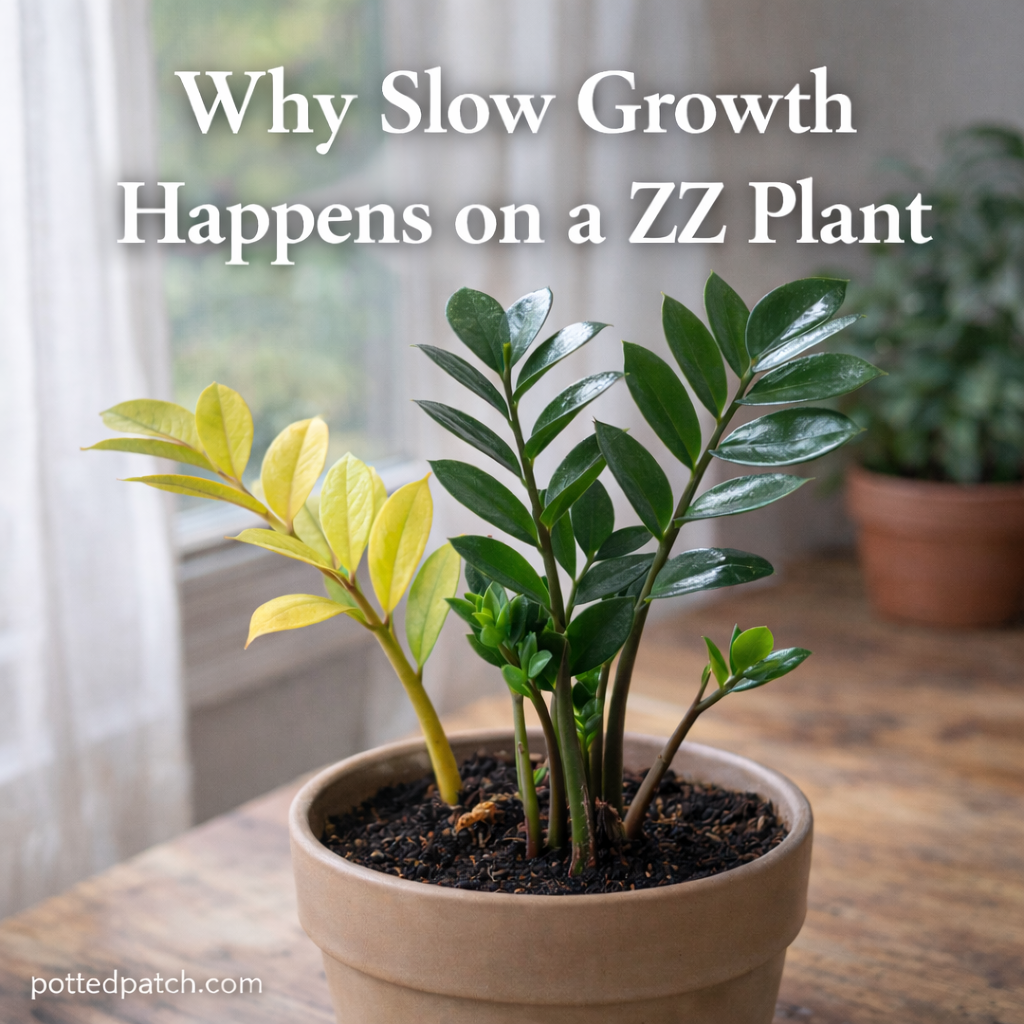
The ZZ plant (Zamioculcas zamiifolia) is known for being low-maintenance and resilient. But one thing that surprises many plant owners is just how slow it can grow.
If your ZZ plant hasn’t produced a new stem in months, don’t immediately assume something is wrong. Slow growth is often normal — but sometimes it signals a care issue.
Here’s how to tell the difference and what you can do about it.
Is Slow Growth Normal for ZZ Plants?
Yes — to a degree.
ZZ plants are naturally slow growers. They store water and energy in thick underground rhizomes, which allows them to survive drought but also slows their growth rate.
Under ideal conditions, you can expect:
- New stems during spring and summer
- Little to no growth in fall and winter
- Gradual, steady development rather than rapid growth
If your plant looks healthy but isn’t growing quickly, it may simply be following its natural rhythm.
1. Insufficient Light
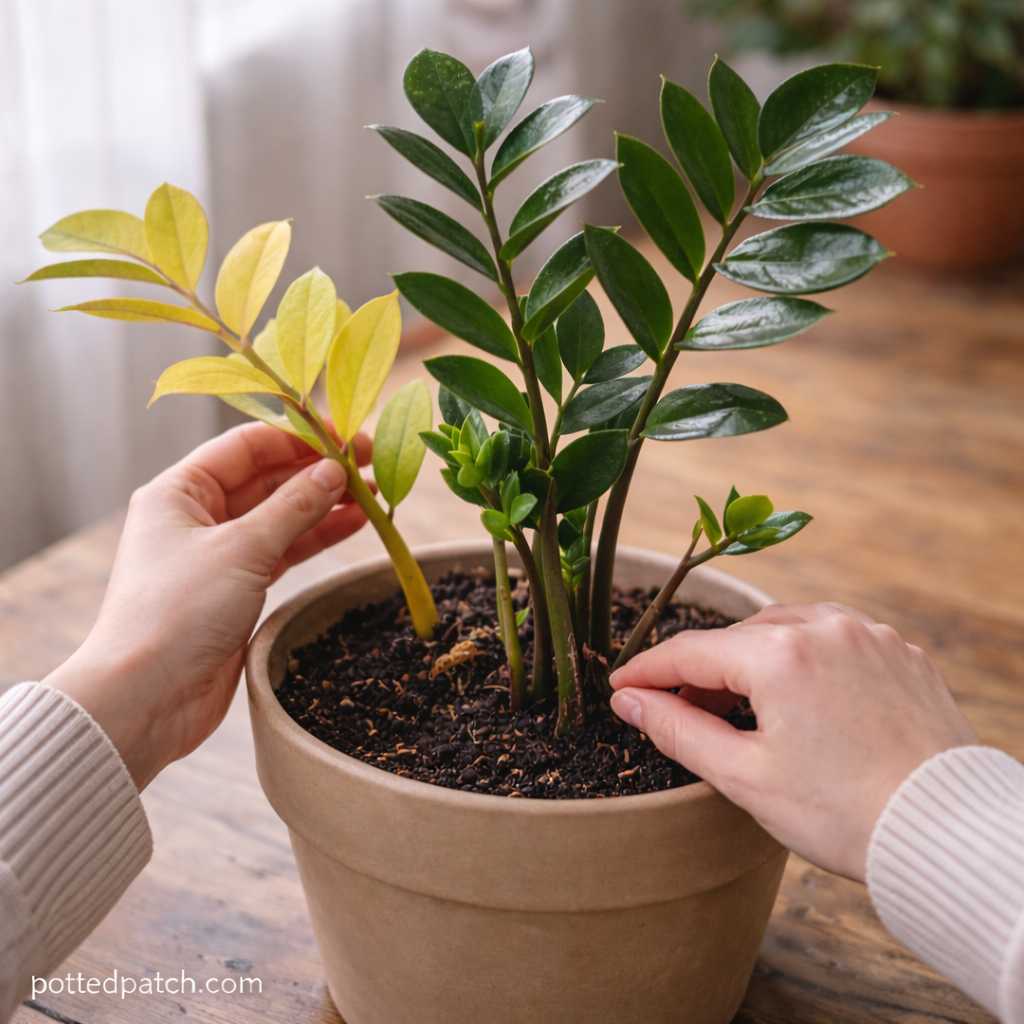
The most common reason for extremely slow growth is low light.
ZZ plants tolerate low light, but they do not thrive in it.
Signs Light Is Too Low
- No new shoots during growing season
- Thin, weak stems
- Very slow overall development
How to Fix It
- Move the plant closer to a bright, indirect light source.
- Place near an east-facing window.
- Position a few feet back from a south or west window.
- Consider a grow light if natural light is limited.
More light often leads to noticeably faster growth within weeks.
2. Overwatering
Overwatering damages roots and slows nutrient uptake.
Even if the plant doesn’t show full root rot symptoms, constantly damp soil can suppress growth.
Signs of Overwatering
- Soil stays wet longer than 10 days
- Yellowing leaves
- Mushy base stems
Solution
- Allow soil to dry completely before watering.
- Use a pot with drainage holes.
- Improve soil drainage with perlite or coarse materials.
ZZ plants prefer dry soil between waterings.
3. Underwatering (Yes, It Happens)
While ZZ plants tolerate drought, extreme dryness for long periods can cause stalled growth.
If the soil has been bone dry for weeks repeatedly, the plant may shift into survival mode.
Balance Is Key
- Let soil dry fully.
- Water thoroughly when you do water.
- Avoid frequent light watering.
Deep, infrequent watering works best.
4. Rootbound Conditions
If the plant has outgrown its pot, growth can slow.
Signs It’s Rootbound
- Roots growing from drainage holes
- Soil drying very quickly
- Stalled growth despite good light
Repot every 2–3 years or when roots crowd the container.
Move up only 1–2 inches in pot size to avoid excess moisture retention.
5. Nutrient Deficiency
If your ZZ plant hasn’t been fertilized in over a year, it may lack nutrients to push new growth.
Fertilizing Tips
- Feed every 6–8 weeks during spring and summer.
- Use a balanced liquid fertilizer.
- Dilute to half strength.
- Do not fertilize in winter.
Avoid overfeeding, which can damage roots.
6. Seasonal Dormancy
Growth naturally slows in:
- Fall
- Winter
- Early spring in cooler climates
Shorter days and lower light levels reduce the plant’s energy production.
If your ZZ plant looks healthy but isn’t growing between October and March, this is likely normal dormancy.
7. Cold Temperatures
ZZ plants prefer temperatures between:
- 65–85°F
If exposed to:
- Drafty windows
- Cold floors
- Air conditioning vents
Growth can slow significantly.
Keep plants in stable indoor conditions year round.
8. Stress From Recent Changes
After:
- Repotting
- Moving locations
- Recovering from root rot
- Major pruning
The plant may pause growth temporarily.
ZZ plants prioritize root recovery before producing new shoots.
How Long Should You Wait for New Growth?
Under good conditions:
- New stems typically emerge in spring or summer.
- Growth may occur once or twice per season.
- Large, mature plants grow faster than young ones.
If more than 6 months pass during active season with no growth and multiple stress factors are present, adjust care.
Signs Your ZZ Plant Is Healthy (Even If Growing Slowly)
Even without rapid growth, your plant is likely healthy if it has:
- Firm, upright stems
- Glossy green leaves
- No yellowing or mushy tissue
- No foul-smelling soil
Healthy appearance matters more than growth speed.
Final Thoughts
Slow growth on a ZZ plant is often normal. However, extremely stalled growth usually comes down to:
- Low light
- Overwatering
- Rootbound conditions
- Nutrient deficiency
- Seasonal dormancy
Improve lighting, adjust watering habits, and ensure proper drainage. With patience and consistent care, your ZZ plant will eventually reward you with fresh new stems.