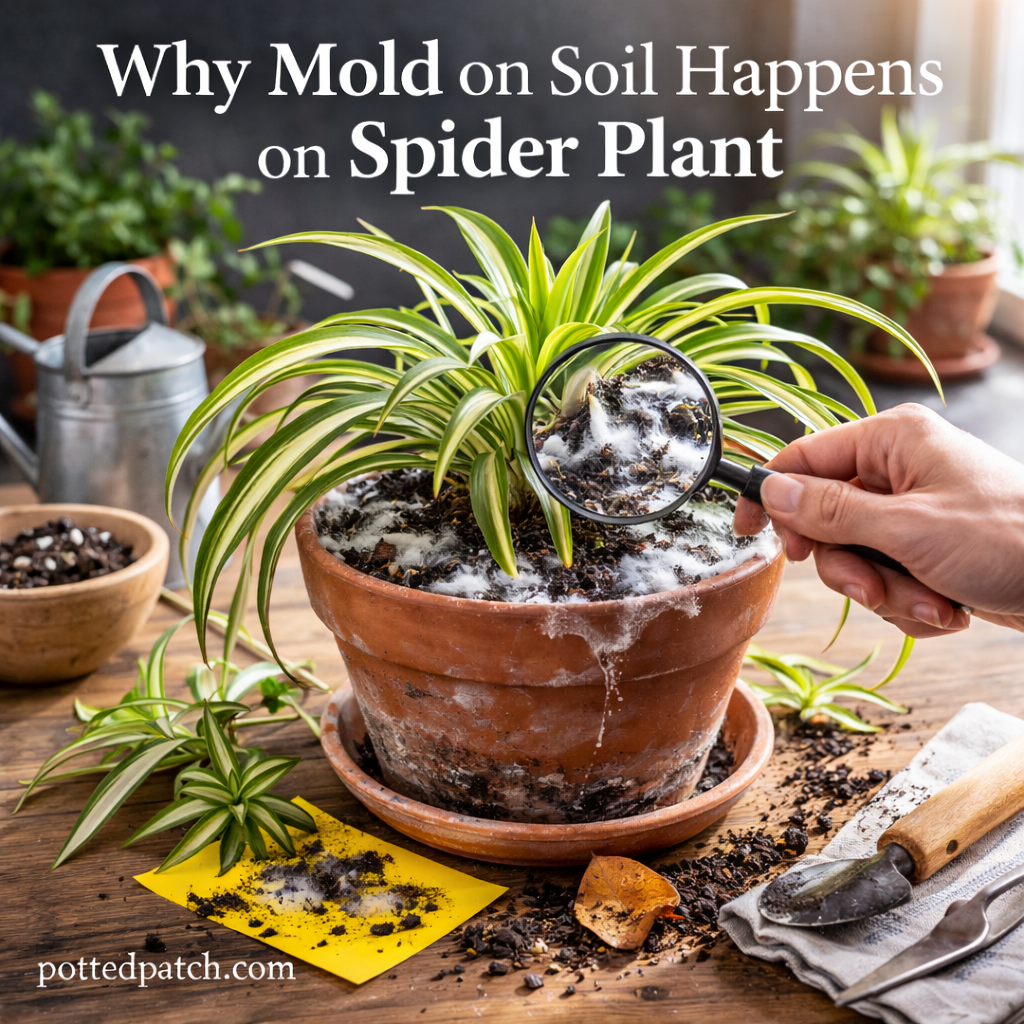
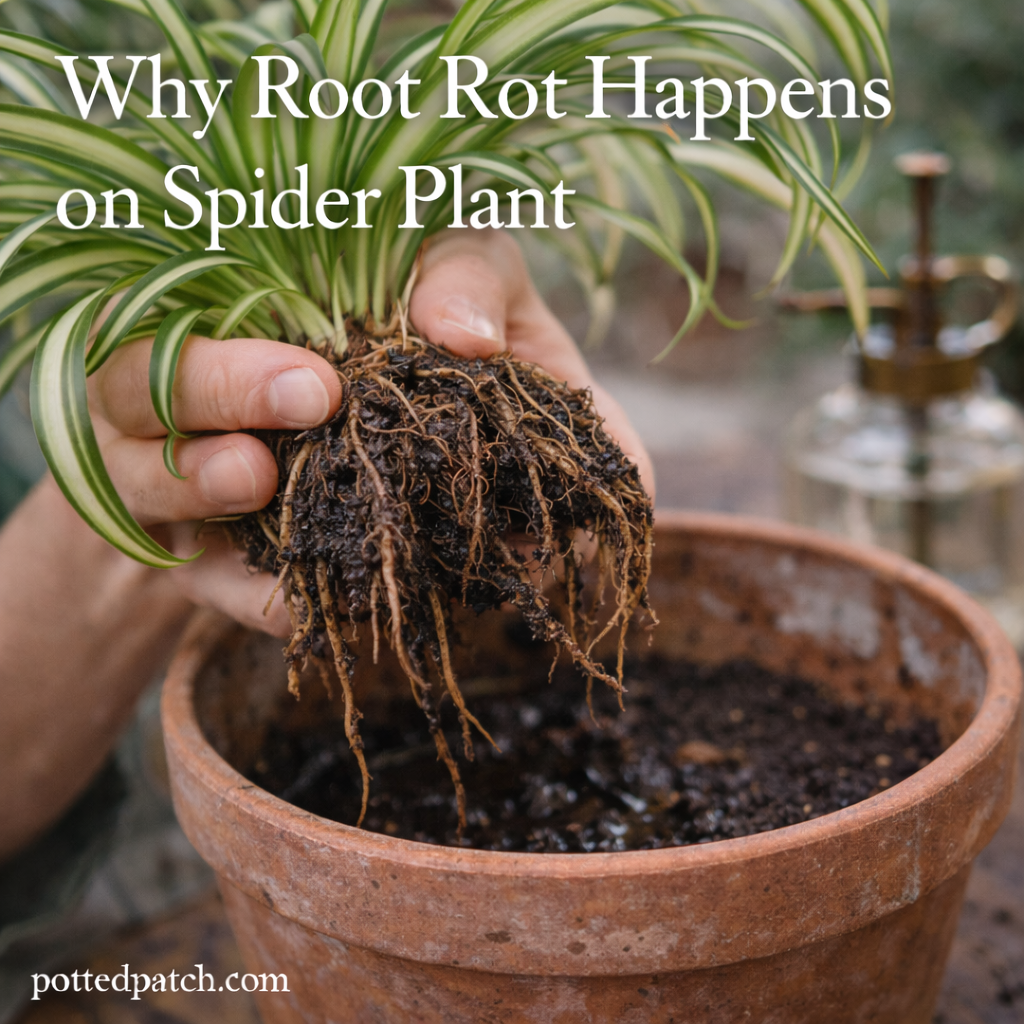
Spider plants are known for being hardy and adaptable. But even these resilient houseplants can develop root rot if conditions aren’t right.
Root rot happens when the roots sit in consistently wet, oxygen-starved soil. Once roots begin to decay, the plant can no longer absorb water or nutrients properly — even if the soil looks moist.
Understanding why root rot happens on spider plant is the first step to preventing it.
What Is Root Rot?
Root rot is a condition where roots become soft, brown, and mushy due to prolonged exposure to excess moisture.
Healthy spider plant roots are:
- Firm
- White or light tan
- Thick and fleshy
Rotten roots are:
- Dark brown or black
- Slimy or mushy
- Foul-smelling
Once roots decay, they cannot recover — but the plant can still be saved if caught early.
1. Overwatering
The most common cause of root rot is watering too frequently.
Spider plants prefer evenly moist soil, but they do not like sitting in wet conditions.
How Overwatering Leads to Rot
- Soil stays saturated for days
- Oxygen cannot reach roots
- Roots suffocate and begin to decay
If you water on a strict schedule instead of checking soil moisture, overwatering becomes more likely.
2. Poor Drainage
Even if you don’t water often, poor drainage can trap moisture.
Common Drainage Mistakes
- Using pots without drainage holes
- Leaving water in decorative outer pots
- Using dense, compacted soil
Water must be able to flow freely out of the container. If it can’t, roots remain wet too long.
3. Heavy or Compacted Soil
Spider plants need light, airy soil.
Dense soil holds excess moisture and reduces airflow around roots.
Ideal Soil Mix
- Indoor potting mix
- Added perlite for drainage
- Optional orchid bark for airflow
Compacted soil prevents roots from drying properly between waterings.
4. Cold Temperatures
Cold conditions slow root metabolism.
If soil stays wet while temperatures are low, roots are even more vulnerable to rot.
Spider plants prefer temperatures between 60–80°F. Avoid placing them near cold drafts or chilly windows in winter.
5. Oversized Pots
Choosing a pot that’s too large can unintentionally increase rot risk.
More soil means more retained moisture. If the root system is small compared to the container, excess soil stays wet for longer.
Spider plants prefer being slightly snug in their pots.
Early Warning Signs of Root Rot
Watch for:
- Yellowing leaves
- Limp or drooping growth
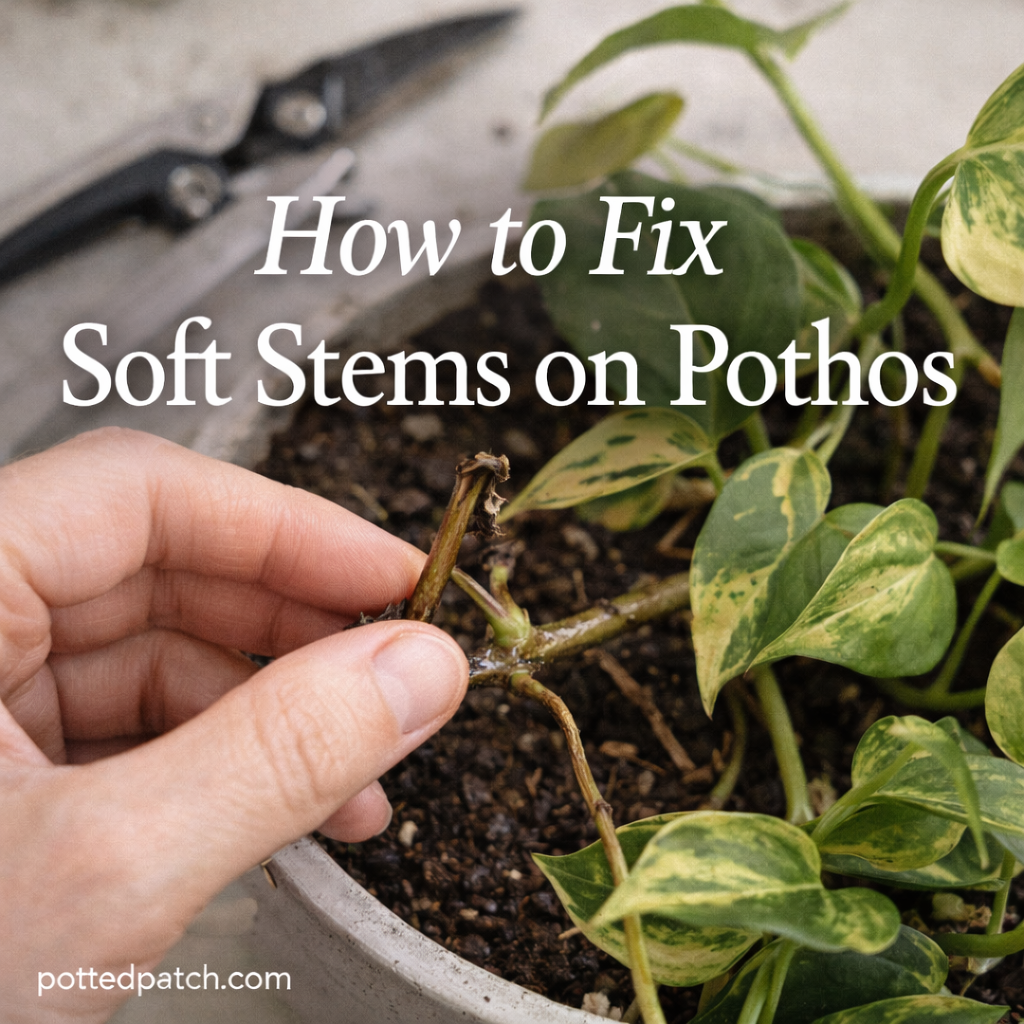
- Soft stems
- Persistent wet soil
- Musty smell
- Browning at the base of the plant
If these symptoms appear together, inspect the roots immediately.
How to Prevent Root Rot
Prevention is much easier than treatment.
Follow these simple rules:
- Water only when the top 1–2 inches of soil are dry.
- Always use pots with drainage holes.
- Improve soil with perlite for airflow.
- Empty excess water from saucers or cache pots.
- Avoid oversized containers.
Consistency and drainage are the two biggest factors.
Can a Spider Plant Recover From Root Rot?
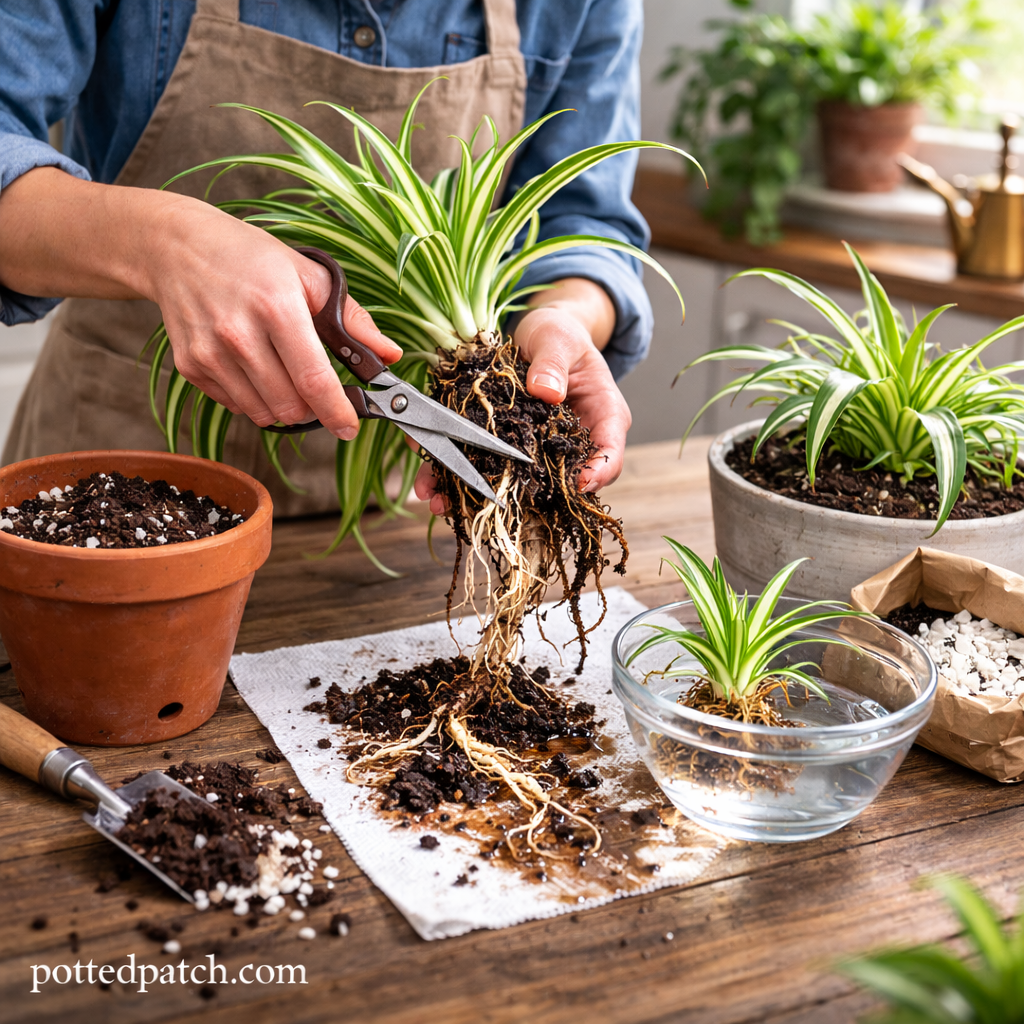
Yes — if caught early.
Recovery Steps
- Remove the plant from the pot.
- Trim away all mushy, dark roots.
- Rinse healthy roots gently.
- Repot in fresh, well-draining soil.
- Water lightly and allow recovery time.
Severe cases may require removing a large portion of damaged roots, but spider plants are resilient and often bounce back.
Final Thoughts
Root rot happens on spider plant primarily due to overwatering and poor drainage. While the condition can be serious, it’s also preventable with proper watering habits and airy soil.
If you keep moisture balanced and allow roots to breathe, your spider plant will stay healthy, firm, and thriving.