Pothos plants are known for being low-maintenance and resilient. But even this hardy houseplant can suffer from root rot if conditions aren’t right.
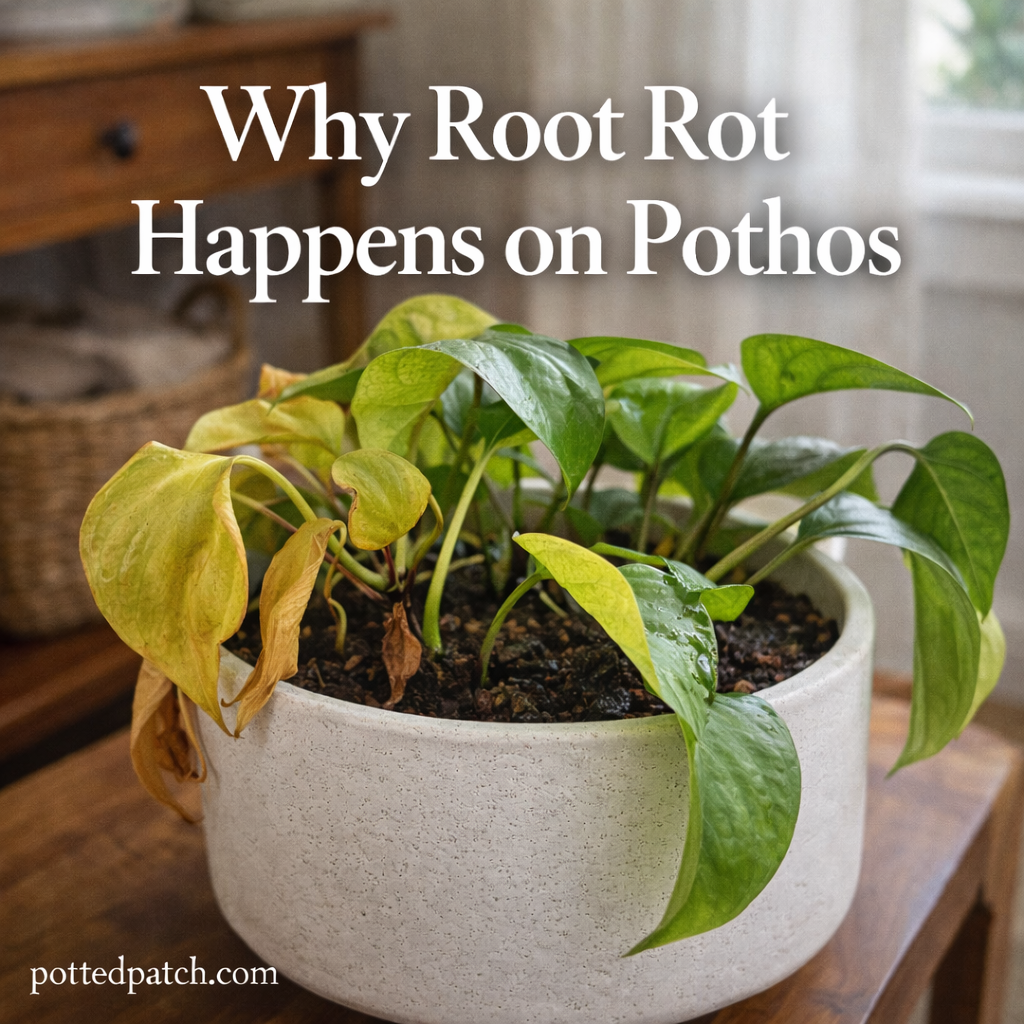
If your pothos has yellowing leaves, mushy stems, or a foul smell coming from the soil, root rot may be the cause.
Understanding why root rot happens is the first step toward preventing it—and saving your plant.
What Is Root Rot?
Root rot is a condition where plant roots begin to decay due to excessive moisture and lack of oxygen.
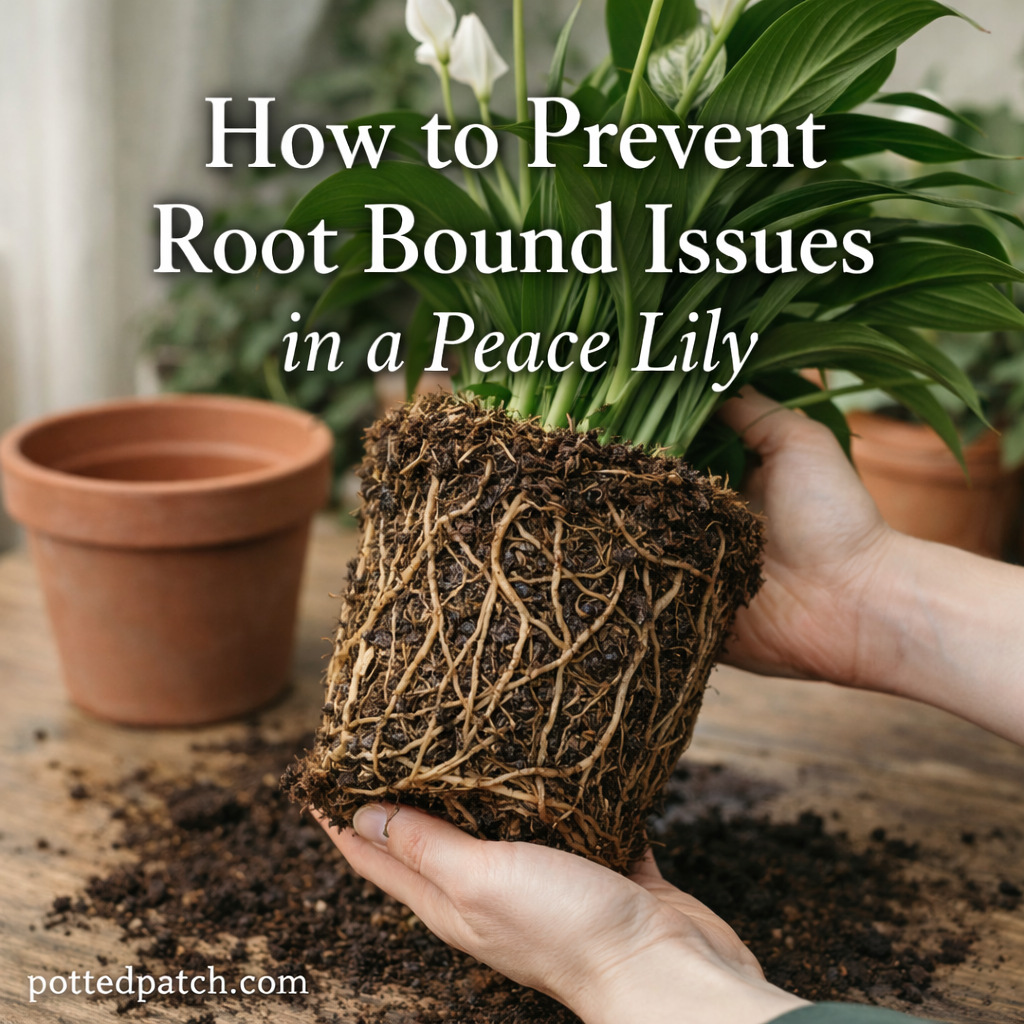
Healthy roots are:
- Firm
- White or light tan
- Slightly springy
Rotting roots become:
- Brown or black
- Mushy
- Slimy
- Foul-smelling
Once roots begin to rot, they can’t absorb water or nutrients properly, which causes visible stress above the soil.
The Main Cause: Overwatering
The number one reason root rot happens on pothos is overwatering.
When soil stays wet for too long:
- Air pockets disappear
- Roots suffocate
- Fungal pathogens thrive
Pothos prefers soil that dries slightly between waterings. Constantly wet soil creates the perfect environment for rot.
Poor Drainage
Even if you’re not watering too frequently, poor drainage can trap moisture.
Common Drainage Problems:
- Pots without drainage holes
- Dense, compacted soil
- Oversized pots holding too much moisture
- Decorative containers trapping runoff water
If water cannot escape, roots remain saturated.
Using the Wrong Soil
Heavy, moisture-retentive soil increases rot risk.
Pothos thrives in:
- Well-draining potting mix
- Soil amended with perlite
- Light, airy blends
Dense soil prevents oxygen from reaching the roots.
Inconsistent Watering Habits
Watering on a strict schedule—without checking soil moisture—can lead to overwatering.
For example:
- Watering every 7 days regardless of dryness
- Watering small amounts frequently
- Not adjusting for seasonal light changes
Always check the top 1–2 inches of soil before watering.
Low Light Conditions
Low light slows growth and reduces water usage.
If your pothos is in a dim corner:
- Soil dries much more slowly
- Water sits longer
- Root rot risk increases
Less light = less water needed.
Cold Temperatures
Cool temperatures slow soil evaporation and root activity.
If your plant is near:
- Drafty windows
- Air conditioning vents
- Exterior doors
Moist soil combined with cold conditions increases the chance of rot.
Signs Root Rot Is Developing
Early detection makes a huge difference.
Watch for:
- Yellowing leaves
- Wilting despite wet soil
- Soft, mushy stems
- Blackened roots (if inspected)
- Foul-smelling soil
If you notice these signs, act quickly.
How to Prevent Root Rot on Pothos
Prevention is much easier than recovery.
Follow These Steps:
- Use a pot with drainage holes.
- Choose well-draining soil with perlite.
- Water only when the top 1–2 inches are dry.
- Empty the saucer after watering.
- Provide bright, indirect light.
Consistency is key.
Can a Pothos Recover from Root Rot?
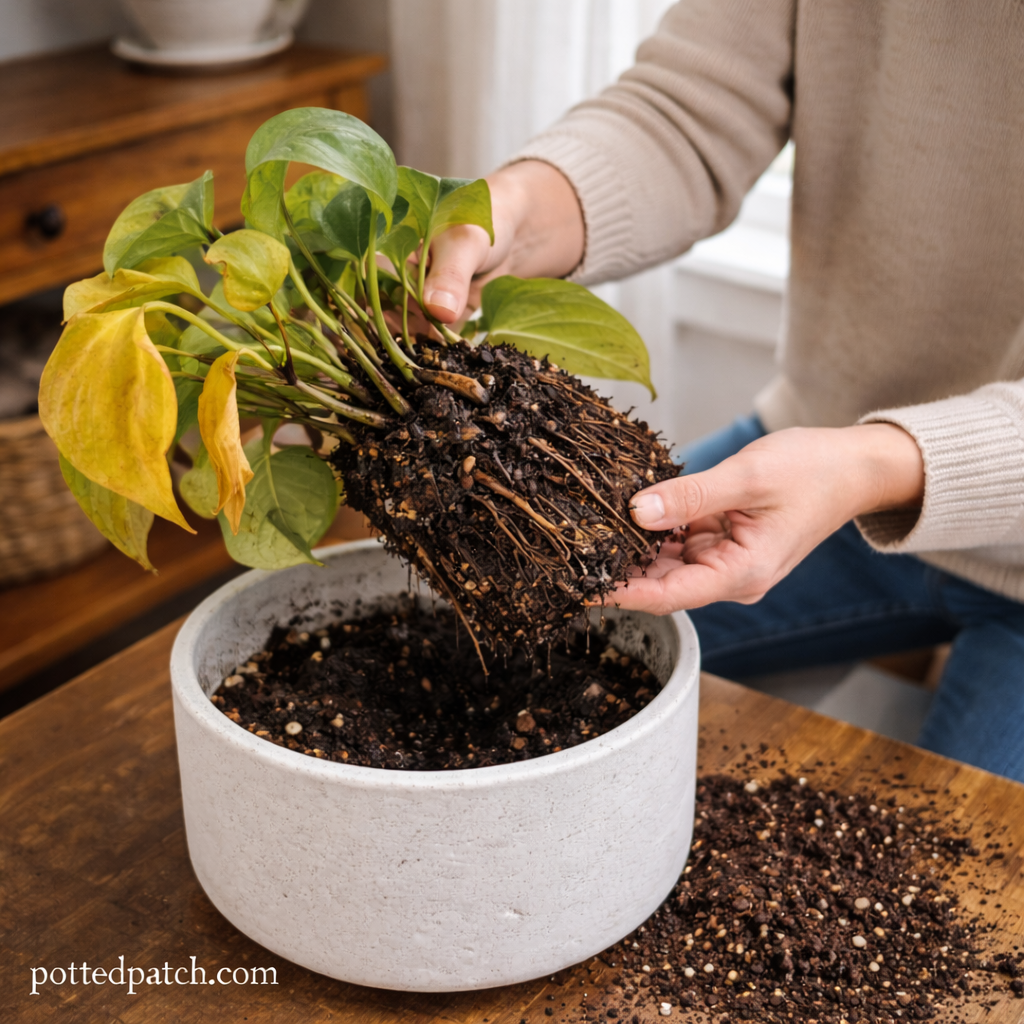
Yes—if caught early.
To treat root rot:
- Remove the plant from its pot.
- Trim away black or mushy roots.
- Repot in fresh, well-draining soil.
- Reduce watering frequency.
- Place in bright, indirect light.
Severe cases may require taking cuttings and propagating healthy stems.
Final Thoughts
Root rot happens on pothos primarily because of excess moisture and poor airflow around the roots.
Most cases are preventable by:
- Improving drainage
- Watering based on soil dryness
- Adjusting for light and season
Healthy roots are the foundation of a thriving plant. With proper care, pothos can grow quickly and bounce back from mild stress.