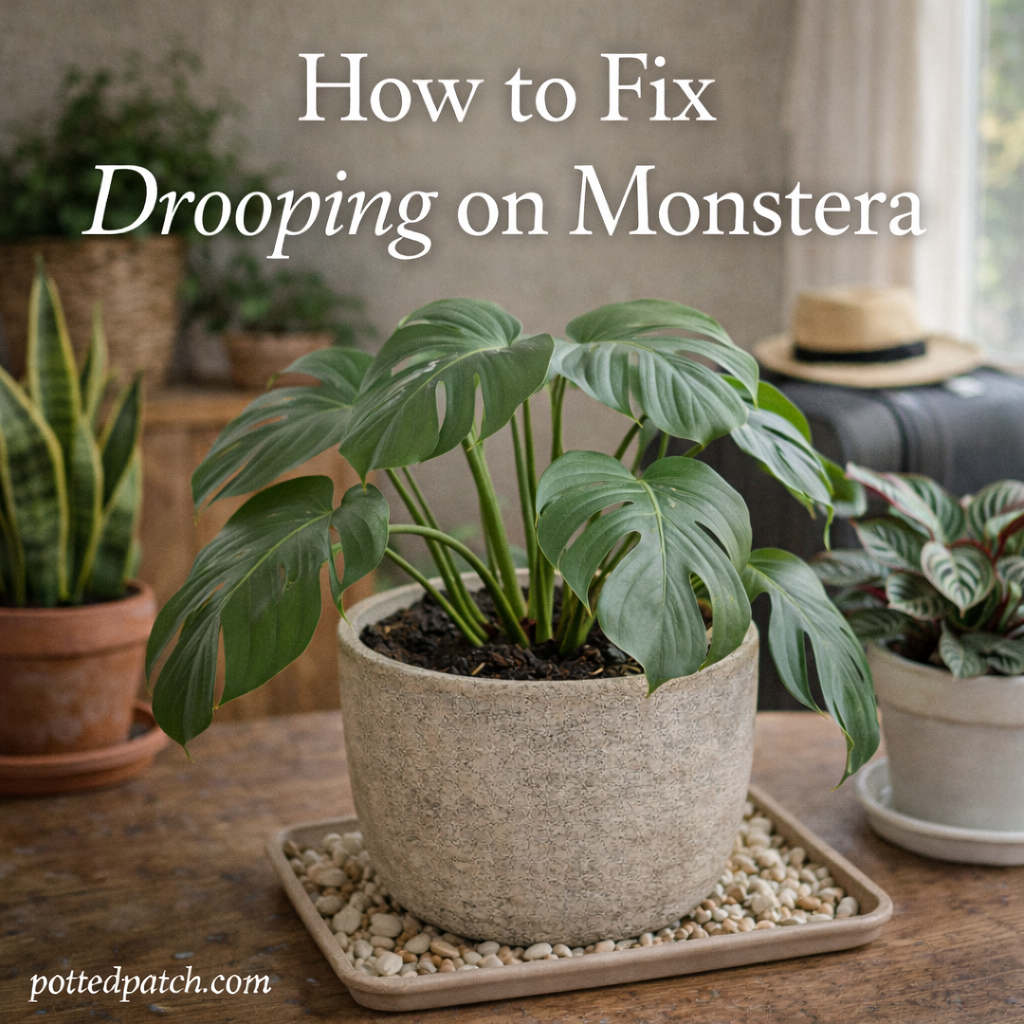
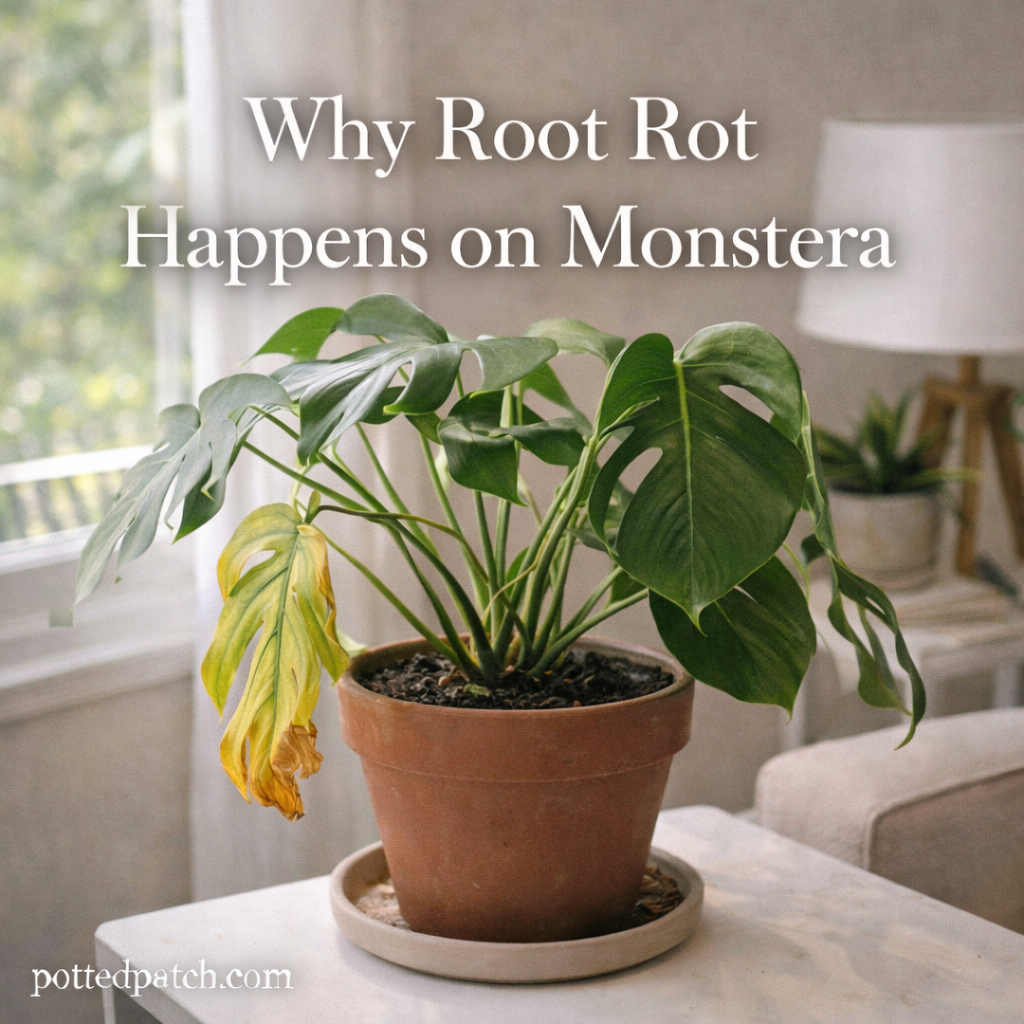
Root rot is one of the most common and damaging problems monstera owners face. It often develops quietly below the soil surface, only becoming obvious once leaves yellow, droop, or collapse. While it can look sudden, root rot is almost always the result of ongoing care or environment issues.
This guide explains why root rot happens on monstera plants, what causes it, how to recognize it early, and how to prevent it from returning.
What Is Root Rot?
Root rot occurs when roots sit in wet, oxygen-poor soil for too long. Healthy roots need air as much as they need water. When soil stays saturated, roots suffocate, decay, and become unable to absorb moisture or nutrients.
Once rot sets in, damage can spread quickly if conditions don’t change.
The Main Reasons Root Rot Happens on Monstera
Overwatering
This is the most common cause.
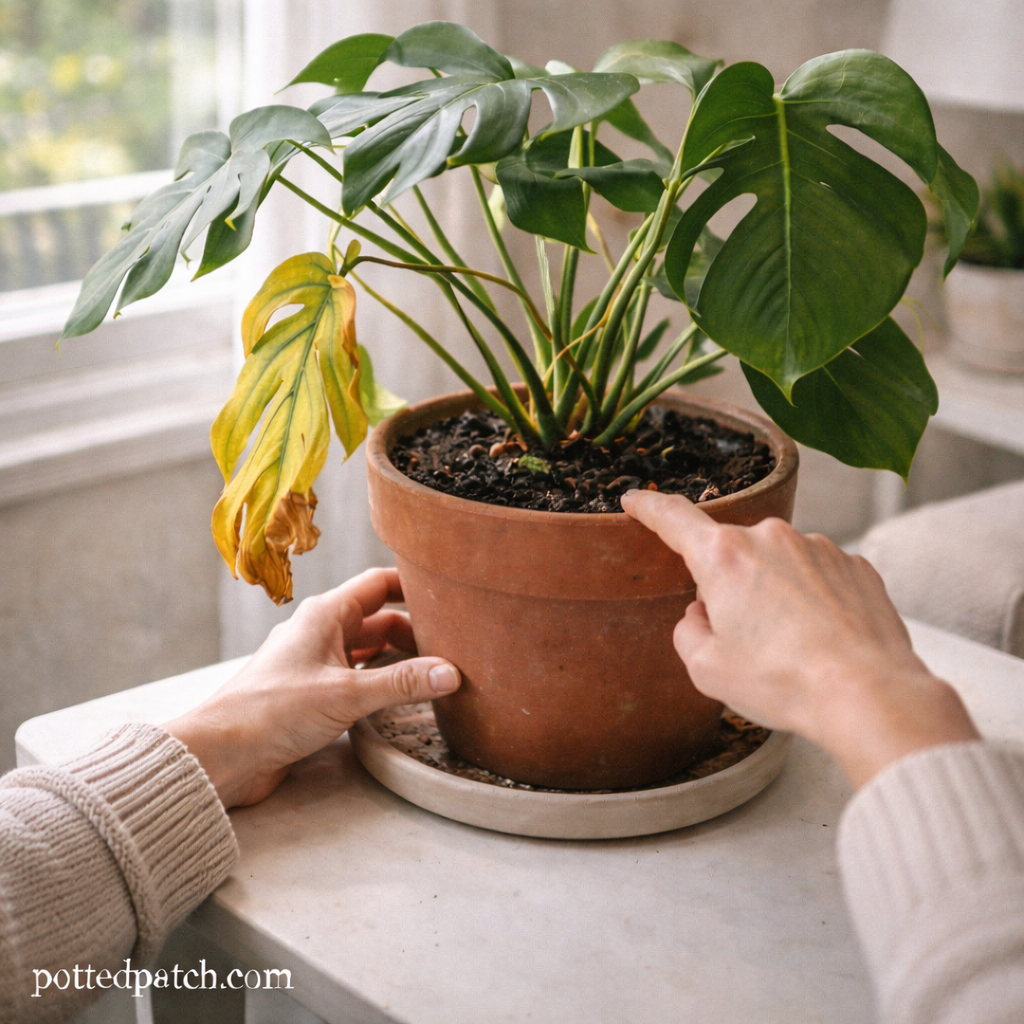
Overwatering doesn’t mean watering too often alone—it means watering when the plant doesn’t need it.
Common overwatering patterns:
- Watering on a fixed schedule
- Watering before soil has partially dried
- Watering more often in low light or winter
Monstera roots need cycles of moisture and drying. Constant moisture triggers rot.
Poor Drainage
Even correct watering can cause rot if drainage is poor.
Drainage problems include:
- Pots without drainage holes
- Compact or heavy soil
- Clogged drainage holes
- Decorative pots that trap water
Without a way for excess water to escape, soil remains wet around the roots.
Wrong Soil Type
Monstera plants need airy, fast-draining soil.
Soil that causes rot:
- Garden soil
- Moisture-control potting mixes
- Peat-heavy soil without amendments
- Old, compacted soil
Dense soil holds water and blocks airflow, creating ideal conditions for rot.
Low Light Conditions
Light affects how quickly soil dries.
In low light:
- Water evaporates slowly
- Roots absorb less moisture
- Soil stays wet longer
A monstera in low light must be watered far less often than one in bright indirect light.
Cold Temperatures
Cold slows root activity.
When temperatures drop:
- Roots absorb water slowly
- Soil stays wet longer
- Rot risk increases
Cold drafts, winter windows, and unheated rooms all contribute to this problem.
Root Bound or Oversized Pots
Both extremes can cause issues.
Oversized pots:
- Hold excess soil
- Stay wet longer than needed
Root-bound plants:
- Have uneven water absorption
- Develop pockets of soggy soil
Monstera pots should be only slightly larger than the root ball.
Early Signs of Root Rot on Monstera
Catching root rot early improves recovery chances.
Watch for:
- Yellowing lower leaves
- Drooping despite wet soil
- Slow or halted growth
- Soft or mushy stems near the base
- Musty or sour soil smell
Above-ground symptoms often appear after roots are already damaged.
What Healthy vs Rotten Roots Look Like
Healthy roots:
- Firm
- Light tan or white
- Slightly flexible
Rotten roots:
- Brown or black
- Mushy or slimy
- Break apart easily
- Strong odor
Inspecting roots is the only way to confirm root rot.
Why Root Rot Spreads So Quickly
Once roots begin to rot:
- They can’t absorb water
- Surrounding roots stay wet
- Fungal organisms multiply
- Damage accelerates
Watering more in response to drooping often makes the problem worse.
How to Prevent Root Rot on Monstera
Use the Right Soil
Ideal monstera soil should:
- Drain quickly
- Hold light moisture
- Allow airflow
A good mix includes potting soil with added perlite, bark, or pumice.
Always Use Pots With Drainage Holes
This is essential.
Drainage holes:
- Let excess water escape
- Prevent standing water
- Protect root oxygen flow
Never rely on rocks or gravel at the bottom to fix drainage.
Adjust Watering Based on Conditions
Watering needs change based on:
- Light
- Season
- Temperature
- Pot size
Always check soil moisture before watering rather than using a schedule.
Match Pot Size to Root Size
Choose a pot:
- 1–2 inches wider than the root ball
- Not dramatically larger
- With adequate depth and airflow
Correct sizing prevents excess moisture retention.
Final Thoughts
Root rot on monstera plants doesn’t happen overnight. It develops when moisture, drainage, light, and temperature are out of balance over time. Understanding why it happens helps you prevent it completely.
Healthy roots mean healthy leaves. When drainage is right and watering is intentional, monstera plants are resilient, forgiving, and long-lived.