The ZZ plant (Zamioculcas zamiifolia) is famous for being nearly indestructible. It tolerates low light, inconsistent watering, and dry indoor air better than most houseplants.
But there’s one problem it doesn’t forgive easily: root rot.
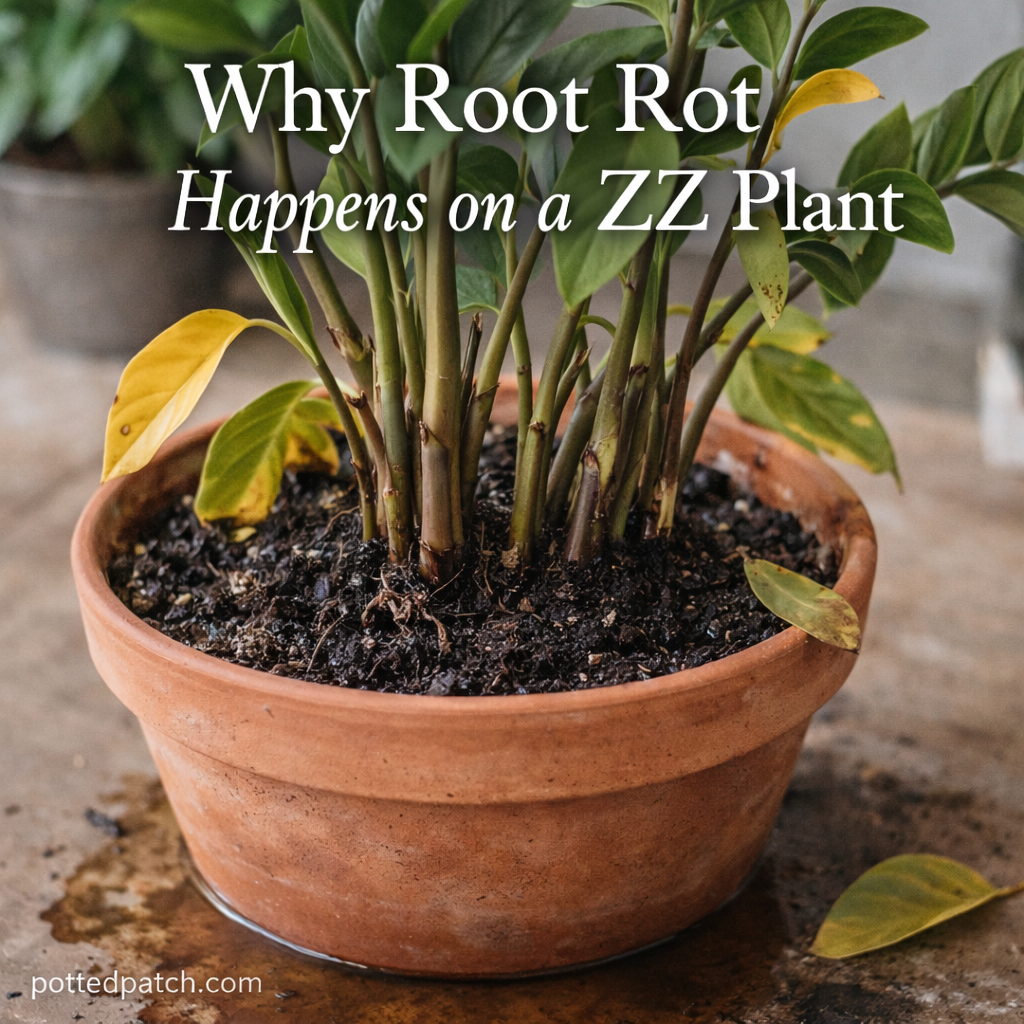
If your ZZ plant has yellowing leaves, mushy stems, or a foul smell from the soil, root rot is likely the cause. Let’s break down why it happens and how to prevent it.
What Is Root Rot?
Root rot occurs when roots sit in excess moisture for too long. Instead of staying firm and white, they become:
- Brown or black
- Soft and mushy
- Foul-smelling
Once roots begin to rot, they can no longer absorb water or nutrients properly. Ironically, this often makes the plant look dehydrated even though the soil is wet.
Why ZZ Plants Are Especially Prone to Root Rot
ZZ plants store water in thick underground rhizomes. These potato-like structures act as reservoirs, allowing the plant to survive drought.
Because of this:
- They need far less water than most houseplants.
- They are extremely sensitive to overwatering.
- They prefer drying out completely between waterings.
When kept too wet, those water-storing rhizomes begin to rot quickly.
The Main Causes of Root Rot in ZZ Plants
1. Overwatering
This is the #1 cause.
ZZ plants do not need weekly watering in most homes. Watering too frequently keeps the soil constantly damp, depriving roots of oxygen.
Signs you’re overwatering:
- Soil feels wet for more than 7–10 days.
- Yellowing leaves.
- Soft stems near the base.
- Fungus gnats around the soil.
2. Poor Drainage
Even if you water correctly, drainage issues can still cause root rot.
Common drainage problems:
- Pots without drainage holes
- Decorative cachepots trapping water
- Heavy, dense soil that holds moisture
If water can’t escape, it lingers at the bottom of the pot — exactly where roots are most vulnerable.
3. Soil That Retains Too Much Moisture
ZZ plants prefer well-draining soil.
Standard potting mix alone can stay too wet. A better blend includes:
- Potting soil
- Perlite
- Orchid bark or coarse sand
Chunky soil allows oxygen to circulate and excess water to drain faster.
4. Watering on a Schedule Instead of Checking Soil
Many plant owners water every 7 days automatically.
ZZ plants should be watered based on dryness, not a calendar.
Always:
- Insert your finger 2–3 inches into the soil.
- Water only if completely dry.
- When in doubt, wait a few more days.
These plants tolerate underwatering far better than overwatering.
5. Low Light + Frequent Watering
Low light slows growth. When growth slows, the plant uses less water.
If you water at the same rate during winter or in dim rooms, the soil will stay wet much longer — increasing rot risk.
In low light conditions:
- Water less often.
- Allow extended drying time.
- Avoid heavy fertilizing.
6. Cold Temperatures
Cold soil slows evaporation and root function.
If a ZZ plant sits near:
- Drafty windows
- Exterior doors
- Air conditioning vents
Moisture may linger in the pot longer than expected, leading to rot.
Early Warning Signs of Root Rot
Catching it early can save your plant.
Watch for:
- Yellow leaves (especially lower leaves)
- Mushy or wrinkled stems
- Soft rhizomes under the soil
- Foul odor from the pot
- Persistent wet soil
If multiple signs appear at once, inspect the roots immediately.
How to Prevent Root Rot on a ZZ Plant
Prevention is much easier than treatment.
Follow These Rules
- Use a pot with drainage holes.
- Use well-draining soil.
- Water only when soil is fully dry.
- Reduce watering in winter.
- Empty saucers after watering.
- Avoid oversized pots (extra soil holds more moisture).
A smaller pot is often safer than one that’s too large.
Can a ZZ Plant Recover From Root Rot?
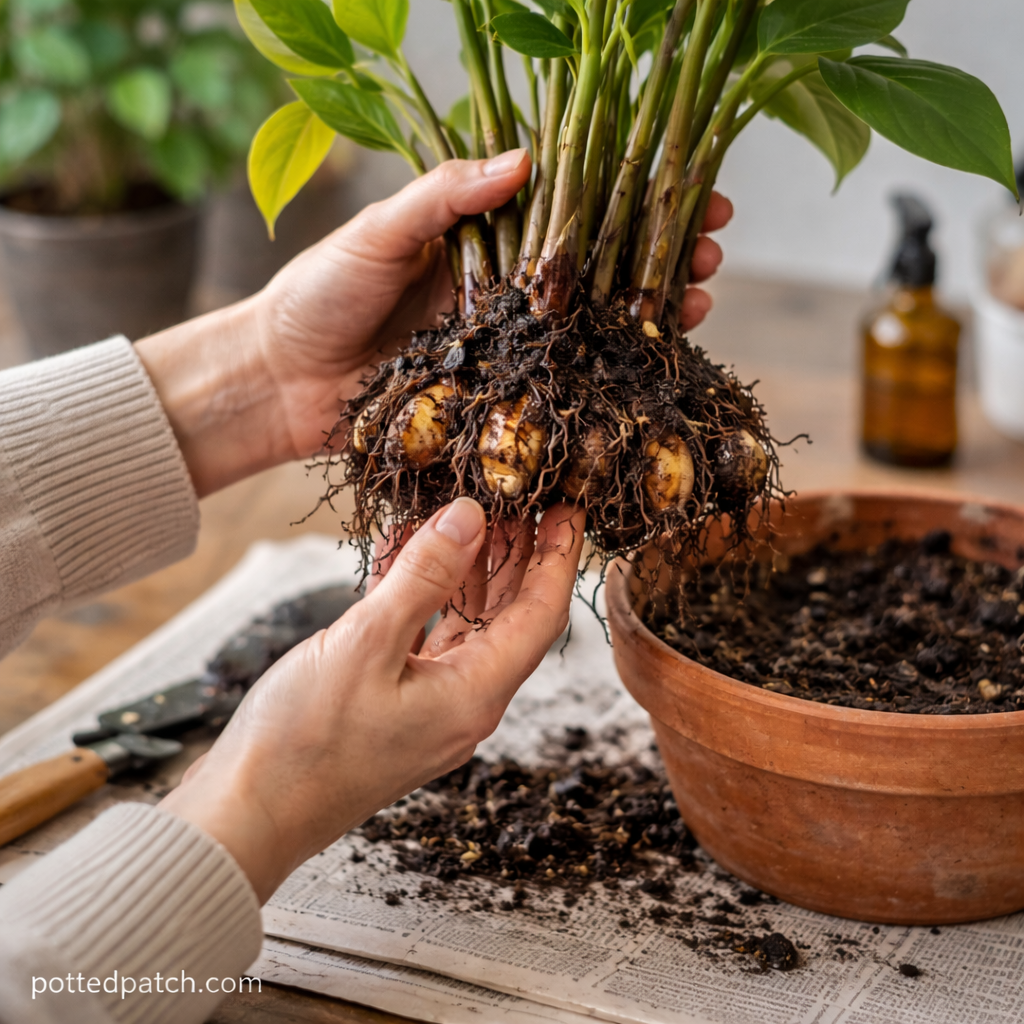
Yes — if caught early.
Steps to save it:
- Remove the plant from the pot.
- Trim away all mushy roots and soft rhizomes.
- Let the plant dry out for several hours.
- Repot in fresh, dry, well-draining soil.
- Wait at least 7–10 days before watering.
Severe rot, however, can be fatal if the rhizomes are fully compromised.
Final Thoughts
Root rot on a ZZ plant almost always comes down to too much water and not enough drainage.
Remember:
- ZZ plants are drought-tolerant.
- Their rhizomes store water.
- They prefer dry soil over wet soil.
- It’s better to underwater than overwater.
When you adjust watering habits and improve drainage, your ZZ plant can thrive for years with minimal maintenance.