Mold on the soil of a monstera plant can be alarming, especially when the leaves still look healthy. While it’s a common issue for indoor plants, it’s also a sign that something in the growing environment is out of balance.
The good news is that soil mold is usually easy to fix once you understand why it appears and how to prevent it from coming back.
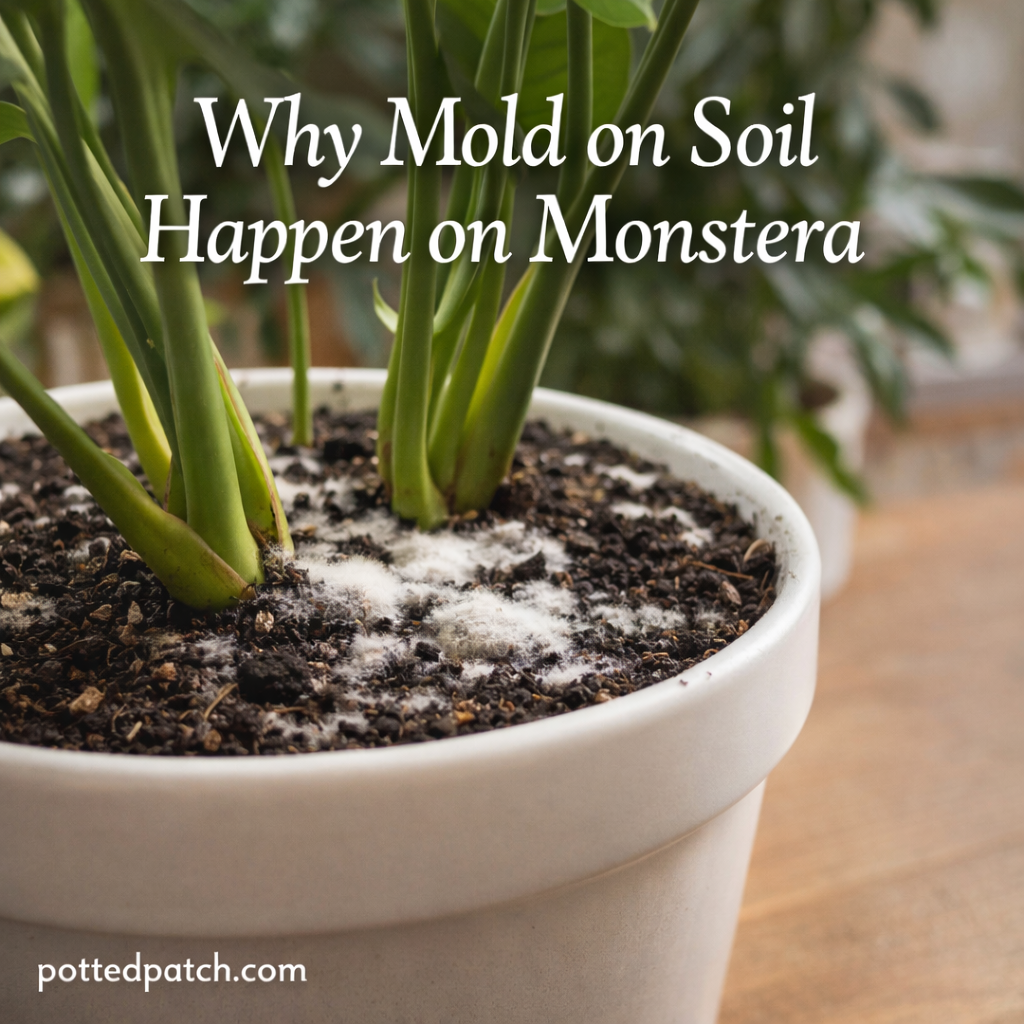
What Mold on Monstera Soil Looks Like
Soil mold usually appears as:
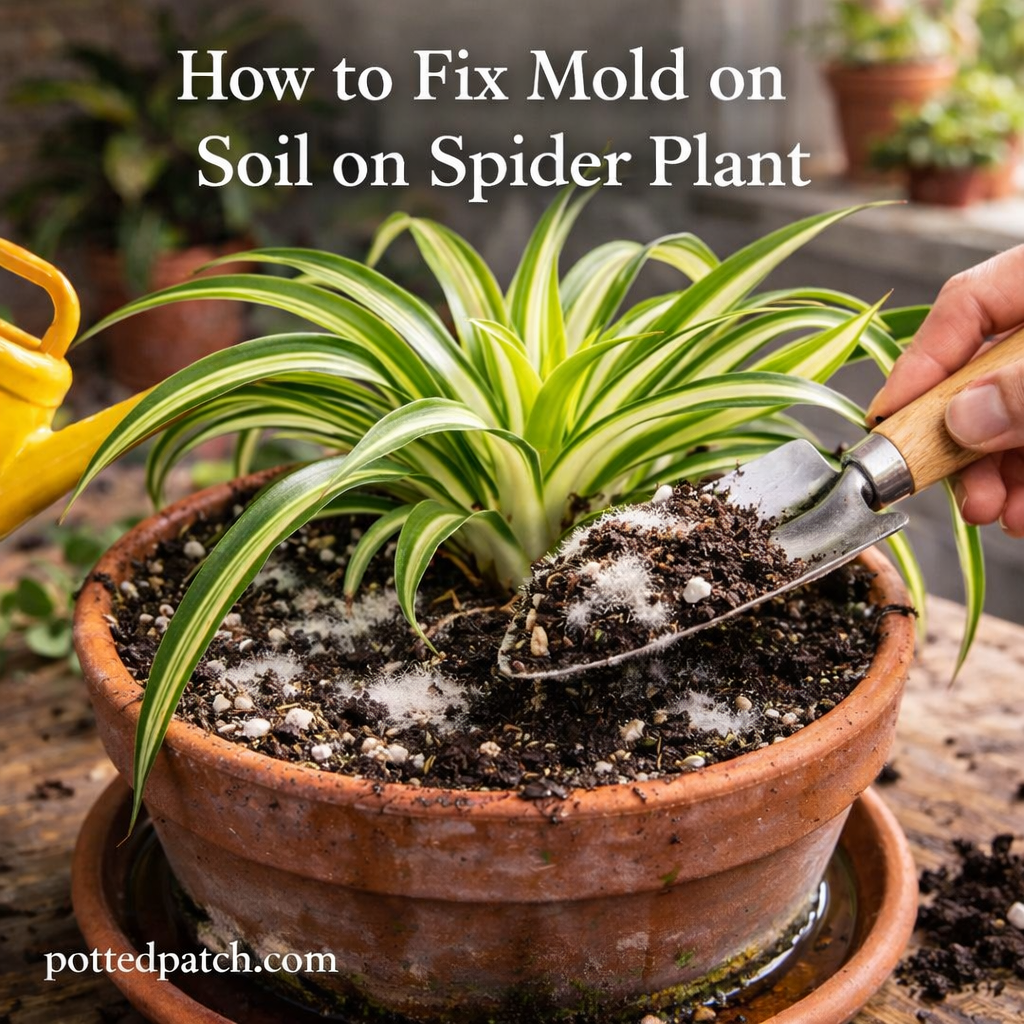
- White, gray, or fuzzy growth on the soil surface
- Powdery or web-like patches
- A slightly musty smell near the pot
In most cases, this mold stays on the soil and does not directly infect the plant. However, it can indicate conditions that may eventually harm your monstera’s roots.
Why Mold Grows on Monstera Soil
Too Much Moisture in the Soil
The most common cause of mold is consistently wet soil.
Mold thrives in damp environments, and monstera plants do not like soggy conditions. Overwatering or soil that doesn’t dry out between waterings creates the perfect environment for fungal growth.
Common moisture-related issues include:
- Watering too frequently
- Pots without drainage holes
- Soil that retains water for too long
Poor Air Circulation
Still air allows moisture to linger on the soil surface, encouraging mold growth.
This is especially common when:
- The plant is placed in a corner with little airflow
- Windows are rarely opened
- The monstera is surrounded by other plants with no spacing
Even a healthy watering routine can lead to mold if air movement is minimal.
Low Light Conditions
Light helps soil dry out more efficiently.
When a monstera sits in low light:
- Water evaporates more slowly
- Soil stays damp longer
- Mold has more time to develop
Low light doesn’t directly cause mold, but it often contributes to overwatering problems.
Organic Matter Breaking Down
High-quality potting soil contains organic materials like bark, compost, or peat. Over time, these materials break down and can support mold growth when moisture is high.
This type of mold is usually harmless but still signals that conditions are too wet.
Old or Compacted Soil
Soil that hasn’t been refreshed in a long time can become compacted, limiting airflow around the roots.
Compacted soil:
- Drains poorly
- Holds moisture unevenly
- Creates pockets where mold can grow
Older soil also tends to stay wet longer than fresh, well-aerated mixes.
Is Mold on Monstera Soil Dangerous?
In most cases, soil mold is not immediately dangerous to your monstera. The plant can continue to grow normally for a while.
However, untreated mold can lead to:
- Root rot due to prolonged moisture
- Fungus gnats attracted to damp soil
- Reduced oxygen reaching the roots
Addressing mold early helps prevent these secondary problems.
How to Get Rid of Mold on Monstera Soil
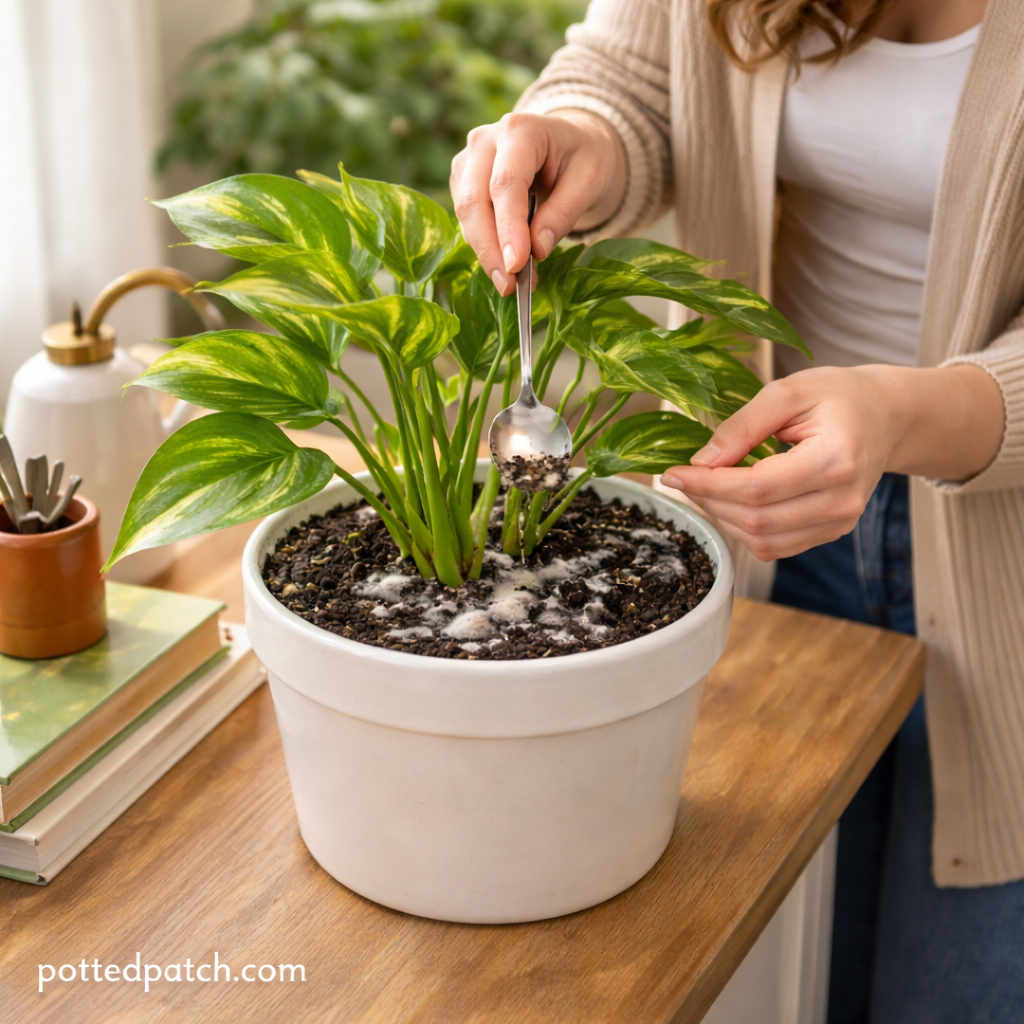
Step 1: Remove the Molded Soil Layer
Gently scrape off the top layer of moldy soil using a spoon or small trowel. Dispose of it away from other plants.
Avoid stirring mold deeper into the pot.
Step 2: Let the Soil Dry Out
Allow the soil to dry more between waterings.
A good rule:
- Water only when the top 2–3 inches of soil feel dry
- Empty saucers so the pot isn’t sitting in water
Drying the soil naturally makes it harder for mold to survive.
Step 3: Improve Airflow
Simple airflow changes can make a big difference:
- Move the plant slightly away from walls
- Space it apart from other plants
- Use a small fan on low, indirect airflow if needed
Better air circulation helps the soil surface dry faster.
Step 4: Adjust Light Exposure
If possible, move your monstera to brighter indirect light. This encourages healthy growth and faster soil drying without stressing the plant.
Step 5: Consider Repotting if Mold Keeps Returning
If mold reappears repeatedly, repotting may be the best solution.
When repotting:
- Use fresh, well-draining potting mix
- Add perlite or orchid bark for better aeration
- Choose a pot with proper drainage holes
This resets the growing environment and removes lingering spores.
How to Prevent Mold from Coming Back
Preventing mold is mostly about consistent care habits.
Water Carefully
- Avoid watering on a fixed schedule
- Always check soil moisture first
Use the Right Soil
- Choose a chunky, well-draining mix
- Avoid heavy garden soil indoors
Keep the Surface Dry
- Bottom watering occasionally can help
- Avoid misting the soil surface
Refresh Soil Periodically
- Replace the top layer of soil every few months
- Repot every 1–2 years as the plant grows
Final Thoughts
Mold on monstera soil is a common issue caused by excess moisture, low airflow, and slow-drying conditions. While it’s usually not harmful right away, it’s a clear signal to adjust watering habits and improve the plant’s environment.
With better drainage, brighter light, and improved airflow, mold problems typically disappear—and your monstera will be healthier for it.