
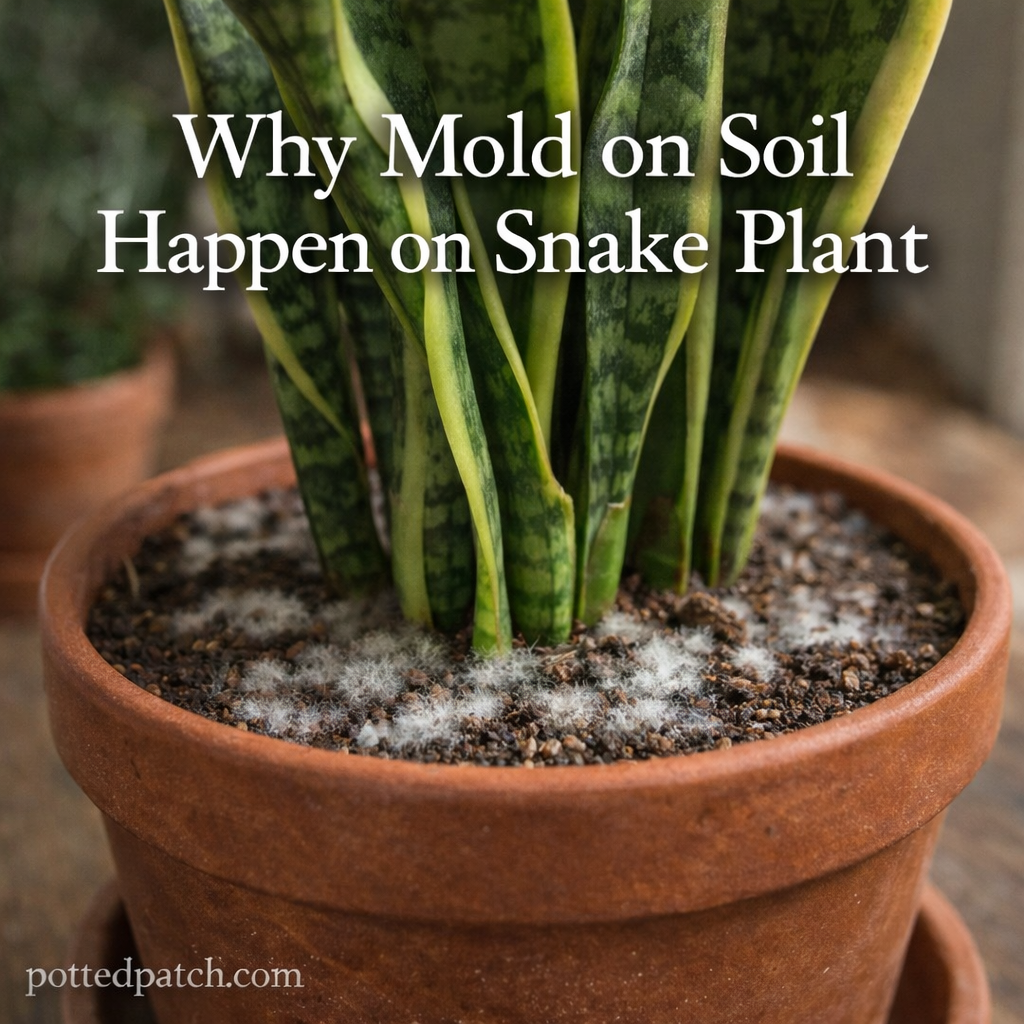
Noticing white, fuzzy mold on the soil of your snake plant can be unsettling. While it looks alarming, it’s usually a sign that something in the plant’s environment needs adjusting — not that your plant is doomed.
Snake plants are hardy, drought-tolerant houseplants. When mold appears, it almost always points to excess moisture or poor airflow.
Let’s break down why mold forms on snake plant soil and exactly how to fix it.
What Does Mold on Snake Plant Soil Look Like?
Mold typically appears as:
- White or gray fuzzy patches
- Powdery white crust on the soil surface
- Thin web-like growth across the top layer
It may resemble cotton, mildew, or fine spiderweb strands.
In most cases, this is saprophytic fungus — a harmless fungus that feeds on decaying organic matter in moist soil.
Why Mold Happens on Snake Plant Soil
Several common care mistakes create the perfect conditions for mold growth.
1. Overwatering
This is the number one cause.
Snake plants prefer dry soil. When watered too often, the top layer remains damp — creating an ideal breeding ground for fungus.
If the soil never fully dries between waterings, mold is likely to appear.
2. Poor Drainage
Even correct watering can cause mold if drainage is poor.
Common drainage problems include:
- Pots without drainage holes
- Heavy, compacted potting mix
- Decorative outer pots that trap water
Wet soil that lingers leads to fungal growth.
3. Low Air Circulation
Stagnant air slows evaporation.
Mold is more common when:
- Plants are crowded together
- The room has little airflow
- The plant sits in a dark corner
Even drought-tolerant plants need air movement.
4. High Humidity
Snake plants tolerate normal household humidity, but persistently damp environments increase mold risk.
Bathrooms, basements, or overly humid rooms can encourage surface fungus.
5. Organic Matter in Soil
Potting mixes rich in bark or peat retain moisture. When kept too wet, decomposing organic material feeds mold growth.
This is especially common in slow-draining soils.
Is Mold Harmful to Snake Plants?
Surface mold itself is usually harmless.
However, it signals a moisture imbalance — and prolonged wet soil can lead to:
- Root rot
- Soft, mushy leaves
- Yellowing foliage
- Foul-smelling soil
The mold is the warning sign. The real danger is what’s happening beneath the surface.
How to Fix Mold on Snake Plant Soil
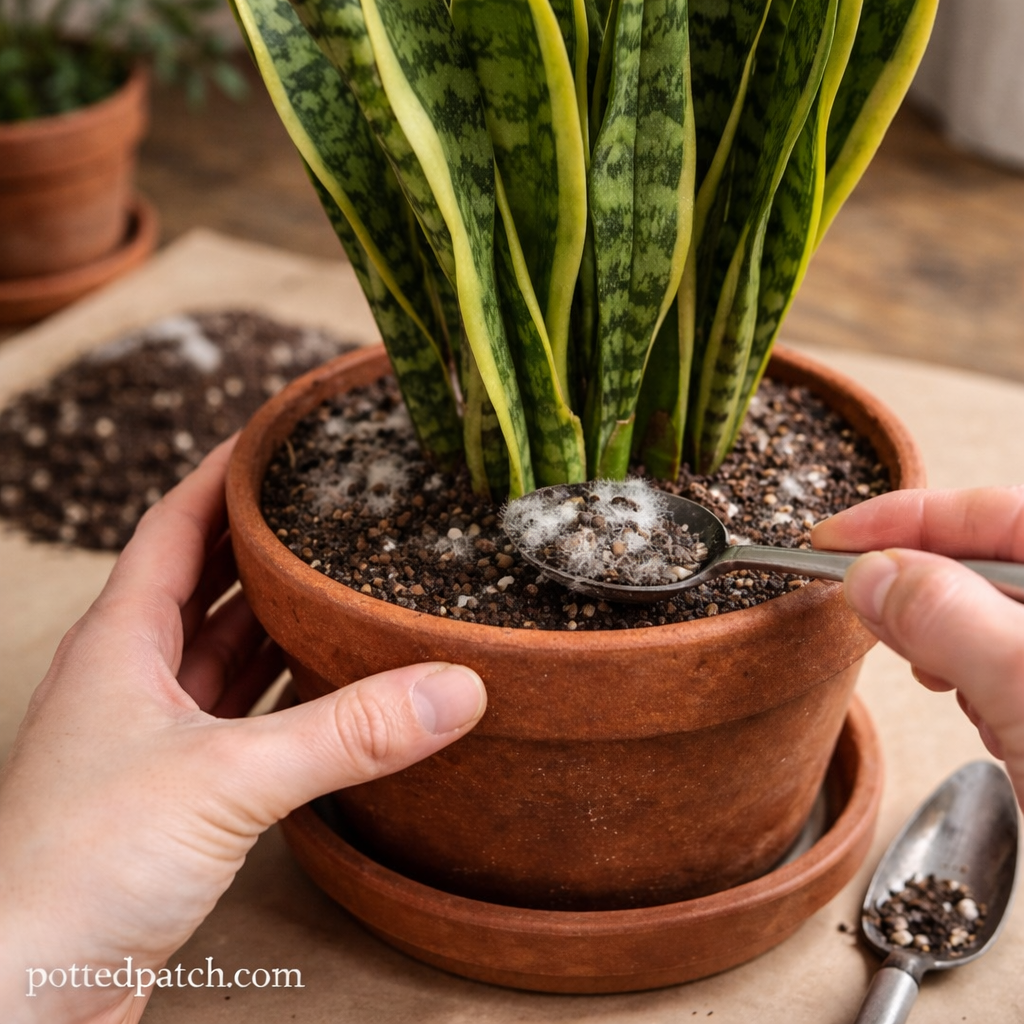
Act early to prevent deeper issues.
Step 1: Remove the Top Layer of Soil
Scoop off the top 1–2 inches of moldy soil and discard it.
Replace with fresh, dry potting mix.
Step 2: Let the Soil Dry Completely
Do not water until the soil is dry at least 2–3 inches down.
Snake plants prefer drying out fully between waterings.
Step 3: Improve Drainage
If the soil feels heavy or stays wet longer than a week:
- Repot using cactus or succulent mix
- Add perlite or pumice
- Ensure the pot has drainage holes
Better drainage prevents recurrence.
Step 4: Increase Airflow
Improve air circulation by:
- Spacing plants apart
- Opening windows periodically
- Using a small fan in low-light areas
Airflow helps soil dry evenly.
Step 5: Adjust Watering Routine
Going forward:
- Water only when soil is completely dry
- Avoid misting the soil surface
- Empty saucers after watering
Snake plants thrive on minimal watering.
Can You Use Cinnamon or Fungicide?
Cinnamon has mild antifungal properties and can be sprinkled lightly on the soil surface.
Commercial fungicides are rarely necessary unless mold keeps returning despite environmental corrections.
Fixing moisture issues is far more effective than chemical treatments.
How to Prevent Mold in the Future
Follow these best practices:
- Use fast-draining soil
- Choose pots with drainage holes
- Avoid watering on a strict schedule
- Allow full drying between waterings
- Keep plants in bright, indirect light
Prevention is all about moisture control.
When to Repot Completely
Consider full repotting if:
- Mold returns repeatedly
- The soil smells sour
- Leaves become soft or discolored
- Roots appear dark or mushy
In these cases, inspect for root rot and trim damaged roots before replanting.
Final Thoughts
Mold on snake plant soil usually means the environment is too wet.
While the fungus itself is often harmless, it’s a signal to adjust watering, drainage, or airflow. Once conditions improve, mold typically disappears and your snake plant continues thriving.
Remember: Snake plants prefer dry soil over constant moisture — and that simple shift prevents most fungal issues.