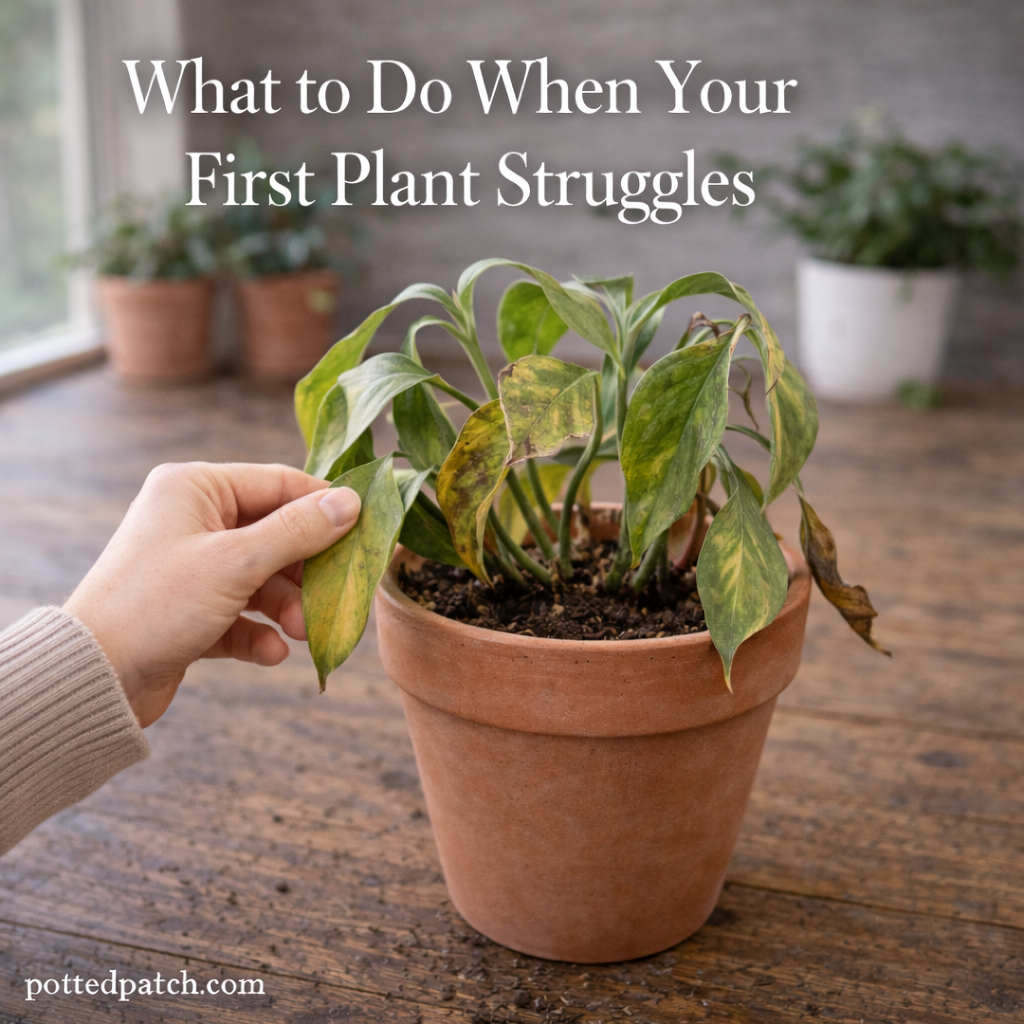

ZZ plants are known for being tough, glossy, and low-maintenance. So when leaves suddenly fall off, it can feel alarming.
The good news?
Leaf drop on a ZZ plant is almost always a care issue — and usually fixable.
In this guide, we’ll break down the most common reasons your ZZ plant is losing leaves and exactly what to do to stop it.
Is Some Leaf Drop Normal?
Yes — occasionally.
It’s normal for:
- A few older leaves to yellow and fall off over time
- Minor leaf loss after repotting
- Slight shedding during seasonal transitions
But if multiple stems are losing leaves quickly, or entire sections look bare, there’s likely a deeper issue.
1. Overwatering (Most Common Cause)
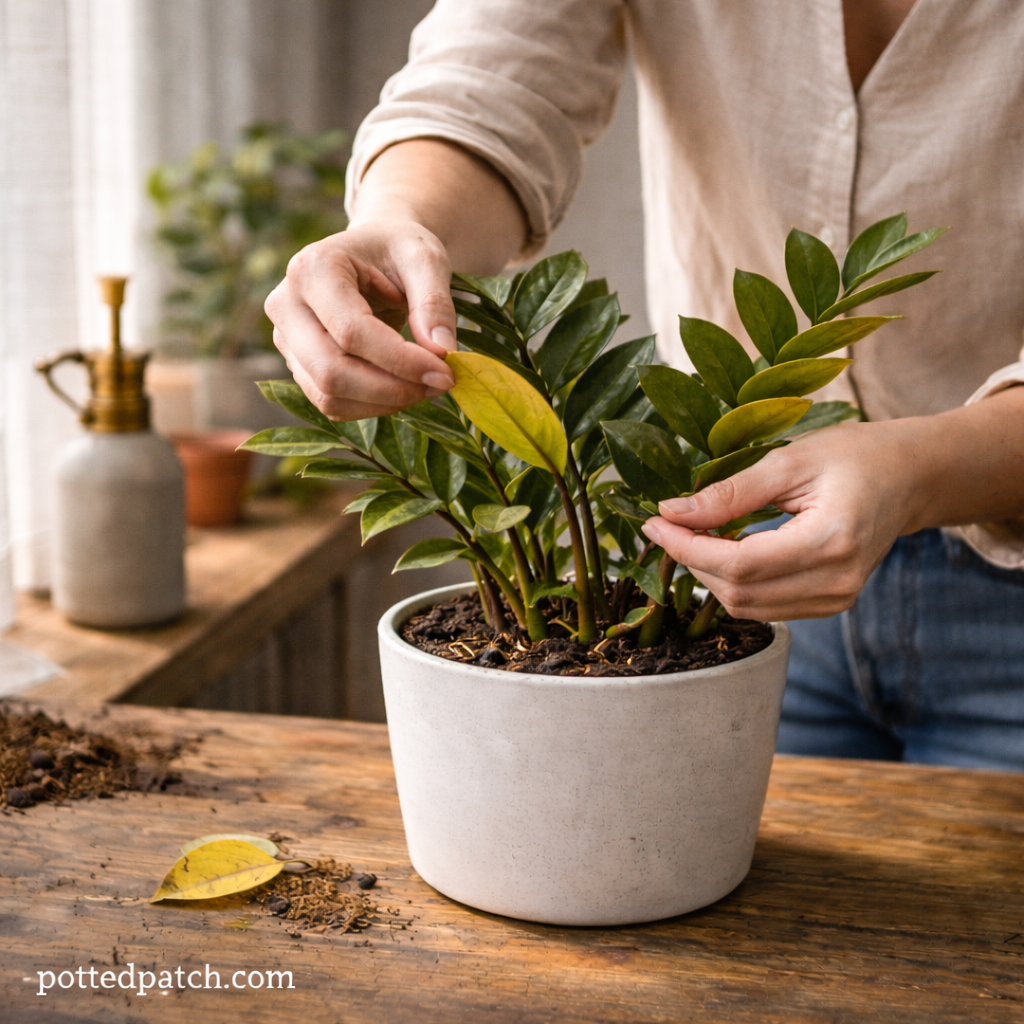
Overwatering is the number one reason ZZ plants lose leaves.
ZZ plants store water in thick underground rhizomes. When soil stays wet for too long, roots begin to rot. Once roots are damaged, the plant cannot support its leaves.
Signs of Overwatering
- Yellowing leaves before they drop
- Soft or mushy stems
- Soil that stays damp for weeks
- Musty smell from the pot
How to Fix It
- Let the soil dry completely before watering again.
- Ensure the pot has drainage holes.
- Repot into fresh, well-draining soil if root rot is suspected.
If caught early, the plant can recover.
2. Underwatering
While ZZ plants are drought-tolerant, extreme dryness for extended periods can also cause leaf drop.
If the rhizomes shrink too much, the plant sheds leaves to conserve energy.
Signs of Underwatering
- Wrinkled or shriveled stems
- Dry, compacted soil pulling from the pot edges
- Leaves dropping without yellowing first
Fix
Water thoroughly and consistently — but still allow the soil to dry between waterings.
Balance is key.
3. Sudden Environmental Changes
ZZ plants dislike abrupt shifts.
Leaf drop can happen after:
- Moving to a new home
- Changing rooms
- Major light changes
- Temperature swings
This is often temporary shock.
If the plant looks otherwise healthy, give it time to adjust.
4. Low Light Stress
ZZ plants tolerate low light, but extremely dark corners can weaken them over time.
In very dim conditions, the plant may:
- Produce thin, weak stems
- Drop older leaves
- Stop growing entirely
Move the plant to bright, indirect light for best results.
5. Temperature Stress
ZZ plants prefer stable indoor temperatures between 65–85°F.
Problems arise when:
- Placed near cold drafts
- Positioned close to AC vents
- Exposed to freezing temperatures
- Sitting next to heating vents
Sudden cold exposure especially can trigger leaf drop.
6. Rootbound Conditions
When roots completely fill the pot, the plant may struggle to absorb water and nutrients efficiently.
Signs include:
- Soil drying extremely fast
- Roots growing out of drainage holes
- Stunted growth
Repot in spring into a container only 1–2 inches larger.
7. Pest Issues (Less Common)
ZZ plants are relatively pest-resistant, but infestations can still happen.
Check for:
- Spider mites
- Mealybugs
- Scale insects
Look underneath leaves and along stems.
If pests are present, treat promptly with insecticidal soap or neem oil.
How to Stop Leaf Drop Quickly
Run through this quick checklist:
- Is the soil soggy?
- Is the soil bone dry?
- Does the pot have drainage?
- Has the plant recently moved?
- Is it exposed to drafts?
- Is it getting bright, indirect light?
Correct the underlying issue, and new growth should eventually replace lost leaves.
How Long Does Recovery Take?
After correcting care:
- Stabilization may take 2–4 weeks
- New growth typically appears during spring or summer
- Severe overwatering recovery may take several months
ZZ plants grow in bursts, so patience is important.
When to Be Concerned
You should investigate further if:
- Entire stems collapse
- Leaves turn black or mushy
- Rhizomes feel soft
- The plant smells foul
These signs suggest advanced root rot and require immediate repotting and trimming of damaged roots.
Final Thoughts
Leaf drop on a ZZ plant is usually a signal — not a death sentence.
Most cases come down to watering habits, lighting conditions, or environmental stress. Once the issue is corrected, the plant often rebounds with strong new growth during the next growing season.
Stay observant, adjust gradually, and your ZZ plant should return to its glossy, resilient self.