

Snake plants (Sansevieria or Dracaena trifasciata) are known for being tough, low-maintenance houseplants. So when you notice leaves falling over, detaching, or collapsing at the base, it can feel confusing.
The good news? Leaf drop on a snake plant is usually fixable. In most cases, it comes down to watering habits, lighting conditions, or root health.
Let’s break down the most common causes and how to correct them.
1. Overwatering (Most Common Cause)
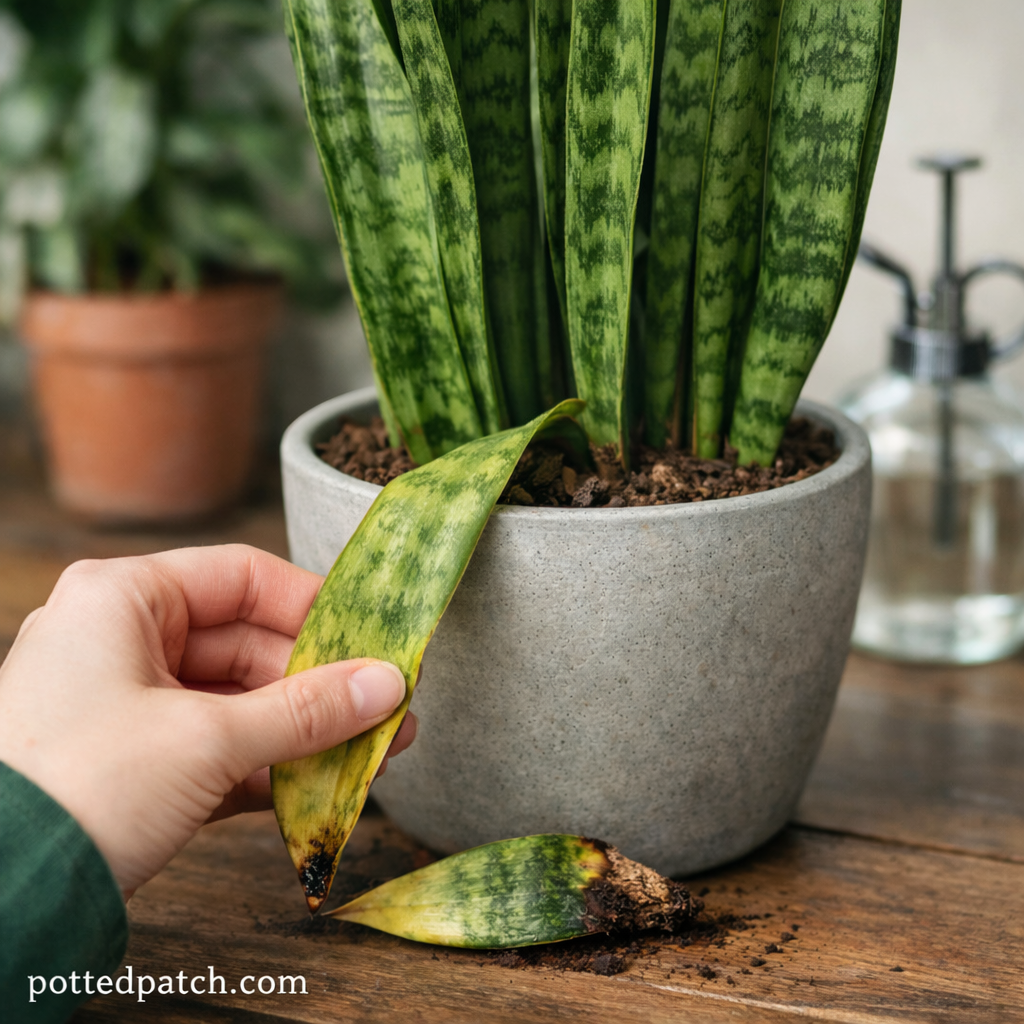
Overwatering is the number one reason snake plants experience leaf drop.
Snake plants store water in their thick, upright leaves. When soil stays wet too long, roots begin to rot. Once the roots weaken, they can’t support the leaves — and they collapse or fall off at the base.
Signs of Overwatering
- Mushy or soft leaf bases
- Yellowing leaves
- Foul smell from soil
- Black or brown roots
- Soil that stays wet for more than 10–14 days
How to Fix It
- Remove the plant from the pot.
- Trim away any black, mushy roots.
- Repot in fresh, well-draining cactus or succulent mix.
- Ensure the pot has drainage holes.
- Let soil dry completely between waterings.
Water only when the top 2–3 inches of soil are fully dry.
2. Root Rot
Root rot is often a result of chronic overwatering, but it deserves its own mention because it directly causes leaf detachment.
When roots decay, the base of the leaf softens and the leaf may:
- Lean heavily to one side
- Separate cleanly from the soil
- Feel slimy at the bottom
If root rot is severe, propagation may be your best option.
Quick Rescue Tip
If a leaf is still firm above the damaged base, cut it above the rot and propagate it in water or soil.
3. Sudden Temperature Changes
Snake plants prefer stable indoor temperatures between 65–85°F.
Cold drafts, AC vents, heaters, or sudden seasonal shifts can stress the plant. Extreme cold especially can damage leaf cells, causing:
- Drooping leaves
- Soft patches
- Eventual leaf drop
Keep your plant away from:
- Exterior doors
- Drafty windows
- Heating vents
- Uninsulated window sills in winter
4. Poor Drainage or Compacted Soil
Even if you don’t overwater, soil that retains too much moisture can create problems.
Dense, peat-heavy soil holds water around roots for too long. This mimics overwatering conditions and leads to instability in the leaf base.
Improve Drainage By:
- Using cactus or succulent soil
- Mixing in perlite or pumice
- Choosing a pot with drainage holes
- Avoiding oversized pots that retain excess moisture
Good drainage is essential for preventing leaf drop long-term.
5. Physical Damage or Heavy Leaves
Snake plant leaves grow tall and heavy. If bumped, bent, or hit repeatedly, they may weaken at the base and fall over.
This is common in:
- High-traffic areas
- Homes with pets
- Plants placed near doorways
If the leaf is otherwise healthy, it may just be structural damage — not a care issue.
6. Natural Aging
Occasionally, older outer leaves will die off as part of the plant’s natural growth cycle.
If:
- Only one or two outer leaves drop
- The rest of the plant looks healthy
- New growth is present
Then it’s likely just normal aging.
Snake plants grow from rhizomes under the soil. As new leaves emerge, older ones sometimes decline.
7. Repotting Stress
If your snake plant recently got repotted, temporary leaf droop or minor leaf drop can happen.
Disturbing roots during transplanting may cause short-term stress. Usually, the plant stabilizes within a few weeks if watering is kept minimal.
Avoid fertilizing immediately after repotting.
How to Prevent Leaf Drop in the Future
Consistency is key with snake plants.
Follow these simple care principles:
- Water sparingly and only when soil is dry
- Use fast-draining soil
- Keep temperatures stable
- Avoid oversized pots
- Ensure bright, indirect light
Snake plants prefer being slightly neglected over being over-cared for.
When Leaf Drop Is Serious
Leaf drop becomes concerning when:
- Multiple leaves collapse quickly
- The base feels mushy
- The plant smells sour
- Soil never dries
In that case, immediate repotting and root inspection is necessary.
If caught early, snake plants are very resilient and often recover well.
Final Thoughts
Leaf drop on a snake plant usually points to moisture imbalance — most often too much water or poor drainage.
Before assuming the worst, check the soil, inspect the roots, and evaluate your watering routine. In many cases, a simple adjustment can restore your plant’s strength.
Snake plants are tough. With the right conditions, they bounce back quickly and continue producing upright, architectural growth.