
Monstera plants are known for their large, dramatic leaves, so when those leaves start dropping, it’s usually a sign that something in the environment is off. Leaf drop doesn’t happen randomly—it’s a response to stress. The key is identifying which condition is triggering the plant to shed leaves and fixing it before the problem escalates.
This guide breaks down the most common reasons Monstera leaf drop occurs and how to correct each one.
What Leaf Drop Looks Like on Monstera
Leaf drop can show up in a few different ways:
- Leaves turning yellow and falling off
- Healthy-looking leaves dropping suddenly
- Older, lower leaves dropping first
- Multiple leaves dropping within a short time
Occasional leaf loss is normal, but repeated or sudden drop signals a care issue.
Overwatering Is the Most Common Cause
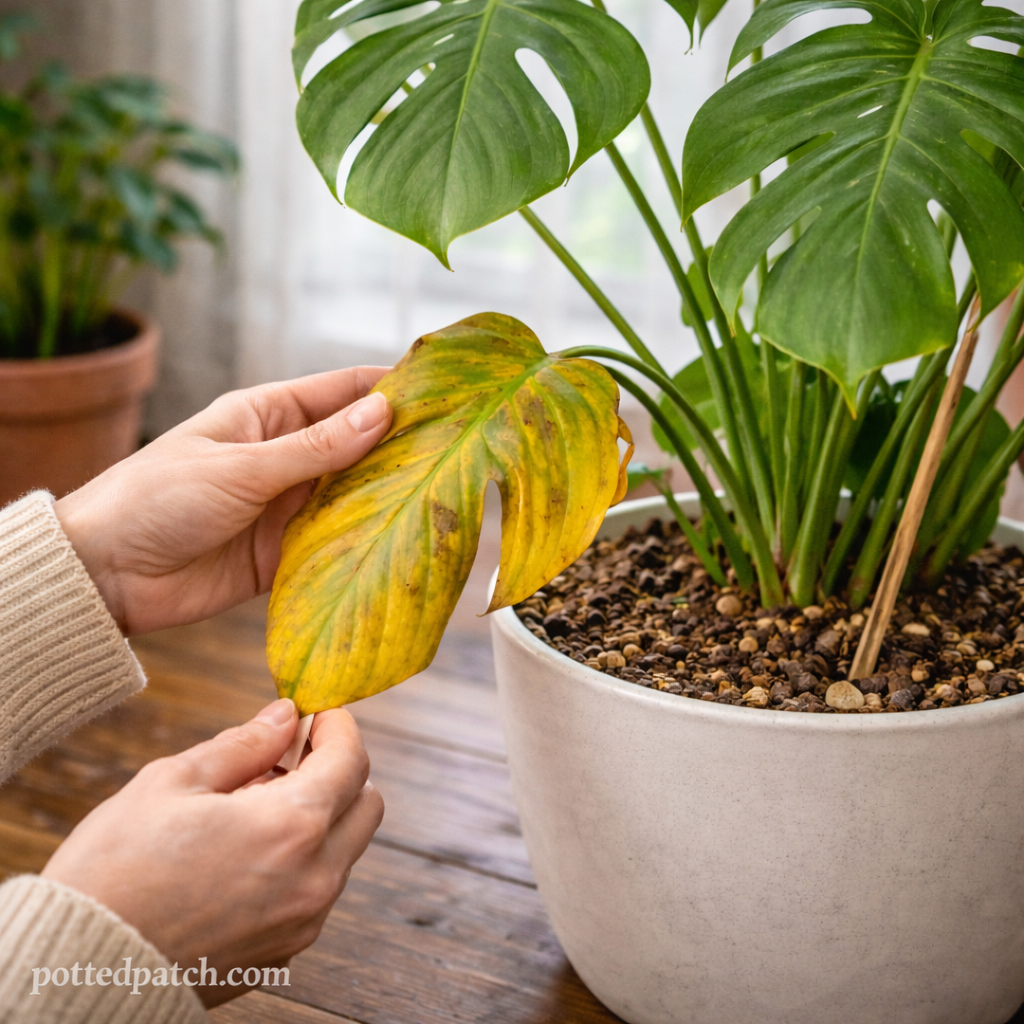
Overwatering is the number one reason Monstera leaves drop.
When soil stays wet for too long, roots lose access to oxygen. This leads to root rot, which prevents the plant from supporting its leaves.
Signs overwatering is the issue
- Yellowing leaves before they fall
- Soft or mushy stems near the soil
- Soil that stays damp for days
- A sour or musty smell from the pot
How to fix it
- Let the soil dry out at least halfway before watering again
- Always empty the drainage tray
- Use a pot with drainage holes
- Switch to a chunky, well-draining soil mix if needed
Once watering is corrected, leaf drop usually stops, but dropped leaves will not regrow.
Underwatering Can Also Trigger Leaf Drop
While Monsteras tolerate some dryness, prolonged underwatering causes stress that can lead to leaf loss.
When the plant can’t access enough moisture, it sacrifices older leaves to preserve energy.
Signs underwatering is the cause
- Dry, compacted soil pulling away from the pot edges
- Drooping or curling leaves
- Crispy brown edges before leaves fall
How to fix it
- Water thoroughly until excess drains out
- Rehydrate dry soil slowly over multiple waterings
- Maintain a consistent watering schedule
Consistency matters more than frequency.
Sudden Temperature Changes
Monsteras prefer stable indoor temperatures. Sudden changes can shock the plant and cause leaves to drop.
Common temperature-related triggers
- Cold drafts from windows or doors
- Air conditioning vents blowing directly on the plant
- Heaters placed too close
- Temperatures below 60°F
How to fix it
- Keep Monstera in a stable 65–85°F range
- Move it away from vents and drafty areas
- Avoid placing it near exterior doors in winter
Temperature stress often causes leaves to drop quickly but stops once conditions stabilize.
Low Light Stress
Monsteras need bright, indirect light to maintain their leaves.
In low light, the plant cannot support all its foliage and begins shedding leaves to conserve energy.
Signs light is the problem
- Slow or no new growth
- Smaller new leaves
- Leggy stems
- Lower leaves dropping first
How to fix it
- Move the plant closer to a bright window
- Use filtered light rather than direct sun
- Increase light gradually over one to two weeks
Improved lighting helps prevent future leaf loss, though dropped leaves will not return.
Transplant Shock After Repotting
It’s normal for Monsteras to drop one or two leaves after repotting.
Root disturbance temporarily interrupts water uptake, causing stress.
How to minimize transplant shock
- Repot only during spring or summer
- Avoid disturbing roots more than necessary
- Water lightly after repotting
- Skip fertilizing for at least four weeks
Leaf drop from transplant shock usually stops once roots reestablish.
Low Humidity Levels
Monsteras are tropical plants and prefer moderate to high humidity.
Dry indoor air, especially during winter, can stress leaves and cause them to drop.
Signs humidity is too low
- Brown leaf edges
- Crispy tips
- Leaf drop without yellowing
How to fix it
- Group plants together
- Use a humidifier nearby
- Place the pot on a pebble tray with water
- Avoid placing near heating vents
Humidity issues typically affect older leaves first.
Nutrient Deficiency or Excess
Both underfeeding and overfeeding can cause leaf drop.
Common nutrient-related problems
- Pale leaves from nitrogen deficiency
- Leaf burn from fertilizer buildup
- Sudden leaf loss after fertilizing
How to fix it
- Fertilize lightly during spring and summer only
- Use a balanced houseplant fertilizer
- Flush the soil with water if salt buildup is suspected
More fertilizer does not mean faster recovery.
Natural Aging of Older Leaves
Some leaf drop is completely normal.
Monsteras naturally shed their oldest, lowest leaves as they mature and produce new growth.
This type of leaf drop:
- Happens gradually
- Affects only one leaf at a time
- Is accompanied by new growth elsewhere
If the plant looks healthy overall, this isn’t a problem.
How to Stop Monstera Leaf Drop Long-Term
To prevent future leaf drop:
- Maintain consistent watering
- Provide bright, indirect light
- Keep temperatures stable
- Use well-draining soil
- Avoid frequent environmental changes
Monsteras thrive on routine and stability.
Final Thoughts
Leaf drop on a Monstera is almost always a stress response, not a mystery. By observing patterns—how fast leaves drop, what they look like, and recent changes—you can pinpoint the cause and correct it quickly.
Once conditions improve, your Monstera will shift its energy back into healthy, new growth.