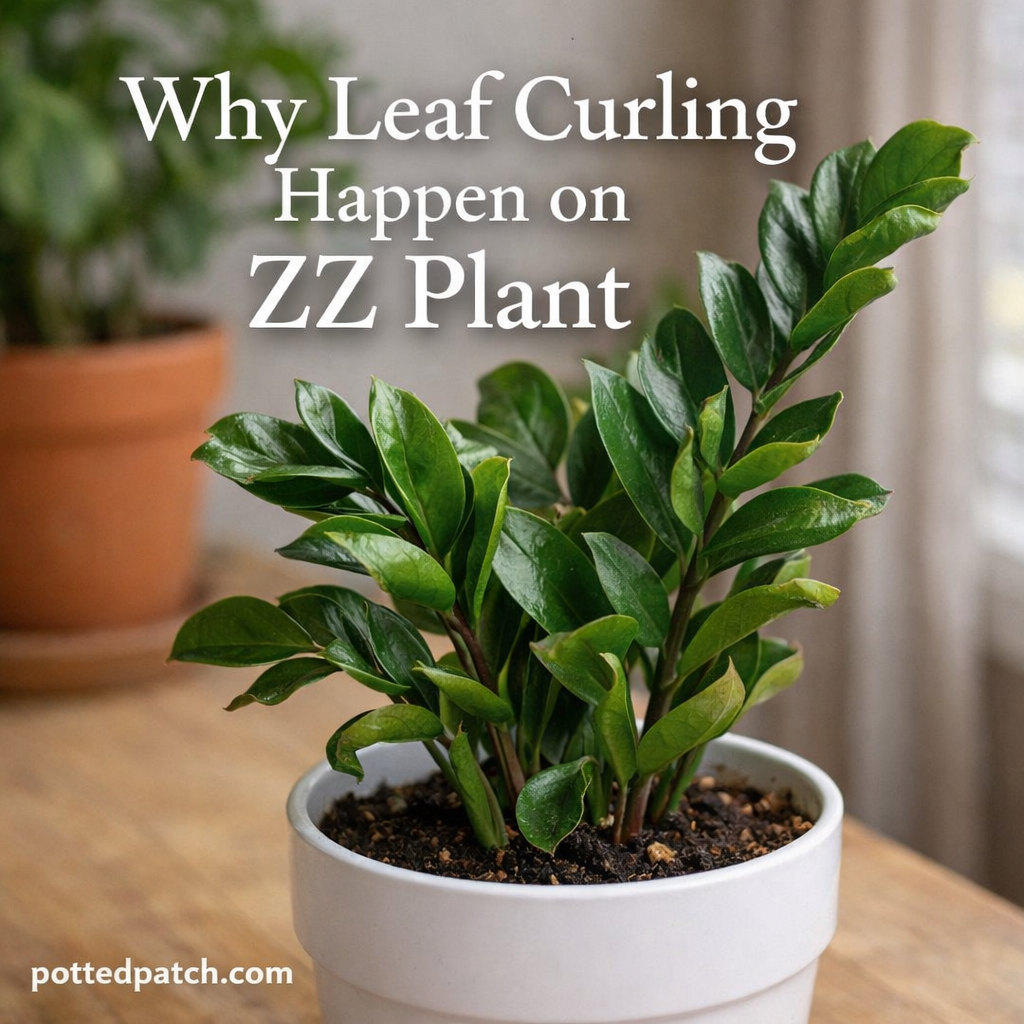
The ZZ plant (Zamioculcas zamiifolia) is famous for being low-maintenance and tough. It tolerates low light, irregular watering, and even a little neglect.
So when you notice the leaves curling, it can feel confusing.
Leaf curling is your plant’s way of signaling stress. The good news? In most cases, it’s completely fixable.
Let’s break down the common causes and what you can do to restore your ZZ plant to its glossy, upright glory.
What Healthy ZZ Leaves Should Look Like
Before diagnosing the problem, it helps to know what’s normal.
Healthy ZZ plant leaves are:
- Firm and slightly thick
- Smooth and glossy
- Gently arched but not twisted
- Evenly spaced along upright stems
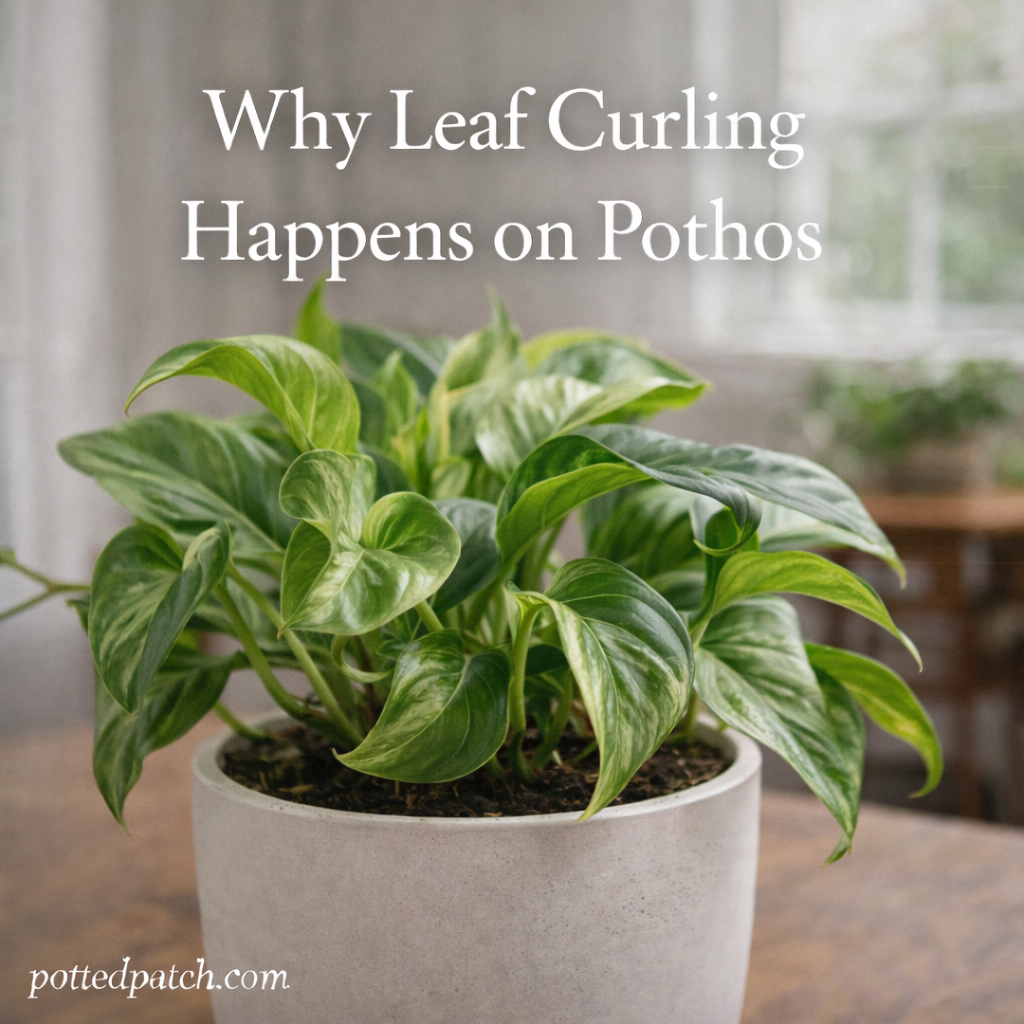
If the leaves are folding inward, twisting, wrinkling, or bending sharply, something is off.
1. Underwatering (Most Common Cause)
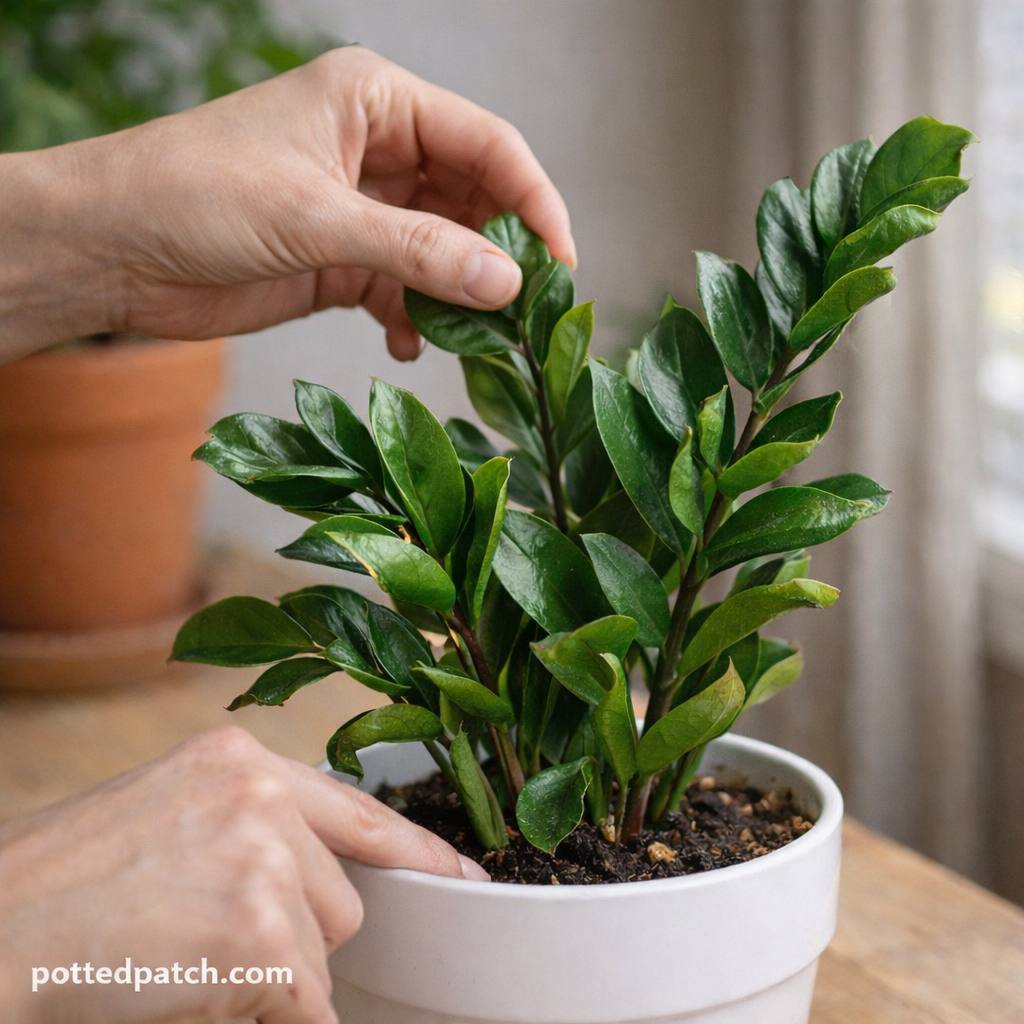
ZZ plants store water in their thick rhizomes (underground stems). While they tolerate drought, prolonged dryness can cause leaves to curl inward to conserve moisture.
Signs of Underwatering
- Leaves curl inward or wrinkle
- Soil is bone dry throughout the pot
- Stems may look slightly limp
- Pot feels very lightweight
How to Fix It
- Check soil depth with your finger (2–3 inches down).
- Water thoroughly until excess drains from the bottom.
- Discard any water sitting in the saucer.
- Resume a consistent watering routine.
For most indoor conditions, watering every 2–3 weeks works well. Always let the top 1–2 inches dry before watering again.
2. Overwatering and Root Stress
Surprisingly, too much water can also cause curling.
When roots sit in soggy soil, they can’t absorb oxygen properly. This leads to stress symptoms, including curling or folding leaves.
Signs of Overwatering
- Leaves curl but also turn yellow
- Soil stays wet for many days
- Mushy stems near the base
- Musty smell from soil
How to Fix It
- Allow soil to dry completely before watering again.
- Improve drainage (make sure the pot has holes).
- Repot using a well-draining mix if soil is compacted.
- Remove any soft, rotten roots if root rot is present.
ZZ plants prefer slightly underwatered conditions rather than soggy soil.
3. Low Humidity or Dry Indoor Air
Although ZZ plants tolerate average indoor humidity, extremely dry air (especially in winter) can cause slight leaf curling.
When This Happens
- During winter heating season
- Near vents or heaters
- In very dry climates
Solutions
- Move the plant away from heating vents.
- Use a humidifier nearby.
- Group plants together to create a micro-humidity zone.
ZZ plants don’t need tropical humidity levels, but stable indoor air helps.
4. Too Much Direct Sunlight
ZZ plants prefer bright, indirect light. Intense direct sunlight can cause stress and curling as leaves try to reduce exposure.
Signs of Light Stress
- Curling combined with fading color
- Brown, crispy edges
- Bleached or pale spots
Fix
Move the plant:
- 3–6 feet away from a bright window
- Behind a sheer curtain
- To an east or north-facing window
Indirect light keeps leaves firm and upright.
5. Temperature Stress
Sudden temperature swings can cause leaves to curl.
ZZ plants prefer:
- 65–85°F
- Stable indoor temperatures
- No cold drafts
Avoid placing your plant near:
- Air conditioners
- Drafty windows
- Exterior doors
6. Pests (Less Common, But Possible)
While ZZ plants are fairly pest-resistant, spider mites and aphids can occasionally cause leaf distortion.
Signs of Pests
- Tiny webbing (spider mites)
- Sticky residue
- Small moving insects
- Speckled or stippled leaves
Treatment Steps
- Isolate the plant.
- Wipe leaves with a damp cloth.
- Use insecticidal soap if infestation continues.
- Repeat weekly until clear.
Early detection prevents long-term damage.
7. Fertilizer Burn
Too much fertilizer can cause root stress, which may show up as curling leaves.
Symptoms
- Leaf curling with brown tips
- White crust on soil surface
- Recent heavy feeding
Fix
- Flush soil thoroughly with distilled or filtered water.
- Reduce fertilizing to once every 6–8 weeks during spring and summer.
- Avoid fertilizing in winter.
ZZ plants are light feeders and don’t need frequent nutrients.
Quick Diagnosis Checklist
If your ZZ plant leaves are curling, ask yourself:
- Is the soil extremely dry?
- Is it staying wet too long?
- Has lighting changed recently?
- Is it near a heat source?
- Did I fertilize recently?
Most curling issues resolve within a few weeks after correcting the root cause.
When Leaf Curling Is Not a Big Deal
Sometimes minor curling is simply:
- Natural leaf aging
- Slight environmental adjustment
- Temporary stress from relocation
If the plant otherwise looks healthy and is producing new growth, monitor it before making drastic changes.
Final Thoughts
Leaf curling on a ZZ plant is almost always a response to environmental stress.
In most cases, the issue comes down to watering habits, light exposure, or temperature fluctuations. Once you adjust the care routine, the plant typically rebounds without long-term damage.
Stay consistent, avoid overcorrecting, and give your plant time to recover. ZZ plants are resilient — and they usually forgive small mistakes.