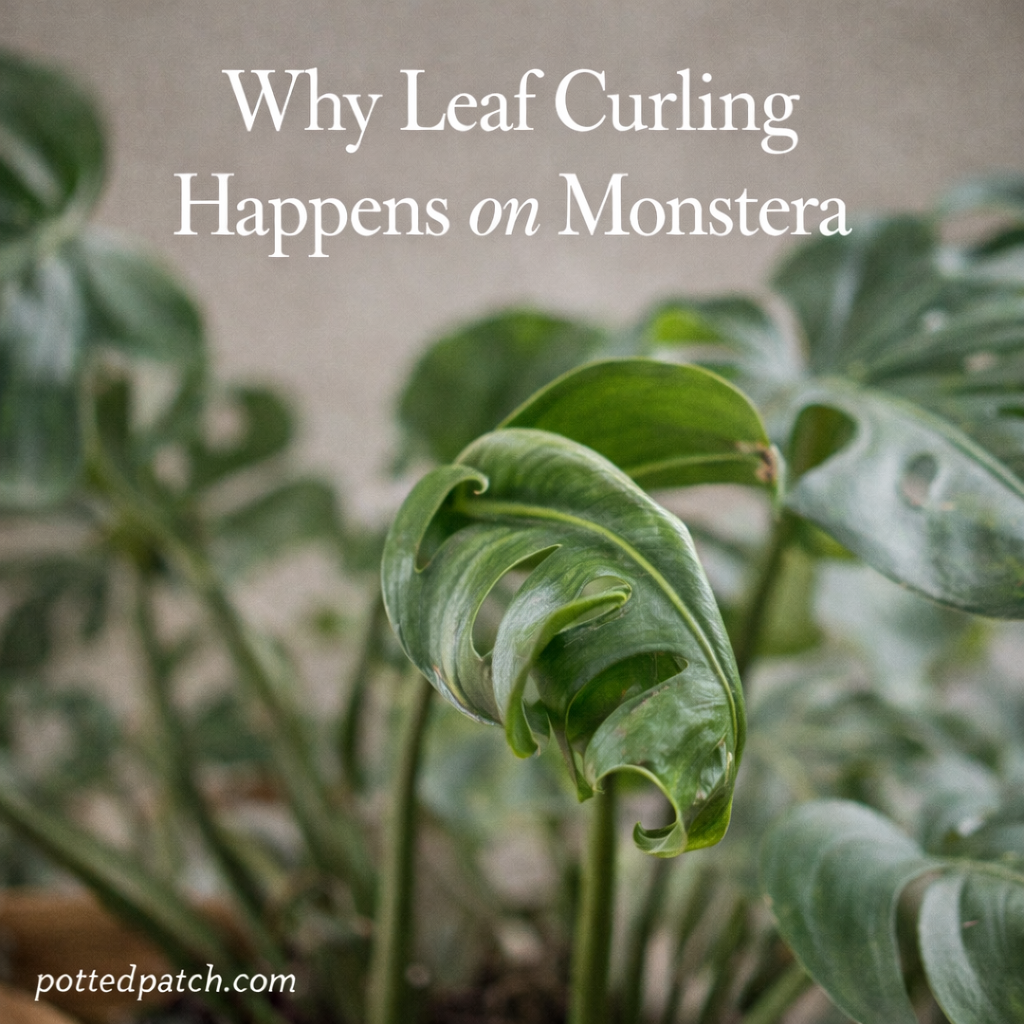
Monstera plants are known for their large, dramatic leaves, so when those leaves start curling, it’s often an early sign that something is off. Leaf curling isn’t a disease on its own—it’s a stress response. The key is identifying what your Monstera is reacting to and correcting it before damage becomes permanent.
This guide breaks down the most common reasons Monstera leaves curl and how to fix each issue.
What Leaf Curling Looks Like on Monstera
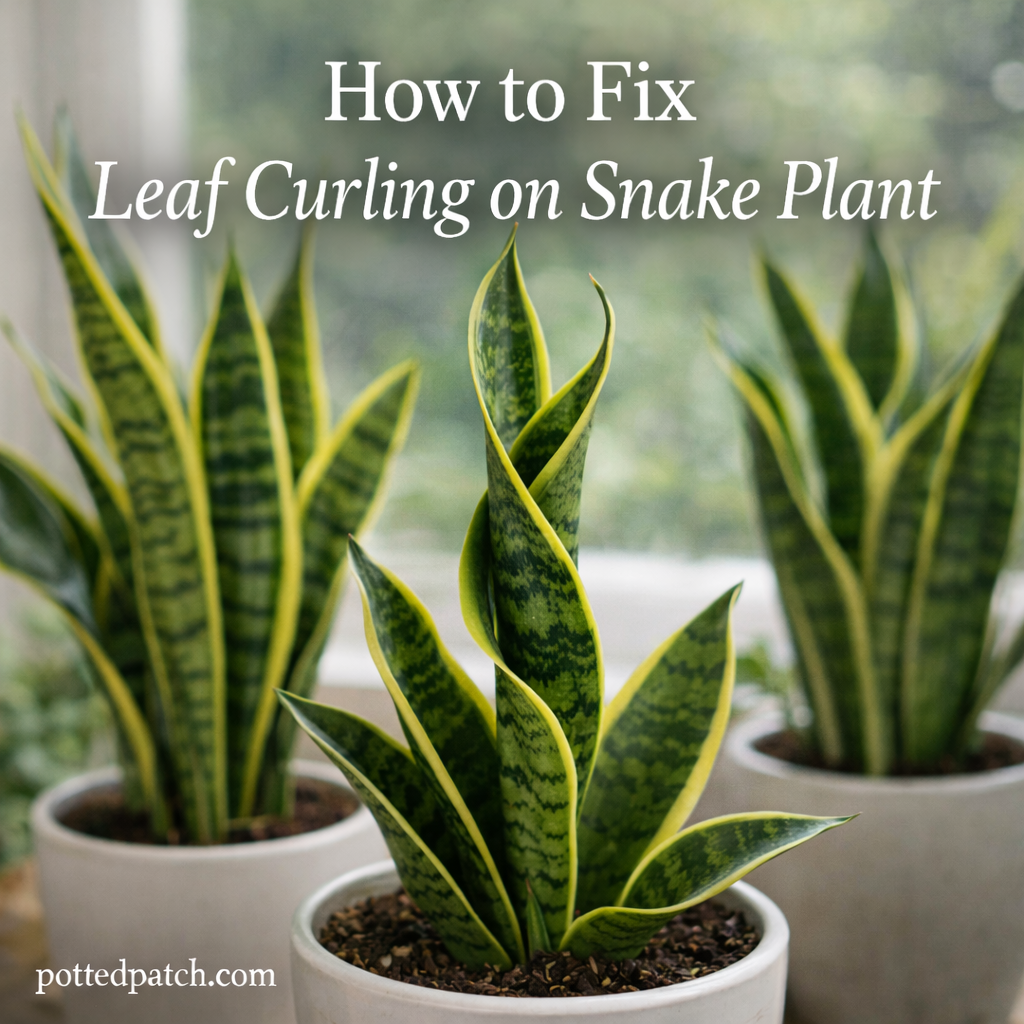
Leaf curling can show up in a few different ways:
- Edges curling inward or downward
- Entire leaves folding or cupping
- New leaves emerging curled and staying that way
- Leaves curling while still green and firm
The direction, timing, and condition of the leaf often hint at the underlying cause.
Underwatering
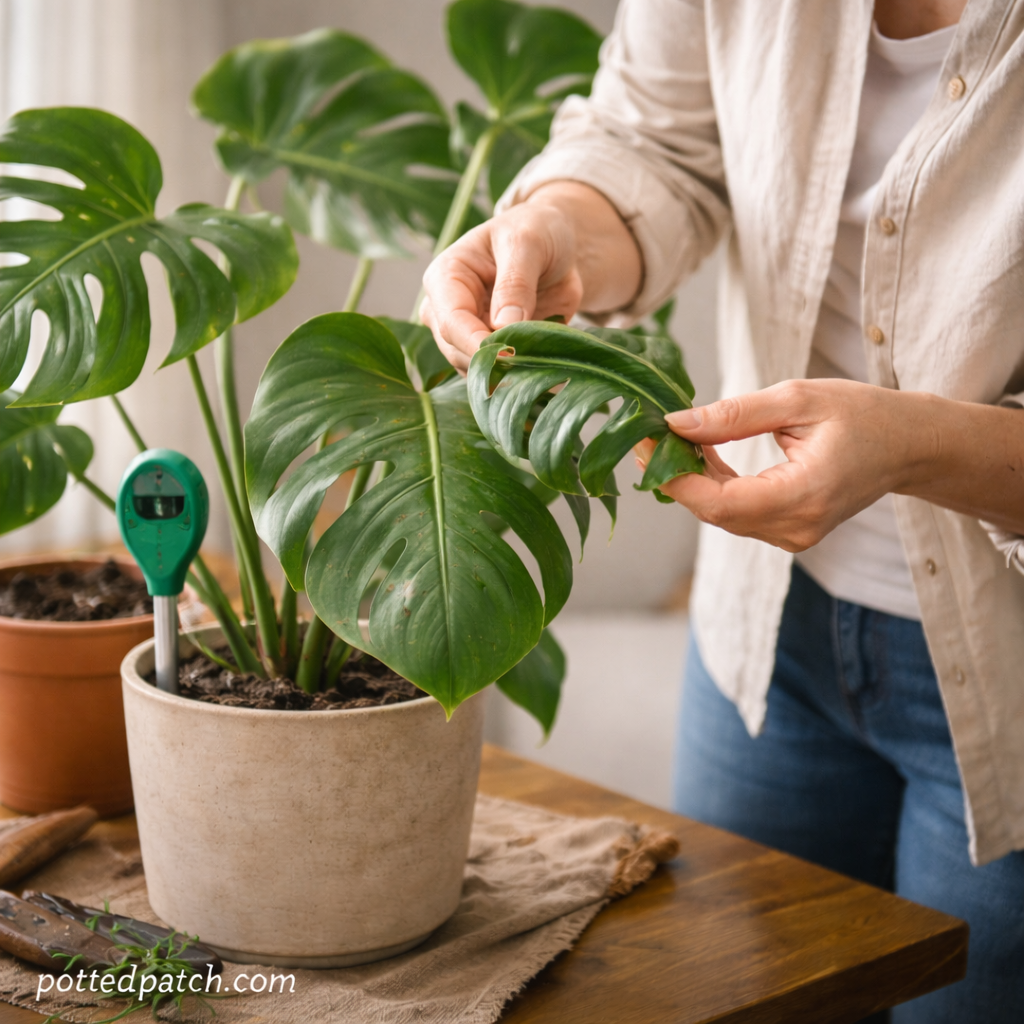
Underwatering is one of the most common causes of leaf curling in Monstera plants.
Why It Happens
When the plant doesn’t get enough water, it conserves moisture by curling its leaves to reduce surface area and water loss.
Signs to Look For
- Dry soil several inches deep
- Leaves curling inward and feeling thin
- Drooping or limp stems
- Slowed growth
How to Fix It
- Water thoroughly until water drains from the pot
- Resume a consistent watering routine
- Check soil moisture weekly rather than following a strict schedule
Once hydrated, leaves often relax within a few days.
Overwatering and Root Stress
While less obvious, overwatering can also cause curling.
Why It Happens
Excess water suffocates roots, preventing them from absorbing moisture properly. Even though the soil is wet, the plant behaves as if it’s dehydrated.
Signs to Look For
- Curling combined with yellowing
- Mushy or soft stems
- Persistent damp soil
- Musty odor from the pot
How to Fix It
- Let the soil dry out before watering again
- Ensure the pot has proper drainage
- Repot if root rot is suspected
Healthy roots are essential for flat, firm leaves.
Low Humidity
Monsteras are tropical plants that prefer humid environments.
Why It Happens
Dry indoor air causes moisture to evaporate from leaves faster than roots can replace it, leading to curling.
Signs to Look For
- Curling leaf edges
- Brown or crispy tips
- Curling more noticeable in winter
How to Fix It
- Increase humidity with a humidifier
- Group plants together
- Move the plant away from heating vents
Improving humidity often stops curling in new growth first.
Heat Stress or Cold Drafts
Temperature extremes can trigger leaf curling.
Why It Happens
Monsteras curl leaves to protect themselves from moisture loss or cold shock.
Signs to Look For
- Curling near windows or doors
- Leaves curling during heat waves
- Uneven curling on one side of the plant
How to Fix It
- Keep temperatures between 65–85°F
- Avoid placing plants near radiators or air conditioners
- Maintain consistent indoor conditions
Stable temperatures help leaves stay relaxed.
Excessive Light or Sun Exposure
Too much direct sunlight can stress Monstera leaves.
Why It Happens
Direct sun increases transpiration, causing leaves to curl to reduce exposure.
Signs to Look For
- Curling paired with pale or scorched patches
- Leaves curling toward the light source
- Curling on sun-facing leaves only
How to Fix It
- Move the plant to bright, indirect light
- Use sheer curtains to filter sunlight
- Rotate the plant for even exposure
Monsteras prefer brightness without harsh sun.
Nutrient Imbalance
Nutrient issues can also contribute to curling.
Why It Happens
A lack of key nutrients—or excess fertilizer salts—can disrupt leaf development.
Signs to Look For
- Curling with discoloration
- Weak or misshapen new leaves
- White residue on soil surface
How to Fix It
- Use a balanced fertilizer sparingly
- Flush the soil occasionally to remove salt buildup
- Feed only during active growing seasons
Moderation is more effective than frequent feeding.
Pests (Less Common but Possible)
Pests can cause curling by damaging leaf tissue.
Common Culprits
- Spider mites
- Thrips
- Aphids
Signs to Look For
- Curling combined with speckling or stippling
- Sticky residue or webbing
- Deformed new growth
How to Fix It
- Inspect leaf undersides regularly
- Wipe leaves clean
- Treat early with insecticidal soap if needed
Early detection prevents widespread damage.
Will Curled Leaves Flatten Again?
It depends on the cause and severity.
- Mild curling from underwatering or humidity often improves
- Severely curled or damaged leaves may not fully flatten
- New growth is the best indicator of recovery
Focus on correcting care rather than forcing old leaves to change.
Preventing Leaf Curling Long Term
To keep Monstera leaves flat and healthy:
- Maintain consistent watering
- Use well-draining soil
- Provide bright, indirect light
- Keep humidity moderate
- Avoid frequent environmental changes
Most curling issues resolve once the plant’s environment stabilizes.
Final Thoughts
Leaf curling on Monstera plants is a helpful warning sign, not a failure. By paying attention to watering habits, humidity, light, and temperature, you can usually identify the cause quickly and correct it. With proper care, your Monstera will reward you with broad, relaxed leaves and steady growth.