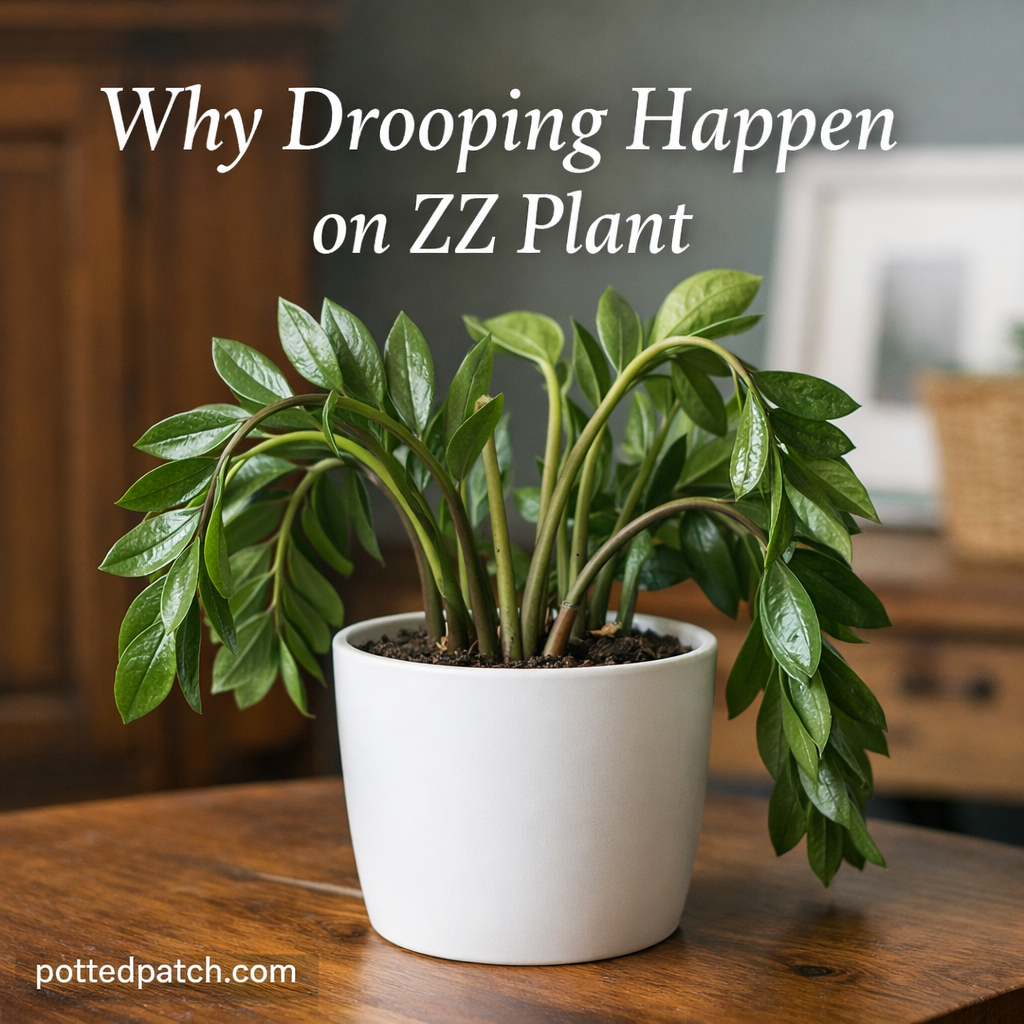
The ZZ plant (Zamioculcas zamiifolia) is known for being tough, drought-tolerant, and nearly indestructible. So when you notice drooping stems or leaning growth, it can feel confusing.
If your ZZ plant is drooping, it’s usually trying to tell you something about water, light, or root health.
The good news? Most drooping issues are completely fixable.
Let’s break down exactly why drooping happens — and what to do about it.
What Does Drooping Look Like on a ZZ Plant?
Drooping can show up in a few ways:
- Stems leaning outward instead of standing upright
- Entire stalks flopping to one side
- Leaves bending downward
- Soft or mushy stems near the base
It’s important to determine whether the plant is simply spreading naturally or actually stressed.
1. Overwatering (Most Common Cause)
Overwatering is the #1 reason ZZ plants droop.
ZZ plants store water in their thick underground rhizomes. When the soil stays wet too long, those rhizomes begin to rot. As roots fail, stems lose support and start to droop.
Signs of Overwatering
- Yellowing leaves
- Soft or mushy stems
- Foul smell from soil
- Wet soil that stays damp for days
- Black or brown roots
How to Fix It
- Remove the plant from the pot.
- Inspect the roots and rhizomes.
- Trim away any mushy or black sections.
- Repot in fresh, well-draining soil.
- Use a pot with drainage holes.
- Allow soil to dry completely between waterings.
Water only when the soil is fully dry — not slightly damp.
2. Underwatering
Although ZZ plants are drought tolerant, extreme dryness can cause temporary drooping.
When the plant runs out of stored moisture, stems may lean or appear slightly limp.
Signs of Underwatering
- Very dry soil pulling away from pot edges
- Wrinkled stems
- Leaves curling inward
- Lightweight pot
How to Fix It
- Water thoroughly until excess drains out.
- Allow soil to dry again before the next watering.
After a deep watering, mild drooping from dryness usually improves within a few days.
3. Natural Growth Pattern
Sometimes drooping isn’t a problem at all.
ZZ plants naturally arch outward as they mature. New stems grow upright, but older ones may gently curve.
If the stems are:
- Firm
- Green
- Free of yellowing
- Not mushy
Then your plant is likely just spreading naturally.
You can rotate the pot every few weeks to encourage more balanced growth.
4. Low Light Conditions
ZZ plants tolerate low light, but extremely dim conditions can cause weak, stretched growth.
When stems stretch toward light, they may become thin and begin to lean or droop.
Signs of Light-Related Drooping
- Long, leggy stems
- Smaller leaves
- Uneven growth toward a window
How to Fix It
- Move the plant to bright, indirect light.
- Avoid harsh direct sun.
- Rotate the plant regularly.
Improved lighting strengthens stems over time.
5. Root Bound Plant
If your ZZ plant has outgrown its pot, roots can become tightly packed. When this happens, the plant may struggle to absorb water properly, causing drooping.
Signs It’s Root Bound
- Roots circling inside the pot
- Soil drying out extremely fast
- Cracked or bulging plastic pot
- Slowed growth
How to Fix It
- Repot into a container 1–2 inches larger.
- Use fresh, well-draining potting mix.
- Gently loosen compacted roots before replanting.
6. Sudden Temperature Stress
Cold drafts, heaters, or rapid temperature changes can shock a ZZ plant.
Extreme stress may cause temporary drooping.
Keep your plant:
- Between 65–85°F
- Away from air vents
- Away from cold windows in winter
ZZ plants prefer stable environments.
How to Tell If Drooping Is Serious
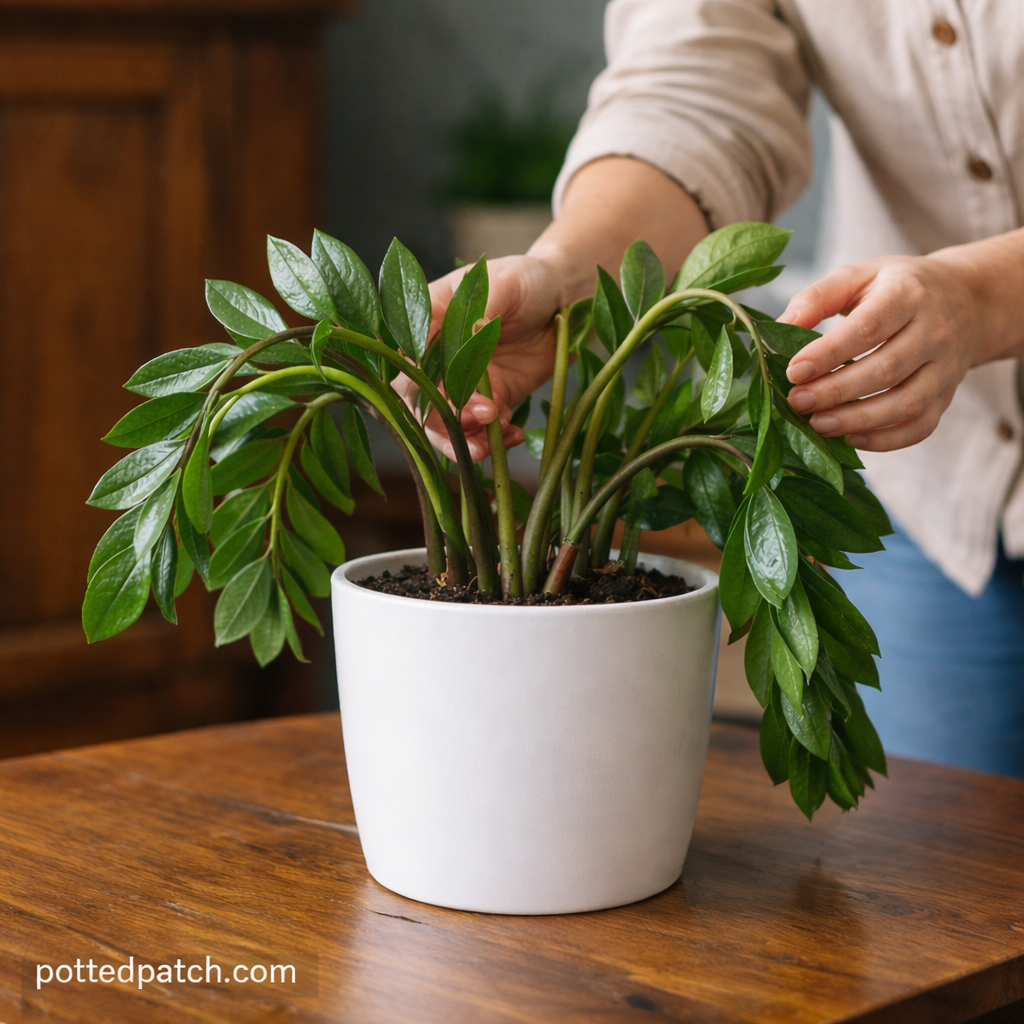
Here’s a quick checklist:
Likely Serious (Act Quickly)
- Mushy stems
- Black roots
- Yellowing with soft base
- Foul-smelling soil
Likely Minor or Normal
- Firm stems
- Gradual outward arching
- No discoloration
- Healthy new growth
If stems are firm, the plant is usually healthy.
How Long Does It Take to Recover?
Recovery depends on the cause:
- Underwatering: 2–7 days
- Overwatering: 2–4 weeks after repotting
- Light adjustment: several weeks
- Repotting shock: 1–3 weeks
ZZ plants are resilient — but they recover slowly. Patience is key.
How to Prevent Drooping in the Future
Follow these simple rules:
- Water only when soil is fully dry
- Use fast-draining soil
- Always use a pot with drainage holes
- Provide bright, indirect light
- Repot every 2–3 years
With proper care, ZZ plants rarely droop.
Final Thoughts
Drooping on a ZZ plant usually comes down to watering issues, light imbalance, or normal growth patterns.
Before panicking, check the stems. If they’re firm, your plant may simply be growing naturally.
But if they’re soft or yellowing, it’s time to inspect the roots.
Once you correct the underlying cause, your ZZ plant will reward you with strong, upright growth again.